News
Gorsuch confirmed to the dismay of LGBT rights supporters
Senate approves new justice after nuking filibuster


The U.S. Senate confirmed Neil Gorsuch to the U.S. Supreme Court.
(Washington Blade photo by Michael Key)
The U.S. Senate confirmed on Friday Neil Gorsuch to the U.S. Supreme Court much to the dismay of LGBT rights supporters who think he’ll oppose LGBT rights and Democrats who say the seat was unfairly awarded to him.
The Senate confirmed him to the seat by a largely party-line vote of 54-45, although Sens. Joe Manchin (D-W.Va.), Joe Donnelly (D-Ind.) and Heidi Heitkamp (D-N.D.) joined Republicans to confirm the nominee. Sen. Johnny Isakson (R-Ga.), who’s recovering from back surgery, missed the vote.
Russell Roybal, deputy executive director for the National LGBTQ Task Force, said in a statement the confirmation amounts to “the triumph of bullying over moderation.”
“Taking their lead from the Bully-in-Chief Donald Trump, Mitch McConnell twisted and turned the rules of the Senate to ram this extremist nominee through — slashing and burning safeguards for moderation, such as the rule calling for a 60 votes threshold needed to confirm an Associate Supreme Court Justice,” Roybal said. “We now have a new Justice who is so conservative that he makes Antonin Scalia look moderate,”
The Gorsuch confirmation is a win for President Trump after a first 100 days in office marked by questions about his presidential campaign’s relationship with Russia, the failure of legislation he endorsed to repeal Obamacare and national security challenges in Syria and North Korea.
But Democrats put up a fight in the road to confirmation, citing Senate Republicans’ unwillingness to even hold a hearing for President Obama’s choice for the seat — U.S. Circuit Judge Merrick Garland — when it was first made open by the death of the U.S. Associate Justice Antonin Scalia last year.
Democrats on Thursday successfully filibustered by the nomination after speaking out on the Senate floor against Gorsuch on the Senate. Sen. Jeff Merkley (D-Ore.), who said he’d filibuster any nominee other than Garland, spoke for 15 hours on the Senate floor against Trump’s nominee.
In the end, Senate Majority Leader Mitch McConnell (R-Ky.) was able to move forward by changing the rules and exercising the “nuclear option,” which ended the ability for senators to filibuster nominees to the Supreme Court. McConnell cited as precedent for this action former Senate Democratic Leader Harry Reid ending the filibuster in 2013 for administrative appointments and lower court judicial nominees.
Commending McConnell for his actions to ensure the confirmation of Gorsuch was Tony Perkins, president of the anti-LGBT Family Research Council.
“Leader McConnell is to be commended for holding fast to historical precedent of not allowing an outgoing president to pack the Court with ideological jurists on his way out of the White House,” Perkins said. “The Supreme Court vacancy after the death of Justice Scalia became a defining issue of the 2016 presidential election. President Trump made history by telling voters who he would appoint to the Court by providing a list — the American people chose him and he in turn chose from the list, keeping his promise.”
LGBT rights supporters have expressed concerns about Gorsuch largely because of his record as a judge on the U.S. 11th Circuit Court of Appeals.
Chief among those concerns is a ruling the Hobby Lobby case in which he determined the retail chain should afforded “religious freedom” despite requirements under Obamacare to deny contraceptive coverage for female employees. Many LGBT rights supporters say that could be a prelude to Gorsuch being willing to institute “religious freedom” carve-outs in LGBT non-discrimination laws.
Other LGBT criticism over Gorsuch relates to his decisions on transgender rights. In 2015, Gorsuch joined an 11th Circuit decision against a transgender inmate who alleged she was denied transition-related hormone therapy and unfairly housed in an all-male facility. In 2009, Gorsuch also joined an unpublished opinion finding the provision against sex discrimination under Title VII of the Civil Rights Act of 1964 doesn’t apply to transgender people.
In a 2005 op-ed for the National Review “Liberals & Lawsuits,” Gorsuch excoriated the progressive movement for seeking advancements in the courts, identifying same-sex marriage an issue that should be decided elsewhere a decade before the Supreme Court would rule for marriage equality nationwide.
Sarah Kate Ellis, CEO of GLAAD, condemned Senate Republicans for the confirmation of Gorsuch in a statement based on his anti-LGBT rulings and writings.
“Republicans in the Senate just destroyed a steadfast American tradition for the purpose of confirming a person to the U.S. Supreme Court who will most certainly vote in opposition to the safety and well-being of the LGBTQ community and many marginalized groups for his entire career on the bench,” Ellis said. “With his history of siding against transgender Americans and arguing against marriage equality, Neil Gorsuch is yet another reprehensible pawn in the Trump Administration’s goal of erasing the LGBTQ community from the fabric of America.”
During his confirmation hearing, Gorsuch said the U.S. Supreme Court ruling in favor of same-sex marriage is “settled law,” but added “there is ongoing litigation about its impact and application right now,” suggesting he thinks limitations to the ruling are still on the table. According to the Human Rights Campaign, Gorsuch also refused to answer in response to written questions from the Senate whether he thinks LGBT people are eligible for protections under current federal civil rights laws.
Stan Sloan, CEO of the Family Equality Council, said in a statement he hopes concerns about Gorsuch’s views on legal protections for LGBT people prove incorrect now that the jurist has been confirmed to the Supreme Court.
“Family Equality Council opposed the confirmation of Neil Gorsuch to the Supreme Court, and we are disappointed that this confirmation is now a reality,” Sloan said. “We hope that our fears concerning his ability to assure fair treatment of LGBTQ individuals and families — and members of all marginalized communities — will now be proven wrong, and that Justice Gorsuch rises to support and protect the civil liberties of all Americans.”





Netherlands
Amsterdam Pride Canal Parade draws hundreds of thousands
Gay Dutch Prime Minister Rob Jetten among participants

Editor’s note: International News Editor Michael K. Lavers and Photo Editor Michael Key are on assignment in the Netherlands through Aug. 10.
AMSTERDAM — Hundreds of thousands of people lined Amsterdam’s canals on Saturday for the city’s annual Amsterdam Pride Canal Parade.
Dutch Prime Minister Rob Jetten, who is openly gay, is among those who participated in the parade that featured more than 80 boats. Participants held signs and posters that, among other things, read “proud to be intersex” and “lesbians love you and a free Palestine.”
The Washington Blade saw at least two attendees holding fans that read “fuck Trump.” One of the boats also compared President Donald Trump and Russian President Vladimir Putin as “the kissing couple.”

(Washington Blade video by Michael K. Lavers)
(Washington Blade video by Michael K. Lavers)
The parade took place a week after a terrorist attack at Berlin’s Christopher Street Day left one person dead and more than two dozen others injured.
It passed the Homomonument, a memorial to gays and lesbians who have suffered persecution. The Homomonument has been transformed into a makeshift memorial to the victims of the July 25 terrorist attack in the German capital.
View on Threads
The Canal Parade took place during World Pride, which will end in Amsterdam on Aug. 9.
European Union
Poland’s top court rejects recognition of same-sex marriages from other EU countries
Ruling sets up potential clash with bloc

Poland’s top court this week rejected the recognition of same-sex marriages legally performed in other EU countries.
The EU Court of Justice in Luxembourg last November ruled in favor of a same-sex couple who challenged Poland’s refusal to recognize their German marriage. Poland’s Supreme Administrative Court in March reaffirmed the decision.
The couple, who lives in Poland, brought their case to Polish courts in 2019. The Supreme Administrative Court referred it to the EU Court of Justice.
The Polish government in May announced it will recognize same-sex marriages legally performed in other EU countries. Polish President Karol Nawrocki on July 17 vetoed bills that would have extended rights to same-sex couples.
The Constitutional Tribunal ruling, which it issued on July 28, was unanimous and final. It also sets up a potential clash between it and the EU Court of Justice.
Taiwan
Taiwan’s government has failed to update process to change gender markers on ID documents
Interior Ministry’s 2008 directive remains in place
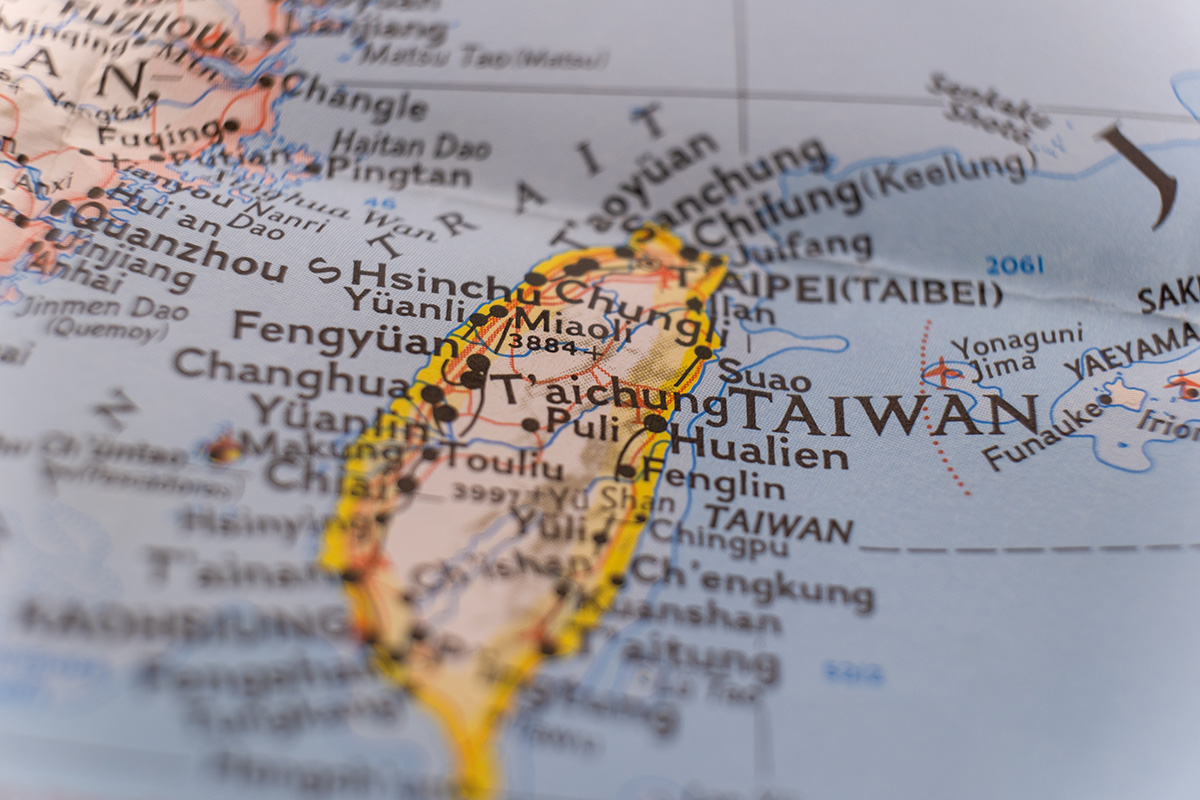
More than four years after Taiwan began formally studying legislation to overhaul its legal gender recognition system, and despite repeated recommendations from international human rights experts, the government has yet to introduce a bill that would replace decades-old administrative rules governing how transgender people can change the gender marker on official documents.
On May 15, an independent international review committee examining Taiwan’s implementation of the International Covenant on Civil and Political Rights and the International Covenant on Economic, Social and Cultural Rights urged the government to enact legislation governing legal gender recognition. The committee said Taiwan’s continued reliance on an administrative order, despite a 2023 Supreme Administrative Court ruling that mandatory gender-affirming surgery violates constitutional rights, has created legal uncertainty for transgender people, administrative authorities and judges.
In Taiwan, legal gender recognition has long been governed by a 2008 Interior Ministry administrative directive rather than legislation.
Under the directive, applicants seeking to change the gender marker on their national identification documents are generally required to provide diagnoses of gender dysphoria from two psychiatrists and proof that they have undergone gender-affirming surgery. For trans men, this typically involves the removal of the breasts, uterus, and ovaries, while trans women generally must undergo the removal of the penis and testicles. Because these requirements are established through an administrative directive rather than a law enacted by the legislature, trans rights activists and human rights organizations have argued they violate human rights.
Although Taiwanese courts have increasingly allowed trans people to change the gender marker on their official documents without undergoing gender-affirming surgery, the Interior Ministry’s 2008 directive requiring surgery remains in force. As a result, Taiwan’s administrative rules and judicial decisions are no longer fully aligned.
In a landmark ruling in May 2024, the Taipei High Administrative Court ordered a household registration office to approve a trans man’s application to change the gender marker on his household registration without requiring gender-affirming surgery. The court held that the Interior Ministry’s 2008 administrative directive, which requires applicants to submit proof of surgery, cannot be treated as an absolute prerequisite for legal gender recognition. Instead, it found that the applicant had provided sufficient medical evidence of a stable and long-standing gender identity and that denying the application solely because he had not undergone surgery was unlawful.
The Executive Yuan began work on legislation in April 2020, when it decided to commission an academic study examining international legal gender recognition systems rather than immediately drafting a law.
The government subsequently commissioned Shih Hsin University to prepare a report reviewing foreign legal models and developing legislative recommendations, including a bill. Since 2022, the Executive Yuan has held a series of inter-agency meetings involving multiple ministries to consider the study’s recommendations and legislation governing legal gender recognition, though no bill has yet been enacted.
In September 2023, Taiwan’s Supreme Administrative Court set aside a lower court ruling that had upheld the Interior Ministry’s refusal to change a trans person’s legal gender without proof of surgery and ordered the case to be reheard.
The court held that the ministry’s 2008 administrative directive requiring surgery could not be treated as the controlling legal standard because it lacked a clear statutory basis and implicated constitutional protections, including bodily autonomy and personality rights. Rather than treating surgery as an automatic prerequisite, the court instructed the lower court to determine whether the applicant had established a stable gender identity based on the evidence presented.
“From our perspective, the primary goal should be lowering the barriers to legal gender recognition, particularly by abolishing the mandatory surgery requirement,” the Taiwan Tongzhi (LGBTQ+) Hotline Association, a nonprofit LGBTQ advocacy and support organization founded in 1998, said in an email to the Washington Blade.
The Taiwan Tongzhi (LGBTQ+) Hotline Association said several factors have stalled progress toward comprehensive legislation.
The organization told the Blade the complexity of the issue and the lack of constructive dialogue are among the primary obstacles. It said legal gender recognition requires extensive discussion, with views differing even within the trans community itself. The Taiwan Tongzhi (LGBTQ+) Hotline Association added that opinions also vary widely within the legislature and across Taiwanese society, while effective channels for dialogue remain lacking.
The Taiwan Tongzhi (LGBTQ+) Hotline Association also attributed the lack of progress to what it described as a lack of political will and an over reliance on “social consensus.”
According to the organization, the executive branch lacks the political momentum to advance legal gender recognition reforms. The Taiwan Tongzhi (LGBTQ+) Hotline Association said the Interior Ministry and other relevant agencies have often adopted a passive approach in the face of opposition from conservative groups, delaying progress by arguing that there is no social consensus or that further discussion is needed.
The Taiwan Tongzhi (LGBTQ+) Hotline Association also said progress has been hindered by what it described as a backlash following the legalization of same-sex marriage. According to the organization, groups opposed to gender equality and trans rights, including some conservative religious and anti-trans organizations, shifted their focus to trans issues after marriage equality became law. The Taiwan Tongzhi (LGBTQ+) Hotline Association said these groups have promoted fear-based narratives, including concerns about safety in public restrooms, leading many politicians to view trans rights as a politically risky issue and reducing momentum for legislative action.
“The existing system makes changing one’s legal gender marker extremely difficult. Forced surgical removal of reproductive organs imposes a heavy financial burden since it must be paid out-of-pocket, and not every trans person can afford, desires, or is medically advised to undergo organ removal,” the Taiwan Tongzhi (LGBTQ+) Hotline Association said. “Additionally, requiring psychiatric evaluations is problematic because specialized medical resources are scarce and concentrated in major cities. These obstacles severely impact transgender individuals in their daily lives.”
The Taiwan Tongzhi (LGBTQ+) Hotline Association said the continued reliance on an administrative directive rather than legislation has created systemic uncertainty for trans people. The organization said the absence of a statutory framework allows executive agencies to alter requirements without legislative oversight, leaving trans people uncertain whether future policies will become more restrictive or more permissive. The Taiwan Tongzhi (LGBTQ+) Hotline Association added that while several trans people have secured favorable court rulings since 2023, those decisions apply only to the individual cases before the courts and do not guarantee similar outcomes for others. The group also said pursuing litigation requires significant time, financial resources, and emotional investment, making it an inaccessible path for many trans people seeking legal recognition.
The Executive Yuan and the Interior Ministry did not respond to the Blade’s requests for comment.

PHOTOS: Petal Release Party

Madonna headlines World Pride Music Festival in Amsterdam

Reggie White relishing first season as artistic director of Woolly Mammoth

PHOTOS: Amsterdam Pride Canal Parade

Amsterdam Pride Canal Parade draws hundreds of thousands

BLADE ENDORSEMENT: Susan Stewart for mayor of Rehoboth Beach

PHOTOS: Lambda Legal in the Pines

Calendar: July 31-August 6

Taiwan’s government has failed to update process to change gender markers on ID documents