a&e features
BACK TO SCHOOL 2018: Gay Howard student says much work remains
Micro-aggressions, token support among challenges for campus LGBT group
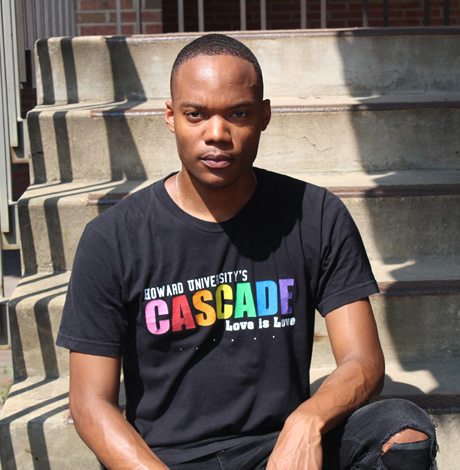
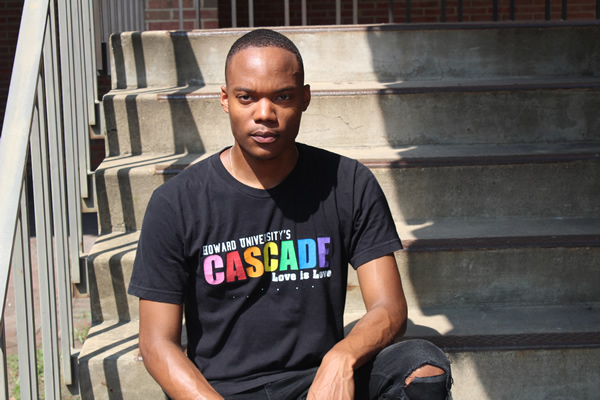
Justin Calhoun overcame extreme homophobia in his native Mississippi before relocating to Washington for college. (Photo courtesy Calhoun)
Justin Calhoun chose Howard University in part to escape the homophobia he grew up with in the Mississippi Delta. However, he continues to face oppression for being gay at the D.C. HBCU (historically black colleges and universities); now, it’s just on a micro rather than macro scale.
When Calhoun was deciding which college to attend, he knew he wanted to go somewhere where his peers “affirmed and understood” him and his gay identity. He thought Howard would offer a “safer, more progressive” environment than Morehouse (an all-male HBCU in Atlanta) or a state school in Mississippi.
The junior, political science major is all too familiar with homophobia thanks to growing up in Ruleville (a small town in northern Mississippi with about 3,000 residents) with parents who are still struggling to accept his gay identity.
“I’ve come to my mom three times, and there will be a fourth time,” Calhoun says. “Each time, my mom has basically lied to herself and been really in denial about it. … After I come out, she always says, ‘I can’t wait till you get a wife and kids.’”
Although Calhoun has known since second grade that he is gay, he didn’t start coming out to his friends till sixth grade, and even then, he intentionally didn’t come out to his parents because he knew they wouldn’t be accepting.
However, one of Calhoun’s teachers approached his parents independently without his knowledge.
“When my parents found out, we had a long talk, and I eventually admitted I was gay,” Calhoun says. “My parents immediately started crying; my dad walked out of the room and said, ‘That’s some bullshit.’ … Several days after that, there were some prayer sessions, prayer warriors, people coming in the house to pray and lift the corners of the house from the evil spirit that was me.”
Beyond social stigma and rejection, Calhoun was also concerned about his physical safety because of recent events near his hometown in Clarksdale, Miss., where Marco McMillian, an openly gay candidate running for mayor, was found murdered at age 34. Although there remains no evidence proving the murderer was motivated by McMillian’s sexual orientation, the event still shook up the LGBT community, making many queer Mississippians like Calhoun frightened and uneasy.
“My dad said, ‘Is this what you want to happen to you? Because that’s basically what you’re asking to happen; you’re gonna die if you keep acting gay.’ So he told me to go to school and tell all my friends I was straight ‘or else,’” Calhoun says. “I never really questioned the ‘or else,’ but I was very aware of what that could possibly mean in terms of physical violence.”
Now at Howard, Calhoun is far from closeted.
“I’m very loud about being gay at Howard and actually most places I go, except my parents’ home. I just don’t like being quiet about it.”
He joined CASCADE (Coalition of Activist Students Celebrating the Acceptance of Diversity and Equality), the campus’ LGBT group, which Calhoun describes as “the hub for all queer activism on campus,” at the end of his freshman year and became the president last semester as a sophomore.
The group currently has 16 advocacy interests for next school year, such as the creation of an LGBT resource center, which would institutionalize queer spaces and Black Gayze, a magazine which will champion and explore the lives of queer students at Howard. CASCADE has also placed trans and gender-non-conforming folks at the forefront of their advocacy with its gender-neutral bathroom initiative.
Currently, only one building on Howard’s campus has gender-neutral restrooms, Frederick Douglas Memorial Hall. However, the hall is currently under renovation until 2020, meaning the campus functionally has no gender-neutral restrooms anywhere on campus. CASCADE hopes to designate at least two such restrooms in all student buildings (dormitories, cafeterias, academic spaces, etc.) by December and at least two in all administrative buildings by April 2019.
Calhoun says Trump has in some ways benefitted queer activism at Howard since his election two years ago.
“I think Trump has been a benefit in that people are realizing how emboldened people feel now and they’re starting to hear their views and people want to make sure they’re not on that side of history, so people have been trying to be politically correct,” Calhoun says.
Yet Calhoun says there remains a lot of passive partnership on campus.
“There’s no resistance (to our agenda). I think the only resistance is silence,” Calhoun says. “A lot of people like to partner with LGBTQ organizations on campus … (but) being intentional with these (queer) groups means talking to them year round and caring. It means funding them. It means partnering with them on long-lasting partnerships. It means coming to their meetings. It means showing the initiative that you care outside of a one-time event that maybe attracts 10-20 people.”
Calhoun says this lack of “initiative” and “intentionality” contributes to micro-aggressions he and other queer students continue to experience. However, he also says these micro-aggressions are partially due to the black community’s historic relationship with the church.
“Howard is supposed to be this safe space where black students can come and explore their identities safely in this microcosm of black creativity and exploration,” Calhoun says. “And that’s cute for one type of student, mainly cis hetero students. But for queer students, that’s not at all the reality … (partially) because of black people’s relationship with the church and (how) the church has had a long history of saying that queerness is wrong. Because of Howard’s history with all of that, the campus has a lot of micro-aggressive oppression.”
One day, Calhoun hopes to start his own nonprofit catered to black, queer people in the South, filling a void he himself experienced growing up. Until then, he hopes to see Howard continue advancing queer rights and voices on campus.
“I would like to see more queer voices and yes I would like to see them represented, but mostly I would like them to be visible … (for example) in classrooms where I see a black, queer teacher talking about their black, queer experience just as they would their black experience now,” Calhoun says. “I just want it (queerness) to be integrated into (the community’s) everyday thoughts and actions, so that students know and feel radical acceptance.”



a&e features
The queer Asian comics building collective joy in D.C.
Spotlighting chaotic ways family, romance, identity take shape in their lives
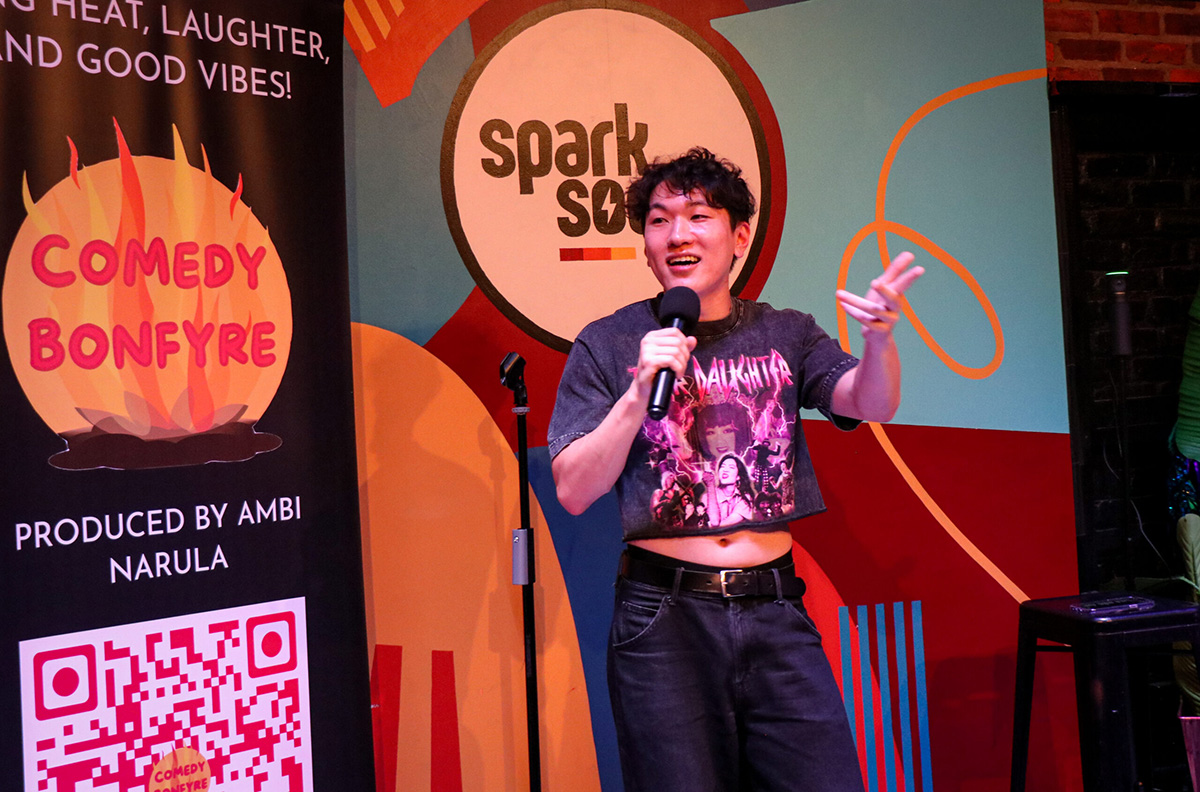
Kevin Chen’s family tombstone has room for four: him, his parents and his boyfriend. The arrangement might prove to be a little awkward.
“My boyfriend is 100% white, and my parents are 100% disappointed,” Chen confessed.
Jokes about family traditions and the untraditional ways they’re practiced earned a burst of laughs at the bar where Chen was opening for the Pride Comedy Special. The D.C. stand-up event, produced by Comedy Bonfyre last month, spotlighted queer Asian comics who shared the chaotic ways family, romance and identity take shape in their lives.
From candid oral sex takes to top surgery hypotheticals like “Where do the boobs go?”, the night highlighted the loud camaraderie of the queer Asian experience — one that sounds like a cacophony of snorts, cackles and belly laughs. While the comics say they are not quite a community, there’s more than enough shared material to bring them together.
“It was such a magical experience. I loved performing in a queer API lineup. It feels so validating,” Chen said after the show. “I’m wondering, ‘Is this how white men feel all the time?’”
Each performance evoked queer Asian joy through a medium that could use more of its presence.
According to Chen, who is based in D.C., it’s hard to say whether there is a true queer Asian comedy presence in his city. There are only a scattered “handful” of Asian comics, and people of color are underrepresented in queer comic circles, he said.
When Tarunika Anand, a nonbinary lesbian comic, first entered the mainstream D.C. comedy scene, they mostly encountered straight white men, describing the experience as “a culture shock.”
“I feel like sometimes a lot of queer spaces are really white, and then a lot of Asian spaces are really straight,” Anand said. “I don’t feel like I fit into either.”
But feeling marginalized didn’t stop these comics from honing their craft and creating spaces for others like them. Alex Kim, who headlined the special and is based in Brooklyn, runs the queer Asian comedy group Boba Gays, which began on WhatsApp and has since made its way to Lincoln Center.
Every Wednesday, Anand co-produces a free comedy show called Funny Side Up. The queer-led group focuses on inclusivity and showcasing new talent.
“It’s really beautiful to speak about your experience and your existence in a way that’s uplifting,” Anand said.
Family is a major throughline of their comedic repertoires.
Chen, for instance, shared that he identifies with jokes about having Asian immigrant parents and the expectations they pass down.
“You see me, you know this part about me, you know this experience intimately, and I can see the truth that you’re trying to wrap a joke around,” he said. “That hits even harder because that’s my truth too. I think that’s what makes good comedy.”
Anand had the audience at the special howling when they explained that their parents’ be-more-like-them comparisons didn’t end when they came out. Instead, the expectations took on a new form.
“Now, my parents want me to be the best gay,” Anand said. “They’re like, ‘Do you know Ellen DeGeneres?’”
Kim said he’s been trying to unlearn things from his Christian Korean mom. Yet he described a moment when he was getting ready for the club and realized he looked just like his mother getting ready for church.
“I’ve been finding it hard to escape her,” Kim said.
Mutual recognition also radiates through the different ways queer love can take shape. From singlehood to death-do-us-part commitments, the comics cover just about every corner.
Anand is holding out hope for settling down with “a nice, pretty, Indian girl.” They recently went through a breakup and said they felt they dodged a bullet.
“As a person of color, I just don’t think I should be with a Swiftie,” they said.
Chen, touching on what it’s like to be in a queer interracial relationship, said that meeting his white boyfriend’s baby nephew for the first time felt like he was forced to participate in a diversity, equity and inclusion training.
“The dad was like, ‘Please welcome Kevin. Be curious about his culture, his history, his foods,’” Chen joked.
Laughter is not the only reward for the comics.
To Anand, comedy is a space where they can say whatever they want. “It gives me a voice,” they said.
Nik Narain, a North Carolina-based trans and nonbinary South Asian comic who performed at the special, said meeting older trans comedians and taking the stage helped him feel reassured in his identity during his transition.
“Stand-up was a really cool way to process that onstage,” he said. “[It] became a way for me to repackage my thoughts.”
Queer Asians are still figuring out their place in the greater D.C. comedy scene. The group is small in numbers and many are still working toward a full-time comedy career. But Narain feels he’s already made it.
Narain is reluctant to pin it all on one moment. He feels that success is already peeking through in milestones — opening for celebrities, traveling to performances and self-producing shows.
“As long as I can keep doing this, I’m super happy,” he said.
This story was produced as part of the AAJA VOICES fellowship program, a student journalism project of the Asian American Journalists Association (AAJA).
a&e features
Mr. Henry’s celebrates 60 years of proud inclusivity
Capitol Hill staple remains ‘a caring community’
America’s 250th isn’t the only milestone birthday D.C. is celebrating this year.
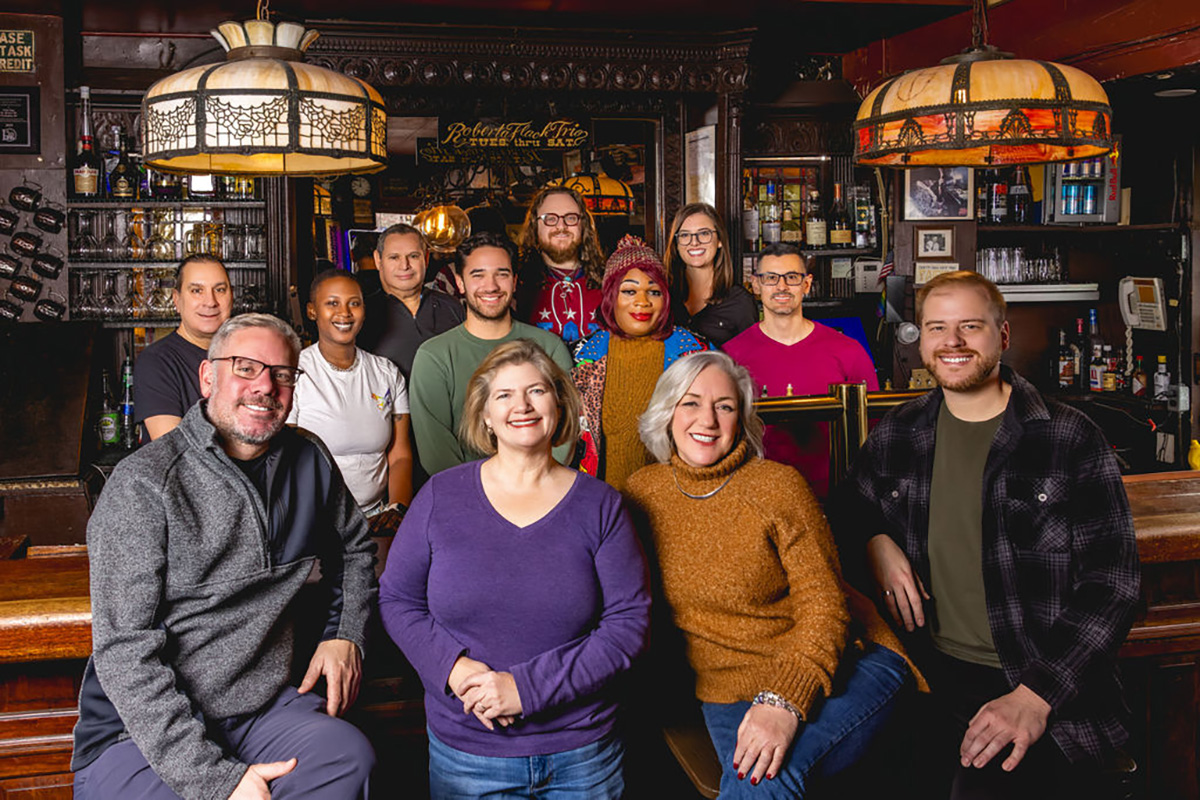
Beloved D.C. restaurant Mr. Henry’s, that Capitol Hill staple, celebrates its Diamond Jubilee all year long. Named for its original owner Henry Yaffe, the restaurant opened on a warm day 60 years ago in the summer of 1966 and has never looked back.
Yaffe took over what was then a country western restaurant, renovated the interior to his liking, and created an institution. Yet Yaffe had another goal. As a gay man, “he created Mr. Henry’s to be a place where everyone felt welcome — not easy in 1966 — and he succeeded,” says current owner Mary Quillian.
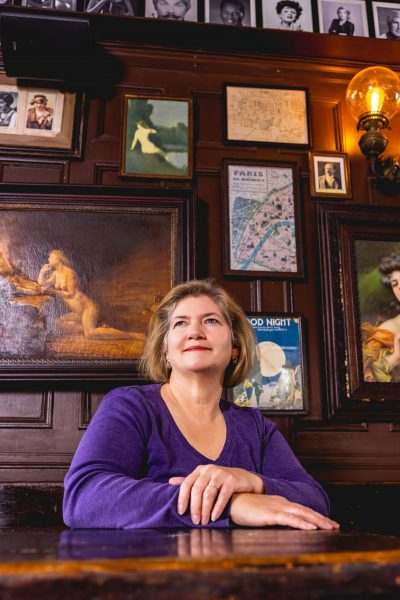
“Mr. Henry’s has long been a place the LGBTQ community has supported because they felt and still feel welcomed,” says Quillian. Even in the current administration, “the gay community and the diversity-minded community continue to come.”
Since then, Mr. Henry’s has changed hands, opened and closed its second floor, welcomed famed musical acts, and played host to politicians, date nights, breakups, and birthdays. But it still feels like home (and has a note in the National Trust for Historic Preservation) at 601 Pennsylvania Ave., S.E.
Its wood-paneled, Victorian-inspired art-filled décor in the downstairs dining room and bar serves American pub fare for lunch and dinner daily, with brunch on weekends (and a dog-friendly patio). Upstairs, Mr. Henry’s hosts live jazz performances and special events most nights, continuing a musical tradition that has defined the venue for decades. That upstairs bar has played host to names like Roberta Flack and Woody Allen.
Musician Kevin Cordt said that, “Mr. Henry’s has been a part of my life for more than 30 years. I started as a customer, then became a bartender and server, and now I have the good fortune to play trumpet at one of the best live music venues in Washington, D.C.”
Aaron Myers, executive director of the D.C. Commission on the Arts and Humanities, is also a supporter. “Not many cities can sport venues that have consistently served the community in the space of culture for more than 50 years, let alone can brag as the birthplace of culture defining talent.”
From the start, Yaffe promoted a rare yet celebrated combination of locals’ bar and soulful nightlife venue. Mr. Henry’s has attracted a diverse crowd at a time when such spaces were – and perhaps still are – uncommon, a diversity that is credited with helping protect the pub during the 1968 D.C. riots.
Longtime customer Evelyn Branic said, “Mr. Henry’s has been my ‘Cheers’ hangout since my wife and I moved to the Hill in 1987. I’ve experienced many iconic moments meeting politicians, reporters, civic activists, and neighbors engaging in spirited conversations. Whether political, LGBTQ, historians, neighbors, or out-of-towners, everyone could find a special place to be greeted as a friend.”
Its welcoming tables come dabbed with a bit of tea: In 1971, in a moment that has since become part of Capitol Hill lore, Yaffe lost the pub in a poker game to Larry Quillian. The Quillian family, recognizing the special role Mr. Henry’s played in the neighborhood, took over ownership, and committed to preserving its spirit. Today, Larry’s daughter Mary owns the bar, having given it a bit of a facelift for the bar’s 50th birthday, bringing in new tables and some fresh menu items.
For example, the menu has some of those dishes that regulars would riot if they disappeared. The Reuben and the hamburgers, the chili and in-house roasted turkey have never departed the menu. Dishes do evolve, says Quillen: they added wings about two decades ago.
In 2026, the restaurant is hosting monthly ticketed “decades” parties, celebrating each of the 10-year periods the restaurant’s been open, plus there were specials in June for Pride. The official 60th anniversary gala takes place Aug. 29, featuring performers, beverages, timeless favorite foods, swag – and the unveiling of a new cocktail.
Inclusive, eccentric, eclectic, Mr. Henry’s is looking forward to maintaining its centrality to diverse crowds in Capitol Hill. Battling inflation, rising menu prices, changing tastes, and thin margins, Quillian says that Mr. Henry’s has — and will always be — “a caring community for so many different folks. And THAT is why I am committed to keeping us going. Society needs places like Mr. Henry’s, now more than ever.”
a&e features
Television loses a legend, longtime ‘Will & Grace’ director James Burrows
Iconic hitmaker leaves behind a legacy of telling LGBTQ stories
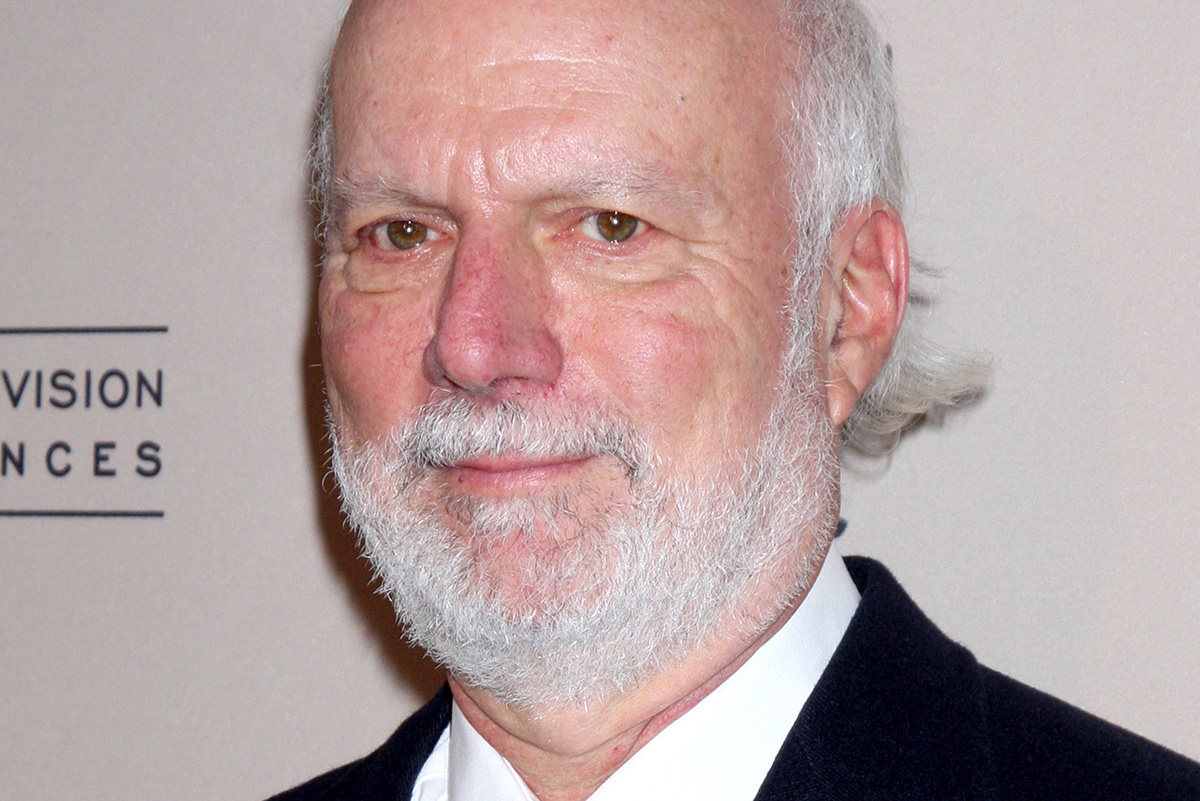
You don’t have to be a pretentious film major to name 10 movie directors. But naming television directors is not that simple. They’re the unsung heroes of your favorite shows, and the late James Burrows was the television director. He passed on June 19, but his DNA runs through television history.
He directed over 1200 episodes of television and over 50 pilots. He co-created “Cheers” and directed many episodes of long-running series like “Friends,” “Taxi,” “Frasier,” “The Big Bang Theory,” and “Two and a Half Men.” You also may remember him from playing a heightened version of himself on the Lisa Kudrow comedy “The Comeback.”
He has left an indelible mark on the LGBTQ community. As recently as last year, he directed the series run of “Mid-Century Modern” starring Nathan Lane, Matt Bomer, and Linda Lavin. He was also a longtime director of “Will & Grace” and directed every episode of the series revival. He even directed the unaired “Absolutely Fabulous” pilot with Kathryn Hahn, Kristen Johnston, and Zosia Mamet.
Not to mention he’s worked with queer icons throughout history, including Betty White and Stockard Channing on their single-season series, and Jennifer Coolidge in “2 Broke Girls.”
He started his career on shows like “The Mary Tyler Moore Show,” “Rhoda,” “Laverne & Shirley,” and the first four seasons of “Taxi.”
He continued to work steadily and directed successful pilots that went to series for “Roc,” “3rd Rock From the Sun,” “Dharma & Greg,” and “Wings.” He directed multiple episodes of “Friends,” “Caroline in the City,” and “Frasier.”
This magic continued into the 2000s with him directing the pilots for “Two and a Half Men,” “The Big Bang Theory,” and multiple episodes of “Mike & Molly,” and the entire return series of “Will & Grace.”
What was the secret to his success? He’d enact the “fun clause” in his contract. In his words, “Life is too short to deal with obnoxious leads,” he shared. “So as long as the writing is good and the cast is fun, I’m going to enjoy the experience.”
He had the magic touch, having multiple pilots turned into long-running series. He was nominated for an Emmy 24 times in 26 years and worked consistently until a year before his death.
The secret was the way he brought the cast together. He describes, “it was my job to mold them into an ensemble, and they did round into a group of people who loved each other.”
This earned him 11 Emmy Awards and five Directors Guild of America Awards, including being awarded the inaugural DGA’s Lifetime Achievement Award for Television Direction.
In a 2003 interview by the Television Academy, he was asked how he wants to be remembered, and he said, “That every night forever you can tune in somewhere, and there’ll be a show I did.”
He’s survived by his wife, Debbie, four daughters, seven grandchildren, and the countless people whose careers he launched and the countless viewers he inspired with his television legacy.

Authorities investigate officer-involved shooting outside Asheville gay bar

Popular Mount Vernon gay bar Leon’s to temporarily close after owner’s death

30 years on, ‘The Birdcage’ remains a landmark

Comings & Goings

Whitman-Walker to host legal services workshop

Democrats are trying to disqualify trans candidates. Here’s how

Political drama in Angie Craig’s Minn. Senate race heats up

Aparna Raj expected to become second LGBTQ member of D.C. Council

Suzanne Goode wants efficient spending, better infrastructure for Rehoboth

Mexico’s first openly gay mayor killed
-

 National5 days ago
Democrats are trying to disqualify trans candidates. Here’s how
-
Congress5 days ago
Political drama in Angie Craig’s Minn. Senate race heats up
-
District of Columbia5 days ago
Aparna Raj expected to become second LGBTQ member of D.C. Council
-
Rehoboth Beach5 days ago
Suzanne Goode wants efficient spending, better infrastructure for Rehoboth