National
HISTORIC: Senate approves ‘Don’t Ask’ repeal
Congress wraps up legislative action on ending gay ban
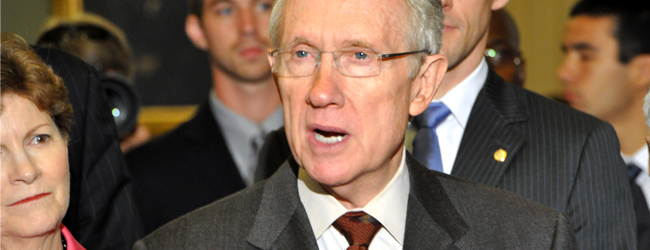
Sen. Harry Reid, along with other Democrats, voted for cloture on “Don’t Ask, Don’t Tell” legislation (Blade photo by Michael Key).
In a historic action, the U.S. Senate on Saturday passed legislation that would end the 17-year-old law prohibiting open gays from serving in the U.S. military.
Early in the day, the Senate voted 63-33 to invoke cloture on the legislation that would end “Don’t Ask, Don’t Tell” to move it to the floor. Later in the afternoon, the chamer approved the legislation by a vote of 65-31, effectively sending the measure to President Obama’s desk.
Clearing the 60-vote threshold needed to invoke cloture was the last significant hurdle for the bill on its path to passage and enactment into law.
For the cloture vote, six Republicans voted in the affirmative. They include Sen. Susan Collins (R-Maine), an original co-sponsor of the bill, as well as Sens. Olympia Snowe (R-Maine), Scott Brown (R-Mass) and Lisa Murkowski (R-Alaska). Each had indicated prior to the vote that they support the bill when it came to the floor.
Additional GOP support for the legislation came from Sens. Mark Kirk (R-Ill.) and George Voinovich (R-Ohio). Three Republicans didn’t vote: Sens. Jim Bunning (R-Ky.), Judd Gregg (R-N.H.) and Orrin Hatch (R-Utah).
Following the cloture vote, Voinovich told reporters he voted in the affirmative because he believes the U.S. military should accept Americans who are qualified to serve.
“If people are not qualified to be in service because of their sexual orientation, then we ought to say, ‘You can’t get in,'” he said. “But if we know that they are qualified, then we ought not to have them lying [about] who they are [under] ‘Don’t Ask, Don’t Tell.’ It just is inconsistent with common sense.”
Sen. Joseph Lieberman (I-Conn.), the sponsor of the repeal legislation, told the Washington Blade following the vote that he wasn’t suprised by Kirk or Voinovich’s votes because they privately assured him they would vote in the affirmative earlier in the week.
“For their own reasons, they didn’t want to announce it, but they were true to their word — God bless them,” Lieberman said. “So, six Republicans was great.”
Lieberman praised the bipartisan nature with which the Senate passed “Don’t Ask, Don’t Tell” in a conversation with reporters following the vote.
“There’s been a lot of difficult times in the last couple years because it’s so partisan to get anything done.,” Lieberman said. “Here we are coming together — and it was bipartisan. We wouldn’t have done it without the Republicans and we got something really good passed, so I feel good about it.”
For the vote for final passage, two Republicans switched their “no” votes on cloture to “yes”: Sens. Richard Burr (R-N.C.) and John Ensign (R-Nev.).
On the Democratic side, all members who were present voted in favor of cloture and final passage, but Sen. Joe Manchin (D-W.Va.) didn’t vote at either time.
Earlier this month, Manchin voted against the motion to proceed on major defense legislation containing “Don’t Ask, Don’t Tell” repeal language. His office didn’t immediately respond to Blade’s request to comment on why he was absent.
Gay rights supporters were concerned that Sen. Kent Conrad (D-N.D.) would vote “no,” but he voted in the affirmative both for cloture and final passage along with nearly all of his Democratic colleagues.
The Senate invoked cloture to proceed with the “Don’t Ask, Don’t Tell” legislation after a vote failed on moving forward with the DREAM Act, an immigration-related bill, 55-41.
Joe Solmonese, president of the Human Rights Campaign, said the cloture vote shows that Congress has “recognized that all men and women have the right to openly serve their country.”
Solmonese also noted that the Senate was able to move “Don’t Ask, Don’t Tell” legislation past its most significant hurdle after many observers believed efforts to pass repeal this year were dead.
“Plenty of people had already planned the funeral for this legislation,” Solmonese said. “Today, we pulled out a victory from what was almost certain defeat just a few days ago.”
Alex Nicholson, executive director of Servicemembers United, called the vote a “historic step forward for this country” and said it “will very likely be a life-changing moment for gay and lesbian troops.”
“While we still have a long road ahead, including a final passage vote, the certification process, and a yet-to-be-determined implementation period, those who defend our freedom while living in fear for their careers will finally breathe a sigh of relief tonight, and those who have fallen victim to this policy in years past will finally begin to see true closure and redemption on the horizon,” Nicholson said.
The U.S. House earlier this week approved identical legislation, so when the Senate votes to approve final passage of the bill, the bill will head to President Obama’s desk.
Following the cloture vote, Lt. Col Victor Fehrenbach, an Air Force pilot who’s facing discharge under “Don’t Ask, Don’t Tell,” told the Washington Blade he was “overwhelmed” that the Senate finally took action to end the military’s gay ban.
“I didn’t think it was going to happen to be honest with you — at least not for a few years,” Fehrenbach said. “As soon as I heard my senator vote — Sen. Voinovich — I knew that we were over the 61 mark and I was pretty emotional over a while there.”
Fehrenbach said he felt “overwhelming happiness” not just for himself but for the estimated 66,000 other gay people serving in the armed forces.
“I’ll still be in limbo, but I know now that I’ll be able to retire in October, so it’s a great feeling to know that this is coming to end — that there is a light at the end of the tunnel,” he said.
In a statement White House Press Secretary Robert Gates confirmed Obama intends to sign the legislation passed by the Senate into law.
“As the president has long said, ending ‘Don’t Ask, Don’t Tell,’ and allowing gay men and women to serve openly in the military, will strengthen our national security while upholding the basic equality on which this nation was founded,” Gibbs said. “The president looks forward to signing the bill into law.”
Gates called on to stop discharges
Now that legislative action on “Don’t Ask, Don’t Tell” is complete, increased attention is being placed on the Obama administration to issue an executive order barring further discharges until repeal is implemented.
Aubrey Sarvis, executive director of the Servicemembers Legal Defense Network, renewed his call for such an order during a news conference after the Senate invoked cloture on the legislation.
“During this limbo interim period, I respectfully call upon the secretary of defense — Secretary Gates — to use his existing authority to suspend all investigations and all discharges until the law is finally repealed,” Sarvis said.
The SLDN head said such a move is necessary from the Obama administration because the legislation still has to make its way to the Obama desk, the president and Pentagon leaders have to certify that repeal can happen and a 60-day waiting process has to take place.
Gay advocates — including Human Rights Campaign President Joe Solmonese — have been calling on President Obama to issue an order stopping discharges since the start of his administration.
At the news conference, Senate Majority Leader Harry Reid (D-Nev.) said he supports the idea of Gates issues an order to suspend discharges as the repeal legislation heads to the president’s desk.
Senate Armed Services Committtee Chair Carl Levin (D-Mich.) also told reporters following the conference he favors such a move from Gates.
In a statement, Defense Secretary Robert Gates said he wouldn’t issue such an order until he can certify that the U.S. military is ready for repeal.
“It is therefore important that our men and women in uniform understand that while today’s historic vote means that this policy will change, the implementation and certification process will take an additional period of time,” Gates said. “In the meantime, the current law and policy will remain in effect.”
A White House spokesperson didn’t respond on short notice to comment on the matter.
In October, Gates issued new guidance limiting the discharge authority for “Don’t Ask, Don’t Tell” to the militaries service secretaries in cooperation with the Pentagon’s general counsel and the under secretary of defense for personnel and readiness. According to the Associated Press, since that time, no discharges have taken place under the law.
Senators debate gay ban
Prior to the votes, senators on the floor spoke out passionately both in favor and against repeal of “Don’t Ask, Don’t Tell.”
Opponents of repeal said the timing wasn’t right for Congress to act on ending the law as the U.S. military engaged in operations overseas, while those advocating for an end to “Don’t Ask, Don’t Tell” said all able bodies — including gay service members — were needed to confront these threats.
Levin disputed the assertions of those who would call supporting “Don’t Ask, Don’t Tell” repeal a partisan vote and noted polls showing an “overwhelming majority” supports ending the law.
“I’m not here for partisan reasons,” Levin said. “I’m here because men and women wearing the uniform of the United States who are gay and lesbian have died for this country, because gay and lesbian men and women wearing the uniform of this country have their lives on the line right now in Afghanistan and Iraq and other places for this country.”
Levin also noted that a provision in the legislation mandates that repeal won’t take effect until the president, defense secretary and the chair of the Joint Chiefs of Staff certify the U.S. military is ready for repeal.
“Secretary Gates has assured everybody that he is not going to certify that the military is ready for repeal until he is satisfied with the advice of the service chiefs that we had, in fact, mitigated, if not eliminated to the extent possible, risks to combat readiness to unit cohesion and effectiveness,” Levin said.
But Sen. John McCain (R-Ariz.) said while repeal of “Don’t Ask, Don’t Tell” may lead to “high-fives all over the liberal bastions of America,” an end of the statute would threaten military recruitment and battle effectiveness.
“We are doing great damage, and could possibly, and probably — as the commandant of the Marine Corps said, and I’ve been told literally thousands of members of the military — harm the battle effectiveness, which is so vital to the support, to the survival of our young men and women in the military,” McCain said.
Sen. Lindsey Graham (R-S.C.), an opponent of repeal, invoked Marine Corps Commandant Gen. James Amos suggestion earlier this week that “Don’t Ask, Don’t Tell” repeal could be a “distraction” that would lead to the loss of Marines’ lives on the battlefield.
“Some will say this is a civil rights issue of time,” Graham said. “The day has come. We need to move forward as a nation. The Marine Corps does not have that view.”
Graham railed against the decision of Senate leadership to prohibit senators from offering any amendments to the legislation.
“To those senators who will take the floor today and announce this as a major advancement of civil rights in America, please let it be said that you’re doing it in a fashion that those who have a different view cannot offer one amendment,” Graham said. “Does that matter? Apparently not.”
Reid had “filled the tree” prior to the vote to prohibit any senators from offering amendments to the legislation. Amending the bill would have sent the bill back to the House and could have killed the measure.


National
Blade reporters reflect on covering Pulse massacre 10 years ago
Orlando stepped up to comfort and support its LGBTQ community
Friday marks 10 years since a gunman killed 49 people inside the Pulse nightclub in Orlando, Fla.
The massacre, which, at the time was the deadliest mass shooting in modern U.S. history, left the LGBTQ community in this country and around the world reeling. It also prompted renewed calls for gun control.
The OnePulse Foundation, which Pulse owner Barbara Poma founded after the massacre, raised upwards of $20 million for a memorial that never materialized.
The city of Orlando in 2023 purchased the Pulse property for $2 million. Crews earlier this year demolished the former nightclub. The city of Orlando has pledged $12 million for a permanent memorial that is scheduled to open in 2027.
Washington Blade Editor Kevin Naff and International News Editor Michael K. Lavers reported from Orlando in the days after the massacre. Here are their reflections a decade later.
Describe the scene when you arrived in Orlando. Where did you go first?
NAFF: Most mainstream reporters headed for the Pulse nightclub, but it was already roped off with police keeping bystanders at least a full city block away. Instead, I hurried to The Center, Orlando’s LGBTQ community center, downtown. I expected to find it locked down with tight security but instead the doors were flung open and everyone inside was busy at work. No tears, just dedicated staff and volunteers working the phones to secure visas and free plane tickets for relatives of the victims. The director gave me a tour and in the back storage room were pallets and pallets of bottled water stacked to the ceiling. When I asked what all the water was for, he said the city had issued a call for blood donations and the lines to donate were 1,500 deep in 100-degree heat. So The Center drove around to all the sites to deliver water to all those standing in line.
That scene was so inspiring and a testament to the strength and resiliency of the LGBTQ community. We’d seen tragedy before and knew how to respond.
LAVERS: I arrived in Orlando about 14 hours after the massacre took place. The city was shellshocked.

Equality Florida, the state’s LGBTQ advocacy group, and other organizations held a press conference at The Center shortly after my flight from D.C. landed. I drove there from the airport. Terry DeCarlo, who was The Center’s executive director at the time, along with then-Equality Florida Executive Director Nadine Smith and others spoke on behalf of a community that was reeling. The Center at the press conference handed out business cards that read, “You matter.” I had it in my wallet when I drove to a makeshift memorial that was a block from Pulse — the police had cordoned off the area immediately around the nightclub. A local resident who I interviewed told me that she did not know if her friends who were at Pulse when the gunman opened fire survived. Another person with whom I spoke shared a similar story.
A torrential downpour began shortly after I arrived. The storm was an apt metaphor for the raw emotion of that horrific day.
What’s your most prominent memory of covering the Pulse massacre?
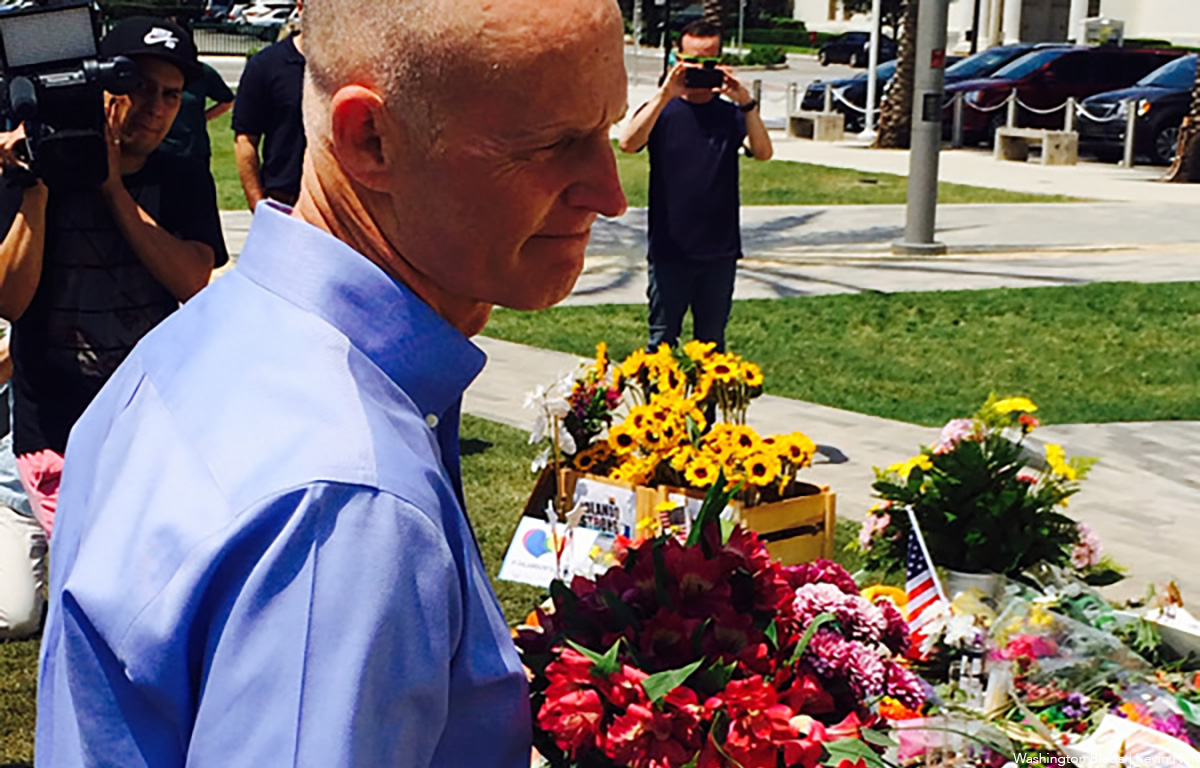
NAFF: I was covering a vigil in downtown Orlando when then-Florida Gov. Rick Scott’s motorcade arrived unannounced. To that point, he had not addressed the LGBTQ angle and seemed to be downplaying the fact that this was an attack on our community. I hurried to the front row as he held an impromptu news conference. To my dismay, he took only three short questions from TV reporters then rushed away. I grabbed his communications director and insisted that Scott take a question from the LGBTQ media. She agreed and told me to wait next to the SUV. When Scott approached, I asked him, “What is your message to LGBTQ Floridians?”
To my surprise, he sputtered, stammered, and broke into tears before telling me, “This was an attack, what else can you say? This was an attack against the gays, an attack against Hispanics, an attack against our country, our nation and it’s disgusting. The biggest thing we do now is ask how to make sure this doesn’t happen again.”
It was his first public acknowledgment that the LGBTQ community was the target of the attack.
LAVERS: Two moments stand out for me.
The first moment is when then-President Barack Obama and then-Vice President Joe Biden traveled to Orlando on June 16, four days after the massacre. I was one of the reporters who the White House asked to be part of the local press pool. I was about 50 feet away from Obama and Biden when they placed bouquets with 49 flowers — one for each of the victims — at a makeshift memorial between City Hall and the Dr. Phillips Center for the Performing Arts in downtown Orlando. Obama in remarks he made to the press pool mentioned one of the gay victims who had once said, “We cannot be afraid.” The emotions of the last four days simply became too much, and I broke down. Another reporter who was part of the press pool who was standing next to me realized I had broken down. She put her hand on my back to console me.
The second moment came a few weeks later when I was in Puerto Rico to cover the community’s response to the massacre and to interview victims’ relatives. Orlando has a very large Puerto Rican community, and nearly half of those who died at Pulse were of Puerto Rican descent.
I drove to Caguas, a city that is roughly 20 miles south of San Juan, the island’s capital, on July 7, and interviewed Aida Velázquez in her small apartment. Her son, Frankie “Jimmy” de Jesús, died at Pulse. Aida talked about her son, and she showed me pictures of him. Jimmy also danced Jíbaro, a Puerto Rican folk dance. The interview took place less than a month after the massacre — Jimmy’s funeral took place in Caguas less than two weeks earlier.
I sat in my car after the interview and sobbed uncontrollably for nearly five minutes. Nothing can possibly prepare you for interviewing a mother who had just lost her child in the most horrific way possible.
How did the local community respond and what about their response gave you hope or inspiration?
NAFF: In addition to the staff at The Center working to assist victims and their families, everyday Orlando residents stepped up to help however they could. At the downtown vigils, straight mothers and fathers carried signs offering hugs to anyone who needed them. I encountered a group of young teenage males who approached a group of law enforcement officers and appeared to perform for them. When they finished, I asked what they were doing and they told me that they were straight friends who lived in Orlando and wanted to do something to help so they composed an uplifting rap song and walked around performing it for anyone who needed cheering up.
LAVERS: The way that Orlando rallied around the LGBTQ community was simply inspiring.
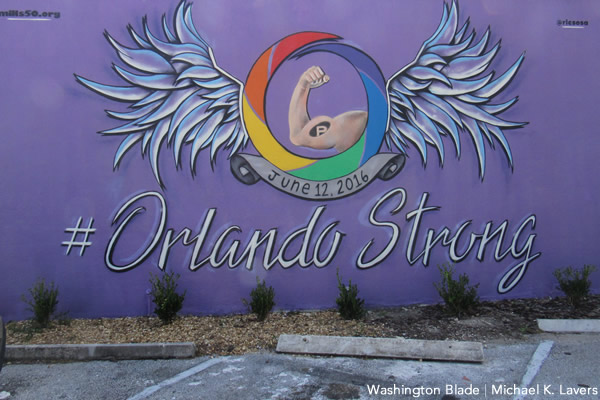
Imam Muhammad Musri, president of the Islamic Society of Central Florida, at a memorial service that took place at the Dr. Phillips Performing Arts Center on June 13 said his organization was “united as Americans when it comes to standing with the LGBT community and their rights to live freely and to practice their lives here.” This comment underscored the outpouring of support that Orlando showed its LGBTQ community after Pulse. It was also a call for the better angels among us to reject hate in all of its forms.
What surprised you most about the experience?
NAFF: I was most surprised — and moved — after talking to Rev. Debreita Taylor of Oasis Fellowship Ministries, an LGBTQ-affirming ministry.
“My message is love. Period. Love. Period. There’s nothing in the word of God that faith leaders can go to that teaches hate,” she told me. “Have faith and believe that evil and hate can be eradicated one person at a time. How do you treat someone? How do you embrace someone who treats you wrong? We all bleed, laugh, hope and have great victories and major defeats. And so, you know me, even if you don’t know my name — I’m you.”
LAVERS: It admittedly took me quite a while to fully process what I experienced in Orlando — I was focused on doing my job as a reporter, which was to cover the story, and, most importantly, show the human impact of what had happened. I suppose one surprising aspect of the time I spent in Orlando was that I found myself feeling more defiant against those who seek to destroy our community. They want us to live in fear, and I refuse to give them that satisfaction.
What, if anything, changed as a result of Pulse?

NAFF: In the immediate aftermath of the attack, queer spaces began rethinking their approach to security, which has served us well in the years since. Sadly, just a year later, Pulse was bumped to the No. 2 deadliest mass shooting in U.S. history when a gunman opened fire on the Route 91 Harvest music festival in Las Vegas, killing 60 people. Americans and their politicians never learn from these largely preventable tragedies. The carnage continues.
LAVERS: Gun violence remains a shameful scourge in this country. Our community remains vulnerable to violence and discrimination. President Donald Trump, Vice President JD Vance, and other politicians here in Washington, around the country, and overseas continue to use our community to advance an anti-equality agenda. The carnage continues, as my colleague correctly notes, but our community remains strong and defiant. That gives me hope.
National
Queen Jean is Tony’s first transgender winner
Designer/activist wins for work on ‘Cats: The Jellicle Ball’
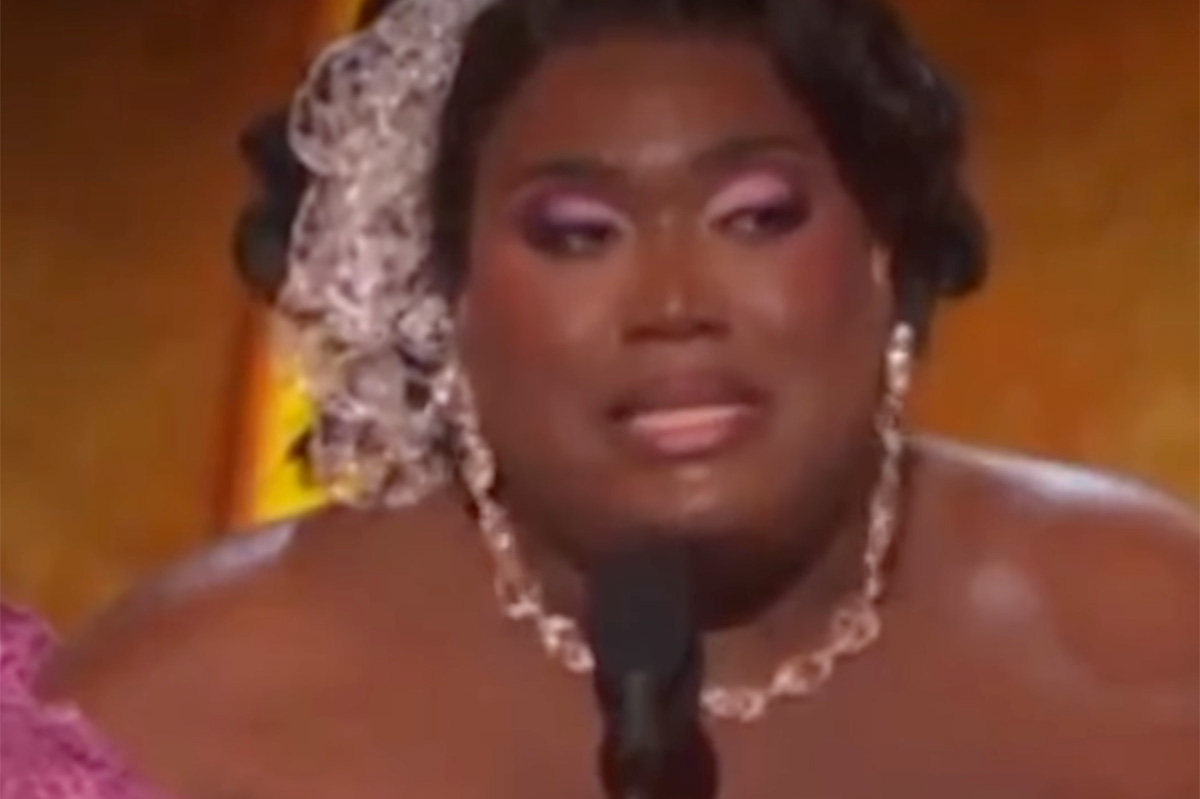
It was a historic night at the 79th annual Tony Awards on Sunday as Queen Jean won the award for Best Costume Design of a Musical, making her the first out transgender person to win a Tony.
“This experience has been monumental. We are here for the legacy of queer people, trans people,” she said. “We are taking up space in ways we have to take up space. We have to shift the paradigm. So I just want to say, thank you all so much for this incredible honor. The world right now is deeply, deeply combating so many ailments, and we know as a society that when we come together, we can make real, permanent change.”
She won the award for her work on “Cats: The Jellicle Ball” and was also nominated for best costume design of a play for “Liberation.”
In addition to her stage work, Queen Jean is the founder of Black Trans Liberation, an organization that supports trans and gender-nonconforming people in New York City.
National
Madonna turns Times Square into massive dance floor
Pop icon celebrates Pride month with surprise performance

Pop icon Madonna celebrated Pride month with a pop-up performance in New York City’s Times Square on Thursday to the delight of 50,000 fans.
She performed for about 15 minutes high above street level, including several songs from her new album “Confessions II” due on July 3, along with a trio of songs from the first “Confessions on a Dance Floor.”
In addition to the brand new “Love Sensation,” she performed “I Feel So Free” and “Bring Your Love,” plus “Hung Up,” “Get Together” and “I Love New York.” She wished the crowd a happy Pride season; the event was shared with audiences through Grindr’s first-ever livestream.



Gay 1920s-era Hollywood star to be honored in Staunton, Va.

Why I’m supporting Gary Goodweather for D.C. mayor

Don’t just vote for change — vote for Hope Solomon for mayor

Vote Kenyan McDuffie for D.C. mayor

Your queer D.C. voting guide

Timothy Nelson on the premiere of his opera ‘Song of Sakuntala’

Controversial ‘Blue Film’ pushes past taboos for gripping drama

PHOTOS: ‘Soul Divas’

‘Mighty Real’ explores history of LGBTQ music