National
Obama still evolving on marriage
President refers to married gay couples in HRC speech

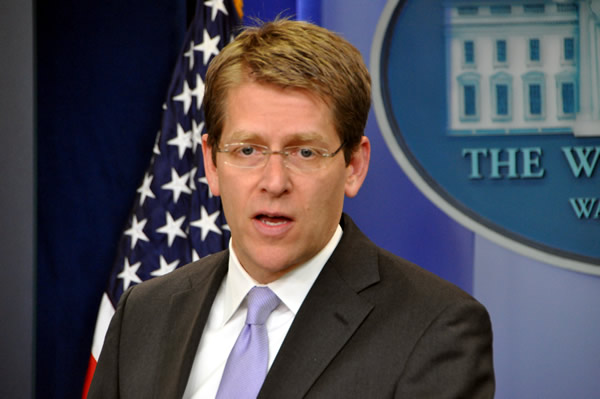
White House Press Secretary Jay Carney (Blade file photo by Michael Key)
White House Press Secretary Jay Carney said Monday that President Obama continues to evolve on same-sex marriage.
Under questioning from the Washington Blade, Carney confirmed Obama remains in a state of evolution on the issue after he first said his views could change on the issue in October 2010.
“I don’t have an update for you on his position,” Carney said. “The remarks he made last year stand and I just don’t have anything new to add to that.”
Asked when this evolution might conclude, Carney repeated he doesn’t have “anything new.”
Obama first suggested his views on the issue could evolve in October 2010 during an interview with AMERICAblog’s Joe Sudbay. Some advocates have been pushing him to complete this evolution and publicly endorse same-sex marriage.
In 1996, Obama, during his bid to become an Illinois state senator, said in a questionnaire response to the Windy City Times, “I favor legalizing same-sex marriages, and would fight efforts to prohibit such marriages.”
On Saturday, questions emerged over whether Obama had come to support marriage equality when he gave the keynote speech at the 15th annual Human Rights Campaign National Dinner. The president made references to the enactment of same-sex marriage rights in New York as well as to the spouses of gay Americans without making an explicit endorsement of marriage equality.
At one point, when talking about progress, Obama said, “It happens when a father realizes he doesn’t just love her daughter, but also her wife.”
Carney dismissed any interpretation of those remarks as a hint that Obama now supports same-sex marriage.
“I would say that you’re over-interpreting remarks,” Carney said. “The president’s position on gay marriage is well known. The comments he made late last year about his views on it are well known, and I have no updates for you. I wouldn’t read into language there any change.”
Asked whether Obama’s comments referring to married gay couples at the dinner were disingenuous, Carney replied, “I think this president’s record on LGBT issues, his commitment to the rights of all Americans was evident on Saturday night both in his remarks and the response he got from the audience there, so I’ll leave it at that.”
Later on Monday, President Obama confirmed in an interview with ABC News’ George Stephanopoulos that he’s “still working” on his views on same-sex marriage.
According to the Associated Press, Obama said gay couples should at a minimum have strong civil unions, but he stopped short of backing marriage equality. Obama was quoted as saying friends, family and children of same-sex couples whom he knows who are thriving are influencing his evolving views.
A brief transcript of the exchange between the Blade and Carney follows:
Washington Blade: Jay, I’d like some clarification on some things the president said on Saturday during a speech before an LGBT audience at the Human Rights Campaign dinner.
When he was talking about the American Jobs Act, the president said, “You’re also folks who are worried about the economy and whether or not your partner or husband or wife will be able to find a job.” Later on, when talking about progress, he said, “It happens when a father realizes he doesn’t just love her daughter, but also her wife.”
Should I interpret those remarks to mean the president now supports same-sex marriage?
Jay Carney: I would say that you’re over-interpreting remarks. I would just leave it to you to analyze. The president’s position on gay marriage is well known. The comments he made late last year about his views on it are well known, and I have no updates for you. I wouldn’t read into language there any change.
Blade: But isn’t it disingenuous for the president to speak reverentially about these people’s spouses when he doesn’t support same-sex marriage?
Carney: Again, I’ll let the president address that question. I think this president’s record on LGBT issues, his commitment to the rights of all Americans was evident on Saturday night both in his remarks and the response he got from the audience there, so I’ll leave it at that.
Blade: We’re approaching the one-year anniversary when the president first said he could evolve on same-sex marriage. He said that late in October 2010 in an interview with progressive bloggers. Has that evolution been shelved or is it still on the table?
Carney: Again, I think I just answered that question. I don’t have an update for you on his position. The remarks he made last year stand and I just don’t have anything new to add to that.
Blade: But when will the evolution come to an end?
Carney: Again, I don’t have anything new to add to that.
Watch the video here (via Think Progress):
http://www.youtube.com/watch?v=MZXjWVdotl8&feature=player_embedded



National
ACLU says trans athletes ruling is narrower than many believe
‘Narrow decision focused on the unique context of sports’
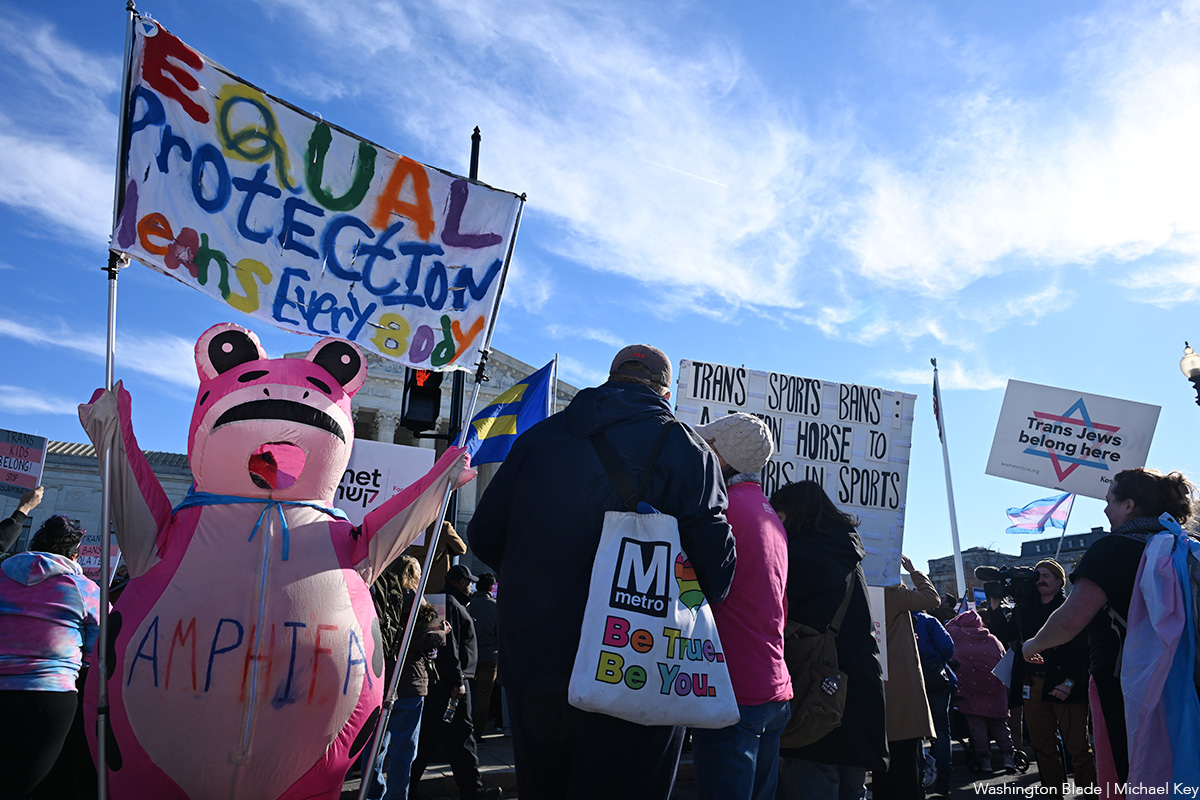
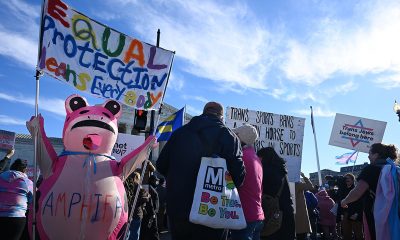
The Supreme Court’s decision Tuesday to uphold state laws barring transgender girls from competing on girls’ school sports teams represents a setback for transgender rights, but attorneys who argued the case say the ruling is considerably narrower than many initial reactions suggested.
Shortly after the decision was released, attorneys with the American Civil Liberties Union — which represented the plaintiffs in the case — held a press call to explain what they described as the limited scope of the Court’s opinion. While the ruling allows states to exclude transgender girls from girls’ school sports teams, they said it stops well short of creating a nationwide ban or dismantling broader legal protections for transgender people.
Joshua Block, senior counsel with the ACLU’s LGBTQ & HIV Project, said the majority intentionally confined its analysis to school athletics.
“[The majority] issued a narrow decision focused specifically on the unique context of sports. It didn’t issue a broader decision saying that Title IX in general didn’t protect transgender students. It didn’t say that other states couldn’t make a different policy choice and allow transgender girls to participate with cisgender girls, and it didn’t issue a sweeping ruling saying that under the Constitution it’s perfectly fine to discriminate based on transgender status.”
Block said one of the opinion’s most significant takeaways is that it leaves decisions about transgender participation in school sports largely in the hands of states.
“It leaves the rest of the legal rights of transgender people where the court found them.”
He stressed that the ruling authorizes states to adopt restrictions but does not require them to do so.
“It’s very important to emphasize that this isn’t a national mandate to ban trans athletes everywhere. It’s a fight that’s going to continue state by state, school by school … it really says that a state may discriminate, not that they must discriminate. States, schools, and athletic associations should be taking every step to ensure that athletic opportunities exist for transgender girls.”
Beyond athletics, Block said the opinion’s most important legal consequence may lie in its treatment of the Equal Protection Clause.
“What the court said is that even applying that heightened standard, we’re going to establish what’s effectively a new rule of the Equal Protection Clause, saying that you can’t bring this sort of as-applied challenge to a law that is valid for most people.”
Even so, he argued that the Court repeatedly framed transgender participation in sports as a policy issue for state governments rather than a constitutional mandate.
“Over and over and over again it talks about how states may exclude transgender girls, not that they must, and over and over and over again it says that this is a policy question that should be decided by the people in their different communities and their representatives.”
Block also rejected the idea that the ruling endorses the Trump administration’s broader efforts to restrict transgender rights.
“I have no doubt that the Trump administration will try to declare victory and say that this decision supports the lawless policies they’re pursuing, but I think anyone reading the decision can see otherwise.”
The White House nonetheless celebrated the decision, calling it a victory that would “protect women and girls.”
“The Court’s decision is a landmark victory for common sense, biological reality, and for the millions of women and girls who deserve a level playing field. By upholding laws protecting female athletic competition, the Court confirmed that states may preserve the fairness, safety, and equal opportunities that Title IX was enacted to guarantee.”
Medical researchers and LGBTQ advocates dispute the administration’s characterization of the evidence. A 2021 study published in the Journal of Sports Medicine found no scientific evidence for supporting these laws that categorically ban transgender women from participating in women’s sports.
Critics have also argued that enforcement of such laws could create new risks for athletes. Researchers have warned that sex-verification requirements may expose students to invasive examinations and discrimination.
A 2016 USA Today investigation found that at least 368 young gymnasts reported experiencing sexual abuse over a 20-year period. More than 100 coaches and gymnastics officials were accused of abuse, yet USA Gymnastics failed to track predatory coaches, allowing many to continue working with children. LGBTQ advocates argue that requiring athletes to undergo genital inspections or other forms of sex verification could place young athletes at even greater risk.
Advocacy organizations said the decision, while limited legally, will have significant real-world consequences for transgender youth.
Chris Mosier, a transgender athlete and board member of Point of Pride, said the ruling extends beyond sports.
“The Supreme Court’s decision today isn’t driven by fairness or dignity in sports. It’s an attack on our community’s right to live freely and authentically in every part of our lives. Young people, regardless of whether they’re cis or trans, deserve the joy of sports: to build friendships, to move their bodies and have fun on the field. To every trans athlete out there: you have a community standing behind you. No politician or law can take away your joy or power. We will get through this as our community has always done: together.”
Brian K. Bond, CEO of PFLAG National, emphasized that states remain free to adopt inclusive policies despite the Court’s decision.
“The Court rules best when it listens to the needs of marginalized people: trans people belong, on and off the field. While we celebrate the Court’s decision to uphold the Fourteenth Amendment and affirm that every person born in the United States is a citizen, the Court today added an asterisk to allow discrimination against transgender student athletes. Our country has been here before, and frankly, you would think this Court would have learned.”
“For PFLAG families, today’s decision in BPJ means that transgender athletes can continue to be affirmed for who they are in places where the law allows – and invigorates our LGBTQ+ and allied community to expand those protections. The parents, families, allies and LGBTQ+ people of PFLAG will continue to advocate for our trans loved ones to have the freedom to be themselves, everywhere. Trans people belong, and deserve to have access to the benefits of sport like everyone else.”
Allen Morris, policy director at the National LGBTQ Task Force, called the decision “devastating” but noted that it does not establish a nationwide sports ban.
“Today’s decision is devastating and the impact to clear. While this is not a nationwide ban on transgender participation in sports, the Court has given states a legal pathway to attempt to discriminate against trans individuals from full participation in school sports and all aspects of life.”
“This ruling is not just about sports: it’s about valuing and protecting the safety, security and constitutional rights of transgender people. By allowing states to draw a categorical line based on “biological sex,” the majority has chosen deference to exclusion and political beliefs over transgender students’ lived realities. There is already a dangerous rise in state-based violence growing across the country, and we’re overcoming this issue at each turn.”
Melanie Willingham-Jaggers, CEO of GLSEN, said the decision sends a broader message about transgender students’ place in schools.
“We are deeply disappointed by the outcome of this decision. This ruling represents another significant setback for transgender youth across the country, limiting their ability to fully engage in school life. Exclusion from these spaces shapes not only athletic access, but the broader message about who should be valued and included in our schools and societal ecosystem.”
“School sports are much more than competition. They are about belonging, forming a community, and the opportunity to grow and thrive alongside peers. Preventing youth from taking part in everyday activities undermines these fundamental values. We continue to see efforts to regulate discrimination under the guise of fairness, despite the lack of evidence that inclusive policies harm women’s sports. Access to these experiences is critical to students’ well-being and development.”
Massachusetts
EXCLUSIVE: Pressley rips State Department over LGBTQ rights rollbacks abroad
Massachusetts Democrat sent letter to Marco Rubio on Tuesday
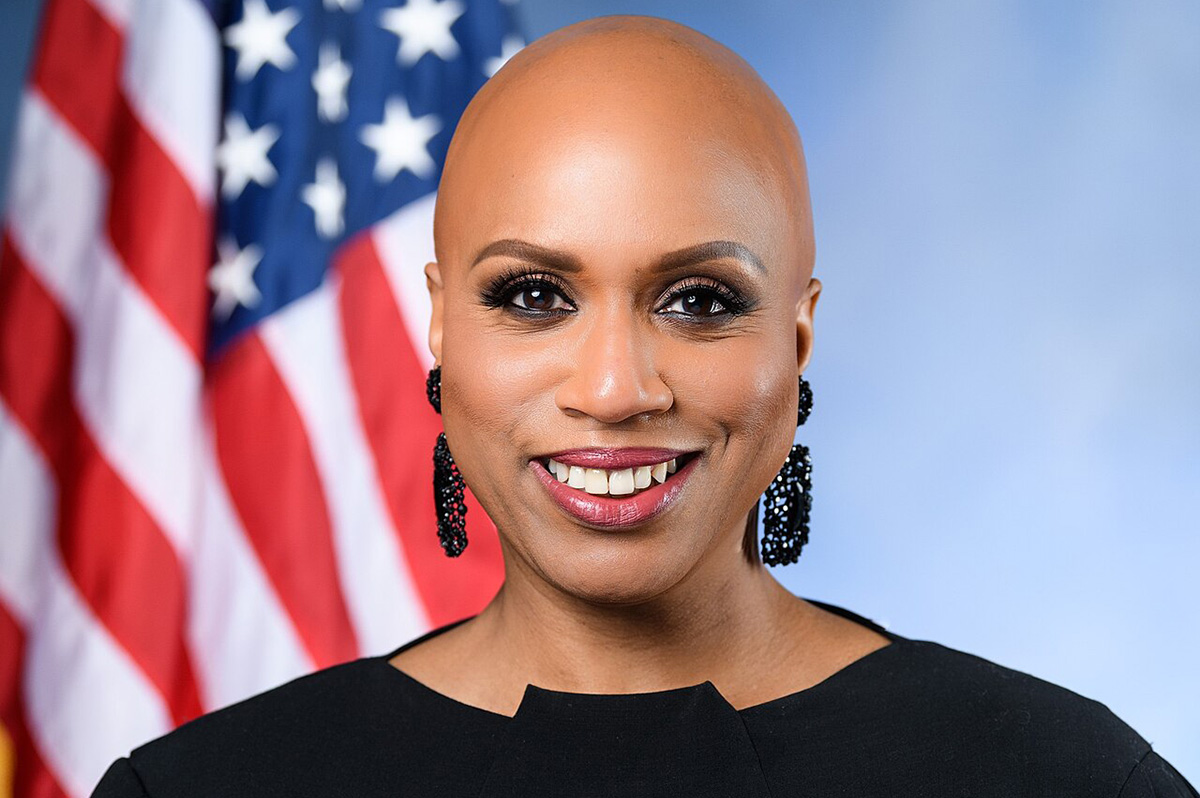
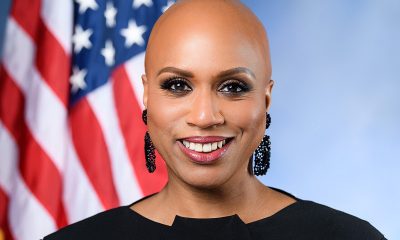
Massachusetts Congresswoman Ayanna Pressley sent a letter to Secretary of State Marco Rubio urging the Trump-Vance administration to take urgent action to defend LGBTQ people across the globe, including in countries that are violating international human rights protections for LGBTQ individuals, putting at risk the safety of civilians and U.S. citizens working, living, and traveling abroad.
The letter, which the Washington Blade got an exclusive preview of prior to its sending, criticizes the Trump-Vance administration’s foreign policy direction at the State Department, arguing that it has moved to roll back LGBTQ protections that have long been part of the U.S.’s global human rights posture.
“Criminalizing LGBTQI+ individuals undermines democracy globally, as well as U.S. national security. Thus, we urge the State Department to take adequate measures to speak out against this criminalization and protect U.S. citizens abroad, including your staff, who may be detained or harmed under such laws, policies, and practices,” Pressley, a Democrat who represents roughly three-fourths of Boston and much of the city’s suburbs, said. “U.S. civilians, diplomatic personnel, military members, and nonprofit workers on the ground providing health care and disaster support will be affected and have their safety threatened if the U.S. does not take action. Even U.S. citizens perceived as being part of the LGBTQI+ community and traveling or living in those countries may be used as bargaining chips. This is a serious U.S. national security concern.”
In the letter, Pressley underscores what she describes as a global escalation in criminalization and violence against LGBTQ people, noting that one-third of countries still criminalize consensual same-sex sexual relationships and that 12 countries impose the death penalty. She argues that these conditions make LGBTQ travelers, diplomats, and aid workers particularly vulnerable, and calls on the State Department to reassert U.S. leadership in defending human rights abroad.
“Every person deserves to live authentically, yet several countries are violating international human rights laws that protect LGBTQI+ individuals,” she said. “One-third of countries around the world criminalize same-sex consensual acts between adults, and 12 countries allow LGBTQI+ people to be executed for being themselves.”
She also invokes the role the U.S. has played in promoting democratic values internationally, arguing that LGBTQ rights should remain central to that mission.
“Historically, the United States has played a critical diplomatic role in promoting democracy and freedom for all individuals, including LGBTQI+ persons. The U.S. should be a world leader promoting human rights domestically and globally.”
In a separate statement included in the letter, Pressley emphasized both the moral and national security implications of the issue, warning that anti-LGBTQ laws abroad are endangering lives and require a coordinated U.S. response.
“Every person deserves to show up as their true, authentic selves here in the United States and in countries across the globe — and that includes our LGBTQI+ community members,” she said.
“However, we are witnessing a deeply concerning rise in human rights violations and criminalization of LGBTQI+ individuals in other countries, endangering the lives of civilians and U.S. citizens. It is incumbent upon the United States to protect our LGBTQI+ siblings at home and abroad not only for our national security but for the safety and freedom of LGBTQI+ people everywhere.”
The letter goes on to press the State Department for concrete action, including a public reaffirmation of U.S. commitments to LGBTQ human rights, the restoration of LGBTQ analysis in annual country reports, and clearer guidance for Americans traveling abroad. It also seeks clarity on whether the department is tracking cases of U.S. citizens detained or harmed under anti-LGBTQ laws and what proactive steps are being taken to warn and protect LGBTQ travelers.
While she is not a member of the Foreign Affairs Committee, Pressley remains highly active in international affairs and global policy.
While the letter focuses on current policy, it also lands in the broader context of Secretary of State Marco Rubio’s long anti-LGBTQ record. Rubio, a former senator from Florida, has consistently opposed same-sex marriage, calling the federal Respect for Marriage Act, which he voted against, a “stupid waste of time.” He has also expressed support for efforts to overturn Obergefell v. Hodges, the U.S. Supreme Court decision that legalized same-sex marriage nationwide.
During his time in the U.S. Senate and as a Florida political leader, Rubio has a long anti-LGBTQ track record. He defended state policies that LGBTQ advocates say target queer and transgender people, including Florida’s Parental Rights in Education law — commonly known by critics as “Don’t Say Gay” or “Don’t Say Trans” — which restricts classroom discussion of sexual orientation and gender identity.
He has also drawn criticism for his voting record, including a 0/100 score from the Human Rights Campaign’s Congressional Scorecard, reflecting opposition to expanding federal civil rights protections for LGBTQ people and for opposing adoption rights for same-sex couples.
Now serving as secretary of state, Rubio has overseen changes at the State Department that LGBTQ advocates say have reduced visibility and protections for transgender people, including the removal of trans-specific references from parts of the department’s public-facing materials and travel guidance. He has also been linked to broader restructuring efforts involving U.S. foreign assistance programs, including the U.S. Agency for International Development, which has historically supported global HIV prevention and LGBTQ rights initiatives in regions such as sub-Saharan Africa, Central Asia, and Latin America.
Those cuts and shifts, critics argue, have weakened programs like PEPFAR — credited with saving millions of lives worldwide — and reduced U.S. support for LGBTQ communities facing persecution abroad. The program is credited with saving at least 25 million lives.
Pressley’s own record stands in contrast, with a 100/100 on HRC’s Congressional Scorecard and a long history of legislative and advocacy work centered on LGBTQ equality. In recent years, she has secured federal funding for The Pryde, an affordable housing development for LGBTQ seniors in Boston, and has repeatedly pushed for expanded civil rights protections, including support for the Equality Act and the Equal Rights Amendment.
She has also advanced policy efforts aimed at LGBTQ survivors of violence, trans, and nonbinary individuals navigating credit and legal systems, and broader protections under housing and civil rights law — framing her work as part of a sustained effort to ensure LGBTQ people are included in federal policy at every level.

U.S. Supreme Court
Supreme Court upholds state laws banning trans athletes from sports teams
Justices heard oral arguments in two cases in January
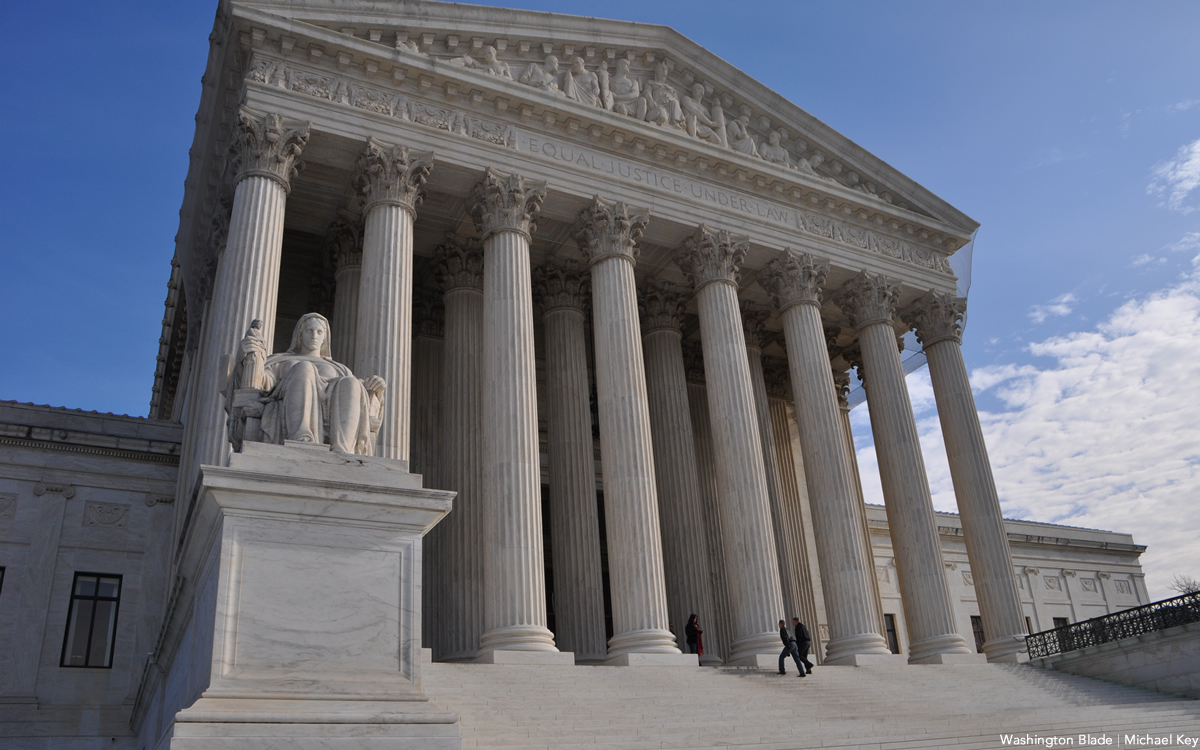
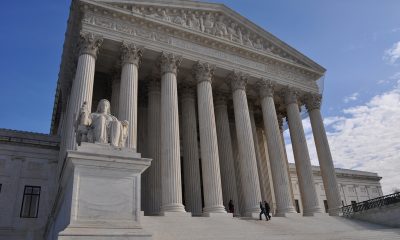
The U.S. Supreme Court on Tuesday upheld state laws that ban transgender athletes from school sports teams that correspond with their gender identity.
The justices in January heard oral arguments in two cases — Little v. Hecox and West Virginia v. B.P.J. — that challenged laws in Idaho and West Virginia respectively.
Both cases question the constitutionality of laws from both states that block trans girls from participating on girls’ teams at publicly funded schools — specifically if these bans violate the 14th Amendment’s Equal Protection Clause and Title IX. Since 2020, 27 states have banned transgender youth from playing school sports.
In a 6-3 decision made on party lines, the conservative justices asserted that laws prohibiting trans women and girls from participating in sports programs at publicly funded schools does not violate either constitutionally protected right. Notably the ruling does not require any state to categorically bar transgender girls from participating on girls’ sports teams, or transgender boys from participating on boys’ sports teams.
In the majority for the case, Justice Brett Kavanaugh delivered the opinion. It holds that schools can determine eligibility for women’s and girls’ sports teams based on biological sex. It also holds that West Virginia did not violate Title IX, which bars educational programs that receive federal funding from discriminating based on sex.
“Consistent with Title IX and the Equal Protection Clause, we hold that the States may maintain women’s and girls’ sports for biological females. They may determine eligibility for women’s and girls’ sports based on biological sex,” Kavanaugh wrote. “The Constitution and Title IX do not require an overhaul of women’s and girls’ sports throughout America.”
The Chief Justice John Roberts, along with Justices Clarence Thomas, Samuel Alito, Neil Gorsuch, and Amy Coney Barrett joined Kavanaugh’s majority opinion. It permissibly maintains female sports for biological females.
In his conclusion, Kavanaugh shares his belief of the importance of sports to women and girls but also a caution that “[n]o student-athlete on either side of the issue … deserves to be ostracized or vilified.”
Justice Sonia Sotomayor opinion was concurring in the judgment in part and dissenting in part. Justices Elena Kagan, and Ketanji Brown Jackson joined Sotomayor’s opinion.
In her dissent, Sotomayor explains that the majority opinion, while attempting to protect one groups Constitutional rights (those assigned women at birth), it puts another group’s constitutional rights (trans women) at its expense and in principle violates the Equal Protection Clause of the 14th Amendment.
“Because the majority, however, inflicts a hardship on those it disfavors without giving them the fair and full opportunity the Constitution requires to litigate their contentions, I respectfully dissent,” Sotomayor wrote, eventually pointing to how the states had evaluated issues of trans sports participants prior to these bans as evidence of general omission. “The ban eliminated this individualized approach in favor of categorical exclusion.”
She also pointed out that these rules to not equally exclude, further bolstering her argument that the majority opinion was not created with the truest sense of the Equal Protection Clause at its center.
“Teams “designated” for “females” “shall not be open to students of the male sex where selection for such teams is based upon competitive skill or the activity involved is a contact sport.” Teams “designated” for “males” do not have the same restriction.”
Jackson wrote in her dissent that this ban does explicitly allow for sex discrimination in any school or education program that receives federal funding.
“A transgender woman penalized for being perceived as aggressive has experienced discrimination ‘on the basis of sex’ just as much as a cisgender woman has, no matter that the transgender woman’s behavior matches expectations of her sex assigned at birth,” Jackson said. “Either way, the institution has imposed its gender-based expectations upon her. And either way, the institution may have violated Title IX.”
In West Virginia v. B.P.J., the case centers on B.P.J., a trans girl who was barred from competing on her school’s girls’ cross-country and track teams under West Virginia’s Save Women’s Sports Act, enacted in 2021. Under the law, it requires participation to be based on the athlete’s biological sex as indicated on their original birth certificate issued at the time of birth.
In Little v. Hecox, the details are slightly different, but ask the same 14th Amendment and Title IX questions but against Idaho’s Fairness in Women’s Sports Act. In this case Hecox, a trans woman and student at Boise State University wished to join the women’s cross-country team, but couldn’t under the law. She, with a cisgender athlete filed a suit against the governor, arguing the Equal Protection Clause of the 14th Amendment explicitly protects their rights to participate on the woman’s team.
Trans rights activists have criticized the highest court in the land’s decision, highlighting it legally allows for discrimination based on gender identity — something they argue is a foundational element of the spirit of the Equal Protection Clause.
Jennifer Levi, senior director of Transgender and Queer Rights at GLAD Law outright called the six conservative justices view of Equal Protection and Title IX as “wrong.”
“Today’s ruling gets it wrong. And it’s kids who will suffer for it. By upholding these blanket bans, the Supreme Court has allowed states to deny students even the chance to try out for a school team, simply because they are transgender,” Levi told the Washington Blade in a statement. “Policies that categorically bar students don’t advance fairness; they mandate exclusion.”
She continued, pointing out excluding some for the protection of others does not ensure fairness as the justices are arguing in their opinion.
“When a law bars every transgender girl regardless of age, hormones, or physiology, it isn’t about competitive fairness. It’s about keeping transgender kids out. We can protect women’s sports without doing that. Most of the country already does.”
Chris Erchull, senior staff attorney at GLAD Law, pointed out that while disappointing, the court does not mandate discrimination as the policy.
“This ruling does not require any state to follow West Virginia’s or Idaho’s cruel, overly-broad approach, and it does not mandate categorical bans on transgender students participating in school sports,” Erchull said. “It also leaves intact broader nondiscrimination protections for transgender students in education, including Title IX’s protections against sex discrimination for LGBTQ+ students. Discrimination has no place in our schools, and we can and should ensure that every student has the opportunity to learn, to thrive, and to know that they belong.”
Sasha Buchert, senior attorney and director of the Nonbinary and Transgender Rights Project at Lambda Legal, also emphasized the bad faith argument the majority opinion pushes for the sake of one exclusionary view of the Equal Protection Clause and Title IX.
“This ruling is deeply harmful for transgender women and girls who only asked for the ability to participate in sports with their peers,” Buchert said. “Countless studies have demonstrated the myriad benefits that come with participation in team sports. Now, one population, transgender youth and collegians, are targeted for specific and baseless discrimination. We will not be deterred and will continue to fight back to secure the equal participation that all youth, including transgender youth, deserve.”
Joshua Block, senior counsel for the American Civil Liberties Union’s LGBTQ & HIV Rights Project also echoed the lasting negative impact this ruling will have for trans Americans.
“This is a heartbreaking ruling for our clients and transgender girls like them who’ve asked for nothing more than the same opportunities afforded to their peers.” Block said. “The reality is that the equality of transgender women and girls takes nothing away from, and in fact promotes, the equality of all women and girls. We will continue to advance the fundamental principle that all young people deserve equal opportunity to thrive and succeed.”
Shannon Minter, legal director for the National Center for LGBTQ Rights, who himself is trans, issued a statement, reassuring that while upon face value the decision seems to undermine the rights of trans sports participants, it does not make that the rule.
“Today’s limited decision means that states and schools across the country still have the power to make reasonable rules to ensure fairness without banning all transgender girls,” said Minter. “Like other health or medical considerations in sports, reasonable policies for transgender student athletes rely on individual assessments rather than blanket bans. Every child deserves the chance to play sports with their friends and learn the lessons sports teach, including determination, resilience, and teamwork.”
Kelly O’Neill, an attorney for Legal Voice’s from Idaho also provided a statement to the Blade.
“It is profoundly unfair to deny a young person the benefits of teamwork and dedication because of who they are,” O’Neill said. “We should be removing barriers for girls and women in sports, not creating new ones.”
Human Rights Campaign President Kelley Robinson came to a similar conclusion.
“No kid — not my kid, not your kid, not any kid — deserves to be discriminated against. Yet this ruling is heartbreaking for transgender student athletes who are being forced to sit on the sidelines simply for who they are. When politicians convince the public that any girl could be ‘the wrong kind of girl,’ they invite harassment, intimidation, invasive questioning, or even an inspection of their body by a total stranger,” Robinson wrote in a statement shared with the Blade. “It’s sadly just the latest decision by the conservative justices on the Supreme Court to roll back protections for marginalized communities and create a second class citizenship for millions of people. We are sacrificing the dignity, privacy, and safety of America’s young people to solve a problem that was manufactured and exploited for political gain … We must continue this fight with full force until freedom, justice and equal opportunity are not flimsy promises, but nationwide guarantees.”
GLAAD President Sarah Kate Ellis, who presides over the world’s largest LGBTQ media advocacy organization, issued a statement on the ruling.
“This decision is at odds with the fundamental principles of fairness, freedom, and family that define our country and our communities. By allowing sweeping restrictions on a very small number of transgender students who simply wanted to participate in sports alongside their peers, the ruling creates an unnecessarily unfair playing field,” Ellis said. “Personal freedom and opportunity are best served when our legal protections expand access and guarantee safety for everyone. Today’s decision unfairly strips the rights of a few and threatens the ability of every girl and woman to play the sports they love.”
On the other side of the ideological isle, U.S. Sen. Jim Risch (R-Idaho) applauded the Supreme Court’s decision to uphold the state’s women and girl trans sport ban. In a statement the Republican called the court’s conservative view of as a win for “women, fairness, and the Gem State.”
“Idaho was the first state in the nation to ban biological men from competing in women’s sports and uphold the opportunities Title IX promised more than 50 years ago,” Risch said in a statement. “The Supreme Court’s decision affirms those protections and the generations of women who fought for fair, equal athletics.”

‘Transcendent’ a tough but important read

SMYAL receives $25,000 award for ‘courageous acts’

Queen Camilla meets with JK Rowling

Ethereal ‘Camp’ a moody allegory for queer shame

D.C. queer faith leaders commit to exist, resist, persist

Gay US couple among four people found dead in Mexico mass grave

ACLU says trans athletes ruling is narrower than many believe

Delaware approves amendment protecting same-sex marriage

Centenares de personas participan en la Marcha del Orgullo en la capital salvadoreña

Actually, I’m gay and I’m queer. It matters
-

 Mexico4 days ago
Gay US couple among four people found dead in Mexico mass grave
-
National4 days ago
ACLU says trans athletes ruling is narrower than many believe
-
Delaware4 days ago
Delaware approves amendment protecting same-sex marriage
-
Noticias en Español4 days ago
Centenares de personas participan en la Marcha del Orgullo en la capital salvadoreña