Connect with us

Arts & Entertainment

Calendar: July 6

Parties, events, concerts and more through July 12

Published

on

DJ Oren Nizri spins at Town this weekend. (Photo courtesy Nizri)

TODAY (Friday)

The HIV Working Group does outreach tonight for Bear Happy Hour at Town (2009 8th St., N.W.) from 7-10 p.m. For more information, visit thedccenter.org or towndc.com.

Phase 1 (525 8th St., S.E.) hosts a dance party tonight for guests 21 and older with DJ Jay Von Teese from 7:30 p.m.-3 a.m. For more details, visit phase1dc.com.

CaShandra J, a jazz and blues singer, performs tonight at Black Fox Lounge (1723 Connecticut Ave., N.W.) from 6-9 p.m. Admission is free. For more information, visit blackfoxlounge.com.

Saturday, July 7           

DJ Oren Nizri, an Israeli DJ, spins tonight at Town (2009 8th St., N.W.). Doors open for guests 21 and older at 10 p.m. and the drag show starts at 10:30. Admission is $8 from 10-11 p.m. and $12 after 11; $3 drinks will be served before 11. For details, visit towndc.com.

Phase 1 (525 8th St., S.E.) hosts a “Pop Rocks” party with DJ LS tonight for guests 21 and older from 7:30 p.m.-3 a.m. For details, visit phase1dc.com.

The Mayu Saeki Trio (1723 Connecticut Ave., N.W.), an alternative Jazz ensemble, perform tonight at Black Fox Lounge from 8-11 p.m. Admission is free. For more information, visit blackfoxlounge.com.

Burgundy Crescent, a gay volunteer organization, volunteers today for the Lost Dog & Cat Rescue Foundation at the Falls Church, Va., PetSmart (6100 Arlington Blvd., Falls Church) from 11:45 a.m.-3 p.m. If interested, email [email protected] or visit burgundycrescent.org for more information.

The D.C. Center (1318 U St., N.W.) has free HIV testing today from 4-7 p.m. today. For more information, visit thedccenter.org.

The Black Cat hosts Hellmouth Happy Hour tonight from 7-8:30 p.m. One episode of the gay cult classic series “Buffy the Vampire Slayer” screens and a drink special is served. Admission is free. For more details, visit blackcatdc.com.

The Green Lantern (1335 Green Ct., N.W.) hosts Code tonight from 9 p.m.-3 a.m. Code is a leather, jock gear, uniforms and skin gear party with a strictly enforced dress code. For details, visit codedc.com.

Sunday, July 8

The D.C. Kings perform tonight at Phase 1 (525 8th St., S.E.). Doors open at 7 p.m. and the performances begin at 9. Tickets are $10 and limited to guests 21 and over. For more information, visit phase1dc.com or dckings.com.

Burgundy Crescent, a gay volunteer organization, volunteers today for the D.C. Central Kitchen (425 2nd St., N.W.) from 9 a.m.-noon. The activity is limited to 15 volunteers. Volunteers will help cook alongside D.C. Kitchen chefs, but prior cooking experience is not required. If interested, email [email protected] or visit burgundycrescent.org for more information.

The Lambda Sci-Fi club hosts its monthly meeting for LGBT science fiction, fantasy and horror fans at 1:30 p.m. this afternoon at 1425 S St., N.W. Guests are encouraged to bring a snack and non-alcoholic drink to share. For more information, visit lambdascifi.org or email [email protected].

Monday, July 9

The D.C. Lambda Squares Beginner Class starts tonight from 7:30-9:30 p.m. at National City Christian Church (5 Thomas Circle, N.W.). No prior square dancing experience, special outfits or partners are required to participate. The cost is $100 in advance or $125 at the door for the 16 classes. For details, visit dclambdasquares.org or thedccenter.org.

The Goethe-Institut German Cultural Center (812 7th St., N.W.) screens “The Complaint of an Empress,” a film directed by Pina Bausch, tonight at 6:30 p.m. The film features a collage of scenes of the city of Wuppertal, Germany, and focuses on the human quest for love. For more information, visit goethe.de/washington.

The Virginia Museum of Fine Arts (200 N Boulevard, Richmond) hosts a textile design workshop today from 9 a.m.-noon. Enrollment is limited to 10 people and costs $135 per workshop ($120 for VMFA members). For more information, visit vmfa.museum.

Tuesday, July 10

Dupont Italian Kitchen (1637 17th St., N.W.) hosts the monthly D.C. Bi Women meeting from 7-9 p.m. For more information, visit thedccenter.org.

The D.C. Center hosts a FUK!T Packing Party tonight from 7-9 p.m. at the Green Lantern (1335 Green Court, N.W.). Volunteers will help make FUK!T packets and TOOLK!Ts. For more details, visit thedccenter.org.

Cobalt (1638 R St., N.W.) hosts Flashback tonight with DJ Jason Royce from 10 p.m.-2 a.m. Dance jams from the ‘70s, ‘80s and early ‘90s play all night. Admission is free and $2 draft beer will be served all night. For more information, visit cobaltdc.com.

The Kennedy Center (2700 F St., N.W.) features the opening show of “The Addams Family,” a morbid musical comedy classic, tonight at 7:30 p.m. Tickets range from $39-$115 and can be purchased online at kennedy-center.org.

Wednesday, July 11

The Rainbow Response Coalition, a group that addresses intimate partner violence among LGBT people in the greater Washington area, meets tonight from 7-8 p.m. at the D.C. Coalition Against Domestic Violence (5 Thomas Circle, N.W.). For more information, visit rainbowresponse.org or thedccenter.org.

Cobalt (1639 R St., N.W.) hosts karaoke tonight for guests 21 and older. Doors open at 10 p.m. and admission is free. $5 Absolut and Smirnoff cocktails will be served. For details, visit cobaltdc.com.

Thursday, July 12

The Art League Gallery (105 North Union St., Alexandria) hosts an opening reception with featured artist Cecily Corcoran for her “Genius Loci” solo exhibition tonight from 6:30-8 p.m. The exhibit has paintings of various Washington landscapes inspired by her daily commute to work. For more information, visit theartleague.org.

Burgundy Crescent, a gay volunteer organization, volunteers tonight for Food & Friends (219 Riggs Road, N.E.). Volunteers will help with food preparation and chopping vegetables. If interested, email [email protected] or visit burgundycrescent.org for more information.

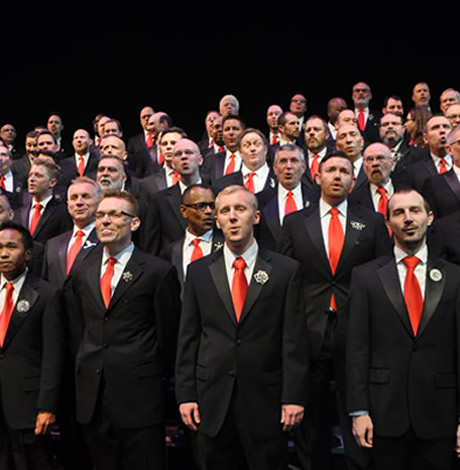
The Gay Men’s Chorus of Washington host an open mic tonight at Black Fox Lounge (1723 Connecticut Ave., N.W.) from 8-11 p.m. Admission is free. Participants receive a complimentary drink after their first song. For more details, visit blackfoxlounge.com.

Cobalt (1638 R St., N.W.) hosts its weekly best package contest at midnight this evening with DJ MadScience and DJ Sean Morris. Admission is $3 and limited to guests 21 and over. $2 rail drinks will be served from 9-11 p.m. For details, visit cobaltdc.com.

Advertisement
FUND LGBTQ JOURNALISM
SIGN UP FOR E-BLAST

Movies

Van Sant returns with gripping ‘Dead Man’s Wire’

Revisiting 63-hour hostage crisis that pits ethics vs. corporate profits

Published

on

Bill Skarsgård and Dacre Montgomery in ‘Dead Man’s Wire.’ (Photo courtesy of Row K Entertainment)

In 1976, a movie called “Network” electrified American moviegoers with a story in which a respected news anchor goes on the air and exhorts his viewers to go to their windows and yell, “I’m mad as hell, and I’m not going to take this anymore!”

It’s still an iconic line, and it briefly became a familiar catch phrase in the mid-’70s lexicon of pop culture, the perfect mantra for a country worn out and jaded by a decade of civil unrest, government corruption, and the increasingly powerful corporations that were gradually extending their influence into nearly all aspects of American life. Indeed, the movie itself is an expression of that same frustration, a satire in which a man’s on-the-air mental health crisis is exploited by his corporate employers for the sake of his skyrocketing ratings – and spawns a wave of “reality” programming that sensationalizes outrage, politics, and even violence to turn it into popular entertainment for the masses. Sound familiar?

It felt like an exaggeration at the time, an absurd scenario satirizing the “anything-for-ratings” mentality that had become a talking point in the public conversation. Decades later, it’s recognized as a savvy premonition of things to come.

This, of course, is not a review of “Network.” Rather, it’s a review of the latest movie by “new queer cinema” pioneer Gus Van Sant (his first since 2018), which is a fictionalized account of a real-life on-the-air incident that happened only a few months after “Network” prompted national debate about the media’s responsibility in choosing what it should and should not broadcast – and the fact that it strikes a resonant chord for us in 2026 makes it clear that debate is as relevant as ever.

“Dead Man’s Wire” follows the events of a 63-hour hostage situation in Indianapolis that begins when Tony Kiritsis (Bill Skarsgård) shows up for an early morning appointment at the office of a mortgage company to which he is under crippling debt. Ushered into a private office for a one-on-one meeting with Dick Hall (Dacre Montgomery), son of the brokerage’s wealthy owner, he kidnaps the surprised executive at gunpoint and rigs him with a “dead man’s wire” – a device that secures a shotgun against a captive’s head that is triggered to discharge with any attempt at escape – before calling the police himself to issue demands for the release of his hostage, which include immunity for his actions, forgiveness of his debt, reimbursement for money he claims was swindled from him by the company, and an apology. 

The crisis becomes a public spectacle when Kiritsis subjects his prisoner to a harrowing trip through the streets back to his apartment, which he claims is wired with explosives. As the hours tick by, the neighborhood surrounding his building becomes a media circus. Realizing that law enforcement officials are only pretending to negotiate while they make plans to take him down, he enlists the aid of a popular local radio DJ Fred Heckman (Colman Domingo) to turn the situation into a platform for airing his grievances –  and for calling out the predatory financial practices that drove him to this desperate situation in the first place.

We won’t tell you how it plays out, for the sake of avoiding spoilers, even though it’s all a matter of public record. Suffice to say that the crisis reaches a volatile climax in a live broadcast that’s literally one wrong move away from putting an explosion of unpredictable real-life violence in front of millions of TV viewers.

In 1977, the Kiritsis incident certainly contributed to ongoing concerns about violence on television, but there was another aspect of the case that grabbed public attention: Kiritsis himself. Described by those who knew him as “helpful,” “kind,” and a “hard worker,” he was hardly the image of a hardened criminal, and many Americans – who shared his anger and desperation over the opportunistic greed of a finance industry they believed was playing them for profit – could sympathize with his motives. Inevitably, he became something of a populist hero – or anti-hero, at least – for standing up to a stacked system, an underdog who spoke things many of them felt and took actions many of them wished they could take, too.

That’s the thing that makes this true-life crime adventure uniquely suited to the talents of Van Sant, a veteran indie auteur whose films have always specialized in humanizing “outsider” characters, usually pushed to the fringes of society by circumstances only partly under their own control, and often driven to desperate acts in pursuit of an unattainable dream. Tony Kiritsis, a not-so-regular “Joe” whose fumbling efforts toward financial security have been turned against him and seeks only recompense for his losses, fits that profile to a tee, and the filmmaker gives us a version of him (aided by Skarsgård’s masterfully modulated performance) that leaves little doubt that he – from a certain point of view, at least – is the story’s unequivocal protagonist, no matter how “lawless” his actions might be.

It helps that the film gives us much more exposure to Kiritsis’ personality than could be seen merely during the historic live broadcast that made him infamous, spending much of the movie focused on his interactions with Hall (performed with equally well-managed nuance by Montgomery) during the two days spent in the apartment, as well as his dealings with DJ Heckman (rendered with savvy and close-to-the-chest cageyness by Domingo); for balance, we also get fly-on-the-wall access to the interplay outside between law enforcement officials (including Cary Elwes’ blue collar neighborhood cop) as they try to navigate a potentially deadly situation, and to the jockeying of an ambitious rookie street reporter (Myha’la) with the rest of the press for “scoops” with each new development.

But perhaps the interaction that finally sways us in Kiritsis’s favor takes place via phone with his captive’s mortgage tycoon father (Al Pacino, evoking every unscrupulous, amoral mob boss he’s ever played), who is willing to sacrifice his own son’s life rather than negotiate a deal. It’s a nugget of revealed avarice that was absent in the “official” coverage of the ordeal, which largely framed Kiritsis as mentally unstable and therefore implied a lack of credibility to his accusations against Meridian Mortgage. It’s also a moment that hits hard in an era when the selfishness of wealthy men feels like a particularly sore spot for so many underdogs.

That’s not to say there’s an overriding political agenda to “Dead Man’s Wire,” though Van Sant’s character-driven emphasis helps make it into something more than just another tension-fueled crime story; it also works to raise the stakes by populating the story with real people instead of predictable tropes, which, coupled with cinematographer Arnaud Potier’s studied emulation of gritty ‘70s cinema and the director’s knack for inventive visual storytelling, results in a solid, intelligent, and darkly humorous thriller – and if it reconnects us to the “mad-as-hell” outrage of the “Network” era, so much the better.

After all, if the last 50 years have taught us anything about the battle between ethics and profit, it’s that profit usually wins.

Continue Reading

Books

‘The Director’ highlights film director who collaborated with Hitler

But new book omits gay characters, themes from Weimar era

Published

on

(Book cover image courtesy Amazon)

‘The Director’
By Daniel Kehlmann
Summit Books, 2025

Garbo to Goebbels, Daniel Kehlmann’s historical novel “The Director” is the story of Austrian film director G.W. Pabst (1885-1967) and his descent down a crooked staircase of ambition into collaboration with Adolph Hitler’s film industry and its Minister of Propaganda Joseph Goebbels. Kehlmann’s historical fiction is rooted in the world of Weimar German filmmaking and Nazi “Aryan” cinema, but it is a searing story for our challenging time as well.

Pabst was a legendary silent film director from the Weimar Republic’s Golden Era of filmmaking. He “discovered” Greta Garbo; directed silent screen star Louise Brooks; worked with Hitler’s favored director Leni Riefenstahl (“Triumph of the Will”); was a close friend of Fritz Lang (“Metropolis”); and lived in Hollywood among the refugee German film community, poolside with Billy Wilder (“Some Like it Hot”) and Fred Zinnemann (“High Noon”) — both of whose families perished in the Holocaust. 

Yet, Pabst left the safety of a life and career in Los Angeles and returned to Nazi Germany in pursuit of his former glory. He felt the studios were giving him terrible scripts and not permitting him to cast his films as he wished. Then he received a signal that he would be welcome in Nazi Germany. He was not Jewish.

Kehlmann, whose father at age 17 was sent to a concentration camp and survived, takes the reader inside each station of Pabst’s passage from Hollywood frustration to moral ruin, making the incremental compromises that collectively land him in the hellish Berlin office of Joseph Goebbels. In an unforgettably phantasmagoric scene, Goebbels triples the stakes with the aging filmmaker, “Consider what I can offer you….a concentration camp. At any time. No problem,” he says. “Or what else…anything you want. Any budget, any actor. Any film you want to make.” Startled, paralyzed and seduced by the horror of such an offer, Pabst accepts not with a signature but a salute: “Heil Hitler,” rises Pabst.  He’s in.

The novel develops the disgusting world of compromise and collaboration when Pabst is called in to co-direct a schlock feature with Hitler’s cinematic soulmate Riefenstahl. Riefenstahl, the “Directress” is making a film based on the Fuhrer’s favorite opera. She is beautiful, electric and beyond weird playing a Spanish dancer who mesmerizes the rustic Austrian locals with her exotic moves. The problem is scores of extras will be needed to surround and desire Fraulein Riefenstahl. Mysteriously, the “extras” arrive surprising Pabst who wonders where she had gotten so many young men when almost everyone was on the front fighting the war. The extras were trucked in from Salzburg, he is told, “Maxglan to be precise.” He pretends not to hear.  Maxglan was a forced labor camp for “racially inferior” Sinti and Roma gypsies, who will later be deported from Austria and exterminated. Pabst does not ask questions. All he wants is their faces, tight black and white shots of their manly, authentic, and hungry features. “You see everything you don’t have,” he exhorts the doomed prisoners to emote for his camera. Great art, he believes, is worth the temporal compromises and enticements that Kehlmann artfully dangles in the director’s face.  And it gets worse.

One collaborates in this world with cynicism born of helpless futility. In Hollywood, Pabst was desperate to develop his own pictures and lure the star who could bless his script, one of the thousands that come their way.  Such was Greta Garbo, “the most beautiful woman in the world” she was called after being filmed by Pabst in the 1920s. He shot her close-ups in slow motion to make her look even more gorgeous and ethereal. Garbo loved Pabst and owed him much, but Kehlmann writes, “Excessive beauty was hard to bear, it burned something in the people around it, it was like a curse.” 

Garbo imagined what it would be like to be “a God or archangel and constantly feel the prayers rising from the depths. There were so many, there was nothing to do but ignore them all.”  Fred Zinnemann, later to direct “High Noon”, explains to his poolside guest, “Life here (in Hollywood) is very good if you learn the game.  We escaped hell, we ought to be rejoicing all day long, but instead we feel sorry for ourselves because we have to make westerns even though we are allergic to horses.”

The texture of history in the novel is rich. So, it was disappointing and puzzling there was not an original gay character, a “degenerate” according to Nazi propaganda, portrayed in Pabst’s theater or filmmaking circles. From Hollywood to Berlin to Vienna, it would have been easy to bring a sexual minority to life on the set. Sexual minorities and gender ambiguity were widely presented in Weimar films. Indeed, in one of Pabst’s films “Pandora’s Box” starring Louise Brooks there was a lesbian subplot. In 1933, when thousands of books written by, and about homosexuals, were looted and thrown onto a Berlin bonfire, Goebbels proclaimed, “No to decadence and moral corruption!” The Pabst era has been de-gayed in “The Director.”

“He had to make films,” Kehlmann cuts to the chase with G.W. Pabst. “There was nothing else he wanted, nothing more important.” Pabst’s long road of compromise, collaboration and moral ruin was traveled in small steps. In a recent interview Kehlmann says the lesson is to “not compromise early when you still have the opportunity to say ‘no.’” Pabst, the director, believed his art would save him. This novel does that in a dark way.

(Charles Francis is President of the Mattachine Society of Washington, D.C., and author of “Archive Activism: Memoir of a ‘Uniquely Nasty’ Journey.”)

The Blade may receive commissions from qualifying purchases made via this post.

Continue Reading

Theater

Swing actor Thomas Netter covers five principal parts in ‘Clue’

Unique role in National Theatre production requires lots of memorization

Published

on

Thomas Netter stars in ‘Clue.’

‘Clue: On Stage’
Jan. 27-Feb. 1
The National Theatre
1321 Pennsylvania Ave., N.W.
thenationaldc.com

Out actor Thomas Netter has been touring with “Clue” since it opened in Rochester, New York, in late October, and he’s soon settling into a week-long run at D.C.’s National Theatre.

Adapted by Sandy Rustin from the same-titled 1985 campy cult film, which in turn took its inspiration from the popular board game, “Clue” brings all the murder mystery mayhem to stage. 

It’s 1954, the height of the Red Scare, and a half dozen shady characters are summoned to an isolated mansion by a blackmailer named Mr. Boddy where things go awry fairly fast. A fast-moving homage to the drawing room whodunit genre with lots of wordplay, slapstick, and farce, “Clue” gives the comedic actors a lot to do and the audience much to laugh at.  

When Netter tells friends that he’s touring in “Clue,” they inevitably ask “Who are you playing and when can we see you in it?” His reply isn’t straightforward. 

The New York-based actor explains, “In this production, I’m a swing. I never know who’ll I play or when I’ll go on. Almost at any time I can be called on to play a different part. I cover five roles, almost all of the men in the show.”

Unlike an understudy who typically learns one principal or supporting role and performs in the ensemble nightly, a swing learns any number of parts and waits quietly offstage throughout every performance just in case. 

With 80 minutes of uninterrupted quick, clipped talk “Clue” can be tough for a swing. Still, Netter, 28, adds, “I’m loving it, and I’m working with a great cast. There’s no sort of “All About Eve” dynamic going on here.” 

WASHINGTON BLADE: Learning multiple tracks has got to be terrifying. 

THOMAS NETTER: Well, there certainly was a learning curve for me. I’ve understudied roles in musicals but I’ve never covered five principal parts in a play, and the sheer amount of memorization was daunting.

As soon as I got the script, I started learning lines character by character. I transformed my living room into the mansion’s study and hallway, and got on my feet as much as I could and began to get the parts into my body.

BLADE: During the tour, have you been called on to perform much?

NETTER: Luckily, everyone has been healthy. But I was called on in Pittsburgh where I did Wadsworth, the butler, and the following day did the cop speaking to the character that I was playing the day before. 

BLADE: Do you dread getting that call?

NETTER: Can’t say I dread it, but there is that little bit of stage fright involved. Coming in, my goal was to know the tracks. After I’d done my homework and released myself from nervous energy, I could go out and perform and have fun. After all, I love to act.

“Clue” is an opportunity for me to live in the heads of five totally different archetype characters. As an actor that part is very exciting.  In this comedy, depending on the part, some nights it’s kill and other nights be killed. 

BLADE: Aside from the occasional nerves, would you swing again?

NETTER: Oh yeah, I feel I’m living out the dream of the little gay boy I once was. Traveling around getting a beat on different communities. If there’s a gay bar, I’m stopping by and  meeting interesting and cool people. 

BLADE: Speaking of that little gay boy, what drew him to theater?

NETTER: Grandma and mom were big movie musical fans, show likes “Singing in the Rain,” “Meet Me in St. Louis.” I have memories of my grandma dancing me around the house to “Shall We Dance?” from the “King and I” She put me in tap class at age four. 

BLADE: What are your career highlights to date? 

NETTER: Studying the Meisner techniqueat New York’sNeighborhood Playhouse for two years was definitely a highlight. Favorite parts would include the D’Ysquith family [all eight murder victims] in “A Gentleman’s Guide to Love & Murder,” and the monstrous Miss Trunchbull in “Matilda.” 

BLADE: And looking forward?

NETTER: I’d really like the chance to play Finch or Frump in Frank Loesser’s musical comedy “How to Succeed in Business Without Really Trying.”

BLADE: In the meantime, you can find Netter backstage at the National waiting to hear those exhilarating words “You’re on!”

Continue Reading

Popular