News
ENDA latest non-marriage target for NOM
Email blast another sign anti-gay group expanding focus beyond marriage
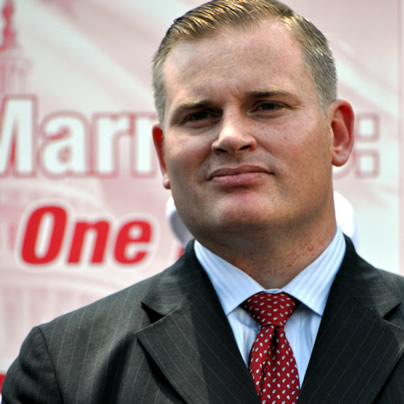
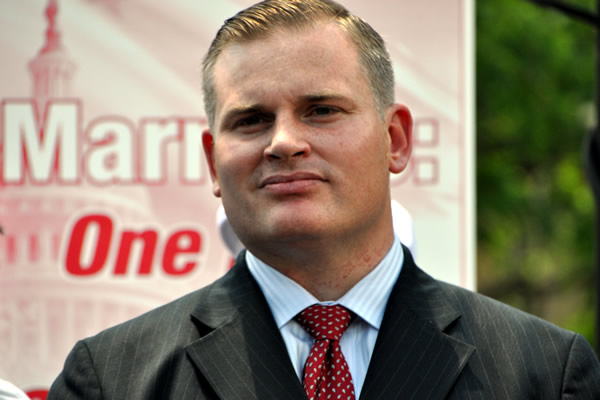
NOM President Brian Brown is calling ENDA a “trojan horse” bill (Washington Blade file photo by Michael Key).
The anti-gay National Organization for Marriage is urging its supporters to stop passage of the Employment Non-Discrimination Act in the group’s latest involvement in an issue outside of marriage.
In an email blast sent to supporters Friday morning, Brian Brown, NOM’s president, calls for the defeat of ENDA, saying the legislation’s prohibition on anti-LGBT job bias is a “trojan horse” that would “attack the foundational institution of marriage between a man and a woman.”
“In the wake of Justice Kennedy’s misguided opinion in the DOMA case (Windsor v. U.S.) it is certain that this federal ENDA bill will become a fulcrum used by same-sex ‘marriage’ activists to try to foist a marriage redefinition regime on the entire country,” Brown writes.
Brown insists that with ENDA in place, courts will have rationale to “easy rationale” to overturn bans on same-sex marriages when confronted with legal challenges for these laws.
Michael Cole-Schwartz, a spokesperson for the Human Rights Campaign, said the latest efforts by NOM against ENDA demonstrate its true focus isn’t marriage, but something broader.
“NOM’s opposition to ENDA is yet further proof that their mantra of ‘protecting marriage’ is nothing more than anti-LGBT animus,” Cole-Schwartz said. “They oppose any level of protections for our community and represent a small and shrinking minority of people.”
Brown contends in the email individuals who oppose same-sex marriage would be subject to lawsuits under the proposed legislation by expressing their view in the workplace.
“Under the law, individuals holding the common-sense belief that marriage is about giving kids a mom and a dad would be subject to punishment,” Brown writes. “Expressions of support for true marriage in the workplace would no longer be a fundamental right, but discriminatory, bigoted and an actionable offense!”
Tico Almeida, president of Freedom to Work, insisted the argument that opponents of same-sex marriage would be punished under ENDA isn’t true.
“NOM’s argument is absurd and shows they know they’re losing this debate on the actual issues addressed in this legislation,” Almeida said. “After ENDA, employers like Chick-fil-A’s Dan Cathy will retain the right to say or tweet anything he wants about marriage and to donate all he wants to anti-gay organizations that oppose marriage equality. ENDA’s protections against workplace harassment will adopt Title VII’s high standard for a ‘hostile work environment’ requiring abusive comments and epithets that are frequent and severe before an employee can bring a valid claim.”
Listed within the email blast are the numbers of eight Republican senators that NOM identified as potential swing votes on ENDA: Sens. John McCain (R-Ariz.), Rob Portman (R-Ohio), Orrin Hatch (R-Utah), Kelly Ayotte (R-N.J.), Jeff Flake (R-Ariz.), Dean Heller (R-Nev.), Pat Toomey (R-Pa.) and John Barrasso (R-Wyo.). Brown urges supporters to call the office of these “to make sure these senators know where the majority of Americans stand on this dangerous bill.”
The mailing is the latest involvement from NOM in an issue that is relevant to the LGBT community, has not overtly related to marriage. The organization previously joined efforts to overturn the California transgender student law, which enables transgender students in California to participate in programs and athletics consistent with their gender identity. According to Right Wing Watch, Brown has also travelled to Russia to urge passage of a law in the country prohibiting same-sex couples in other countries from adopting Russian children.




2026 Midterm Elections
As Washington shifts right, Democratic Socialists gain ground
Next major test for movement comes in Midwest

As President Donald Trump’s second administration has pushed the federal government further to the right on issues ranging from immigration to LGBTQ rights, a different political movement has been gaining momentum inside the Democratic Party.
From industrial communities in upstate New York to Colorado’s Front Range, candidates aligned with the Democratic Socialists of America (DSA) have won a series of victories in Democratic primaries this year, in several cases defeating longtime incumbents who had represented Democratic strongholds for years. Their success has reignited debate over the Democratic Party’s future, as a growing faction of progressive voters calls for a more confrontational approach to economic inequality, healthcare, housing, labor rights, climate policy, and LGBTQ protections rather than what they view as the party’s increasingly cautious establishment.
These victories also reflect a broader ideological divergence in American politics. While Republicans under Trump have embraced a more conservative governing agenda, many Democratic primary voters in safely blue districts appear to be rewarding candidates running on unapologetically progressive platforms that reject incremental change in favor of more sweeping reforms.
The Democratic Socialists of America (DSA), the nation’s largest socialist organization, says it has more than 100,000 members and chapters in all 50 states. The organization advocates what it describes as democratic socialism — promoting social and economic equality through democratic government while supporting a larger public role in healthcare, housing, labor protections, education, and other social programs alongside a regulated market economy.
On its website, the DSA explains its goals are to utilize “progressive movements for social change while establishing an openly democratic socialist presence in American communities and politics.”
For LGBTQ Americans, the organization has long supported expansive nondiscrimination protections, marriage equality, transgender rights, and broader legal protections through a platform first adopted in 2017. Its LGBTQ policy calls for federal legislation prohibiting discrimination, expanded access to gender-affirming healthcare, reproductive freedom, and opposition to laws targeting LGBTQ people.
The movement’s biggest victories came in New York.
Just months after the election of New York City Mayor Zohran Mamdani, a democratic socialist, candidates backed by the DSA and allied progressive organizations swept Democratic primary elections that many political observers viewed as a referendum on the party’s ideological direction.
Among the most notable victories were Brad Lander’s defeat of incumbent Rep. Dan Goldman in New York’s 10th Congressional District, Claire Valdez’s victory over Brooklyn Borough President Antonio Reynoso in the 7th District, and Darializa Avila Chevalier’s upset of five-term incumbent Rep. Adriano Espaillat in New York’s 13th Congressional District.
Overall, nine of the 10 New York City candidates backed by the DSA won their Democratic primaries, further cementing the organization’s growing influence in the nation’s largest city and demonstrating that democratic socialist candidates can compete beyond isolated local races.
Outside New York, the trend continued.
In Colorado, Melat Kiros defeated 15-term incumbent Rep. Diana DeGette in one of the cycle’s biggest primary upsets. Kiros campaigned without accepting corporate PAC contributions and criticized DeGette’s fundraising practices and foreign policy positions, presenting herself as an alternative to the Democratic establishment.
While socialist movements have existed in the United States for more than a century, democratic socialism remained largely on the political margins for decades. That began to change following Sen. Bernie Sanders’ presidential campaigns in 2016 and 2020, which introduced millions of Americans to democratic socialist ideas and energized a younger generation of progressive activists.
Although Sanders never won the Democratic nomination, his campaigns helped reshape the party’s left flank by elevating issues such as universal healthcare, tuition-free public college, stronger labor protections, and economic inequality into the mainstream Democratic conversation.
Today, the movement’s most recognizable elected officials include Rep. Alexandria Ocasio-Cortez and several members of the congressional “Squad,” who have helped normalize the democratic socialist label among younger Democratic voters and increasingly challenged party leadership from the left.
For LGBTQ voters, democratic socialist candidates have frequently positioned themselves among the Democratic Party’s strongest advocates for transgender rights, particularly as the Trump administration has sought to restrict access to gender-affirming healthcare, military service, and other legal protections for transgender Americans.
The next major test for the movement may come in the Midwest.
In Michigan, progressive candidate Abdul El-Sayed is locked in a closely watched Democratic Senate primary, while in Wisconsin, DSA-backed Francesca Hong is seeking her party’s nomination for governor. The outcomes of those races could offer another measure of whether democratic socialism’s recent gains represent a lasting realignment within the Democratic Party or are concentrated primarily in deep-blue urban districts.
Rehoboth Beach
Susan Stewart could make history as Rehoboth’s first openly gay mayor
Aug. 8 election features four candidates for top job
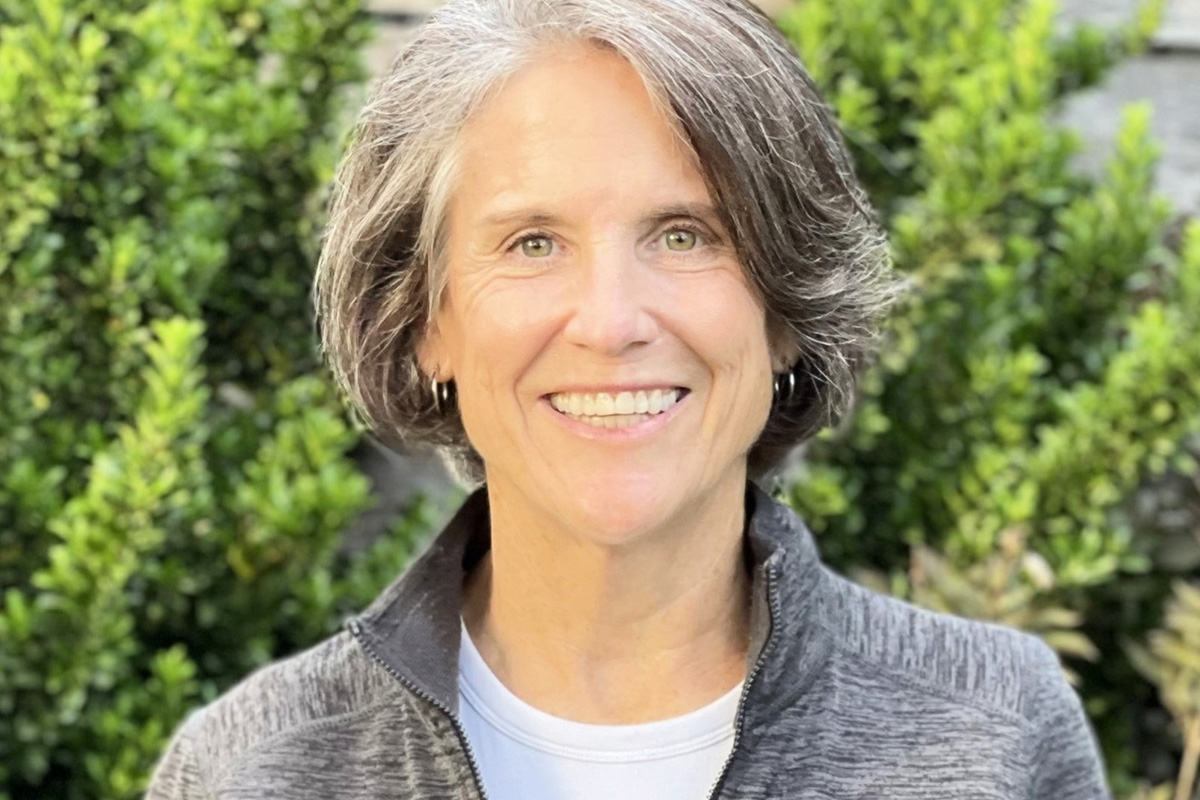
(Editor’s note: This is the first installment in a three-part series profiling the candidates for mayor of Rehoboth Beach, Del.: Commissioners Suzanne Goode, Susan Stewart, and Craig Thier; a fourth candidate, William Raak, filed to join the race but has not responded to Blade inquiries.)
Residents of Rehoboth Beach, Del. will elect a new mayor this summer after Stan Mills announced plans to retire after serving six years as mayor and 12 as a commissioner. One candidate who could make history is Commissioner Susan Stewart, who identifies as part of the LGBTQ community, a potential first for the town, which has never had an openly gay mayor.
Stewart is a current city commissioner for Rehoboth Beach and has served as a member of the Mixed-Use and Stormwater Utility Task Forces.
A Pennsylvania native who spent her adult life working in Washington, D.C., Stewart has owned a home in Rehoboth since 2013 with her partner of more than 20 years and began living there full time during COVID.
Stewart described her campaign as offering vision, leadership, and integrity. She has a background as an attorney and financial adviser.
She spoke about the work that she is doing as city commissioner that she would continue as mayor, specifically with Reimagine Rehoboth.
“I’ve been shepherding through a master planning initiative for the first time,” she said. “We’ve never really had an overall study with urban planners and transportation consultants.”
Stewart highlighted the upcoming ‘Charrette Week’ from July 13-17 when members of the community can learn about the city from urban planners and give their input on the planning initiative.
“We’ve got this natural beauty and we’ve got some things we can work on,” said Stewart. During ‘Charrette Week’, Stewart said that the community will also have the chance to rename ‘Reimagine Rehoboth’ due to the pushback it initially received.
“Getting the community engaged and united behind is the big goal,” said Stewart.
Stewart also mentioned that she is the liaison with Clear Space Theatre Company as it aims to build their own venue in town. She expressed hope in bringing this vision to fruition as she values the art and culture that the company brings to town.
“It hasn’t been lost on us that the Kennedy Center has sort of cut loose a lot of its patrons,” said Stewart.
Stewart also said she wants to increase age and racial diversity in Rehoboth through supporting the construction of more workforce housing.
“We don’t generally have [racial and age diversity] here. I wish we did,” said Stewart.
According to the 2024 census, the median age of Rehoboth in 2024 was 63 with 44% of the population being 65 and over. Additionally, 89% of the city’s population was reported to be white.
Stewart also said that she aims to maintain Delaware’s perfect score on the Human Rights Equality Index in 2025, which she credits to the work of the assistant city manager, Evan Miller, and CAMP Rehoboth for getting Rehoboth to be recognized.
“Rehoboth is a great place for our broader LGBTQ+ community,” said Stewart.
She also said that she is proud to support organizations like CAMP Rehoboth, which the city was able to give a grant to for the first time this year according to Stewart.
“The city and CAMP Rehoboth have such a productive and wonderful relationship.”
Stewart said that she wants CAMP to know that they are always welcome to reach out if they ever have issues that require help from the city.
“We’ll continue to have a very productive and warm relationship.”
The Blade also asked Stewart about her public disagreement with fellow City Commissioner and mayoral candidate Suzanne Goode in March of this year.
During a commissioners meeting on March 9, Stewart outlined allegations that Goode used derogatory language in emails, particularly toward City Manager Taylour Tedder.
“All of our emails are public information under FOIA. I simply asked the city to link them on the website, and then the city published a transcript of [Goode’s emails].”
Stewart said that she did this on behalf of the city’s employees such as Tedder: “We have a moral and legal obligation to support our employees.” She also said that this situation has escalated since the March 9 meeting.
At the meeting, Goode denied all of the allegations and said that they were based on falsehoods.
“The challenge with Suzanne Good is that she burns through so much time in a public hearing because she wants to talk about all these things in the past,” said Stewart.
If elected mayor, Stewart said that she would look into measures to help meetings run smoother and prevent disruptions such as turning off mics and moving public comment to the end of the meeting instead of the end of each topic.
“We want public input, but the people that come there for good reasons to talk about things that they need help with get drowned out by these disruptions.”
The election will take place on Aug. 8, from 10 a.m.-6 p.m. at the Rehoboth Beach Convention Center.
National
Madonna roundup: Reviews, sales, and love for ‘Danceteria’
Pop legend’s new album ‘Confessions II’ earning raves

Madonna isn’t just back, she’s ubiquitous.
From a Times Square takeover to Graham Norton’s couch, the pop legend is busy promoting her new album, “Confessions II,” a sequel to 2005’s “Confessions on a Dance Floor,” that is earning rave reviews.
“Madonna’s back in peak form with a fresh and honest dance record that’s not only her best in 20 years, but a genuinely vital addition to her canon,” says Pitchfork.
“Facing grief and loss has made Madonna’s music deeper than it’s been in 20 years, but also more alive,” the Guardian proclaims.
“If everyone in the club is a work of art, as ‘Danceteria’ says, then to live loudly is to make an indelible mark,” according to Vulture.
The album features upbeat dance productions along with some melancholic views on death and loss. On the song “Betrayal,” she reflects on the recent death of her stepmother Joan, singing, “You’ll never take my mother’s place … you betrayed me, you enslaved me.”
On “L.E.S. Girl,” she revisits her early days living on the Lower East Side and struggling to pay the rent. “Bizarre” seems to reference her failed 1980s marriage to actor Sean Penn. “Test” is a duet with daughter Lola Leon, in which she sings, “I wish I knew / The pain I’ve caused / My butterfly / Was always being watched.”
But the emotional high point of the album comes on “Fragile,” which she wrote about the death of her brother Christopher. The two were close early in Madonna’s career and he designed sets for early tours, including “Blonde Ambition.” But they had a falling out after her marriage to Guy Ritchie and he wrote a scathing tell-all book about his sister that led to years of estrangement. The two reconciled after Christopher’s cancer diagnosis and shortly before he died in 2024 at age 63. She sings, “Late last night I was fast asleep/You came to me in a dream/You said, ‘Don’t forget about me/Don’t forget to be happy.’”
Death emerges again but in a much more upbeat context in “Danceteria,” an ode to the iconic New York nightclub that has emerged as a gay favorite single and seems destined to be the song of the summer in queer nightlife. She recounts her pre-fame days trying to convince a DJ to play her first single “Everybody” at the club and name checks Jean-Michel Basquiat, Keith Haring, best friend Debi Mazar, and DJ Mark Kamins on the track.
Streaming numbers and sales are strong for the new album with projected first week sales of 100,000 ensuring a No.1 debut in the U.S.

As Washington shifts right, Democratic Socialists gain ground

Susan Stewart could make history as Rehoboth’s first openly gay mayor

Silky Nutmeg Ganache talks sex and dating, gender, politics, weight loss journey

Madonna roundup: Reviews, sales, and love for ‘Danceteria’

Three overlooked court rulings limited White House anti-trans policies

‘Transcendent’ a tough but important read

Under-the-radar Delaware beach towns smart buyers are targeting

‘My Favorite Sociopath’ debuts at Shepherdstown’s CATF

In Trump’s divided America, Michael Weinstein’s AHF responds