Arts & Entertainment
GLAAD Media Awards 2018 releases nominees
Netflix raked in the highest number of nominations for TV shows
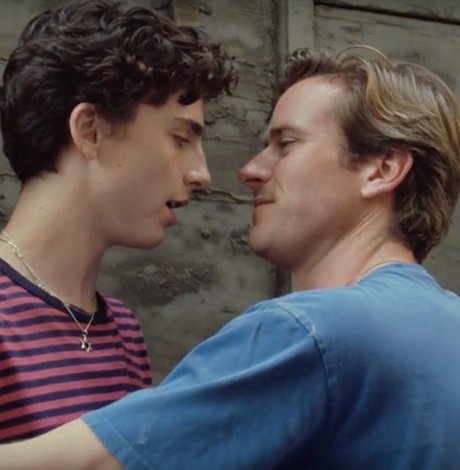
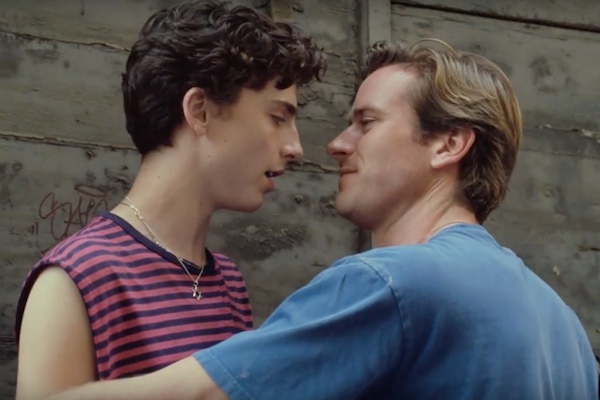
(‘Call Me By Your Name.’ Screenshot via YouTube.)
The 29th annual GLAAD Media Awards announced its 2018 nominees at the Sundance Film Festival on Friday via Trace Lysette (“Transparent”) and Wilson Cruz (“Star Trek: Discovery”).
Netflix raked in the most nominations for television with seven nominations. ABC, CBS and NBC came in at a close second with six nominations. This was also the first time the category Outstanding Kids & Family Programming was introduced which recognizes “Andi Mack,” and “Doc McStuffins,” among others, for their LGBT inclusion.
Critically-acclaimed films “Call Me By Your Name,” “Lady Bird” and “The Shape of Water” also scored nominations.
For music, Miley Cyrus, Sam Smith, Halsey and Kesha all earned nominations for Outstanding Music Artist.
Special recognition was also given to the animated short film “In a Heartbeat,” written and directed by Esteban Bravo and Beth David, as well as Jay-Z’s track “Smile,” about his mother’s coming out, from his album “4:44.”
Check out the full list of nominees below.
OUTSTANDING FILM – WIDE RELEASE
“Battle of the Sexes” (Fox Searchlight)
“Call Me by Your Name” (Sony Pictures Classics)
“Lady Bird” (A24)
“Professor Marston and the Wonder Women” (Annapurna Pictures)
“The Shape of Water” (Fox Searchlight)
OUTSTANDING FILM – LIMITED RELEASE
“BPM” (The Orchard)
“A Fantastic Woman” (Sony Pictures Classics)
“God’s Own Country” (Samuel Goldwyn Films/Orion Pictures)
“Thelma” (The Orchard)
“The Wound” (Kino Lorber)
OUTSTANDING COMEDY SERIES
“The Bold Type” (Freeform)
“Brooklyn Nine-Nine” (FOX)
“Crazy Ex-Girlfriend” (The CW)
“Modern Family” (ABC)
“One Day at a Time” (Netflix)
“One Mississippi” (Amazon)
“Superstore” (NBC)
“Survivor’s Remorse” (Starz)
“Transparent” (Amazon)
“Will & Grace” (NBC)
OUTSTANDING DRAMA SERIES
“Billions” (Showtime)
“Doubt” (CBS)
“The Handmaid’s Tale” (Hulu)
“Nashville” (CMT)
“Sense8” (Netflix)
“Shadowhunters” (Freeform)
“Star” (FOX)
“Star Trek: Discovery” (CBS All Access)
“This Is Us” (NBC)
“Wynonna Earp” (Syfy)
OUTSTANDING INDIVIDUAL EPISODE (in a series without a regular LGBTQ character)
“Chapter 8”, “Legion” (FX)
“Grace”, “Pure Genius” (CBS)
“Lady Cha Cha”, “Easy” (Netflix)
“The Missionaries”, “Room 104” (HBO)
“Thanksgiving”, “Master of None” (Netflix)
OUTSTANDING TV MOVIE OR LIMITED SERIES
“American Horror Story: Cult” (FX)
“Feud: Bette and Joan” (FX)
“Godless” (Netflix)
“Queers” (BBC America)
“When We Rise” (ABC)
OUTSTANDING KIDS & FAMILY PROGRAMMING
“Andi Mack” (Disney Channel)
“Chosen Family”, “Danger & Eggs” (Amazon)
“The Emergency Plan”, “Doc McStuffins” (Disney Channel)
“The Loud House” (Nickelodeon)
“Steven Universe” (Cartoon Network)
OUTSTANDING DOCUMENTARY
“Chavela” (Music Box Films)
“Gender Revolution: A Journey with Katie Couric” (National Geographic)
“Kiki” (Sundance Selects)
“Real Boy”- “Independent Lens” (PBS)
“This is Everything: Gigi Gorgeous” (YouTube Red)
OUTSTANDING REALITY PROGRAM
“Gaycation with Ellen Page” (Viceland)
“I Am Jazz” (TLC)
“RuPaul’s Drag Race” (VH1)
“Survivor: Game Changers” (CBS)
“The Voice” (NBC)
OUTSTANDING MUSIC ARTIST
Miley Cyrus, “Younger Now” (RCA Records)
Halsey, “Hopeless Fountain Kingdom” (Astralwerks Records)
Honey Dijon, “The Best of Both Worlds” (Classic Music Company)
Kehlani, “SweetSexySavage” (TSNMI/Atlantic Records)
Kelela, “Take Me Apart” (Warp Records)
Kesha, “Rainbow” (Kemosabe/RCA Records)
Perfume Genius, “No Shape” (Matador Records)
Sam Smith, “The Thrill of It All” (Capitol Records)
St. Vincent, “MASSEDUCTION” (Loma Vista Recordings)
Wrabel, “We Could Be Beautiful” (Epic/Sony Records)
OUTSTANDING COMIC BOOK
“America,” written by Gabby Rivera (Marvel Comics)
“The Backstagers,” written by James Tynion IV (BOOM! Studios)
“Batwoman,” written by Marguerite Bennett, James Tynion IV (DC Comics)
“Black Panther: World of Wakanda,” written by Roxane Gay, Ta-Nehisi Coates, Yona Harvey, Rembert “Browne” (Marvel Comics)
“Deadman: Dark Mansion of Forbidden Love,” written by Sarah Vaughn (DC Comics)
“Goldie Vance,” written by Hope Larson, Jackie Ball (BOOM! Studios)
“Iceman,” written by Sina Grace (Marvel Comics)
“Lumberjanes,” written by Kat Leyh, Shannon Watters (BOOM! Studios)
“Quantum Teens are Go,” written by Magdalene Visaggio (Black Mask Comics)
“The Woods,” written by James Tynion IV (BOOM! Studios)
OUTSTANDING DAILY DRAMA
“The Bold and The Beautiful” (CBS)
“Days of Our Lives” (NBC)
“The Young & the Restless” (CBS)
OUTSTANDING TALK SHOW EPISODE
“Australia Marriage Equality”, “Last Week Tonight with John Oliver” (HBO)
“Danica Roem”, “The Opposition with Jordan Klepper” (Comedy Central)
“Laila and Logan Ireland, Transgender Military Couple”, “The Ellen DeGeneres Show” (syndicated)
“Laverne Cox and Gavin Grimm”, “The View” (ABC)
“Trans Veterans React to Ban”, “The Daily Show with Trevor Noah” (Comedy Central)
OUTSTANDING TV JOURNALISM – NEWSMAGAZINE
“A Boy Named Lucas”, “20/20” (ABC)
“China Queer”, “The Naked Truth” (Fusion)
“Gay Purge?”, “Nightline” (ABC)
“The Pulse of Orlando: Terror at the Nightclub”, “Anderson Cooper 360” (CNN)
“Trans Youth”, “VICE on HBO” (HBO)
OUTSTANDING TV JOURNALISM SEGMENT
“The Abolitionists Face the Love Army” KAPP-KVEW Local News (KAPP-35/KVEW-42 [Tri Cities/Yakima, Wash.])
“DJ Zeke Thomas Goes Public”, “Good Morning America” (ABC)
“Murders Raise Alarm for Transgender Community”, “NBC Nightly News with Lester Holt” (NBC)
“Transgender Murders in Louisiana Part of Disturbing Trend”, “CBS Evening News” (CBS)
“Transgender Rights under Fire in Trump Era”, “AM Joy” (MSNBC)
OUTSTANDING NEWSPAPER ARTICLE
“Fearfully and Wonderfully Made: The Journey of a Transgender Man” by Lauren McGaughy (The Dallas Morning News)
“Lesbian College Coaches Still Face Difficult Atmosphere to Come Out” by Shannon Ryan (Chicago Tribune)
“Pulse Victims’ Families in Puerto Rico: ‘We Have to Cry Alone'” by Jennifer A. Marcial Ocasio (Orlando Sentinel)
“Revised Guidance on HIV Proves Life-Transforming” by Lenny Bernstein (The Washington Post)
“The Silent Epidemic: Black Gay Men and HIV” [series] (The Atlanta Journal-Constitution)
OUTSTANDING MAGAZINE ARTICLE
“America’s Hidden H.I.V. Epidemic” by Linda Villarosa (The New York Times Magazine)
“Beyond ‘He’ or ‘She’: The Changing Meaning of Gender and Sexuality” by Katy Steinmetz (Time)
“Forbidden Lives: The Gay Men Who Fled Chechnya’s Purge” by Masha Gessen (The New Yorker)
“Free Radical” by Nathan Heller (Vogue)
“Trans, Teen, and Homeless” by Laura Rena Murray (Rolling Stone)
OUTSTANDING MAGAZINE OVERALL COVERAGE
The Advocate
Billboard
People
Teen Vogue
Time
OUTSTANDING DIGITAL JOURNALISM ARTICLE
“The Ballad of Bobby Brooks, the First Gay Student-Body President of Texas A&M” by Lauren Larson (GQ.com)
“For Those We Lost and Those Who Survived: The Pulse Massacre One Year Later” by James Michael Nichols (HuffPost Queer Voices)
“‘I Am a Girl Now,’ Sage Smith Wrote. Then She Went Missing.” by Emma Eisenberg (Splinter)
“Meet the Transgender Student Who Fought Discrimination at His Maryland High School (and Won)” by Nico Lang (INTO)
“Why Bisexual Men Are Still Fighting to Convince Us They Exist” by Samantha Allen (Splinter)
OUTSTANDING DIGITAL JOURNALISM – MULTIMEDIA
“Former Patriots and Chiefs Tackle Ryan O’Callaghan Comes Out as Gay” by Cyd Zeigler (Outsports/SB Nation)
“Made to Model: Trans Beauty in Fashion” (LogoTV.com)
“‘This Is How We Win’: Inside Danica Roem’s Historic Victory” by Diana Tourjée (Broadly.Vice.com)
“Transgender Day of Remembrance” by Saeed Jones (AM to DM, BuzzFeed News)
“US Travel Ban Leaves LGBT Refugees in Limbo” by Nina dos Santos (CNN.com)
OUTSTANDING BLOG
Autostraddle
Gays With Kids
My Fabulous Disease
Pittsburgh Lesbian Correspondents
Transgriot
OUTSTANDING SCRIPTED TELEVISION SERIES
“Las chicas del cable” (Netflix)
“La doble vida de Estela Carrillo” (Univision)
“Ingobernable” (Netflix)
OUTSTANDING TV JOURNALISM – NEWSMAGAZINE (Spanish Language)
“Así viven los estudiantes transgénero después de que Trump anulara la ley de baños de Obama para escuela públicas” , “Primer Impacto” (Univision)
“Pulse, huellas de la masacre”, “Docufilms” (CNN en Español)
“Ser transgénero en Latinoamérica: sus experiencias y crecimiento”, “Vive la Salud” (CNN en Español)
OUTSTANDING TV JOURNALISM SEGMENT (Spanish Language)
“Comunidad LGBTQ vulnerable bajo nuevo gobierno”, “Perspectiva Nacional” (Entravision)
“Entrevista con Daniela Vega”, “Showbiz” (CNN en Español)
“Joven transgénero tiene un mensaje para las familias: ‘Acepten a sus hijos'”, “Al Punto” (Univision)
“El triunfo de una diseñadora mexicana transgénero en Nueva York”, “Noticias Telemundo” (Telemundo)
“Unidos contra la discriminación y el acoso contra la comunidad LGBT”, “Despierta América” (Univision)
OUTSTANDING DIGITAL JOURNALISM (Spanish Language)
“La compleja realidad de ser gay en América Latina” (cnnespanol.cnn.com)
“‘No aprobar el Dream Act significaría una sentencia de muerte’, jóvenes LGBT y DACA” (laopinion.com)
“Padres de familia de Dallas luchan por los derechos de su hija transgénero” (aldiadallas.com)
“Primera senadora trans aspira a impulsar medidas para sectores discriminados” (efe.com)
“Tres hermanitos para dos papás” (laopinion.com)





Fairfax City Pride was held at the Sherwood Center (3740 Blenheim Blvd., Fairfax, Va.) on Saturday, June 6.
(Washington Blade photos by Michael Key)


a&e features
D.C. prepares to party as Pride celebrations kick off Saturday
Bars, clubs have busy lineups; Pride on the Pier returns

Capital Pride’s date change isn’t slowing down the festivities. Back in December, the Capital Pride Alliance shifted the calendar for Pride celebrations in the nation’s capital from the second weekend of June to two weeks later to the weekend of June 20-21 to not conflict with President Trump’s birthday and 250th anniversary of America celebrations, with the aim that “our community can gather safely and without unnecessary barriers… We are protecting our space and preserving Pride as a powerful act of visibility, solidarity, and resistance.”
On the heels of WorldPride last year, the city shows no sign of slowing down. Instead, restaurants, bars, clubs, and neighborhoods are taking the opportunity to be even more visible. The Blade has put together a (non-comprehensive) list of parties, activations, and activities across town:
Pride on the Pier returns on Saturday, June 13 to the Wharf on the Southwest waterfront. The event, sponsored and hosted by the Washington Blade, is free and runs from 4-9 p.m. There will be vendors, DJs, and drag performances all day. VIP tickets are $25 and come with air conditioned party room, private bathrooms, and free cocktail. More details at prideonthepierdc.com.
Capital Pride Official Opening Party: RIOT! is the official opening dance party of Capital Pride, taking place Friday June 19, 9 PM-3AM. The 2026 edition headlining performer is Myki Meeks, a finalist of “RuPaul’s Drag Race” season 18; Bob The Drag Queen will perform a special set. DMV-area DJs and performers include: Bambi, Baphomette, Bumper, Cake Pop!, Connor, DJ Ed Bailey, DJ Diyanna Monet, Evry Pleasure, Jakknife Complex, Mari Con Carne, Pussy Noir, WessTheDJ. Trade owner Ed Bailey is producing the event.
Kinetic Presents brings the heat across the entirety of Pride weekend as well. It again is partnering with Capital Pride Alliance to produce four events over four days this Pride, including the Official Main Event on Saturday (the Friday official event is at Echostage). Kinetic’s parties are splayed across various D.C. venues, with special performances, massive productions, shirtless dancers, play zones, dance-forward audio and visuals, and international DJ talent. Thursday, June 18 at 10 PM at District Eagle is Lust, with music by Dan Slater and TOMI. Friday, June 19 at 10 PM is UNCUT XXL Heavy Load, at A.i. Warehouse in Union Market District, with music by Alex Acosta, Felipe Lira & Mitch Ferrino; the party is a “high-octane night of muscular house and tribal rhythms.” Saturday, June 20 at 10 PM brings that official main event, Kinetic Toy Land, at Echostage, with music by GSP & Matt Suave. Alaska Thunderfuck headlines. Sunday evening June 21 at 10 PM closes with discoVERS at SAX. A portion of tickets supports the DC LGBTQ+ community through Capital Pride Alliance.
9:30 Club always comes in clutch for the LGBTQ community. Already in June, it produced Kitty Kat Ball on June 7, and Kiesza performed on June 8. On June 20 at 10 PM, the famed Mixtape party hits the stage, care of gay DJs Shea van Horn and Matt Bailer, who have spun together for coming up on two decades. Mixtape has been held at several venues across the city over those years, and now settled on 9:30 Club for Pride. On June 25 at 7 PM, Big Freedia – the bounce artist from New Orleans – hits the 9:30 Club scene for the eighth time, as part of the Big Freedom Tour.
Crush: New this year from the 14th Street bar is the Pride Pop-Up, sitting pretty in the parking lot at 1820 14th St., N.W., at the corner of Swann Street by the start of the Pride Parade route. Hours are Friday from 2-10 PM and Saturday from 12-10 PM. Friday evening features Grizzly Bear Happy Hour, a DJ will set up shop on Saturday, and for those needing another layer, there’s a Crush merch store. Co-owner Mark Rutstein “has always wanted to throw a party in that parking lot, so he did,” said co-owner Stephen Rutgers. Note that Crush (the bar) will have a cover on Friday and Saturday.
Kiki: Over at Kiki, there’s a full slate of Pride-themed programming all week. Tuesday, June 16 at 9 PM brings karaoke; Wednesday, June 17 at 7:30 PM is trivia; Thursday June 18 at 9PM is “Night of 1000 Tatianna’s Drag Show”, and Friday June 19 at 9 PM brings the Juneteenth Serve Drag Show. Saturday, June 20 at 10 PM, post-parade, is a Pride Dance Party with DJ Lemz. Sunday daytime at 5 PM is the Father Figures Daddy Issues Special Drag Show; and after the festival at 8 PM, DJ Tezrah hits the tapes.
Jane Jane: Right along the parade route, gay-owned Jane Jane has transformed its space into a “No Kings, Yas Queens” activation in a direct response to the America 250th commemorations happening downtown, from the colorful window installation, to merch (including a custom bandana and tank) to disco wig installations. Events include industry night on Mondays, donations to LGBTQ charities, and to-go cocktails during the Pride Parade.
Shaw’s Tavern: Gay-owned Shaw’s Tavern on Florida Avenue celebrates Pride week with a full lineup of themed events, entertainment, and specials, including Pride trivia on Monday, June 15 at 7:30 PM, bingo on Tuesday, June 16 at 8 PM, a cabaret on Thursday, June 18 at 9 PM, Juneteenth Drag Brunch on Friday, June 19 at 12:30 PM, and both a pre-parade brunch (10 AM-4 PM) and post-parade party (5-9 PM) on Saturday, June 20. Sunday, June 21 at 7 PM brings Mama’s Sunday Supper & Drag Pride Show in the evening for anyone who is still awake.
Trade: This classic has a weekend of events, starting on Thursday, with Tiburon Pride Edition, a Latin Dance party in the Shark Tank. On Friday, the bar opens early (at 2 PM), with all-day happy hour and the Jx&Evry Show. On Saturday, the bar opens at noon, offering a prime parade viewing spot from its windows. There will be the CLASH drag show hosted by Tatianna and Crimsyn, and Sweet Spot party that night. On Sunday, the bar opens for normal hours at 2 PM, with DJs Adam K, Alex Love, and WESSTHEDJ.
Pitchers: The multi-level bar in Adams Morgan is hosting a Pride-themed show on Thursday, June 18 at 10 PM, with drawstring bag giveaways – the only kind of bag that will be allowed into the bar during Pride weekend. The show features drag queen Kyle Sonique Love.
Barrel House Cafe and Bar: Also by the parade route on 14th Street, Barrel House Cafe takes advantage of its large patio to have a slate of events during Pride week, including Schism, a drag and burlesque show on June 18 at 10 PM, as well as an all-day Pride party coinciding on parade day.
Bunker: Bunker again plays host to a series of afters. Friday night (Saturday 3:30 AM) is Unhinged, and Saturday night (Sunday 3:30AM) is Unholy. The regular Saturday night party (10 PM) brings in Venetian and Tiara Missou. All parties have cover charges.
District Eagle: Beyond the Kinetic party on Friday, June 19 brings Gear Night at 10 PM; Saturday, June 20 at 10 PM is LOBO presents PRISM, and Sunday, June 21 is Sundaze wit Papi at 6 PM.
African Art Museum: On Thursday, June 18 at 5 PM, this Smithsonian museum is hosting a free event with artists and curators celebrating its exhibit, “Here: Pride and Belonging in African Art,” “based on years of close collaboration and dialogue with African visual art practitioners who claim belonging in the LGBTQ+ community, however they define those terms,” according to the museum.
KNEAD Hospitality & Design: The gay-owned KNEAD restaurant group (including spots like Gatsby, Mi Vida, Succotash The Grill) is featuring the GLITTERATI cocktail, made with Tito’s, St-Germain Elderflower, Butterfly Flower, ginger, and yes, glitter. A portion of proceeds from every Glitterati cocktail sold will benefit The Trevor Project. The cocktail will be sold throughout June.
The Fountain Inn is partnering with Rhodium spirits (Rhode Island’s first LGBTQ+ owned distillery) all month, making cocktails like gimlets and espresso martinis featuring Rhodium’s liquors. Proceeds benefit SMYAL, an organization dedicated to empowering LGBTQ+ youth.
Hard Rock Cafe: Hard Rock DC is taking part in the chain’s annual “LOVE OUT LOUD” campaign, with Pride merch, specials on June 20, and a donation to The Trevor Project.
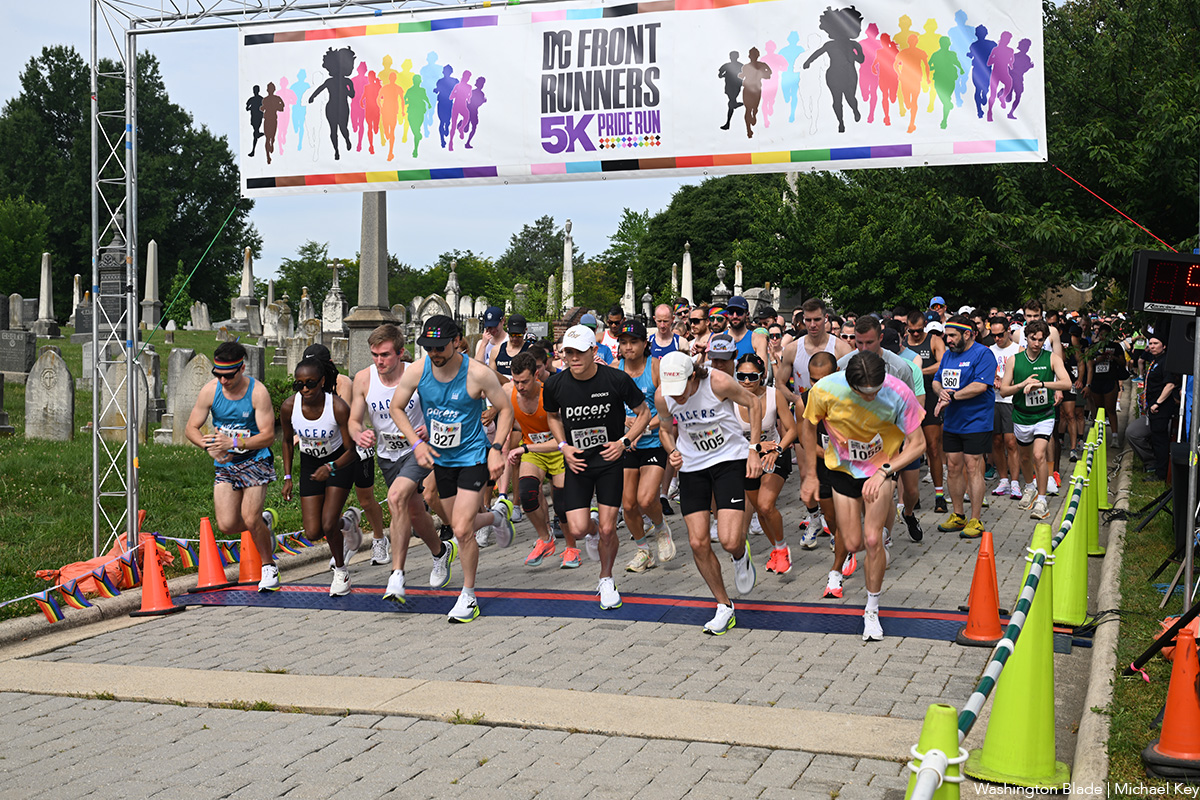
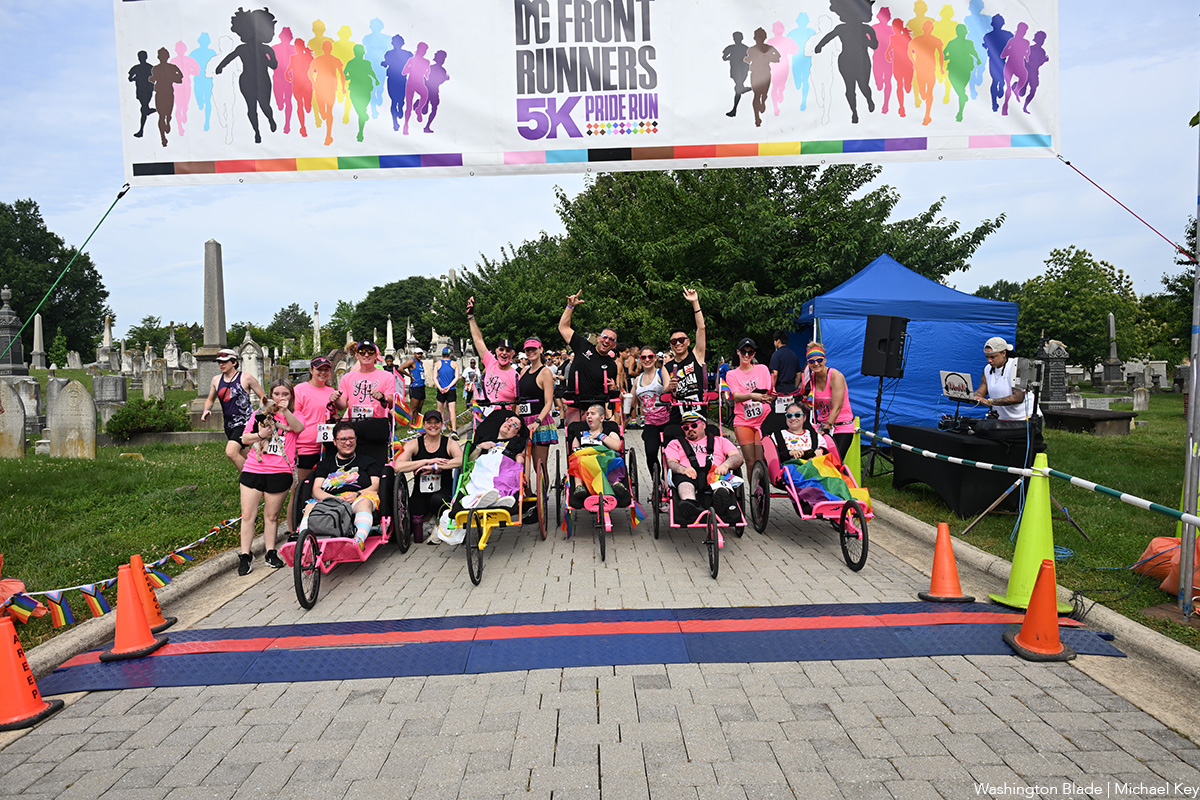
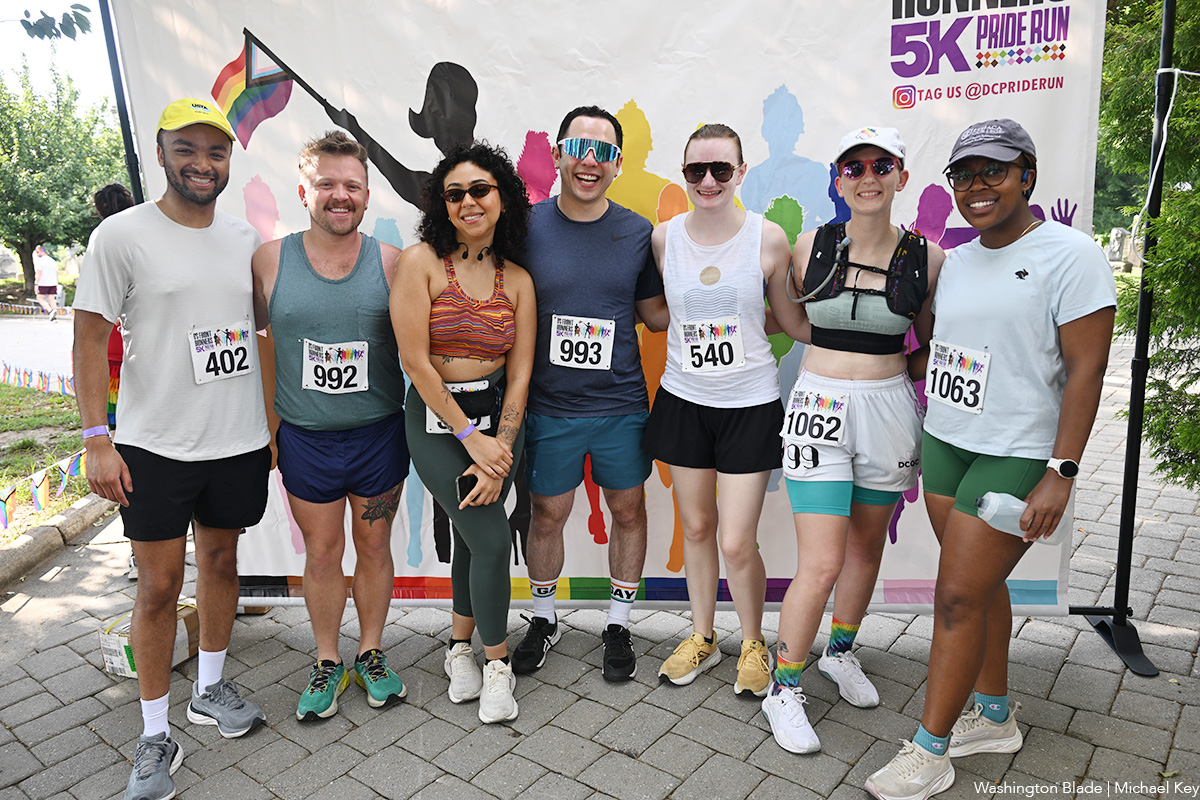
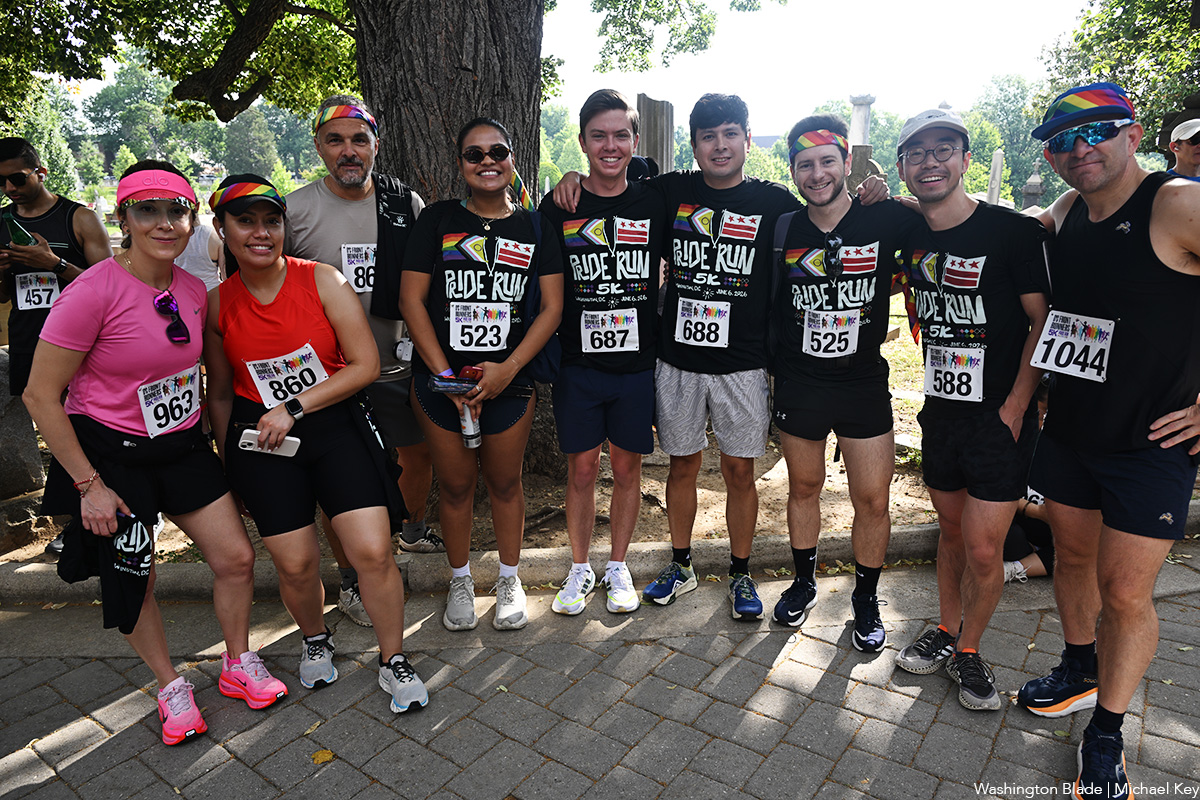
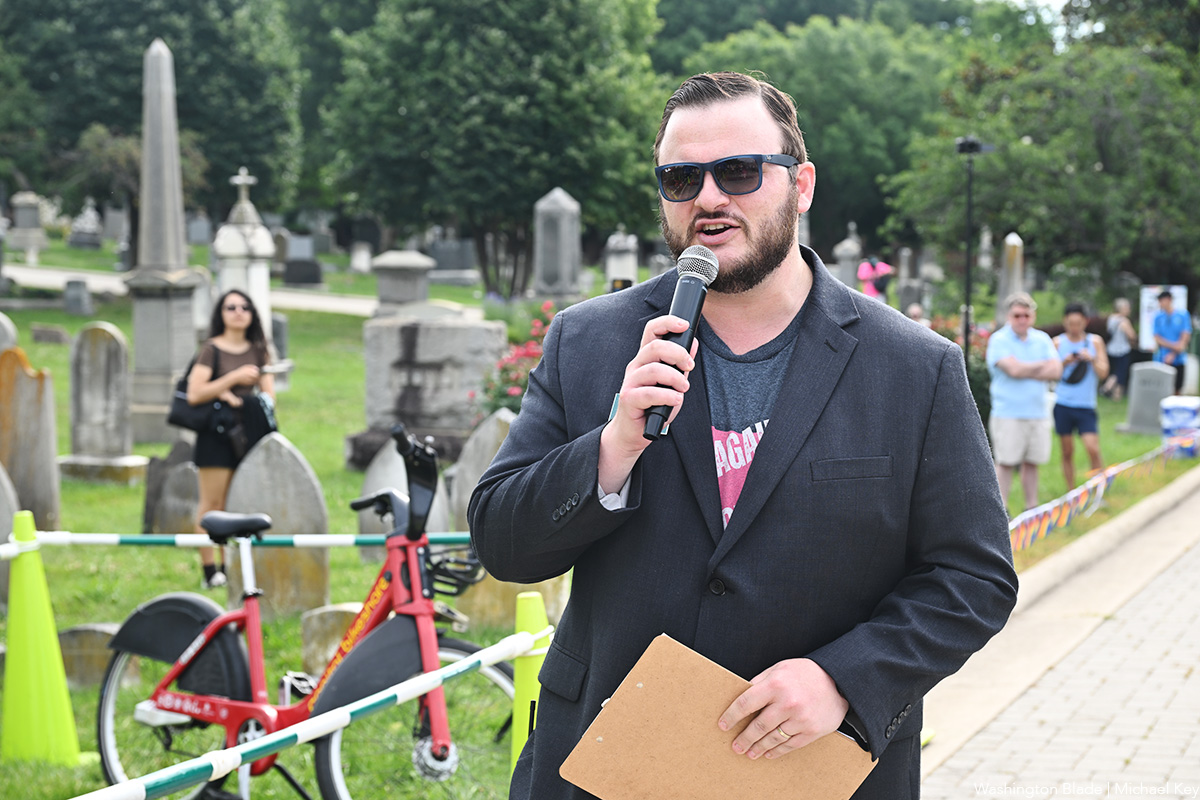
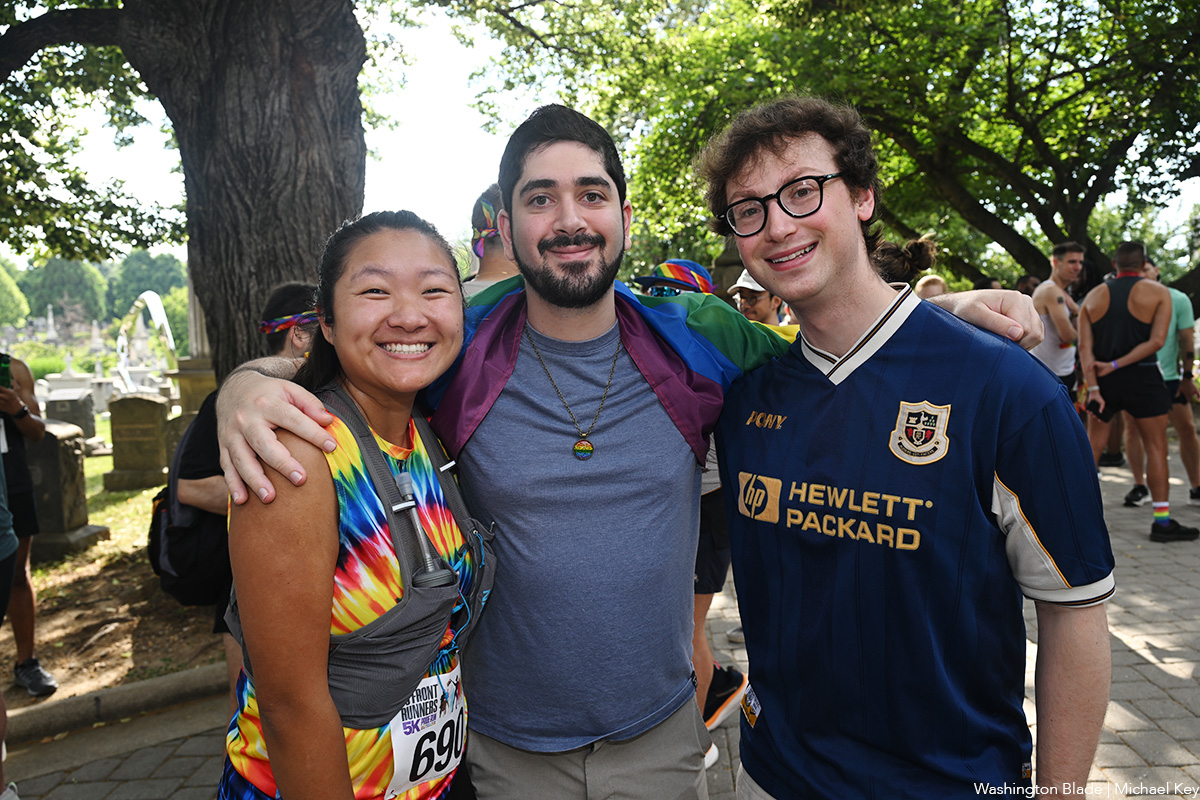
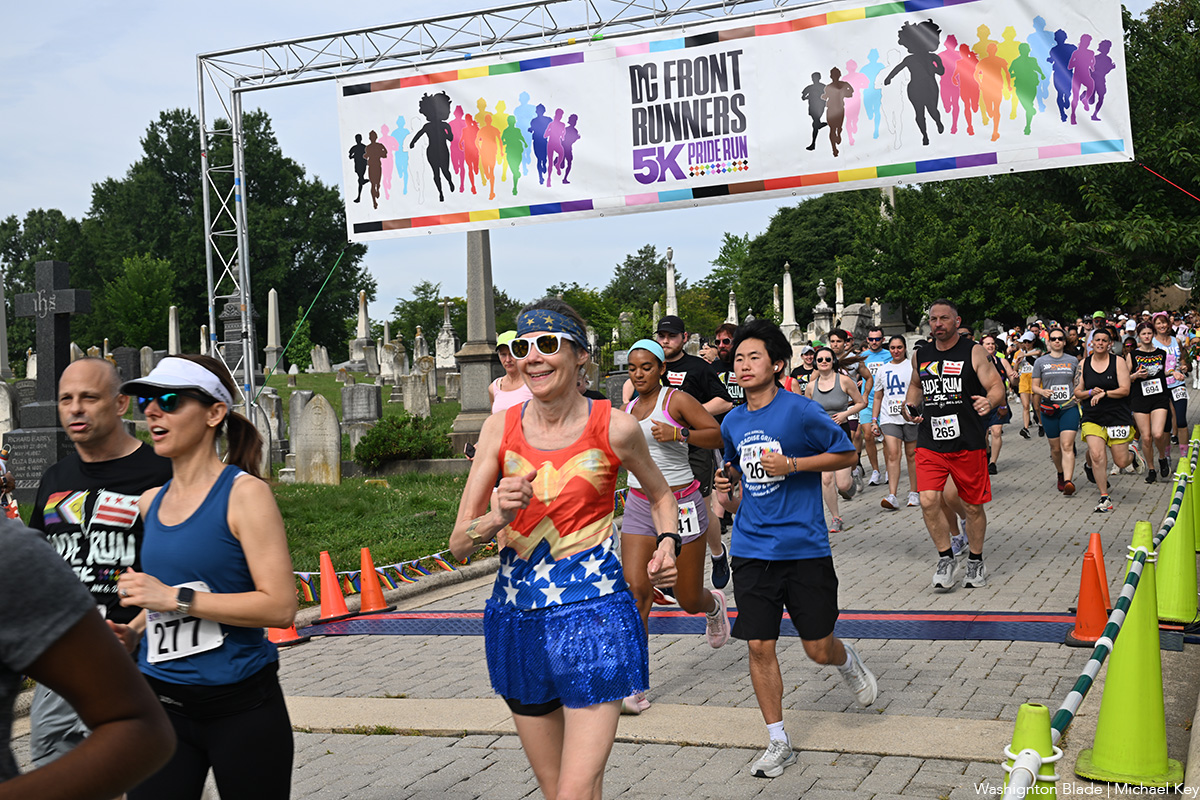
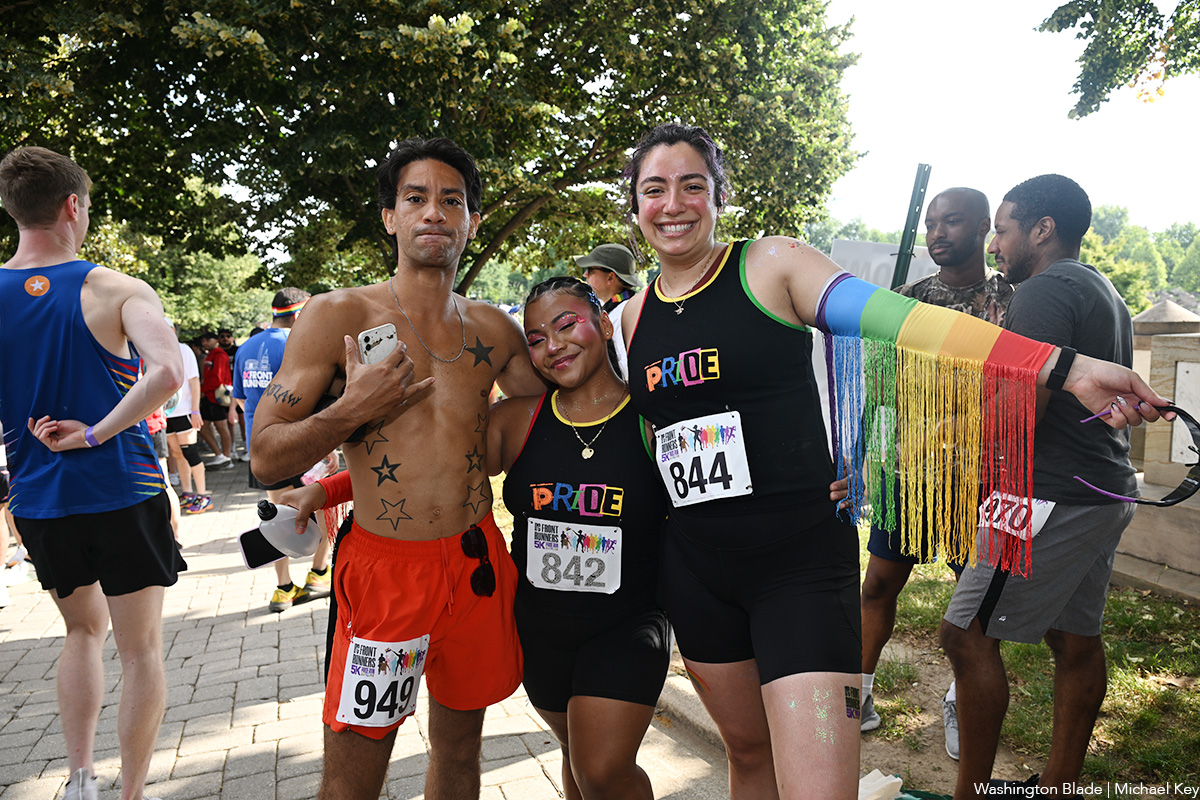
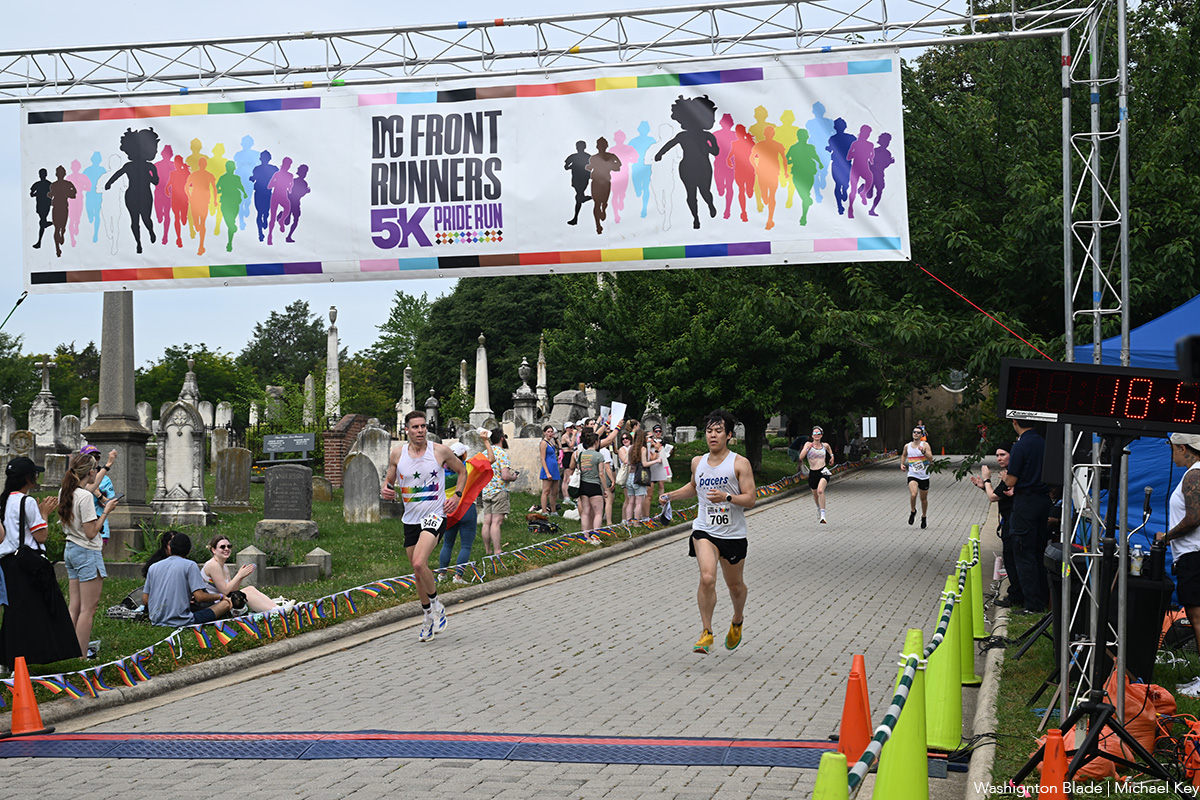
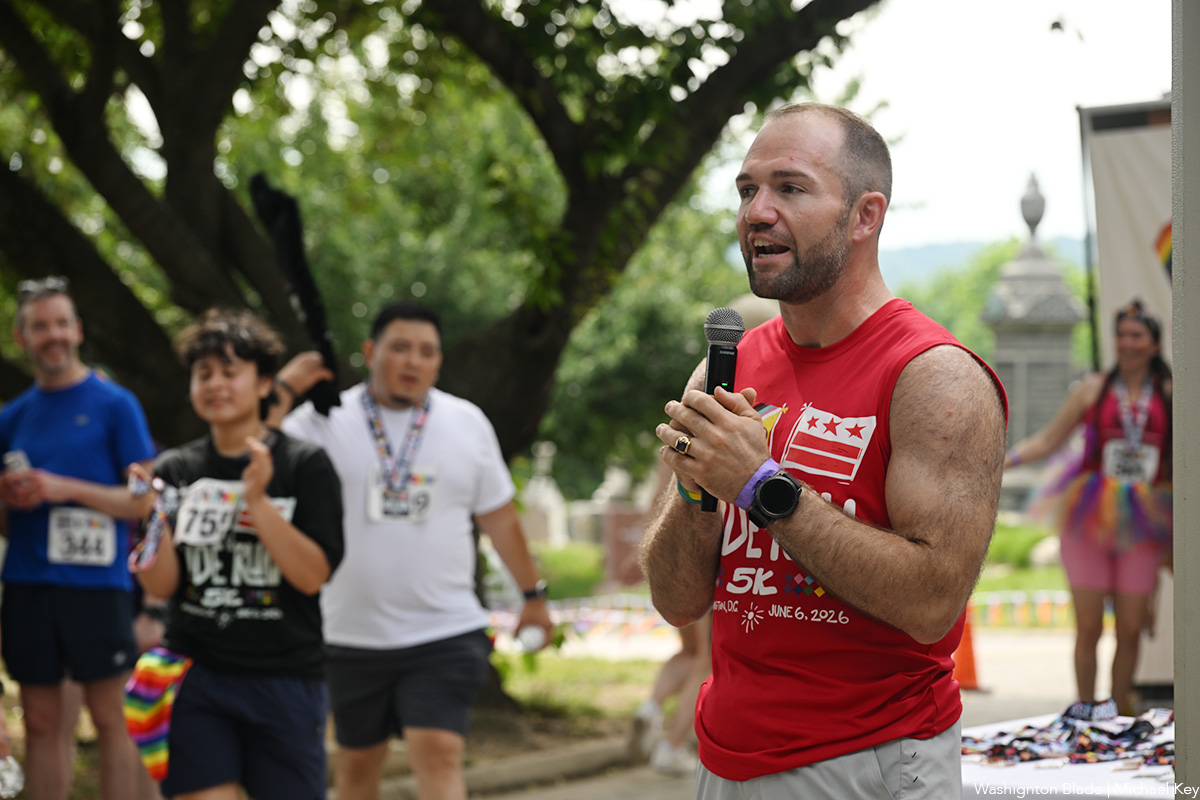
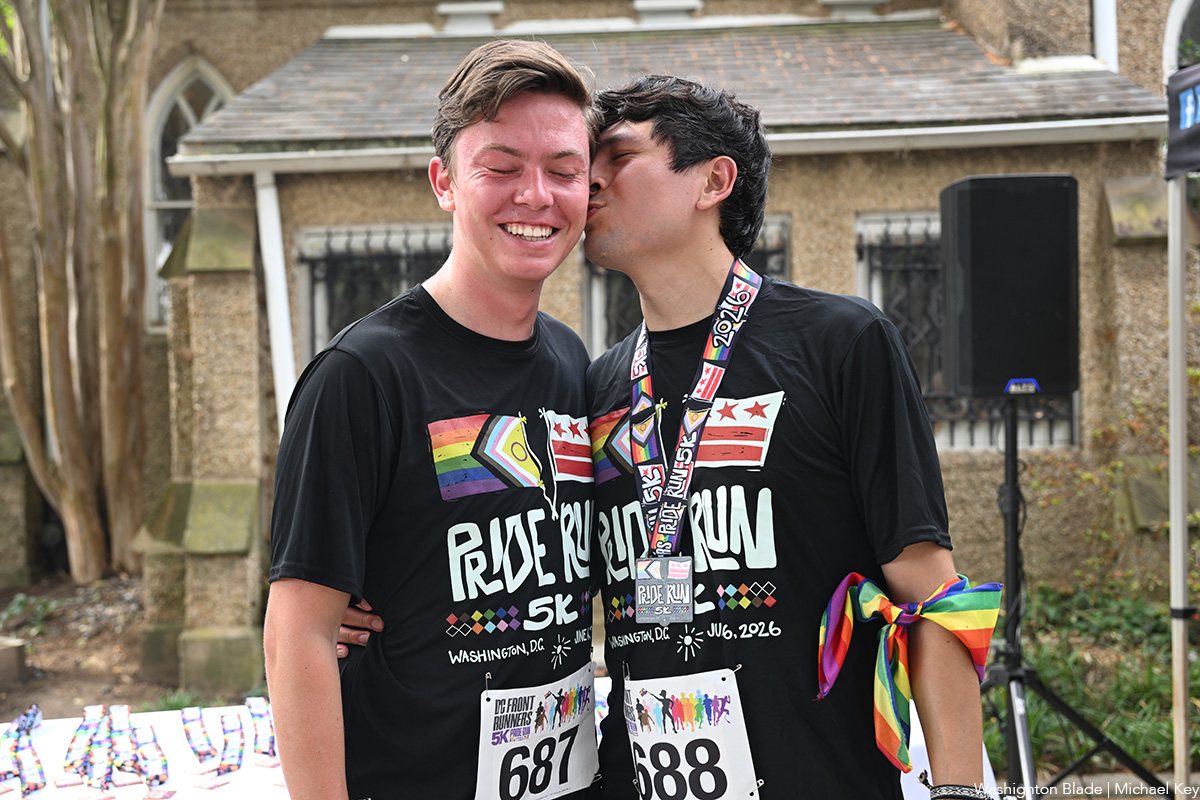
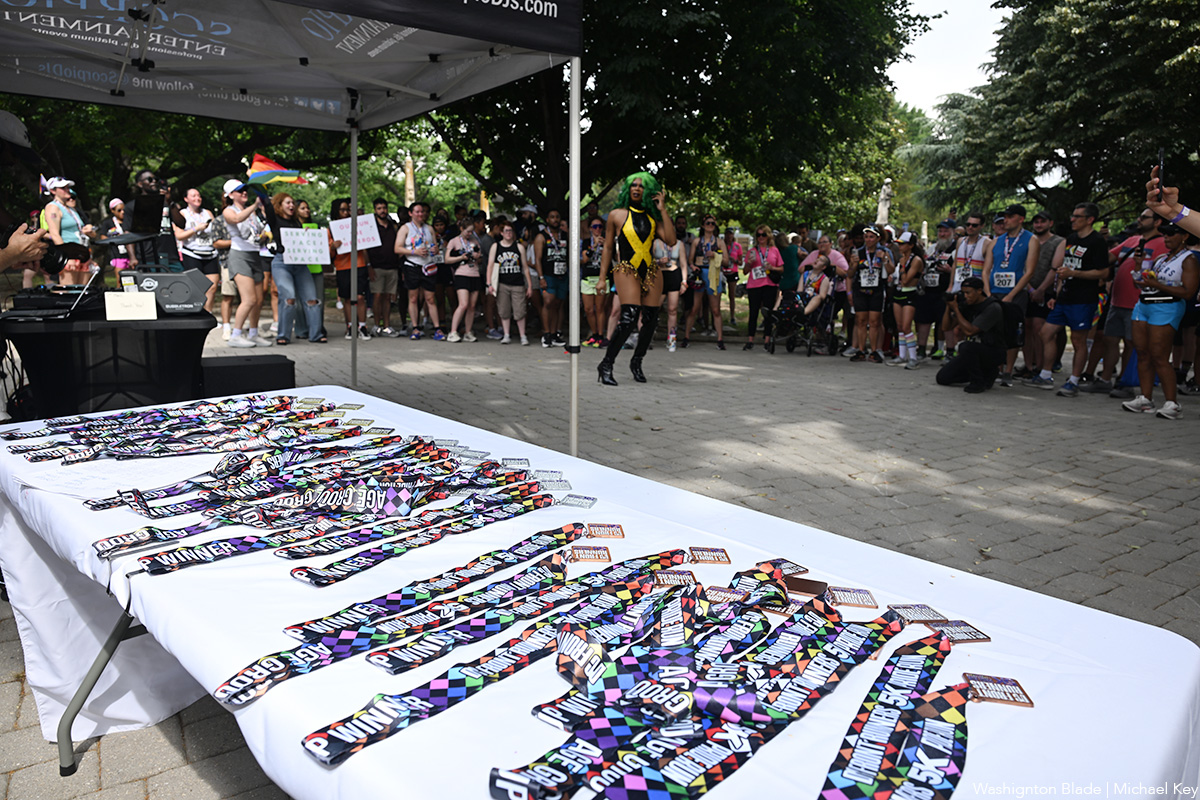
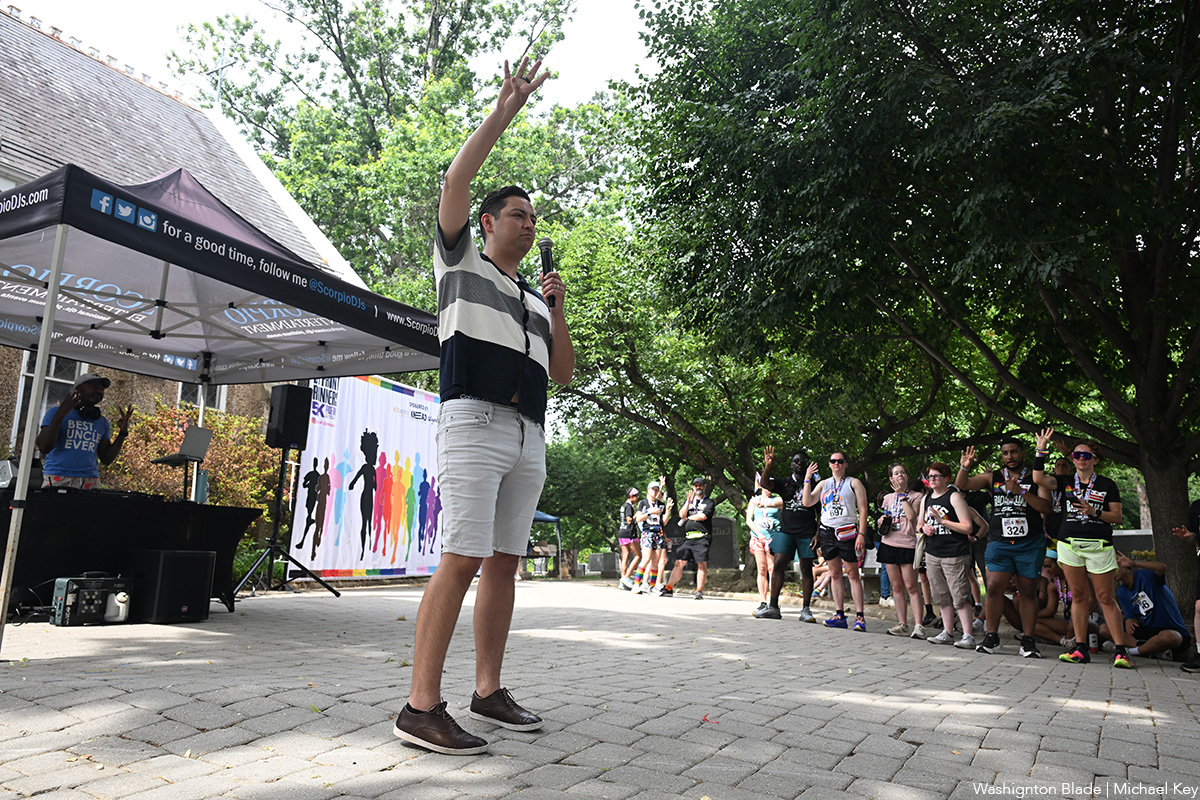
The D.C. Front Runners held the 14th annual 5K Pride Run at Congressional Cemetery on Saturday, June 6.
(Washington Blade photos by Michael Key)








View on Threads

Rehoboth’s Pride on the Bay set for June 27

Blade editor inducted into D.C. Society of Professional Journalists Hall of Fame

Pride in a new world order

McDuffie on LGBTQ support and standing up to Trump

PHOTOS: Fairfax City Pride

Controversial ‘Blue Film’ pushes past taboos for gripping drama

Timothy Nelson on the premiere of his opera ‘Song of Sakuntala’

PHOTOS: ‘Soul Divas’

‘Mighty Real’ explores history of LGBTQ music