Theater
Out actors shine in area productions ‘Anastasia,’ ‘As You Like It’
Jade Jones, Stephen Brower overcame insecurities to forge successful stage careers
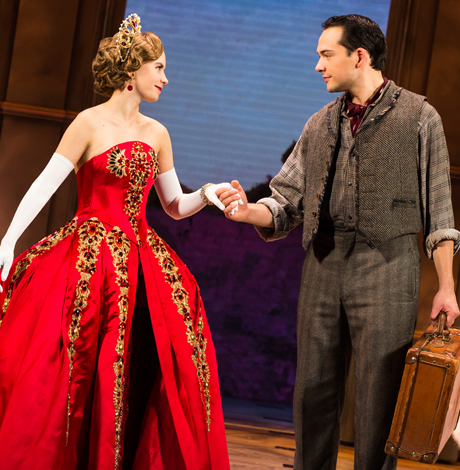
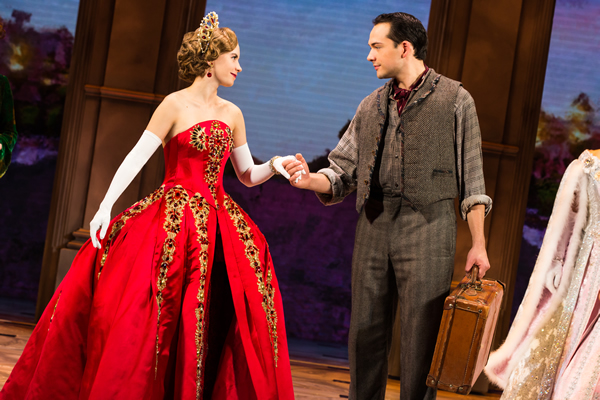
Lila Coogan with Stephen Brower in the national tour of ‘Anastasia.’ (Photo by Evan Zimmerman)
‘Anastasia’
Through Nov. 25
The Kennedy Center
2700 F St., N.W.
$59-179
202-467-4600

Jade Jones in ‘As You Like It,’ at Keegan Theatre. (Photo by Cameron Whitman)
‘As You Like It’
Through Dec. 2
Keegan Theatre
1742 Church St., N.W.
$62
202-265-3767
Untraditional casting and breaking gender stereotypes on stage aren’t new concepts. And for younger out actors like Broadway vet Stephen Brower and local up-and-comer Jade Jones, it’s all part of the job. In recent interviews, the talented pair share their respective experiences.
As Dmitry, the young con man turned princely love interest in the national tour of “Anastasia” now at the Kennedy Center, Brower adds an unexpected vulnerability to the part that other actors might not. Still, as the leading man in the Stephen Flaherty and Lynn Aherns’ musical about the mystery surrounding the last tsar’s fabled daughter, Brower brings the chemistry and romance.
In his program bio, Brower, 25, thanks the production’s producers and creative team for their trust and open-mindedness.
“The guys who played Dmitri before me, Derek Clena and Zach Adkins, are traditional leading men — masculine, tall strapping guys,” he says. “Unlike them, I’m tall and skinny with bad posture. So when I auditioned for the part, I went in with my bag tricks. I was quirky and making jokes, but unafraid to show sensitivity. And they trusted my take on the role.”
Traditionally actors have been taught that leading men need to be sexually appealing to be successful, Brower says. “I’ve seen a lot of naturally sexy people get cast over more talented actors. I guess it has to do with ticket sales. As an actor, you face a challenge in being marketable while trying to be honest with yourself. My upbringing and background — being an opening gay man raised in conservative Tulsa, Oklahoma — has a lot do with what I bring to the part.”
Fortunately for actors who might come across as somewhat less than butch, things are changing Brower says. “We are currently in an age where can challenge those perceptions and I feel great to be a part of that. I honestly don’t think I would have been cast as Dimitri 10 years ago.
“Still,” he adds, “there remains a lingering fear that when you walk into an audition room that you have to put on that swagger to make them fall in love with you and casting directors only fall in love with guys who are hypermasculine. Most actors are plagued by insecurities. It’s important to me that stereotypes of leading men are changed.”
Growing up in Tulsa, Brower came out at 15.
“My family was very supportive and I think I knew they would be. What’s more I attended a diverse school. Magnet school for general education that created a loving and supportive environment.”
He went on to earn a degree in musical theater at Texas State University in three years before heading to New York City. Soon after, he landed a professional gig and has been employed ever since.
Prior to playing Dmitry, Brower toured with “Pippin” and “An American in Paris.” Luckily, he enjoys life on the road. His boyfriend, an actor/dancer, is touring with “Wicked.”
“We get together when our schedules permit. It’s tough but we manage. It’s part of what actors have to do.”
Jade Jones, 28, has played a hippy in “Hair” at Keegan Theatre, a munchkin in Ford’s Theatre “The Wiz” and recently that notorious meat piemaker Mrs. Lovett in Stephen Sondheim’s musical “Sweeney Todd” at Rep Stage in Howard County, an experience Jones describes as her principal accomplishment to date.
Currently Jones is playing Senior Duke in Keegan Theatre’s “As You Like It,” a pop/rock musical take on the Bard’s romantic comedy by New York singer/songwriter Shaina Taub. It’s the third time Jones has been cast in a role written for a man.
“It’s really interesting casting and makes me realize that the sky is the limit,” says Jones, who sums up her attitude in a quote attributed to African-American ballet dancer Lauren Anderson: “Do I fit this mold? No. There is no mold in art.”
In the spring, Jones tackles Little Red Ridinghood in Sondheim’s “Into the Woods” at Ford’s. Her future working wish list includes playing Tennessee William’s iconic creations Blanche Dubois and Stanley Kowalski (though not in the same production).
Like Stephen Brower, Jones is familiar with insecurities.
“I never believed I had what it took to be a musical theater actor. I initially felt that I needed to separate my acting and vocal careers,” says Jones who’s often singled out for her magnetic stage presence and powerful, soulful voice. “But then fellow actors explained to me how I could, and really should, do both together. I also had a fear of dancing. Fellow actors helped me with that too. I’ve been fortunate to work with some very supportive people. I consider them my mentors.”
On Monday at Keegan Theatre’s annual gala held in their charming performance space on Church Street in Dupont, Jones will receive the company’s Emerging Artist Award given to younger artists who have performed on the Keegan stage and shown particular promise and demonstrated a collaborative spirit, a dedication to their craft, an exceptional work ethic and an ever-deepening love for the art form. Keegan Theatre Associate Artistic Director Susan Marie Rhea says, “Jade is a true triple threat, a performer of the highest caliber. But she’s more than that — she has passion, vision for her career and a love for life and her fellow artists that makes her a true joy to be around.”
Jones, who is single and lives in Dupont, says receiving the award is like “coming full circle.” As a Fairfax County high school student, Jones was introduced to the works of Tennessee Williams with Keegan’s “A Streetcar Named Desire.”
“I was blown away. It’s the reason why I’m an actor. After graduating from Ferrum College in Virginia, my first professional acting job was at Keegan in ‘Hair.’ That they’re celebrating my work is very exciting.”
Coming out to her religious parents wasn’t easy. Being gay was condemned from the pulpit and her parents agreed with that.
“But they’ve changed since then. When I look at them now and the way they have accepted me and other family members and my friends, it makes be believe that there is positive light in this world despite everything. It’s not hard to be LGBTQ in the theater community,” she says. “I don’t think there’s any profession that’s more accepting. It’s where I’m most comfortable.”





Theater
Don’t miss summer productions at Clear Space in Rehoboth Beach
‘Cher Show,’ ‘Pretty Woman’ among season’s standouts
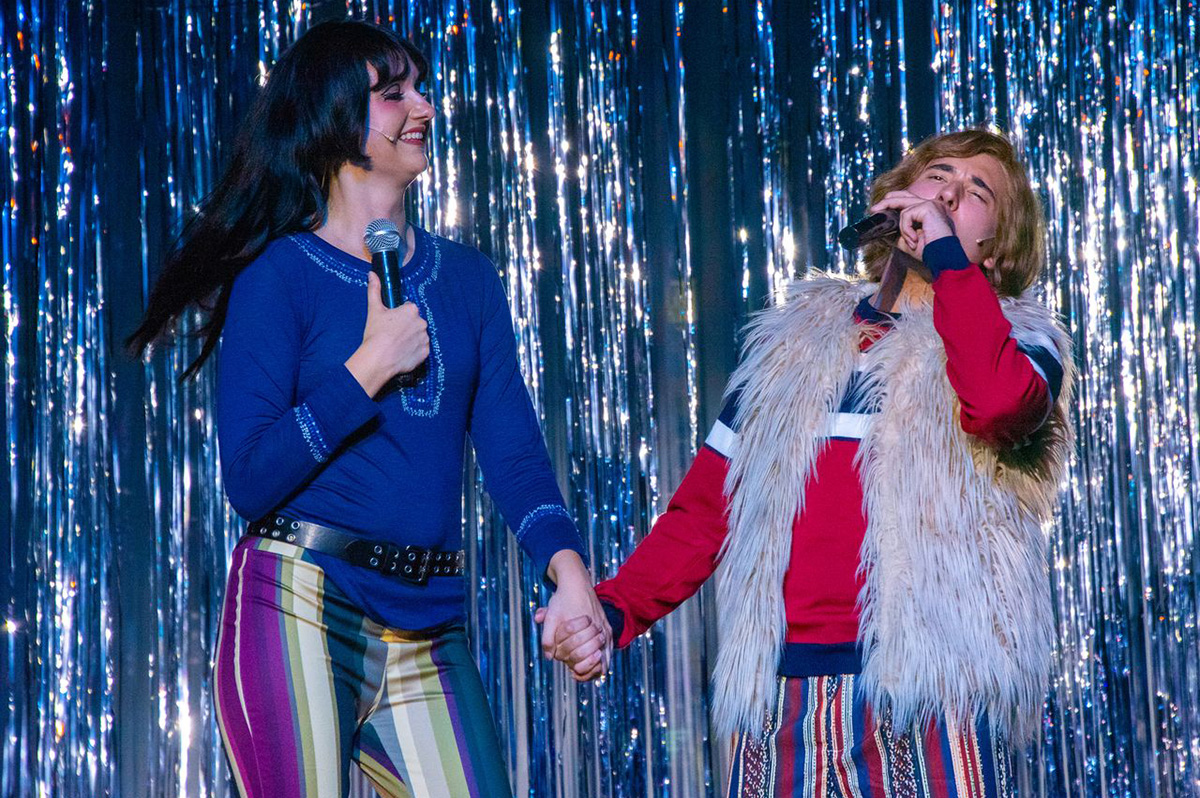
“The Cher Show” at Clear Space Theatre is wonderful. I am always amazed at the talent they attract for their summer series. Kudos to Wes Drummond, the artistic director of the theater. “The Cher Show” is written by Rick Elice. Compliments to the talented director, James FitzSimmons, who brought to life this production. His immensely talented cast includes Shannen Hofheimer as Star, Breanna Lemerise as Lady, Abby Lynne as Babe, and Anya Kay, as young Cher. Each is a pleasure to both watch and listen to. They command the stage. Then more kudos to the entire cast and ensemble. Also, the creative team, which includes among so many who make this show a hit, choreographer Shondelle Graulich; scenic designer, David Chappell; lighting designer Brendan Smith; costume designer Valerie Beardsley; and the entire orchestra led by conductor, Jerry Birl.
But the actor who I was looking forward to seeing in the production, was a young actor I had written about, and reviewed, when I saw him at Clear Space two years ago. In this production he is Sonny Bono, and he definitely didn’t disappoint.
Let me introduce Caetano de Sá. I have written about him before, but his resume is worth repeating. It says; Height: 5’7 ½, Eyes: Brown, Voice part: Tenor G2 – C5, Build: Athletic. All true. Then you add to this he speaks Brazilian Portuguese, is certified in stage combat by the Society of American Fight Directors, and is a 2nd Degree Black Belt in Taekwondo. Then as his resume of roles confirms, he can act, sing, and dance with the best. He does a great job as Sonny and is fun to watch on stage. Here he displays his talents as a singer and actor, and they are as good as I remembered them when I first met Caetano while he was still in school in 2024, and was starring as Frankie Valli in “Jersey Boys,” at Clear Space. At the time he was a rising senior at the Boston Conservatory at Berklee BFA Musical Theater program. I interviewed him, and Harry Sperduto, who played Tommy Devotee, after seeing them in the show, and being amazed by their talent. Since that time, I have followed their careers. When I heard Caetano was coming back to Clear Space for the summer, I reached out, and he agreed to sit down and chat, which we did. I knew Clear Space Theatre was planning a busy summer season. Their lineup of shows included “The Cher Show,” “Mean Girls,” and “Pretty Woman.” They always have talented casts, including the many college students who are getting their first chance to shine, which was the case for Caetano in 2024. Now he is back as a graduate, with more experience under his belt, a little more established. This season he was going to play Sonny in their production of “The Cher Show,” Martin/Coach Carr, in “Mean Girls,” and Mr. Hollister in “Pretty Woman,” and being a part of the ensemble. He told me he really enjoys being at Clear Space, and that his castmates are all talented. He is a lot more experienced than when he was here before, having performed in productions at the Prairie Repertory Theatre, the Emerald Coast Theatre Company, Firehouse Center for the Arts, and the Sullivan Rep, among others. In productions as diverse as “Oklahoma!,” “Mystic Pizza,” “Hairspray,” and “Rock of Ages.” He now lives in New York City and clearly New York is the perfect place for an aspiring actor. He has an agent at Bramante Artists, who is getting him gigs, like the one he had at 54 Below and even a TV commercial for AFLAC.
“The Cher Show” is the second show I have seen at Clear Space this summer. After our chat I got one of the last tickets available that evening for “Pretty Woman.” In that production he has a smaller role, and is part of the incredibly talented ensemble. It is also an entertaining show and its very talented stars, Abby McDonough as Vivian, and Jaiden Leo Riley as Edward, are a pleasure to watch. Kudos to the talented director, Ashley Williams, and the entire creative team.
For anyone living at the beach, or coming for a visit, I urge you to plan a night at Clear Space. You won’t regret it. But know tickets for all the shows, and Sunday evening cabaret nights, sell out fast. So, I suggest you see what’s available online and buy yours today.
Theater
Reggie White relishing first season as artistic director of Woolly Mammoth
First five shows a reminder that ‘pressure is a privilege’
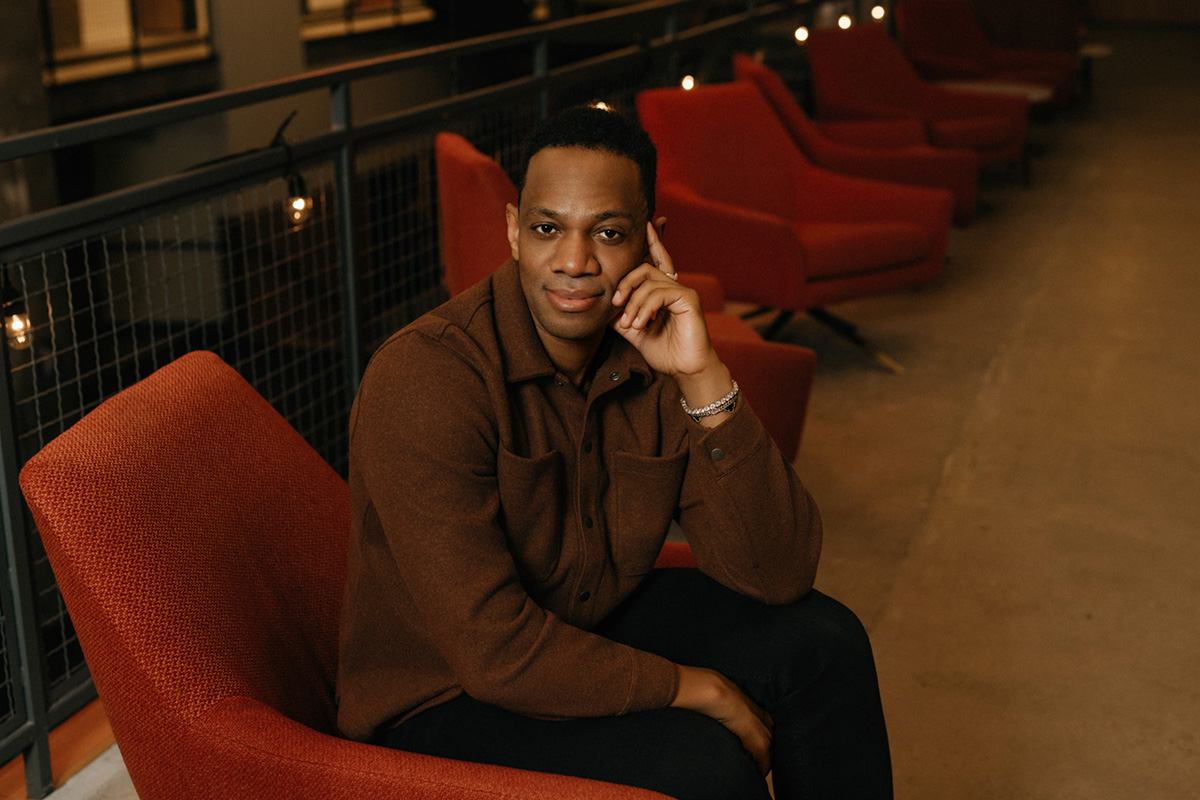
Madly talented and preternaturally energetic, Reggie D. White, 38, is about to launch his first season as artistic director of D.C.’s boundary-pushing Woolly Mammoth Theatre Company.
White brings a lot to the job. As actor, playwright, and director, his varied resume includes a 2019 Broadway acting debut in Matthew López’s Tony Award–winning play “The Inheritance,” his semi-autobiographic play “Fremont Ave.” that opened to acclaim last season at Arena Stage, and a number of exciting regional directing credits.
A longtime admirer of Woolly, the out theater-maker was selected from a pool of candidates before receiving the offer last November and starting work in January. His season of five world premieres kicks off with gay playwright Steve Yockey’s “Venus” (Sept. 9-Oct. 4), a darkly funny study of modern relationships told through two lesbians looking back on their first encounter.
White was introduced to Woolly Mammoth as a pre-law student at Cal State Hayward in the San Francisco Bay Area, long before he foresaw a life in the arts. “As part of a random theater history course, I was assigned to write a paper on a counterculture company called Woolly Mammoth,” he recalls “Strange name. I was like what the hell is that?”
Nineteen-year-old White was intrigued. Research acquainted him with Howard Shalwitz who co-founded Woolly in 1980, and the company’s commitment to living playwrights and new work. He also learned how theater could be used as a tool for difficult conversations and shape the way people thought about social issues by employing imagination and rigor.
“Never in a million years did young me envision that one day I’d be Woolly’s third artistic director in its 46-year history,” says White. “It’s kind of serendipitously insane.”
WASHINGTON BLADE: Was there a moment when the enormity of the job hit you?
REGGIE D. WHITE: After I’d signed my contract and finished all the paperwork, I got my keys and sat in the theater by myself in the dark and thought about what an incredible honor it is to be trusted with what happens in this beautiful space [in D.C.’s Penn Quarter]. I might have cried. Sometimes I have to pinch myself to remember it’s real.
BLADE: Are you curating the upcoming 2026–2027 season?
WHITE: Yes, I am. It’s very rare that an incoming artistic director gets to program their first season, but I was lucky in terms of time. After being hired late last year, I asked Woolly’s managing director Kimberly E. Douglas, if she thought it would be crazy if I programmed the season. She warned me it would be hard.
I invoked tennis legend Billie Jean King’s maxim “pressure is a privilege” and got to work.
These plays [dubbed White’s “first five”] represent both the kind of theater that Woolly can do really well and speak directly to my voice as curator and how I want to contribute to the larger theatrical conversation in the DMV.
Getting here has meant a lot of late nights. But I knew the juice would be worth the squeeze.
BLADE: As a queer artistic director, what makes you unique?
WHITE: When I was playing in “Inheritance” on Broadway, after a performance, U.S. Supreme Court Justice Sotomayer came backstage to meet the cast. She spoke about how her lens on the world as a Puerto Rican woman shapes her decisions. Similarly, because I’m a queer Black man I see through a lens that shapes my work.
I know I’m not the only queer artistic director in town. For me, it influences how I make editorial decisions. Out of this season’s five plays there are explicitly queer characters in four [“Venus,” “Chanukkah Spectacular,” “Ten Grand,” and “Love I Awethu Further”] and I’m directing two [“Venus,” “Ten Grand”].
BLADE: Will we see familiar faces?
WHITE: Every show this season will feature a Woolly Mammoth company member in its cast. Our company also includes designers and directors who we’ll include. I’m invested in continuing to provide a showcase for their work.
BLADE: How do you think queer audiences will receive the season?
WHITE: Very well, I think. For queer people who’ve had to navigate the world subversively and solve problems in unique ways, I think it will be especially interesting. I find theater a potent place for questions.
Like all artistic directors. I’ll show up for the job in my own way. I’m just excited that I’ve been invited to bring the fullness of myself to the role.
Theater
D.C. summer theater offers something for every taste
From family fare to ‘Brontë Sister House Party’

Staycation doesn’t preclude time travel.
For instance, Happenstance Theater’s production of “Adrift: A Medieval Wayward Folly” now playing at Round House Theatre in Bethesda invites audiences to go somewhere familiar but far from home.
A timely piece of theater, “Adrift” takes place shortly after an apocalypse, prompting a group of seafaring fools to ask “What do we do now?”
What ensues is a gorgeously lit glimpse into the dark ages bursting with slapstick comedy and high art. Characters and mise-en-scène are inspired by the late Middle Ages/early Renaissance paintings of Hieronymus Bosch, and archetypes from the Tarot. Bosch’s surreal heaven and hellscapes are brought to life with music, devised and existing text, puppetry, and movement.
Sabrina Mandell, Happenstance’s charming co-artistic director and bona fide “visionary tornado” describes Happenstance, now marking its twentieth anniversary season, as small and agile, more interested in sustainability than growth. “It’s served us well. Our goal has never been to own a building,” she adds.
Over the years, the company has fostered an ensemble (Mandell, co-artistic director Mark Jaster, Gwen Grastorf, Sarah Olmsted Thomas, and Alex Vernon), an immensely creative team. In addition to performing, each member contributes in various ways: puppet making, social media, props, etc.
They play off each other endlessly. (“Sort of like the Carol Burnett Show only different?” I ask. “Exactly.” she agrees. They’ve been through a lot and have formed common vocabulary. Nostalgia buffs, they enjoy old films, art movements, and historical eras. The vibe is eccentric and there’s a bit of queer sensibility.
The two-time Helen Hayes Award winner for costume design, does it all — props and costumes and marketing. In “Adrift,” she plays both the oracle and a crone.
Mandell was born on the coast of Nova Scotia, Canada, the daughter of artists, and later lived in Montreal. As a young woman, she worked on schooners. For Mandell, it’s been a magical life filled with visuals marvels, she says.
When Happenstance begins rehearsal, there’s no fixed script: “We choose a territory and everyone does a deep dive. I’m interested in alchemy, the Tarot, mortality, and the Shaministic roots of theater. All of which are well represented in this production.”
The experience is also immersive. Audiences are encouraged to pose questions to the oracle. Much is whimsical, and in true Medieval fashion the 85-minute show is not without a hellmouth (the jaws of hell) and plenty of demons. Happenstancetheater.org
For staycationing kids, there’s “Pete the Cat: A Live Rock Musical” (through Aug. 2) at Imagination Stage in Bethesda. Follow Pete (played by Michael Perrie Jr.) and the Biddle family as they rock out in a fast-paced, globe-trotting musical based on the massively popular children’s book series. Imaginationstage.org.
There’s more family theater at Glen Echo Park in Maryland. Adventure Theatre MTC puts a spin on beloved fairytale with “Sleeping Beauty: The Time Traveler” (through Aug. 9). A humdrum summer changes when a young Rolly (Carl L. Williams) is whisked back in time to the Age of Charlemagne where he meets Aurora (Chelsea Majors), a bold 12-year-old princess with dreams of knighthood and adventure beyond her castle walls. (Chelsea Majors). Adventuretheatre-mtc.org.
Also at Glen Echo Park, The Puppet Co. presents “The Three Billy Goats Gruff” (through Aug. 23), ideal for kids 4+ and puppet aficionados of all ages. Thepuppetco.org
Broadway at the National on Pennsylvania Avenue presents “The Notebook” (through Aug. 30). Based on Nicholas Sparks’s best-selling novel that inspired the successful film, this romantic musical tells the story of unlikely couple Allie and Noah, who against all odds (hardship, separation, and Alzheimer’s disease) share a lifetime of love. Broadwayatthenational.com
In Vienna, Va., Wolf Trap takes you to Rome circa 1800 with Puccini’s “Tosca” (Aug. 4) presented by Wolf Trap Opera, in collaboration with the Washington National Opera Orchestra.
Following Puccini it’s a magical summer night with Diana Ross (Aug. 19). Expect to hear the superstar and two-time Grammy Lifetime Achievement Award winner perform many of her iconic hits including “I’m Coming Out,” “Ain’t No Mountain High Enough,” “Stop in the Name of Love” and more. Wolftrap.org
Nu Sass, a company that promotes marginalized genders in all aspects of theater, presents Courtney Bailey’s “Brontë Sister House Party” (Aug. 14-Sept. 12) at Van Ness on Main Street (4340 Connecticut Ave., NW). In life, the Brontë Sisters, Emily, Charlotte, and Anne, wrote their 19th century English lit classics in the virtual isolation of their father’s remote York parsonage. Now, stuck in purgatory, they’re suffering through party after party in an endless time loop. For them, hosting is truly hell, until they finally find a way to make it tolerable. Nusass.com
At Olney Theatre Center it’s “A Gentleman’s Guide to Love and Murder” (through Aug. 23), a Tony Award–winning musical farce about murder, manners, and money starring out actor Tom Story as all seven members of the rich, ill-fated D’Ysquith family. This fast-paced comedy promises to be a good time.
The Olney Outdoors summer series (Aug. 9-Sept. 12) also at the Olney Theatre Center features tribute bands, cabaret-style performances, comedy, drag, and family sing-alongs on the open-air Root Family Stage. Among the transportive tribute bands are “Space Oddity – The Ultimate David Brighton Bowie Experience” (Aug. 28) and for Labor Day weekend, it’s “Almost Queen” (Sept. 5) with Joseph Russo playing the band’s front man and queer icon Freddie Mercury. Olneytheatre.org
Signature Theatre in Arlington presents “Respect: Aretha Franklin” (Aug. 11-30), a musical tribute celebrating the Queen of Soul starring powerhouse performer Nova Y. Payton. Not to be missed. Sigtheatre.org

Flanagan beats Craig in Minn. Senate primary after winning key LGBTQ endorsements

Gay ANC commissioner sues D.C. over police ‘failure’ to pay reward money

New LGBTQ visitor center slated for Wilmington, Del.

Jason DePuy on coping with homophobia in ‘Big Brother’ house