Arts & Entertainment
Polyamorous gay triad re-enacts American history in ‘Kill the Monsters’

In case you’ve ever wondered what an allegorical story about the history of the United States would look like if it were told in the form of a polyamorous gay romantic comedy, you might be surprised to find that you’re not alone.
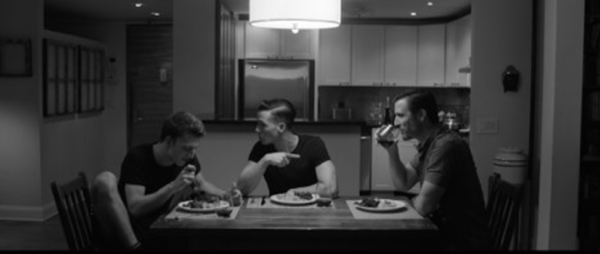
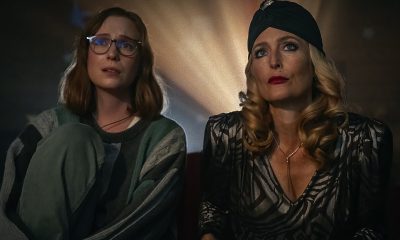
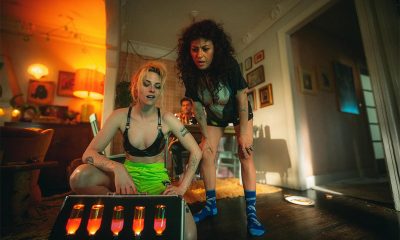
Filmmaker Ryan Lonergan has done more than wonder about it – he’s made a film based on exactly that premise. “Kill the Monsters,” which drops in February, follows three New York men living in a polyamorous relationship who set off across the country when their youngest member becomes “unwell,” seeking a holistic cure from a Santa Monica doctor. Along the way, they encounter a series of female characters whose interactions with them mirror US history – while also playing out realistically in an entirely contemporary setting.
Lonergan, who wrote, directed and starred in the movie as well as co-producing it, says he came up with the idea when he was revisiting the George Orwell classic, “Animal Farm,” and was inspired by the novel’s shrewd use of allegory in exploring the rise of Communism through a story about barnyard animals.
“It made me want to explore the evolution of democracy in the United States in a similar way,” the first-time director explains, “only my film would use humans rather than farm animals for protagonists. I wanted to ask: if democracy is the final evolution of government, as so many philosophers claim it to be, then why is it so ineffective at serving the people? If one watches the men in this film and wonders why they stay together, one must also question the same for these united states. Why should we stay together? How did we get here? What, if anything, can be done to improve the situation?”

If all of that sounds like more than you want from a romantic comedy, don’t worry. The director also assures us that his film is “a road movie centering around the preservation of a long term relationship” that never overtly concerns itself with politics or history, saying that those connections are made “through allegory and humor.”
Besides Lonergan, the film stars Garrett McKechnie and Jack Ball as the other points of the triad, whose cross-country journey takes them from hot sex in their luxurious NYC apartment, through a road trip that erupts in a conflict that may divide their union, to a high-pressure all-out poker war with scheming European lesbians. On the 2018 festival circuit, it was an official selection at dozens of fests, including Frameline42, Raindance Film Festival, and the Seattle Queer Film Festival.
It becomes available on DVD and VOD platforms February 18. You can watch the trailer below.



Out & About
Equality Chamber hosts Pride in Business Expo and Profits & Pours
Entrepreneurs, business leaders, professionals to meet at Mayor’s Office of LGBTQ Affairs

The Equality Chamber of Commerce is bringing together LGBTQ+ entrepreneurs, business leaders, professionals, advocates, and community partners on Thursday, Oct. 15 at 2:30 p.m. at the D.C. Mayor’s Office for LGBTQ Affairs (899 N. Capitol Street, NE).
This is an afternoon and evening focused on one essential question: How do we build businesses and a business community that can thrive? The Pride in Business Expo and Profits & Pours with Stephanie will create a powerful forum for connection, practical knowledge, and economic opportunity at the Mayor’s Office of LGBTQ Affairs. The Pride in Business Expo, taking place from 4-7 p.m., brings the region’s LGBTQ+ business community together to showcase businesses, build relationships, discover resources, and create new opportunities.
Out & About
Learn more about Virginia’s queer history
‘The Remarkable Visibility of Hannah Nokes’ event scheduled for Wednesday
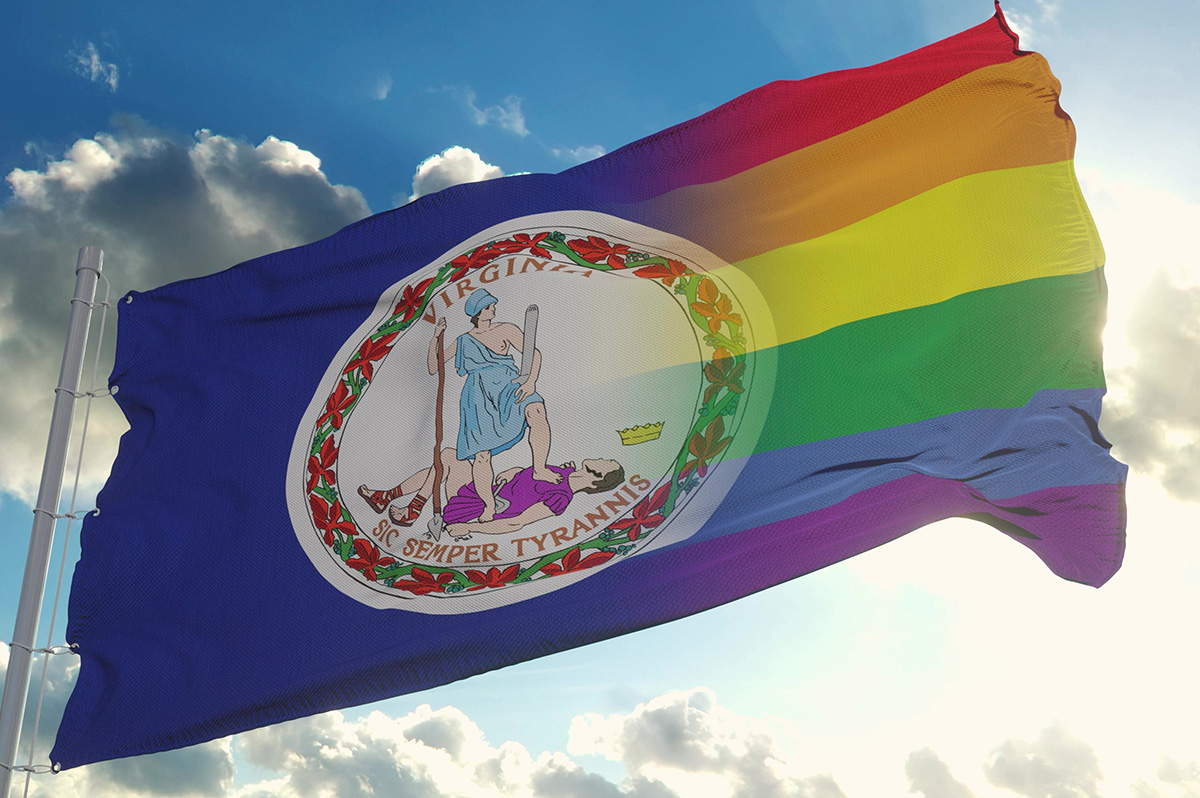
Queer Virginia Contributor Amy Bertsch will host “The Remarkable Visibility of Hannah Nokes” on Wednesday, Oct. 14 at 6 p.m. at Sprouse Rare Book Room inside the Kate Waller Barrett Branch Library (717 Queen St., Alexandria, Va.).
Amy will share the story of Hannah Nokes, an African-American transgender woman who made headlines in 1933 when she testified in a high-profile murder trial. Learn about Nokes’s life, her place in history, and the broader social context of her remarkable story. Her story is among those featured in the book “Queer Virginia: New Stories in the Old Dominion.”
Register at the Alexandria Library website.
Out & About
Annapolis Pride arrives this weekend
Sixth annual LGBTQ celebration held in Maryland capital
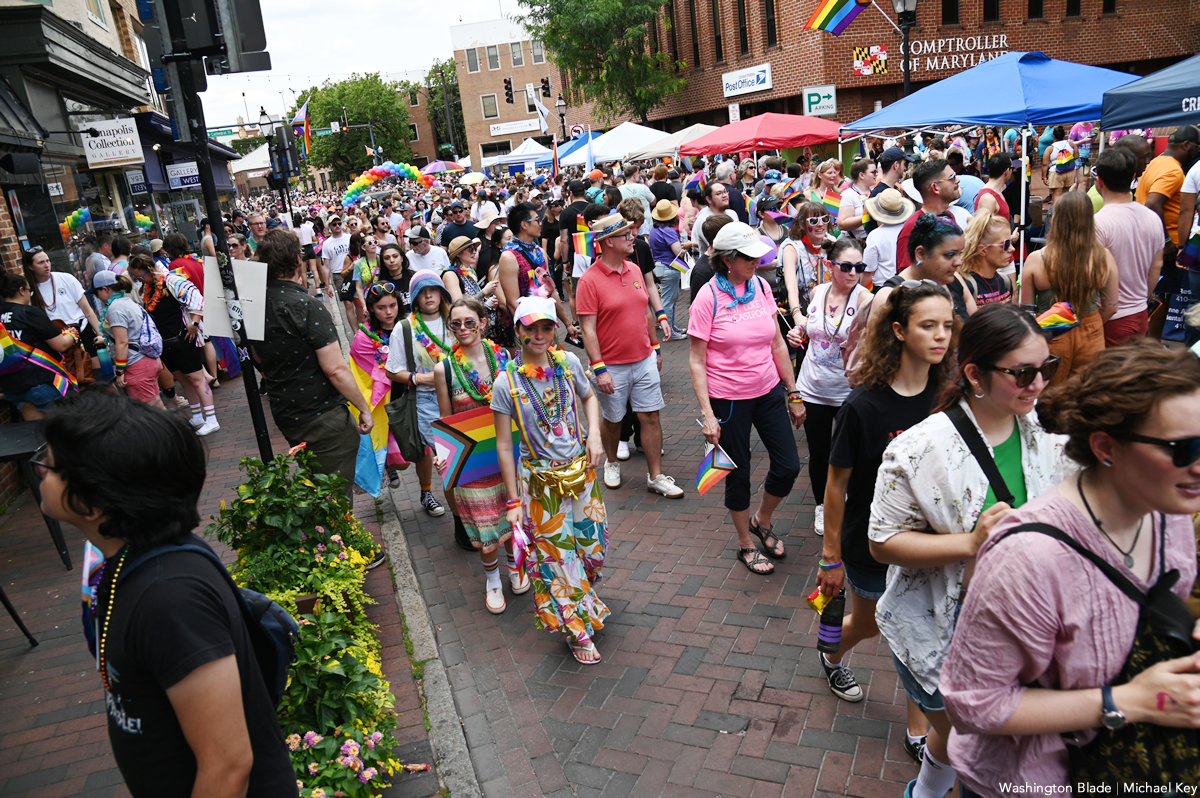
The Sixth Annual Annapolis Pride Parade and Festival will be held on Saturday, Oct. 3 at 11 a.m. on the streets adjacent to St. John’s College.
The theme of this year’s Annapolis Pride Parade and Festival celebration is “United in Pride, Together We Thrive!” Saturday’s parade will begin on St. John’s Street adjacent to St. John’s College, continue along Calvert Street to Northwest Street, to Church Circle, and onto West Street. The parade route then turns onto Amos Garrett Boulevard and eventually ends on Constitution Avenue near Maryland Hall.
Those with disabilities will be able to watch the parade from a special viewing porch at the Graduate Hotel at 126 West St. An Annapolis Pride volunteer will be there and available to assist.
For more details, visit the festival’s website.

Equality Chamber hosts Pride in Business Expo and Profits & Pours

Learn more about Virginia’s queer history

Annapolis Pride arrives this weekend

Calendar: October 2-8

Renee Good’s family files two federal lawsuits

529 openly LGBTQ candidates running in Brazilian election

Meet the LGBTQ candidates running for U.S. House, Senate

Ana Brnabić becomes world’s first openly lesbian head of state

Vote now! Best Of LGBTQ DC readers’ choice awards

Gay Va. couple hopeful voters will enshrine marriage equality in state constitution
-

 Brazil5 days ago
529 openly LGBTQ candidates running in Brazilian election
-
2026 Midterm Elections4 days ago
Meet the LGBTQ candidates running for U.S. House, Senate
-
Serbia4 days ago
Ana Brnabić becomes world’s first openly lesbian head of state
-
Arts & Entertainment4 days ago
Vote now! Best Of LGBTQ DC readers’ choice awards