Opinions
Will Democrats fall in love or marry well?
Panic pervades party’s presidential prospects
It may be a time for valentines, but Democrats aren’t falling in love.
The pickle in which the party finds itself is producing a palpable internal panic. Party members don’t have an obvious suitor for winning their affection and, similar to many a potential relationship, each one has serious shortcomings.
Although this is being written as voters are trekking to the polls in New Hampshire, it was not long ago that party partisans thought it possible to nominate practically any person for president with the expectation it would be easy to win. All of that changed last week.
A vote-counting debacle in Iowa gave Republicans an opportunity to taunt Democrats, asking how a party incapable of such a simple task could successfully put government in control of everyone’s health care while commandeering control of much private sector activity. Lower-than-expected voter turnout was also an omen.
The next day President Trump cockily strolled into the House chamber and delivered a robustly defiant State of the Union address. His full-throated presentation, complete with reality show audience cameos and stylized presentations, came on the eve of a perfunctory acquittal on impeachment charges generating less support for conviction the longer the trial took. He touted a strong economy, the lowest unemployment rate in 49 years, rising incomes alongside a soaring stock market – all while tossing out so many slabs of raw meat it wasn’t hard to imagine Republicans cheering the speech in their homes.
Worst of all for Democrats, national polls indicated Trump was garnering his highest approval ratings since election and greatest levels of popular support ever. This amidst sky-high confidence in the economy, an astonishing 90 percent “satisfied with life” score, and a super-majority of the public saying “things are going well.” It was a startlingly sudden shift in opinion that steered party stalwarts somewhere between doom and despair.
Eight candidate debates later and party members have grown glum. Policy prescriptions once internally normalized are increasingly considered far too extreme and politically untenable for voters. They look across the now whittled-down field of prospects still seeking the nomination and fret that not a one of them can win where it matters. Due to the general election result being predictable in the vast majority of jurisdictions, only a handful of states will likely decide the general election outcome.
Rattled by developments and the ascendancy of party-interloping democratic socialist Bernie Sanders, Democratic leaders and operatives began openly warning that a looming lurch to the extremist left could result in a massive Electoral College loss and defeat in as many as 35 or more states. Moderate Democrats in swing congressional districts whose victories in the mid-term election enabled the party to gain control of the House began voicing the same apprehensions and sounding similar alarms.
Ironically, Sanders might be best able to win back the upper Midwest “blue wall” states and disaffected working-class voters Hillary Clinton lost but suffer an overwhelming rejection elsewhere, creating a huge nationwide electoral deficit. Fears abound that selecting Sanders would result in a dual Trump win also including a popular vote victory.
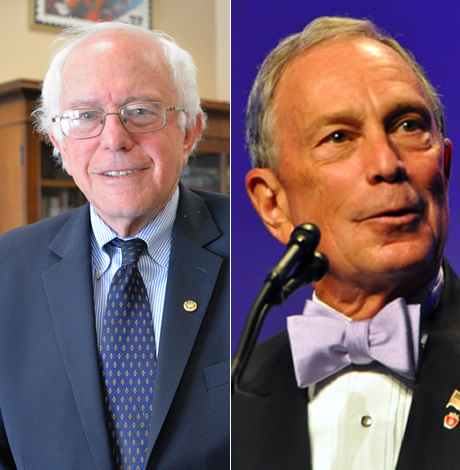
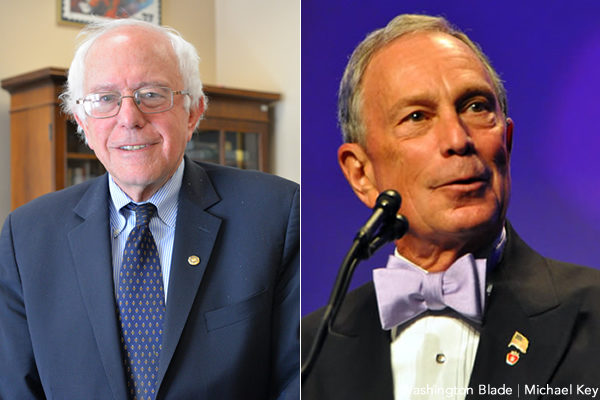
Sanderistas counter that an equally cantankerous disruptor and radical political personality is the ideal foil for Trump. Others, however, seem to be suddenly shifting support to former New York City Mayor Michael Bloomberg and the big bucks from his pocket he’s willing to spend. Trump is expected to raise a billion dollars while deploying a highly sophisticated voter targeting capability.
Democrats confront the rising possibility that no one will arrive at the party’s national convention with enough delegates to become the standard-bearer on the first ballot. The worry is that the nominee will leave a bitter Milwaukee confab bloodied and, if not Bloomberg, broke.
Democrats may hope for love, but might do better by marrying well.
Mark Lee is a long-time entrepreneur and community business advocate. Follow on Twitter: @MarkLeeDC. Reach him at [email protected].



Opinions
Skipping Memorial Day crowds in Rehoboth Beach
After 30 years, I’ve become allergic to large gatherings

There are a lot of things about getting older that are great. I love retirement, love the cruises I take, time at my favorite coffee shops, both in D.C. and at the Coffee Mill in Rehoboth. Then there are some not so great things. I have had a few health issues, which luckily, I have fully overcome. Some issues you can do something about, others you can’t. One of the things I have come to realize is, I no longer enjoy big crowds, and this is something I can do something about. Just avoid them.
I have spent every holiday weekend since buying my place in Rehoboth, and that is going on 30 years, at the beach. I go for Christmas and New Year’s, Martin Luther King, Jr. weekend, President’s Day, Memorial Day, and Labor Day. Add a few extra holidays I may be missing like Veterans’ Day, if it falls on a weekend. This is the first year I won’t be there on Memorial Day, and it is by choice. Instead, will be staying in D.C. Some will ask why, and my simple answer is to avoid the crowds. I keep thinking of the crowds last Memorial Day and decided to see how it goes skipping it this year.
Don’t get me wrong, I am thrilled for all the businesses at the beach when they are swamped with people. And glad those people who want to be there are having a great time, and don’t mind when the lines to get into Aqua and Diego’s are around the block. Or when my favorite place for coffee, The Coffee Mill, has a line when I get there at 7 a.m. When you can’t get a reservation at the Pines or even Ava’s. But last year it finally occurred to me why I wasn’t having as much fun as I used to, and realized it was because I have become allergic to crowds. So, for the first time this year, I determined I was going to stay away and see how it feels. I may regret it after a few hours at home in D.C., or when seeing friends’ posts on Instagram and Facebook. But am going to take that chance. One thing I do regret missing is the incredible annual brunch thrown by my friend Robert, and his husband, but am determined to see what it feels like not being at the beach for the kick-off holiday weekend of the summer.
To wean myself away, I did go last weekend. Had a great time seeing friends. Had fun at Aqua each evening for happy hour; went to a great party at CAMP in honor of their new Executive Director Dr. Robin Brennan. I’ve had a chance to chat with her, and believe they made a great choice when hiring her. Then on Friday evening I went to the Washington Blade annual season kick-off party at Diego’s and met the new Steve Elkins Fellow, Thomas Weaverling, and am sure he will do a great job. It was wonderful to see Ashley Biden there accepting the award given posthumously to Beau Biden for all he did for the LGBTQ community. Then on Saturday I stopped in at Freddie’s Beach Bar for the Cloud Nine reunion. That brought back so many good memories. It was coordinated by the inimitable Fay Jacobs. It was back then when I did like crowds, the more the merrier, and remember dancing all evening on the small crowded dance floor. Some people at the reunion reminded me of all the years I hosted an annual Memorial Day party, actually the first 10 years I had my place at the beach. It was catered by the Blue Moon, when my friend Rob was there, and they brought the Champagne, hors d’oeuvres, and even a bartender. I just had to have fun, and I did. The thought of doing that today is a little overwhelming, and I think it is about age.
So, this year I will see how much I miss being at the beach for the holiday weekend. Then after my June trip to France, will decide whether I want to do the same for the Fourth of July. I kind of look forward to seeing what my thoughts on it are, and how it goes.
For those of you at the beach, I hope the place is a zoo, of the best kind, and you all have a fabulous time.
Peter Rosenstein is a longtime LGBTQ rights and Democratic Party activist.
Opinions
GLAA’s 2026 primary election ratings show candidates agree on basics
We applaud all who are standing up for human rights in D.C.
Our local elections in D.C. this year will be the most consequential in a long time, as we will get a new mayor, several new Council members, and a new delegate to Congress. It also comes amid the most intensive and far-ranging federal attacks on our self-determination in the history of Home Rule, along with concerted efforts to deprive members of our communities of their rights and well being. As always, GLAA publishes our policy brief and ratings on candidates to help inform voters as they make these momentous decisions. This year, our policy brief and candidate questionnaire are a recommitment to promoting the basics: basic human rights, basic human needs, and basic human decency.
Though GLAA does not issue endorsements, we do rate candidates. Of the candidates who responded, mayoral candidate Janeese Lewis George, and Ward 1 Council candidates Rashida Brown, Miguel Trindade Deramo, and Aparna Raj received a +10, the highest possible rating a candidate can receive from GLAA. This indicated strong agreement with GLAA, thoughtful answers, and an impressive record of action on the issues presented in our brief and policy questionnaire. Other high scores include Oye Owolewa, the highest scoring candidate for the Council At-Large primary election, with a score of 9, and Doni Crawford, who scored the highest in the Council At-Large special election, with 6.5.
For the 2026 primary and special elections, candidates are in broad agreement with GLAA’s policy priorities. In seven out of 10 of our priorities, each candidate indicated agreement. Total consensus on core issues signals that whomever is elected to Council and mayor, we should expect to hold our elected officials accountable to our goals of protecting home rule, resisting federal overreach, advancing transgender healthcare rights, and eliminating chronic homelessness in the District. Other areas of agreement include ending food insecurity, building equitable energy infrastructure, and ensuring robust access points to public benefits. While candidates agree on the basics, they distinguish themselves in the depth and creativity in their responses, and their record on the issues. To read and review their responses in depth, visit glaa.org or outvotedc.org.
As D.C.’s oldest LGBTQ advocacy organization, we know the power that queer people have in local elections. Our queer siblings are among the privileged and the dispossessed. For our communities, this can be an opportunity and an obligation. GLAA’s policy brief is an invitation and call to action. When we do better to support those at the margins, we see an increase in our collective wellbeing. Using a “queer lens” we can see radical and concrete ways that the District can use our power to uplift us all.
We hope the candidate ratings, their responses, and our policy brief are useful to the community as we make decisions during this consequential year. We applaud all who are standing up for D.C., for human rights, for civil rights. We invite you to join us in the work to create the queer future we all deserve.
Benjamin Brooks is president of GLAA; Darby Hickey is secretary.
Ghana
Intersex lives, constitutional freedom, and the dangerous future of Ghana’s Human Sexual Rights and Family Values Bill
Lawmakers continue to consider draconian measure

There is a dangerous silence surrounding intersex lives in Ghana — a silence shaped by fear, misinformation, cultural misunderstanding, and institutional neglect. Today, amid discussions around the possible passage of the Human Sexual Rights and Family Values Bill, 2025, that silence risks becoming law, reinforcing exclusion and deepening the marginalization of already invisible lives.
Much of the national debate surrounding the bill has focused on LGBTQ+ identities. Yet buried within it are implications for intersex persons that many Ghanaians do not fully understand because intersex realities remain largely invisible.
Intersex persons are born with natural variations in chromosomes, hormones, reproductive anatomy, and/or genital characteristics that do not fit typical definitions of male or female bodies. Intersex is not a sexual orientation or gender identity. It is a biological reality. Ghana’s Commission on Human Rights and Administrative Justice (CHRAJ) has clearly acknowledged this distinction.
Despite this distinction, the bill mistakenly collapses intersex realities into a legal framework linked to LGBTQ+ criminalization.
Although the bill contains only limited references to intersex persons, under certain medical exceptions, these references do not amount to recognition or protection. Instead, they frame intersex bodies as abnormalities requiring regulation, correction, and institutional management. This approach is inconsistent not only with Ghana’s constitutional guarantees of dignity, equality, privacy, and liberty, but also with emerging African and international human rights standards. The African Commission on Human and Peoples’ Rights Resolution on the Promotion and Protection of the Rights of Intersex Persons in Africa – ACHPR/Res.552 (LXXIV) 2023 affirms protections relating to bodily integrity, dignity, freedom from discrimination, and against harmful medical practices. Additionally, the United Nations has repeatedly condemned medically unnecessary and non-consensual interventions on intersex children. Rather than affirming the humanity and autonomy of intersex persons, the bill risks legitimizing systems of surveillance, coercion, violence, and institutional erasure.
This is not protection.
It is managed erasure.
A child born intersex in Ghana already enters a society shaped by secrecy and stigma. Families are often pressured to hide intersex children or seek “correction” to make their bodies conform to social expectations.
The bill risks intensifying this pressure.
Clause 17 creates space for “approved service providers” to support interventions relating to intersex persons, yet offers little protection around informed consent, bodily autonomy, confidentiality, or coercive treatment. Under the language of “correction” or “support,” harmful interventions may become normalized.
The intersex community has documented painful lived experiences of intersex Ghanaians that reveal the devastating consequences of stigma and invisibility.
One heartbreaking case involved intersex twins born in Ghana’s Eastern Region in 1993, who were repeatedly forced to move from village to village because of rejection and ridicule. After losing their father, their main source of protection and support, they became even more vulnerable and reportedly experienced severe emotional distress, including suicidal thoughts linked to years of stigma and exclusion. This is what invisibility looks like in practice.
Another painful example is the story of Ativor Holali, whose lived experience exposed the cruel realities intersex persons face in sports and public life. Ativor Holali endured invasive scrutiny, public humiliation, and social suspicion because her body did not conform to rigid expectations of femininity. Rather than being protected as a Ghanaian athlete deserving dignity and privacy, she became the subject of speculation, gossip, and institutional discomfort.
Her experience reflects a broader social crisis: when society insists that every body must fit a narrow binary definition, intersex people are forced to defend their humanity in spaces where dignity should already be guaranteed.
Intersex Persons Society Of Ghana (IPSOG)’s Ŋusẽdodo research further revealed that approximately 70 percent of intersex respondents reported depression, anxiety, trauma, or severe emotional distress linked to medical mistreatment, family rejection, bullying, and social exclusion.
The bill risks transforming these existing prejudices into institutional policy. Several provisions risk deepening surveillance, restricting advocacy, weakening confidentiality, and discouraging public education around intersex realities. Intersex-led organizations providing healthcare guidance, legal referrals, psychosocial support, and community services may face serious challenges.
This places IPSOG and other intersex-led organizations in Ghana at serious risk.
For many intersex Ghanaians, these spaces are not political luxuries.
They are survival mechanisms.
Governments derive legitimacy by protecting the natural rights of all persons, including dignity, liberty, bodily autonomy, and freedom from arbitrary interference. The bill raises concerns because it risks weakening these protections for intersex persons through surveillance, coercive interventions, and restrictions on advocacy.
Ghana’s Constitution declares that “the dignity of all persons shall be inviolable.” Articles 15, 17, 18, and 21 specifically protect dignity, equality, privacy, expression, and freedom of association. These protections should apply equally to intersex persons.
Intersex persons are not threats to Ghanaian culture.
Intersex children are not moral dangers.
Intersex bodies are not political weapons.
They are human beings deserving dignity, healthcare, safety, and constitutional protection.
The true measure of a democracy is how it protects those most vulnerable to exclusion. At this moment, Ghana faces a choice: deepen fear and silence, or uphold dignity, bodily autonomy, and constitutional freedom for intersex persons.
History will remember the choice we make.
Fafali Delight Akortsu is the founder and president of the Intersex Persons Society of Ghana (IPSOG).

Elevated Living. Personalized Care.

Politicians, activists pay tribute to Barney Frank

Skipping Memorial Day crowds in Rehoboth Beach

What is queer food?

GLAA’s 2026 primary election ratings show candidates agree on basics

Disillusioned about democracy? Think of it as a community garden

Honey, have we been priced out of gay paradise?

IDAHOBiT a reminder we all must stand up against transphobia

PHOTOS: Blade Summer Kickoff Party