Movies
Netflix delivers bold, bisexual ‘Ma Rainey’
Boseman, Davis shine in one of year’s best films
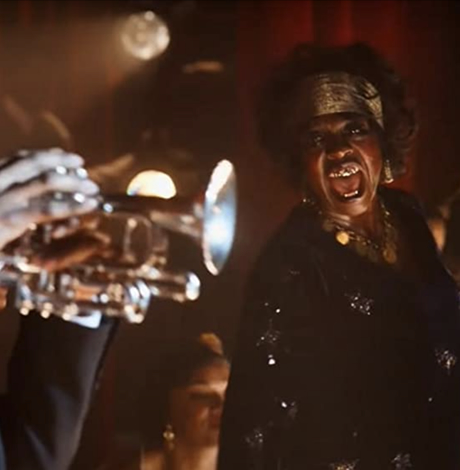
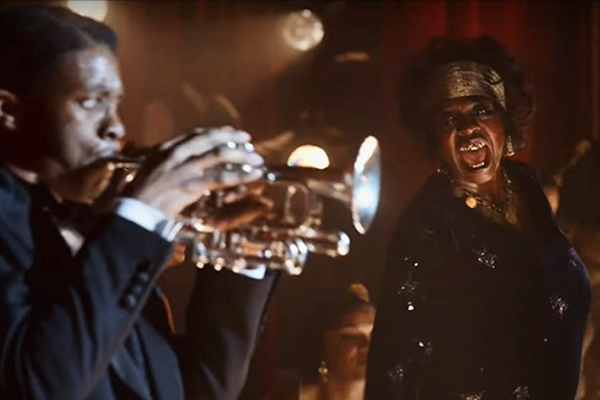
There are a lot of reasons why “Ma Rainey’s Black Bottom” should be on the top of your viewing list in the last weeks of 2020.
For a large percentage of viewers, the biggest one might well be that the Netflix adaptation of August Wilson’s Tony-nominated play, which debuts on Dec. 18, turned out to be the final film appearance of Chadwick Boseman. For others, it might be the appeal of seeing fan-favorite diva Viola Davis sink her acting chops into another meaty role, while music aficionados may be drawn by the role itself – a real-life blues legend whose known bisexuality could, in turn, draw LGBTQ viewers curious to see how that aspect of her life is handled by the film.
Whether or not any of those things are a hook for you, there is one inescapable reason for watching. At the end of a year in which Black experience in America has been thrust to the forefront of our cultural attention, “Ma Rainey’s Black Bottom” might well be considered a must-see for any American concerned for the state of their nation by virtue of its “blackness” alone.
It’s true that the streaming universe has no shortage of such content. But what the new Netflix film brings to the table is something rare in an entertainment landscape that favors the new, now, and next over the echoing memories of a time gone by – a work of weight and import, crafted with meticulous artistry by one of the most significant Black theater artists of the 20th century at the peak of his skills, and carrying with it all the insight of a lifetime spent negotiating the racial divide during some of the greatest cultural upheaval in recent memory.
“Ma Rainey” covers a short window in the life of its titular blues icon – just a few hours, really – but it uses that brief snapshot to explore a vast landscape of topics, as the singer and her band convene for a recording session on a hot Chicago day in 1927. The singer, well-known for her tempestuous lifestyle and “difficult” behavior, is late to arrive, leaving her musicians to kill time in reminiscence and debate, while her white album producers stew and fret over the delays to their schedule. When she arrives, she comes with an entourage; a pretty dancer from her tour, now her latest arm candy, and a stuttering nephew she insists must record a spoken introduction to a song. With all the players in place, the afternoon’s work can finally begin, but interruptions ensue and tensions are running high, inevitably sparking heated conflicts and festering confrontations – not the least of which center around Levee, the band’s hot-headed young trumpeter, who has musical ambitions of his own and an ego to rival Ma Rainey herself.
That synopsis is the blueprint for everything we see in the film – but it would be disingenuous to imply that “Ma Rainey’s Black Bottom” is uneventful. A lot of momentous things happen; revelations are made, rivalries are stoked, motivations are unmasked, and actions are taken that can never be taken back. Nor is it all heavy going; within the drama and the passion is woven a fair share of tempering humor and even moments of unblemished joy. And underneath it all, like an ancient spring buried just below the surface, bubbles the steady and unbroken effect exerted by the subtext of race.
Playwright Wilson wrote “Ma Rainey” as part of what would be a 10-play cycle documenting black life in America throughout the 20th century, informed by a childhood in which he experienced first-hand the grip of poverty exacerbated by inequality and inspired by the blues music he had loved from an early age. It’s not a biography of its title character; rather, it’s a fictional exploration of themes that spread, like fractals, from the exploitation of black artists – of black voices – by white culture, to reveal the subtle but insidious effects of racial oppression.
When I write about film, I usually try to remove myself from the discussion; but as a white writer, it’s not possible for me to comment on how “Ma Rainey’s Black Bottom” conveys Black experience. I can say that, to me, it felt powerfully authentic, that it moved me, and that I believed I held a deeper empathy at the end of it. I might also be able, as a gay man, to recognize and relate to the familiar patterns, charted so clearly by Wilson throughout his play, that frequently mark the internal politics of the oppressed – the jockeying for positions of favor, the bitterness of the rejected, the misdirection of frustration and anger toward self and each other – and the further conflicts that arise between generations as that frustration and anger grow in the face of a system built on keeping you down.
I can certainly say that those brought in for Boseman or Davis will have no reason to be disappointed.
Davis has nothing to prove, and nothing to lose, which makes her perfect to capture the beautiful monster that Wilson created in his vision of Ma Rainey. She is every inch the sullen, confrontational diva, exacting, petty, and sometimes cruel; yet her every moment onscreen conveys the absolving truth that the only way to claim power from an oppressor is to make him fear you – along with the terrible thrill that comes of living on that dangerous edge.
As for Boseman, his performance here can only serve to cement his status as a legendary talent, taken too soon. As the complex, conflicted, driven, and dangerous Levee, he is electrifying; he instills a deliberately polarizing figure with total humanity, while never losing the edge that makes him an antagonist for almost every character around him. His work is made all the more extraordinary by the fact that he was dying of colorectal cancer when he filmed it – something perhaps evidenced by a gaunt appearance, but in no way by the intensity and passion of his performance.
The rest of the cast is made up of less familiar faces, but they form a solid ensemble that’s every bit as capable as the stars they support. Behind the camera, director George C. Wolfe does an outstanding job of keeping the film grounded in its theatrical origins while giving it an expanded feel for the screen – mostly accomplished through stylistic choices rather than expanding scenes or settings – and screenwriter Ruben Santiago-Hudson provides an adaptation that is right in tune with that approach.
When you add the musical contributions of Branford Marsalis and a handful of stellar renditions of some of Rainey’s classic blues songs, you have more than enough ingredients to make a damn good movie.
Considering that, perhaps what I can say about “Ma Rainey’s Black Bottom” might prove to be the best reason of all to watch it – it’s one of the most thoroughly well-rounded, excellently made films of the year.
And if it helps you get a little closer to understanding what it’s like to be Black in America, then so much the better.


Movies
‘She’s the He’ brings gender-bending twist to teen comedy genre
Recreating raunchy nostalgia through a queer eye

No matter which generation you belong to, you have nostalgic memories of “teen comedy” movies from your adolescent years, even though you’re a little embarrassed about it today.
This is particularly true for the Gen X and Millennial crowd, who grew up with raunchy teen movies from “Fast Times at Ridgemont High” to “Porky’s” to “American Pie,” and have lived long enough to experience the shock of watching younger generations deploring them for the very raunchiness and toxic behavior that made them appealing to us in the first place.
These are exactly the type of films that are channelled in “She’s the He,” a SXSW hit and Independent Spirit Award nominee that hit VOD platforms on June 30, which strikes a nostalgic chord that conjures both the extreme “political incorrectness” and heartfelt sensitivity of the movies that inspired it – but updates the formula to add an edge that’s especially relevant in our current time.
In other words, it recreates the “raunchy teen comedy” genre through a queer eye (with a focus on the fine points of gender identity), and it’s every bit as messy, awkward, inappropriate, and “cringey” as you might hope it to be.
Written and directed by trans/nonbinary filmmaker Siobhan McCarthy, it’s a movie that might result in mixed feelings from many audiences over a story that centers on two cis-male high school seniors, Ethan (Misha Osherovich) and Alex (Nico Carney), who pretend to “come out” as trans together as a way to get close to girls.
Actually, it’s mostly Alex’s scheme to gain “access” to his crush, Sasha (Malia Pyles), and quell the rampant rumors that he and lifelong BFF Ethan are gay, reasoning that being “trans” would technically make them girls, too. It works, incredibly, in the beginning, but as a burgeoning friendship with nonbinary Forest (Tatiana Ringsby) distracts Alex from his rampant teen hormones, Ethan begins to realize that she really is trans, after all. What started out as a juvenile ploy suddenly becomes a complicated mess, and the two best friends must try to navigate their way out of it; unfortunately, Alex can’t stop scheming for sex and Ethan is struggling with the prospect of coming out to her transphobic mother (Suzanne Cryer), and needless to say, it puts a strain on their friendship. Meanwhile, there’s a whole locker room full of testosterone-charged jocks who want in on the scam themselves.
If all that sounds incredibly problematic to you, you’re not wrong – it definitely is. The entire premise, with all its nonconsensual shadiness and its hormone-driven gaslighting, seems like enough to trigger calls for “cancellation” from both sides of our divided social mediaverse; add to that the fact that the whole thing is played for laughs, as a crass and foul-mouthed sex farce about high school kids, and the movie opens itself up to an even greater level of pearl-clutching.
Like most of those teen raunch-fests of earlier generations, however, “She’s the He” is doing it all on purpose. McCarthy’s wildly “inappropriate” movie is not just some cheap sexploitation comedy, but a savagely campy assault on the attitudes and expectations of the very people that might be offended by it.
As McCarthy says in their director’s notes for the film, “By taking conservative talking points at face value and playing out their worst fears on screen, ‘She’s the He’ seeks to undermine and defang these harmful ideas while satirizing the very media that has fueled this fear-mongering.”
Among the most obvious “conservative talking points” their movie lampoons is the whole obsession around gender and bathrooms (it is, after all, a story about two cis males who essentially disguise themselves as trans so that they can get into the girl’s locker room), but there are a whole lot of others, too: the excessive concern over pronouns, the obsession over genitalia, the assumption that gender identity and sexuality are somehow synonymous, the sexed-up male fantasy of what happens between girls when they’re behind closed doors – all the typical exaggerated tropes are there, and exaggerated even further for full effect. In fact, it’s the film’s not-so-subtle subversion of the “male gaze” through a queer and feminist lens that might be its most satisfying flourish, underscoring the already absurd parody provided by Alex’s single-minded (and hilariously “incel”-ish) prioritization of his sex drive above all other considerations.
Yet what really raises “She’s the He” above the level of the crude humor it deploys has nothing to do with making fun of people, nor is it even about pushing against uptight social boundaries around sexual and/or gender expression; all the irreverent zaniness is wrapped around a deeper story about friendship, love, and growth, a journey of self-discovery and finding the courage to embrace who you really are. And at the center of it is a transgender nonbinary actor in the leading role – in itself a bold challenge to rigid expectations – with not just the talent, but the grace, nuance, and bravery to play it with full authenticity. Osherovich earned a well-deserved nomination for Best Breakthrough Performance at this year’s Independent Spirit Awards, and they’re the heart of the film.
In fact, it might be McCarthy’s deliberate choice to cast their film entirely with actors who identified in some way as queer that fuels its transgressive energy and keeps it feeling “real” even when it’s at its most ludicrously excessive. They make for a great ensemble of players, but naturally there are standouts: co-star Carney (who is also a successful standup comic, known for mining his own transmasculine experience for laughs) does a great job as Alex, endearingly unconcerned and frequently clueless about his shortcomings as he single-mindedly pursues the loss of his virginity, and his chemistry with Oserovich makes them a winning pair whenever they share the screen; Cryer brings a dose of needed maturity to the mix, while also conveying the struggle of a mom trying to navigate her child’s coming out; Pyles and Ringsby both bring the intelligence and depth to undercut our expectations of their characters; comedian Aparna Nancherla earns plenty of chuckles as a teacher haplessly trying to keep up with all the changing identities (and pronoun protocols) of her students; and knowing that the school’s entire male sports team is played by transmasculine actors adds a delicious flavor to the movie’s overall parody of conventional gender presentation that helps make its climactic “locker room showdown” scene all the more hilarious.
It’s worth noting that “She’s the He” is targeted mainly for Gen Z audiences – it’s their generation’s turn to put their stamp on the genre, after all – but older audiences needn’t feel left out; there’s plenty here that should feel universal enough for any age to enjoy; and if you’re afraid it will be too extreme, rest assured: the most shocking thing about it is that it might be the sweetest teen sex comedy you’ll ever see.
Considering they’ve been making them for decades, that’s saying a lot.
Movies
Ethereal ‘Camp’ a moody allegory for queer shame
An unsentimental yet empathetic exploration of guilt
When one watches movies for a living, it’s as easy to fall into routine as it is with any job. Each movie is different, of course, each with its own characters, its own viewpoint, and its own story – (or at least its own variation on one), but in so many other ways, they have a tendency to be very much the same.
This is because there is an entire “language” of filmmaking, established from the earliest days of cinematic storytelling, a process so subtle that most of us are barely aware of it: the image directs our attention, the script provides the shape and structure of the story, and the actors are our stand-ins, allowing us to “experience” the reality of the film through a transference of identity that occurs so reflexively that we don’t even notice it’s happened.
That’s why it can be such a jolt when we come across a movie that doesn’t follow the expected rules, and we can’t think of a better recent example than Avalon Fast’s “Camp,” which drew attention as it made the rounds at last year’s festival circuit and embarked on a series of screenings in select cities beginning on June 26.
Fast, 26, is a queer Canadian filmmaker who specializes in “Girl Horror” (a genre that centers female experience), and who has already become a prominent force in the “new queer indie” movement. Her first feature, “Honeycomb,” got a Slamdance “virtual” screening, and she’s appeared as a performer in films like Alice Maio Mackay’s “The Serpent’s Skin” and leading trans filmmaker Jane Schoenbrun’s yet-to-be-released Cannes hit, “Teenage Sex and Death at Camp Miasma.” With “Camp,” however, she stakes her claim to territory in a burgeoning field of queer/trans/feminist cinema to establish herself as a formidable “brand” of her own.
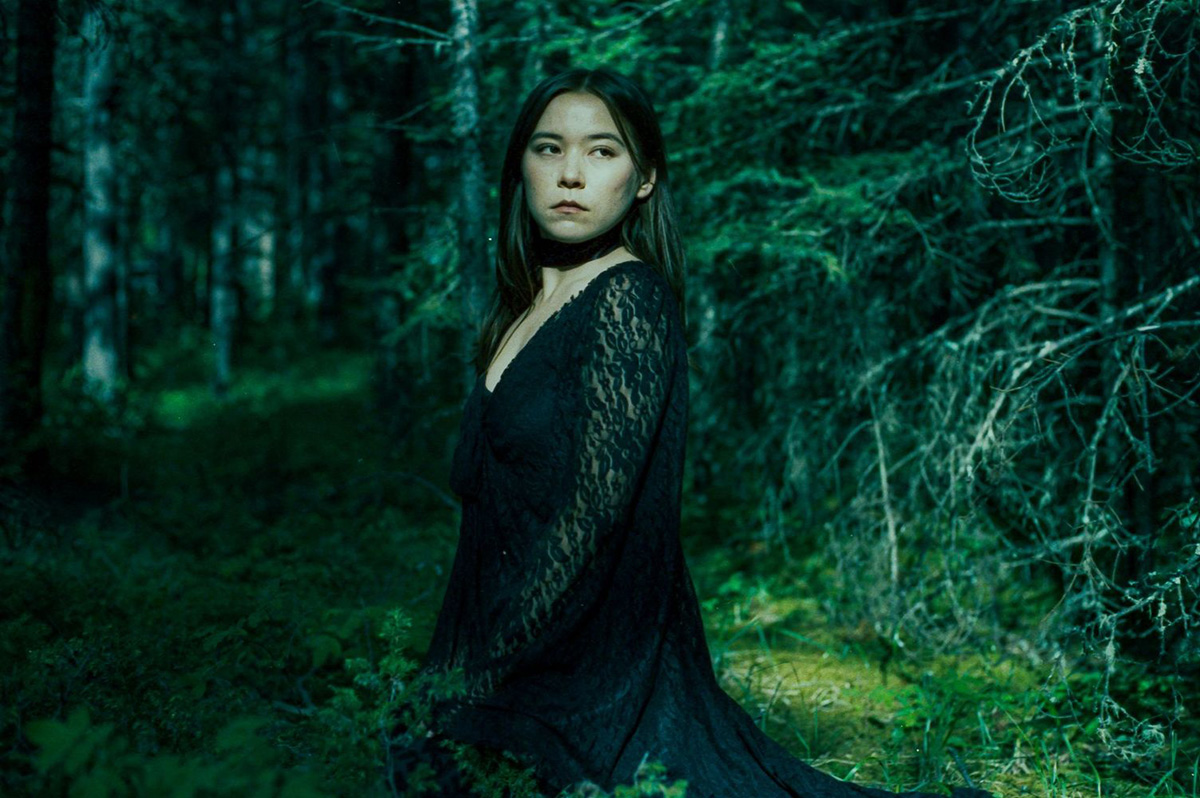
Rooted in a blend of trope-ish horror conventions and presented in a dreamy, ethereal style that elevates feeling over cognition, it’s the story of Emily (Zola Grimmer), a young woman accidentally responsible for two horrific tragedies, who feels hopelessly trapped by guilt and shame. At the suggestion of her father (Mike Tan), she takes a summer job as a counselor at a camp for “troubled” young people like herself, where she is quickly embraced and assimilated by the core group of female counselors – most of them “hot weirdos” who are more interested in all-night partying and a kind of home-grown witchcraft than they are in the wholesome camp activities they supervise during the day. Her initial response to this new environment is guarded, but as the summer goes on she comes to feel a strong connection to her fellow counselors, beginning to hope that she has – at last – found her place among a “family” that accepts her despite the life-shattering incidents that have come to define her sense of self. Yet at the same time, she becomes ever more aware of a call to confront and quiet the ghosts of her misfortunate past – even if it requires an unthinkable sacrifice.
Dreamy and purposefully opaque when it comes to differentiating between real experience and metaphysical reflection, Fast’s movie draws us in from the start with its edgy mix of visual atmosphere, blending an aesthetic that combines home-movie nostalgia with the ironically whimsical flourishes of the digital age to establish a tone that feels like a half-forgotten memory reconstructed in the form of an Instagram “reel.” It’s a potent effect, creating a milieu of surreal impressionism in which the plot advances more through mood and fragments of subjective experience than through concrete narrative form; at times, it feels untethered, yes, but it always manages to orchestrate its seemingly disjointed perspective into a shape that makes sense — even if we’re not quite sure how or why, or even what is actually happening.
The effect is cumulative, as the story becomes less bound to logic and realism while leaning further into a perspective that favors the arcane and mysterious over the rational and concrete. And while that might prove frustrating for viewers expecting a more traditional kind of “horror,” it provides for an experience that’s more likely to satisfy the kind of fans who appreciate being left to provide their own interpretations. The most obvious comparison would be with the work of David Lynch; there’s clearly an influence there for Fast’s darkly intuitive approach, which goes beyond the obvious parallels of its “Twin Peaks”-ish setting (the forest is most definitely a character here) to emulate the stream-of-consciousness narrative flow that marked much of Lynch’s late-career work.
“Camp” is far from imitative, however. While it may share some traits with the work of Lynch and other masters of contemporary surreal horror, it creates a unique “vibe” by allowing its own creative feminine energy to take the lead. The traumas it depicts spring from a definitively female space, from first-menstruation nightmares to the absurdities of having to defer to the “leadership” of a mediocre male who has more power than you (in this case, Austyn Van de Kamp as the camp’s supervisor, a naive but endearing yokel whose Jesus-centric worldview is undermined by the “coven” under his tentative command), and the overall treatment of its few male characters is largely less than forgiving. Yet on a deeper level, its subtext of carrying “unforgivable sin” that affects every aspect of one’s interactive life feels ultimately as much an expression of queer trauma as it does feminist ideology. The result is just cryptic enough to leave us pondering what we’ve just seen yet clear enough to deliver an emotional catharsis which feels, if not exactly curative, at least healing enough to pave a way forward.
Admittedly, it’s not a film that will likely tick off all the boxes for hardcore horror fans; while it might deal in dark emotions and a certain witchiness that ties it to the legacy of such pagan-flavored classics as “The Wicker Man” or “Midsommar,” its terrors are more existential than visceral, pondering the difficulties of overcoming self-hatred rather than pitting us against a palpable physical threat, supernatural or otherwise. Indeed, it’s more introspective psychodrama than it is traditional horror – which is less a criticism than it is a disclaimer.
Though it’s Fast’s moody aesthetic that emerges as the “star” attraction of “Camp,” much of its effectiveness hinges on the performances of its cast. Grimmer, especially, is central, and she succeeds admirably not only in winning our empathy but in peeling back the morally murky layers of Emily’s path to redemption in a way that feels like empowerment rather than ethical compromise. However, the ensemble of “soul sisters” that surrounds her (Alice Wordsworth, Cherry Moore, Ella Reece, Lea Rose Sebastianis, and Sophie Bawks-Smith) all play their own particular part in creating the “magic” that makes the whole thing work.
All in all, “Camp” is an exhilaratingly fresh – if sometimes opaque – expression of queer filmmaking from a feminine perspective; that’s a regrettably rare occurrence which makes Fast’s fastidiously unsentimental (yet deeply empathetic) exploration of queer guilt all the more powerful, and makes her movie an essential addition to your watchlist.
Movies
‘Leviticus’ demonizes homophobia for gripping queer horror yarn
A genuinely engaging and terrifying supernatural drama
There’s something about horror films that makes them particularly apt as a vehicle for allegory. Vampires, zombies, ghosts, or seemingly death-proof serial killers can all easily be seen as metaphors for some lurking threat from the “dark side” of our own collective psyche, and stories about them are almost always cautionary tales that remind us that it’s the “dark side” of our own nature that we must confront in order for the danger to be eliminated.
This subtext has always been present in the genre, of course; but with the so-called “renaissance” of horror cinema that has taken place across the past decade or so, modern filmmakers in the genre have made increasingly bold choices with regard to how “sub” it is. “Get Out” or “Sinners” need no explanation to get across their allegorical points about racism, nor does “The Substance” require an expert to recognize its satirical observations about the toxic cultural obsession with youth and beauty. These are movies that wear their proverbial hearts on their sleeves, instead of masking them behind layers of cliched and “coded” plot tropes.
The same can definitely be said of “Leviticus,” the debut feature from Australian writer/director Adrian Chiarella, which not only hinges on a conceit that has obvious associations with its not-so-hidden themes but tips off the whole thing by its very choice of title – a reference to the Old Testament book frequently cited by fundamentalist bigots as so-called proof of God’s condemnation of homosexuality, which sets up exactly what we are in for before the opening credits even begin to roll.
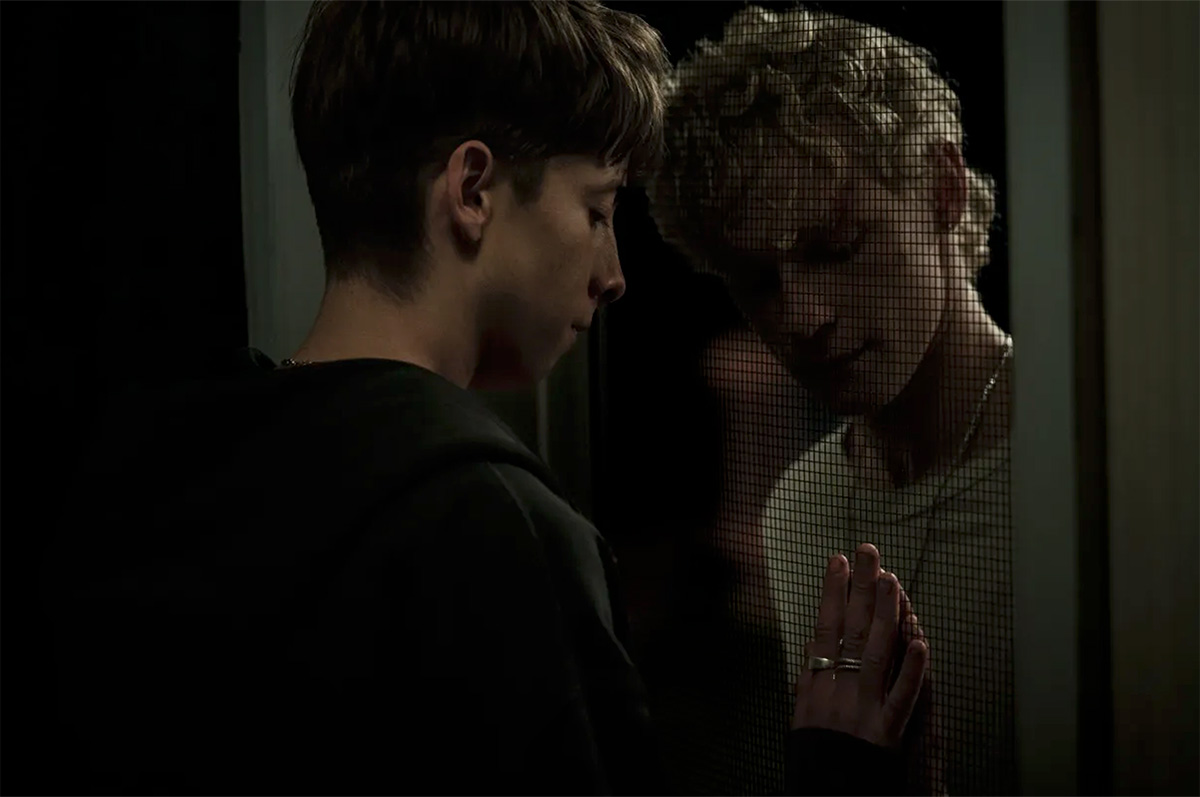
Set in a conservative rural town (in the Australian state of Victoria, though it will feel distinctly familiar to anyone who grew up in similar communities anywhere else in the world), it centers on Naim (Joe Bird), a teen boy newly transplanted by his mother (Mia Wasikowska) – who has ties to a fundamentalist Christian enclave there – after the death of his father. Their new life – like seemingly everything else in the community – is tied directly to the church, which makes it doubly inconvenient when Ryan (Stacy Clausen), son of the town’s presiding preacher, invites him for an after-school “hangout” which leads to a furtive make-out session in the town’s deserted mill.
Though the boys promise each other to keep it secret, they are both soon “outed” to their parents and subjected to a ritual performed by a mysterious “deliverance healer” (Nicholas Hope), intended to “protect” them from their “sinful” impulses. Soon after, a series of mysterious and violent encounters lead them to investigate local rumors around incidents involving other local teens – and the revelation that the ritual has summoned a malevolent entity, which appears to them as the person they are most attracted to (in this case, each other) and unleashes its murderous wrath when they give in to temptation. Their only chance of staying safe is to stay apart – unless they can find a way to defeat the supernatural force that has been turned loose against them.
Yes, it’s all very obvious. There is no attempt to mask what Chiarella’s movie is really about, though the word itself – like the biblical book with which it shares a title – is never spoken aloud in the film. It’s hardly a spoiler, though, to confirm that “Leviticus” is a story about homophobia. From its obvious evocation of real-life “conversion therapy” to its more subtle exploration of the secrecy and social shaming that surrounds same-sex love for so many teens growing up in an environment of fundamentalist religious tradition, every nuance of the film’s ingenious premise announces the clear intent of its messaging: homophobia is the true evil at work here, and its deadly power lies in its ability to make queer people afraid of being who they are.
While some might argue that presenting such an “on the nose” allegory in what is ostensibly “just” a horror film is a heavy-handed choice, we suggest – in this case, at least – that it’s exactly what makes the movie work so effectively.
From the very first scenes (after a prologue that ominously hints at the arcane evil that will soon come into play), we are invested in Naim and Ryan, whose tentative-but-joyous afternoon tryst is bound to trigger our own individual memories of adolescent sexual awakening, and whom we hope will be able to navigate their way through to the other side – even before the introduction of supernatural hate demons being summoned to kill them by using their own feelings for each other as a trap. They’re almost a definitive queer “coming of age” archetype, echoing generations of treasured “first time” memories and “what if“ fantasies about what might have been; we want them to be together, to overcome the otherworldly forces deployed to keep them apart – and when their romance is distorted, inverting their natural attraction into fear and mistrust, it’s their own inability to resist the pull they feel toward each other that continues to put them in danger.
That emotional stake is the anchor of “Leviticus,” which lends an imperative to what might otherwise be a campy B-movie thriller and turns it into a genuinely engaging – and therefore terrifying – supernatural drama that is all the more powerful for playing to our hearts. Much of this effect hinges on the chemistry between its two young stars (which hits just the right pitch between irresistible hormonal urge and inseparable soul connection), but it’s also underscored by the irony of their being immersed within a culture that would rather destroy them than allow them to exist outside its traditional norms.
Nevertheless, while “Leviticus” succeeds by making us identify with its cult-crossed teenage lovers, it pays off by delivering not just a genuinely unsettling, profoundly disturbing, and unflinchingly brutal personification of religious bigotry at its most cruelly hateful, but by providing a tense and terrifying horror scenario that works on a pure “genre” level. Simply put, even setting aside any wider subtext about the deadly consequences of homophobia, it’s a creepy, nerve-wracking ride.
A critical hit as part of the Sundance Festival’s “Midnight” section earlier this year, “Leviticus” went into theatrical release on June 19, the latest in a continuing trend of fresh and inventive films that has elevated the horror movie to new levels of critical appreciation. For us, it’s worth singling out as a boldly original expression of queer experience, elegantly constructed from the reinterpreted formulas of a genre that has always had particular draw for those in our community who knew how to read between the lines.
The difference is, this time we don’t have to – the message is spelled out loud and clear, and that in itself is enough to make it feel a little bit like empowerment, at a time when we could all use as much of it as we can get.

Gay Fla. Democrat Elijah Manley sees opportunity in Trump’s second term

Ron Singer, owner of popular Mount Vernon gay bar Leon’s, dies

Egyptian authorities refuse to allow gay cruise to dock in country

‘She’s the He’ brings gender-bending twist to teen comedy genre

Supreme Court ruling on trans athletes is a public health story

‘My Favorite Sociopath’ debuts at Shepherdstown’s CATF

Under-the-radar Delaware beach towns smart buyers are targeting

In Trump’s divided America, Michael Weinstein’s AHF responds

Turkish authorities refuse to allow gay cruise to dock in country

When a church fears the rainbow
-

 Theater5 days ago
‘My Favorite Sociopath’ debuts at Shepherdstown’s CATF
-
Real Estate5 days ago
Under-the-radar Delaware beach towns smart buyers are targeting
-
Politics4 days ago
In Trump’s divided America, Michael Weinstein’s AHF responds
-
Turkey4 days ago
Turkish authorities refuse to allow gay cruise to dock in country