Local
Comings & Goings
Lane named senior counsel at Brady United
The Comings & Goings column is about sharing the professional successes of our community. We want to recognize those landing new jobs, new clients for their business, joining boards of organizations and other achievements. Please share your successes with us at [email protected].
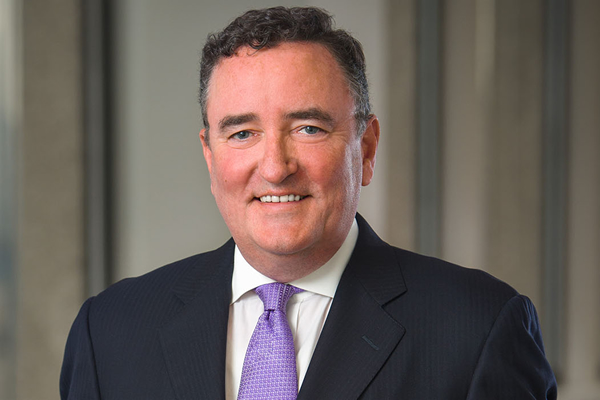
Congratulations to Thomas Patrick Lane the new Senior Litigation Counsel and Director of Affirmative Litigation with Brady United. According to its website, Brady’s mission is, “To unite all Americans against gun violence. We work across Congress, the courts, and our communities with over 90 grassroots chapters, bringing together young and old, red and blue, and every shade of color to find common ground in common sense. In the spirit of our namesakes Jim and Sarah Brady, we have fought for over 45 years to take action, not sides, and we will not stop until this epidemic ends. It’s in our hands.”
Jonathan Lowy, chief counsel and vice president of legal at Brady said, “The whole Brady team is thrilled to welcome Tom’s skills as a trial lawyer and his leadership as a champion for justice and a voice for inclusivity and equal rights. Tom is one of the top litigators in the country, and has been a fighter his whole life who has proven himself undaunted by any challenge, including taking on the gun industry for its role in causing gun violence in America. Tom’s expertise and insights into complex litigation involving emerging technologies, such as 3-D printed guns, “smart” technology, and online commerce, will bolster our fight for industry-wide change by holding companies accountable and forcing reforms that will make all Americans safer.”
Upon accepting the position Lane said, “From my time as a prosecutor to private practice, I have seen the effects of gun violence and the importance of defending victims and survivors and upholding common-sense laws that keep our families and communities safe. I am excited to bring that background to Brady and to continue this important work nationwide.”
Prior to joining Brady, Lane was a partner in the New York office of Winston & Strawn, LLP. Before that he was a partner in Thelen Reid Brown Raysman & Steiner LLP. He is recognized as one of the country’s top intellectual property and new media lawyers. He tried the first Internet music case and the first Digital Millennium Copyright Act safe harbor case before juries. He has also served as a senior trial attorney in the office of the New York Kings County District Attorney.
Lane represented the City of New York in litigation against major gun manufacturers in the early 2000s. LawDragon named him as one of the 500 Leading Lawyers in America.
Lane earned his undergraduate degree from Hamilton College, Clinton, N.Y.; and his J.D. from Tulane University School of Law in New Orleans. He has created an endowed scholarship there for LGBTQ students to help law firms realize the importance of hiring diverse rosters of attorneys, and to honor the courage of his uncles Bernard Lane (an Army Ranger decorated with two Bronze Stars) and Richard Morrison (a recovered alcoholic who devoted his life to counseling others).
Both men were known for their toughness tendered by humor and both lived openly in loving relationships with same-sex partners in the 1970s. Lane is a former board member of the National LGBT Bar Association. He directs all external legal matters for the Tyler Clementi Foundation, whose mission is to end bullying in schools, workplaces, and faith communities.





Delaware
New LGBTQ visitor center slated for Wilmington, Del.
The Collective to feature gift shop, queer museum, more

During Pride month this year, the Delaware Sexuality and Gender Collective (DSGC) announced plans for “The Collective,” the first LGBTQ+ visitor center in Wilmington in nearly 40 years.
“We’ve been talking about the concept of a brick-and-mortar space for a long time,” said Noah Duckett, co-founder of the DSGC.
A licensed clinical social worker, Duckett co-founded DSGC with his mother, Julissa Corianno, in 2018. Established under Sussex Pride, the DSGC serves as a hub for leaders and organizations working directly with LGBTQ+ communities throughout Delaware.
“Our vision for The Collective is a place where our community can come to learn, create, work, and be inspired,” said Corianno.
The Collective will feature a visitor center and gift shop highlighting LGBTQ-owned businesses in Delaware.
“I think that this is something that’s going to benefit our community so much,” said Duckett.
Some of the LGBTQ-owned businesses that DSGC has already partnered with include Stressed Induced Art Attack, Moonbeam Art Collaborative, Voce Coffee, Groovy Gemini Co., Scout Cafe, Macaron Social, and Huxley and Hiro.
“Specifically in Wilmington, we haven’t had an LGBTQ-dedicated space in almost 40 years,” said Duckett.
The last LGBTQ community center in Wilmington was The Griffin Community Center, which was open for only a few years in the 1990s.
“The Griffin was a community space in the ’90s, founded by our friends James and Evo, who are so incredible and have been so supportive throughout this process,” said Duckett.
Duckett said the DSGC hopes to carry on The Griffin’s legacy.
“I think now more than ever, there’s more and more spaces closing their doors. More and more spaces are losing funding, seeing reduced funding and reduced access, especially LGBTQ+ organizations and communities,” said Duckett.
The Collective will also feature Delaware’s first LGBTQ history museum, curated by queer historian Carolanne Deal.
“We don’t have any permanent displays in the state about Delaware’s queer history, and we want people to be able to access that history any day of the year, not just during Pride month,” said Deal.
With a master’s degree in art history for museum professionals, Deal has more than seven years of experience in curatorial work and hands-on collections care.
“It’s mainly going to be a graphic display with photographs, articles, and accessible text that draws people in and creates a story for the community,” said Deal.
Although the museum will not initially have an object collection, Deal said she hopes to add physical archival pieces in the future.
“Delaware has been at the forefront of a lot of queer civil rights, and it’ll be really amazing to have that enshrined in a permanent display that’s not only up for Pride month,” said Deal.
Duckett said DSGC is currently raising funds with the goal of breaking ground this summer and opening by the end of the year.
“We would love to have rent paid for, like, multiple years up front,” said Duckett.
Duckett told the Blade that fundraising efforts have reached just under $29,000 and that the organization is awaiting several major donations from community partner organizations.
However, he said DSGC continues to be denied many grants tied to federal or state funding because of restrictions on those funds being used for LGBTQ-serving organizations.
“Private and corporate donations are absolutely vital,” said Duckett.
Anyone interested in supporting the construction of The Collective can donate online or contact [email protected] for more information.
District of Columbia
D.C.’s Mary’s House For Older Adults names new executive director
Charlene Leach to succeed Imani Woody as leader of LGBTQ-supportive seniors home
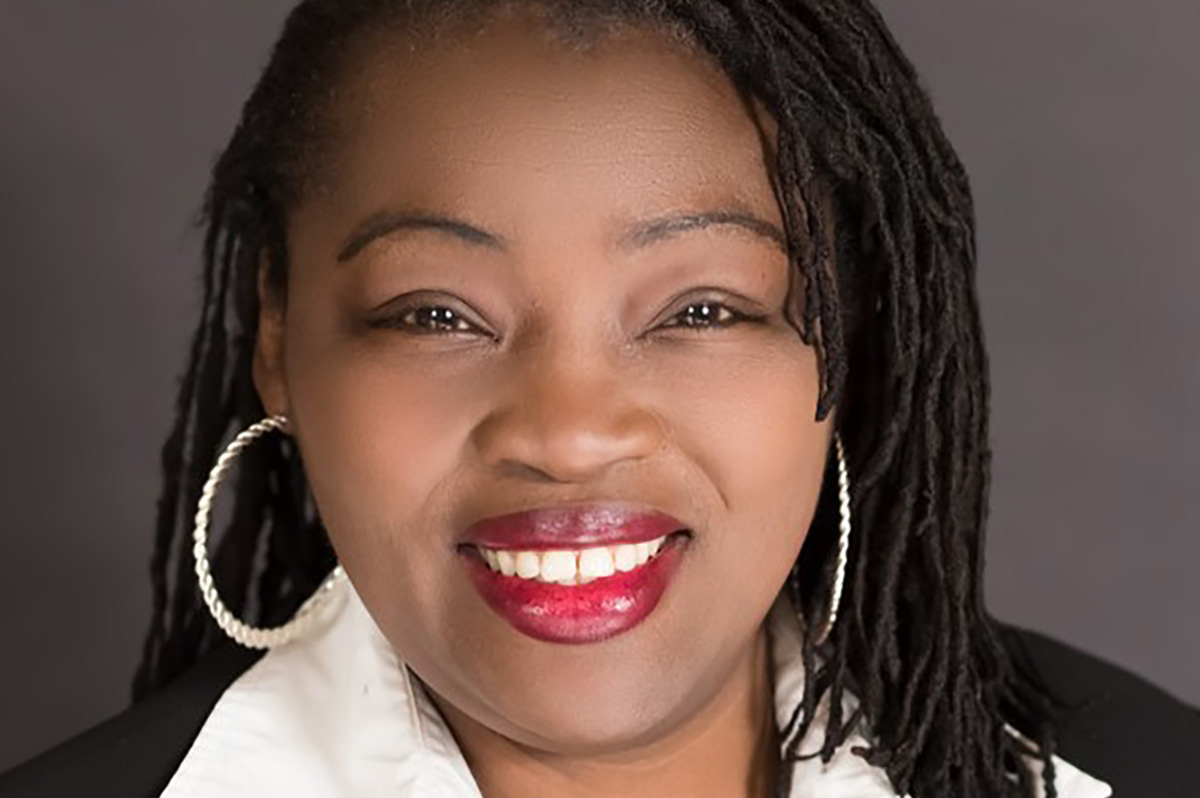
The board of directors of Mary’s House for Older Adults, the D.C.-based home dedicated to providing affordable housing for LGBTQ seniors, has announced it has named longtime nonprofit organization leader A. Charlene Leach as its new executive director.
Leach, who is now serving in the executive director’s position, is succeeding Dr. Imani Woody, the Mary’s House founding president and CEO, who announced her retirement from her official leadership role at Mary’s House on July 7.
Woody, who holds a PhD in Human Services, is credited with playing the lead role over many years in arranging both city and private funding needed to construct and operate the Mary’s House three-story building located at 401 Anacostia Road, S.E., in the city’s Fort DuPont neighborhood.
“With over three decades of nonprofit experience and 15 years serving as an executive director, Charlene brings a wealth of knowledge in organizational leadership, program development, and community engagement,” the Mary’s House board says in a statement.
“Her proven track record of building impactful programs and leading mission-driven organizations makes her uniquely suited to guide Mary’s House into its next phase of growth,” the statement continues. “Charlene is deeply aligned with the mission of Mary’s House and is committed to advancing its work to provide safe, inclusive housing and supportive services for LGBTQ+ older adults,” it says. “Under her leadership, the organization will continue to expand its impact while remaining grounded in the values that define our community.”
Leach’s LinkedIn page shows she has most recently served since 2022 as executive director of the African American AIDS Task Force in Minneapolis. Prior to that, it shows she served as executive director of the Fredericksburg Area Health and Support Services organization in Fredericksburg, Va., and before that as director of development for the D.C.-Baltimore area Women’s Collective.
Her LinkedIn page says she has been involved with Mary’s House as a volunteer and grant writer since 2016.
The newly built and enlarged Mary’s House, which opened in March 2025, with a grand opening ceremony held in May 2025 attended by D.C. Mayor Muriel Bowser, includes 15 single-occupancy residential apartments and more than 5,000 square feet of shared communal living space.
An earlier statement released by the Mary’s House board announcing Woody’s retirement said Woody would continue to be involved with the organization as a member of the board. The earlier statement and board’s more recent statement on July 29 announcing Leach’s appointment as executive director did not say whether the board plans to name someone else as president and CEO, the title that Woody held before her retirement. But the latest statement says Leach will be running Mary’s House’s day-to-day operations as Woody did.
Virginia
Doug Ollivant to face Eugene Vindman in Va. 7th Congressional District
Republican defeated challengers in Tuesday’s primary

Republican Doug Ollivant will face off against incumbent U.S. Rep. Eugene Vindman (D-Va.) in Virginia’s 7th Congressional District.
Ollivant defeated his Republican opponents in Tuesday’s primary. Vindman ran unopposed.
Vindman in 2024 ran to succeed then-Congresswoman Abigail Spanberger in the U.S. House of Representatives after she ran for governor. Spanberger succeeded Republican Gov. Glenn Youngkin in 2025.
U.S. Sen. Mark Warner (D-Va.) on Tuesday easily won his primary. All other Democratic incumbent members of Congress from Northern Virginia also won their respective primaries.

Don’t miss summer productions at Clear Space in Rehoboth Beach

New LGBTQ visitor center slated for Wilmington, Del.

PHOTOS: World Pride March

Tens of thousands take part in World Pride March

PHOTOS: Daddy Issues at Kiki

Continue to engage in community after Pride month

D.C.’s Mary’s House For Older Adults names new executive director

Suzanne Goode is not good for Rehoboth Beach

Calendar: August 7-13