World
Chilean Senate approves marriage equality bill
President Sebastián Piñera has urged lawmakers to support measure
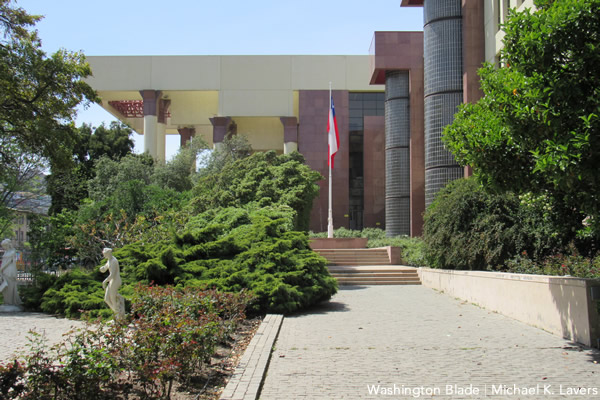
The Chilean Senate on Wednesday by a 28-14 vote margin approved a bill that would extend marriage rights to same-sex couples.
The vote took place less than a month after President Sebastián Piñera announced he supports marriage equality and urged lawmakers in the South American country to quickly act on the issue. The bill now goes to the Chilean House of Representatives.
The Movement for Homosexual Integration and Liberation (Movilh), a Chilean LGBTQ advocacy group, described the vote as a “triumph of justice and equality.”
“The Senate, four years after of processing, finally approves and dispatches (the) marriage equality (bill),” tweeted the organization. “The end of discrimination against same-sex partners and same-sex parents is near. A better path for new generations.”
TRIUNFA LA JUSTICIA Y LA IGUALDAD: el Senado, tras cuatro años de trámite, aprueba y despacha por fin el #MatrimonioIgualitario. Se acerca el fin de la discriminación a las parejas del mismo sexo y a las familias homoparentales. Un mejor camino para las nuevas generaciones ❤️ pic.twitter.com/dbX5z05OPo
— Movilh Chile (@Movilh) July 21, 2021
Lorena Recabarren, undersecretary for human rights in Chile’s Justice Ministry, in a statement applauded Piñera for his position in support of the bill. Recabarren stressed the president will continue to urge members of the House of Representatives to quickly approve it.
“Our goal is that this bill gets done as soon as possible and will be signed into law for everyone in our country,” she said.
Same-sex couples have been able to enter into civil unions in Chile since 2015.
Movilh in 2012 filed a lawsuit with the Inter-American Commission on Human Rights on behalf of three same-sex couples who were seeking marriage rights in the country. The group entered into an agreement with the Chilean government over marriage equality and adoption rights for same-sex couples, but withdrew from it last October.




Cuba
Cuba marks IDAHOBiT amid heightened tensions with U.S.
Energy crisis, fears of military intervention overshadow events

International Day Against Homophobia, Transphobia, and Biphobia commemorations took place in Cuba against the backdrop of increased tensions between the country and the U.S.
Mariela Castro, the daughter of former Cuban President Raúl Castro who is the director of the country’s National Center for Sexual Education, spoke at a Havana press conference on May 13. Mariela Castro, who is a member of Cuba’s National Assembly, also participated in an IDAHOBiT gala that took place in the Cuban capital on May 14.
CENESEX organized an IDAHOBiT event in Havana on Sunday. The group this month also put together panels and other gatherings.

‘Love is law’
IDAHOBiT commemorates the World Health Organization’s declassification of homosexuality as a mental disorder on May 17, 1990.
This year’s IDAHOBiT theme was “At the Heart of Democracy.” CENESEX-organized IDAHOBiT events took place under the “Love is Law” banner.
“On this day we remember diversity is wealth and equality is a right that does not allow exceptions,” said Cuba’s National Office of Statistics and Information on Sunday. “To say ‘no’ to homophobia, transphobia, and biphobia is to affirm Cuba is being built around the inclusion, the dignity, and the recognition of all people.”
Mariela Castro’s uncle, Fidel Castro, in the years after the 1959 Cuban revolution sent thousands of gay men and others deemed unfit for military service to labor camps known as Military Units to Aid Production.
His government forcibly quarantined people living with HIV/AIDS in state-run sanitaria until 1993. Fidel Castro in 2010 formally apologized for the labor camps, which are known by the Spanish acronym UMAP.
His brother, Raúl Castro, succeeded him as Cuba’s president in 2008. Fidel Castro died in 2016.
The Cuban constitution bans discrimination based on sexual orientation and gender identity, among other factors. Authorities, however, routinely harass and detain activists who publicly criticize the government. (The Cuban government in 2019 detained this reporter for several hours at Havana’s José Martí International Airport after he tried to enter the country to cover IDAHOBIT events. Officials then allowed him to board a flight back to the U.S.)
Same-sex couples have been able to marry on the island since 2022.
Cuba’s national health care system has offered free sex-reassignment surgeries since 2008. Activists who are critical of Mariela Castro and/or CENESEX have previously told the Washington Blade that access to these procedures is limited.
Lawmakers in 2025 amended Cuba’s Civil Registry Law to allow transgender people to legally change the gender marker on their ID documents without surgery.
Federal prosecutors to reportedly indict former Cuban president
American forces on Jan. 3 seized now former Venezuelan President Nicolás Maduro and his wife, Cilia Flores, at their home in Caracas, the Venezuelan capital, during an overnight operation.
Venezuela after Maduro’s ouster stopped oil shipments to Cuba. That, combined with a U.S. energy blockade, has caused widespread blackouts and a severe fuel shortage that has paralyzed the country.
Federal prosecutors are reportedly planning to indict Raúl Castro over his alleged role in the 1996 shooting down of four planes that Brothers to the Rescue, a Miami-based Cuban exile group, operated over the Florida Straits that separate Cuba and the Florida Keys. The Associated Press notes Raúl Castro, who is 94, was Cuba’s defense minister when the incident took place.
CIA Director John Ratcliffe on May 14 met with Raúl Castro’s grandson, Raúl Guillermo Rodríguez Castro, and other Cuban officials in Havana.
Axios on Sunday reported Cuba “has acquired” more than 300 drones and is preparing to use them to attack Guantánamo Bay, a U.S. naval base on the island’s southern coast, and other targets that include Key West, Fla., which is less than 100 miles north of the Communist country. Cuban President Miguel Díaz-Canel said Cuba is “not a threat, nor does it have aggressive plans or intentions against any country.”
“Cuba, which is already suffering from a multidimensional aggression by the U.S., does indeed have the absolute and legitimate right to defend itself against a military onslaught. This cannot, however, be logically or honestly be wielded as an excuse to wage war against the noble Cuban people.”
Las amenazas de agresión militar contra #Cuba de la mayor potencia del planeta son conocidas.
Ya la amenaza constituye un crimen internacional. De materializarse, provocará un baño de sangre de consecuencias incalculables, más el impacto destructivo para la paz y la estabilidad…
— Miguel Díaz-Canel Bermúdez (@DiazCanelB) May 18, 2026
World
This year’s IDAHOBiT to highlight democracy
Criminalization laws, US funding cuts among global movement’s challenges
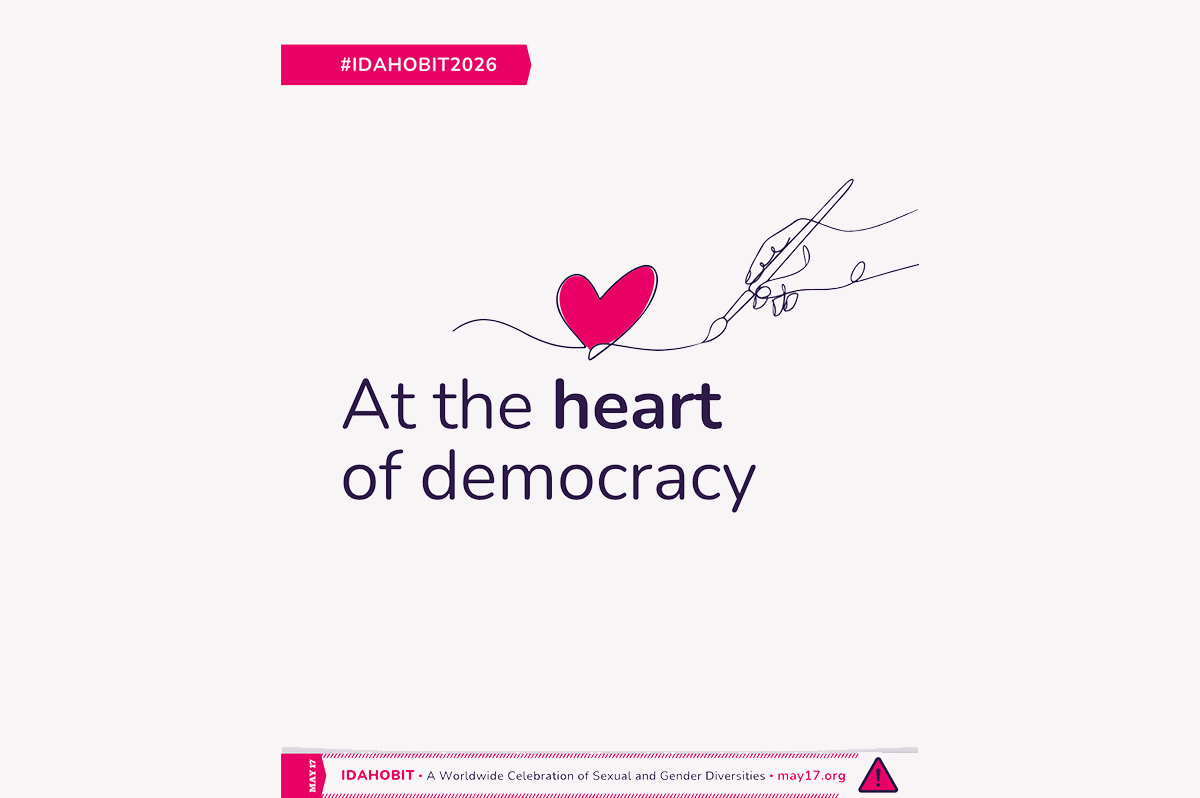
Activists around the world on Sunday will mark the International Day Against Homophobia, Transphobia, and Biphobia.
The IDAHOBiT Advisory Group — which includes 18 LGBTQ and intersex rights organizations around the world — in a press release notes IDAHOBiT events are expected to take place in more than 60 countries. Advocacy groups are also using IDAHOBiT to highlight discrimination and violence based on sexual orientation and gender identity and other LGBTQ-specific issues.
Caribe Afirmativo, a Colombian advocacy group, on May 8 released a report that notes one LGBTQ person was reported murdered in the country every 32 hours in 2025. Caribe Afirmativo also said the Colombian government has not done enough to address anti-LGBTQ violence.
“The evidence is clear: violence against LGBTIQ+ persons in Colombia does not begin with homicide, but with tolerated prejudice and ignored threats,” reads Caribe Afirmativo’s report. “In 2025, the State not only failed to protect — it also failed to count, investigate, and sanction. The crisis is not invisible. It is structural. And it requires an urgent, comprehensive, and sustained response.”
The Initiative for Equality and Discrimination, a Kenyan group known by the acronym INEND, issued a report that details how the country’s law enforcement treats LGBTQ and intersex people. “A widespread pattern of arbitrary arrests, extortion, and both physical and sexual violence” are among the abuses the INEND report notes.
“These abuses not only inflict severe physical and psychological trauma but also foster a widespread distrust of the law enforcement, further marginalizing the community and hindering its ability to seek justice, access essential services such as healthcare, and fully enjoy fundamental freedoms,” it reads.
IDAHOBiT commemorates the World Health Organization’s declassification of homosexuality as a mental disorder on May 17, 1990. This year’s IDAHOBiT theme is “At the Heart of Democracy.”
This year’s IDAHOBiT will take place against the continued impact that the lack of U.S. funding is having on the global LGBTQ and intersex rights movement.
The IDAHOBiT Advisory Group notes consensual same-sex sexual relations remain criminalized in 65 U.N. member states, and the number of countries with criminalization laws increased in 2025. The IDAHOBiT Advisory Group also indicates more than 60 countries have laws that restrict “freedom of expression related to sexual and gender diversity issues.”
“No matter where we live, who we are, or the faiths that drive us, most people want to nurture neighborhoods and communities where every life can bloom,” said the IDAHOBiT Advisory Group. “But today, reactionary governments worldwide are poisoning our gardens with the invasive weeds of their authoritarian policies and exclusionary legislations.”
‘Progress is still happening’
Activists around the world since last year’s IDAHOBiT have seen several legal and political victories.
New Hungarian Prime Minister Péter Magyar on April 12 defeated his predecessor, Viktor Orbán, whose government faced widespread criticism over its anti-LGBTQ crackdown.
The Eastern Caribbean Supreme Court last July struck down St. Lucia’s colonial-era laws. The Dominican Republic’s Constitutional Court a few months later ruled the country’s National Police and Armed Forces cannot criminalize consensual same-sex sexual relations among its members. Botswana late last month repealed a provision of its colonial-era penal code that criminalized homosexuality.
A Hong Kong judge last September ruled in favor of a lesbian couple who sought parental recognition for their son. The European Union Court of Justice over the last year issued two landmark decisions: one said EU countries must recognize same-sex marriages legally performed in other member states and another directed member states to allow transgender people to legally change their name and gender on ID documents.
“Time and again, LGBTQIA+ people have resisted, rolled up their sleeves together with all the good people caring about their communities, and sowed the seeds of change,” said the IDAHOBiT Advisory Group in its press release.
United Kingdom
UK government makes trans-inclusive conversion therapy ban a legislative priority
King Charles III on Wednesday delivered King’s Speech
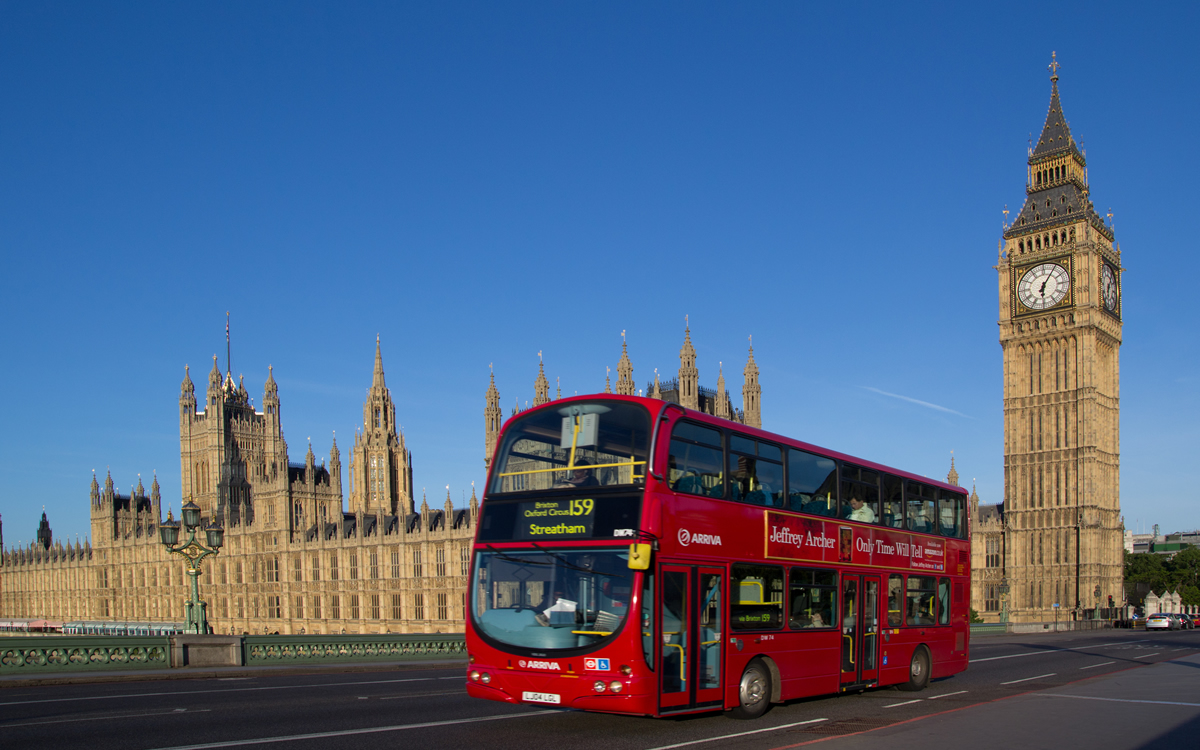
King Charles III on Wednesday said a transgender-inclusive ban on so-called conversion therapy in England and Wales is among the British government’s legislative priorities.
“My government will bring forward a bill to speed up remediation for people living in homes with unsafe cladding [Remediation Bill] and a draft bill to ban abusive conversion practices [Draft Conversion Practices Bill],” said Charles in his King’s Speech that he delivered in the British House of Lords.
The government writes the King’s Speech, which outlines its legislative agenda. The British monarch delivers it at Parliament’s ceremonial opening.
“Conversion practices are abuse, and the government will deliver the manifesto commitment to bring forward a trans-inclusive ban on conversion practices,” said the government in an addendum to the speech.
Then-Prime Minister Theresa May’s government in 2018 announced it would “bring forward proposals to end the practice of conversion therapy in the U.K.”
Then-Prime Minister Boris Johnson’s government in 2022 said it would support a ban that did not include gender identity. The decision sparked outrage among British advocacy groups, and prompted them to boycott a government-sponsored LGBTQ conference that was ultimately cancelled.
Prime Minister Keir Starmer’s Labour Party ahead of the 2024 elections included a conversion therapy ban in its manifesto. Charles delivered the King’s Speech against the backdrop of growing calls for Starmer to resign after the Labour Party lost more than 1,000 council seats in local and regional elections that took place on May 7.
Stonewall, a British advocacy group, on April 30 said the government “has failed to meet its own timeline to publish a draft bill to ban conversion practices.”
“We should not have to wait any longer,” said Stonewall CEO Simon Blake in his group’s statement. “Conversion practices are abuse. LGBTQ+ people do not need fixing or changing. They need to hear and feel that government is going to protect their safety and dignity. Not at some random date in the future. No more delays.”

D.C. Black Pride set for Memorial Day Weekend

Anti-LGBTQ commentator Tyler O’Neil to testify in Southern Poverty Law Center probe

Texas Children’s Hospital reaches $10 million settlement with DOJ over gender-affirming care

Cuba marks IDAHOBiT amid heightened tensions with U.S.

PHOTOS: Blade Summer Kickoff Party

Capital Stonewall Democrats endorses Janeese Lewis George for D.C. mayor

This year’s IDAHOBiT to highlight democracy

‘The Inheritance’ is most-nominated at this year’s Helen Hayes Awards

United Night Out set for Saturday

HIV Vaccine Awareness Day set for May 18
-

 District of Columbia5 days ago
Capital Stonewall Democrats endorses Janeese Lewis George for D.C. mayor
-
World4 days ago
This year’s IDAHOBiT to highlight democracy
-
Theater4 days ago
‘The Inheritance’ is most-nominated at this year’s Helen Hayes Awards
-
Out & About4 days ago
United Night Out set for Saturday