Opinions
Opinion | The case for informed consent in trans healthcare
Combatting the toxic influence of medical gatekeeping
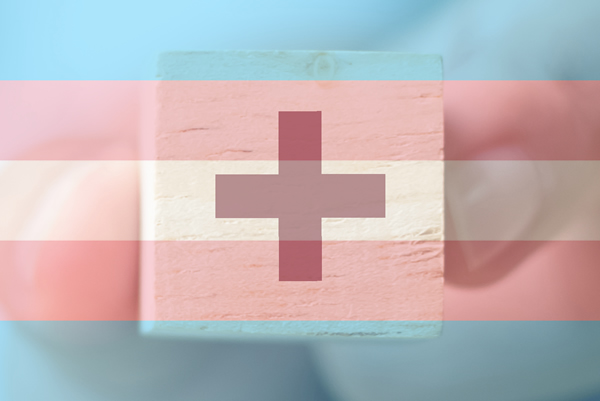
Transgender and nonbinary folk face a whole host of issues when trying to get medical treatment. One of those issues is gatekeeping, in which trans folk have to convince doctors and mental health professionals that they are the right fit and “trans enough” for hormones and surgery.
Medical gatekeeping occurs among trans women, transmen, and nonbinary folk (people who feel neither male nor female).
Currently, most medical guidelines for transgender folk are set out by the World Professional Association for Transgender Health, also known as WPATH.
WPATH is a nonprofit that was founded by a mix of medical professionals set out on a mission to regulate trans healthcare. WPATH is not a government institution, and has no connection to any state or federal legislative body. It also is not directly connected to a hospital institution. It is essentially a bunch of people who just came together to embark on a “savior mission” to presumably make sure that trans people are tended to medically.
The medical field has come to embody WPATH as the norm, and doctors adopt WPATH protocol when prescribing surgeries and hormones to us.
Unfortunately, WPATH mandates that trans folk have to receive letters from mental health caretakers before receiving testosterone or estrogen. During these visits with mental health professionals, transmen have to sit down on a couch and convince the therapist that they are sane enough, and “trans enough”, to go on testosterone.
While coming from a supposed place of “care,” WPATH standards are actually antiquated and harmful to trans folk, and especially nonbinary people, who have a hard time convincing mental health professionals that they are “manly” enough or “feminine” enough to receive care.
The truth is that all sorts of gender nonconforming folk—some not presenting as strictly masculine or feminine—have the right to receive affirming surgeries and hormones.
However, doctors often block nonbinary people from seeking these medical treatments. They do so out of an obsolete and bigoted notion that transgender people must conform to being either male (transman) or female (transwomen).
At Yale University, where I attended college, a doctor within Yale Health denied a nonbinary peer top surgery because they deemed them “not male enough.”
In addition to these horror stories, visits with mental health professionals are both costly and potentially traumatizing for trans folk. Many trans folk lack adequate money to pay hundreds of dollars to see a therapist, oftentimes out of pocket from insurance.
Additionally, we feel the need to conform to these therapists’ views of what is trans and what is not trans. In the process of doing so, we are marginalizing our own experiences of gender fluidity.
The solution to this issue of gatekeeping is something called the informed consent model. In the informed consent model, doctors and other medical professionals do not write letters for recipients of surgery and hormones. Instead, they read patients their rights, and inform them of the risks, liabilities, side effects, and benefits of hormone treatment and surgery. Doctors make a reasonable assessment, without mandating a letter, that the patient is fit for treatment.
Many trans positive clinics across the United States have adopted the informed consent model, mainly because they understand the toxic influence that gatekeeping has had on trans people already. These clinics are usually partly run by trans and queer folk. Whitman-Walker Health in D.C. and Callen Lorde Community Health Center in New York City practice informed consent.
The informed consent model will birth a new generation of trans patients who are not forced to prove their masculinity or femininity just to get testosterone, estrogen, or surgeries.
Already, doctors don’t require breast augmentation or reduction patients to get a letter from a mental health professional—so why should trans people?
It’s time for the medical establishment to reconsider WPATH standards in favor of informed consent. Doing so will greatly enrich the trans experience.
Isaac Amend (he/him/his) is a transgender man and young professional in the D.C. area. He was featured on National Geographic’s ‘Gender Revolution’ in 2017 as a student at Yale University. Isaac is also on the board of the LGBT Democrats of Virginia. Find him on Instagram @isaacamend.



Opinions
Don’t just vote for change — vote for Hope Solomon for mayor
LGBTQ community isn’t separate from Washington’s story — it is our story
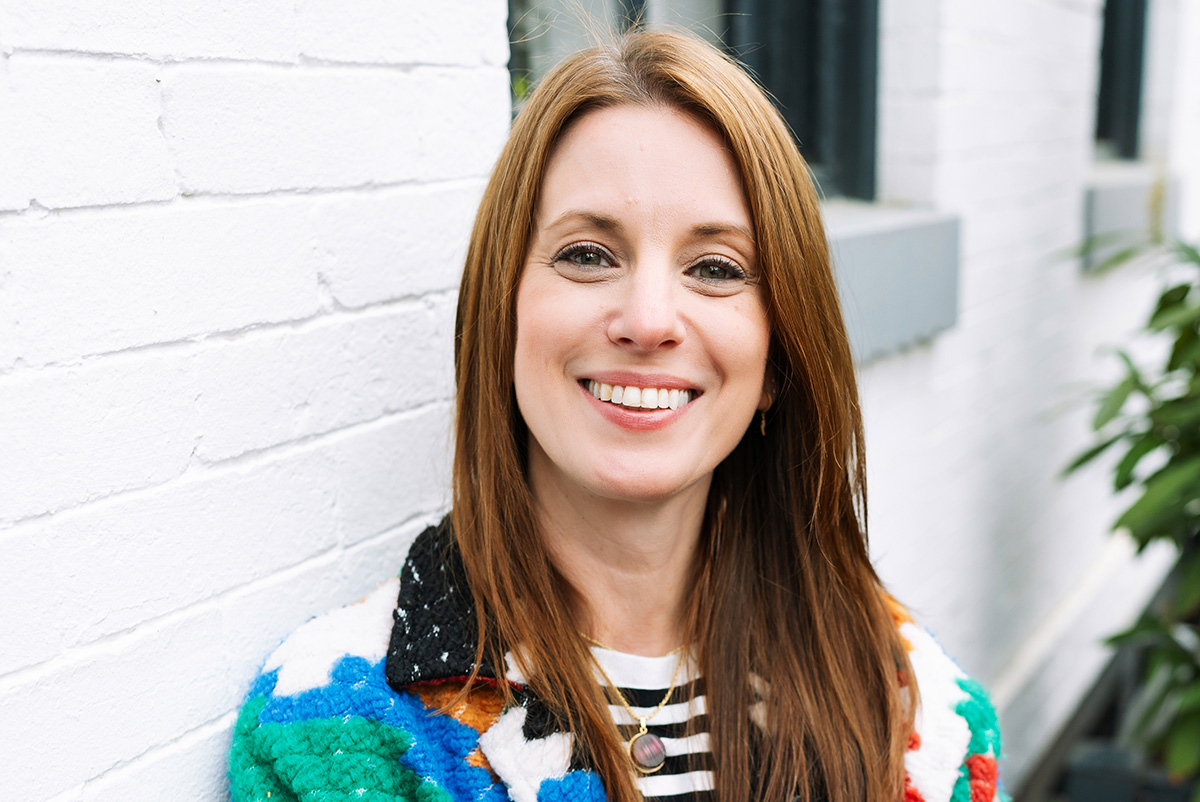
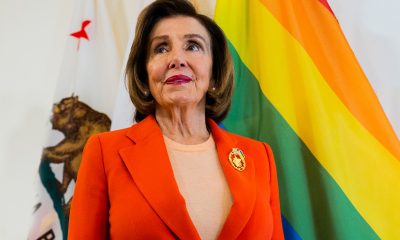
My name is Hope Solomon, and I’m running for mayor of Washington, D.C.
I’ve spent my entire life here. I attended D.C. Public Schools. I grew up working in my family’s small business here in D.C. I live in Dupont Circle. For 17 years, I worked in national security with the Department of Defense, FBI, and Department of Homeland Security. Then last July, I got DOGE’d by Elon Musk.
I don’t recommend it as a career strategy.
But it did give me something I hadn’t had in a long time: perspective.
For the first time in years, I had space to slow down and ask a simple question: Why does it feel like Washington is being run by the same small group of people playing musical chairs, while everyone else is just expected to live with the results?
That’s when I decided to run.
I wasn’t raised in Washington’s political circles. I was raised in Washington. There’s a difference.
Some of my earliest memories are going to see the AIDS Quilt on the National Mall with my mother. I didn’t fully understand it at the time, but I understood enough to know it mattered—because it made something the country had been trying not to see completely impossible to ignore.
My family’s version of a home-cooked meal has always been Annie’s or Mr. Henry’s. I grew up going to Pride, the High Heel Race, drag brunches, and drag shows. As a kid, I thought that was just what cities were like—sequins, show tunes, queens, neighbors, everything mixed together.
Turns out that wasn’t every city.
It was Washington.
The arts shaped me just as much as anything else. I started at Fillmore Arts Center, trained for years with the Washington School of Ballet, and performed across the city—from the Kennedy Center to Warner Theatre to Lisner Auditorium.
The arts taught me discipline and confidence. But more than that, they taught me something Washington has always understood: A city works when people are free to be exactly who they are.
Growing up here, LGBTQ+ Washingtonians were my neighbors, my teachers, fellow business owners, artists, friends, and family.
They helped build the Washington I know.
And that’s why this moment matters.
Washington is facing a budget crisis. Small businesses are struggling. The federal government is openly hostile toward our city. But what worries me most isn’t just policy—it’s whether we lose what makes Washington itself while trying to fix it.
Because the soul of this city is in places like Annie’s. It’s in neighborhood restaurants, small theaters, Pride celebrations, independent businesses, and the people who make this city feel like home.
As mayor, I’ll fight to protect that. I’ll stand up for LGBTQ+ rights, support LGBTQ+ youth, invest in the arts, strengthen public safety, and back the small businesses that keep our neighborhoods alive.
Most importantly, I’ll lead with the understanding that the LGBTQ+ community isn’t separate from Washington’s story.
It is Washington’s story.
If you want another career politician, you’ve got plenty of options.
If you want someone who was shaped by this city, believes in this city, and is ready to fight for this city, I’m asking for your vote.
Learn more at HopeForDC.com. On Election Day, don’t just vote for change. Vote for Hope.
Hope Solomon is a candidate for D.C. mayor.
Opinions
Vote Kenyan McDuffie for D.C. mayor
He will best protect D.C.’s interests amid federal meddling

Elections are always important, but this year in D.C. they will bring major changes. Because of that, your vote in the Democratic primary on June 16 is more important than ever. D.C. is so overwhelmingly Democratic it is a near certainty the winners in the Democratic primary will win the general election. So, I urge everyone eligible, take the time to vote.
D.C. makes it very easy. Every registered voter has received a ballot in the mail. I cast mine before I left for a vacation. When you read this don’t put your ballot in the mail, rather vote at an early voting location, or put your ballot in one of the drop boxes around the city, or vote in person on June 16. You can find the locations for these options nearest you by going to the DCBOE website.
This year for the first time D.C.is dealing with rank choice voting, and who you rank second, or third, can make a difference in the outcome. It is important to note that you don’t have to rank the candidates. You can bullet vote for the one you like, or rank up to five. If there is one or more you like, you can simply choose a #1 and #2. Again, there is no requirement that you rank more people. From what I am seeing, in most of the races, even if five, six, or more, are running and listed on the ballot, in most of those races it will come down to one or two who have any chance. The way the city handles giving out our public money, it will cost us a lot of taxpayer dollars for all those people with no chance at all to win. I hope after these elections the Council will take a close look at how we do our public financing, and reform it. I am all for public financing, just not at the rate D.C. does it. We must ensure anyone who gets city money, accounts for every penny of it. It should never be spent on personal items. If it is not all used, it needs to be refunded to the city.
I have not made endorsements in every race, but clearly the most important race this year in D.C. is for mayor. After 12 years of Muriel Bowser serving as our mayor, there will be someone new sitting in that office after Jan. 1, 2027. What people must remember when voting for mayor, is the person we elect, even if Democrats take back Congress, and I think we will, must continue dealing with the felon in the White House for the first two years of their term. We have seen doing that requires the skill to walk a tightrope. While fighting him on nearly all he is doing, it’s crucial the mayor understands they must not alienate him to the point where he goes all out to attack the city, and the residents here. Remember, home rule gives the felon in the White House, and Congress, enormous power over us. Congress gets to review all our legislation, and our budgets, before they become law. The president controls the D.C. National Guard, and the federal agencies that in many cases get involved, and impact the work of our city. That includes housing, parks, the MPD, and others. There is only one person on the ballot who fully understands that, and has shown, by word and action, they know how to deal with him in the way that will benefit all the people in our city. That person is Kenyan McDuffie. I urge your #1 vote for him. If you have decided to vote for one of the other candidates, I would hope you would list him on your ballot as #2.
Then for Democratic Council-at-large I urge you to consider a #1 vote for Kevin Chavous. Then Brian Schwalb for Attorney General, Phil Mendelson for Council Chair, and Brooke Pinto for delegate to Congress. For Ward 5 Council I recommend Zachary Parker. For Democratic Party slots, I urge a vote for all those running on the Democrats United for a Free D.C. slate.
Then for the Independent Council-at-Large seat I urge a vote for Jacque Patterson or if you vote for Doni Crawford, rank Jacque #2.
Again, the results of this election will determine the future of the District of Columbia. It is the most important election here in years. I urge everyone who can vote in the primary to do so. Your vote can make a difference to you, and all your neighbors.
Peter Rosenstein is a longtime LGBTQ rights and Democratic Party activist.
Opinions
Pride in a new world order
White House has dismantled global U.S. LGBTQ rights infrastructure
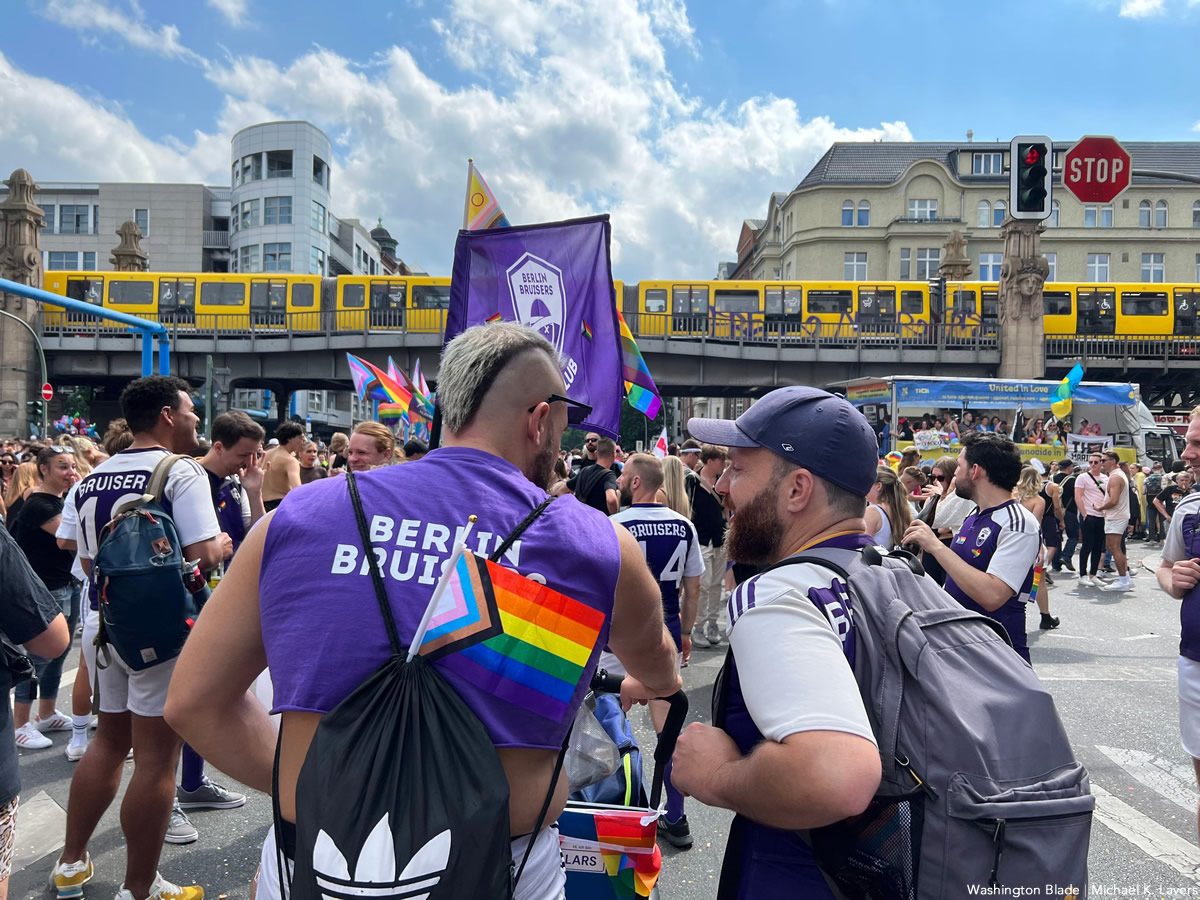
It can be tempting to feel somber this Pride. In 2025 and 2026, the United States dismantled much of the LGBTQ+ rights infrastructure it had spent decades building — eliminating the Global Equality Fund, defunding local LGBTQ+ organizations, and banning the rainbow flag from federal buildings and embassies. India unexpectedly rolled back transgender rights in March, stripping away the hard-won right to self-identify. Senegal passed an abhorrent anti-LGBTQ+ law in April, and a similar one just cleared parliament in Ghana.
But this is only part of the story. 2026 is also the year Rob Jetten — a proud gay man — became prime minister of the Netherlands, the youngest in the country’s history. It is the year Thailand celebrated the first anniversary of legalizing same-sex marriage, a historic first for Southeast Asia that is already influencing debates across the region. It is also the year “Heated Rivalry” became one of the most-watched shows on HBO, a global phenomenon.
In fact, LGBTQ+ people have never been more numerous, more visible, or more politically consequential than we are today. The question is not whether we have power. The question is whether we are using it to adapt to the emerging new world order.
Three geopolitical forces are redrawing the terrain. Borders and sovereignty are under renewed strain — this year showed us that the rules-based international order can no longer be taken for granted. Power politics is back at the center of global affairs, and when nations turn inward and militarize, those at the margins often pay the price first. And the institutions our movement has relied on most — governments, multilateral bodies, and multinational corporations — are proving unreliable allies.
The conclusion is that LGBTQ+ people cannot tie their future solely to the fortunes of liberal democracies. We need to come into our own power, and this turbulent moment may offer an opportunity to do so.
This requires a change in strategy. The LGBTQ+ movement has largely understood itself as a national movement in the business of changing hearts and minds one country at a time: win the courts, shift public opinion, and trust that progress would spread from north to south. That model delivered real victories on decriminalization, anti-discrimination protections, military service, and marriage equality. But it is showing diminishing returns. Today, political movements, financial flows, cultural narratives, and AI models increasingly operate globally outside of normative frameworks. Our movement has not kept pace.
LGBTQ+ people globally constitute a population larger than that of the United States. Our collective economic power approaches $4 trillion. We shape culture disproportionately in film, fashion, technology, and the arts. We are no longer a niche constituency petitioning for tolerance. We are a global community with growing economic, cultural, and political influence.
Realizing that potential requires three things. The first is unity — not uniformity, but the strategic coherence that allows a dispersed global community to act with shared purpose. The second is infrastructure: organizations and networks capable of operating across borders, pooling resources, and articulating a vision people want to be a part of. The third is abandoning a Western-centric mindset: building deeper roots in emerging economies will be essential.
There is a broader point. LGBTQ+ people should not be reduced to merely enduring or surviving this moment. We are entering a turbulent period in which humanity faces serious challenges — armed conflict, climate disruption, and technologies advancing faster than governance. LGBTQ+ people have often had to imagine a different future before it existed — and build the communities to sustain it across borders, generations, and class lines. That experience gives us a comparative advantage in this global context.
Pride, at its best, has always been a declaration of existence and a demand for dignity. In 2026, it should become something more: a reckoning with how much power our community has accumulated — and how seriously we intend to wield it to shape what comes next.
Fabrice Houdart is a former World Bank and United Nations staff member. He has taught at Georgetown University and Columbia University, and chairs the Institute of Current World Affairs in D.C.

Don’t just vote for change — vote for Hope Solomon for mayor

Vote Kenyan McDuffie for D.C. mayor

Your queer D.C. voting guide

Blade reporters reflect on covering Pulse massacre 10 years ago

Rehoboth’s Pride on the Bay set for June 27

Controversial ‘Blue Film’ pushes past taboos for gripping drama

Timothy Nelson on the premiere of his opera ‘Song of Sakuntala’

PHOTOS: ‘Soul Divas’

‘Mighty Real’ explores history of LGBTQ music