District of Columbia
Bowser budget proposal calls for $5.25 million for 2025 World Pride
AIDS office among agencies facing cuts due to revenue shortfall
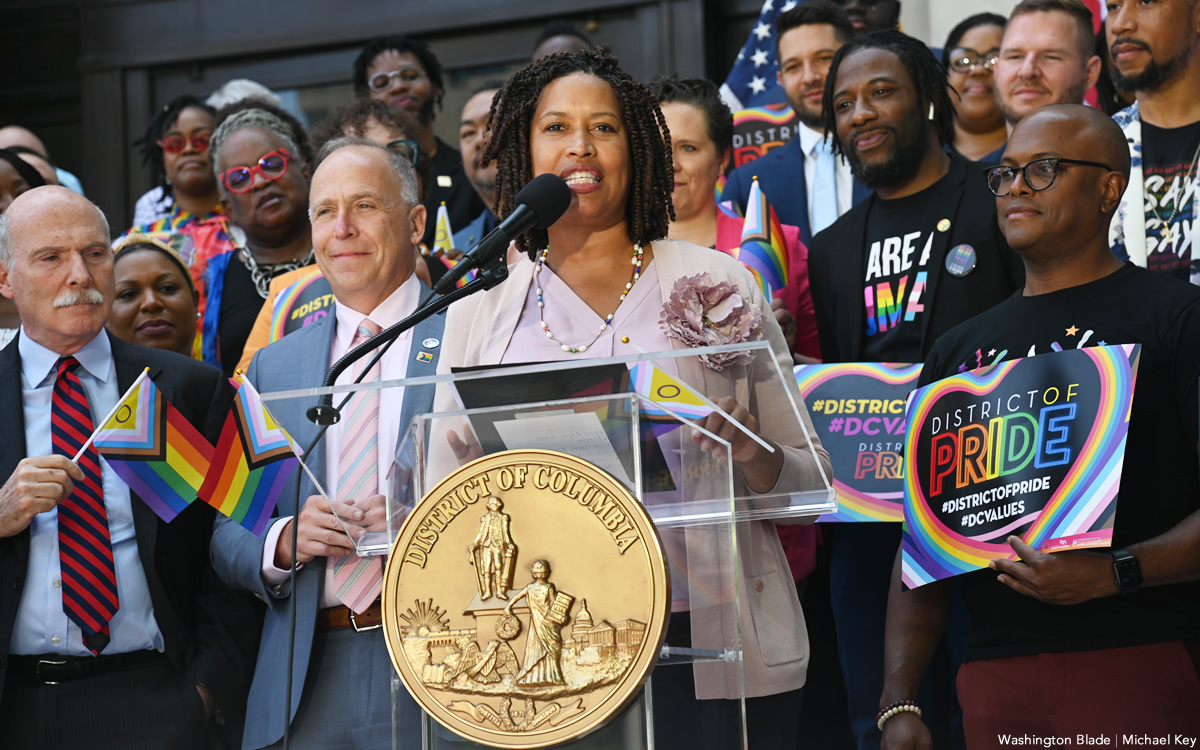
D.C. Mayor Muriel Bowser’s proposed fiscal year 2025 budget includes a request for $5.25 million in funding to support the June 2025 World Pride celebration, which D.C. will host, and which is expected to bring three million or more visitors to the city.
The mayor’s proposed budget, which she presented to the D.C. Council for approval earlier this month, also calls for a 7.6 percent increase in funding for the Mayor’s Office of LGBTQ Affairs, which amounts to an increase of $132,000 and would bring the office’s total funding to $1.7 million. The office, among other things, provides grants to local organizations that provide services to the LGBTQ community.
Among the other LGBTQ-related funding requests in the mayor’s proposed budget is a call to continue the annual funding of $600,000 to provide workforce development services for transgender and gender non-conforming city residents “experiencing homelessness and housing instability.” The budget proposal also calls for a separate allocation of $600,000 in new funding to support a new Advanced Technical Center at the Whitman-Walker Health’s Max Robinson Center in Ward 8.
Among the city agencies facing funding cuts under the mayor’s proposed budget is the HIV/AIDS, Hepatitis, Sexually Transmitted Disease, and Tuberculosis Administration, known as HAHSTA, which is an arm of the D.C. Department of Health. LGBTQ and AIDS activists have said HAHSTA plays an important role in the city’s HIV prevention and support services. Observers familiar with the agency have said it recently lost federal funding, which the city would have to decide whether to replace.
“We weren’t able to cover the loss of federal funds for HAHSTA with local funds,” Japer Bowles, director of the Mayor’s Office of LGBTQ Affairs, told the Washington Blade. “But we are working with partners to identify resources to fill those funding gaps,” Bowles said.
The total proposed budget of $21 billion that Bowser submitted to the D.C. Council includes about $500 million in proposed cuts in various city programs that the mayor said was needed to offset a projected $700 million loss in revenue due, among other things, to an end in pandemic era federal funding and commercial office vacancies also brought about by the post pandemic commercial property and office changes.
Bowser’s budget proposal also includes some tax increases limited to sales and business-related taxes, including an additional fee on hotel bookings to offset the expected revenue losses. The mayor said she chose not to propose an increase in income tax or property taxes.
Earlier this year, the D.C. LGBTQ+ Budget Coalition, which consists of several local LGBTQ advocacy organizations, submitted its own fiscal year 2025 budget proposal to both Bowser and the D.C. Council. In a 14-page letter the coalition outlined in detail a wide range of funding proposals, including housing support for LGBTQ youth and LGBTQ seniors; support for LGBTQ youth homeless services; workforce and employment services for transgender and gender non-conforming residents; and harm reduction centers to address the rise in drug overdose deaths.
Another one of the coalition’s proposals is $1.5 million in city funding for the completion of the D.C. Center for the LGBTQ Community’s new building, a former warehouse building in the city’s Shaw neighborhood that is undergoing a build out and renovation to accommodate the LGBTQ Center’s plans to move in later this year. The coalition’s budget proposal also calls for an additional $300,000 in “recurring” city funding for the LGBTQ Center in subsequent years “to support ongoing operational costs and programmatic initiatives.”
Bowles noted that Bowser authorized and approved a $1 million grant for the LGBTQ Center’s new building last year but was unable to provide additional funding requested by the budget coalition for the LGBTQ Center for fiscal year 2025.
“We’re still in this with them,” Bowles said. “We’re still looking and working with them to identify funding.”
The total amount of funding that the LGBTQ+ Budget Coalition listed in its letter to the mayor and Council associated with its requests for specific LGBTQ programs comes to $43.1 million.
Heidi Ellis, who serves as coordinator of the coalition, said the coalition succeeded in getting some of its proposals included in the mayor’s budget but couldn’t immediately provide specific amounts.
“There are a couple of areas I would argue we had wins,” Ellis told the Blade. “We were able to maintain funding across different housing services, specifically around youth services that affect folks like SMYAL and Wanda Alston.” She was referring to the LGBTQ youth services group SMYAL and the LGBTQ organization Wanda Alston Foundation, which provides housing for homeless LGBTQ youth.
“We were also able to secure funding for the transgender, gender non-conforming workforce program,” she said. “We also had funding for migrant services that we’ve been advocating for and some wins on language access,” said Ellis, referring to programs assisting LGBTQ people and others who are immigrants and aren’t fluent in speaking English.
Ellis said that although the coalition’s letter sent to the mayor and Council had funding proposals that totaled $43.1 million, she said the coalition used those numbers as examples for programs and policies that it believes would be highly beneficial to those in the LGBTQ community in need.
“I would say to distill it down to just we ask for $43 million or whatever, that’s not an accurate picture of what we’re asking for,” she said. “We’re asking for major investments around a few areas – housing, healthcare, language access. And for capital investments to make sure the D.C. Center can open,” she said. “It’s not like a narrative about the dollar amounts. It’s more like where we’re trying to go.”
The Blade couldn’t’ immediately determine how much of the coalition’s funding proposals are included in the Bowser budget. The mayor’s press secretary, Daniel Gleick, told the Blade in an email that those funding levels may not have been determined by city agencies.
“As for specific funding levels for programs that may impact the LGBTQ community, such as individual health programs through the Department of Health, it is too soon in the budget process to determine potential adjustments on individual programs run though city agencies,” Gleick said.
But Bowles said several of the programs funded in the mayor’s budget proposal that are not LGBTQ specific will be supportive of LGBTQ programs. Among them, he said, is the budget’s proposal for an increase of $350,000 in funding for senior villages operated by local nonprofit organizations that help support seniors. Asked if that type of program could help LGBTQ seniors, Bowles said, “Absolutely – that’s definitely a vehicle for LGBTQ senior services.”
He said among the programs the increased funding for the mayor’s LGBTQ Affairs office will support is its ongoing cultural competency training for D.C. government employees. He said he and other office staff members conduct the trainings about LGBTQ-related issues at city departments and agencies.
Bowser herself suggested during an April 19 press conference that local businesses, including LGBTQ businesses and organizations, could benefit from a newly launched city “Pop-Up Permit Program” that greatly shortens the time it takes to open a business in vacant storefront buildings in the downtown area.
Bowser and Nina Albert, D.C. Deputy Mayor for Planning and Economic Development, suggested the new expedited city program for approving permits to open shops and small businesses in vacant storefront spaces could come into play next year when D.C. hosts World Pride, one of the word’s largest LGBTQ events.
“While we know that all special events are important, there is an especially big one coming to Washington, D.C. next year,” Bowser said at the press conference. “And to that point, we proposed a $5.25 million investment to support World Pride 2025,” she said, adding, “It’s going to be pretty great. And so, we’re already thinking about how we can include D.C. entrepreneurs, how we’re going to include artists, how we’re going to celebrate across all eight wards of our city as well,” she said.
Among those attending the press conference were officials of D.C.’s Capital Pride Alliance, which will play a lead role in organizing World Pride 2025 events.


District of Columbia
Mary’s House founder, CEO retires
Dr. Imani Woody played leading role in opening DC’s first home for LGBTQ seniors
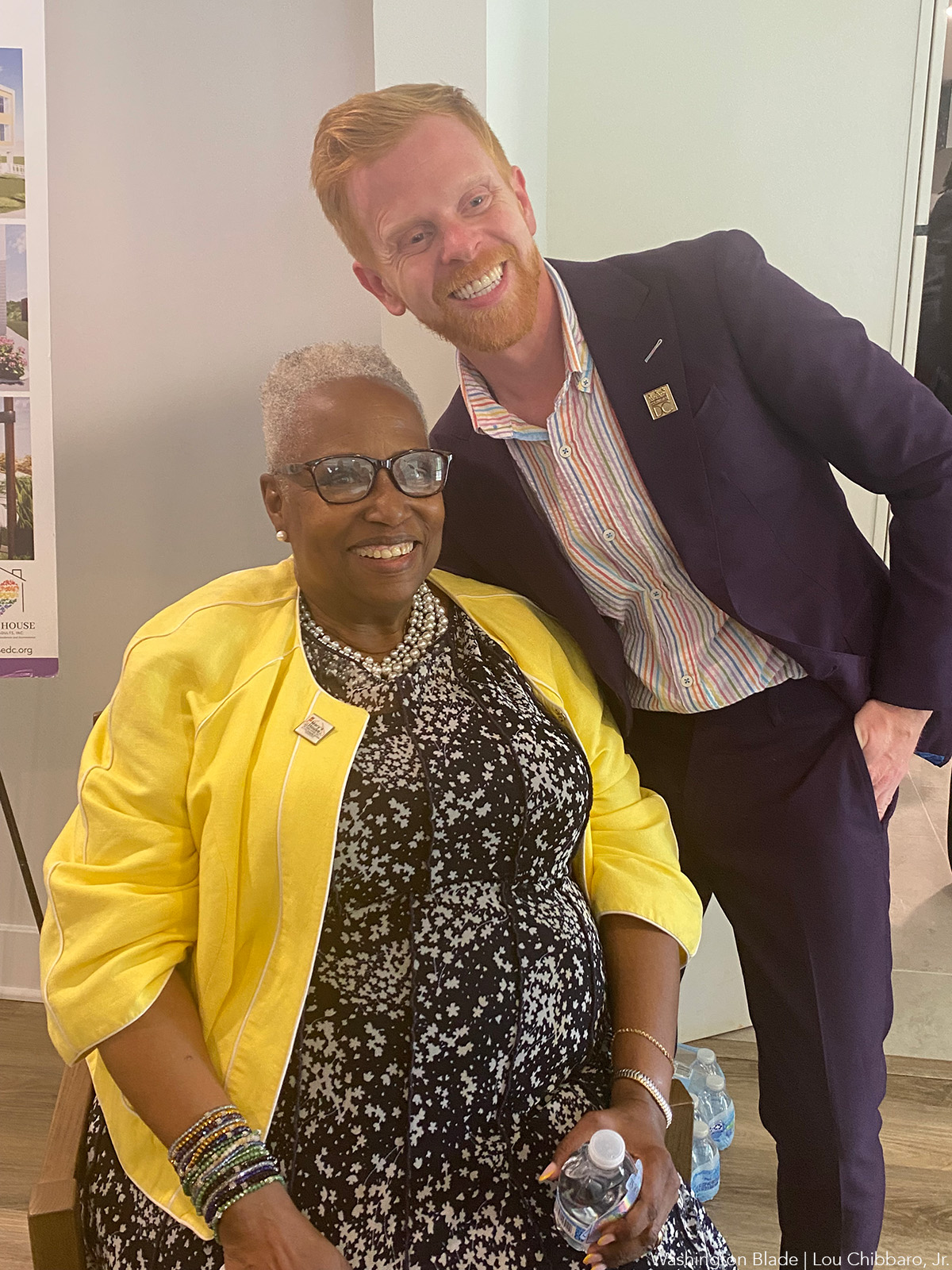
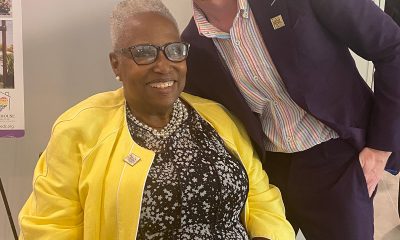
The board of directors for Mary’s House for Older Adults, DC’s first official home dedicated to providing affordable housing for LGBTQ seniors, announced on July 7 that its founding president and CEO, Dr. Imani Woody, has retired.
Woody, who holds a PhD in Human Services, is credited with playing a leading role over many years in arranging both city and private funding needed to construct and operate the Mary’s House three-story building located at 401 Anacostia Road, S.E., in the city’s Fort Dupont neighborhood.
The house, which opened in March 2025, with a grand opening ceremony held in May 2025, includes 15 single-occupancy residential units and more than 5,000 square feet of shared communal living space.
“It is with profound gratitude and hearts full of celebration that the board of directors of Mary’s House for Older Adults, DC (MHFOA) announces the retirement of our visionary founder, Dr. Imani Woody, from her role as president and CEO,” the Mary’s House board says in a statement.
“Dr. Woody’s journey with Mary’s House began with her vision and a kitchen table gathering of women with a bold, urgent, and loving vision: to create safe, affirming, affordable housing for LGBTQ/SGL older adults in Washington, DC,” the statement says.
It adds, “What started as a dream has grown into DC’s first affordable LGBTQ+/SGL affirming communal living space for adults 60 and over, a 15-room community residence at 401 Anacostia Road in Southeast Washington.”
The statement says Woody will continue to serve on Mary’s House board.
“The board will be sharing information about the leadership transition process in the coming weeks,” the statement continues. “We are committed to honoring Dr. Woody’s legacy by ensuring Mary’s House continues to thrive and grow in faithful service to LGBTQ/SGL elders experiencing housing insecurity and isolation.”
District of Columbia
SMYAL receives $25,000 award for ‘courageous acts’
D.C. group provides support services for LGBTQ youth
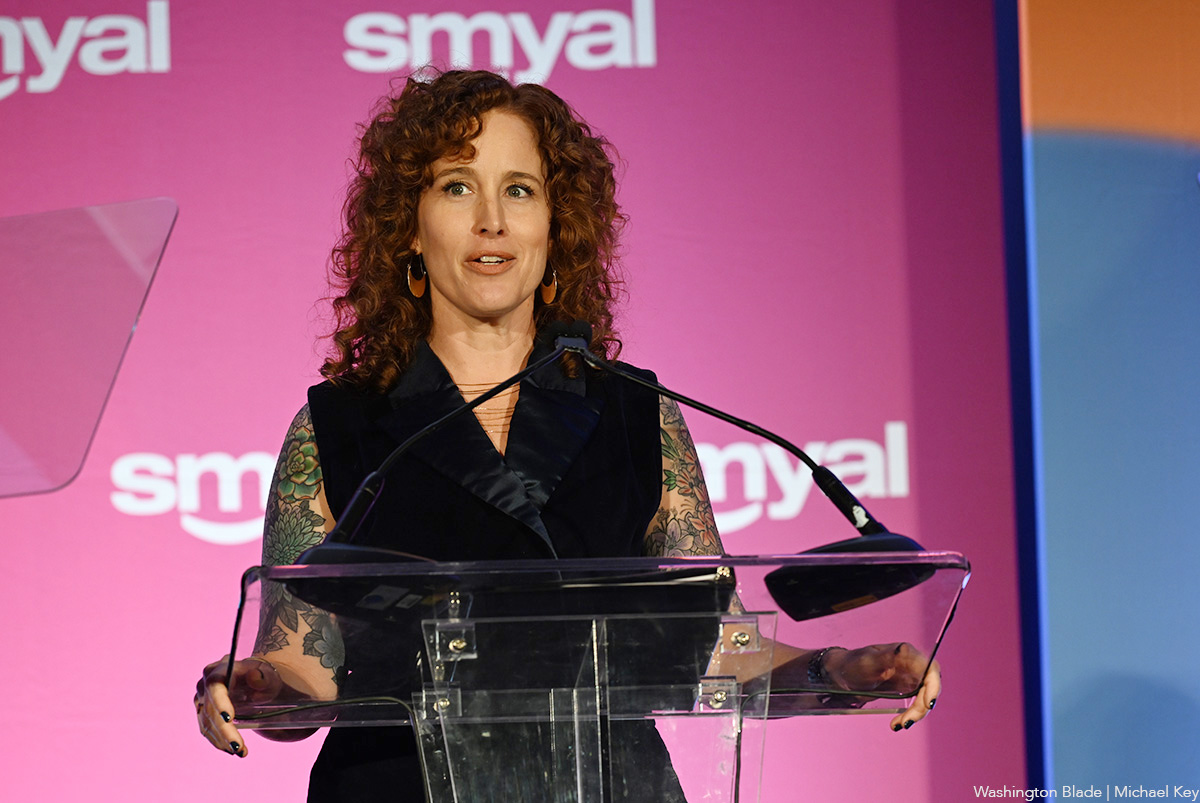
The D.C.-based organization SMYAL, which provides services for LGBTQ youth in the D.C. metro area, including housing for homeless LGBTQ youth, announced on June 30 that it received a $25,000 award for its “courageous acts” in support of the community it serves.
The award was a monetary grant from The Courage Project, which describes itself as a “national initiative investing in acts of courage and compassion that strengthens our communities and democracy.”
A statement on its website says it was launched in May 2025 and is funded and backed by leading national foundations in the U.S.
“At SMYAL, we are deeply grateful to receive support from The Courage Project and are inspired by their bold investment in LGBTQ+ youth at such a critical moment,” SMYAL CEO Erin Whelan said in a statement. “For queer and trans young people, simply showing up as themselves each day requires immense courage, and that courage is strengthened when organizations like The Courage Project stand behind them loudly, proudly, and without hesitation,” Whelan said.
In its statement announcing the award SMYAL says The Courage Project will recognize SMYAL and other awardees and their work on July 3 at the Washington National Cathedral as part of a special interfaith service marking the U.S. 250th anniversary.
“The Courage Project is a bold initiative honoring everyday acts of bravery – the quiet, often unseen acts of heroism that reflect the best of the American spirit and strengthen democracy at the community level,” the project states on its website.
District of Columbia
Longtime Blade staffer Stephen Rutgers steps down after 14 years
Plans to focus on running Crush Dance Bar, other ventures

Longtime Washington Blade employee Stephen Rutgers announced he is stepping down after 14 years to focus on other ventures, including his part ownership of the popular Crush Dance Bar.
Rutgers was hired by the Blade in 2012 to help plan Pride festivities and over the years was promoted to director of sales and marketing. In addition to his broad set of responsibilities, Rutgers planned the annual Pride on the Pier celebration at the Wharf, which has exploded in popularity over the seven years since its launch.
“Watching Pride on the Pier grow from a new community event into one of D.C.’s signature Pride celebrations has been incredibly rewarding,” Rutgers said. “Expanding Pride on the Pier into a two-day festival for WorldPride in 2025 was definitely a career highlight. Seeing thousands of people come together to celebrate our community while supporting the Blade’s mission is something I’ll always be proud of.”

Rutgers described his biggest challenge as navigating the changing media landscape.
“More than ever, we’ve had to remind our community that local journalism matters and that it needs their support,” he said.
He added that he’s most proud of helping to ensure the Washington Blade is positioned to thrive for the next 50 years.
“I was fortunate to be part of the Blade during its 50th anniversary — a milestone that reflects its incredible history and impact,” Rutgers said. “The Blade has been an important voice for the LGBTQ community for more than five decades, and knowing I played a small part in helping its future is most important to me.”
Blade Publisher Brian Pitts praised Rutgers for juggling multiple responsibilities.
“We wish Stephen all the best,” Pitts said. “For the past 14 years, Stephen has been a vital part of the Blade, handling many things — marketing and advertising, sponsorships, and Blade signature events. We will all miss him.”
Blade Editor Kevin Naff thanked Rutgers for his years of service to the community.
“After 14 years, it’s hard to imagine the Blade without Stephen and his boundless energy and creativity,” Naff said. “He’s one of the hardest working and most dedicated people I’ve ever known and he will be missed. But change is the only constant and I know Stephen will move on successfully to new challenges and the Blade will expand on Stephen’s important work.”
As for what’s next for Rutgers, he said he plans to focus on Crush as well as his real estate business.
“I’ve always been someone who likes to stay busy,” Rutgers said. “For the past 12 years, I’ve balanced my work at the Blade and in real estate. Two years ago when I opened Crush, I never realized just how much time and energy it would take. The passing of my father earlier this year also gave me a new perspective. It reminded me that life is short and that it’s important to make time for the people and experiences that matter most. Stepping away from the Blade will allow me to focus on those ventures while also creating more balance in my life. After 14 incredible years, it feels like the right time for a new chapter.”
Naff said that for now Rutgers’s responsibilities will be divided between existing staff along with several new freelance contractors.
“The Washington Blade plays a unique role in our community’s fight for equality,” Rutgers said. “It’s the only LGBTQ news organization with White House credentials, giving it direct access to the people and institutions shaping policies that affect our community. The Blade continues to hold elected officials accountable, report on the issues that matter most to LGBTQ people, and tell the stories that often go uncovered by mainstream media.
“The Blade has been my family for most of my adult life. For 14 years, it has been part of my daily routine, so it’s going to feel very strange waking up and not logging on each morning.”

Egyptian authorities refuse to allow gay cruise to dock in country

‘She’s the He’ brings gender-bending twist to teen comedy genre

Supreme Court ruling on trans athletes is a public health story

Queer media dominates 2026 Emmy nominations

It’s good to see some justices standing up to Trump

Under-the-radar Delaware beach towns smart buyers are targeting

‘My Favorite Sociopath’ debuts at Shepherdstown’s CATF

In Trump’s divided America, Michael Weinstein’s AHF responds

Turkish authorities refuse to allow gay cruise to dock in country

When a church fears the rainbow
-

 Real Estate4 days ago
Under-the-radar Delaware beach towns smart buyers are targeting
-
Theater4 days ago
‘My Favorite Sociopath’ debuts at Shepherdstown’s CATF
-
Politics3 days ago
In Trump’s divided America, Michael Weinstein’s AHF responds
-
Turkey3 days ago
Turkish authorities refuse to allow gay cruise to dock in country