Opinions
NY Times report on GLAAD riddled with bad reporting, innuendo, lies
GLAAD, Ellis should stay the course — the world needs you now more than ever
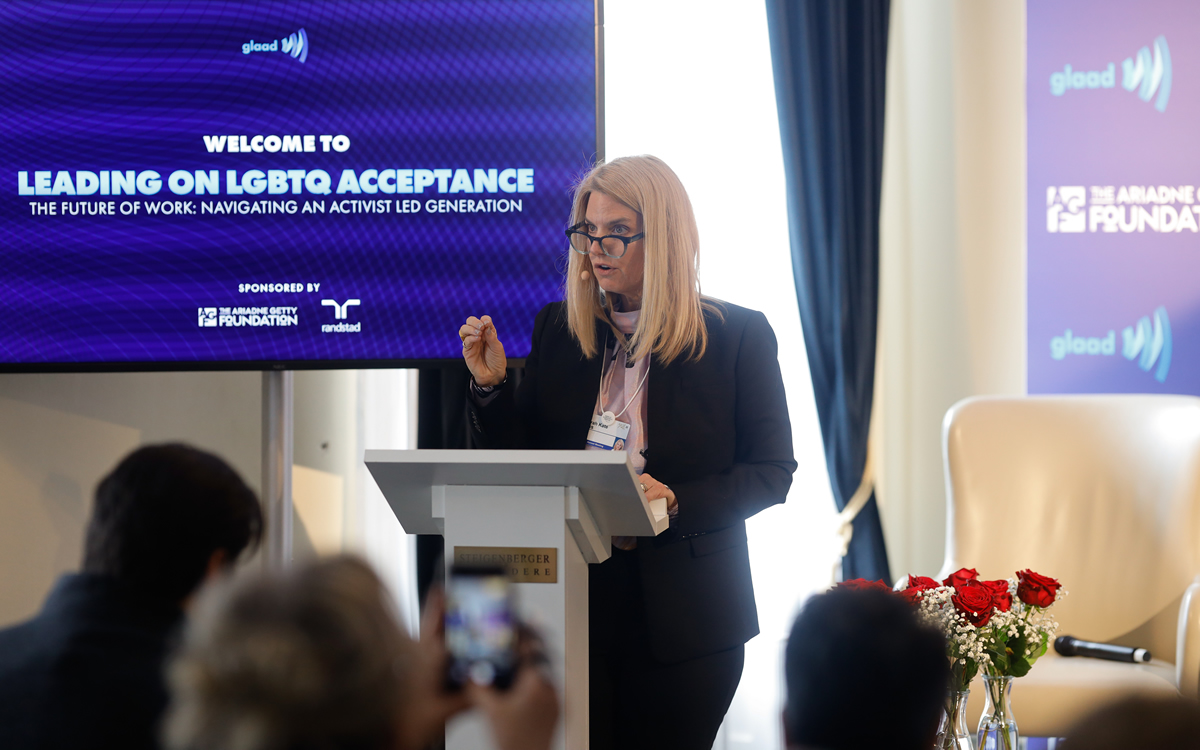
Let me say up front that no one from GLAAD asked me to write this, and I did not run its content by them or coordinate in any way. These are my independent observations based on my experience as Vice President and Chief Programs Officer under the leadership of Sarah Kate Ellis for five years. I was there for much of what is detailed in the recent New York Times story, and I feel compelled to provide a counterpoint to the imbalanced — and perhaps libelous — story put forward by the Times.
Before I get into the content of the piece, it’s incredibly relevant to point out that the writer of this piece, Emily Steel, signed an open letter last year criticizing GLAAD and more than 100 other organizations and leaders who spoke out against The New York Times’ coverage of transgender people. That alone should have disqualified her from investigating and writing this story. I won’t speculate about her motives or those of her editors, but the fact that she had taken a public position against GLAAD’s work speaks volumes.
Beyond that, the piece is riddled with bad reporting, innuendo, lies, mistruths, facts out of context, and misinformation. I know because I was there — but no one at the New York Times bothered to call any of us (and there are many) who could have instantly debunked this nonsense.
So let’s get into it — facts first.
Sarah Kate Ellis’s salary is not $1 million per year. It’s not even close. It’s easily searchable and publicly available on GLAAD’s IRS 990 forms, which are filed annually. The most recent documents indicate a salary of roughly $575,000 and a bonus of about $27,000 — a lot of money, yes, but a far cry from $1 million and very much in line with the leadership of nonprofit organizations with similar budgets.
Much has been made of GLAAD’s work at Davos, so let me offer some context there as well. The World Economic Forum meets in Davos each year and is composed of leaders from government, business and international organizations, civil society, academia, and media to tackle the world’s most pressing challenges. Until GLAAD entered the frame in 2017, LGBTQ issues were not on the agenda. Today, they are a centerpiece.
While I did not attend any of GLAAD’s trips to Davos, I was privy to the strategy, logistics, and other details related to those activations. Here’s the truth. Those trips are funded by a donor who specifically designated those funds for that purpose in order to provide GLAAD an opportunity to have a seat at the table with world leaders, Fortune 100 CEOs, and global influencers in order to make progress on criminalization of LGBTQ identities, HIV medication access, and reform in the Catholic Church. You don’t do that with events and meetings at the local Hampton Inn. If you want to have a seat at the table with world leaders, you go where they are.
GLAAD is not a direct services organization — it is an agent of culture change, and culture change is a long and expensive game. When you show up to Davos, Cannes Lions, the Emmys, Sundance, and other places of elite influence, you must show up as their equal in order to earn a place in the conversation and be trusted to co-create the change we are advocating for. And what is the change that has happened, exactly, from GLAAD’s presence in Davos?
A simple Google search will produce a laundry list of impact for the LGBTQ community from GLAAD’s work there, especially critical at a time when DEI and other inclusive programs are under attack in the corporate world. It’s also worth noting that GLAAD’s fingerprints are all over many things that never are acknowledged publicly because to do so would damage the work and the end goal.
Nonetheless, here are just a few headlines tell the tale:
Washington Blade: GLAAD, HRC Presidents Attend World Economic Forum
Associated Press: Pope Approves Same-sex Blessings For Couples
Associated Press: Pope Says Homosexuality Not A Crime
World Economic Forum: What Davos Taught Me About Supporting My Transgender Child Partnership for Global LGBTQIA+ Equality: Davos Promenade Lights Up Rainbow
New York Times: Vatican Says Transgender People Can Be Baptized and Become Godparents Here’s the bottom line.
Sarah Kate Ellis has taken the organization from literal bankruptcy to the stages at Davos, the Emmys, Cannes Lions, the Super Bowl, and countless other places to represent our community and make change. She has made GLAAD a juggernaut with a place at the table at the world’s most influential cultural moments and among the globe’s leading decision makers and culture shapers. That’s why Time magazine named her one of the 100 most influential people in the world in 2023 and why she commands the respect of the team she leads at GLAAD, the board of directors who hired her, and the leaders of the industries in which she is making change every day. On a personal level, she is one of the most honorable, visionary, judicious, and impactful leaders I have ever worked with.
It’s a shame to see the New York Times stoop to petty vindictiveness and shoddy reporting for clicks and revenge. It’s not just an attack on Sarah Kate Ellis — it’s an attack on all of us who have been a part of turning GLAAD around and making it a leading global voice for equality and acceptance. My only demand of GLAAD’s leadership would be to go even bigger, even louder, even harder, and even faster. Stay the course. The world needs you now more than ever.
(Editor’s note: Charlie Stadtlander, a spokesperson for the New York Times, disputes Stokes’s characterization of the open letter. He wrote in an email to the Blade: “The letter was not critical of GLAAD. It was signed by over 80 members of our newsroom opposed to the NewsGuild of New York engaging in or taking sides in public debates over internal editorial decisions at The Times. The letter stated: ‘Our duty is to be independent. We pursue the facts wherever they may lead. We are journalists, not activists. That line should be clear.’”)
Zeke Stokes is former Vice President and Chief Programs Officer at GLAAD and an executive producer of the award-winning documentary ‘TransMilitary.’




Opinions
LGBTQ community must vote in big numbers
We have a chance to retake Congress and flip governors’ mansions
On Nov. 3, we have a chance to make a difference for our own community, and for so many others, who are being hurt by the lying, grifting, felon in the White House, his fascist aides, and sycophants in Congress. The danger they pose is real.
We have seen members of the LGBTQ community have their lives threatened, and some even killed. The anti-trans language, and anti-trans legislation, both supported and proposed by this administration, and their MAGA followers around the nation, is real. In the Department of Defense, we have seen trans heroes drummed out of the military. Books on our community taken off library shelves, and our history being wiped out. Even the history of the Enola Gay, the plane that dropped the atomic bomb, was wiped out before someone actually told the dangerous, moron, Pete Hegseth, Secretary of Defense, that Gay was the name of the pilot’s mother, not a reference to our community.
Many members of the Log Cabin Republicans will proudly tell you that the administration is actually pro-LGBTQ, as there are gay members of the felon’s administration. What they don’t like to dwell on, is their silence during these attacks on the community. Yes, there are people like Richard Grennell, who destroyed the Kennedy Center. He cancelled concerts by the Gay Men’s Chorus, and programs by drag queens. Then there is Scott Bessent, the highest-ranking queer, a clearly self-hating, Secretary of the Treasury. A man who benefitted from the work of all the activists in our community, so he could get married, and have children, but then won’t speak out for the community. I wrote a column suggesting when his children grow up, they will be embarrassed by what their father didn’t do. Most of the other members of the LGBTQ community in this administration are either members, or supporters, of Log Cabin, and have sworn fealty to the lying, grifting, Trump in order to get, and keep, their jobs.
So, it is beyond time, for the LGBTQ community, and our allies, to vote, and vote in large numbers, to say ‘ENOUGH’, we will not continue to stand idly by while we, and others, are being hurt by this self-serving, venal administration.
Barney Frank once said “If we aren’t at the table, we are on the menu.” But we have come to realize, not every one of us at the table, will work to protect us. There are some at the table today who either agree with what the administration is doing, or are remaining silent out of fear. They remind us every day of the truth of the slogan, ‘Silence = Death.’
So, Nov. 3 is our next chance to speak out. We can do it with our votes. If we vote in large enough numbers, we have the chance to not only take back the Congress, the House and Senate, but to impact state governments, cities, and local communities. We have the real chance to take back the governor’s mansions in Ohio, by electing Amy Acton; in Iowa, by electing Rob Sand; in Florida, by electing David Jolly; and in Georgia, by electing Keisha Lance Bottoms, among other states. These races are all close, and our voting in big numbers can make the difference. Then we can flip state legislatures, mayor’s offices, local commissions, and even school boards. We have seen even in small communities like Rehoboth Beach, Del., when we vote, we elected the first out lesbian mayor, Susan Stewart. In Key West, we elected a commissioner, Christopher Massicotte. Our votes, along with so many other decent people, do make a real difference.
It is not only electing members of the LGBTQ community. It is electing those who will have our backs, and fight for us. We must support, and vote for, candidates who will have our backs and fight against the homophobia, and vicious attacks, on our community by today’s MAGA version of the Republican Party. While the numbers vary, there have been more than 500 anti-LGBTQ bills filed in state legislatures thus far in 2026. I may have missed something, but as far as I know the felon’s administration has not opposed any of them. They have endorsed a host of them through their words and actions.
So, I beg you, as a member of the LGBTQ community, and someone who believes in equal rights, and human rights, for all; please vote. Make the effort to get all your friends and family that support you, to vote as well. Martin Luther King, Jr., who I had the honor of meeting and taking with, once told me “Each one of us can make a difference.” This is your chance!
Peter Rosenstein is a longtime LGBTQ rights and Democratic Party activist.
Commentary
Washington Blade responds to concerns over White House pool duties
Inaccurate media reports create confusion but we stand with our colleagues
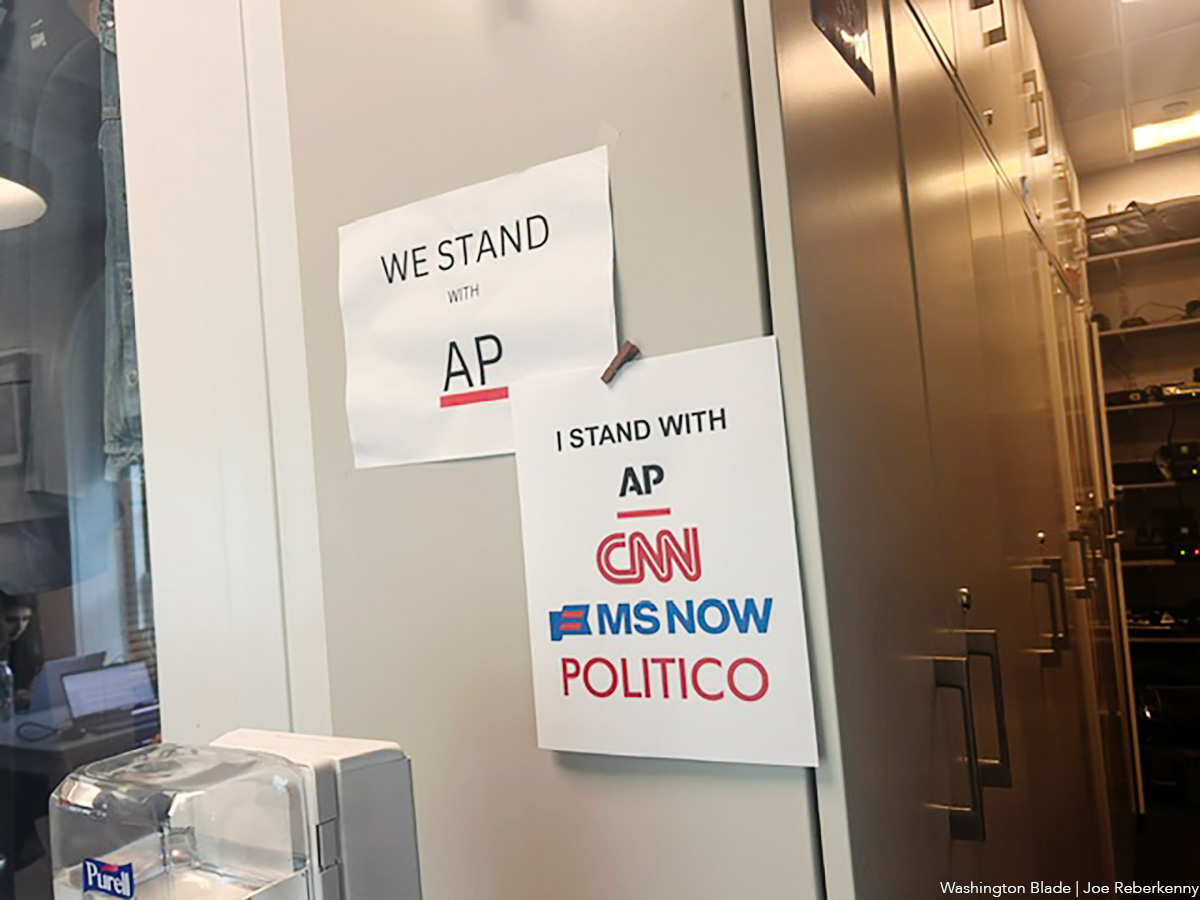
Last week, President Trump announced his unconstitutional ban of CNN, MSNow, and Politico from the White House. Coincidentally, on Monday, it was the Washington Blade’s turn to serve as the print pool reporter on duty covering the president’s actions that day. This important responsibility is shared and rotated among the print members with each serving roughly once per month. The Blade is the only LGBTQ outlet with a seat in the briefing room, a slot in the pool rotation, and membership in the White House Correspondents’ Association, something we fought for decades to secure after enduring years of discrimination, ridicule, and resistance to openly queer journalists working inside the White House. We take our responsibilities there seriously.
There are two pools that cover the president: broadcast and print. The other four members of the broadcast pool — ABC, CBS, NBC, and Fox News — agreed to boycott their pool duties. There has been no boycott among the print pool, which is a separate entity. I called the president of the White House Correspondents’ Association on Monday to confirm that no outlets in the print pool were boycotting.
A boycott by the Blade would set us back and lead to our expulsion from the pool and briefing room and our replacement by a right-wing outlet sympathetic to President Trump’s approach to attacking the media. The LGBTQ community is far better served with the Blade in the room than a far-right blogger taking our seat.
Let’s be clear: the Blade stands for diversity, equity, and inclusion and we stand for the First Amendment and freedom of the press. In solidarity with the broadcast pool, we made two important decisions on Monday — the first day anyone had to think about any of this. First, we refused to take or share any videos or still photos of the president, which would have undermined the broadcast boycott. Second, when Politico’s turn comes up for pool duty in mid-October, the Blade will not fill in and cover for them while they are banned. Politico must be readmitted and allowed to do their job.
After a rough day navigating and reporting on all of this, the Advocate published a reckless and inaccurate story suggesting that the Blade had crossed a picket line. Not true, as there is no print pool boycott. They claimed that I wouldn’t talk to their reporter. Also not true. I called their reporter within 90 minutes of receiving his message and he didn’t take the call or call me back. Their story named me and our White House reporter, immediately exposing us to public criticism and worse. The environment in D.C. is so toxic and even violent these days that subjecting our staff to unfair and false accusations like this invites harassment, doxxing, and worse. To do that without even talking to us is next level irresponsible and the antithesis of journalism.
On Tuesday, I talked to two reporters and an editor at the Advocate but they refused to retract anything in their inaccurate story. If the reporter had returned my call, I could have explained all of this but they are more concerned with clickbait and sensational headlines, a dangerous practice in these troubled times.
Back to the pool. The Blade was in the briefing room in the Reagan era, when Press Secretary Larry Speakes made jokes about AIDS and the reporters in the room laughed out loud. We endured all of that abuse and worse for decades, always standing in the back of the room and never being called on. The Blade’s journalists persevered. When President George W. Bush was re-elected in 2004, the Blade’s White House credentials were revoked amid an earlier press crackdown. Notably, no one boycotted or stood up for us. When Barack Obama won election in 2008, I received an email from his communications director informing me that effective midnight on Jan. 20, 2009, the Blade’s credentials would be restored.
So we have had quite a ride navigating administrations and their changing requirements for gaining access but always playing the long game. As Barney Frank used to say, “If you’re not at the table, then you’re probably on the menu.” The Blade is at the table and we do our best to ensure the LGBTQ community’s issues are addressed by both parties.
Thanks for reading and supporting the Blade’s work. If you have questions about our approach, you can reach me at [email protected].
Kevin Naff is editor of the Washington Blade. Reach him at [email protected].
Opinions
Young people should know history of the fight for human rights
Trump is working to erase contributions of marginalized people
When talking with otherwise really smart young people, I am amazed how little knowledge many of them have about the fight for human rights in the United States. Our country was founded by white men, who didn’t think about giving full rights to Black Americans, women, the LGBTQ community (what they knew of it, or called it). They wrote in the Declaration of Independence, “We hold these truths to be self-evident, that all men are created equal, that they are endowed by their Creator with certain unalienable Rights, that among these are Life, Liberty and the pursuit of Happiness.” But that referred to all white men, and intentionally didn’t mention women. For 250 years, the country has been trying to make up for that, and making progress in fits and starts. We have yet to fully succeed. Today the felon, and his fascist aides, in the White House, are working daily to take us backwards.
For that reason alone, it is important for younger generations to understand the fight for human rights, know who was fighting for those rights, and understand it is an ongoing fight. Often, when listening to some millennials speak, one would think the world began with them. They either forgot, or never learned, about all those who fought for the rights they now have. I realize this was true for previous generations as well. In 2016 I co-hosted a fundraiser for Pete Buttigieg during his run for president. He is an undeniably brilliant guy. Yet when he spoke of marriage equality, he just thanked Justice Kennedy for it. I reminded him after he spoke, while it’s nice to thank Kennedy for his vote, it shouldn’t be done without acknowledging the many activists who worked for decades, to get to the point that allowed Kennedy to cast that vote. In the same way it was clear to me during the Hillary Clinton campaign for president, many young women didn’t understand the work many of their own mothers had done, to fight for their right to control their own healthcare, and women’s rights in general. They took for granted the rights they had. Now, after losing some of them, many will realize the fight for their rights is never-ending.
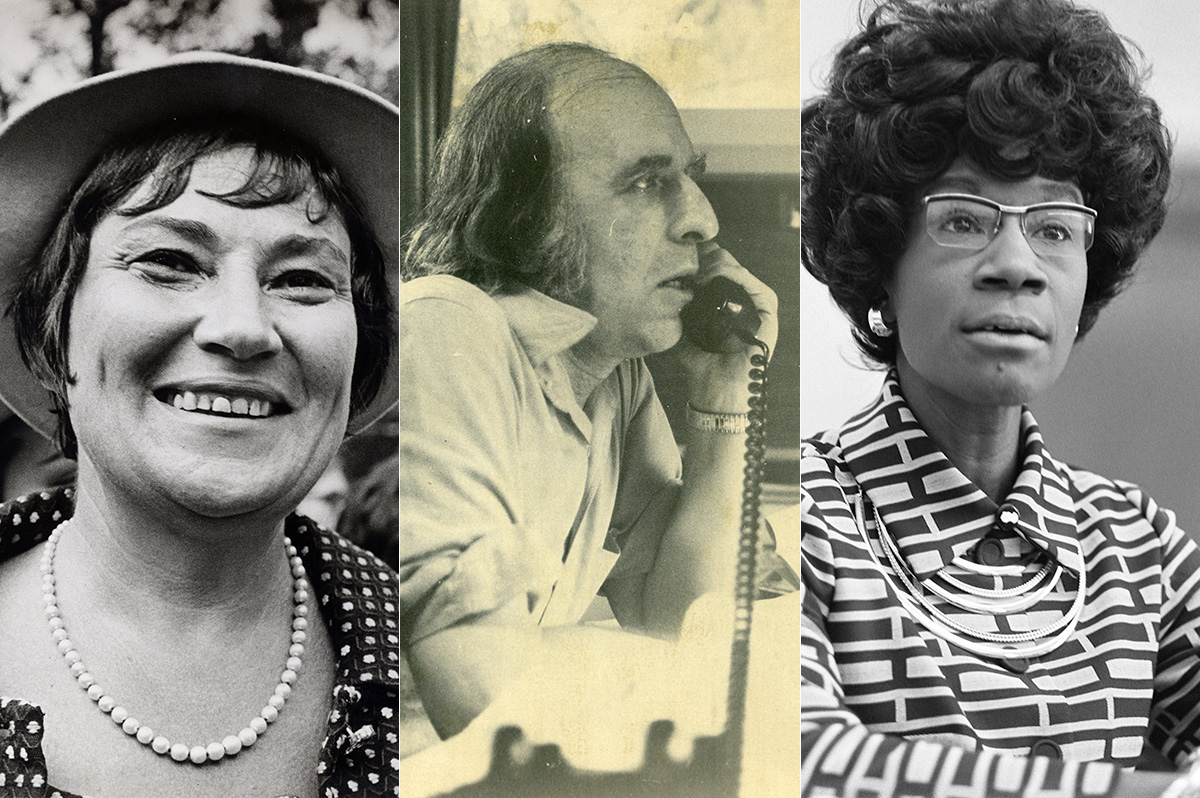
When I speak to younger members of the LGBTQ community, I am amazed how many don’t know the history of the AIDS epidemic, many thinking it was always a disease you could deal with by taking medication. They don’t understand the work so many activists did to bring attention to this devastating disease, and get the healthcare so many needed. Those like Cleve Jones, Larry Kramer, Dr. Anthony Fauci, and so many others. Recently, I realized how many young women don’t know the names of Gloria Steinem, Betty Friedan, Shirley Chisholm, Bella Abzug — women who fought for their rights. And this is just recent history, no less knowing about the Suffragettes, the strong women who fought for their right to vote. I’ve met young women who don’t know what the ERA is, and others who think it passed. Many don’t know the nation couldn’t get 38 states to approve an amendment to include them in the Constitution. The same for young members of the LGBTQ community who don’t know what the Equality Act is. Others think it passed, and are shocked when told it didn’t and in 27 states, they can be married on Sunday, and kicked out of their home, and fired from their job, on Monday. They don’t know names like Frank Kameny, Harvey Milk, Barney Frank, or the history of the Mattachine Society, or the Stonewall Riots.
Our current president is trying to wipe out all this history, and reverse any progress that has been made. Knowing this, it makes it even more important for school systems across the nation to fight to educate our children. We should ensure no child can graduate high school, without taking a course called “The 250-year fight for human rights in the United States.” They need to understand the history, and learn about the people who fought for their rights. They need to know how far we have come in 250 years, and understand, as we begin the next 250, how far we still have to go, to ensure real, full equality, for all.
Peter Rosenstein is a longtime LGBTQ rights and Democratic Party activist.

LGBTQ community must vote in big numbers

Victory Fund board investigates former staffers’ allegations against CEO Evan Low

Calif. governor signs 6 pro-LGBTQ bills, vetoes 1

Gay Va. couple hopeful voters will enshrine marriage equality in state constitution

Vote now! Best Of LGBTQ DC readers’ choice awards

PHOTOS: HRC National Dinner

What’s frightening is also funny in ‘Venus’

I’m 66, he’s 27. Is it love or am I being played?

The LGBTQ real estate map is being redrawn