News
Grindr rolls out new features for countries where LGBTQ identity puts users at risk


Grindr has announced a rollout of new features designed to help users in countries where the prevailing culture of homophobia, biophobia, and transphobia puts them at risk.
In what it describes as “part of its continued commitment to the safety and security” of its users, the popular dating/hookup app is introducing new features including: 1) the ability for users to “unsend” messages that they want to remove from the conversation; 2) expiring photos that give users the ability to have their personal photos disappear from a conversation as a protective measure; and 3) screenshot blocking for photos, chats, and profiles. The latter is a particularly important feature which allows users to protect their identity when sharing content that could personally identify them in areas where it is illegal or unsafe to be LGBTQ. These new security features are a part of the company’s continued efforts to make user safety a top priority.
Scott Chen, President of Grindr, said in a statement, “As Grindr has grown to become a vital part of the gay, bi, trans, and queer community, we feel a responsibility to provide important information and evolving tools to facilitate our users’ safe dating experience. Our work in improving the well-being for the LGBTQ community around the globe is far from finished, but we are proud of these additional features to help provide a safer platform for our users.”
In addition, Grindr has unveiled a Holistic Security Guide, covering: 1) digital security; 2) personal safety; and 3) emotional well-being. As part of Grindr’s ongoing efforts to enhance its security features, the company has partnered with LGBTQ activists and online safety advocates around the world, such asArticle 19, on this Holistic Security Guide. The Guide will debut in six languages – English, Spanish, French, Arabic, Russian, and Nigerian Pidgin – and can be found in two formats. The first is in the form of a FAQ much like Grindr’s Sexual Health Resource Center (SHRC) and the Gender Identity Resource Center (GIRC). The second is a standalone report written by Azza Sultan, Associate Director of Grindr for Equality, which can be found on Grindr for Equality’s website.
Grindr for Equality (G4E) is an initiative within Grindr focused on the ever-evolving mission to promote justice, health, safety, and more for LGBTQ+ individuals around the globe. G4E works with health, digital rights and LGBTQ/human righs organizations as well as local community leaders and queer activists to find ways of using the Grindr app, technology and platform to mobilize, inform, protect and empower Grindr users. Grindr for Equality also recently announced that it granted $100,000 to LGBTQ activists and organizations in the Middle East-North Africa region.
The director of Grindr for Equality, Jack Harrison-Quintana, said, “We are so proud to introduce these new security features, along with the Holistic Security Guide, as we continue to promote safety and justice for our users around the globe. We are grateful for the feedback from users and the various organizations and activists around the world who have helped us to continue improving the quality of life for Grindr users.”
In addition to Grindr’s efforts to advance user safety and security, Grindr is working towards a kinder, more respectful community. To learn more, visit: https://www.kindr.grindr.com.






Politics
Log Cabin Republicans remove transgender rights from mission
Decision made after ‘significant discussion’ with members, board

Log Cabin Republicans, an organization that formerly represented LGBTQ conservatives, has removed advocating for transgender and queer rights from its “renewed” national advocacy focus.
In an opinion piece written by Log Cabin Republicans President Ross Hemminger for the conservative media outlet Town Hall, he announced that trans rights would no longer be part of what the organization advocates for through conservative leadership and candidates.
In his piece, Hemminger wrote that after “significant discussion” with members and Log Cabin Republicans’ board of directors, the organization’s leadership voted to “refine Log Cabin Republicans’ national advocacy focus to concentrate specifically on issues of sexual orientation and conservative values,” a focus that does not include trans people.
“We have fought for the right to legally marry who we love, serve our country and our communities openly and proudly, and to enjoy the same inalienable rights afforded to all law-abiding Americans — and we succeeded,” Hemminger wrote. “However, the new era of gender identity politics is not the movement we supported and fought for. Gay men and women are losing public support across the country, and support for gay marriage and other once-widely accepted rights is eroding. Why? Because many voters today weren’t alive or cognizant of the politics of gay marriage winding its way through the courts and gaining ground in public opinion. Their view of the gay community is based on today’s radical transgender activists with their unnecessary and discomfiting focus on America’s youth.”
Hemminger then went on to argue that trans advocacy has shifted to focusing primarily on minors — a characterization that does not reflect the breadth of issues trans advocates address.
“They push schools to teach radical gender ideology; they want biological men in women’s sports regardless of the consequences; perhaps most offensively, they support gender reassignment treatments for minors, often without the knowledge or consent of the parents, knowing full well these treatments are mostly irreversible,” he wrote.
Hemminger and many right-wing political leaders have continued to assert this false reality as fact.
A Harvard-affiliated study found approximately 2.1 gender-affirming surgeries occur per 100,000 trans and gender-diverse minors diagnosed with gender dysphoria, underscoring how uncommon these procedures are among minors. In addition to the option of surgery for those who think it’s right for them, there is an array of other medically sound options to treat gender dysphoria, which according to KFF, an independent source for health policy research and polling, includes “medical, surgical, mental health, and non-medical services for transgender and nonbinary people.”
Additionally trans advocacy is not as narrow as Hemminger makes it seem in his opinion piece.
There are a slew of issues the trans community faces — and fights for — on a daily basis that have nothing to do with healthcare. Those include obtaining government documents that accurately reflect one’s gender identity, multiple elements of family law that include the right to marry and adopt children as straight couples can, protections from violence, hate crime protections, the right to serve in the military, access to bathrooms corresponding with their gender, and the right to education.
Despite the overwhelming number of issues trans people — regardless of political affiliation — have to struggle with as a result of systemic gaps in protections that are supposed to be afforded to everyone under the law, they remain vulnerable to unequal treatment.
Despite this shift, Log Cabin Republicans has committed to standing with the Republican Party rather than LGBTQ people as a whole. The organization was initially founded as a loosely connected network of local California social clubs made up of LGBTQ conservatives in the late 1970s before eventually emerging as a national political organization in the early 1990s under its founding executive director, Rich Tafel.
As the organization continued to gain momentum, it endorsed a handful of Republicans who voted against the Respect for Marriage Act, the 2022 law that federally recognized marriage equality for same-sex couples.
The Washington Blade reached out to Log Cabin Republicans for comment but did not hear back by the time of publication.
Delaware
Democrat Maureen ‘Mo’ Madden takes on longtime GOP stronghold in Delaware’s 38th
Out lesbian candidate for state House focused on infrastructure needs, voting rights
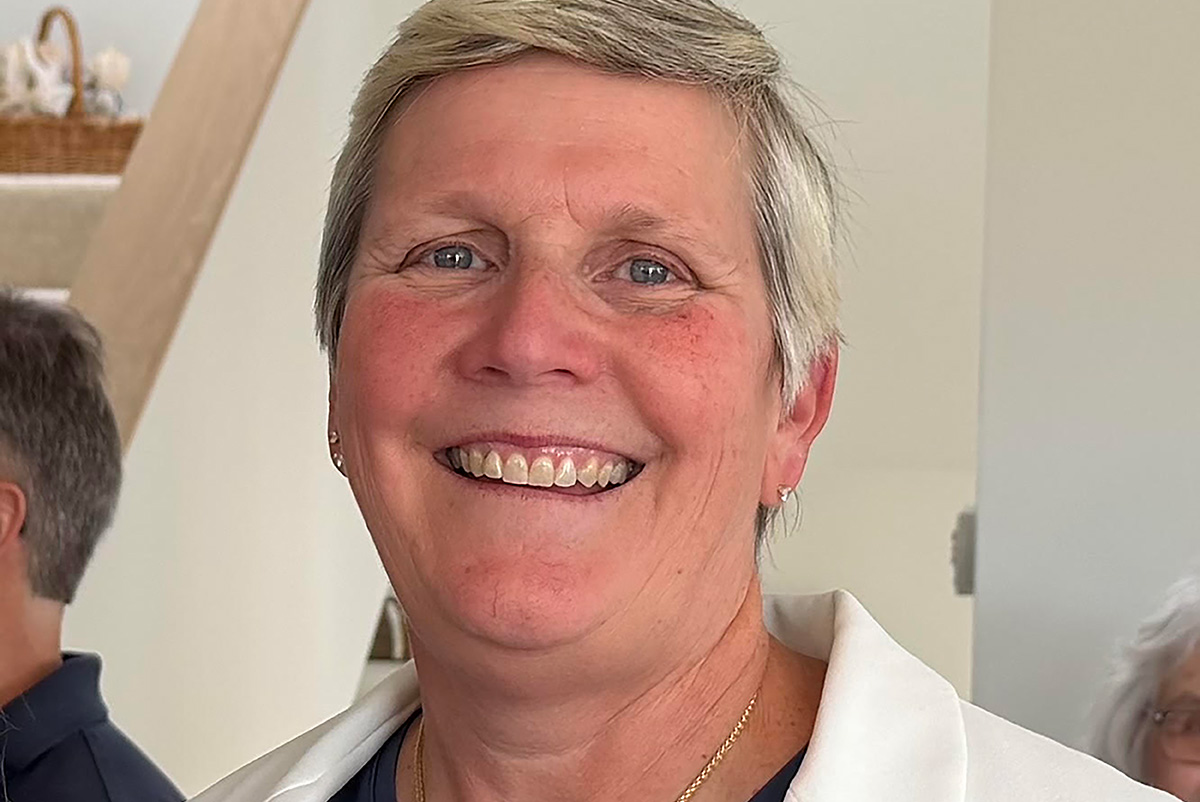
Democrat Maureen “Mo” Madden is running for the Delaware House of Representatives in the 38th District, seeking to win a seat that has been held by Republicans for more than two decades.
The race opened up after Republican state Rep. Ron Gray announced in April that he would not seek reelection after seven terms in the General Assembly.
Gray was first elected in 2012 and represents communities including Bethany Beach, Fenwick Island, Selbyville and Ocean View. Madden, a Dagsboro resident, filed to run for the seat in 2025.
Madden is a retired federal civil servant who spent nearly 23 years at NASA and more than seven years at the National Oceanic and Atmospheric Administration. She holds a master’s degree in physics and previously worked in leadership at NOAA.
She said her professional experience taught her the importance of working collaboratively, something she believes would translate to the legislature.
“Advocating, negotiating, and collaborating are all skills that a legislator needs,” she said. “You learn to collaborate. You learn to negotiate. You learn to advocate for your budget, for your team, and for your projects.”
Madden said her decision to run began after she and her wife moved to the area and she noticed the lack of Democratic candidates on the ballot in her district.
“Somebody’s got to do it, and I’ve got time. I’m retired,” said Madden.
She acknowledged the difficulty of running as a Democrat in the district, which has been represented by Republicans since 2002.
Madden said one of the biggest concerns she hears from residents is the rapid growth of Sussex County.
“We have a massive amount of growth and a massive amount of development,” said Madden.
Madden said the growth has placed additional pressure on roads, schools, emergency services, as well as water and sewer infrastructure.
“We need to find a way to bring more money down here for the school system and for the infrastructure that we need,” she said.
She also raised concerns about the impact of new developments on existing neighborhoods, particularly in regard to flooding and drainage.
“Something needs to be done,” said Madden.
Madden also pointed to climate change as a factor affecting the region.She said the state will need to work on both addressing development and preparing communities for increasingly severe weather.
“We have to work both sides of it,” Madden said.
Madden said improving infrastructure would be a priority if she is elected, particularly roads and other infrastructure that affect residents’ daily lives.
“I want to increase the safety of my neighbors,” she said.
Madden also said she wants to address infrastructure needs related to water and sewer service, as well as the availability of health care in the rapidly growing coastal region.
Madden said protecting voting rights would be another priority in the legislature.
“The right to vote is one of the biggest things that we have here in a democracy,” she said.
She said that she supports early voting, mail-in voting, and same-day registration, as well as restoring voting rights to people who have completed felony sentences.
“You should not lose a constitutional right because you’ve been in jail,” said Madden.
“Protecting the right to vote is how I will defend democracy when I get to the state House,” she said.
Madden said she would also support efforts to enshrine certain rights in the Delaware Constitution, including reproductive rights, voting rights, and the right to marriage.
“Those three protections of our freedoms that are right now under attack need to be more secure in the Delaware State Constitution,” she said.
As an openly lesbian candidate, Madden said LGBTQ+ rights are important to her, particularly the treatment of young transgender people.
She said she is concerned about efforts to restrict transgender students’ participation in sports and other policies affecting transgender people.
“They are picking on the most vulnerable of the most vulnerable,” said Madden.
She said she hopes voters will view LGBTQ+ people as part of their communities rather than as fundamentally different from their neighbors.
“We’re your neighbors. We’re your friends. We’re your family,” she said.
Madden will face Republican Carlie Carey in the general election on Nov. 3.
The Comings & Goings column is about sharing the professional successes of our community. We want to recognize those landing new jobs, new clients for their business, joining boards of organizations and other achievements. Please share your successes with us at [email protected].
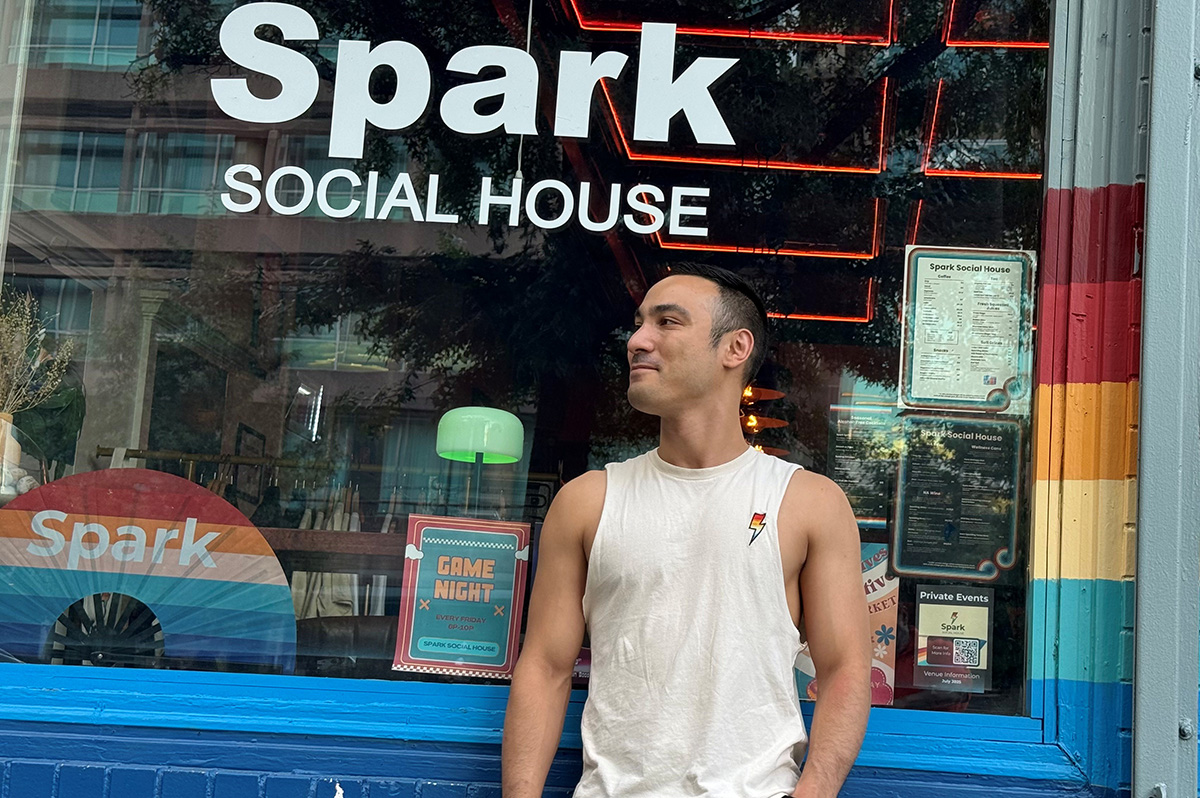
It is exciting to write about Nick Tsusaki, the founder and owner of Spark Social, 2009 14th St., N.W. Tsusaki just announced the official opening, on Sunday, Aug. 23, of a new daytime event, called Spark Coffee Club, a great opportunity to meet up with friends, or meet new ones. It is in partnership with Go Gay DC and runs 12-1 p.m., every Sunday. If you are new to D.C., you can browse more than 180 local LGBTQ+ community groups Tsusaki has listed on the community tab of his website: spark-dc.com/community.
“I’ve been out for most of my life, but it wasn’t until I started working in queer spaces, surrounded by queer people, that I really felt proud, even lucky, to be gay,” he said. “I hope Spark is a place where more people come to that same realization.”
Tsusaki went to Georgetown for his undergraduate studies, and spent four years doing Navy ROTC, then went into the Navy. He told me, “Town was the first gay bar I ever went to. It was always such a liberating and euphoric experience, I knew I wanted to come back to D.C. permanently, after the Navy.”
During his eight years in the Navy, Tsusaki spent time in among other places, Bahrain, and Korea. He was D.C. operations manager, where he managed large, diverse teams, across multiple countries, supervising logistics, scheduling, safety protocols, and daily operational readiness. He also directed emergency response and crisis management operations, including White House support, COVID-19 response planning, and major safety and security protocols protecting tens of thousands of personnel.
Tsusaki recounted, “When I left the Navy in 2023, I applied to every gay bar in the city. Fortunately, Shakers, was just opening at that time, and I started as a barback on the opening team. My appreciation for the D.C. LGBTQ+ community, and LGBTQ+ spaces only grew as I worked with and met some of the most hilarious, talented, proud, diverse, and supportive people in my life. After just a year in the industry, my passion had grown so strong I decided I wanted to open my own venue.”
Tsusaki then built Spark Social, and now supervises a 20-person team across café, bar, retail, and nightlife operations, ensuring strong safety standards, clear procedures, and consistent guest experience. He has developed a deeply trusted neighborhood presence through strong community partnerships, resulting in a 4.9 Google rating with 120+ reviews. He created an innovative 1-for-1 cocktail menu offering alcoholic and non-alcoholic options, with equal quality and presentation, and promotes an inclusive nightlife for non-drinkers. He has established Spark as a unique market leader in LGBTQ+ hospitality, combining daytime café culture, with late-night programming, and community-centered events. So, whether you go for the new community coffee hour on Sundays, or any other time, Spark Social is a place where you will feel comfortable.
Tsusaki earned his bachelor’s of science degree in foreign service, Georgetown University; and master’s in business analytics from the University of Virginia, Darden School of Business.

Exploring Renée Richards’s life through lens of a trans author

Log Cabin Republicans remove transgender rights from mission

Not all trans people are the same

Queer team brings girl power to fully baked ‘The Wrong Girls’

Democrat Maureen ‘Mo’ Madden takes on longtime GOP stronghold in Delaware’s 38th

Winsome Earle-Sears ‘Life and Marriage Tour’ to include Northern Va. stops

White House targets gender-affirming care funding, states fight back

Madonna nominated for 11 MTV VMAs

Thailand’s first openly gay senator attends World Pride in Amsterdam

Man charged with anti-gay assault in D.C. accepts plea offer
-

 Virginia5 days ago
Winsome Earle-Sears ‘Life and Marriage Tour’ to include Northern Va. stops
-
White House5 days ago
White House targets gender-affirming care funding, states fight back
-
Celebrity News5 days ago
Madonna nominated for 11 MTV VMAs
-
Netherlands4 days ago
Thailand’s first openly gay senator attends World Pride in Amsterdam