Connect with us

National

Fla. gay Republicans hail Romney victory

Log Cabin warns of ‘anti-gay pandering’
Published

on

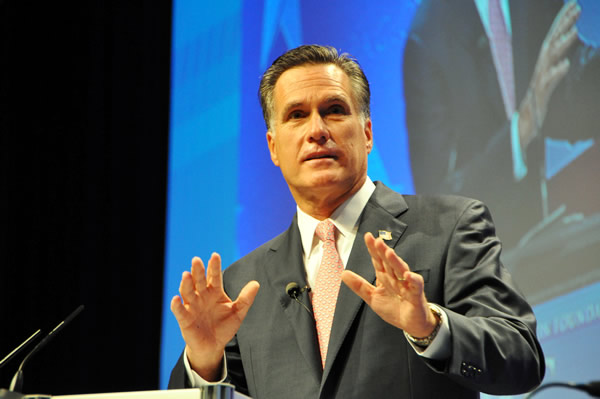
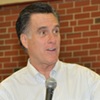
Mitt Romney won a decisive victory in Florida this week, as Newt Gingrich appeared to lose momentum. (Blade file photo by MIchael Key)

FORT LAUDERDALE, Fla. — Gay Republicans joined many of their straight counterparts in Florida Tuesday night in congratulating former Massachusetts Gov. Mitt Romney for his decisive victory in the Florida Republican primary.

But R. Clarke Cooper, executive director of the national Log Cabin Republicans, while also congratulating Romney, cautioned him against engaging in “anti-gay pandering or divisive social politics.”

Cooper told the Blade his comment was a reference to statements Romney has made in news media interviews over the past several months in which he appeared to be appealing to conservative voters hostile to gay rights.

Officials with Log Cabin’s chapters in the Miami, Fort Lauderdale and Tampa areas said support for Romney was strong among LGBT Republicans in the state. Romney won by a lopsided margin in a Jan. 28 straw poll of Log Cabin members at an informal gay Republican caucus in Miami.

“I’m pleased that Romney won,” said Andy Eddy, board member of Log Cabin Republicans of Broward County, which includes the city of Fort Lauderdale and the nearby gay enclave Wilton Manors.

“Many of our members support him and believe he has the best chance of beating Obama,” he said.

With 100 percent of the election precincts counted, Romney captured 46 percent of the vote. His closest rival, former House Speaker Newt Gingrich received 32 percent, former Pennsylvania Sen. Rick Santorum received 13 percent, and Texas Congressman Ron Paul received 7 percent.

In Florida’s winner take all primary, Romney captured 50 delegates, giving him a boost going into a series of upcoming primaries and caucuses leading up to Super Tuesday on March 6, when 10 states hold primaries.

“This big win for Gov. Romney makes it all but certain that he will emerge as the nominee of the Republican Party,” said Jimmy LaSalvia, executive director of the gay conservative group GOProud.

“Gov. Romney’s win tonight is particularly pivotal given the size of the state and the importance Florida will have in electing the next president,” he said. “Gov. Romney’s message of economic hope and renewal has clearly resonated with the voters of Florida.

“The truth that neither Barack Obama nor his friends in the liberal media want to discuss is that most Americans, gay or straight, are no better off than they were in 2008 and that is a product of Obama’s failed big government policies,” said LaSalvia, who personally endorsed Romney earlier this month.

Cooper said Log Cabin has a longstanding rule of not endorsing presidential candidates until the time of the Republican National Convention. He said on Tuesday night that the timing of the club’s endorsement vote is strictly “administrative” in nature and has no bearing on the group’s views of Romney.

During the Log Cabin caucus in Miami on Jan. 28, which followed a national Log Cabin board meeting, Cooper and officials with Log Cabin chapters in Florida said the group’s members clearly were leaning toward backing Romney.

Hastings Wyman, editor of Southern Political Report, a newsletter specializing in reporting on politics in the South, characterized as “remarkable” Romney’s dramatic rise in popularity in Florida. He noted that Romney had been trailing Gingrich in the Sunshine State by double digits in the days following Gingrich’s win in the South Carolina primary.

“I think the biggest single factor was money,” said Wyman, in referring to Romney’s lopsided lead over Gingrich and the other three GOP contenders in money raised for his campaign.
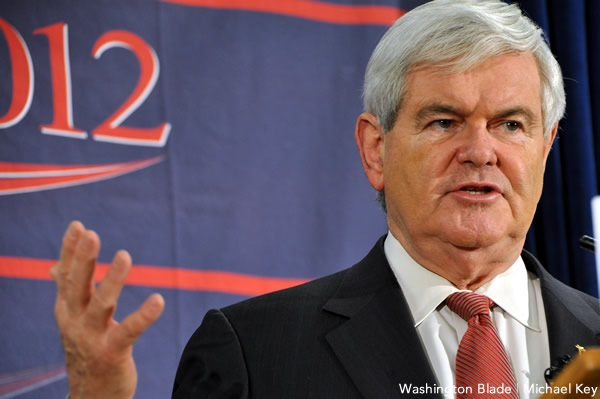
Newt Gingrich has vowed to fight on after losing big to Mitt Romney in Florida’s primary this week. (Blade photo by Michael Key)

He said Romney’s large campaign war chest enabled him to purchase a barrage of negative TV ads that clearly hurt Gingrich. Gingrich’s campaign fired back with negative ads attacking Romney, prompting some state Republican leaders to express concern that the negative campaigns waged by both Romney and Gingrich could hurt them in their race against Obama should either of them win the nomination.

“I also think Romney did much better in the last two debates in Florida,” Wyman said. “Gingrich just didn’t look as strong. The performance and appearance in the debates by Romney was much better.”

Wyman, who is gay, said it’s hard to predict how Romney will deal with gay issues if he’s elected president.

“I think he would be perfectly comfortable in supporting civil rights for gays,” he said. “But I don’t’ think he would do anything to hurt him politically. I think he would be somewhat better than the others, but he’s not going to do anything to upset his base.”

In his election night statement, Cooper of Log Cabin Republicans cautioned Romney and the other GOP presidential candidates that adopting a “big tent” policy inclusive of gays would be the best tactic for the Republican presidential nominee to defeat Obama in November.

“Our local chapter leaders report that, like Florida voters overall, Log Cabin members in the Sunshine State were drawn to Romney’s business sense and clear plan to return America to prosperity through a strong private sector,” Cooper said.

“Still, there remain serious reservations about recent statements by Romney to so-called ‘pro-family’ groups,” Cooper said. “The real question now is whether Romney can win a majority of Americans, including younger voters, independents and disaffected Democrats,” he said. “Log Cabin Republicans are looking for a candidate who can rebuild the big tent, unite our party and claim a mandate to restore liberty and fiscal responsibility to the United States. Whether that candidate is Romney remains to be seen.”

Jerame Davis, executive director of National Stonewall Democrats, an LGBT group that is backing Obama, said Romney’s win in the Florida primary was due to his ability to “outspend and throw more mud than all of his opponents combined.”

He called Romney “a very unpopular frontrunner” whose support is not as strong as the “not-Romney” wing of the Republican Party.

Although the conservative GOProud and more moderate Log Cabin leaders often disagree over how the LGBT community should interact with the Republican Party, the two groups appeared to be in agreement this week over how to secure LGBT votes for Romney if he wins the nomination for president.

Both LaSalvia and Log Cabin members in Florida said they would stress that LGBT people, like all other voters, care about issues beyond gay rights. While Romney may not be as supportive or outspoken on LGBT issues as Obama, they said they will stress that Romney’s economic policies would help gays where it counts the most, “in their wallets and pocketbooks,” as Log Cabin’s Tampa chapter president Jim Pease said.

“So why do I think gays will do well under Romney?” asked gay Republican activist Jim Driscoll, a former Bush administration appointee to the Presidential Advisory Council on HIV/AIDS. “Romney’s opposition to discrimination against gays in jobs, etc., is genuine. He is not uncomfortable with gay people.”

Gay Democrats argue that unlike Obama, Romney hasn’t taken a position on whether he would support and sign the Employment Non-Discrimination, or ENDA, which would ban job discrimination based on sexual orientation and gender identity.

Attempts by the Blade this week to reach a Romney campaign spokesperson to determine Romney’s position on ENDA and other pending LGBT-related bills in Congress were unsuccessful.

LaSalvia notes that Obama has said he doesn’t support same-sex marriage. Gay Democrats respond by saying Obama has supported virtually all other items on the LGBT rights agenda, including repeal of the Defense of Marriage Act, which bans the federal government from recognizing same-sex marriages performed in states that have legalized them.

In what will likely emerge as the gay Republicans’ key talking point in the fall general election, LaSalvia said gays are not “one-issue” voters.

“Something I say a lot, is especially true when contrasting Obama’s policies with any of the Republican candidates, is that I believe that free market solutions benefit all Americans, but especially gay Americans,” he said.

“Whether it’s Social Security reform that includes private inheritable accounts, free market health care reform that would allow same-sex partners to go on the open market and purchase family plans, or tax reform to make the tax code simpler and fairer, Romney and the other Republican candidates are offering solutions to problems facing all of us that are far better for our country than Obama’s failed policies,” LaSalvia said.

Davis from National Stonewall Democrats said most LGBT voters will dismiss such arguments as “ridiculous.” He said NSD and the Democratic Party has and will continue to show that Obama comes out far ahead on LGBT and non-LGBT issues.

Davis said both Log Cabin and GOProud were downplaying what he called Romney’s most anti-gay stand – his agreement to sign a pledge issued by the anti-gay National Organization for Marriage to support a U.S. constitutional amendment to ban same-sex marriage.

“It’s the height of hypocrisy” that gay Republicans would attempt to excuse Romney’s support for the NOM pledge, Davis said.

“They should be ashamed for excusing any of these GOP swindlers for pandering to these regressive demagogues who seek to not only take away our rights, but persecute us back into the closet,” he said.

A random, unscientific sample of interviews with 14 gay men at Fort Lauderdale’s gay beach on Tuesday appeared to confirm the longstanding leanings of that city’s LGBT community. All 14 said they strongly support the re-election of Barack Obama and would be unlikely to vote for any Republican.

“As a gay man, I won’t vote for any Republican, said Al Adamczyk, a longtime Fort Lauderdale resident. I’m gay and I’m proud of it. Gay Republicans are idiots.”

Daniel Jeffers, a gay Air Force veteran who just moved to Fort Lauderdale with his partner, Jerry Finster, said the two believe Obama has been good on both gay and non-gay issues and would never consider voting for a Republican candidate for president.

“Some gays want him to do more,” said Finster of Obama. “He is doing everything possible. I think independents will vote for him. The Republicans are a joke. Out of a scale of five stars, I have six stars for Obama.”
 

Advertisement
FUND LGBTQ JOURNALISM
SIGN UP FOR E-BLAST

The White House

White House deadnames highest-ranking transgender official

Rachel Levine’s portrait altered at HHS

Published

on

Adm. Rachel Levine speaks at the International LGBTQ Leaders Conference on Dec. 2, 2021. (Washington Blade photo by Michael Key)

Admiral Rachel Levine — the first transgender person ever confirmed by the U.S. Senate and the highest-ranking trans official in American history — had her official portrait in the Humphrey Building altered, with staff replacing her correct name with her deadname, the name she has not used since 2011.

NPR first reported the change, and an HHS spokesperson confirmed to the outlet that Levine’s portrait had recently been altered. A digital photograph obtained by NPR shows Levine’s former (male) name typed on a placard beneath the portrait, placed under the glass of the frame.

Levine served as a four-star admiral in the U.S. Public Health Service Commissioned Corps under the Biden-Harris administration and was appointed the 17th assistant secretary for health.

During her tenure, Levine oversaw the Commissioned Corps and helped lead national public-health initiatives, including the federal COVID-19 response and vaccination strategy; efforts to address rising syphilis infection rates; HIV/AIDS prevention and treatment programs; and strategies to combat the opioid epidemic, particularly through expanded harm-reduction approaches for the communities most affected.

The Trump-Vance administration’s decision to publicly deadname Levine is widely viewed within the trans community as demeaning and disrespectful. The move comes amid a series of federal policy reversals targeting LGBTQ Americans, particularly trans youth seeking gender-affirming care.

Those actions include: weakening workplace protections for LGBTQ employees; limiting restroom access; downgrading gender-identity discrimination cases; pressuring hospitals to end gender-affirming care; cutting HIV research and prevention funding; removing LGBTQ crisis resources; restricting access to trans-inclusive medical policies for veterans and young people; supporting trans sports bans and threatening funding for teams that include trans athletes; and forcing schools and universities to eliminate DEI and LGBTQ offices, inclusive curricula, gender-neutral bathrooms, and books or training materials addressing LGBTQ issues.

The Trump–Vance administration has also expanded federal censorship by removing LGBTQ language from surveys, agency websites, Smithsonian materials, and human-rights reports; blocking Pride recognitions; creating federal communications that misgender trans women; imposing passport and travel barriers for trans Americans; lifting protections for trans service members; limiting benefits and care for LGBTQ veterans; and pressuring states, universities, and hospitals to end trans-inclusive policies under threat of losing federal research, education, or Medicaid funds. The administration has additionally deported LGBTQ asylum seekers to unsafe conditions, removed LGBTQ issues from global human-rights reporting, and escalated anti-trans rhetoric at public events.

These actions stand in stark contrast to Levine’s public-health record. As assistant secretary for health, she worked to expand LGBTQ+ health data collection, promote equitable vaccine distribution, strengthen national health-equity initiatives, and reduce care disparities experienced by historically underserved communities, including LGBTQ populations. Within HHS, she led councils and task forces dedicated to reducing structural barriers to care and improving community outcomes.

Before joining the federal government, Levine oversaw health and safety for nearly 13 million residents as Pennsylvania’s physician general from 2015–2017 and as Pennsylvania secretary of health from 2018–2021.

Rachel Levine‘s official portrait, which now bears her deadname. (Photo public domain)

Asked by NPR about the alteration of her official portrait, Levine responded that it had been an honor to serve as assistant secretary for health, adding: “I’m not going to comment on this type of petty action.”

Continue Reading

Health

The harsh truth about HIV phobia in gay dating

HIV and stigma remain baked into queer dating culture

Published

on

(Photo by Val Chaparro for Uncloseted Media)

Uncloseted Media published this article on Dec. 9.

This story was produced with the support of MISTR, a telehealth platform offering free online access to PrEP, DoxyPEP, STI testing, Hepatitis C testing and treatment and long-term HIV care across the U.S. MISTR did not have any editorial input into the content of this story.

By SAM DONNDELINGER | In his room, 19-year-old Cody Nester toggles between Grindr profiles on his phone.

As he senses chemistry with a match, he knows he has to flag something that could be a deal breaker.

“Did you see on my profile that I’m HIV positive?” he writes.

The reply arrives instantly.

“You’re disgusting. I don’t know why you’re on here.” Seconds later, the profile disappears, suggesting Nester is blocked.

“He went out of his way to say that. People could at least be more aware, ask questions, and understand the reality [of living with HIV] instead of attacking us,” Nester told Uncloseted Media.

“I would say 95 percent of people respond that way,” says Nester, who lives in Hollywood, Fla., and works at a Mexican restaurant. “The entire conversation is going fine. They’re down to meet up and then right when I mention [HIV], it’s always, ‘Oh no, never mind.’”

Some other messages he’s received include:

“You’ll never get anything in your life.”
“Why don’t you die?”
“Why are you on here?”

More often, it’s silence, a cold “No” or a sudden block.

“It’s like you’re a white fish in a school of black fish,” he says. “You’re immediately the odd one out.”

Even though Nester’s undetectable status makes it impossible for him to transmit HIV to partners during sex, he experiences stigma around HIV, something which nearly 90 percent of Americans agree still exists, according to a 2022 GLAAD report. And a survey shared in 2019 found that 64 percent of respondents would feel uncomfortable having sex with someone living with HIV, even on effective treatment. The emotional cost of this stigma is a significant barrier to intimacy and can result in a loss of self-esteem, fear of disclosure and suicidal thoughts.

What the science says — and why it doesn’t seem to matter

“The fear comes from antiquated ideas around HIV,” says Xavier A. Erguera, senior clinical research coordinator at University of California, San Francisco,’s Division of HIV, Infectious Diseases & Global Medicine. “A lot of people who are newly diagnosed still fear it’s a death sentence. Even though we have medications now to treat it effectively, and it’s basically a chronic condition, people haven’t caught up.”

Since 1996, antiretroviral therapies have developed to where they can suppress the virus to levels so low that it is undetectable in the blood, and thus not able to be transmitted to sexual partners. This is known as Undetectable = Untransmittable, or U=U. According to a Centers for Disease Control and Prevention report from 2024, 65 percent of HIV-positive cases are virally suppressed.

Another line of defense is pre-exposure prophylaxis (PrEP), which reduces the risk of acquiring HIV from sexual intercourse by roughly 99 percent when taken as prescribed. Approved by the Food and Drug Administration in 2012, the medication launched as a once-a-day pill and was hailed as a breakthrough as it transformed the sex lives of gay men, which had been shaped by decades of fear about HIV complications and about where AIDS came from.

“Internal logic doesn’t reflect what we know scientifically,” says Kim Koester, associate professor in the Department of Medicine at UCSF. “I was very optimistic when PrEP came out. The drug works, so why wouldn’t everyone use it?”

Even with PrEP use on the rise, less than 600,000 Americans used it in 2024, and Koester says skepticism and judgments about taking the drug persist.

“The phobia is pervasive,” Koester told Uncloseted Media. “People believe that others get the disease because of their lifestyle. … PrEP was supposed to be the antidote to the threat of HIV, reduce the anxiety, and make you more open to who you are and the sex you want. It’s supposed to be liberating. It is part of the answer. But it’s not enough. We don’t have enough people using PrEP for it to make the dent in the stigma we need.”

According to a 2023 study of seven informants living with HIV, public stigma stems from problematic views from society that those living with HIV are “a dangerous transmission source,” “disgraceful” and “violators of social and religious norms who have committed deviant behavior.”

Laramie Smith, assistant professor of Global Public Health at the University of California, San Diego, says this stigma is unwarranted and fueled by misunderstanding:

“With today’s treatments, it shouldn’t be a life-altering identity shift. It should be no different than, ‘I have diabetes.’ If you’re virally suppressed, it shouldn’t matter whether you’re friends with someone, whether you’re sleeping with someone — the science shows us that.”

How HIV phobia shows up online

Nester, who contracted HIV last year from a Grindr hook-up who insisted he was negative, says he is just starting to accept his diagnosis. “I didn’t go back on the apps for a long time after that. It messed with my mental health … realizing I’d have to take medication for the rest of my life.”

Since he started dating again this year, returning to apps like Grindr and Sniffies, he has faced a new normal. He tries to do everything “right” and disclose his status early. Even on his Grindr profile, he identifies as “poz,” slang for HIV-positive.

Still, he says most people ghost him once they find out. “The second I bring it up, it’s ‘No,’” says Nester. “The amount of discrimination you get … it’s always the same pattern. … People don’t know, and they don’t want to know. It messes with you.”

This discrimination may be fueled by a deprioritization of HIV awareness programs across the country. Earlier this month, the U.S. State Department did not commemorate World AIDS Day for the first time in 37 years. HIV prevention programs have been slashed, especially in conservative districts, and only 25 states and D.C. require both HIV and sex education. In many states, health curricula often lag behind current science and omit teaching about PrEP, gay sex and concepts like U=U. Research shows that Gen Z is currently the least educated generation about HIV.

“I could go all day explaining HIV, but people don’t want to listen,” says Nester, who is part of Gen Z. “People don’t want to learn about it; they just want to avoid it.”

HIV anxiety and public stigma shaped by history

Even in more progressive areas, stigma still exists. Damian Jack, a 45-year-old from Brooklyn, remembers sitting in an exam room in 2009 as a doctor explained how low his T-cell count was, which is a hallmark of HIV infection.

“I started hysterically crying,” he told Uncloseted Media. “HIV meant death. That’s what I thought.”

In 1981, when Jack was 1 year old, the first reports of a mysterious and deadly immune deficiency syndrome, which would later be named AIDS, appeared in the U.S. Growing up, Jack saw countless terrifying images of men on their deathbeds with Kaposi sarcoma, the purple lesions the media once called “gay cancer.” Public misinformation and fearmongering spread ideas that AIDS was a disease that “only gay men and drug users get.” And politicians often equated it with homosexuality and moral failure, calling it a “gay plague.” It wasn’t until September 1985, four years after the crisis began and thousands had died, that President Ronald Reagan first publicly mentioned AIDS.

Decades later, the emotional residue of that era and the shame associated with the virus lingers.

Hours after learning of his diagnosis, Jack faced his first encounter with rejection. He already had a date planned that night, and his doctor and friends encouraged him to go.

They had a great time until the date asked him: “Are you negative or positive?”

He told the truth.

“It was just understood there wouldn’t be a second date,” says Jack. “I remember thinking, ‘This is how dating is going to be now.’ I felt so anxious telling guys. It followed me everywhere. I don’t think that anxiety ever truly goes away.”

The emotional impact of HIV stigma

For those who are HIV-negative, experts say that “stigma’s whole design is to ‘other.’”

“The ‘us versus them’ creates that false sense of safety when it comes to HIV,” says Smith. “If I can believe that someone did something to deserve their diagnosis, and I’m not that [kind of person], then I’m safe.”

This othering is painful and can lead to shame, fear and isolation, and it is linked to a higher risk of depression and anxiety.

“If I’m undesirable, and that’s what those messages are communicating, that threatens your sense of safety, your sense of belonging and the fundamental desire we all have to be loved,” Smith says. “And that starts to reinforce the thinking that ‘I am not worthy. This virus that I have means that I’m not lovable. I am not safe showing up among other men.’”

“I pretend it doesn’t hurt, but some things do sting a little bit,” Nester says. “You start thinking, ‘Am I really that disgusting? Am I really that singled out?’”

When public stigma turns inward

“Internalized stigma is what occurs when applying the stereotypes about who gets HIV, the prejudice, the negative feelings, onto yourself,” says Smith.

In 2024, 38 percent of people living with HIV reported internalized stigma. And studies show that it can predict hopelessness and lower quality of life, even when people are engaged in care or virally suppressed.

Internalized stigma can also affect how people practice safe sex and communicate about the virus. A 2019 survey of men who have sex with men found that individuals who perceived greater community-level stigma were less likely to be aware of — and use — safer-sex functions available on dating apps, such as HIV-status disclosure fields, as well as sexual health information and resources.

“[HIV phobia] is probably the most intense, subvert bigotry I think you could experience,” Joseph Monroe Jr., a 48-year-old living in the Bronx, told Uncloseted Media.

On dating apps, men have messaged him things like, “You look like you’ve got that thing” and “Go ahead and infect someone else.”

Monroe has also dealt with misinformed people who rudely opine about how he contracted the virus: “Who fucked you? That’s how you got it, right?” people will say to him.

“You end up internalizing all these stereotypes about who gets HIV — that you were promiscuous, that you didn’t care about yourself, that you did something wrong,” says Smith. “You carry that in, and then you have to relearn: ‘No, I didn’t. This is just a health condition.’”

What HIV acceptance looks like and raising awareness

For those living with HIV, acceptance feels far away.

“You’re living under this threat of HIV and the threat that others find you threatening. It inhabits you socially and sexually,” Koester says. “People are hunkering down. Not putting themselves out there and having a mediocre quality of life. To have a sense of empowerment, you have to be legitimate and seen in the world and it’s hard to do that with the stigma that exists.”

Researchers say the path forward lies as much in conversation as in medicine.

Koester says she talks about HIV and PrEP anywhere she can, including in salons, cafes and restaurants. “Whenever I get into a cab with someone, I’m going to bring up HIV so the driver gets accustomed to hearing about it. … We have a long way to go in terms of exposure and awareness and every little bit helps.”

Part of this lies in increasing awareness through targeted marketing campaigns. PrEP is still profoundly misunderstood outside major urban centers, with uneven uptake among minority groups and usage gaps in the Bible Belt. And a 2022 U.S. survey found that 54.5 percent of people living with HIV didn’t know what U=U meant, and less than half of Americans agree that people living with HIV who are on proper medications cannot transmit the virus.

While eradicating stigma is slow, there is hope for acceptance.

Years after Jack’s diagnosis, in 2021, he told a man he was on a third date with that he was HIV-positive but undetectable. His date’s reply was almost casual:

“Oh — is that it? I thought you were going to say you had a boyfriend or something. I’m on PrEP. You’re fine.”

“It felt so good to hear him say that and accept me,” says Jack. “I was like, ‘This is my person. You’re my person.’” One year later, they got married.

Back in Florida, 19-year-old Cody Nester isn’t feeling this acceptance. He still scrolls past profiles that read “Only negative guys” and tries to ignore the hateful messages.

“It still hurts, but I know it’s coming from fear,” he says. “I wasn’t too informed about HIV before I got it. … When I got it, I really jumped into the rabbit hole and began to learn. I really do think [HIV and stigma] is because people are not knowledgeable. … When people don’t know details, they tend to get scared.”

Additional reporting by Nandika Chatterjee.

Continue Reading

The White House

Trump’s shocking East Wing amputation—and the painful fallout Americans won’t ignore

Gay Social Secretary Jeremy Bernard talks about importance of civility

Published

on

Jeremy Bernard, gay news, Washington Blade
Jeremy Bernard with then-President Barack Obama (Official White House Photo by Pete Souza)

Since Jan. 20, 2025, life in Donald Trump’s divided America has been a series of jaw-dropping split-screen scenarios, flashing at an even faster pace since the resounding anti-Trump, pro-affordability Democratic electoral victories on Nov. 4. But while the weeks before Thanksgiving have injected hope that the No Kings marches, the rule of law, and the 2026 midterms will uphold democracy, Trump’s violently oriented MAGA and Christian National base and his committed Project 2025 backers continue remaking the federal government and fighting the culture wars.

Screenshot of the New York Times’s rendering of Trump’s plans.

Luxuriating in his own narcissism, Trump ordered the clandestine demolition of the East Wing on Oct. 23 to make way for his 90,000 square foot ballroom. He apparently didn’t care about the national shock at the brutal amputation of America’s beloved cultural arm that balanced the hard political arm of the People’s House.  

“This isn’t a real estate deal. This is a living, breathing building. It actually hurts, as a citizen. It’s us. It’s our home. This doesn’t belong to anybody except the blood, the sweat and the tears of every president,” new D.C. resident Roseanne Siegel told NPR.

“For historians and for Americans who love their history, this is a big blow,” said ABC News presidential historian Mark Updegrove.

Trump rendering of ballroom (Screenshot from ABC News)

According to an Oct. 30 poll from the Washington Post, ABC News, and Ipsos, 56 percent of respondents disagreed with Trump’s move while 28 percent favored it. An earlier Yahoo/YouGov poll found 61 percent of respondents rejected Trump’s ballroom plan while 25 percent supported it. 

Trump lied. “It won’t interfere with the current building,” Trump said last July about his ballroom plans. “It will be near it, but not touching it. And pays total respect to the existing building, which I’m the biggest fan of. It’s my favorite He was dishonest about his intent in terms of we’re not going to touch anything, like it’s going to be close, but not touching,” Kevin Wade, a 52-year-old tech tourist from Texas, told Reuters. “And then now we’re completely demolishing it.”

Screenshot of satellite photos of the East Wing before and after

The East Wing emptiness is now a tourist attraction, a PTSD imprint that — with the rapid developments leading up to Thanksgiving — may inspire a turning point in Trump’s presidency.  

On Tuesday, Nov. 18, after a 43-day government shutdown to avoid this moment, the U.S. House of Representatives voted 471-1 to compel the Justice Department to release all files on convicted child sex offender Jeffrey Epstein.  

President Donald Trump escorts the Saudi Crown Prince Mohammed bin Salman to a black tie dinner (Screenshot)

Meanwhile at the White House, Trump gleefully hosted Saudi Arabia Crown Prince Mohammed bin Salman, who US intelligence believes approved the gruesome 2018 murder of Washington Post columnist Jamal Khashoggi. The president scolded ABC News journalist Mary Bruce for embarrassing “guest” MBS with “a horrible, insubordinate” question about Khashoggi’s murder. “Whether you like [Khashoggi] or didn’t like him, things happen.” 

In Bob Woodward’s 2020 book, “Rage,” Trump reportedly bragged about shielding MBS: “I saved his ass,” getting Congress “to leave him alone.” 

Meanwhile, after the House vote, Epstein survivors huddled at a news conference, holding up photos of themselves as teenagers and young women, asking if Trump is innocent, what is he hiding? Why won’t he release the files now? Suddenly, thrilled survivors learned that the U.S. Senate had unanimously passed the Epstein Files Transparency Act and sent it to Trump for his signature.

Gay Apple CEO Tim Cook and gay Treasury Secretary Scott Bessent at the MBS dinner (Screenshot)

Cut to Trump hosting a black-tie dinner for MBS with lots of rich men who do business with the Saudis. The next morning, he announced that he had signed the Epstein bill, with a 30-day deadline.

“It was a remarkable turn of events for what was once a far-fetched effort,” AP reported. “Trump did a sharp U-turn on the files once it became clear that congressional action was inevitable.” 

Trump needed a distraction. 

U.S. Sen. Elissa Slotkin (D-Mich.) from on her X account

Early Tuesday morning, Nov. 18, U.S. Sen. Elissa Slotkin (D-Mich.) posted a 90-second video on her X account calling on U.S. servicemembers to not obey unlawful orders. 

“The American people need you to stand up for our laws and our Constitution,” said Slotkin with five other fellow military veterans — U.S. Sen. Mark Kelly (D-Ariz.), and U.S. Reps. Jason Crow (D-Colo.), Chris Deluzio (D-Pa.), Maggie Goodlander (D-N.H.), and Chrissy Houlahan (D-Pa.). “Don’t give up the ship.”

The Uniform Code of Military Justice says troops who disobey a direct order will be punished. But servicemembers and officers also have an obligation to reject any order they deem is unlawful, a reference to the “I was only following orders” Nazi defense during the Nuremberg trials. 

There is cause for concern. In his first term, Trump asked about shooting unarmed civilians protesting the murder of George Floyd. In his second term, Trump has threatened to use the Insurrection Act to deploy troops, “unleashed” police, federalized National Guard, and masked and violent ICE and Border Patrol agents in American cities.  

“The president was enraged,” Trump’s 1st term Defense Secretary Mark Esper told NPR. “We reached that point in the conversation where he looked frankly at [Joint Chiefs of Staff] Gen. [Mark] Milley and said, ‘Can’t you just shoot them, just shoot them in the legs or something?’ … It was a suggestion and a formal question. And we were just all taken aback at that moment as this issue just hung very heavily in the air.”

Trump found his distraction on Thursday, Nov. 20, reposting a Washington Examiner story about the Democratic lawmakers’ video, adding that it was “really bad, and Dangerous to our Country. Their words cannot be allowed to stand. SEDITIOUS BEHAVIOR FROM TRAITORS!!! LOCK THEM UP???”  In another post he said it was “SEDITIOUS BEHAVIOR, punishable by DEATH.” 

Trump also reposted a @P78 comment: “HANG THEM GEORGE WASHINGTON WOULD !!” Bomb and death threats against the Democratic vets “surged.” Senate Democratic Leader Chuck Schumer said Trump was ‘lighting a match in a country soaked with political gasoline.’”

New York Post’s Nov. 22 cover after Trump met with New York City Mayor-elect Zohran Mamdani at the White House.

Cut to Friday. 34-year-old New York City Mayor-elect Zohran Mamdani met with Trump, who had vilified the Democratic Socialist. But inexplicably, the meeting turned into an Oval Office lovefest, with an almost giddy Trump, 79, saying it was “OK” that Mamdani had called him a fascist. He promised to help the city. 

That night, longtime Trump and MAGA loyalist U.S. Rep. Marjorie Taylor Greene (R-Ga.) announced she’s resigning from Congress, effective Jan. 5, 2026. 

Greene criticized Trump over “America First” and health insurance policies but a major split occurred when she sided with Epstein survivors over him. Trump called her a “traitor” and vowed to back a primary challenger.

“Loyalty should be a two-way street,” Greene said in her 10-minute video. “I refuse to be a battered wife hoping it all goes away and gets better.”

No one knows what’s coming next. 

CNN graphic rendering of Epstein emails released by the House Oversight Committee

But for the LGBTQ community, there are other important split screens amid Project 2025 erasure – such as U.S. Rep. Robert Garcia (D-Calif.)’s key role as ranking member of the House Oversight Committee focused on transparency and justice for Epstein survivors.  

Pete Williams on the cover of the Advocate

And while Trump was threatening Democratic lawmakers with death on Thursday, Pete Williams, a former NBC News correspondent and press secretary for Vice President Dick Cheney, spoke at Cheney’s funeral at the National Cathedral. Williams told the mostly old-fashioned Republicans how he offered to resign in 1991 when the Advocate was about to out him as gay. Cheney — who loved his semi-out lesbian daughter Mary — said no and checked on him after the story was published. During the horrific AIDS crisis in the early 1990s, ANGLE (Access Now for Lesbian and Gay Equality) fundraised and worked to elect pro-gay politicians. In 1991, longtime gay politico David Mixner introduced ANGLE to his friend, Arkansas Gov. Bill Clinton, whom the group helped elect as president.

Jean O’Leary and Bruce Voeller lead the delegation exiting the historic 1977 White House meeting. (Photo by Bill Bland courtesy Michael Bedwell Collection)

Gay people were not welcome at the White House until Clinton, other than one historic visit on March 26, 1977. Decades later, when ANGLE’s Jeremy Bernard was being interviewed by first lady Michelle Obama for the job of Social Secretary, he recalled how difficult it was to get through the East Wing visitors’ entrance during Clinton’s administration.

Jewel’s Catch One Disco owner Jewel Thais-Williams at the Abraham Lincoln bust at the end of the East Colonnade in 2013. (Photo by Karen Ocamb)

“I said to Mrs. Obama, ‘It takes a lot to get in these doors. And I think it’s very important for people to feel very welcomed,’” Jeremy says during a recent conversation. 

The first lady agreed and “wanted to make sure as many people that never had been to the White House and never thought they would be, got the experience to do it.”

Jeremy Bernard with longtime Obama friend Valerie Jarrett (Photo by Karen Ocamb)

Bernard worked for Obama’s presidential campaign in 2008, then as White House Liaison to the National Endowment for the Humanities before serving as Senior Advisor to the US Ambassador to France. On Feb. 25, 2011, he became the first male and first openly gay person to serve as Social Secretary.

Jeremy Bernard shows President Barack Obama the ‘Jeremy dance’ (White House photo)

“Jeremy shares our vision for the White House as the People’s House, one that celebrates our history and culture in dynamic and inclusive ways. We look forward to Jeremy continuing to showcase America’s arts and culture to our nation and the world through the many events at the White House,” Obama said in a press release.

“My office was in the East Wing, and I had what I thought was the best office. I looked over toward the South Lawn, but I also had the roof of the East Colonnade below me. I had a window that actually would open like a door, and you could walk out onto the roof as if it was a patio,” Bernard recalls, noting that he was warned to call the Secret Service before going out to avoid getting shot. 

“I was so shocked,” Bernard says about the East Wing being demolished. “When I first heard there were bulldozers, I was like, well, what is it they’re knocking down from it?” — finding out later, “the whole thing” was gone.  

He felt “some self-sorrow” and “numb” remembering his office. “It really is a part of history, not just for those of us that worked there, but for virtually everyone – whether you were there for a state dinner, a holiday party, or a reception for St. Patrick’s Day, LGBT celebration — whatever it was, everyone came through the East Wing.” 

California Gov. Gavin Newsom said it well, Bernard says. “Compared to what ICE is doing and all that, it may not rank up there, but it’s symbolic of what’s happened in our country.”

Jeremy Bernard with Michelle and Barack Obama (White House photo)

Michelle Obama said it well, too. “We always felt it was the people’s house,” she told CBS “The Late Show” host Stephen Colbert. “I am confused by what are our norms? What are our standards? What are our traditions? I just feel like, what is important to us as a nation anymore? Because I’m lost.” 

And, Michelle Obama continued, “I hope that more Americans feel lost in a way that they want to be found again, because it’s up to us to find what we’re losing.”

“The West Wing was work — sometimes it was sadness, it was problems. It was the guts of the White House,” she said. “The East Wing was where you felt light.”

‘Treating People Well’ book cover

Bernard and Lea Berman, social secretary in the George W. Bush White House, have some suggestions in their book “Treating People Well,” subtitled “How to Master Social Skills and Thrive in Everything You Do.” 

“It was important to us to see that despite our differences in how we viewed policy, Lea and I and Lea’s husband — who is an operative in the Republican Party — were very close,” Bernard says.

“I think about what this must be like for kids,” Bernard says. “We always looked at these presidents as a certain type of person.”

But now people hear Trump say, “’I hate my enemies. I want revenge.’ What is that teaching kids?” Bernard asks. “The president of the United States is saying that. I think it’s really frightening. We can’t let that stand.”

“I think we’ve got to go back to the way we were brought up about how you treat other people,” Bernard says. “It’s really important that we focus on the more positive characteristics of human beings … Most communities are very different and we celebrate that. But you can only celebrate it with civility.”

Karen Ocamb is a veteran LGBTQ journalist and former news editor for the Los Angeles Blade. This article was originally posted on her Substack LGBTQ+ Freedom Fighters. Her extended conversation with Jeremy Bernard, who talks more about the East Wing, ANGLE and the Obamas, is embedded in the post.

Continue Reading

Popular