Local
Jury deliberating Marine murder case
Suspect allegedly shouted anti-gay slur before stabbing victim
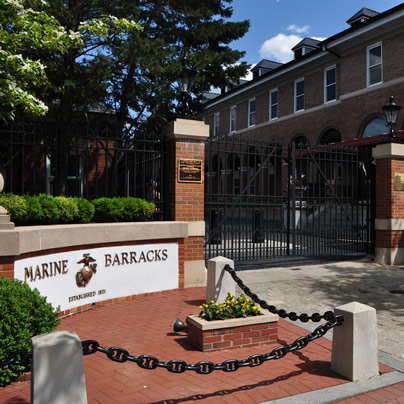
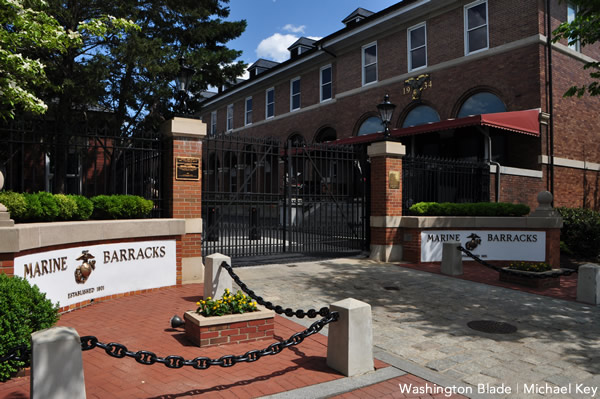
Lance Corp. Phillip Bushong was stabbed in the upper chest with a pocketknife on 8th Street, S.E., across from the Marine Barracks. (Washington Blade file photo by Michael Key)
A D.C. Superior Court jury completed its third day of deliberations on Tuesday without reaching a verdict over whether a 21-year-old former U.S. Marine should be found guilty of second-degree murder while armed for stabbing a fellow Marine to death after allegedly shouting an anti-gay slur during an April 2012 altercation.
Judge Russell Canan gave jurors Wednesday and Friday off for the Thanksgiving holiday weekend and instructed them to return Monday, Dec. 2, to resume their deliberations.
Pfc. Michael Poth, who has since been discharged from the Marines, has been held in jail since the time D.C. police arrested him on April 21, 2012, minutes after witnesses said he stabbed Lance Corp. Phillip Bushong, 23, in the upper chest with a pocketknife on 8th Street, S.E., across the street from the Marine Barracks.
Bushong was pronounced dead less than an hour later after being taken to a hospital. An autopsy showed he died of a single knife wound that punctured his heart.
Gay congressional staff member Nishith Pandya, a friend of Bushong’s who emerged as a lead prosecution witness, testified that Poth called him and Bushong a “faggot” while the two stood with others on the sidewalk outside Mollie Malone’s restaurant and bar as Poth walked by.
Pandya, who works for U.S. Rep. Bobby Rush (D-Ill.), told the jury he’s gay and that he and Bushong, who was straight, were platonic friends.
Assistant U.S. Attorney Michael Liebman, the lead prosecutor in the case, said Poth hurled the anti-gay slur with the intent of provoking Bushong into a confrontation to give Poth an excuse to stab Bushong. Liebman cited testimony by witnesses that Poth became angry over a remark that Bushong made to Poth about an hour earlier when the two Marines first crossed paths on 8th Street.
A police report says Poth told D.C. police homicide detectives after the stabbing that Bushong called him a “boot,” a slang term used for a Marine just out of boot camp.
“Call me boots and the fight started,” the police report quoted Poth as saying. “He was talking shit so I stabbed him…I stabbed him because he punched me in the head,” the report quoted him as saying.
Pandya testified that Bushong never hit Poth.
In his closing argument, Liebman pointed to a civilian witness who testified that she saw someone fitting Poth’s description walking along 8th Street saying to himself he was going to stab somebody. Liebman cited testimony by a police detective that Poth told police at the time of his arrest, upon learning that Bushong was being taken to a hospital, “Good, I hope he dies.”
The prosecutor said other witnesses, including Marine guards who were watching Poth walk past them on 8th Street and nearby streets prior to the stabbing, made it clear that Poth wanted to confront Bushong again and was walking up and down the street looking for him.
“You don’t get to claim self-defense when you proclaim intent to stab someone before you come into contact with them,” Liebman told the jury. “The law doesn’t allow you to use deadly force before you have contact” in a self-defense claim, Leibman said.
Poth’s attorney, Bernard Grimm, told the jury Poth acted in self-defense and that the stabbing came after Bushong and Pandya walked toward Poth at the time of the verbal altercation outside Mollie Malone’s. Grimm said the jury should be skeptical about Pandya’s claim that Poth made an anti-gay slur.
Grimm pointed out repeatedly that Poth, who weighs 140 pounds and is five-feet-seven inches tall, was far smaller than Bushong, who was over 6 feet tall and Pandya, who weighs more than 200 pounds.
He said one of several videos obtained from security cameras deployed by businesses along 8th Street suggested that Poth had been on the ground and stood up just before the stabbing. This corroborated Poth’s claim that Bushong punched him in the head and knocked him down and that Poth stabbed Bushong in self-defense, Grimm said.
Grimm pointed to testimony by a Marine guard who witnessed part of the altercation that Bushong at one point changed directions and followed Poth after the two crossed paths on the sidewalk while walking on 8th Street.
The Marine testified that Bushong reached toward Poth and put one hand on Poth’s shoulder and motioned with his other hand as if he was about to throw a punch. It was at that time that Poth appears to have stabbed Bushong, the Marine said.
Leibman and Grimm played video footage from security cameras of several of the businesses along the street, but none of the video footage captured the stabbing.
Grimm called Pandya’s testimony unreliable, saying that Pandya told police the person who stabbed Bushong was wearing khaki colored short pants when it was clear to all other witnesses that he was wearing blue jeans. He said Pandya, knowing that the stabbing took place after Bushong followed Poth and acted as the aggressor, didn’t want police to talk to Poth out of fear that it would become clear that his friend was the instigator of the fight that broke out between Bushong and Poth.
“He was in it up to his ears,” Grimm said. “He egged Bushong on.”
Grimm also reminded the jury that witnesses said Bushong was asked to leave one of the bars on 8th Street on the night of the incident because he was intoxicated and acting in a boisterous and disruptive manor.
“Someone said don’t let him get near anyone on the street,” Grimm told the jury, saying someone in the bar feared Bushong would hurt someone.
Liebman told the jury that although Pandya got the clothing description of Poth wrong, his testimony on what unfolded between Poth and Bushong was correct.
“Mr. Grimm wants you to believe that you can’t believe anything that Mr. Pandya said,” Liebman told the jury, including Pandya’s testimony that Poth used the word “faggot” to insult Bushong.
“Mr. Pandya is gay. Do you think he heard that right?” said Liebman. “You better believe it. He had no reason to make that up.”
Although Liebman said at a pre-trial hearing in April 2012 that prosecutors considered the stabbing to be a hate crime, the government never formally charged Poth with a hate crime. A hate crime designation enables a judge to hand down a more severe sentence than what is normally required for a particular offense.
The jury began its deliberations about 2 p.m. on Friday, Nov. 22, 10 days after the trial began on Nov. 12. Judge Russell Canan, who’s presiding over the trial, sent the jurors home for the weekend just before 5 p.m. They resumed deliberations about 10 a.m. Monday, Nov. 25 and continued through Tuesday afternoon.
A conviction on second-degree murder while armed carries a possible maximum sentence of 70 years in jail. If the jury finds Poth not guilty on the second-degree murder charge it has the option of finding him guilty of a lesser offense of manslaughter.




Baltimore
Popular Mount Vernon gay bar Leon’s to temporarily close after owner’s death
Ron Singer passed away on July 7
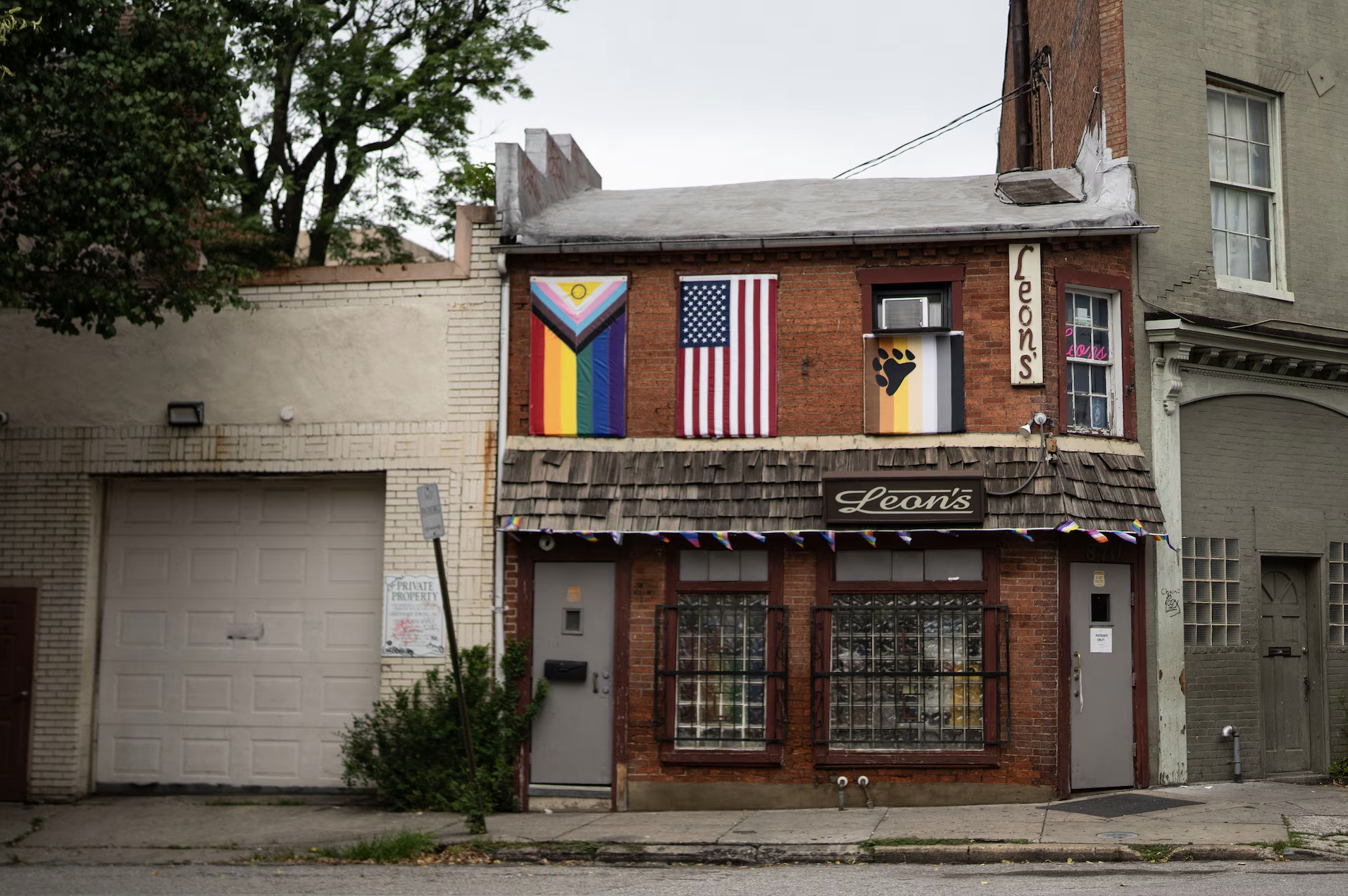
By WESLEY CASE | Leon’s Backroom, Baltimore’s oldest gay bar, temporarily shut down after service on Wednesday night, according to a post on the business’s Instagram page.
The announcement comes a little more than a week after the death of the Mount Vernon bar’s owner, Ron Singer, who died at 66 on July 7.
The rest of this article can be found on the Baltimore Banner’s website.

The Comings & Goings column is about sharing the professional successes of our community. We want to recognize those landing new jobs, new clients for their business, joining boards of organizations and other achievements. Please share your successes with us at [email protected].
Congratulations to Stuart Ortel and Scott Marker, and Dave Lyons and Rick Hardy, on the recent opening of their garden center on Route 1 in Rehoboth Beach, in the former Farmer Girl site. It is called Bay Laurel Home and Garden and debuted earlier this year. The four owners are all well known to the denizens of Rehoboth Beach.
Stuart and Scott have been active members of the Rehoboth Beach community since 1999. Stuart is a landscape architect, and has established relationships with many local folks in the building and landscape industry. When this opportunity for Bay Laurel Home & Garden presented itself, and they had the perfect team of people in place, he and Scott were committed to making it a reality. So, when Scott and Stuart introduced this opportunity to create a new garden center to Dave and Rick, they embraced the chance to cultivate a business where beautiful plants, inspiring home and garden products, and outstanding customer service come together. Dave and Rick knew about owning a business in Rehoboth as they previously owned Coho’s Market, where they discovered firsthand the value of serving their community, and the rewards of running a locally owned business.
The garden center launched with a refreshed brand identity, updated merchandising, and expanded product lines, all designed to create an inspiring and welcoming environment for your home. Bay Laurel Home & Garden offers a beautifully appointed garden center and curated home and gift shop.
The new center features a full nursery with annuals, perennials, shrubs, trees, and seasonal selections; a garden center offering pottery, fountains, and garden ornamentation, and essential tools and garden supplies. It has a garden shop featuring unique indoor/outdoor furnishings and accessories, and a gift shop featuring botanical and coastal style items for home and entertaining.
Rehoboth Beach
Celebrate Pride in Rehoboth Beach this weekend
‘A vital space for community, healing, and connection’
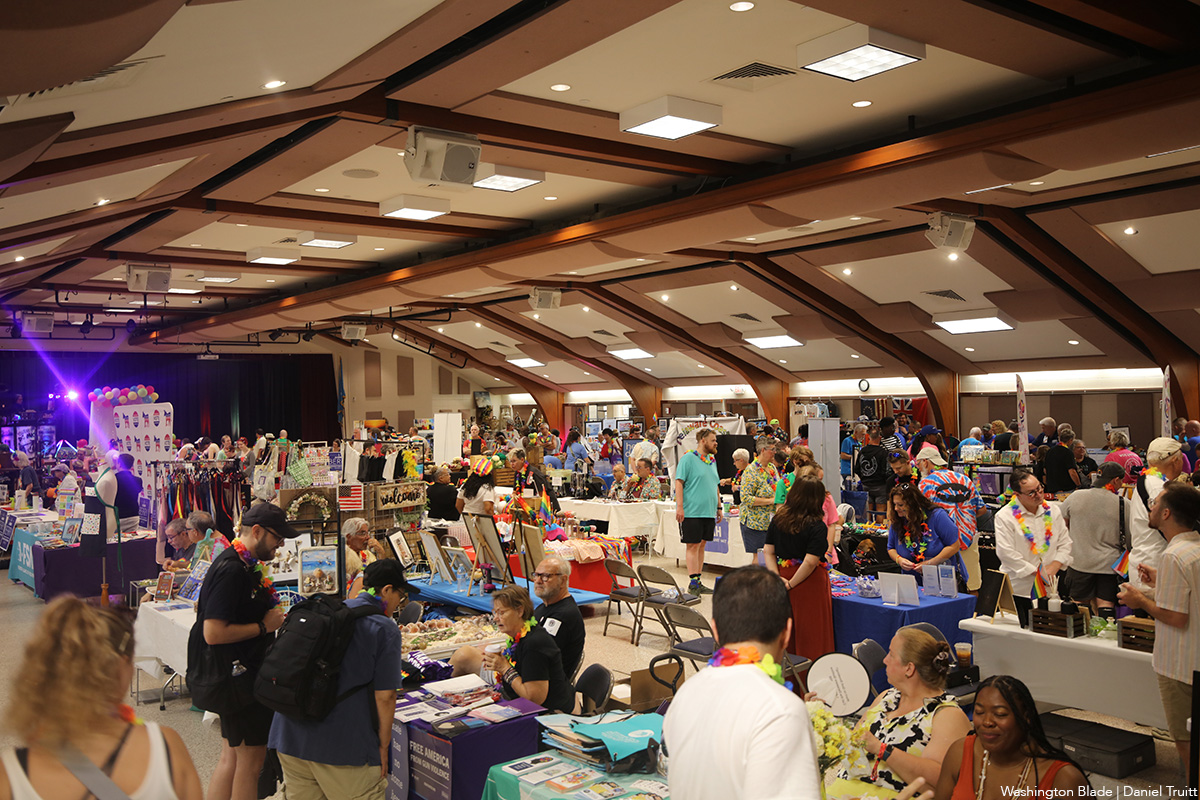
Pride in Rehoboth Beach is kicking off this week on Friday, July 17, with events happening throughout the weekend.
“Rehoboth Beach Pride is more than a festival — it is a vital space for community, healing, and connection,” said David Mariner, director of Sussex Pride, which organizes many of the events.
The weekend will begin with the Grand Opening & Community Preview from 1-4 p.m. on Friday, July 17, celebrating the opening of Novus Medical Services and the new Sussex Pride Community Center.
This will be followed by an Interfaith Pride Service at 6 p.m. at the Metropolitan Community Church Rehoboth to gather for healing and the affirmation of queer spirituality with Rev. Carla Christopher, chair of Sussex Pride Faith.
Members of the community are then invited to head over to join the Rehoboth Beach Bears at the Pines to have dinner, mingle, and give back to local initiatives.
End the first night of Pride in Rehoboth at Diego’s Bar & Nightclub with music by DJ Joey P from 9 p.m.-1 a.m.
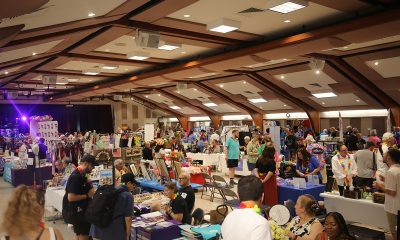
Rehoboth Beach Pride Festival will take place on Saturday, July 18, 2026, from 9 a.m.- 3 p.m. inside the Rehoboth Beach Convention Center. A full list of events is available at rehobothbeachpride.org.
Roxy Overbrooke will host on the main stage as live performances take place throughout the day, featuring music from DJ MK and Tribe 9 Entertainment.
The festival will include educational workshops, community meetups, and a raffle dedicated to raising funds for unhoused LGBTQ+ youth across Delaware.
Feature workshops include panels discussing topics such as unhoused LGBTQ+ youth in Delaware, the needs of trans and non-binary youth, as well as the increase in HIV and syphilis diagnoses amid federal budget cuts, in a panel moderated by Blade Editor Kevin Naff.
Saturday night will also feature an evening comedy and entertainment show at the Convention Center presented by the Gay Women of Rehoboth. Performers will include comedians Suzanne Westenhoefer and Karen Mills as well as musician Kristen Merlin. Tickets are available at gaywomenofrehoboth.org.
The Rehoboth Beach Pride Ride will take place at 10 a.m. on Sunday, July 19, hosted by the Dykes on Bikes Rehoboth Beach Women’s Motorcycle Club, starting at Lefty’s.
Goolee’s Drag Brunch will also take place on Sunday from 12-2 p.m at Goolee’s Grille. This is a family-friendly event hosted by Regina Cox and Ruby, featuring Aurora Sterling, Michelle Leigh Sterling, Scarlet St. Cartier, and Joanna Blue. Tickets can be purchased online.
Pride in Rehoboth will conclude at 2 p.m. with the official Rehoboth Beach Pride Closing Party at Aqua Bar & Grill, celebrating the venue’s landmark 20th anniversary with DJ Biff until 7 p.m.
Due to an influx of visitors for the summer season, those coming from out-of-town are encouraged to use the Park & Ride.

Authorities investigate officer-involved shooting outside Asheville gay bar

Popular Mount Vernon gay bar Leon’s to temporarily close after owner’s death

30 years on, ‘The Birdcage’ remains a landmark

Comings & Goings

Whitman-Walker to host legal services workshop

Democrats are trying to disqualify trans candidates. Here’s how

Mexico’s first openly gay mayor killed

Expected India Supreme Court ruling could shape future LGBTQ rights cases

Celebrate Pride in Rehoboth Beach this weekend

Christa Tichy hopes to preserve LGBTQ representation in Md. House of Delegates
-

 National5 days ago
Democrats are trying to disqualify trans candidates. Here’s how
-
Mexico5 days ago
Mexico’s first openly gay mayor killed
-
India4 days ago
Expected India Supreme Court ruling could shape future LGBTQ rights cases
-
Rehoboth Beach4 days ago
Celebrate Pride in Rehoboth Beach this weekend