Arts & Entertainment
Baltimore arts briefs: March 9
‘Blackouts’ author on book tour, Hippo drag show and more

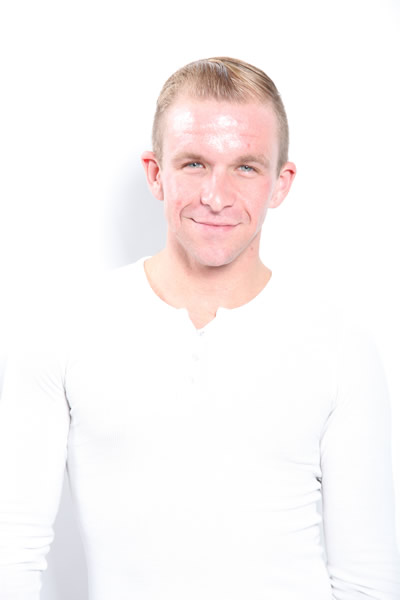
Author Mark Brennan Rosenberg finishes his visit to the area on a 45-city book tour with a stop in Baltimore. (Photo courtesy Rosenberg)
‘Blackouts’ author plans regional book tour
Openly gay author Mark Brennan Rosenberg brings his 45-city book tour to Baltimore with a visit to The Book Escape (805 Light St.) on March 15 at 5 p.m.
Rosenberg’s tour is to promote his first book, “Blackouts and Breakdowns,” as well as his second book, “Eating My Feelings,” slated for release on April 19.
“Blackouts” includes 11 short stories exploring Rosenberg’s once excessive drinking and the struggles he faced when becoming sober. “Eating” includes 16 essays about his time in fat camp, high school and more.
Rosenberg will also have appearances University of Maryland Bookstore on March 12, Duplex 18 & U on March 13 and Towson University on March 14.
Hippo hosts glam drag show
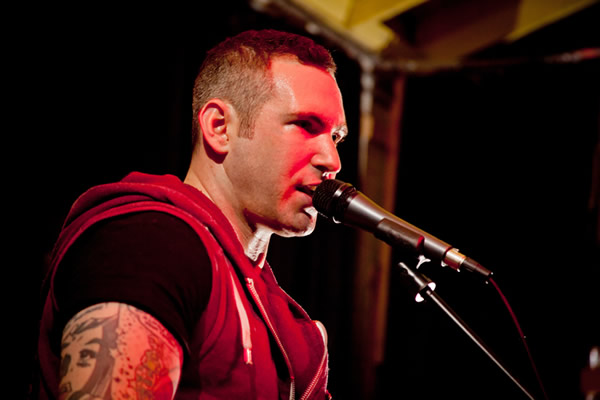
Josie & the PussyCats presents “A Baltimore BLAST Show” on Friday at Club Hippo (1 West Eager St.).
The show will feature Jada, first alternate to Miss Gay Baltimore; Josie Foster, a promoter for Miss Gay Baltimore; Chi Chi Ray Colby, Miss Gay Maryland America; Sue Nami, former Miss Gay Maryland; and more.
Tickets are $7 and can be purchased by calling 410-274-7118.
Doors open at 10 p.m.
Also at Club Hippo, DJ Jason Royce will be spinning on Saturday.

On Foursquare? Add many of these events to your To-Do list, and connect with the Blade to always be in the know.
Heading ‘Into the Woods’
Center Stage (700 N. Calvert St.) presents “Night Out: Into the Woods,” Stephen Sondheim and James Lapine’s retelling of Grimm classics directed by Mark Lamos on March 13 at 6:30 p.m.
“Into the Woods” follows familiar folktale figures such as Cinderella, Little Red Ridinghood and more as they try to get home before dark. Danielle Ferland, who originated the role of Red on Broadway, returns to the production as the baker’s wife.
The Tuesday before opening night, “Night Out” is an evening of theater and cocktails designed for the LGBT community.
Tickets range from $10 to $45 and can be purchased online at centerstage.org. “Into the Woods” will run through April 15.
Mink Stole, others at the Patterson
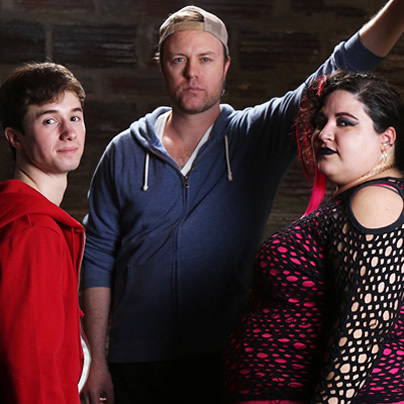
Creative Alliance presents Erin Markey, the Degenerettes, Lexie Mountain and a guest appearance by Mink Stole on Friday at the Patterson (3134 Eastern Ave.) at 8 p.m.
Markey is a long-time member of the queer performance cabaret, the Charm City Kitty Club. She’ll be performing a variety of things, including excerpts from her newest solo musical project, “The Dardy Family Home Movies by Stephen Sondheim by Erin Markey.”
Tickets are $15 for general admission and $10 for CA members.
For more information and to purchase tickets, visit creativealliance.org.
Movies
Ethereal ‘Camp’ a moody allegory for queer shame
An unsentimental yet empathetic exploration of guilt
When one watches movies for a living, it’s as easy to fall into routine as it is with any job. Each movie is different, of course, each with its own characters, its own viewpoint, and its own story – (or at least its own variation on one), but in so many other ways, they have a tendency to be very much the same.
This is because there is an entire “language” of filmmaking, established from the earliest days of cinematic storytelling, a process so subtle that most of us are barely aware of it: the image directs our attention, the script provides the shape and structure of the story, and the actors are our stand-ins, allowing us to “experience” the reality of the film through a transference of identity that occurs so reflexively that we don’t even notice it’s happened.
That’s why it can be such a jolt when we come across a movie that doesn’t follow the expected rules, and we can’t think of a better recent example than Avalon Fast’s “Camp,” which drew attention as it made the rounds at last year’s festival circuit and embarked on a series of screenings in select cities beginning on June 26.
Fast, 26, is a queer Canadian filmmaker who specializes in “Girl Horror” (a genre that centers female experience), and who has already become a prominent force in the “new queer indie” movement. Her first feature, “Honeycomb,” got a Sundance “virtual” screening, and she’s appeared as a performer in films like Alice Maio Mackay’s “The Serpent’s Skin” and leading trans filmmaker Jane Schoenbrun’s yet-to-be-released Cannes hit, “Teenage Sex and Death at Camp Miasma.” With “Camp,” however, she stakes her claim to territory in a burgeoning field of queer/trans/feminist cinema to establish herself as a formidable “brand” of her own.
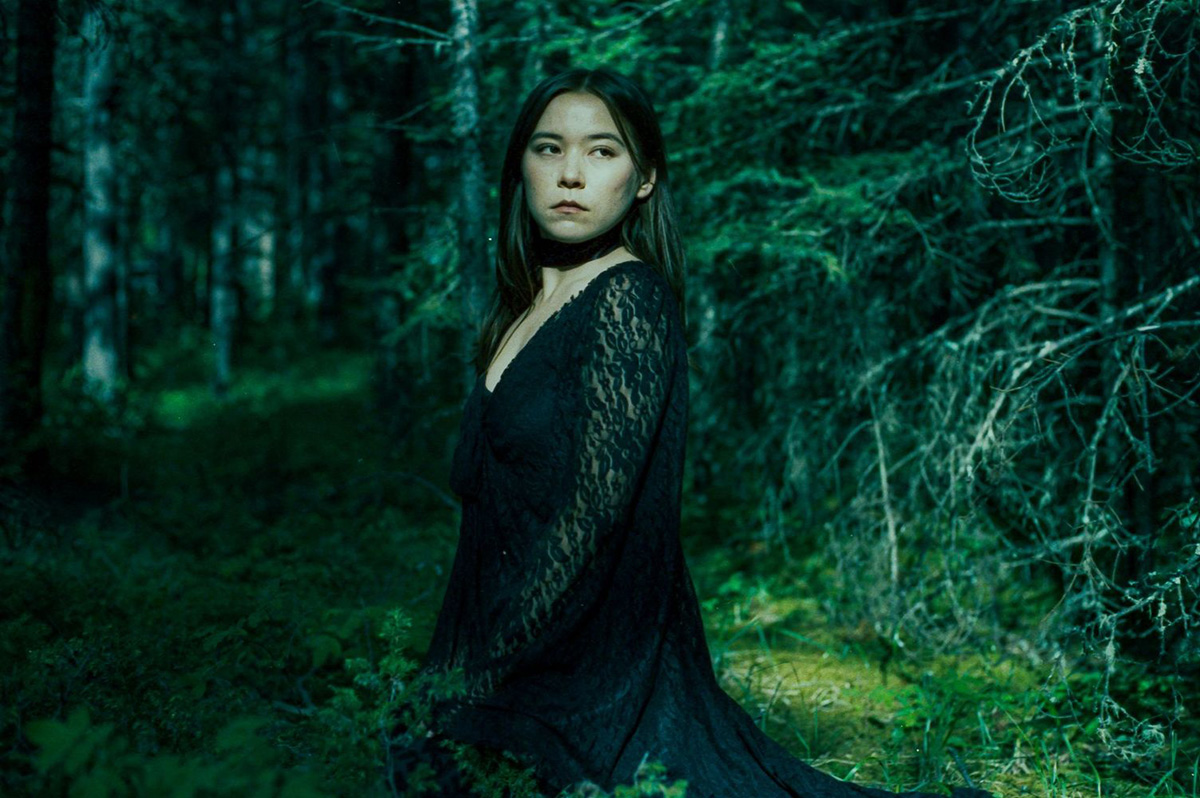
Rooted in a blend of trope-ish horror conventions and presented in a dreamy, ethereal style that elevates feeling over cognition, it’s the story of Emily (Zola Grimmer), a young woman accidentally responsible for two horrific tragedies, who feels hopelessly trapped by guilt and shame. At the suggestion of her father (Mike Tan), she takes a summer job as a counselor at a camp for “troubled” young people like herself, where she is quickly embraced and assimilated by the core group of female counselors – most of them “hot weirdos” who are more interested in all-night partying and a kind of home-grown witchcraft than they are in the wholesome camp activities they supervise during the day. Her initial response to this new environment is guarded, but as the summer goes on she comes to feel a strong connection to her fellow counselors, beginning to hope that she has – at last – found her place among a “family” that accepts her despite the life-shattering incidents that have come to define her sense of self. Yet at the same time, she becomes ever more aware of a call to confront and quiet the ghosts of her misfortunate past – even if it requires an unthinkable sacrifice.
Dreamy and purposefully opaque when it comes to differentiating between real experience and metaphysical reflection, Fast’s movie draws us in from the start with its edgy mix of visual atmosphere, blending an aesthetic that combines home-movie nostalgia with the ironically whimsical flourishes of the digital age to establish a tone that feels like a half-forgotten memory reconstructed in the form of an Instagram “reel.” It’s a potent effect, creating an overall aesthetic of surreal impressionism in which the plot advances more through mood and fragments of subjective experience than through concrete narrative form; at times, it feels untethered, yes, but it always manages to orchestrate its seemingly disjointed perspective into a shape that makes sense — even if we’re not quite sure how or why, or even what is actually happening.
The effect is cumulative, as the story becomes less bound to logic and realism while leaning further into a perspective that favors the arcane and mysterious over the rational and concrete. And while that might prove frustrating for viewers expecting a more traditional kind of “horror,” it provides for an experience that’s more likely to satisfy the kind of fans who appreciate being left to provide their own interpretations. The most obvious comparison would be with the work of David Lynch; there’s clearly an influence there for Fast’s darkly intuitive approach, which goes beyond the obvious parallels of its “Twin Peaks”-ish setting (the forest is most definitely a character here) to emulate the stream-of-consciousness narrative flow that marked much of Lynch’s late-career work.
“Camp” is far from imitative, however. While it may share some traits with the work of Lynch and other masters of contemporary surreal horror, it creates a unique “vibe” by allowing its own creative feminine energy to take the lead. The traumas it depicts spring from a definitively female space, from first-menstruation nightmares to the absurdities of having to defer to the “leadership” of a mediocre male who has more power than you (in this case, Austyn Van de Kamp as the camp’s supervisor, a naive but endearing yokel whose Jesus-centric worldview is undermined by the “coven” under his tentative command), and the overall treatment of its few male characters is largely less than forgiving. Yet on a deeper level, its subtext of carrying “unforgivable sin” that affects every aspect of one’s interactive life feels ultimately as much an expression of queer trauma as it does feminist ideology. The result is just cryptic enough to leave us pondering what we’ve just seen yet clear enough to deliver a sense of emotional catharsis which feels, if not exactly curative, at least healing enough to pave a way forward.
Admittedly, it’s not a film that will likely tick off all the boxes for hardcore horror fans; while it might deal in dark emotions and a certain witchiness that ties it to the legacy of such pagan-flavored classics as “The Wicker Man” or “Midsommar,” its terrors are more existential than visceral, pondering the difficulties of overcoming self-hatred rather than pitting us against a palpable physical threat, supernatural or otherwise. Indeed, it’s more introspective psychodrama than it is traditional horror – which is less a criticism than it is a disclaimer.
Though it’s Fast’s moody aesthetic that emerges as the “star” attraction of “Camp,” much of its effectiveness hinges on the performances of its cast. Grimmer, especially, is central, and she succeeds admirably not only in winning our empathy but in peeling back the morally murky layers of Emily’s path to redemption in a way that feels like empowerment rather than ethical compromise. However, the ensemble of “soul sisters” that surrounds her (Alice Wordsworth, Cherry Moore, Ella Reece, Lea Rose Sebastianis, and Sophie Bawks-Smith) all play their own particular part in creating the “magic” that makes the whole thing work.
All in all, “Camp” is an exhilaratingly fresh – if sometimes opaque – expression of queer filmmaking from a feminine perspective; that’s a regrettably rare occurrence which makes Fast’s fastidiously unsentimental (yet deeply empathetic) exploration of queer guilt all the more powerful, and makes her movie an essential addition to your watchlist.

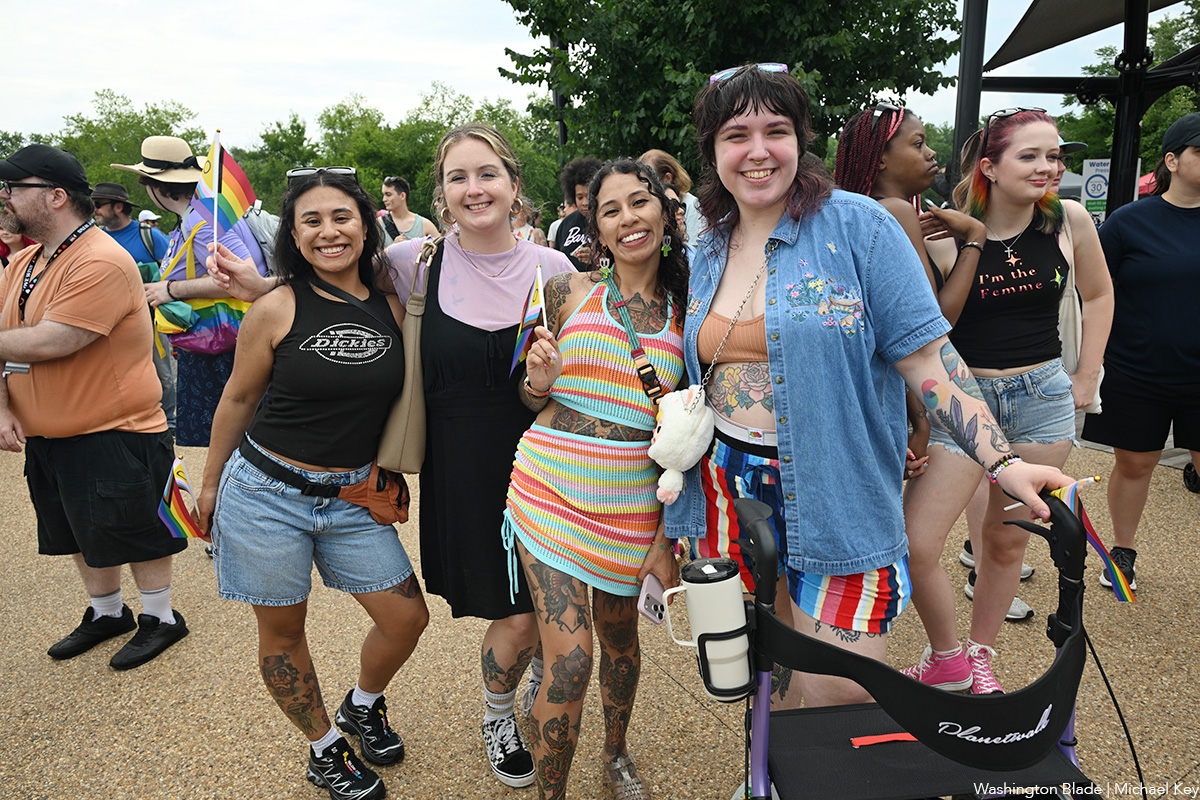
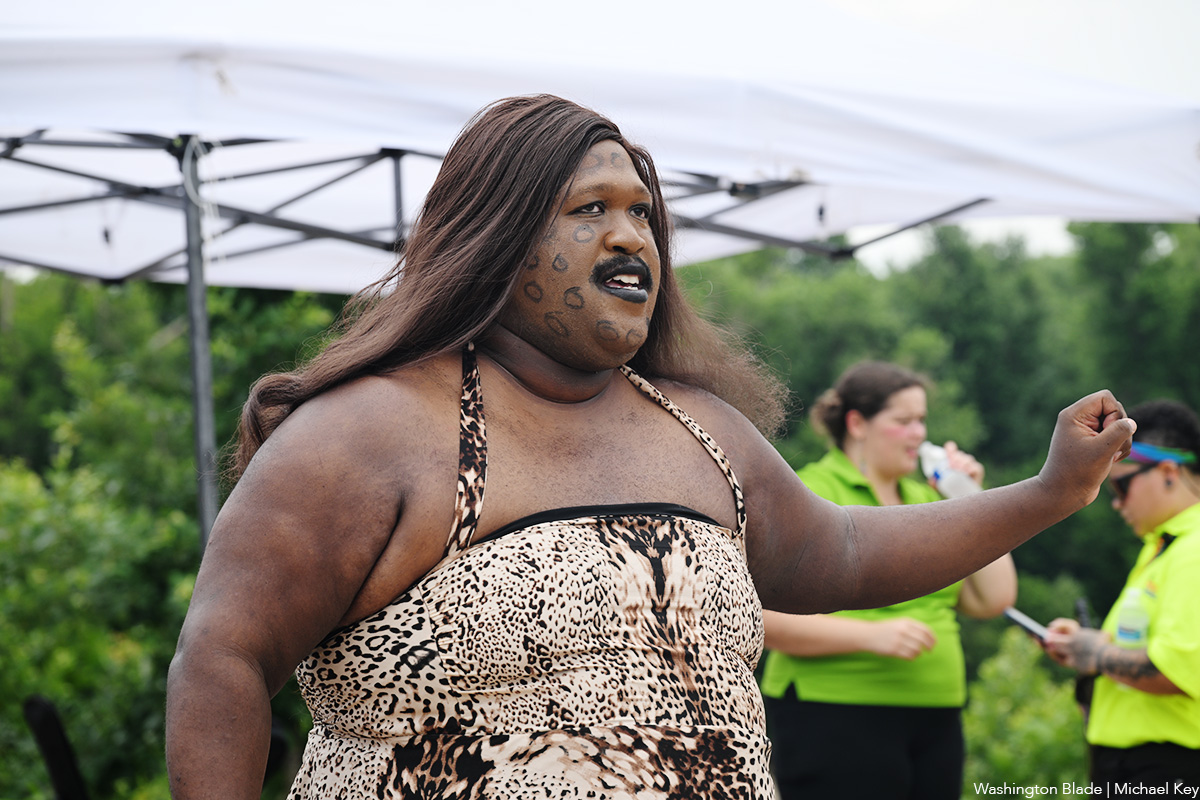
The 13th annual Frederick Pride Festival was held at Carroll Creek Park in Frederick, Md. on Saturday, June 27.
(Washington Blade photos by Michael Key)


View on Threads


Photos
PHOTOS: Fredericksburg Pride March and Festival
LGBTQ celebration held in historic Virginia town

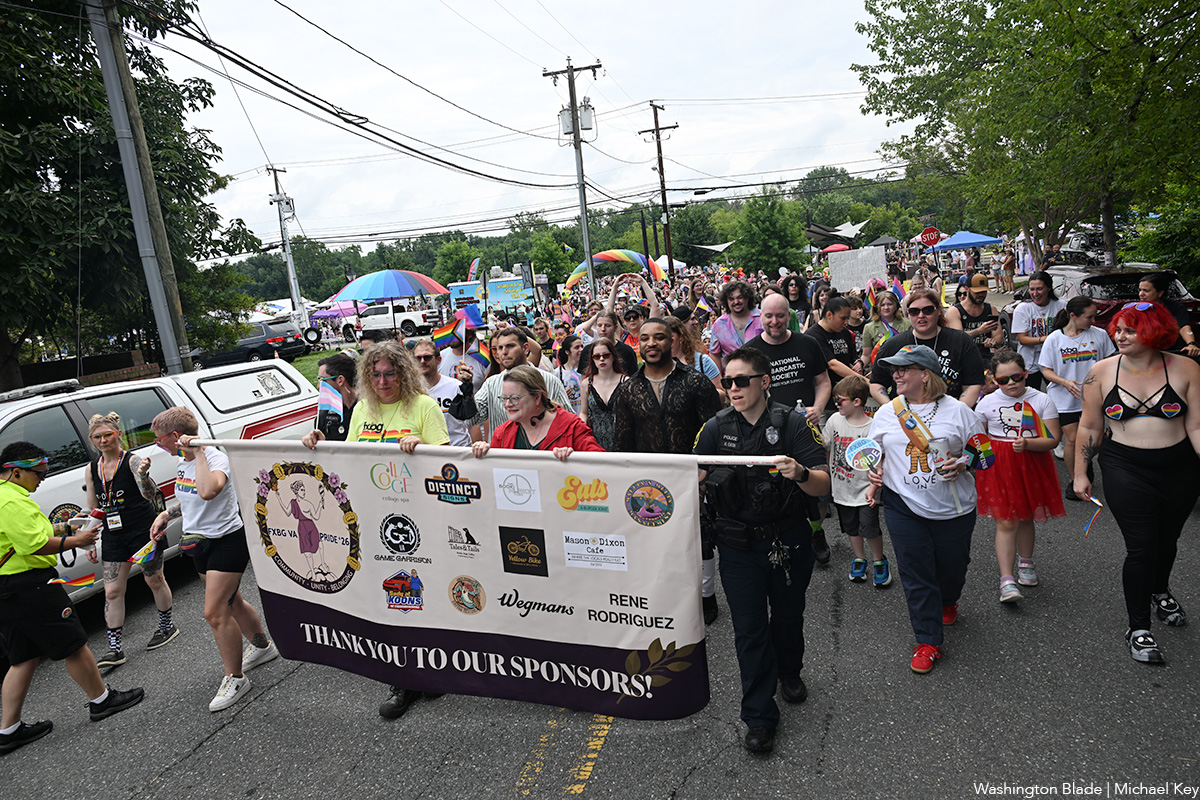
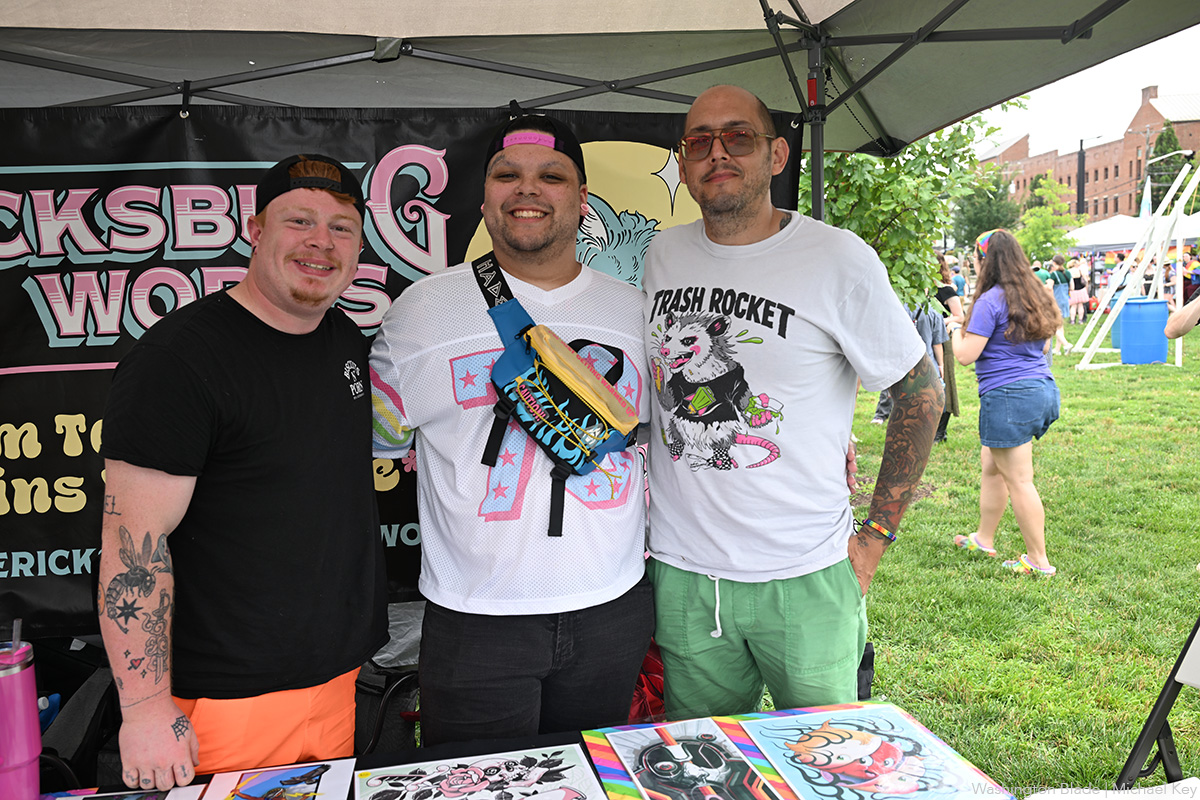
The sixth annual Fredericksburg Pride March was held in downtown Fredericksburg, Va. on Saturday, June 27. Stafford County Board of Supervisors Chair Deuntay Diggs led the march alongside Fredericksburg City Council Member Jannan W. Holmes. The Fredericksburg Pride Festival took place at Riverfront Park after the march. Bree Fram was the featured speaker.
(Washington Blade photos by Michael Key)




View on Threads






SMYAL receives $25,000 award for ‘courageous acts’

Queen Camilla meets with JK Rowling

Ethereal ‘Camp’ a moody allegory for queer shame

D.C. queer faith leaders commit to exist, resist, persist

Democratic Socialists of America are not automatically Democrats

Iran, Egypt play in World Cup ‘Pride Match’

PHOTOS: Frederick Pride Parade

D.C. has a chance to lead on equitable transit through AVs

Carla Hall goes from ‘Top Chef’ to the stage