News
Jindal caves on same-sex marriage in Louisiana
GOP hopeful had sought to delay implementation of marriage ruling
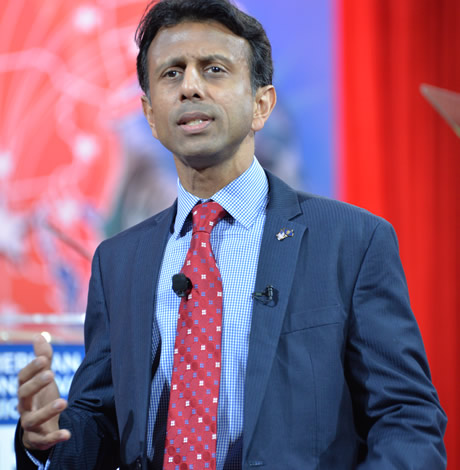
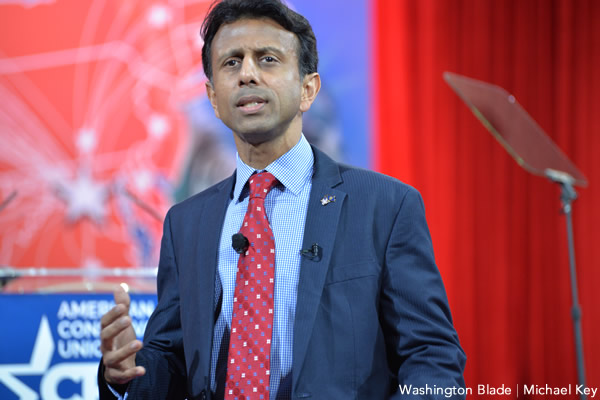
Gov. Bobby Jindal (R-La.) is recognizing same-sex marriages in Louisiana. (Washington Blade photo by Michael Key)
According to NOLA.com, Louisiana’s Department of Vital Records is now recognizing them after the federal district court that once upheld the marriage ban in the state reversed its decision and upon guidance from the U.S. Fifth Circuit Court of Appeals. The Washington Blade confirmed with the agency the state will now recognize same-sex marriages.
“Today the Eastern District Court of Louisiana ordered the Louisiana Department of Health and Hospitals to begin issuing marriage licenses to same-sex couples who complete a marriage application at the Department’s Office of Vital Records in Orleans Parish,” Olivia Hwang, spokesperson for the agency is quoted as saying.
Jindal, who’s running for the Republican nomination for president as a social conservative, has stalled on implementation of the Supreme Court ruling on same-sex marriage at every possible turn.
After the Supreme Court decision was handed down, he said his administration wouldn’t recognize same-sex marriages — including for tax purposes and other states benefits — until action from the Fifth Circuit, which was considering litigation directly challenging the state’s marriage ban.
But after the Fifth Circuit acted on Thursday, reversing the judgment of a district court that upheld Louisiana’s ban on same-sex marriage and remanding the litigation to the court, Jindal delayed implementation again, saying through a spokesperson the district court would have to issue judgment before the state would recognize same-sex marriage.
Only after U.S. District Judge Martin Feldman issued judgment in the litigation, Robicheaux v. Caldwell, did Jindal’s administration concede Louisiana was a marriage-equality state.
Kenneth Upton, senior counsel Lambda Legal and attorney for same-sex couples in the case, said Jindal dragged out implementation of the Supreme Court decision.
“While we wonder why Gov. Jindal insisted on dragging his feet in complying with the U.S. Supreme Court ruling and the subsequent very clear order from the Fifth Circuit, we are pleased for our clients and all same-sex couples in Louisiana that they will now be able to marry and have their marriages recognized by the state,” Upton said.
Jindal is facing litigation filed by American Civil Liberties Union over his religious freedom executive order allowing individuals to refuse to recognize same-sex marriage, including for the purposes of anti-LGBT discrimination. The governor signed the executive order after legislation along those lines failed in the legislature.




Politics
Buttigieg indicates he may run for president in 2028
Former Transportation Secretary was in Biden-Harris administration’s Cabinet

Former Transportation Secretary Pete Buttigieg told a podcaster he is considering throwing his hat in the ring for president once again.
“I don’t know,” Buttigieg told Steven Bartlett, the British host of The Diary of a CEO, the most popular top business and tech podcast on Spotify, which aired Monday. “I think I’m more inclined than not, but there’s so much we don’t know.”
“There’s so much I don’t even know about what’s going to happen this year, let alone … what we need to know later,” he added.
Buttigieg is no stranger to running for the Oval Office.
In 2019, the former South Bend, Ind., mayor was a serious contender in the Democratic primary for the 2020 presidential election but ultimately ended his campaign and endorsed Joe Biden.
In May, an Emerson College Polling survey found Buttigieg at the top of the list of potential presidential contenders, leading California Gov. Gavin Newsom, New York Congresswoman Alexandria Ocasio-Cortez, former Vice President Kamala Harris, and others.
In addition to discussing his future in federal politics, Buttigieg also discussed President Donald Trump’s handling of the Iran war — which reached its 5-month mark two weeks ago — the changing landscape of U.S. jobs due to the rise of artificial intelligence, and the growing national debt, all issues he could face if he ultimately returns to the White House.
Following his 2020 presidential campaign, Buttigieg gained prominence within the Democratic Party, eventually leading to his confirmation as Transportation Secretary. In February 2021, he became the first openly gay Cabinet member to be confirmed by the U.S. Senate.
In addition to his experience as an elected official, the 44-year-old served as a Navy intelligence officer in the reserves from 2009-2017, including a seven-month deployment to Afghanistan in 2014. Buttigieg came out as gay in 2015 and later married his husband, Chasten Glezman, in 2018. The couple now has two children: twins.
Buttigieg also has an extensive educational background.
He graduated from Harvard University with a bachelor’s degree in history and literature and later became a Rhodes Scholar, attending the University of Oxford, where he earned a bachelor’s degree in philosophy, politics, and economics.
This is not the first time Buttigieg has made headlines this year.
In June, he went public about being falsely accused of posing a threat to his children’s safety. An anonymous police report claimed he was a danger to his 4-year-old twins and was not allowed to be with them until after police interviews were conducted.
The police report was later determined to be false. The Washington Blade reached out to the Michigan State Police to ask what course of action, if any, would be taken against the woman who filed the false report, but the agency did not answer the question.
The Blade reached out to Buttigieg’s team for comment on his potential 2028 presidential bid, but did not hear back before publication.
Obituary
Remembering Elliot Leonard, generous visionary who helped LGBTQ communities thrive
‘You’re only here for a while … make something of it’
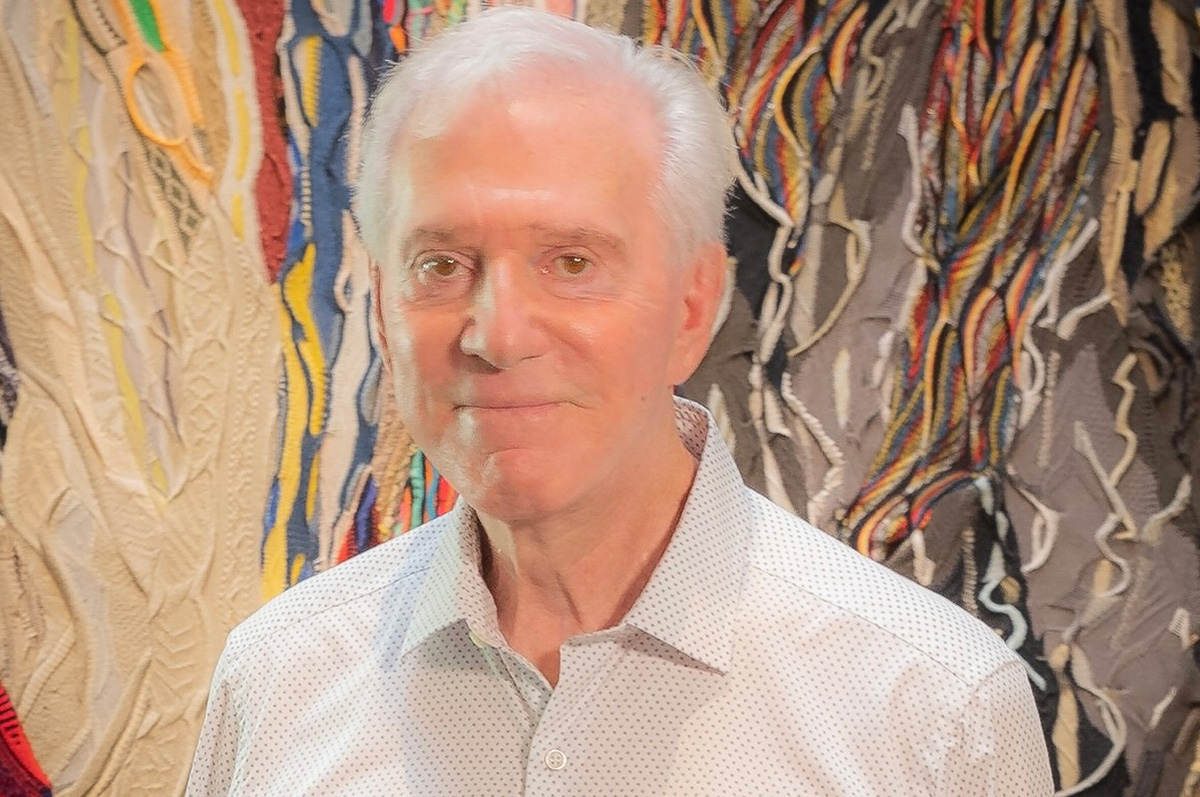
Elliot Leonard, the visionary co-founder and founding trustee of the Leonard-Litz LGBTQ+ Foundation, died on June 6 in Easton, Conn., at his home with his husband, Roger Litz, by his side. He left a legacy of generosity and support for LGBTQ+ organizations across the Northeast and beyond, and is remembered as the heart and soul of a mission that sought to uplift people and empower the LGBTQ+ community. Leonard was 88.
“His memory lives on in every small town Pride festival, every weekly support group of a Pride center, every foundation and benefactor that is inspired to follow his example,” the Foundation said in a statement following Leonard’s passing. “His vision lives and breathes in every young person free to discover their identity and in every person of any age who has the freedom and support to continue living their truth.”
Perhaps owing to the loss of his parents at a young age, and having grown up in a time when being young and gay was fraught, Leonard held a special place in his heart for LGBTQ youth. He simply wanted their lives to be better.
“Elliot wanted to do good in the world, and with all the LGBTQ+ folks locally that he became friendly with, he noticed a thread that most of us grew up with and saw, especially those of us of a certain age, where we had to hide our identities,” said Judy Troilo, executive director and trustee of the Leonard-Litz LGBTQ+ Foundation.
“Then when we came out, we dealt with adverse reactions. Kids need to be able to grow up in this very, very dangerous world when you are other than the majority… He also felt strongly about seniors and knew that many were lonely. He was looking at his age, and was very grateful for his life and the fact that he had a partner of 57 years that he loved very much.”
Launched in early 2021, the Leonard-Litz Foundation has granted more than $6 million to about 150 nonprofit organizations since inception – serving the LGBTQ+ community through advocacy, programs, and services that range from youth summer camps to mental health outreach. The Washington Blade Foundation is among those beneficiaries and the Leonard-Litz Foundation has served as a key sponsor of the annual Pride on the Pier celebration that brings tens of thousands of queer Washingtonians together each June.
Leonard measured his success by how many people the Foundation could bring together and how many people they could help, Troilo says.
“And because of all the hostility, anti-LGBTQ legislation and the fight we’re having on so many different levels – from academia to the work environment to government – we’ve widened the help to folks in areas where people are most disenfranchised, especially the trans community.”
With more than 6,000 connections of care made last year alone, the Triangle Community Center, located in South Norwalk, is a welcoming space where LGBTQ+ people feel safe, seen, and supported. TCC provides resources that include peer-to-peer youth support, AA gatherings, housing navigation, laundry and shower facilities, a food pantry, a gender-affirming closet and so much more.
It was Leonard’s involvement with TCC after permanently settling in Connecticut that set the wheels of inspiration in motion for his own foundation. By no means his first foray into charitable giving, as a funder and board member of TCC, Leonard saw the effects of what could be done at the ground level.
“He and Roger saw a great need in the LGBTQ+ community: well-funded community centers dedicated to serving the community, supported by courageous and generous benefactors willing to bring people together. He knew that if someone led the charge, others would follow,” his Foundation said in its tribute.
“He had ideas on how to do good work through a foundation that could have a more immediate and direct impact, and saw that he could really use his voice to make an impact on the LGBTQ community,” recalls Rachel Simon, TCC’s executive director.
Among the countless ways their Foundation helped, Leonard and Litz made it possible for TCC to build out its footprint with a large gathering space. Thanks to that expansion, TCC is now able to host more than 30 events each month, Simon says, including workshops and community dinners where people cultivate friendships, share ideas and network around work and activism.
Leonard was particularly proud to see vision turn to brick and mortar, when the Foundation was able to give Bridgeport – the largest city in Connecticut, and one of the largest in New England – an LGBTQ+ hub of its own. The Bridgeport Pride Center offers comprehensive support services and resources, along with an array of programming and events.
“Growing up in Bridgeport, I never imagined I would one day see a Pride Center or the incredible Pride celebrations our city now has,” said Jason A. Coombs, co-founder and executive director of the Bridgeport Film Fest. “Elliot’s vision, leadership, generosity, and unwavering belief in this community helped make those dreams a reality. As a member of the Bridgeport Pride Center Board, I know firsthand that we would not have the Pride Center we have today without his dedication, generosity and advocacy.”
Leonard’s intense need to support the community took on urgency amid the widespread bans and restrictions unleashed upon our most marginalized in recent years. In June 2026, the Leonard-Litz Foundation provided $25,000 for The Safe Harbor Fund, which assists out-of-state patients seeking reproductive and gender-affirming care that is legal in Connecticut, but would otherwise be unavailable to them in their states of residence.
“Elliot Leonard worked to expand opportunity for all people and remove barriers to their dignity, success, and happiness,” Connecticut State Treasurer Erick Russell shared. “He will be deeply missed, but his vision and generosity will live on through the Leonard-Litz Foundation. We are honored that the Foundation made the inaugural contribution to Connecticut’s Safe Harbor Fund — one of the many ways Elliot’s legacy will continue to impact lives for years to come.”
If there is a resounding motif, it is this: “Elliot didn’t back organizations. Elliot backed people,” Danny Loftus George, president of The Norwalk Conservatory of the Arts, shared at a June 29 gathering of remembrance at TCC. “He believed in people, and he was one of the best judges of character — one of his many superpowers.”
“Elliot believed in me. He changed my life. He changed the Norwalk Conservatory, and because of his contributions at NoCo, he changed the lives of thousands of students, faculty, community, and more.”
Elliot Leonard was born in Brooklyn on March 7, 1938. Before most young people were even beginning to discover who they are, Leonard had already experienced profound loss, Jeff Arnold, board member of TCC, shared at the memorial gathering. “Those early years demanded courage long before anyone should have to find it,” he said. “And rather than allowing hardship to define him, Elliot allowed it to strengthen him.”
After earning a bachelor’s degree from Brooklyn College, and law degree from UCLA, Leonard built an extraordinary career. He practiced corporate and real estate law for 20 years, and, inspired by his clients, became a full-fledged entrepreneur. His portfolio of success included the development of residential and commercial properties in California, and he was a principal founding member of the largest roofing and solar subcontractor company in the state. As a result of his business leadership and advocacy, Leonard was invited to serve on many boards, including the Orange County LGBTQ Center.
“Success came through intelligence, persistence, and an unwavering belief that difficult circumstances never have the final word,” Jeff Arnold said.
But it was not these accomplishments that Leonard was most proud of, Arnold reflected. It was Roger. As Arnold tells it, the two first met in 1970 at a Los Angeles gay bar. Litz didn’t initially think Leonard was his type. But the buttoned-up Leonard was persistent, and upon learning what Litz wanted in a partner—”to be loved, cherished, and adored”— Leonard made it clear that this wouldn’t be difficult to do.
It was the beginning of a 57-year love story that took them from California through countless trips and adventures, ultimately landing in Easton, Conn., where they cultivated the extraordinary gardens they were famously known for, and surrounded themselves with opera and art. As Arnold shared, “perhaps most importantly, [they] lived openly and honestly as gay men during decades when doing so often required tremendous courage.”
Leonard delighted in the untamed beauty of nature, and in time spent with friends amid statues, starlings, and blue jays in his extraordinary botanical landscape. There, Danny Loftus George affectionately recalled, Leonard dared to plant banana trees, simply because he loved them, even while knowing their time was limited in a climate unsuited to their survival.
Leonard also took immense joy from his expansive collection of art that included works from around the world and across a spectrum of styles. “He would collect what he loved,” said Troilo, who admired how Leonard wouldn’t think twice about placing folk art by an unknown young artist next to a Keith Haring. “I think his art represented his diversity as a person, but also his vision of equality,” she said. “He was saying that you’re as important.”
Leonard is remembered for his loving tenacity in challenging others to push harder. “Elliot would lean in with that spark in his eyes and say, ‘What’s next?'” Foundation trustee Andrew Mitchell-Namdar shared. “He never let us get comfortable. He believed right down to his bones that we could always do more. He didn’t just believe it; he modeled it every single day with the same energy and hope he brought to everything he touched.”
As for the man who made Leonard light up whenever he walked into a room, his husband, Roger Litz, told the gathering of chosen family, “Almost anyone could sense that this is a man who got things done and was on the right side. He was on the right side of humanity, and that’s a lot.” Leonard didn’t care for grandiosity, Litz said. If you said something nice to his face, Leonard was likely to get embarrassed. What he wanted to leave people with was this:
“You’re only here for a while, so it’s not a matter of making the best of it. Make something of it.”
Celebrity News
My evening with Madonna
Gay icon headlined the World Pride Music Festival in Amsterdam

Editor’s note: International News Editor Michael K. Lavers and Photo Editor Michael Key will be on assignment in the Netherlands through Aug. 10. They will be covering World Pride in Amsterdam.
AMSTERDAM — Madonna and 6,000 of her closest friends celebrated World Pride at Amsterdam’s AFAS Live concert hall early Sunday morning. I was fortunate enough to be one of them.
Madonna last Wednesday nearly broke the internet when she said on social media in Dutch that “I got somethin’ I wanna talk about,” referring to an opening line in “Danceteria,” one of the tracks on her “Confessions II” album that has received rave reviews since its July 2 release. The track has been on near constant replay on my playlist since I first heard it.
— Madonna (@Madonna) July 28, 2026
MISTR — a telehealth platform that offers free access to PrEP, Doxy PEP, STI testing, and long-term care that has organized Madonna’s Club Confessions shows in the U.S. and the U.K. — later confirmed the rampant speculation. I woke up on July 30 to an email in my inbox from MISTR and the World Pride Music Festival PR team that said I was on the press list.
Madonna was indeed going to headline the World Pride Music Festival that Jake Resnicow and Insomniac produced, and I was going to be there. OMFG!!!!
The gay icon had one more surprise in store.
The Dutch internet on Saturday once again broke over speculation that Kylie Minogue was going to appear alongside Madonna. I was getting ready to leave our hotel in Amsterdam on Saturday night when I saw a video of the two of them together.
“Madonna is now teasing Kylie Minogue on her social media … she may be one of her ‘special guests’ tonight,” I wrote in a text to Washington Blade Editor Kevin Naff at 8:46 p.m.
“Have fun! This is turning into the gayest concert ever,” he responded.
I arrived at AFAS Live shortly before 11 p.m. My press contact walked me and two other Dutch journalists into the venue’s cavernous main room known as the Black Box. We made small talk for a few minutes before I started to walk around and listen to Josh Harrison who was on the decks.
Madonna was scheduled to take the stage at 1:30 a.m., but she is known for being late — she is Madonna and she does what she wants. Hayla, a British singer, and Bebe Rexha are among those who performed ahead of Madonna. Thousands of sweaty men — including a group of Australians next to me who were eagerly awaiting Kylie’s anticipated appearance — packed the Black Box and were dancing, anticipating what was to come.

MISTR CEO Tristan Schukraft at one point came on stage and declared Madonna was indeed in the building. The moment for which we were all eagerly waiting finally came shortly before 2:30 a.m.
“Mother is here and this is gay heaven,” said Madonna when she took the stage.
Stuart Price, who produced her “Confessions on a Dance Floor” album in 2005, manned the decks during Madonna’s set.
She opened it with “I Feel So Free” from “Confessions II.” Madonna then sang “Bring Your Love” and “Danceteria” to which this reporter — and everyone else — sang along.
Madonna then teased a surprise before she began to perform “Love Sensation.” Kylie soon appeared on stage. It was nearly too much for my fellow partygoers from Australia. It was indeed the gayest concert ever!
Madonna and Kylie performed “Love Sensation” together. They then sang “Hung Up” and “Sorry” from “Confessions on a Dance Floor” to round out the set that ended shortly after 3 a.m.
Madonna and I share the same birthday — Aug. 16 — and I would like to think she and Kylie gave me an early birthday present. In all seriousness though, it was an amazing night for me and for everyone else who was fortunate enough to be there.
“On the dance floor I feel so free,” says Madonna in the opening of “I Feel So Free.”
For those few precious hours at AFAS Live I did not think about the Trump-Vance administration and the myriad ways it is destroying the U.S. I did not think about the National Guard troops deployed to D.C. I did not think about the pointless wars that continue to ravage Ukraine and other countries around the world. I simply lost myself on the dance floor and celebrated an icon who has always stood with my community.
Thank you, Madonna.

Buttigieg indicates he may run for president in 2028

Remembering Elliot Leonard, generous visionary who helped LGBTQ communities thrive

My evening with Madonna

PHOTOS: Petal Release Party

Madonna headlines World Pride Music Festival in Amsterdam

PHOTOS: Lambda Legal in the Pines

Calendar: July 31-August 6

Taiwan’s government has failed to update process to change gender markers on ID documents

Come showcase your singing, poetry talent