Local
D.C. surrogacy bill becomes law
Ends antiquated criminalization of agreements


Under the city’s antiquated surrogacy law that the new law replaces, all parties to surrogacy agreements that are legal in nearly every state were subject to a fine of up to $10,000 and a one-year prison sentence.
After four years in the making, a bill ending D.C.’s longstanding criminalization of surrogacy parenting and establishing a legal framework for surrogacy agreements became law on April 7 upon completion of a required congressional review.
The D.C. City Council gave final approval of the legislation, the Collaborative Reproduction Amendment Act of 2015, last December. An earlier version of the bill had been introduced in 2013 and a revised version in 2015 became stalled in the Council’s Judiciary Committee until the committee released the bill to the full Council last November.
Under the city’s antiquated surrogacy law that the new law replaces, all parties to surrogacy agreements that are legal in nearly every state were subject to a fine of up to $10,000 and a one-year prison sentence.
LGBT rights organizations were part of a coalition of civil liberties and reproductive rights organizations and advocates that urged the Council to pass the new law.
“The District has a track record of being a national leader in providing equal rights for all its residents,” said Diane Hinson, owner and founder of Creative Family Connections LLC, a Chevy Chase, Md., based law firm that provides surrogacy related services.
“It was one of the first jurisdictions to permit same-sex couples to marry,” she said. “Yet its antiquated surrogacy law has impeded their ability to have children.”
The D.C. law establishes guidelines for parents and surrogates to enter into surrogacy agreements and spells out how those seeking to become parents, including gay male couples, should establish their parental rights.
“It is a great day for reproductive rights that the nation’s capital now allows all parents to build their families through surrogacy,” Hinson told the Blade in an email. “It’s a good day for surrogacy in general and for rights in general and for LGBT reproductive rights in particular.”



Rehoboth Beach
Susan Stewart could make history as Rehoboth’s first openly gay mayor
Aug. 8 election features four candidates for top job
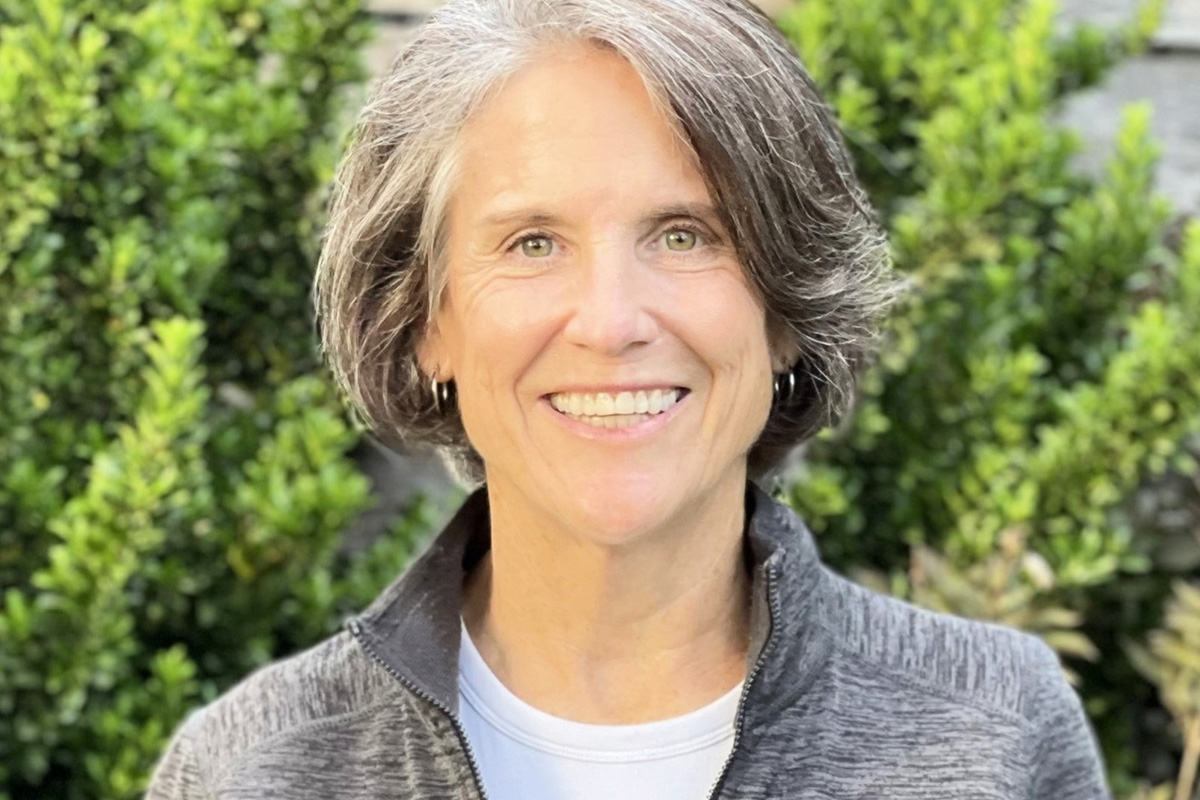
(Editor’s note: This is the first installment in a three-part series profiling the candidates for mayor of Rehoboth Beach, Del.: Commissioners Suzanne Goode, Susan Stewart, and Craig Thier; a fourth candidate, William Raak, filed to join the race but has not responded to Blade inquiries.)
Residents of Rehoboth Beach, Del. will elect a new mayor this summer after Stan Mills announced plans to retire after serving six years as mayor and 12 as a commissioner. One candidate who could make history is Commissioner Susan Stewart, who identifies as part of the LGBTQ community, a potential first for the town, which has never had an openly gay mayor.
Stewart is a current city commissioner for Rehoboth Beach and has served as a member of the Mixed-Use and Stormwater Utility Task Forces.
A Pennsylvania native who spent her adult life working in Washington, D.C., Stewart has owned a home in Rehoboth since 2013 with her partner of more than 20 years and began living there full time during COVID.
Stewart described her campaign as offering vision, leadership, and integrity. She has a background as an attorney and financial adviser.
She spoke about the work that she is doing as city commissioner that she would continue as mayor, specifically with Reimagine Rehoboth.
“I’ve been shepherding through a master planning initiative for the first time,” she said. “We’ve never really had an overall study with urban planners and transportation consultants.”
Stewart highlighted the upcoming ‘Charrette Week’ from July 13-17 when members of the community can learn about the city from urban planners and give their input on the planning initiative.
“We’ve got this natural beauty and we’ve got some things we can work on,” said Stewart. During ‘Charrette Week’, Stewart said that the community will also have the chance to rename ‘Reimagine Rehoboth’ due to the pushback it initially received.
“Getting the community engaged and united behind is the big goal,” said Stewart.
Stewart also mentioned that she is the liaison with Clear Space Theatre Company as it aims to build their own venue in town. She expressed hope in bringing this vision to fruition as she values the art and culture that the company brings to town.
“It hasn’t been lost on us that the Kennedy Center has sort of cut loose a lot of its patrons,” said Stewart.
Stewart also said she wants to increase age and racial diversity in Rehoboth through supporting the construction of more workforce housing.
“We don’t generally have [racial and age diversity] here. I wish we did,” said Stewart.
According to the 2024 census, the median age of Rehoboth in 2024 was 63 with 44% of the population being 65 and over. Additionally, 89% of the city’s population was reported to be white.
Stewart also said that she aims to maintain Delaware’s perfect score on the Human Rights Equality Index in 2025, which she credits to the work of the assistant city manager, Evan Miller, and CAMP Rehoboth for getting Rehoboth to be recognized.
“Rehoboth is a great place for our broader LGBTQ+ community,” said Stewart.
She also said that she is proud to support organizations like CAMP Rehoboth, which the city was able to give a grant to for the first time this year according to Stewart.
“The city and CAMP Rehoboth have such a productive and wonderful relationship.”
Stewart said that she wants CAMP to know that they are always welcome to reach out if they ever have issues that require help from the city.
“We’ll continue to have a very productive and warm relationship.”
The Blade also asked Stewart about her public disagreement with fellow City Commissioner and mayoral candidate Suzanne Goode in March of this year.
During a commissioners meeting on March 9, Stewart outlined allegations that Goode used derogatory language in emails, particularly toward City Manager Taylour Tedder.
“All of our emails are public information under FOIA. I simply asked the city to link them on the website, and then the city published a transcript of [Goode’s emails].”
Stewart said that she did this on behalf of the city’s employees such as Tedder: “We have a moral and legal obligation to support our employees.” She also said that this situation has escalated since the March 9 meeting.
At the meeting, Goode denied all of the allegations and said that they were based on falsehoods.
“The challenge with Suzanne Good is that she burns through so much time in a public hearing because she wants to talk about all these things in the past,” said Stewart.
If elected mayor, Stewart said that she would look into measures to help meetings run smoother and prevent disruptions such as turning off mics and moving public comment to the end of the meeting instead of the end of each topic.
“We want public input, but the people that come there for good reasons to talk about things that they need help with get drowned out by these disruptions.”
The election will take place on Aug. 8, from 10 a.m.-6 p.m. at the Rehoboth Beach Convention Center.
District of Columbia
SMYAL receives $25,000 award for ‘courageous acts’
D.C. group provides support services for LGBTQ youth
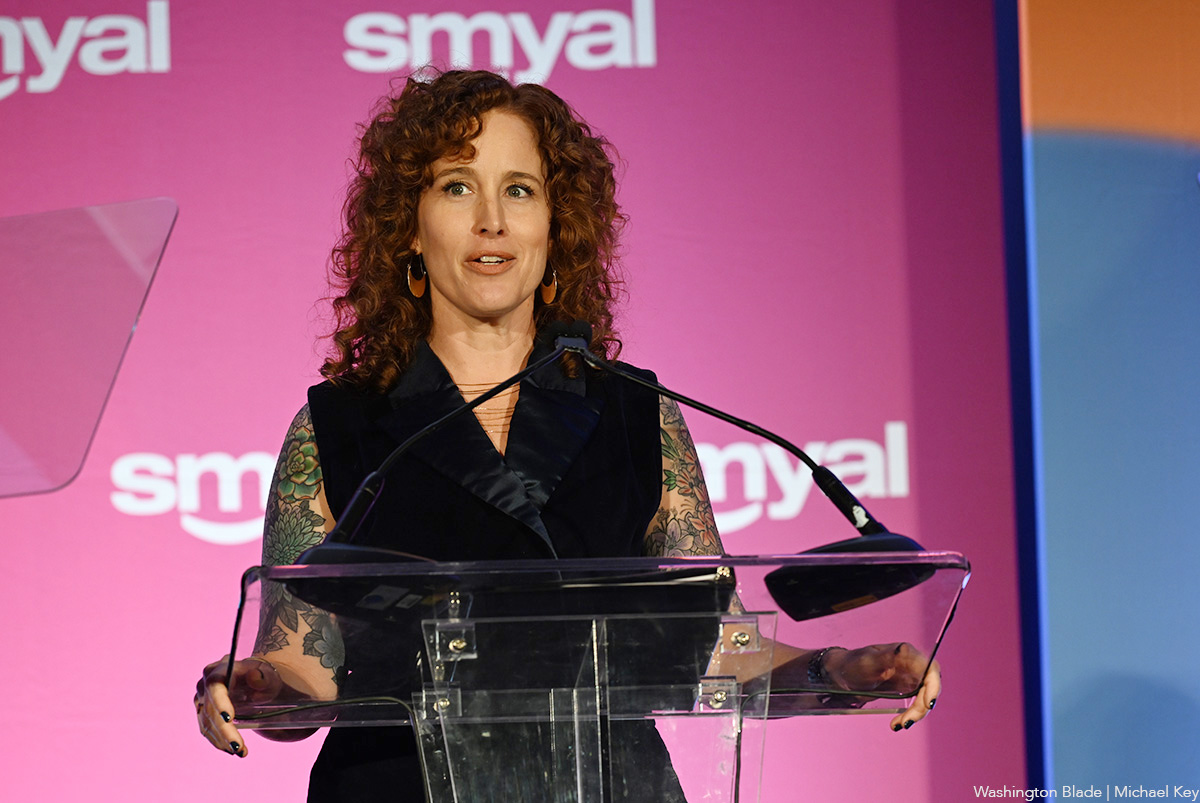
The D.C.-based organization SMYAL, which provides services for LGBTQ youth in the D.C. metro area, including housing for homeless LGBTQ youth, announced on June 30 that it received a $25,000 award for its “courageous acts” in support of the community it serves.
The award was a monetary grant from The Courage Project, which describes itself as a “national initiative investing in acts of courage and compassion that strengthens our communities and democracy.”
A statement on its website says it was launched in May 2025 and is funded and backed by leading national foundations in the U.S.
“At SMYAL, we are deeply grateful to receive support from The Courage Project and are inspired by their bold investment in LGBTQ+ youth at such a critical moment,” SMYAL CEO Erin Whelan said in a statement. “For queer and trans young people, simply showing up as themselves each day requires immense courage, and that courage is strengthened when organizations like The Courage Project stand behind them loudly, proudly, and without hesitation,” Whelan said.
In its statement announcing the award SMYAL says The Courage Project will recognize SMYAL and other awardees and their work on July 3 at the Washington National Cathedral as part of a special interfaith service marking the U.S. 250th anniversary.
“The Courage Project is a bold initiative honoring everyday acts of bravery – the quiet, often unseen acts of heroism that reflect the best of the American spirit and strengthen democracy at the community level,” the project states on its website.
Delaware
Delaware approves amendment protecting same-sex marriage
Measure must pass second vote in next year’s session

The Delaware General Assembly passed Senate Substitute 2 for Senate Bill 100 on the last day of the legislative session on Tuesday after being rescinded last week.
Senate Substitute 2 for Senate Bill 100 (SB-100) passed with 28 ‘yes’ votes, meeting the two-thirds threshold required for the bill to pass. Tuesday was the last day of the 153rd General Assembly.
The amendment would enshrine the right to same-sex and interracial marriage in the Delaware Constitution.
SB-100 was rescinded last week after it did not receive enough votes to pass. Democrats were short by three votes, with two Democratic members missing from the vote.
Rep. Josue Ortega (D-03) voted ‘no’ on SB-100 and Rep. Medinah Anton-Wilson (D-27) did not vote. However, both members voted ‘yes’ for Senate Substitute 2 for SB-100 on Tuesday.
Prime sponsor of SB 100, Rep. Claire Snyder-Hall (D-14), made the technical decision to change her vote last week from a ‘yes’ to a ‘no’ at the last minute to keep the bill alive.
Additionally, Republican Assemblyman Michael Smith (R-22) joined the Democrats with a ‘yes’ vote after voting ‘no’ on SB-100 last week.
In order for SB 100 to be enshrined into the state Constitution, it must be passed by two consecutive General Assemblies. Thus, the amendment will not be officially added to the Constitution unless it passes in the 154th General Assembly next year.
Rep. Snyder-Hall introduced the measure earlier this week.
“Just one week ago, we failed to pass this legislation. We failed the people of Delaware. But today, on the final day of the legislative session, the 153rd General Assembly affirmed that every Delawarean has the fundamental right to marry the person they love, regardless of race or gender,” said Snyder-Hall.
“Thank you to my colleagues for recognizing that the right to marry is a right worthy of protection and for voting yes on this important constitutional amendment.”

As Washington shifts right, Democratic Socialists gain ground

Susan Stewart could make history as Rehoboth’s first openly gay mayor

Silky Nutmeg Ganache talks sex and dating, gender, politics, weight loss journey

Madonna roundup: Reviews, sales, and love for ‘Danceteria’

Three overlooked court rulings limited White House anti-trans policies

‘Transcendent’ a tough but important read

Under-the-radar Delaware beach towns smart buyers are targeting

‘My Favorite Sociopath’ debuts at Shepherdstown’s CATF

In Trump’s divided America, Michael Weinstein’s AHF responds