Arts & Entertainment
Bill Nye bashes gay conversion therapy with ice cream
conservative outlets slam the animated short


(Screenshot via YouTube.)
Bill Nye the Science Guy explained the sexuality spectrum and slams the use of gay conversion therapy using ice cream cones on his Netflix series, “Bill Nye Saves the World.”
In an animated short titled, “Ice Cream Sexuality,” a vanilla ice cream cone invites the other flavors to ice cream conversion therapy.
“As vanilla, I feel that I am the most natural of the ice creams, and therefore, the rest of you should just go ahead and also be vanilla. It’s the one true flavor,” the ice cream cone tells the rest. He explains that they should, “pretend to be vanilla until they no longer have the urge to not be vanilla.”
The other flavors protest. Strawberry panics and pistachio explains he doesn’t have the urge to be pistachio, he just is that way.
Eventually, the other flavors convince vanilla they don’t have to change who they are and all the scoops dance together in a bowl.
Conservative media outlets took offense to the cartoon, including Megan Fox who wrote a column for PJ Media criticizing Nye.
“The message here is clear (and not at all scientific): Christian, straight white people are bigots, racists and not even straight,” Fox writes. “Bill Nye offers no proof of that, other than a poorly drawn cartoon about debauched ice cream.”
Daily Wire Editor-in-Chief Ben Shapiro posted a Facebook video slamming the video saying, “There is no scientific basis for anything that is in this video. Just on a scientific basis, ice cream does not have genitalia.”
Watch “Ice Cream Sexuality” below.




Sports
2 former NBA players launch cheap anti-trans stunt to exploit WNBA rules
Enes Kanter Freedom and Royce White are attempting to extend their finished sports careers through vague gender eligibility policy in the WNBA.

As transgender sports policy continues to make headlines, two former NBA players are attempting to use vague WNBA wording on players’ gender identity to extend their finished professional sports careers.
Enes Kanter Freedom and Royce White, two male former professional basketball players who have aligned themselves with the ‘far-right’ political spectrum, have announced that they plan to self-identify as transgender in order to meet the requirements to declare themselves eligible for the WNBA draft.
Freedom last played for the NBA in 2022, while White played his last professional game in 2018.
Both players have explicitly stated that this choice is an attempt to exploit the policy currently in place in the WNBA — one that assumes those who say they identify as transgender women are women — unlike what these two have done.
The WNBA’s collective bargaining agreement states that “only players who are women are eligible to play in the WNBA,” but it does not include more specific language about gender identity or sex assigned at birth, according to The Athletic, The New York Times’s sports publication.
Neither Freedom nor White has previously made any statements about being trans.
“If simply declaring who you are is all that’s required, then I meet every single requirement necessary to compete in the WNBA,” Freedom wrote on X. “Based on the current guidelines, I can and am officially declaring my eligibility for the upcoming WNBA draft in April 2027.”
Hours later, White made a similar statement to Fox News, emphasizing that this was solely an attempt to exploit the policy — an attempt at inclusion — and use it as a loophole to stay relevant in the sport he left in 2018.
“I’m transgender. I’m a woman. I identify as sometimes identifying as a woman for purpose of basketball, professional basketball, so I’ll be declaring for the WNBA draft in 2027 as well,“ White told Fox News. “I think I’d be unstoppable. But I’m a team-first guy. I’m a pass-first kind of player. I do the little things. I led my team in all five major stat categories at Iowa State University, so I do a little bit of everything. I’ll do whatever the coach needs me to do. I’ll do whatever the girls need me to do.”
White also said that he would be open to suing the WNBA if he were not allowed to be a part of the draft, while making transphobic comments about genitalia in the same breath.
“I think the WNBA could come out and make a definitive statement about guys with a pair of balls playing in the Women’s Association,“ White said, saying he doesn’t “want to be discriminated against.”
“I want fair treatment,” White continued while also using the opportunity to promote his run for the U.S. Senate seat in Minnesota. “I’m a young Black, hopefully United States Senator that would like a fair chance to participate as a sometimes-identifying-as-a-transgender-woman athlete.”
“We’re gonna have to have a huge legal battle about discrimination if I can’t play,” he added.
White has made multiple failed attempts to run for office as a Republican since leaving the NBA, with statements surrounding conspiracy theories and his support for Trump coming under fire.
He has faced court actions after falling behind on court-mandated child support payments and has faced family repercussions for his political activities.
White’s grandfather has distanced himself from White, stating: “There’s no way I can support my grandson supporting the GOP, and in essence, Trump.”
In response to Freedom’s X post and White’s announcement, the Women’s National Basketball Players’ Association, the players’ union for the WNBA, released a statement doubling down on its commitment to inclusivity in the sport.
“We embrace justice, equity, diversity, and inclusion. Those are the values that unite this Union and allow it to protect women’s sports while creating transformational change,” the statement said in a post on Instagram.
“Hate, abuse, and demonization of any person or group of people, including transgender people, only fuel fear, division, and harm. We will continue to have hard conversations,” the post continued. “But we will not be used as political pawns.”
The statement comes just days after WNBA Commissioner Cathy Engelbert sent a memo to teams attempting to address ongoing discussions around transgender athletes in women’s basketball.
“I know many of you have received questions in recent weeks regarding transgender athlete participation in women’s basketball, and I expect this topic will continue to receive significant attention,” Engelbert wrote in the memo, which was sent Friday afternoon and published in the Associated Press. “I wanted to reach out to share how we are approaching these conversations at the league office and to thank those of you who have responded to questions from the media with thoughtfulness and professionalism.”
“We recognize that this is a complex and nuanced topic, and we will continue to have important conversations with all of you and the Players Association in the weeks and months ahead,” Engelbert said. “We also plan to convene additional discussions and offer listening sessions for any team leaders who would like to participate. Your perspectives and feedback are invaluable, and I appreciate those who have already reached out to share their thoughts.”
The memo, which does not clarify whether the league’s stance on gender eligibility will change or what the ongoing conversations have looked like, comes as political figures — particularly those on the right — continue to fuel debates over transgender participation in women’s sports across the country and across sports.
Republican Florida Gov. Ron DeSantis also commented on the ongoing eligibility meetings the WNBA is holding, using the issue to criticize transgender participation in women’s sports.
“WNBA meeting to decide whether 2+2=4 or 2+2=5,” Desantis wrote on X on Saturday.
Indiana Fever player Sophie Cunningham voiced support for barring transgender girls and women from girls’ and women’s sports. Cunningham’s comments sparked small rallies and protests in Seattle and Portland when the Fever were on the road last week.
Despite the loudest voices — and those being covered by non-LGBTQ outlets — highlighting negative takes on transgender inclusion on female sports teams, multiple WNBA members have voiced their support for transgender women participating in sports.
Seattle Storm center Stefanie Dolson and Minnesota Lynx coach Cheryl Reeve have used their platforms to continue their vocal support for transgender women participating in sports.
“We need to protect trans kids,” Reeve said on Aug. 1. “To me, it’s a human rights issue. Every kid has a right to sports.”
A source familiar with the league told the Blade that the WNBA is not taking Freedom and White’s announcements seriously and is not entertaining what the source characterized as bad-faith efforts to demonize the transgender community. The source emphasized that there are no serious or immediate eligibility issues involving the two men and said their attempts to enter women’s sports do not represent an effort to protect women’s sports.
“The WNBA will not allow bad-faith publicity stunts designed to mock or demean others to dictate serious conversations about league policy,” the source told the Blade on Tuesday. “There are no immediate eligibility issues affecting the WNBA.”
Theater
Don’t miss summer productions at Clear Space in Rehoboth Beach
‘Cher Show,’ ‘Pretty Woman’ among season’s standouts
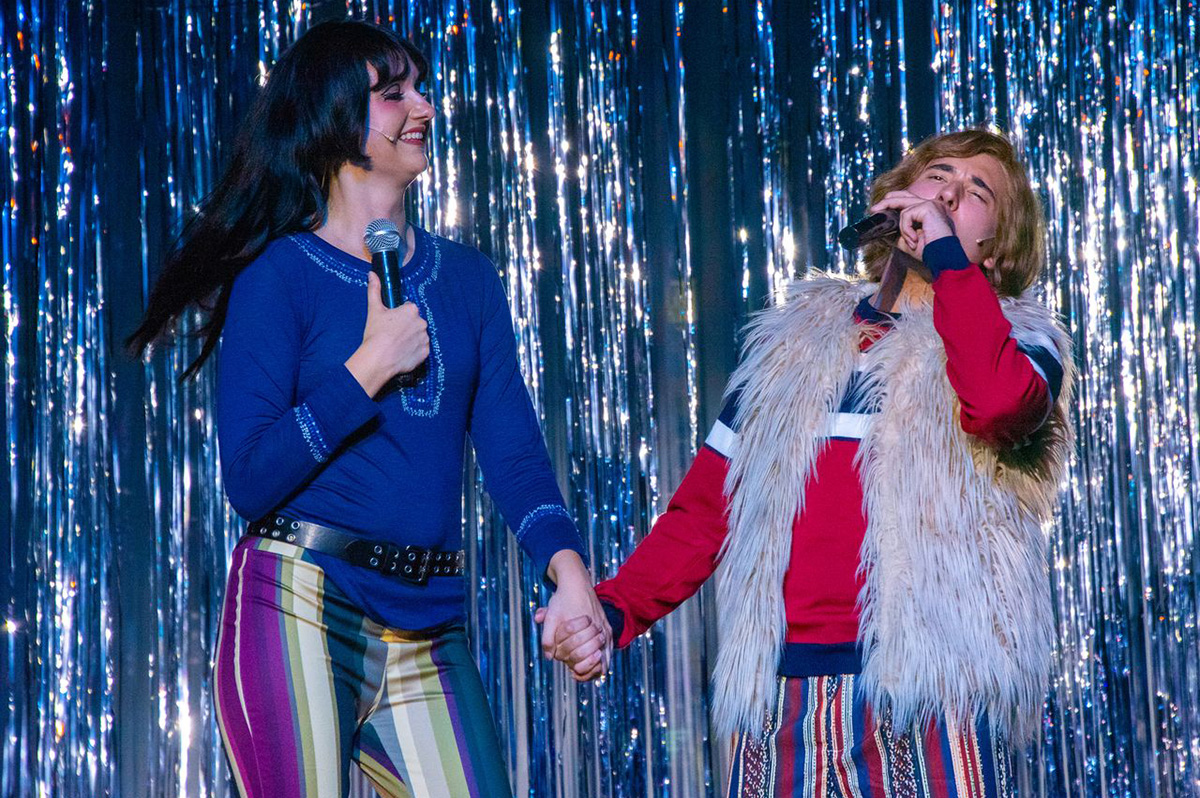
“The Cher Show” at Clear Space Theatre is wonderful. I am always amazed at the talent they attract for their summer series. Kudos to Wes Drummond, the artistic director of the theater. “The Cher Show” is written by Rick Elice. Compliments to the talented director, James FitzSimmons, who brought to life this production. His immensely talented cast includes Shannen Hofheimer as Star, Breanna Lemerise as Lady, Abby Lynne as Babe, and Anya Kay, as young Cher. Each is a pleasure to both watch and listen to. They command the stage. Then more kudos to the entire cast and ensemble. Also, the creative team, which includes among so many who make this show a hit, choreographer Shondelle Graulich; scenic designer, David Chappell; lighting designer Brendan Smith; costume designer Valerie Beardsley; and the entire orchestra led by conductor, Jerry Birl.
But the actor who I was looking forward to seeing in the production, was a young actor I had written about, and reviewed, when I saw him at Clear Space two years ago. In this production he is Sonny Bono, and he definitely didn’t disappoint.
Let me introduce Caetano de Sá. I have written about him before, but his resume is worth repeating. It says; Height: 5’7 ½, Eyes: Brown, Voice part: Tenor G2 – C5, Build: Athletic. All true. Then you add to this he speaks Brazilian Portuguese, is certified in stage combat by the Society of American Fight Directors, and is a 2nd Degree Black Belt in Taekwondo. Then as his resume of roles confirms, he can act, sing, and dance with the best. He does a great job as Sonny and is fun to watch on stage. Here he displays his talents as a singer and actor, and they are as good as I remembered them when I first met Caetano while he was still in school in 2024, and was starring as Frankie Valli in “Jersey Boys,” at Clear Space. At the time he was a rising senior at the Boston Conservatory at Berklee BFA Musical Theater program. I interviewed him, and Harry Sperduto, who played Tommy Devotee, after seeing them in the show, and being amazed by their talent. Since that time, I have followed their careers. When I heard Caetano was coming back to Clear Space for the summer, I reached out, and he agreed to sit down and chat, which we did. I knew Clear Space Theatre was planning a busy summer season. Their lineup of shows included “The Cher Show,” “Mean Girls,” and “Pretty Woman.” They always have talented casts, including the many college students who are getting their first chance to shine, which was the case for Caetano in 2024. Now he is back as a graduate, with more experience under his belt, a little more established. This season he was going to play Sonny in their production of “The Cher Show,” Martin/Coach Carr, in “Mean Girls,” and Mr. Hollister in “Pretty Woman,” and being a part of the ensemble. He told me he really enjoys being at Clear Space, and that his castmates are all talented. He is a lot more experienced than when he was here before, having performed in productions at the Prairie Repertory Theatre, the Emerald Coast Theatre Company, Firehouse Center for the Arts, and the Sullivan Rep, among others. In productions as diverse as “Oklahoma!,” “Mystic Pizza,” “Hairspray,” and “Rock of Ages.” He now lives in New York City and clearly New York is the perfect place for an aspiring actor. He has an agent at Bramante Artists, who is getting him gigs, like the one he had at 54 Below and even a TV commercial for AFLAC.
“The Cher Show” is the second show I have seen at Clear Space this summer. After our chat I got one of the last tickets available that evening for “Pretty Woman.” In that production he has a smaller role, and is part of the incredibly talented ensemble. It is also an entertaining show and its very talented stars, Abby McDonough as Vivian, and Jaiden Leo Riley as Edward, are a pleasure to watch. Kudos to the talented director, Ashley Williams, and the entire creative team.
For anyone living at the beach, or coming for a visit, I urge you to plan a night at Clear Space. You won’t regret it. But know tickets for all the shows, and Sunday evening cabaret nights, sell out fast. So, I suggest you see what’s available online and buy yours today.

The 2026 World Pride March was held on Saturday, Aug. 8 in Amsterdam. Tens of thousands of participants marched from Martin Luther Kingpark to the grounds of the Pride Village at Museumplein.
(Washington Blade photos by Michael Key)


View on Threads


View on Threads


View on Threads


2 former NBA players launch cheap anti-trans stunt to exploit WNBA rules

Same-sex couples challenges India income tax law

HISTORIC: Susan Stewart elected Rehoboth’s first out mayor

Todd Blanche’s record on LGBTQ issues comes under scrutiny as he takes over DOJ

Don’t miss summer productions at Clear Space in Rehoboth Beach

Calendar: August 7-13

Greg Araki still wants your sex

Insured on paper, excluded in practice

Mr. Henry’s to host 60th anniversary party