News
Jared Polis announces bid to become Colorado governor
Out congressman could be first openly gay person elected governor
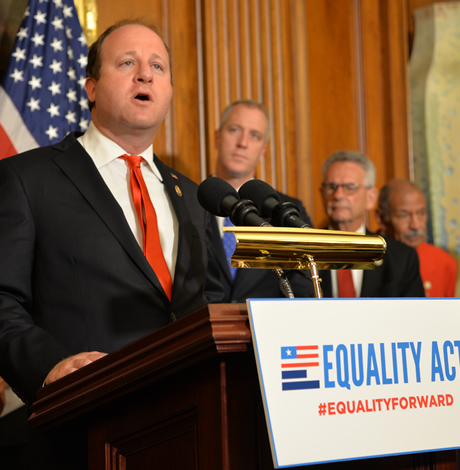
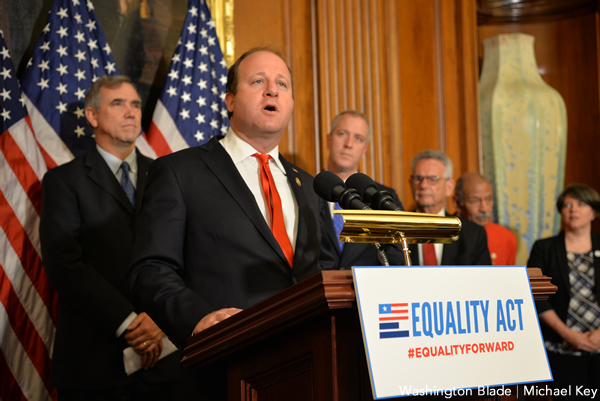
Rep. Jared Polis (D-Colo.) is running for governor of Colorado.
(Washington Blade file photo by Michael Key)
The most senior out member of the U.S. House on Sunday announced his intent to run for governor of Colorado. If successful, he’d be the first openly gay person elected governor in the United States.
Rep. Jared Polis (D-Colo.), who’s served in Congress since the start of the Obama administration in 2009, said in an email to supporters he’d formally declare his bid Monday to become governor and to succeed retiring Gov. John Hickenlooper.
“I’m running to be your next governor because I want to turn bold ideas into real results for your family,” Polis wrote. “Colorado can lead the way into the future and, together, we can build an economy that works for everybody — not just those at the top.”
Included in the email blast is video featuring Polis as well as supporters — the owner of Jones’ Scones, a graduate of the New America School founded by Polis, a teacher and a former state senator.
“My life has been about taking big ideas and turning them into results,” Polis said. “I’m running for governor to preserve what makes Colorado special. We’re working to make sure our state works for everyone, not just a few.
Among the goals cited by Polis are making Colorado “completely energy independent” and ensuring the state entirely runs on renewable energy by 2040 with green energy jobs that he says can’t be outsourced overseas. Polis also pledges free full-day preschool and kindergarten for Colorado and “an inclusive economy where workers make more, not just CEOs.”
As a member of Congress, Polis took the lead on legislation seeking to enhance LGBT rights, such as the Employment Non-Discrimination Act and the Student Non-Discrimination Act. Polis is a co-chair of the LGBT Equality Caucus and a co-sponsor of the Equality Act.
If Polis were to succeed in his bid to become Colorado governor, he’d be the first openly gay person elected governor in the United States and the only sitting openly gay governor.
However, the more general milestone of an openly LGBT person winning election as governor has been achieved. Last year, Oregon Gov. Kate Brown, who’s bisexual, won election after being appointed to the position in 2015 following the resignation of her predecessor.
Another governor came out as gay after having been elected and serving in office. In 2004, New Jersey Gov. Jim McGreevey, came out as gay prior to resigning amid scandal involving an affair with a male aide.
Polis might have some competition for the distinction of becoming the first openly gay person elected governor. In Maryland, gay State Sen. Richard Madaleno (D-Montgomery County) has declared his candidacy to unseat Gov. Larry Hogan (R). In Connecticut, State Comptroller Kevin Lembo, who’s gay, has opened an exploratory committee to run for governor, but hasn’t made an official declaration.
Polis is running in a crowded field for the Democratic nomination. Other Democrats vying for the nomination are former State Sen. Michael Johnston, Denver businessperson Noel Ginsburg, U.S. Rep. Ed Perlmutter (D-Colo.), former Colorado treasurer Cary Kennedy and businessperson Moses Humes. The primary will take place on June 28 next year.
On the Republican side, declared candidates are Arapahoe County District Attorney George Brauchler, Larimer County Commissioner Lew Gaiter, former State Rep. Victor Mitchell, businessperson Doug Robinson and retired banker JoAnne Silva.






The Comings & Goings column is about sharing the professional successes of our community. We want to recognize those landing new jobs, new clients for their business, joining boards of organizations and other achievements. Please share your successes with us at [email protected].
Congratulations to Leigh Miles Jackson, Ph.D., named executive director of The Institute for Health Research & Policy at Whitman-Walker, and Angel Earle, Ph.D. named as chief operating officer, Whitman-Walker Health System.
Upon her appointment Dr. Jackson said, “Under my leadership, I would love for The Institute for Health Research & Policy at Whitman-Walker to be known as a trusted, forward-looking research organization that shapes policies, strengthens practices and creates measurable change for the community.” Dr. Jackson spent 12 years with the National Academies of Sciences, Engineering and Medicine, leading national initiatives on minority-serving institutions and economic evidence for investments in children, youth and families. Dr. Jackson holds an extensive educational background, including postdoctoral fellowships in developmental Psychology and Neurogenomics from Vanderbilt University, a Ph.D. in molecular and systems pharmacology from Emory University and a bachelor’s degree in chemistry from Wake Forest University.
Upon her appointment Dr. Earle said, “When we talk about parity and inequities and research, it’s never just about the dollars that are out there. It’s about making sure that we’re cultivating a change that embraces equity at the heart of everything that it does. As the COO for Whitman-Walker Health System I will be working closely to support The Institute for Health Research & Policy at Whitman-Walker and the Whitman-Walker Foundation to drive advancement in research and support the strategic goals of all of the Whitman-Walker Heath System entities.”
Dr. Earle is a genetic epidemiologist and senior executive. She brings a background from the London School of Economics and the University of South Carolina, with expertise in global health, corporate strategy and socioeconomic policy. She has co-authored peer-reviewed research on cancer genetics, nephrology biomarkers and reproductive genomes.
Dr. Heather Aaron, CEO of Whitman-Walker Health System said, “both leaders bring research-driven expertise and operational strength to the organization as it continues expanding research, health care access, and health outcomes for residents across the Washington, D.C., region, including the LGBTQ+ community, people living with and at risk for HIV, and communities experiencing persistent health disparities.”
The Institute for Health Research & Policy at Whitman-Walker is also expanding its research agenda beyond HIV to address the complex health conditions affecting people living with and at risk for HIV, as well as the broader communities The Institute for Health Research & Policy at Whitman-Walker serves.
District of Columbia
Former Capital Pride board member reiterates sexual harassment allegation
Trans activist says resignation of board chair won’t change org’s culture

Taylor Lianne Chandler, who earlier this year resigned from the Capital Pride Alliance Board of Directors after expressing concern that the board failed to address instances of “sexual misconduct” within the Capital Pride organization, said this week she doesn’t believe her concerns will be addressed following the resignation of the board’s current chairperson.
Capital Pride Alliance serves as the lead organizer of D.C.’s annual LGBTQ Pride events.
Anna Jinkerson, who has served as chair of the Capital Pride board for only 10 months and has served on the board for the past four years, confirmed she is resigning from the board effective Sept. 30.
In a statement to the Washington Blade commenting on the possible impact of Jinkerson’s resignation, Chandler said Capital Pride board member Natalie Thompson would be replacing Jinkerson as board chair, and she didn’t expect that change to impact what she called Capital Pride’s problematic “culture.”
But Ryan Bos, the Capital Pride president and CEO, told the Blade that Thompson had not been selected as the new board chair and that a new chair would not be selected until the board holds an election scheduled for October.
Chandler, who identifies as transgender, said it was a Capital Pride board member who told her that Natalie Thompson had been or would be selected as the new Capital Pride board chair. She didn’t identify the board member.
“My concerns about how Capital Pride has handled serious allegations of sexual misconduct have not disappeared with a change in leadership,” she told the Blade in her statement. “When leadership continues to socialize, smile for photographs, and share spaces with someone facing serious allegations, what message does that send to the people who say they were harmed,” she said.
Chandler has told the Blade a Capital Pride investigation identified an individual implicated in a “pattern” of sexual harassment-related behavior but said she was bound by a Non-Disclosure Agreement that applied to all board members and she could not provide further details.
When asked by the Blade to comment on Chandler’s allegations at the time she resigned from the board in February of this year, board chair Jinkerson said Capital Pride acts “quickly and appropriately” to address concerns such as those raised by Chandler. But she and other Capital Pride officials did not at that time or since then specifically acknowledge whether someone associated with the organization engaged in sexual harassment.
“The community deserves transparency, accountability, and leadership willing to make difficult decisions,” Chandler said in her statement to the Blade this week. “Changing the chair doesn’t change the culture,” she added. “Actions do.”
In response to a request from the Blade for an update on its response to Chandler’s allegations about alleged sexual misconduct within the Capital Pride organization, Bos sent the Blade a statement on behalf of Capital Pride.
“The Capital Pride Alliance takes allegations of harassment, misconduct, and unsafe behavior seriously,” the statement says. “The organization follows standard procedures and engages appropriate resources to support a thorough, confidential, and impartial review, when information is reported.”
The statement adds, ”Because these matters require maintaining confidentiality and protecting the privacy of personnel, volunteers, and governance processes, we will not comment on specific individuals, allegations, investigative findings or communications involving law enforcement.”
It concludes by stating, “We remain committed to fostering a safe, respectful, and inclusive environment, appropriately addressing concerns raised, and continuing to strengthen our policies, governance practices, and organizational culture.”
Although the statement refers to “communications involving law enforcement,” Capital Pride has not disclosed whether instances of alleged sexual harassment or, as stated by Chandler, a possible instance of sexual assault, have been reported to D.C. police.
A D.C. police spokesperson, in response to a Blade inquiry, said they have no record of a sexual harassment or sexual assault complaint surfacing from the Capital Pride office, which is located in the D.C. LGBTQ+ Community Center building at 1827 Wiltberger Street, N.W.
Officials at Capital Pride recently exchanged testy public Facebook posts with Chandler. June Crenshaw, COO of Capital Pride Alliance, criticized Chandler for her social media posts on the matter.
“It is remarkable to watch people publicly accuse others of failing to create safe spaces when, during the time they themselves held positions of leadership and significant volunteer responsibility, they claim to have witnessed deeply troubling behavior, yet never reported what they allegedly witnessed to fellow leaders, law enforcement, the Office of the Attorney General, legal counsel, or staff responsible for addressing such concerns,” Crenshaw wrote. “When I became aware of allegations or personally witnessed conduct that required intervention, I reported what I knew through the appropriate channels, including to law enforcement and other relevant authorities. Investigations were conducted. Those processes created records, documentation, correspondence, timelines, and conclusions.”
Chandler responded, “I was NOT in organizational leadership or fully informed about the scope of these allegations when much of what you reference occurred. I was read into the situation after becoming an executive officer. By that point, the investigation had already concluded, and we were awaiting the final report. … Once that report became available to me, and once I understood the seriousness and scope of what was being alleged, my position was anything but ambiguous: I did not believe this individual should be welcomed at, participate in, or have access to official Pride events.”
Capital Pride’s attorney Nick Harrison then joined the exchange, accusing Chandler of violating confidentiality rules.
“You served on the Board for years. You cannot now present yourself as an outsider with no responsibility for what occurred during your tenure,” Harrison wrote. “When the situation became difficult, you resigned, provided your resignation letter to the media, disclosed confidential organizational matters, and recast yourself as the victim.”
Again, no one has publicly identified the person Chandler references as being welcome at Pride events and photographed with Capital Pride leadership.
New York
Grace Meng sharply criticizes DOJ over hospital settlements
N.Y. congresswoman spoke with the Blade this week
Few things have riled up Republicans in power like the ongoing fight to restrict gender-affirming care for minors.
The Trump-Vance administration has been clear in making the fight against transgender rights, healthcare, and visibility a priority as they enter their “lame duck” phase of the presidency.
With the midterms looming, they are hoping scapegoating trans children — as they did in 2020, only for it to grow into a core national party strategy in the following elections — will save them from a less-than-secure control of the federal government like they’ve had since Trump took office.
In the past year, numerous deals have been struck between hospitals that have provided gender-affirming care to minors and the Justice Department to halt any further care.
While Republican pundits and conservative voices continue to accuse these hospitals — like NYU Langone and Mount Sinai Health System — of committing what they contend are atrocities against these children, large portions of gender-affirming care for minors involve social transitions and puberty blockers, which are reversible.
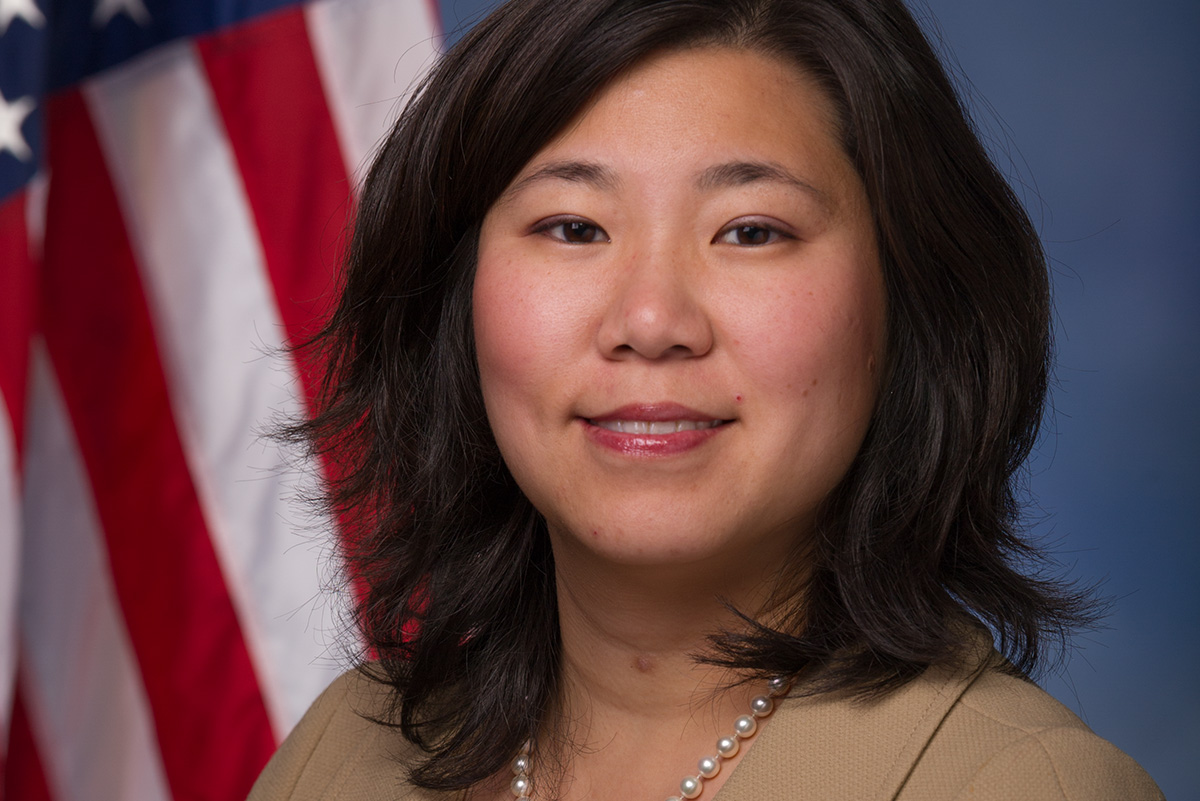
The Washington Blade spoke with Congresswoman Grace Meng, who represents New York’s Sixth Congressional District and is the ranking member of the House Appropriations Subcommittee on Commerce, Justice, Science, and Related Agencies, to discuss whether these ongoing settlements between hospitals and the Trump-run Justice Department are legal.
In her role as the ranking member of the House Appropriations Subcommittee on Commerce, Justice, Science, and Related Agencies, Meng oversees funding for Justice Department and a slew of other federal agencies. The position gives her the power to look behind the coercion, examine how things are being done, and question the policies and actions of these federal powers in a way many other members of Congress cannot.
Meng said the Justice Department’s actions against hospitals providing gender-affirming care are part of what she sees as a broader pattern of institutions — under the control of this president — targeting LGBTQ people.
“Unfortunately this is not the first time that the DOJ is weaponizing the agency to target our communities, and our LGBTQ+ community, especially our young people, are unfortunately yet another victim of that,” Meng told the Blade. “The real victims are the actual patients and families who are losing a trusted provider.”
She argued that one prong of this ongoing situation is the way the DOJ is going about these “wins” — through pressure rather than through going to court to find actual wrongdoings.
“This DOJ knows that they can’t win in the courts based on the merit of these types of actions, so they are just working by bullying and using coercion to cheat their way through getting what they want,” she said.
She pointed to the use of litigation, subpoenas, and reputational damage against the hospitals as part of that pressure campaign.
“They know that they can’t prove any wrongdoing in court, so they’re just using the threat of prolonged litigation, subpoenas for patients’ records and trying to damage reputations of these institutions as they’ve been cutting funding for them.”
The hospitals involved so far include NYU Langone Hospitals in New York, University of Pittsburgh Medical Center in Pennsylvania, the Mount Sinai Health System in New York, the Cleveland Clinic Foundation in Ohio, Connecticut Children’s Hospital in Connecticut, and Texas Children’s Hospital in Texas.
Meng said the settlements are part of a broader strategy by the Justice Department.
“This is a part of their larger deliberate strategy across the country. They’ve obviously gone after NYU Langone. They’ve gone after Mount Sinai in my state, and they’re doing this in other states as well.”
When asked about the agreements being reached between the Justice Department and hospitals, Meng was direct.
“I think these are forced settlements. Absolutely,” Meng said.
Meng described the federal government’s involvement in individual trans healthcare decisions as an intrusion into private medical decisions.
“This is cruel. It’s a cruel form of coercion. It’s a form of cheating,” she went on, comparing this to the ongoing fight for reproductive freedom in the country. “Just like when we’re talking about reproductive rights, right? It’s an invasion of privacy. These are confidential patient records.”
Meng said the federal government should not be involved in decisions between families and their doctors.
“President Trump and the federal government do not belong in a hospital, helping to make decisions that are very personal and sensitive to every single family. They should not be involved in these decisions.”
She said the settlements could leave families without access to healthcare they need.
“Their way of forcing these settlements and leaving so many without the healthcare that they really need is really just devastating.”
Meng said the impact is already being felt by families in her district and across New York.
“The human impact, the impact on our families, on our constituents here in Queens and throughout New York, is really hurtful.”
Meng framed the issue as part of what she described as a larger pattern within the Trump-Vance administration of attacking the most vulnerable.
“If you ask me to sum up this administration in one word, it would be cruelty,” she said. “They feel like they have a right to decide who is American enough in this country, and who is good enough, and who is deserving enough.”
She went further, saying Trump is “literally acting as a dictator.”
She contrasted his leadership with that of a traditional public servant.
“Most public servants wake up every day thinking of ways that they can make people’s lives better, how they can help people. This administration and this action is no different. It wakes up and thinks of a new way to target a different community every day.”
As the ranking member of the House Appropriations Subcommittee on Commerce, Justice, Science, and Related Agencies, Meng said Congress has tools available to examine how the Justice Department operates and spends federal money.
“The purpose of our 12 subcommittees is to have direct oversight and leverage as Congress members, as the third branch of government, over how the Department of Justice spends our taxpayers’ money.”
One crucial thing Meng pointed out about being on this committee is the fact that much of the work of appropriations is bipartisan and is entirely within the power of Congress via the Constitution.
“We need the White House to respect the constitutional process that the Appropriations Committee goes through,” she said. “We write the Appropriations Law. It’s between Republican and Democratic Congress members.”
When asked about the funding from the settlements — and the continued funding for an increasingly looked-down-upon DOJ — she said she is seeking greater transparency into how federal money is being spent.
“I think that both sides will end up wanting more transparency into the money, how the money is spent.”
Meng said Congress has the legal authority to place requirements on the Justice Department through appropriations legislation.
“We have the legal authority to include language that helps write the DOJ and other agencies, but the DOJ’s budget, and so we will certainly exercise that authority whether or not we’re in the majority.”
She also pointed to the possibility of Democrats taking control of the U.S. House of Representatives after the midterms.
“Hopefully, as we’re in the majority after November, we will be able to have more teeth and more ability to apply that pressure and to write the bill in a way that is transparent and doesn’t harm our families.”
Despite the growing public agitation and disappointment over these settlements, Meng said there is not yet a specific schedule for congressional hearings on the issue, but that it may come after the midterms.
“We don’t have a timeline of hearings and specific topics, but CJS is everything under Commerce, Justice, and Science-related agencies,” she said. “Hopefully, when House Democrats control the House and maybe even the Senate, that we’ll be able to claw back some of their overreach.”
Meng also criticized what she described as a Justice Department operating outside the traditional boundaries of the agency.
“They can’t operate as a rogue agency or as a personal law firm of this president, in the way that they’re doing now. Using subpoenas, threatening prosecutions, these settlements — they are tools that are being used, I believe, unethically and illegally.”
Meng said trans children and their families could continue to face the consequences of the administration’s actions as the Justice Department expands its efforts.
“These are maybe low-hanging fruit or easy targets for the administration, but I can see them going after institutions in other states as they started to do as well.”
She said members of Congress have a responsibility to reassure affected families that they are not alone.
“Our job, whether it’s a representative for my Queens families, but for families across America too, is to let them know that I and my colleagues, many of my colleagues, are standing with them.”
“We are still with them, especially with the patients and the families affected by the NYU Langone deal, but any of these institutions and how they’re hurting them.”
Meng said she wants to achieve that through partnerships outside of government.
“We’re gonna do our best to expand partnership with organizations on the ground to make sure that they’re getting the support and the care that they need.”
While talking to the Blade, Meng also raised broader concerns about the relationship between Congress and the executive branch.
“This administration has definitely not followed the Constitution, and I know that there are pending lawsuits,” she said.
Just this week, the Trump-Vance administration was taken to court over what CNN, POLITICO and MS NOW alleged were violations of their First Amendment rights.
Meng said the administration has not treated Congress as an independent branch of government.
“They [the president] do not act as if Congress is a third branch of government. They think and act like Congress works for them, like they’re a part of their agencies that they’re weaponizing.”
Meng said she believes the public has become more aware of the administration’s actions, but that there is still work to do in explaining how those actions unfold.
“I think that the American people’s eyes have been opened a little more under this administration than in past ones … There’s definitely more room to continue to educate the public as to what this administration is doing.”
For Meng, the debate over trans healthcare ultimately comes down to the families affected by the decisions being made in Washington.
“What’s most important is not just the legalese that everyone’s debating these days when news like this comes out. We have to remember that there are real human beings, real families that are being impacted,” she said. “There are people crying behind closed doors in their homes, and they don’t know literally what they can do or where they will call next to get the care that they need and that they want.”
Meng said lawmakers have a responsibility to address the issue legislatively while also supporting families in their communities.
“It’s our job in Washington, in the capital, to fight these fights legislatively. But in our home districts and in our communities, it’s our job to reassure these families that we’re there for them, and that we’re going to be creative, and we’re going to find new partnerships and expand existing ones to make sure that our families have a path forward.”
She said local and state governments are also being forced to find ways to respond — and, in many cases, end up being some of the only places where protections can happen.
“Our local legislators and many of our communities, on the city level, municipal level, and the state level, they’re looking for more funding options, and a lot of them, including in New York, have had to step up in major ways.”
“Everyone has to step up in newer and more creative ways.”
Ultimately, Meng said the focus should remain on the families affected by the decisions.
“But at the end of the day, it’s the families that are impacted that we’re doing this for,” she said.
The Human Rights Campaign, the largest LGBTQ advocacy group in the U.S., issued a statement this week following the announcement of more settlements.
“This is nothing less than a crisis for families and transgender youth. Since day one, Trump and his callous administration have used the full force of the federal government to come after transgender young people, their families and their doctors — and far too many hospitals are complying and abandoning their patients. Now, even in states with policies that protect transgender people, the options for parents to get their children best-practice, and potentially life-saving healthcare, are dwindling day by day,” HRC President Kelley Robinson said.
“This is the exact outcome Trump wants to see — and this cruelty shouldn’t be lost on anyone who has ever had to make difficult decisions about how to safeguard their child’s health and well-being. Our thoughts are with the countless families across the country who feel scared and under siege. We will not stop fighting until everyone can have access to the healthcare they need.”
While the Blade had her, they also asked about House Speaker Mike Johnson (R-La.), and his decision to send members of Congress home rather than hold a vote on impeaching Defense Secretary Pete Hegseth, in part over his trans military ban, which has left thousands of highly skilled, ready and able workers sitting on the sidelines awaiting the courts to tell them if they are guaranteed the right to fight on behalf of the country.
“I can’t take credit for this, but someone called it the Hegseth holiday,” Meng said. “This speaker, every time there’s a tough vote, instead of acting as a leader and a speaker, he just calls it quits and he sends us home.”
“I believe — and I’m sure he does — that we had enough votes to impeach Hegseth, and he didn’t want to do it. So off we go.”

‘Lizzie Borden’ might be the best ‘Monster’ yet

Comings & Goings

Tyler Clementi Foundation to host fundraiser in Rehoboth

Calendar: September 25-October 1

Former Capital Pride board member reiterates sexual harassment allegation

For lesbian victims of domestic violence, competent care is scare

United States Conference on HIV/AIDS grapples with federal budget cuts

UN human rights chief sounds alarm over ‘comprehensive onslaught’ against LGBTQ rights

Gov. Whitmer to serve as keynote speaker for Saturday’s HRC National Dinner

Washington Blade responds to concerns over White House pool duties
-

 National4 days ago
For lesbian victims of domestic violence, competent care is scare
-
Health4 days ago
United States Conference on HIV/AIDS grapples with federal budget cuts
-
United Nations5 days ago
UN human rights chief sounds alarm over ‘comprehensive onslaught’ against LGBTQ rights
-
LGBTQ Non-Profit Organizations4 days ago
Gov. Whitmer to serve as keynote speaker for Saturday’s HRC National Dinner