Opinions
Jim Acosta should grow up, stop whining
Privileged CNN reporter steaming mad no one will call on him
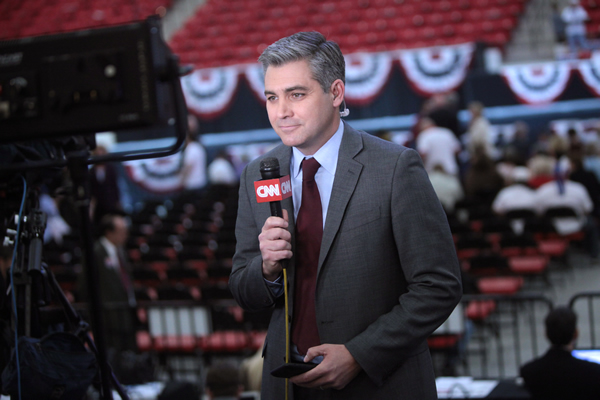
Boo-hoo, no one wants to call on Jim Acosta. (Photo by Gage Skidmore; courtesy Flickr)
CNN’s Jim Acosta is playing right into Trump’s hands by whining that Sean Spicer and Sarah Huckabee Sanders won’t call on him during White House briefings.
Acosta has shouted questions out of turn, complained on camera and all but stomped his feet as the White House has banned cameras from the briefing room on several occasions and subsequently stopped calling on him. It’s been irresistible fodder for right-wing agitators like Rush Limbaugh, eager to further demonize mainstream media. Sadly, those critics are right.
Of course, what Trump’s communications team is doing should be condemned; they are deliberately undermining the traditions of interacting with the press in hopes we will go away or talk about something other than Russia.
Acosta has suggested reporters walk out in protest, whining about his treatment and suggesting fellow reporters should band together and have his back.
Sorry, Jim, but a little perspective here. You have a front-row seat in the briefing room and always will. Some of your colleagues in that room don’t even have a chair. When was the last time you took a stand for one of them?
When George W. Bush won re-election in 2004, the Washington Blade’s White House credentials were revoked and we were kicked out of the briefing room. Did CNN — or anyone else — rush to our defense? Of course not.
Instead of whining about it, we regrouped and found other ways to cover a hostile administration, namely by cultivating sources outside the official spokespeople who wouldn’t talk to us. It’s something the Washington Post and New York Times are doing with gusto, battling to the death to see which publication can take down this administration. Acosta would be wise to follow that lead rather than sit back waiting for Spicer to talk again.
No one said journalism would be fun or easy. No one owes Acosta a scoop or newsworthy tidbit of information wrapped in a bow and served on a silver tray. The briefings are too important to boycott and such action would backfire, with even fewer opportunities to get on-the-record statements from officials.
Welcome to our world, Jim. A briefing room in which you spend hours — in the Blade’s case, years! — waiting to be called on by hostile spokespeople. Pull up your big-boy britches and get to the work of journalism. Show up every day. Refuse to go away. Defy and outlast your tormentors. If you need advice on how to do that, give me a call.
Kevin Naff is editor of the Washington Blade. Reach him at [email protected].


Opinions
Corporate LGBTQ Pride 2026 on life support
A rainbow washout as marketing dollars disappear
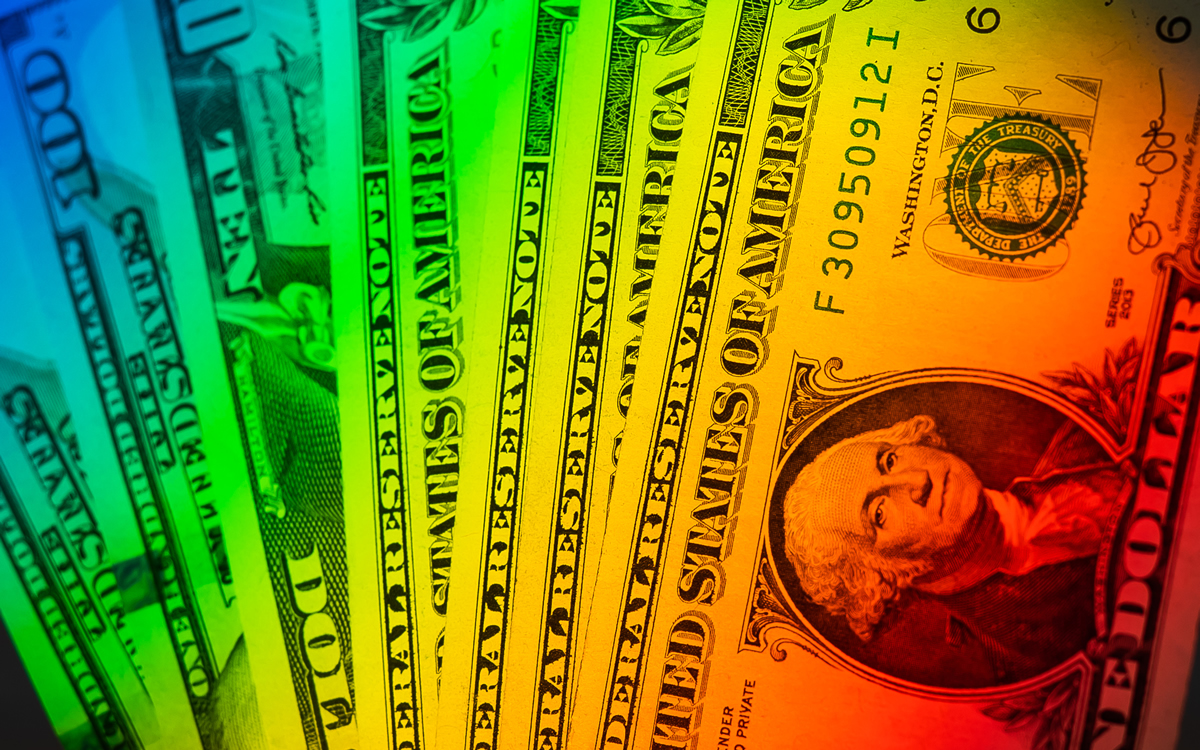
Terrified of becoming targets of right wing media and activists, businesses and brands are fleeing Pride support in 2026. The fear of boycotts and retribution have seen Pride sponsorships plummet to previously unseen levels. Further, there is now a complete corporate reevaluation of marketing and advertising activities in the LGBTQ consumer sector writ large.
No more rainbow washing. For the past 30 years, corporations have literally wrapped their brands in rainbow colored monikers during the month of June. This practice, know as “rainbow washing,” sought to ingratiate companies with the over $1 trillion LGBTQ consumer segment. From rainbow filled Oreos to rainbow wrapped Burger King Whoppers, brands actively engaged in developing relationships with this coveted consumer. Now, it’s considered taboo.
No more multi-million dollar beer sponsorships in the aftermath of the Bud Light disaster. For the first time since the over 100 Pride festivals accepted marketing opportunities, major brands including Bud Light, Miller and Corona have decided that reputational risk, boycotts and the like are more dangerous than the commercial reward. Their non-participation and the significance of this loss cannot be overstated.
When right-wing bloviators co-opted the meaning of the word woke, they turned a positive definition into a pejorative. Now, corporations and brands are petrified of being labeled as woke, and in turn, are curtailing marketing outreach to niche consumer segments, LGBTQ included.
Anti-woke legislation has now appeared in a multitude of states, primarily around transgender issues. Bathroom bills, as they are known, are ubiquitous. Boys playing in girls sports,is portrayed as a national emergency. These issues are a constant presence on social media as well as at every level of government, and have had a major impact on LGBTQ-related corporate activities.
But perhaps most devastating, is the federal government effort to enact elements of the right-wing’s Project 2025 agenda, seeking to eradicate DEI at every level. Companies, universities, and nearly all institutions that previously championed diversity, equity, and inclusion, have rapidly and radically disbanded and defunded all DEI efforts and activities within their organizations. Discontinuing supplier diversity initiatives, defunding support for internal ERG’s (employee resource groups), and decamping from participation in HRC’s (Human Rights Campaign) Equality Index. Importantly, this index is considered the gold standard for corporate DEI evaluation, and its repudiation is having a profound effect on corporate behavior.
DEI is now in the ICU on life support, with little chance of resuscitation. Companies that once embraced DEI have retreated in fear, in spite of critical positive facts. In 2023, McKinsey and Company, no bastion of liberalism stated, “that for five years, our research has shown a positive, statistically significant correlation between company financial outperformance and diversity, on the dimensions of both gender and ethnicity.”
What happens next is unknown. We have entered uncharted territory where the confluence of so many factors is having negative effects. June 2026 has seen many companies severely curtail or fully exit partnerships with Pride organizations and LGBTQ marketing programs in general, citing among other things, economic concerns. However, no company can honestly deny that overall fear and the increasingly hostile climate for DEI and LGBTQ issues have prompted brands to rethink their overall support and initiatives. This, despite pressure from stakeholders and shareholders, and vital employee recruitment and retention efforts.
Political winds have outcomes. It would be naïve to think that there might be an immediate rethinking should the Congress or presidency change parties. Business cycles, though more agile than government, take longer to work through. Years, not months. So just as quickly as “rainbow washing” has come to a precipitous end, so too is the arrival and reckoning with the blistering Rainbow Washout.
Andrew A. Isen is the founder and president of WinMark Concepts, a D.C.-based marketing and communications firm. For 35 years, WinMark has been advising companies and brands on defining and developing effective LGBTQ business strategies.
Opinions
Cowardly corporations abandon LGBTQ America
Execs are hiding in the closet this Pride season. Should we ever welcome them back?
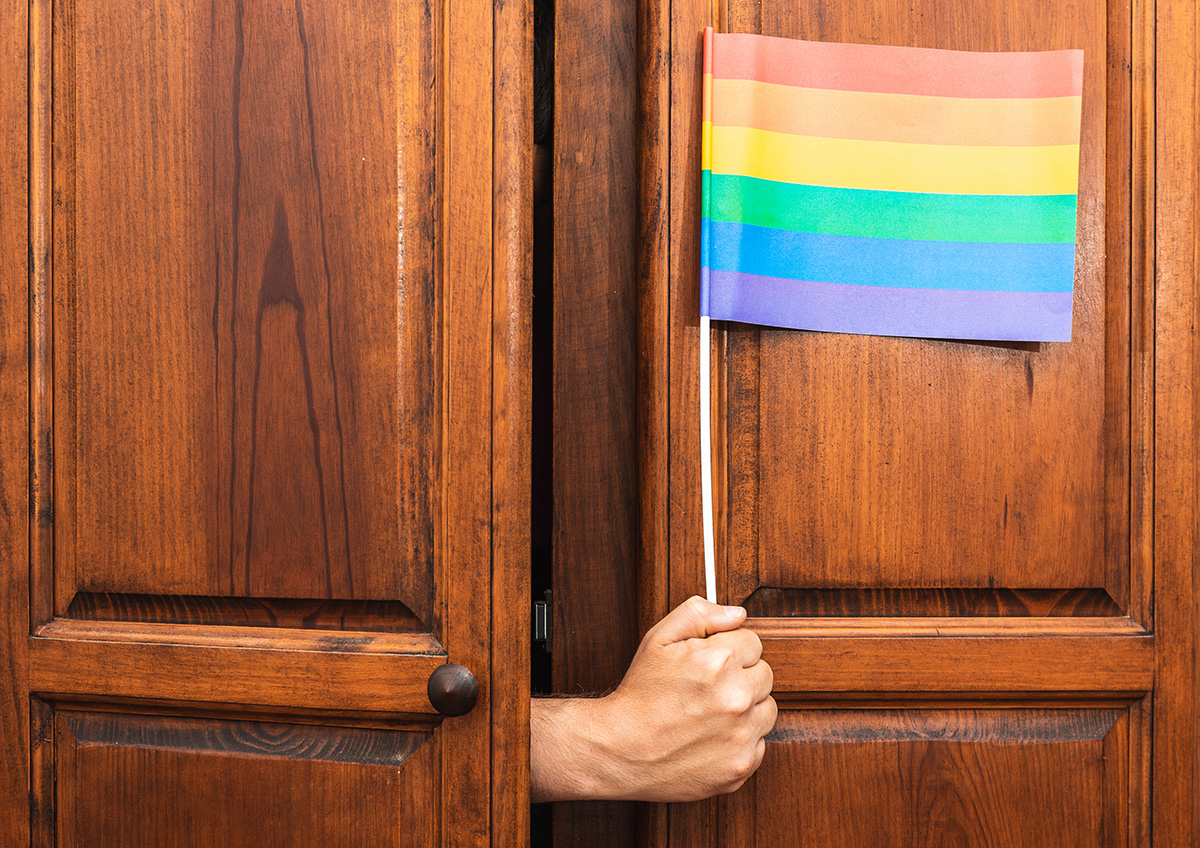
I had a thought provoking conversation with Billy Porter over Memorial Day weekend. The talented and opinionated star asked me how things were going at the Blade and in D.C. given the current administration in the White House.
It was a loaded question. The short answer is that things in D.C. are pretty terrible these days — the economy is down, inflation and gas prices are up; small businesses and non-profits are struggling amid widespread government funding cuts; and, yes, media outlets large and small are also feeling the pinch. Even the aesthetics of our once beautiful city are suffering (see the White House lawn).
For queer-identified businesses, the news is worse, as major corporations across the country have reduced or eliminated support for anything deemed “DEI,” which includes LGBTQ causes and support for Pride celebrations.
When I explained all of this to Porter, he replied with a quick and definitive comment that has left me thinking for weeks: “And when the pendulum swings back, don’t let those companies back in. Ever.”
There are certainly some big companies that continue to live their values and stand by the LGBTQ community — Absolut, Marriott, Walmart, Coca-Cola. But so many others have abandoned us at a challenging time — Target, Bud Light (and most beer brands), PepsiCo, Accenture, among a long list.
There’s a lot of cynicism about so-called “rainbow capitalism,” or the practice of companies profiting off of the LGBTQ community especially during Pride month. We’ve seen all sorts of silly pandering in recent years — rainbow Oreos and Doritos come to mind.
But corporate America has frequently been called upon to play an important role in advancing equality. From implementing inclusive and affirming hiring and workplace practices (especially in places lacking legal protections) to using their influence to advance public policy, our corporate allies have helped us in myriad ways. To suggest we don’t need them ignores the many accomplishments corporate leaders have made on our behalf. They stepped up to fight bathroom bills in North Carolina and they successfully blunted Mike Pence’s notorious “license to discriminate” law in Indiana.
That was then. Fast forward to 2026 and under pressure from the corrupt Trump administration, our former corporate allies have run for cover. They are cowards. Their cynical abandonment of the LGBTQ community has grave consequences. New York City Pride ran $800,000 short last year after major sponsors like Mastercard and Nissan pulled out, according to a recent report in the Wall Street Journal. San Francisco Pride fell $300,000 in debt last year when Anheuser-Busch and others pulled out, the Journal noted. Phoenix Pride has filed for bankruptcy. There will be many other casualties.
The topic of how to respond if and when the pendulum swings back is a popular one right now in the LGBTQ movement. Do we replace corporate sponsorship dollars with grants and individual donations? That’s easier said than done. Do we take their money and forgive these transgressions? Or do we follow Porter’s advice and tell them to fuck off?
Nonprofits, Pride organizations, and queer media outlets like the Blade have some thinking to do about this. No one is in business to turn away sponsors and ad dollars. But we have a responsibility to our customers, readers, and community to operate ethically. An ad in the Blade carries a lot more subtext and meaning than an ad in the Washington Post.
To those companies and executives hiding in the closet this Pride season: Shame on you. To the companies standing with us: Our sincere gratitude. Our community’s memory is long and we will not forget those who resisted Trump’s anti-DEI crusade to stand on the right side of history.
Kevin Naff is editor of the Washington Blade. Reach him at [email protected].
Opinions
Confronting homophobia at school
Queer students should feel comfortable and safe in the classroom

A couple weeks ago, I was walking into my school’s cafeteria, about to get lunch. As I navigated around groups of students, I heard a student shouting “ fa**ot!” over and over again at one of his friends, as some kind of joke or playful insult. How do I know it was a joke? Because I’ve seen countless amounts of people at my school call each other this slur, or other homophobic language while bantering with their friends. The prevalence of homophobia in my school, even if it’s not directed at queer people, is troubling.
As an openly queer student, I’ve experienced homophobia in school since middle school. During middle school, I was teased, bullied, and ostracized just because I tried to live as my authentic self. My classmates knowingly asked me uncomfortable and invasive questions about my sexuality, and I was called all types of dehumanizing names. The bullying was so bad that I would frequently isolate myself during school, just so I could get a break from all of the harassment I went through. I felt like I was an outcast, so I’d constantly hide myself behind books or my computer. I started to develop depressive and suicidal thoughts, and every day I had to go to school was a nightmare for me.
When I eventually graduated middle school and started high school, I was elated to discover that there were many more queer students at my school, some of whom I’d eventually get to know and become friends with. However, the homophobia I faced did not go away, but instead took a new form. Instead of hearing homophobic slurs directed at me, they’re now used as if they were another insult, like “stupid” or “idiot,” despite the fact that they carry much more weight. I still have to face the effects of the normalization of homophobia and homophobic language in schools, and it isn’t just my school that has this problem.
According to the District of Columbia Public Schools Panorama Survey, only 45 percent of gay and lesbian students, 37 percent of bisexual students, and 39 percent of transgender or nonbinary students in DCPS schools say that students in their school show them respect. Across the entire district, over half of LGBTQ students feel as if they are not respected in school which is both heartbreaking, yet not surprising to see as a queer student myself. And this is a consistent trend across all of America. According to Glisten’s 2025 National School Climate Survey, which polls LGBTQ youth about their school climate, two-thirds of LGBTQ students said they felt unsafe at school due to their sexual orientation or gender identity. In addition, 63 percent of students reported hearing homophobic remarks from peers, and 62 percent and 68 percent of participants experienced harassment or assault based on sexual orientation or gender identity respectively.
School should be a place where queer students should feel comfortable and safe, a place where they can learn and prosper. Instead, so many are mistreated and abused, and feel as if they’re an outsider in their own community. Teachers and administrators should be striving to create a LGBTQ+ friendly space where all kinds of students can work toward their goals in an environment where they feel accepted and loved.
(This work is part of a partnership between the Washington Blade Foundation and Youthcast Media Group, funded through the FY26 Community Development Grant from the Office of D.C. Mayor Muriel Bowser. Quinn McPherson is a rising sophomore at Benjamin Banneker Academic High School, one of Youthcast Media Group’s journalism class partners. YMG founder, former USA Today health policy reporter Jayne O’Donnell, contributed to this report.)

N.Y. governor’s race presents stark contrast on LGBTQ rights

Rehoboth’s ‘Poodle Beach’ to be honored with historical marker

McDuffie concedes to Lewis George in D.C.’s mayoral primary

Obama Center opens with tributes to marriage equality, LGBTQ progress

Intersex teacher alleges Fla. school fired him over perceived trans identity

PHOTOS: Lost River Pride

PHOTOS: Pride on the Pier

David Archuleta on Mormon faith, ‘Idol,’ more in new book

The advantages of owning your home