Arts & Entertainment
Hugh Hefner championed gay rights pre-Stonewall
the Playboy founder was 91
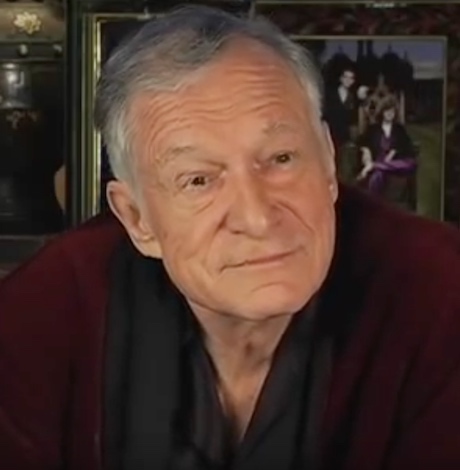
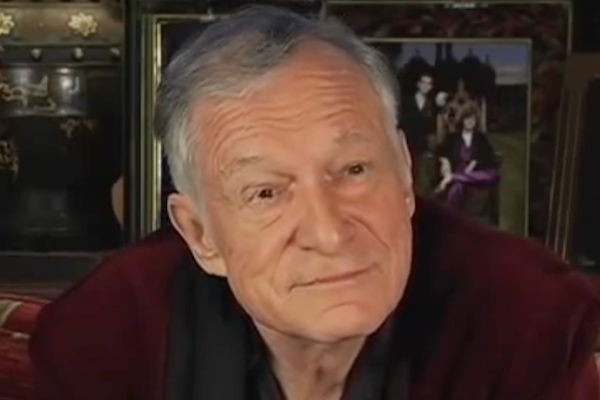
(Screenshot via YouTube.)
Playboy founder Hugh Hefner died from natural causes at his home, the Playboy Mansion, on Wednesday. He was 91.
A pioneer for the straight sexual liberation movement, Hefner was also one of the early advocates for gay rights tracing back to the 1950s.
The 2009 documentary “Hugh Hefner: Playboy, Activist and Rebel,” explains that Hefner stood up for gay representation dating back to 1955. Esquire had rejected “The Crooked Man,” a science fiction story written by Charles Beaumont.
“The Crooked Man” told the story of a world where heterosexuals were the minority and punished while homosexuals were the majority. Hefner accepted the story to run in Playboy and received an onslaught of angry letters.
“If it was wrong to persecute heterosexuals in a homosexual society then the reverse is wrong too,” Hefner reportedly wrote back.
Hefner also was one of the first to stand up for transgender rights. In the 1980s, transgender model Caroline “Tula” Cossey was outed by the tabloid News of the World. Hefner put Cossey on the cover of Playboy making her the first transgender model to grace Playboy.
He kept his stance on gay rights years later when he told the Daily Beast in 2009 that nothing was wrong with gay marriage.
“Without question, love in its various permutations is what we need more of in this world,” Hefner said. “The idea that the concept of marriage will be sullied by same-sex marriage is ridiculous. Heterosexuals haven’t been doing that well at it on their own.”
Hefner is survived by his wife Crystal and four children.
American Icon and Playboy Founder, Hugh M. Hefner passed away today. He was 91. #RIPHef pic.twitter.com/tCLa2iNXa4
— Playboy (@Playboy) September 28, 2017




Movies
30 years on, ‘The Birdcage’ remains a landmark
A reminder that the only thing required to make a family is love

In 1996, after the AIDS epidemic had cast its shadow over the gay community for a decade and a half, the breakthrough finally came: the success of antiretroviral medication turned a fatal disease into a manageable and survivable condition — and suddenly, “queer joy” began to feel like a possibility again.
The year 1996 also saw the release of “The Birdcage,” a remake of the farcical French film comedy “La Cage aux Folles,” about a gay couple who attempt to “play it straight” when their son brings his fiancée’s conservative parents over for dinner, starring Robin Williams and Nathan Lane — in one of his first (non-animated) film roles — as the couple. It was notable as one of the rare studio films of the era to center on gay characters, and the fact that it was a certified box office hit represented a welcome cultural shift after the years of homophobic stigma fostered by Reagan-era “moral majority” conservatism.
These two landmarks were coincidental, of course, and obviously the significance of the first (though it came a few months later) was, in the scheme of things, far more monumental. Nevertheless, there’s something about the timing that marked a definitive moment in the ongoing struggle for queer acceptance. It was a palpable turn of the tide, a moment in time when we could collectively “unclench” — and 30 years later, in the midst of a whole new onslaught of conservative bigotry that threatens to erode the progress of the intervening years, it’s a moment worth celebrating, if for no other reason than to remind ourselves of what is possible when we refuse to hide who we are.
That, after all, is the central conflict in “The Birdcage,” just as it was in the earlier French play (by Jean Poiret) and film that inspired it, as well as the hit Broadway musical (“La Cage aux Folles” (adapted by queer writer Harvey Fierstein and queer composer Jerry Herman) that came in between. Set in the famously gay Miami neighborhood of South Beach, it centers on a popular queer nightclub owned by longtime partners Armand (Williams), who runs the business, and Albert (Lane), a flamboyant drag performer known as “Starina” who serves as the club’s headlining act; as a result of a long-ago one-night stand, Armand is father to Val (Dan Futterman), whom the couple have raised together, and who has become engaged to Barbara (Calista Flockhart), the daughter of a prominent conservative senator (Gene Hackman). Fearing that knowledge of his parents’ true relationship will prevent the senator from allowing the marriage, Val convinces Armand and Albert to temporarily “straightwash” themselves for a dinner party with the would-be future in-laws. Naturally, things do not go as planned (this is a farce, after all), but by the end, the gays “save the day,” as they say, by helping the senator and his wife (Dianne Wiest) avoid a scandal, and the kids get to have their wedding, after all.
It’s true that “The Birdcage” has invited criticism from within the community over the years for offering exaggerated stereotypes, especially in its depictions of “femme” characters like Albert and Agador (Hank Azaria), the couple’s Guatemalan housekeeper — and, in more recent times, from younger queer viewers who brand Val as “the real villain” of the movie for his insistence on making his parents pretend to be straight. There’s also the quibble that two of the film’s leading gay characters are played by heterosexual actors (Williams and Azaria) and that neither the writer nor director of the film were queer themselves. We can’t dispute the validity of such positions, but we can certainly suggest that they might be missing the point.
The director, Mike Nichols, was a man who had transitioned from being a comedian to becoming a celebrated director for both stage and screen, responsible for (among many other films) “Who’s Afraid of Virginia Woolf?” and “The Graduate,” and the script was by Elaine May, his former comedy partner, known for her witty, sophisticated, and savvy screenwriting. Both came with a pedigree that included extensive collaboration with queer performers and creators, and a track record that clearly showed their dedication for humanity and truth over the social constructs they repeatedly undermined with shrewd observational satire.
Williams, known then and now for his manic, over-the-top cartoonishness, plays Armand with complete sincerity, balancing his signature lunacy (like the classic “Fosse, Fosse” moment as he directs a new act for the club) with a deeply considered emotional solidity that never strikes a false note; and Azaria, whose performance became an instantly iconic fan favorite of outrageous femme-boy camp, is lovable precisely because his iteration of the cliché is so completely un-self-conscious, and is still beloved arguably as much for this as for his decades of voice work on “The Simpsons” — not because he is ridiculous (he is, and hilariously so) but because he is so recognizably real.
As for Lane, Albert’s character is explicitly written as a “diva,” the kind of gay male “show queen” stereotype that never quite offends because we all know someone — or are someone — who fits that profile to a tee; underneath it all is a person determined to live life on their own terms, and it makes his emergence as an eleventh-hour hero/heroine all the more satisfying. Let’s face it, when the chips are down, none of us could ask for a better mom than he turns out to be.
Of course, the participation of incomparable actors Hackman and Wiest is invaluable, allowing even their stodgy characters enough grace to keep them from coming off as complete buffoons (though Hackman’s reprehensible senator, appropriately enough, comes close); for good measure, there’s even the delicious Christine Baranski as Val’s biological mother.
All those performances — along with the fabulous explosion of Miami decor in the scenic design, the depictions of vibrant queer nightlife, and a soundtrack that includes both spicy nuggets of iconic club music and a handful of songs by the great gay genius Stephen Sondheim — are enough to make “The Birdcage” a classic, but the reason it continues to resonate with queer joy emanates from the material itself.
Wrapped up in all the absurdity of its humor, “La Cage aux Folles” (in all its forms) proffers a simple story in which — despite misunderstandings, hurt feelings, and all the various kerfuffles which erupt throughout — everyone shows up for each other. It’s a portrait of a household built on love, about a family willing to leap hurdles and place the happiness of those dear to them above their own inconveniences. In the end, the queerness is really not the point; but the fact that it’s a queer family who embodies these values (and a messy one, at that) is, as the queer expression goes, everything.
Thirty years ago, “The Birdcage” was a fun celebration; today, in a world that once more feels weaponized against queerness, it’s more than that: It’s a great film that reminds us that our greatest victories arise from being ourselves, unapologetically — and that the only thing required to make a family is unconditional love.
Out & About
Whitman-Walker to host legal services workshop
Event held virtually and in-person at the DC LGBTQ+ Community Center

Whitman Walker Health Center will host a legal services workshop on Tuesday, July 21 at 3 p.m. virtually and in-person at the DC LGBTQ+ Community Center.
Attorneys from WWH will give an overview of the free legal services they offer and discuss recent challenges. WWH meets clients where they are to address the issues they are facing, such as:
- Immigration relief based on LGBTQ+/HIV status
- Public benefits, including Social Security Disability denials
- Appealing health insurance denials of Gender Affirming Care
- Name changes and ID Document update
Register online to attend virtually. To attend in person, no registration is required.

Friday, July 17
Go Gay DC will host “LGBTQ+ Social in the City” at 7 p.m. at Hotel Zena. This is a chance to relax, make new friends, and enjoy happy hour specials at this classic retro venue. Attendance is free and more details are available on Eventbrite.
Trans and Genderqueer Game Night will be at 7 p.m. at the DC LGBTQ+ Community Center. This is a relaxing, laid-back evening of games and fun. For more details, visit the DC Center’s website.
Saturday, July 18
Go Gay DC will host “LGBTQ+ Community Brunch” at 11 a.m. at Freddie’s Beach Bar & Restaurant. This fun weekly event brings the DMV area LGBTQ+ community, including allies, together for delicious food and conversation. Attendance is free and more details are available on Eventbrite.
The DC LGBTQ+ Community Center will host “Sunday Supper on Saturday” at 2 p.m. It’s an opportunity to step away from the busyness of life and invest in something meaningful, and enjoy delicious food, genuine laughter, and conversations that spark connection and inspiration. For more details, visit the Center’s website.
LGBTQ People of Color will be at 7 p.m. on Zoom. This peer support group is an outlet for LGBTQ people of color to come together and talk about anything affecting them in a space that strives to be safe and judgement free. There will be all sorts of activities like watching movies, poetry events, storytelling, and just hanging out with others. For more details, visit thedccenter.org/poc or facebook.com/centerpoc.
Sunday, July 19
“Nellie’s DC Drag Brunch” will be at 12 p.m. at Nellie’s Sports Bar. Come get served like a queen by a queen. Join Sapphire Blue, Deja Diamond and their team of amazing drag performers for the most fun you’ll have all weekend. Tickets are $58.51 and are available on Eventbrite.
Monday, July 20
“Center Aging: Monday Coffee Klatch” will be at 10 a.m. on Zoom. This is a social hour for older LGBTQ+ adults. Guests are encouraged to bring a beverage of choice. For more information, contact Adam ([email protected]).
Tuesday, July 21
Center Bi+ Roundtable will be at 7 p.m. on Zoom. This is an opportunity for people to gather in order to discuss issues related to bisexuality or as bi individuals in a private setting. Visit Facebook or Meetup for more information.
Wednesday, July 22
Job Club will be at 6 p.m. on Zoom upon request. This is a weekly job support program to help job entrants and seekers, including the long-term unemployed, improve self-confidence, motivation, resilience and productivity for effective job searches and networking — allowing participants to move away from being merely “applicants” toward being “candidates.” For more information, email [email protected] or visit thedccenter.org/careers.
Asexual and Aromantic Group will meet at 7 p.m. on Zoom. This is a space where people who are questioning this aspect of their identity or those who identify as asexual and/or aromantic can come together, share stories and experiences, and discuss various topics. For more details, email [email protected].
Thursday, July 23
The DC Center’s Fresh Produce Program will be held all day at the DC LGBTQ+ Community Center. People will be informed on Wednesday at 5 p.m. if they are picked to receive a produce box. No proof of residency or income is required. For more information, email [email protected] or call 202-682-2245.
Virtual Yoga Class will be at 7 p.m. on Zoom. This free weekly class is a combination of yoga, breath work and meditation that allows LGBTQ+ community members to continue their healing journey with somatic and mindfulness practices. For more details, visit the DC Center’s website.

Authorities investigate officer-involved shooting outside Asheville gay bar

Popular Mount Vernon gay bar Leon’s to temporarily close after owner’s death

30 years on, ‘The Birdcage’ remains a landmark

Comings & Goings

Whitman-Walker to host legal services workshop

Democrats are trying to disqualify trans candidates. Here’s how

Political drama in Angie Craig’s Minn. Senate race heats up

Aparna Raj expected to become second LGBTQ member of D.C. Council

Suzanne Goode wants efficient spending, better infrastructure for Rehoboth

Mexico’s first openly gay mayor killed
-

 National5 days ago
Democrats are trying to disqualify trans candidates. Here’s how
-
Congress5 days ago
Political drama in Angie Craig’s Minn. Senate race heats up
-
District of Columbia5 days ago
Aparna Raj expected to become second LGBTQ member of D.C. Council
-
Rehoboth Beach5 days ago
Suzanne Goode wants efficient spending, better infrastructure for Rehoboth