News
Exclusive: Biden briefed on transgender deaths breaking record in 2021
At least 46 people killed in grim milestone
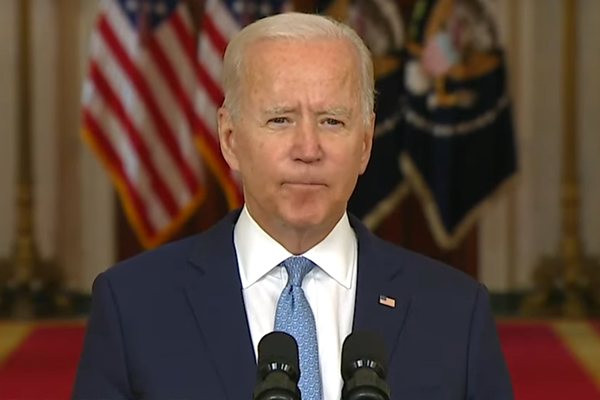
President Biden, in a year when the killings of transgender people are at the highest number in recorded history, has been briefed on the grim milestone of anti-transgender violence, the Washington Blade has learned exclusively.
A White House official confirmed via email to the Blade on Monday that Biden was briefed Thursday, Nov. 18 on the number of transgender and non-binary people killed in 2021, which was the same week as the Transgender Day of Remembrance.
In response to a follow-up inquiry from the Blade on which principals were in attendance at the briefing, the White House official had nothing to share.
At least 46 transgender and non-binary people have been killed, which is the highest number since efforts to record those deaths began. The violence has consistently had a disproportionate impact on transgender women of color.
The Blade first posed the question about whether Biden was briefed on anti-transgender violence to White House Press Secretary Jen Psaki on Nov. 12. At the time, Psaki said she was unsure whether Biden was briefed, but said deaths were “terrible, heartbreaking” to hear.
Biden’s briefing on the anti-transgender violence is consistent with the statement he issued on Saturday recognizing the Transgender Day of Remembrance, which decried the deaths of the 46 transgender and non-binary people killed in 2021.
“Each of these lives was precious,” Biden said in the statement. “Each of them deserved freedom, justice, and joy. Today, on Transgender Day of Remembrance, we mourn those we lost in the deadliest year on record for transgender Americans, as well as the countless other transgender people — disproportionately Black and brown transgender women and girls — who face brutal violence, discrimination, and harassment.”
Biden, who has called transgender rights “the civil rights issue of our time,” is credited with being a transgender advocate in the White House, having issued policies such as a rollback of former President Trump’s transgender military ban and signing an executive order requiring federal agencies to implement the U.S. Supreme Court’s ruling against anti-LGBTQ discrimination to the furthest extent possible under the law.
The Biden administration announced in June an interagency task force charged with making the U.S. government as transgender inclusive as possible, which the White House says is ongoing.
The year 2021 reached a new record for anti-transgender murders upon the death of Marquiisha “Quii” Lawrence, a 28-year-old Black transgender woman who was shot and killed in her home in Greenville, S.C.
Biden and other transgender advocates marked the Transgender Day of Remembrance this year with the solemn acknowledgment of the 46 transgender and non-binary people lost in 2021.
Biden as a 2020 presidential candidate highlighted ongoing anti-transgender violence, including its disproportionate impact on transgender people of color. In his comprehensive LGBTQ platform, Biden repeatedly pledged he’d take steps to protect LGBTQ people from violence.
In fact, Biden predicted the killing of transgender people would end if former President Trump were voted out of office, telling attendees at the Human Rights Campaign dinner in 2019: “The fastest way to end it is to end the Trump administration.”
Democratic National Committee chair Jaime Harrison and LGBTQ Caucus chair Earl Fowlkes issued a joint statement, saying each of the lives lost “represents a family broken, a friend forever changed, or a community in mourning.”
“Today, we mourn the lives lost due to senseless violence,” Harrison and Fowlkes said. “Tomorrow, we reaffirm and rededicate ourselves to enacting the change necessary to create a future where no one is forced to hide or live in fear.”




2026 Midterm Elections
Trump uses anti-trans slur against Democratic Senate candidate
President mocked Annie Andrews

President Donald Trump used an anti-trans slur against Democratic South Carolina Senate candidate Annie Andrews on Monday as he sought to rally support for Republicans in the state’s Senate race.
In a post on Truth Social, Trump attacked Andrews three times, referring to her as “trannie” while promoting U.S. Sen. Darline Graham (R-S.C.)’s campaign.
Andrews is running against Graham for a Senate seat in the solidly Republican state.
Earlier this year, Graham was specially appointed to the seat following the death of her brother, Lindsey Graham, who represented South Carolina in the Senate from 2003 to 2026.
Andrews, the Democratic nominee from the state, is a pediatrician that lives in Charleston with her three children. She told NBC News that she will “work with anyone to put South Carolina first.”
“As a mom and a pediatrician, I’m in this race to fight for my patients, my three kids, and South Carolina,” Andrews said, adding that “lowering costs and making life better for families across our state is going to take all of us working together.”
Andrews used the attention from the president’s attack to emphasize what she described as a focus on policy issues rather than the culture wars that have dominated much of the political debate.
“If you care more about your bills than the politics in Washington, this campaign is for you,” she added.
Trump’s remarks have drawn criticism from leaders on both sides of the aisle.
Senate Minority Leader Chuck Schumer (D-N.Y.) condemned Trump’s words Monday night on social media, calling his attacks on Andrews “despicable.”
“Annie Andrews is a mom and pediatrician who’s always put her community first — and she’s exactly who South Carolina needs representing them in the Senate,” Schumer said on X.
Former South Carolina Gov. David Beasley, a Republican, also criticized the president’s attack on Andrews, urging voters to “reject politics based on division and hate.”
“This is abhorrent. Elections don’t have to be about cruelty and lies. South Carolina deserves better,” Beasley wrote Monday night on X.
South Carolina has not elected a Democratic senator in nearly three decades.
Andrews’s campaign website does not mention her positions on LGBTQ issues.
The Washington Blade reached out to Andrews’s campaign for comment on Trump’s attack and her positions on transgender rights but did not hear back by time of publication.
District of Columbia
D.C.’s LGBTQ homeless facilities face possible hit from Trump funding cuts
38 percent of homeless youth identify as LGBTQ, up from 2025
(Editor’s note: This article is part of our 2026 contribution to the D.C. Homeless Crisis Reporting Project in collaboration with other local newsrooms. The collective works will be published throughout the week at bit.ly/DCHCRP.)
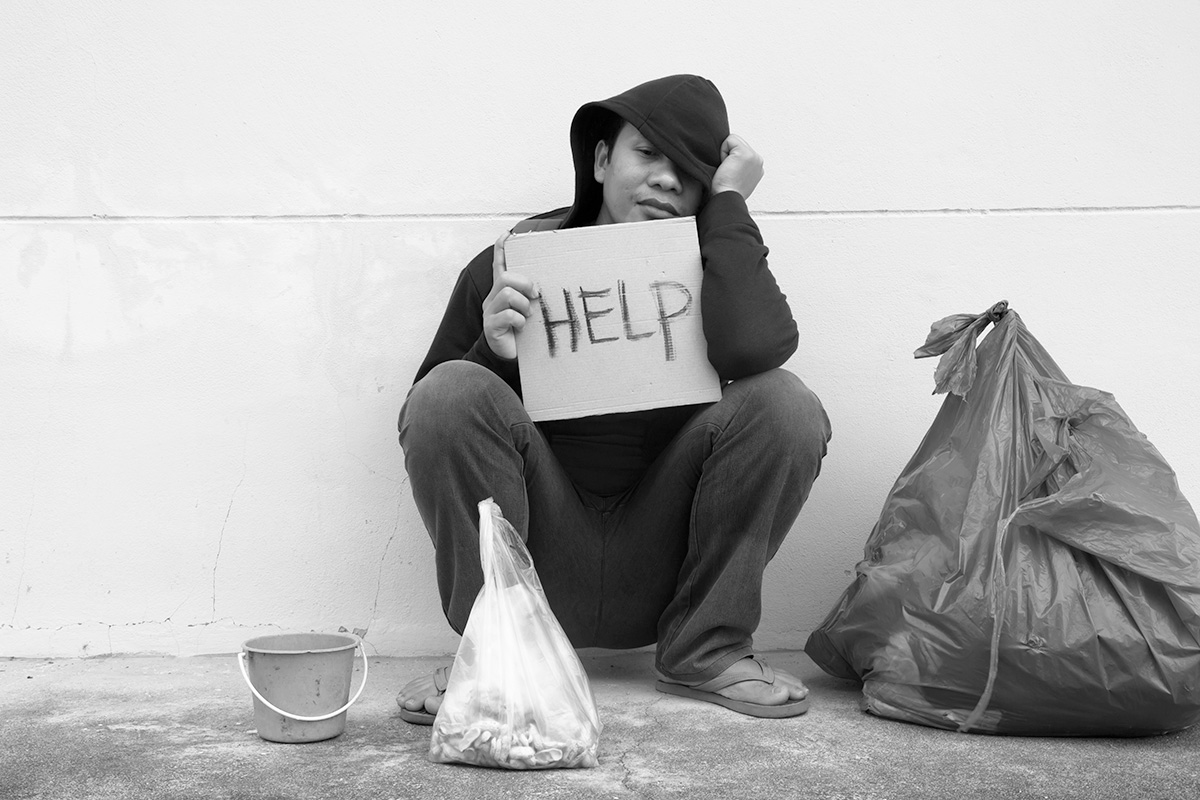
A decision by President Trump’s administration to eliminate most federal funding for community-based programs to place homeless people in permanent subsidized housing could have a severe adverse impact on LGBTQ people facing homelessness in D.C., according to local advocates.
Officials with organizations that provide services for homeless people in the D.C. area and nationally have pointed to an executive order issued by Trump last year that calls for ending federal support for so-called “Housing First” programs that arrange for permanent subsidized housing for homeless people. The officials note that Trump’s proposed fiscal year 2027 budget calls for eliminating funding for the Housing First programs.
Advocates for programs providing support for homeless people note that ending federal funding for permanent housing for homeless people will — and in some cases already has — resulted in occupants of homeless shelters and short-term transitional housing facilities remaining in those facilities far longer than in the past, preventing openings for others who need housing.
A lawsuit filed by several states and homeless advocacy organizations, including the D.C.-based National Alliance To End Homelessness, to block the Trump efforts to cut off those funds has temporarily delayed some of the funding cuts. A decision in August by a federal judge in Rhode Island declared the Trump action a violation of a federal law for failing to open the proposal for the funding cuts to public comment before putting it in place.
Court records show the U.S. Department of Housing and Urban Development (HUD), which provides the federal funding for homeless related programs, appealed the lower court ruling and an appeals court reversed the ruling pending further appeal by the parties that filed the lawsuit.
At least two of the five D.C. organizations that provide housing for homeless LGBTQ youth have said their funding so far has not been cut due to the Trump actions.
Cesar Toledo, executive director of the Wanda Alston Foundation, which currently provides transitional housing for 20 LGBTQ homeless youth, said his organization receives local D.C. government funding but no federal funding so his group has so far not been impacted by the Trump action.
Debby Shore, executive director of the Sasha Bruce Youthwork organization that provides housing for young people ages 18-24, including some LGBTQ youth, said her organization also had not yet been impacted but it could be impacted soon.
“We have not had that funding cut,” she told the Washington Blade. “What we understand is if HUD is allowed to go through with those changes, then we will,” she said. “Because we have one of our programs that’s funded directly by HUD,” which she said could be considered the type of “long term” housing that HUD wants to cut.
A spokesperson for the local LGBTQ youth advocacy organization SMYAL, which currently provides housing for 55 homeless LGBTQ youth according to its website, didn’t immediately respond to a Blade inquiry into whether they have been impacted by the Trump actions. Toledo of the Alston Foundation said he understood that SMYAL has received federal funding for its homeless program.
At least two other D.C. organizations that provide housing for homeless youth, including some LGBTQ youth – Covenant House and the Latin American Youth Center – also couldn’t immediately be reached for comment on whether they have been impacted by the Trump funding cuts.
The city’s only shelter for homeless LGBTQ adults, which is operated by the D.C. Department of Human Services and is D.C. funded, has not been immediately impacted by the Trump funding cuts, according to a DHS statement sent to the Washington Blade in response to a Blade inquiry. Called Living Life Alternative, the low-barrier shelter accommodates 40 individuals, the statement says.
It says DHS receives federal funding for its homeless services programs, and it was awaiting HUD approval for its annual federal funding grant for the city’s Permanent Supportive Housing program for homeless residents. It says the current funding for that program expires Jan. 31, 2027.
According to the statement, a separate federal grant DHS receives from HUD for homeless assistance services was approved for next year but included “a slight reduction in funding of $22,808.”
The annual 2026 Point-In-Time (PIT) count of homeless people in D.C., conducted in January, recorded a total of 5,363 people who were homeless, a 4 percent increase over the previous year.
The PIT count report shows 424 adults, or 12 percent of the adults counted, identified as members of the LGBTQ community, a slight increase over the 11.7 percent of homeless LGBTQ people counted in 2025. It shows that 38 percent of “Transition Age Youth” ages 18-24 identified as LGBTQ, an increase of one percent over the 37 percent of LGBTQ youth counted in 2025.
The Trump administration through HUD has said it supports housing for homeless people that lasts no more than two years and participants should be required to get treatment for the mental illness and substance use disorders such as drug addiction and alcoholism that many homeless people suffer from.
The Washington Post has cited studies showing that up to two-thirds of homeless people have a mental illness and two in five have a substance use disorder.
“Housing First has failed our most vulnerable and enabled addiction,” the Post quoted HUD saying in an email message. “HUD’s proposed reforms seek to address the root cause of homelessness and advance recovery, self-sufficiency, and competition that drives accountability,” the Post quoted the HUD statement as saying.
Shore, director of Sasha Bruce Youthwork, disputes that assessment, saying treatment for disorders should not be a replacement for longer term housing programs, which she said improves the outcome of treatments for disorders.
“I think the idea of putting more services in place – I don’t have any problem with that,” she said. “But suggesting that you do that in exchange for longer term supports for people does not seem to be the right way to go.”
Federal Government
Bessent says Trump chose him for his qualifications, not his sexuality
Treasury Secretary Scott Bessent talked with Axios about his sexuality — and how it played no role in his nomination for the position.
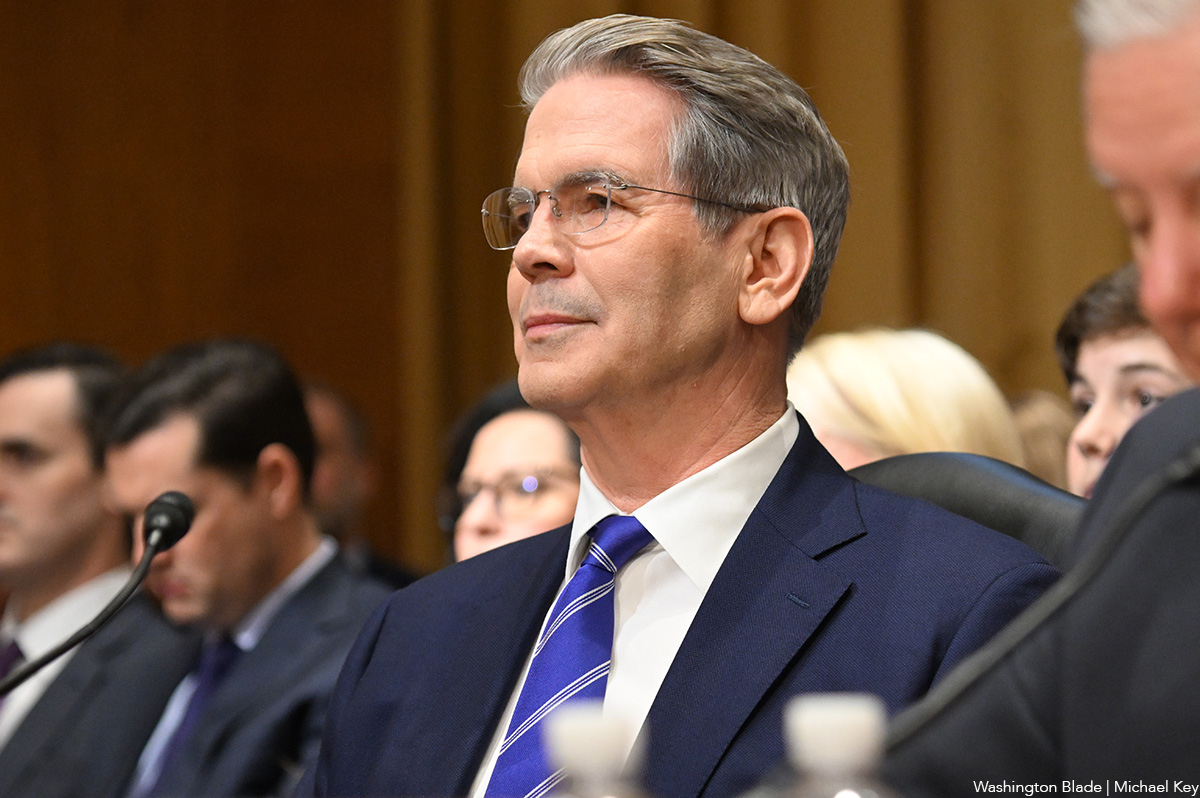
Treasury Secretary Scott Bessent participated in an interview in which he said his sexuality had no impact on the president’s selection of him.
On Sunday, Axios co-founder Mike Allen interviewed Secretary Bessent, the 79th person to lead the Treasury Department, in the “Cash Room” in the Treasury building. The two talked for more than 40 minutes about issues related to the current administration’s efforts for Axios’s YouTube channel.
Bessent has been something of an anomaly during this administration, breaking what many consider the “gay glass ceiling.” He is the first openly gay person to lead the U.S. Treasury Department, the first openly gay Senate-confirmed Cabinet member in a Republican administration, and the highest-ranking LGBTQ government official in U.S. history.
The two covered various ground — about the state of the U.S. economy, the various AI approaches by the Trump administration, and the war in Iran. All things that have made President Trump’s constant appraisal of the U.S. economy difficult to sell to the American people as the affordability crisis has worsened.
Toward the end of the interview, Allen asked Bessent about deciding not to attend the U.S. Naval Academy, knowing his sexuality would be a hindrance, and instead attending Yale University. Allen asked if his choice to attend the Ivy League school held him back in life.
“I don’t think it did at all, and it’s very difficult to talk about the counterfactual… but I don’t think going to Yale held me back,” Bessent said. “Maybe some people at other schools would think it might. But I think it makes you aware, and I’ve openly spoken about it before, too. I think maybe some of my career choices were influenced by it.”
The U.S. Naval Academy only began allowing openly LGBTQ students to apply — and be open about their sexuality — following the 2011 repeal of “Don’t Ask, Don’t Tell.” Prior to the policy’s removal, students could be removed from the school for violating the rules, including rules related to their sexuality.
“You said President Trump chose me because he believes I’m the best candidate, not because of my sexual preference or your green eyes…,” Allen said.
“Exactly,” Bessent replied. “And I think that’s one of the reasons we have such a great team. The president makes his decisions all the time. You know, he’ll occasionally tell me, ‘You’re breaking my friends’ hearts.’ They see you on TV and they want an intro, and we have to break the news to them.”
Bessent has been married to former New York prosecutor John Freeman since 2011, and they have lived together in South Carolina. There, they had two children through surrogacy.
Despite being a member of the LGBTQ community, Bessent has publicly supported Trump’s policies, including some that have drawn criticism from LGBTQ advocates and organizations. These include reductions to PEPFAR funding, policies removing transgender service members from the military, recognizing only two sexes, removing LGBTQ protections from Title IX, and other policies that LGBTQ advocates argue come at the cost of LGBTQ safety and protections.
The Washington Blade has reached out to the Treasury Department and Secretary Bessent’s team for comment and responses to these questions, including questions about how he views his identity and sexuality in relation to — and potentially at odds with — the policies and mission of the current administration. The Blade did not receive a response by publication time.

Trump uses anti-trans slur against Democratic Senate candidate

D.C.’s LGBTQ homeless facilities face possible hit from Trump funding cuts

10 years later, we still can’t shake Barry Jenkins’s ‘Moonlight’

‘Some Like It Hot’ a wild ride at renovated Bernard Family Theatre

Bessent says Trump chose him for his qualifications, not his sexuality

Eliot Glazer’s new book an engaging collection of essays

Equality Chamber hosts Pride in Business Expo and Profits & Pours

Learn more about Virginia’s queer history

Lula, Flávio Bolsonaro to face off in second round of Brazilian presidential election

‘Merrily’ is for Sondheim super fans, the uninitiated, and anyone in between
-

 Books3 days ago
Eliot Glazer’s new book an engaging collection of essays
-
Out & About4 days ago
Equality Chamber hosts Pride in Business Expo and Profits & Pours
-
Out & About4 days ago
Learn more about Virginia’s queer history
-
Brazil3 days ago
Lula, Flávio Bolsonaro to face off in second round of Brazilian presidential election