World
Iran reportedly executes two gay men for sodomy
Advocacy group says execution took place in Maragheh prison
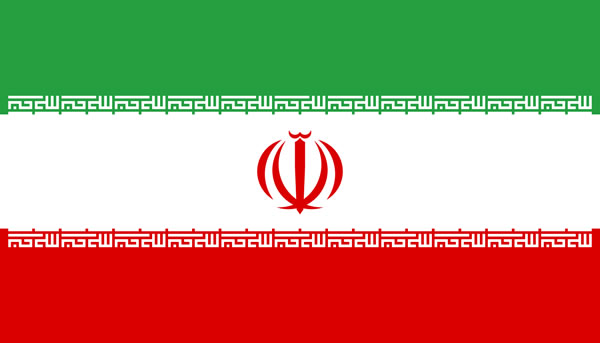
Iran has reportedly executed two gay men who were convicted of sodomy.
The Associated Press cites a report the Human Rights Activists News Agency released on Sunday that says Mehrdad Karimpour and Farid Mohammadi were sentenced to death six years ago for “forced sexual intercourse between two men.” The Human Rights Activists News Agency notes Karimpour and Mohammadi were hanged at a prison in Maragheh, a city that is 310 miles northwest of the Iranian capital of Tehran.
Iran is among the handful of countries in which consensual same-sex sexual relations remain punishable by death.
The AP notes two men in Maragheh who were convicted of sodomy were executed last July.
The State Department last May condemned the murder of Ali Fazeli Monfared, whose relatives reportedly kidnapped and beheaded him after they learned he was gay. Members of the Iranian Revolutionary Guard Corps a few months later arrested a lesbian woman as she tried to enter Turkey.



Commentary
The boy they refused to forget
Jonathan David Muir Burgos released from Cuban prison after participating in protest
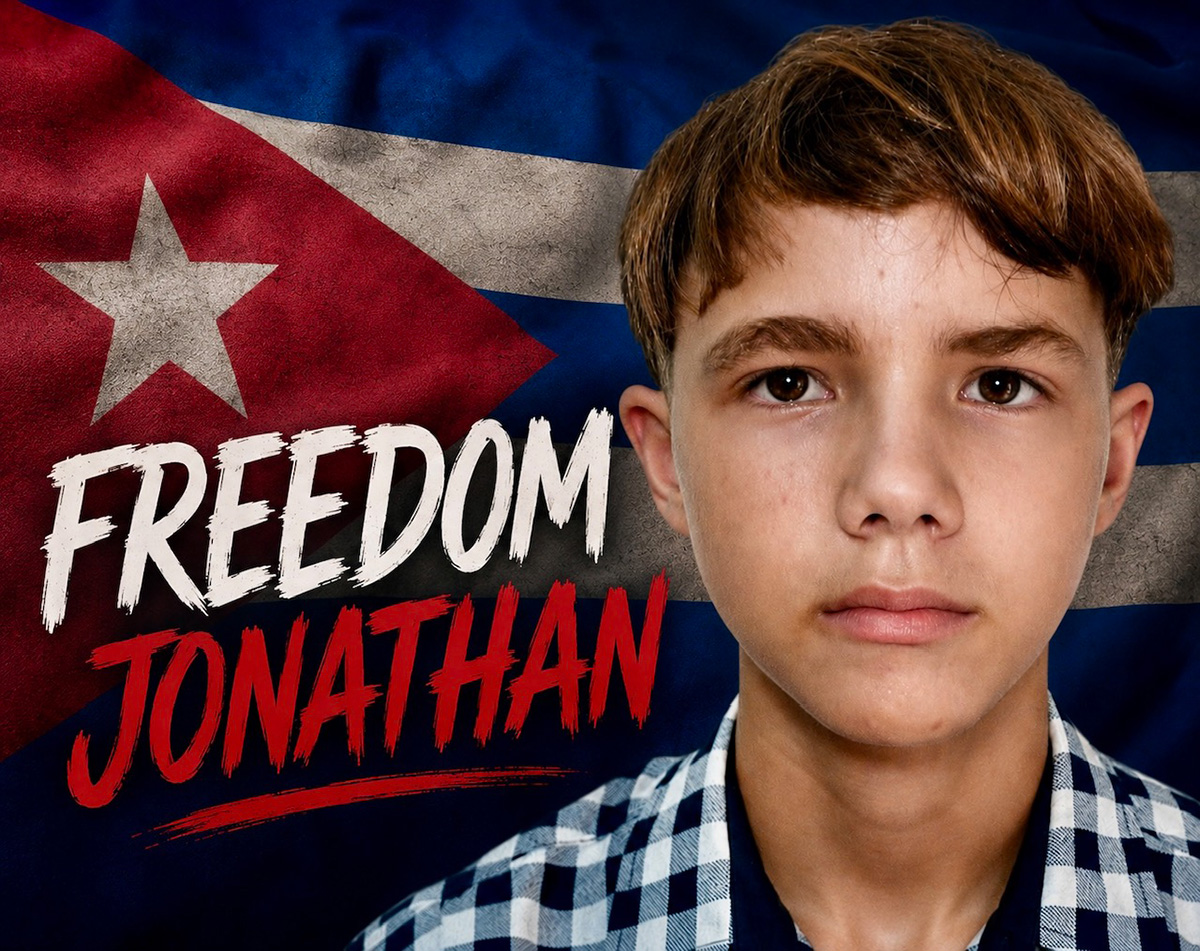
When the Washington Blade first reported the story of Jonathan David Muir Burgos, the news centered on a 16-year-old Cuban teenager who had been sent to prison after taking part in a public protest in Morón, Ciego de Ávila. At the time, the facts were straightforward. A minor had lost his freedom, and his case was beginning to attract attention beyond Cuba’s borders.
Today there is another fact that deserves to be recorded with the same rigor.
Jonathan is no longer in prison.
His release, confirmed by multiple news organizations, closes one chapter of a story that, for months, was followed by journalists, human rights organizations, religious communities, and countless individuals who refused to let his name disappear from public view. Each of them became part of a much larger effort to ensure that the imprisonment of a Cuban teenager would not fade into silence as the news cycle moved on.
That collective attention does not explain every decision that ultimately led to Jonathan’s release, and it would be irresponsible to suggest otherwise. Judicial processes are rarely shaped by a single factor. What can be said with certainty is that Jonathan’s story never disappeared. It continued to be documented, discussed and followed long after the initial headlines were published.
Behind every widely reported case there is a family living a reality that rarely appears in the news. In Jonathan’s case, there was a father who also serves as a Protestant pastor and who spent months speaking publicly about his son while asking others not to forget him. There was a mother enduring the uncertainty familiar to any parent separated from a child. There were classmates, friends, and neighbors waiting for the day when Jonathan would no longer be known as the teenager behind bars, but simply as the young man returning home.
The image of a prison gate opening often marks the end of a news story. In reality, it marks the beginning of something far more difficult. A teenager must resume an interrupted education, reconnect with friends, rebuild ordinary routines, and recover a sense of normalcy after months in confinement. Those experiences seldom become headlines, yet they are part of the true cost of imprisonment.
Jonathan’s release is therefore more than an update to a story previously reported. It is a reminder that public attention has value. Journalism matters because it documents. Human rights organizations matter because they investigate. Communities matter because they refuse indifference. Families matter because they continue to wait, even when the waiting becomes unbearable. None of these efforts should be viewed in isolation. Together they ensure that a person’s story does not disappear simply because time has passed.
Many people leave prison after being forgotten.
Jonathan David Muir Burgos walked out of prison knowing that, throughout those months, thousands of people had continued to speak his name, follow his case and hope for the day when this story could be told differently.
Today, that day has arrived.
Eswatini
Eswatini’s government ordered to allow LGBTQ group to legally register
Unanimous Supreme Court ruling caps off 7-year legal battle

Eswatini’s Supreme Court has ordered the government to allow an LGBTQ rights group to legally register.
The Registrar of Companies in 2019 denied Eswatini Sexual and Gender Minorities’ request to register.
The advocacy group in 2020 petitioned the Supreme Court to hear the case. The Supreme Court initially ruled against Eswatini Sexual and Gender Minorities, but it appealed the decision.
The Eswatini Commerce, Industry, and Trade Ministry in 2023 said it would not allow the group to register. The Supreme Court on Tuesday in a unanimous ruling ordered the Swazi government to allow Eswatini Sexual and Gender Minorities to register.
“For seven years the Eswatini Sexual and Gender Minorities group has fought the Swazi government for its citizens to have the right to freedom of association,” said Eswatini Sexual and Gender Minorities on Tuesday in a Facebook post. “But this is a hard fight against a government and king who believe LGBTI people have no place in the kingdom and who are trying to restrict the power of civil society organizations.”
Eswatini is a small, landlocked country in southern Africa that borders South Africa and Mozambique.
Consensual same-sex sexual relations between men remain criminalized in the country.
Discrimination and harassment based on sexual orientation and gender identity is commonplace in Eswatini. The country’s first Pride parade took place against this backdrop in 2018.
South Africa
White House to end PEPFAR funding for South Africa
State Department says country failed to respond to 2025 executive order demands
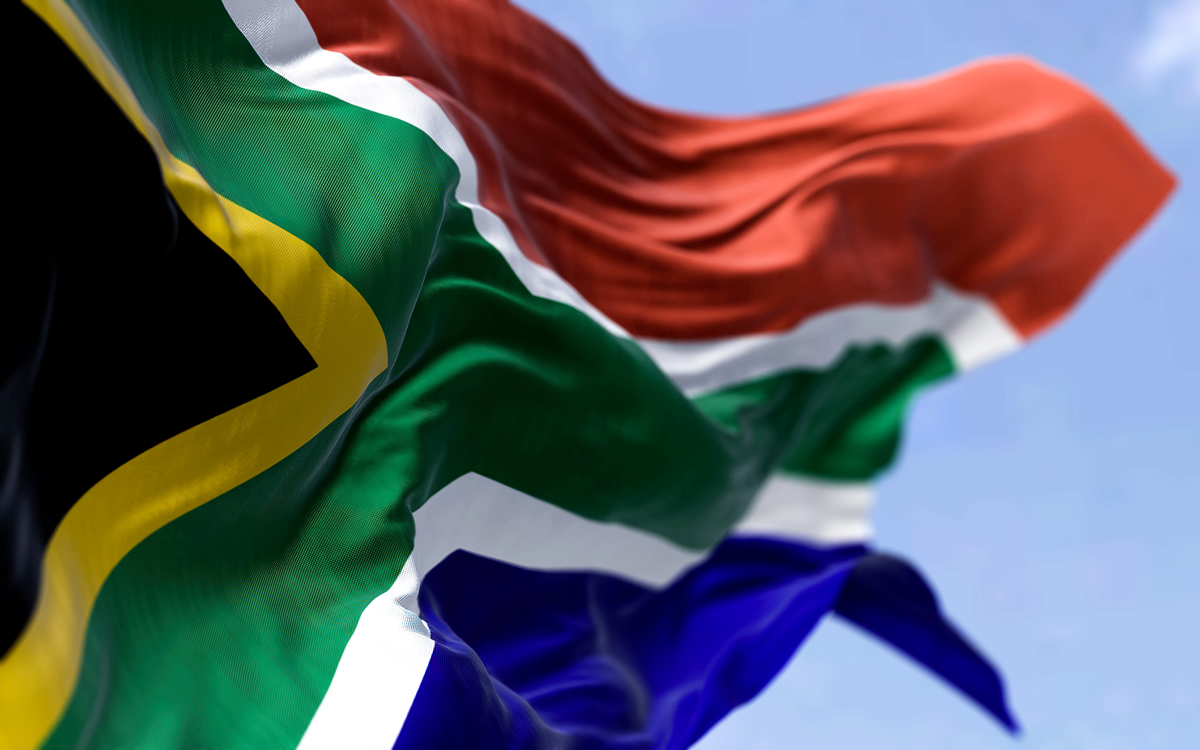
The Trump-Vance administration will end PEPFAR funding for South Africa.
A State Department spokesperson on Wednesday told the Washington Blade the State Department “will begin a phased drawdown of PEPFAR programming in South Africa, with most programs ending by Sept. 30, 2026, and critical personnel support continuing through March 31, 2027.”
Semafor last week reported South Africa has received more than $8 billion in PEPFAR funding since President George W. Bush created the program to combat the global HIV/AIDS pandemic in 2003.
President Donald Trump on Feb. 7, 2025, issued an executive order that addressed what it described as “egregious actions of the Republic of South Africa.” The State Department spokesperson with whom the Blade spoke noted the directive included five specific requests:
• South African government provides exemptions or alternatives for U.S. companies to Broad-Based Black Economic Empowerment laws and other race-based mandates.
• Senior government officials (e.g., president, deputy president, or minister of justice) unequivocally condemn all race-based incitement to violence, including the “Kill the Boer” song, more frequently.
• The South African government prevents the implementation of measures that would allow expropriation without fair compensation and due process under the Expropriation Act of 2024.
• South African Police Service designates rural crime a “priority crime” and increases resources dedicated to high-crime rural areas.
• South Africa refrains from actions that would significantly interfere with the implementation of the refugee program, within the confines of South African law.
“The United States communicated to the government of the Republic of South Africa multiple times at many levels that PEPFAR funding was likely to be terminated in the absence of progress on the five asks,” said the State Department spokesperson.
The State Department spokesperson further noted South Africa is “one of the largest economies in sub-Saharan Africa” and “has funded the vast majority of its own HIV response, estimated at 76 percent of the total, including procurement of all treatment commodities.”
“South Africa will continue to be supported by the Global Fund, including for the introduction and scale up of lenacapavir through Global Fund Resources,” the spokesperson told the Blade.
Lenacapavir is groundbreaking HIV prevention drug that users inject twice a year. Eswatini, which borders South Africa, is among the African countries that have received doses of the drug through PEPFAR.
HIV/AIDS service organizations in the U.S. and around the world have sharply criticized the Trump-Vance administration over plans to not fully fund PEPFAR and to cut domestic HIV/AIDS funding.
Secretary of State Marco Rubio shortly after the current White House took office issued a waiver that allowed PEPFAR and other “life-saving humanitarian assistance” programs to continue to operate during a freeze on nearly all U.S. foreign aid spending. HIV/AIDS service providers around the world with whom the Blade has spoken say PEPFAR cuts and the loss of funding from the U.S. Agency for International Development, which officially closed on July 1, 2025, has severely impacted their work.

The boy they refused to forget

Reflect on Pride season with these engaging books

Eswatini’s government ordered to allow LGBTQ group to legally register

Does Pride decor resemble Trump’s design aesthetic?

Nearly 6,000 turn out for Pride Night Out at the Nationals

US no longer refuge for LGBTQ refugees

Cool convertibles

Abelardo de la Espriella elected Colombia’s next president

Capital Pride draws tens of thousands to D.C.