Television
GLAAD TV report acknowledges progress — and some setbacks
Media watchdog challenges industry to do better
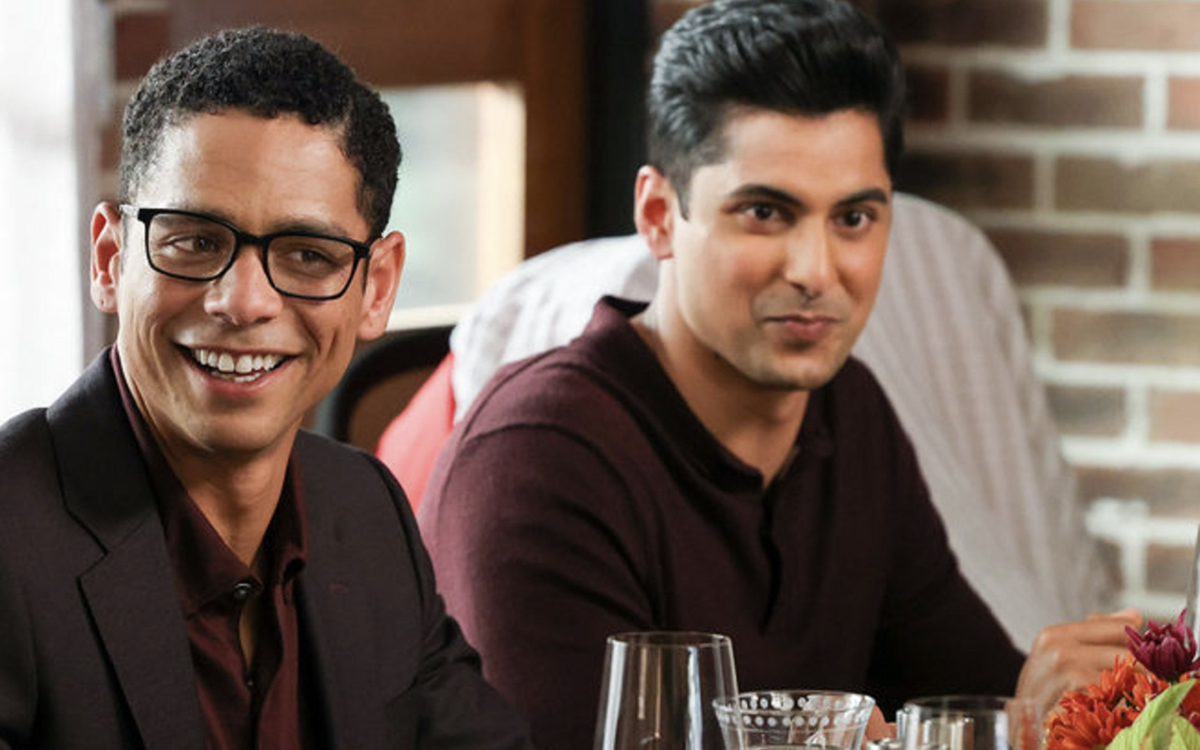
As we move further into 2022 and away from the pandemic-fatigued rollercoaster that was 2021, it’s perhaps more important than ever for us to look back together and take stock of where we are. This is particularly true when it comes to matters affecting communities that have historically taken the hardest hits in times of cultural stress – the disenfranchised among us are always the ones who slip most easily between the cracks, after all. Obviously, that includes the LGBTQ population, whose advances in recent years often tempt us to assume that, while all things may not yet be entirely equal, they are at least so much improved that we can stop paying attention.
There’s a danger, however, in taking our progress for granted. That’s why it’s wise for us all to take heed when GLAAD issues its annual “Where We Are On TV” report, as it did last week. Its findings show that, despite some shortfalls, there’s clear reason to celebrate our progress since the days when the only queer representation on our home screens was coded, stereotyped, and mostly tragic when it wasn’t played for laughs at our expense – but there’s still a long way to go before we can safely pause to rest on our laurels.
Looking at that report, which analyzes the overall diversity of primetime scripted series regulars on broadcast networks, as well as assessing the number of LGBTQ regular and recurring characters on primetime scripted cable programming and original scripted streaming series, it’s impossible not to acknowledge the good news.
While LGBTQ representation was down in last year’s report among regular characters on broadcast scripted series, this year saw a 2.8% increase in that total. Even better, this increase brings the total figure up to 11.9% – a new record-high percentage since the inaugural report 17 years ago. That means that out of the 775 series regular characters appearing in content that premiered or is expected to return between June 1, 2021 and May 31, 2022, 92 of them are LGBTQ. In addition, there are 49 recurring LGBTQ characters, bringing the total number of queer characters on broadcast television up to 141.
When we add streaming platforms to the mix, the picture gets even brighter. On original scripted programming across eight platforms (expanded from the three tracked in previous reports), there are 245 regular and 113 recurring LGBTQ characters, bringing the combined total to 358.
When it comes to cable, however, there’s a deficit. While the report from two years ago (covering the last pre-pandemic TV season) featured 215 queer cable characters, that number fell to 118 with last year’s report and has only risen by 20 this year, bringing the total to 138 (87 regular, 51 recurring) – still far fewer than counted in the prior report.
Despite that disappointing nuance, LGBTQ people clearly enjoy a greater presence on TV overall than ever before. In the more granular details, however, it’s obvious there’s room for improvement.
This year, lesbian characters represent a majority of LGBTQ regular or recurring characters on broadcast television for the first time in the report’s history. Lesbians make up 40% (56 characters), up six points from the previous season. Gay men make up 35 percent (49 characters), a decrease of five points from last year (though still an increase of 9 characters), but bisexual+ representation, after decreasing for the past two years, has increased – albeit slightly – to reflect 19% (27 characters) of the total, up a single point from the 2021 report. Notably, bisexual+ representation is still skewed heavily in favor of women (124 total characters), with bi+ men (50 characters) and bi+ nonbinary individuals (9) trailing far behind.
In addition, the number of transgender characters has increased across broadcast, cable, and streaming programming, with 42 regular and recurring transgender characters tracked across all three platforms, an encouraging improvement over last year’s 29. Of those characters, 20 are trans women, 14 are trans men, and eight are nonbinary trans characters. A further 17 characters are nonbinary and not trans. Yet there were only two asexual characters – one of which appeared on HBO Max’s now-cancelled “Genera+ion”, and one slated for inclusion in an unspecified upcoming streaming series. No asexual characters are expected to be featured on broadcast or cable.
More troubling are the figures on racial diversity among LGBTQ characters, which has increased on broadcast and streaming, but dropped significantly on cable. GLAAD previously issued a challenge to ensure that more than half of LGBTQ characters on television were also people of color, and while this year’s report confirms that broadcast content continues to meet that challenge, with LGBTQ people of color representing 58% of its LGBTQ characters for the fourth year in a row, cable programming – which met and surpassed the challenge last year – shows an alarming drop to only 45% of overall total LGBTQ representation. Representation of LGBTQ people of color still lags on streaming but increased to 49% in this year’s report.
Similarly underwhelming are the figures on representation for people with disabilities, down to 2.8% of all series regular characters from last year’s 3.5%. This number is disproportionately lower than the actual number of those with disabilities in the United States (13.3%) and includes only a small handful of LGBTQ characters within the overall total.
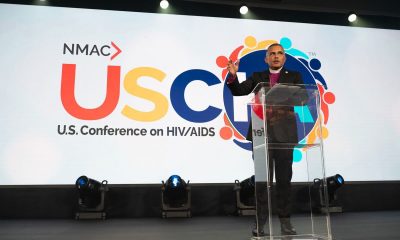
Perhaps the most disappointing finding is the decrease of representation for people living with HIV or AIDS – a demographic with an already-abysmal showing on TV. This year’s report marks only two HIV+ characters across all platforms (down from last year’s three, all of whom appeared on FX’s “Pose”), and a significant decrease from the nine tallied in the study prior to that. Both of this year’s POZ characters are recurring. These findings are particularly worrisome considering the challenge issued by GLAAD and Gilead Sciences with last year’s study, which called on the entertainment industry to grow representation of HIV with the goal of driving cultural and societal change in ending the stigma around the millions who live with it.
What does all this mean, and why does it matter? For those who recognize the dire importance of positive queer representation in the media in the ongoing struggle to expand LGBTQ+ acceptance, the answer is obvious. For anyone who questions the need for advocacy groups like GLAAD to continue placing pressure on content providers in their effort to ensure continued progress, the answer is summed up in the statement issued with the report by GLAAD President and CEO Sarah Kate Ellis:
“The growing state of LGBTQ representation on television is a signal that Hollywood is truly starting to recognize the power of telling LGBTQ stories that audiences around the world connect with. At a time when anti-LGBTQ legislation and violence continues to increase, it is cultural institutions like television that take on the crucial role of changing hearts and minds through diverse and inclusive storytelling. Networks and platforms must continue to prioritize telling LGBTQ stories that have been long overlooked, with a specific focus on the trans community, LGBTQ people of color, people living with HIV, and LGBTQ people with disabilities.”
Read the full report at glaad.org.


Television
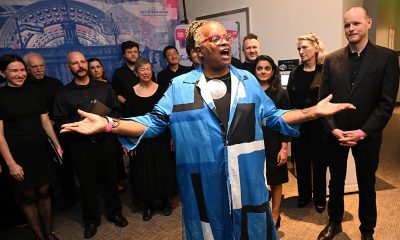
‘Star Trek: Strange New Worlds’ star Celia Rose Gooding breaks down that finale time travel twist
Season 4 finale gives actress ultimate showcase as a performer
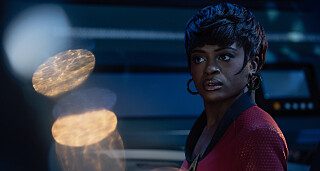
At long last, Celia Rose Gooding can talk about the “Star Trek: Strange New Worlds” Season 4 finale. And it’s a finale that belongs almost exclusively to her.
In the finale episode, now available to stream on Paramount+, communications officer Nyota Uhura (Gooding) comes face-to-face with an older version of herself.
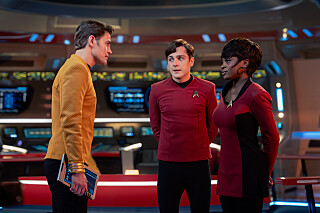
In order to save Scotty (Martin Quinn), Uhura must uncover a mystery and confront the leader she was always destined to be.
It’s one step closer to “Strange New Worlds” closing the gap between “The Original Series,” where fans were first introduced to Uhura through Nichelle Nichols’s iconic performance back in 1966.
“We see them confront each other and love each other in a way that can only breed more self-acceptance, self-understanding and self-actualization, which is what fans have been hungry for this whole time,” Gooding says of Uhura’s interaction between past and future self.
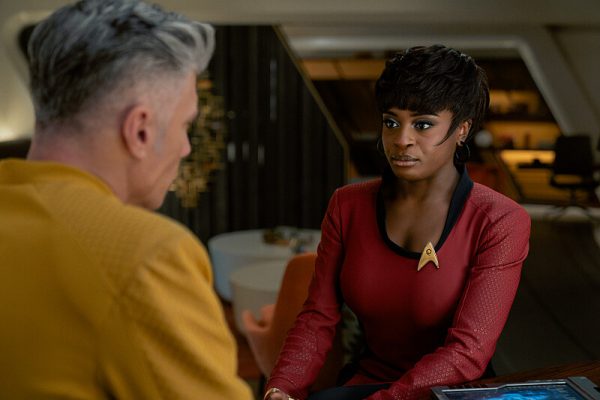
Gooding spoke with the Washington Blade to break down the emotional final episode, why she was hesitant to pay homage to Nichols’s beehive hairdo, and her hopes for the future of Black and queer representation on “Star Trek” amid the Paramount-Warner Bros. merger. This interview has been edited and condensed.
I know you’ve already finished filming the upcoming fifth and final season, so first of all, congratulations! This finale is such an exciting showcase for you. Can you break down this time travel twist and how you approached playing these two different versions of Uhura?
So much of what this episode meant to me was about honoring everything Uhura means — not just to me, but to Trekkies across the world, to people who’ve seen themselves in Uhura, and most importantly to Nichelle Nichols. I didn’t get the opportunity to meet her, although I’m desperate to have had that. But I think there’s something really special and unique about being able to have a conversation with a version of yourself that you no longer recognize in the past, and also a version of yourself that you do not recognize in the future. So much of the conversation between the two Uhuras in the beginning is filled with tension; they’re not super fond of each other just because they are so different. There’s so much growth and separation between their two mentalities. Given the stakes of the episode, “Strange New Worlds” is hearing things and is called on in a way that she does not understand. And so much of Uhura’s job, as a communications officer, is to understand — especially the things that she’s hearing, the conversations that are going on. When she is detached from that understanding, she’s left floating in this really uncomfortable space. The first thing that she can reach out and grab onto is something that should not be happening; she should not be able to speak to a version of herself that exists in the future. It breaks so many directives; she is breaking a lot of rules about time travel and temporal anomalies.
And then on the flip side, we have “TOS [The Original Series]” Uhura, who gets back on this mission, and something has gone terribly wrong. That tenacity, that perseverance, that reminiscent characteristic between both of these Uhuras is that they’re not going to give up. I love that in Uhura’s mind, if something doesn’t make sense to her, it’s because something is wrong. And not because she is incapable of understanding what’s happening; it’s that something has happened and it must be corrected. I love the confidence that we see in “TOS” Uhura of talking to her friends and crewmates and being like, “You aren’t listening to me. You need to listen to me!”
What was the most challenging part of playing these two parts?
The time jump between the two of them. Originally, it was three years, but now in the edit it’s just one. And playing “Strange New Worlds” Uhura, who knows all of this time has passed but doesn’t know what’s in it that makes her future self so unrecognizable — at first, I was trying really hard to make sense of that tension, trying to establish something. I kept coming up against the obstacle of, “How can I make this make sense?” Even when we only had 16 hours until shooting, I was down to the wire. I had conversations with director Chris Fisher, and he really implored me to not focus so hard on trying to make it make sense; the moment it makes sense is the moment we don’t have a story anymore. So much of the tension and conflict is that we don’t understand how this has happened; these two characters have to make it make sense together, and they do, because they always do! But it was a real challenge as an actor to live in that liminal, unknown, uncharted space and let that discomfort be the fuel for the engine that is the story. Even as I talk about it now, I fear that I’m not making any sense!
Finally, I think fans of Uhura have been so hungry for her to just inch closer and closer and close that gap, and I think while [the Season 4 finale] doesn’t completely close that gap all the way, we see them confront each other and love each other in a way that can only breed more self-acceptance, self-understanding, and self-actualization, which is what fans have been hungry for this whole time.
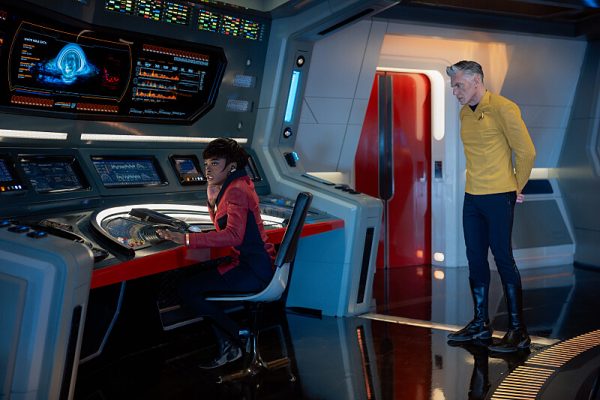
And you get to pay homage to Nichelle Nichols with that iconic beehive hairdo.
Story-wise, it was important for us to give the audience a way to immediately recognize who was talking because they’re both me, with my face. And it wasn’t just my hair that established the timeline change — it was the lighting, color grading, and everyone else’s different looks and costume changes. But the conversation around that iconic beehive- at first, I was a little resistant. I’m not gonna lie to you. I didn’t love the idea of recreating this iconic hairstyle because I have such admiration for Nichelle Nichols. God, I owe her so much for this era of my career. It is all thanks to her and what she has done, and so it felt like blasphemy, sacrilege. I was like, “I don’t know if this is right, guys; I think some things are just meant to be precious.” And then I saw it on camera, and I was like, “You know what? Maybe there’s a reason why they’re the showrunner, and maybe I should just do my part and let everybody else do their part.” It’s so recognizable, iconic, and immediately present.
I’m just filled with pride. I’ve been holding on to this episode for so long. I’ve been dying to talk about this episode because we shot it a year and four months ago, in June 2025. And I’m just really excited for fans to see it. It was a labor of love. It is an ode to Nichelle, but it’s also an ode to the version of Celia that said yes to playing Uhura because she had no idea what she was fucking in for. She had no idea, and just as Uhura held her hands and said, “You’re doing great,” I just want to hug that version of myself who was so hard on themselves, the same way the “Strange New Worlds” Uhura is, and just tell her to exhale and be like, “Baby, you got it. The hard part is behind you now. You get to just show up, do your job, and learn the lessons day-by-day.
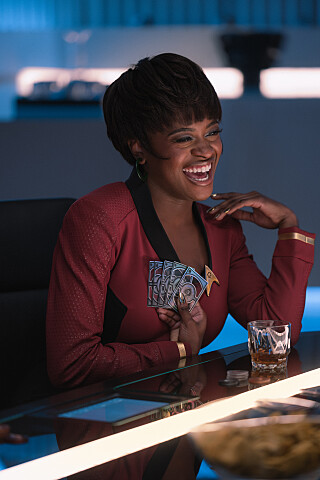
As we’re celebrating “Star Trek”’s 60th anniversary this year, it’s been a moment to recognize the show’s diversity and inclusion. There are, naturally, some fears about what the future of the show will look like considering where the industry is going amid the Paramount merger. As a queer person, how do you feel about the potential for the show to continue embracing diversity and perspective?
I know my publicist is holding her breath right now! I am really excited to be surprised about the future of “Trek” because right now, realistically, there is no “Trek” in production. We have another season of “Starfleet Academy” to release, and another season of “Strange New Worlds” to release, and then it gets quiet for live-action “Star Trek.” I know there’s a Nickelodeon show coming; there’s a lot of animated “Trek” happening, but when it comes to Gene Roddenberry’s vision, I don’t know what the future holds. The unknown can mean so many different things, and I am really excited about what I’ve been able to donate to this franchise. I’m so excited about what it means as a dark-skinned, Black queer individual to exist in Trek, to have my vessel that Uhura lives on in, and what it means for me and my community.
I can’t imagine that “Strange New Worlds” is going to be the last of “Trek.” I hope that is not the case because “Trek” has done so much for how people think about the future and how people embrace the future. There is so much positivity and diversity embraced in “Trek,” and the world is only going to get more diverse, despite what the powers that be want you to believe. We’re not going back, and I am excited for “Star Trek” to continue to be at the forefront of the stories that are told about how we do not go back, about how we move forward and embrace each other and embrace the unknown, embrace the diversity of opinion and experience. I’m just really excited to be surprised. I want to wake up one day and be like, “I could never have imagined this for ‘Trek’!”
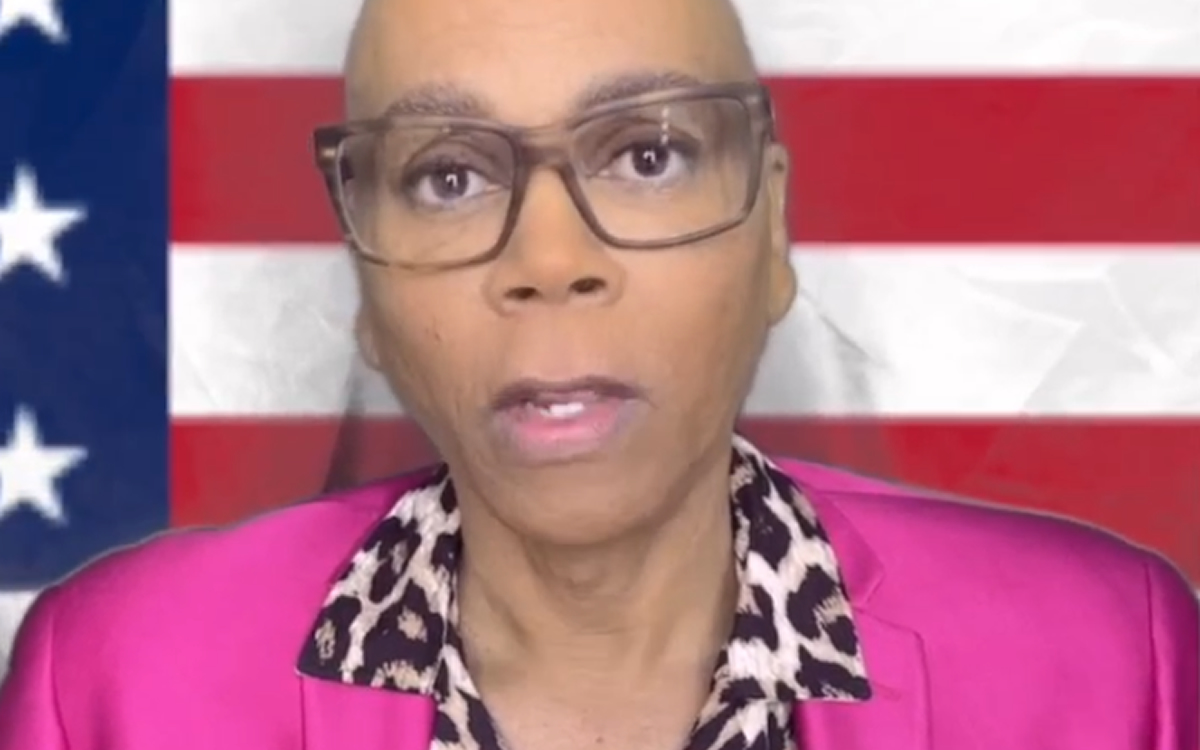
Nominations for the 78th Primetime Emmy Awards are here — and they are so, so queer!
With the year we’ve seen in LGBTQ media, this isn’t very surprising; whether it be jaw-dropping new series or the ends of fan-favorite classics, every month offered a new project or performer for queer audiences to fall in love with. There were some pleasant surprises — and shocking snubs — with these nominations that have left the many TV fanatics in our community excited, hopeful that their favorite actor or series can take home at least one award at this year’s ceremony.
Will this be the gayest Primetime Emmy Awards that the Television Academy has ever seen? Let’s take a look at some of the biggest, absolutely queerest nominations for this year and find out!
Leading the pack (and making history) for queer television is “Hacks,” with the final season of this HBO Max comedy earning a massive 25 nominations — breaking “Schitt’s Creek”’s record for the maximum number of nominations for a comedy series’ final season! Following an established comedienne (Jean Smart) and her bisexual, thoroughly Gen Z comedy partner (Hannah Einbinder), the series has been applauded for not only its portrayals of queer identity but also for how it showcases the generational divide in a way anyone can laugh at. Smart and Einbinder are both nominated for Outstanding Lead Actress and Outstanding Supporting Actress, respectively, with their fellow performers Meg Stalter, Paul W. Downs, Kaitlin Olson, and more also earning nominations for their time on the show. These, along with the numerous nominations for “Hacks”’ writing, directing, and all-around production, make it one of the most nominated programs at this year’s Emmys.
And this isn’t the only sapphic program being celebrated at this year’s awards! When “Pluribus” premiered, it took the (thankfully non-hive-minded) world by storm; it follows a lesbian author (Rhea Seehorn) who becomes one of the only people left with autonomy when an alien virus takes over the Earth. Seehorn — who offers an impeccably bitter performance as protagonist Carol Sturka — is being honored with an Outstanding Lead Actress nomination, with the show itself receiving 18 nominations overall in categories ranging from Outstanding Supporting Actor to Casting for a Drama. One extremely fun, thoroughly queer fact about these nominees: the actresses behind both of Carol’s onscreen love interests, Karolina Wydra and Miriam Shor, have earned their first Emmy nominations ever due to their work on the series!
While these queer TV shows are earning massive praise, the Emmys also made sure to honor the LGBTQ+ and ally celebrities who’ve graced our screens this year.
When he isn’t exciting audiences all over the world in “Heated Rivalry,” Connor Storie was making viewers laugh on “Saturday Night Live,” a hosting spot which earned him a nomination for Guest Actor in a Comedy. And though Jeff Hiller (who is coming off a 2025 Emmy win for “Somebody, Somewhere”) has proven to be one of the best parts of new hit “Widow’s Bay,” it was his turn as a mind-controlled, bicycle-short-wearing drone in “Pluribus” that earned the openly gay actor an Outstanding Guest Actor in a Drama nomination. Along with these, the always immaculate Zendaya received a nomination for Outstanding Lead Actress for her role as queer recovering drug addict Rue in “Euphoria,” and long-time ally Claire Danes will be competing for Lead Actress in a Limited Series for her role as troubled lesbian writer Aggie Wiggs in “The Beast in Me.”
When it comes to scripted television, the 2026 Emmy Nominations are filled with nominations for queer performers and stories alike. But, to the shock of nobody who loves nothing more than a good confessional and shocking table flip, there was one category where queer performers absolutely dominated: Reality Television.
The Outstanding Host for a Reality/Competition Program is one of this year’s most competitive categories — and not just because four of the five nominees are queer! The hilarious RuPaul Charles and Alan Cumming have both received nominations in this category, with their shows “RuPaul’s Drag Race” and “The Traitors” also being nominated for Best Reality Competition Program. They’re joined by lesbian heartthrob Kristen Kish, who, for the third year in a row, has been nominated for Outstanding Host right alongside her series, “Top Chef,” for Best Reality Program!
And, finally, making her debut in the world of Emmy nominations is Ariana Madix, who just earned her first nomination for Outstanding Host thanks to her work on “Love Island USA”! An alum of reality TV herself, her guiding sexy singles along the path to love has helped this reality series take the country by storm. An openly bisexual host — who has stated that she wants her own show to be more queer — she joins this amazing group of leaders helping to innovate this genre today.
While these are some of the biggest LGBTQ+ nominees at this year’s Emmys, they don’t include the countless queerr editors, writers, costume designers, and more who have also been nominated in the ceremony’s 100+ categories. They all deserve a huge round of applause for their tireless work this year, and each of them should remember that they’ve each won just by being nominated.
And even if they don’t take home that illustrious trophy, in the words of a particular Queen of Drag who’s nominated for Outstanding Reality Host, always remember: losing is the new winning!
You can watch the 78th Primetime Emmy Awards on Sept. 14 at 8 p.m. EST on NBC and Peacock.
Television
‘Big Mistakes’ an uneven – but worthy – comedic showcase
In the years since “Schitt’s Creek” wrapped up its six season Emmy-winning run, nostalgia for it has grown deep – especially since the still painfully recent loss of its iconic leading lady, Catherine O’Hara, whose sudden passing prompted a social media wave of clips and tributes featuring her fan-favorite performance as the deliciously daft Moira Rose. Revisiting so many favorite scenes and funny moments from the show naturally reminded us of just how much we loved it, even needed it during the time it was on the air; it also reminded us of how much we miss it, and how much it feels now like something we need more than ever.
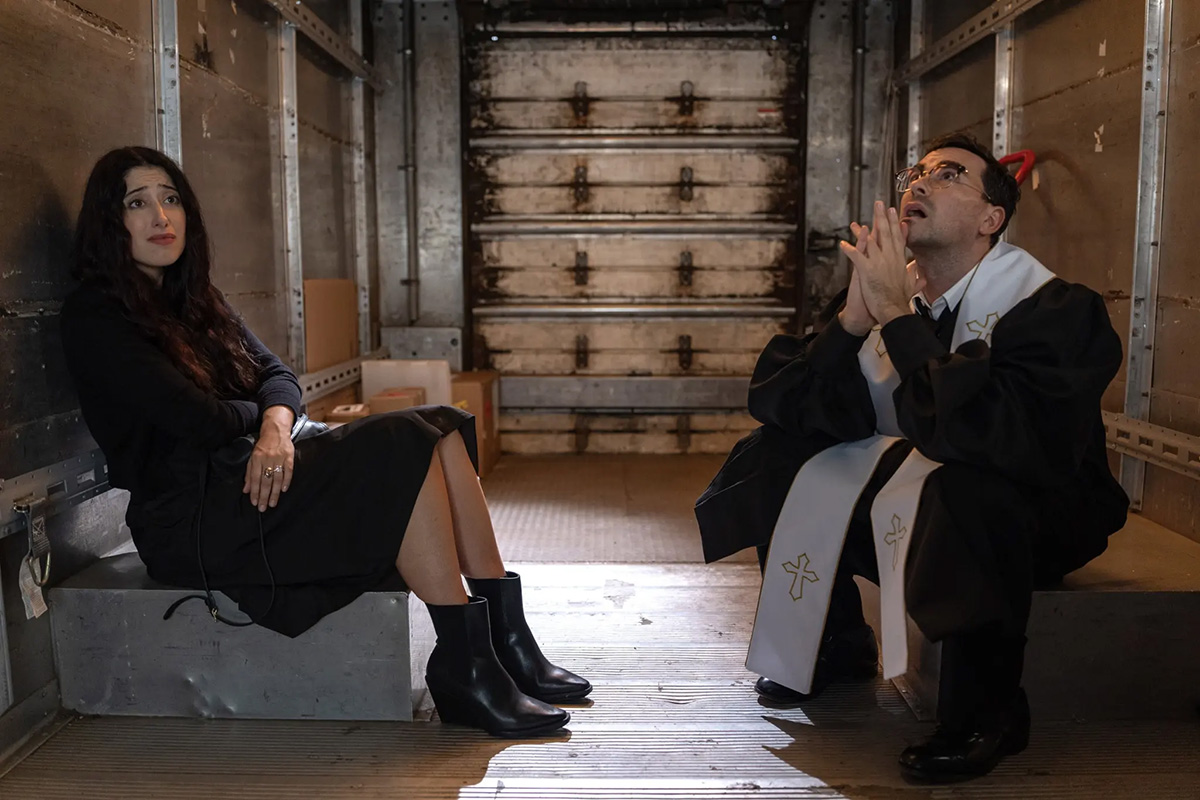
That, perhaps more than anything else, is why the arrival of “Big Mistakes” – the new Netflix series starring, co-created and co-written by Dan Levy – felt so welcome. We knew it wouldn’t be the Roses, but it seemed cut from the same cloth, and it had David Rose (or at least someone who seemed a lot like him) in the middle of a comically dysfunctional family dynamic, complete with a mother who gets involved in town politics and a catty sibling rivalry with his sister, and still nebbish-ly uncomfortable in his own gay shoes. Only this time, instead of running a charmingly pretentious boutique, he’s the pastor of the local church, and instead of a collection of kooky small town neighbors to contend with, there are gangsters.
As it turns out, it really does feel cut from the same cloth, but the design is distinctly different. Set in a fictional New Jersey suburb, it centers on Nicky (Levy) and his sister Morgan (Taylor Ortega) – he openly gay with an adoring boyfriend (Jacob Gutierrez), yet still obsessive about keeping it all invisible to his congregation, and she drudging aimlessly through life as an underpaid schoolteacher after failing to achieve her New York dreams of show biz success – who inadvertently become enmeshed in a shady underworld when a gesture for their dead grandmother’s funeral goes horribly awry.
They’re surrounded by a crew of equally compromised characters. There’s their mother Linda (Laurie Metcalf), whose campaign to become the town’s mayor only intensifies her tendency to micromanage her children’s lives; Yusuf (Boran Kuzum), the Turkish-American mini-mart operator who pulls them into the criminal conspiracy yet is himself a victim of it; Max (Jack Innanen), Morgan’s live-in boyfriend, who pushes her for a deeper commitment and is willing to go to couples’ therapy to prove it; Annette, his mother (Elizabeth Perkins), who lends her society standing toward helping Linda’s campaign against a misogynistic opponent (Darren Goldstein); and Ivan (Mark Ivanir), the seemingly ruthless crime boss who enslaves the siblings into his network but may really be just another slave himself. It’s a well-fleshed out assortment of characters that helps our own loyalties shift and adapt, generating at least a degree of empathy – if not always sympathy – that keeps everyone from coming off as a merely “black-and-white” caricature of expectations and typecasting.
To be sure, it’s an entertaining binge-watch, full of distinctive characters – all inhabiting familiar, even stereotypical roles in the narrative – who are each given a degree of validation, both in writing and performance, as the show unspools its narrative. At the same time, it makes for a fairly bleak overall view of humanity, in which it’s difficult to place our loyalties with anyone without also embracing a kind of “dog eat dog” morality in which nobody is truly innocent – but nobody is completely to blame for their sins, anyway.
In this way, it’s a show that lets us off the hook in the sense that it places the idea of ethical guilt within a framework of relative evils, as it permits us to forgive our own trespasses by accepting its “lovably” amoral characters, each of whom has their own reasons and justifications for what they do. We relate, but we can’t quite shake the notion that, if all these people hadn’t been so caught up in their own personal dramas, none of them would have ended up in the compromised morality that they’re in.
However, it’s not some bleak morality play that Levy and crew undertake; rather, it’s more an egalitarian fantasy in which even “bad” choices feel justified by inevitability. Everybody’s motivations make enough sense to us that it’s hard to judge any of the characters for making the choices – however unwise – that they do. In a system where everyone is forced to compromise themselves in order to achieve whatever dream of self-fulfillment they may have, how can anybody really blame themselves for doing what they have to do to survive?
Of course, all things considered, this is more a relatable comedy than it is a morality play. As a comedy of errors, it all works well enough on its own without imposing an ideology on it, no matter how much we may be tempted to do so. Indeed, what is ultimately more to the point is how well this pseudo-cynical exercise in the normalization of corruption – for that is what it really about, in the end – succeeds in letting us all off the hook for our compromises.
In the end, of course, maybe all that analysis is too deep a dive for a show that feels, in the end, like it’s meant to be mostly for fun. Indeed, despite its focus on being dragged into the shady side of life, the arc of its messaging seems to be less about a moralistic urge toward making the “right” choice than it is a candid recognition that all of us are compromised from the outset, often by choices we only force upon ourselves, and that’s a refreshing enough bit of honesty that we can easily get on board.
It helps that the performances are on point, especially the loony and wide-eyed fanaticism of Metcalf – surely the MVP of any project in which she is involved – and the directly focused moral malleability of Ortega; Levy, of course, is Levy – a now-familiar persona that can exist within any milieu without further justification than its own queer relatability – and, in this case, at least, that’s both the icing on the cake and substance that defines it. That’s enough to make it an essential view for fans, queer or otherwise, of his distinctive “brand,” even if he – or the show itself – doesn’t quite satisfy in the way that “Schitt’s Creek” was able to do.
Seriously, though, how could it?

Former Capital Pride board member reiterates sexual harassment allegation

Grace Meng sharply criticizes DOJ over hospital settlements

‘Star Trek: Strange New Worlds’ star Celia Rose Gooding breaks down that finale time travel twist

Center for Black Equity’s annual gala to take place Oct. 3