World
Australia prime minister reiterates opposition to trans women in female sports
Scott Morrison noted position ahead of May 21 general election
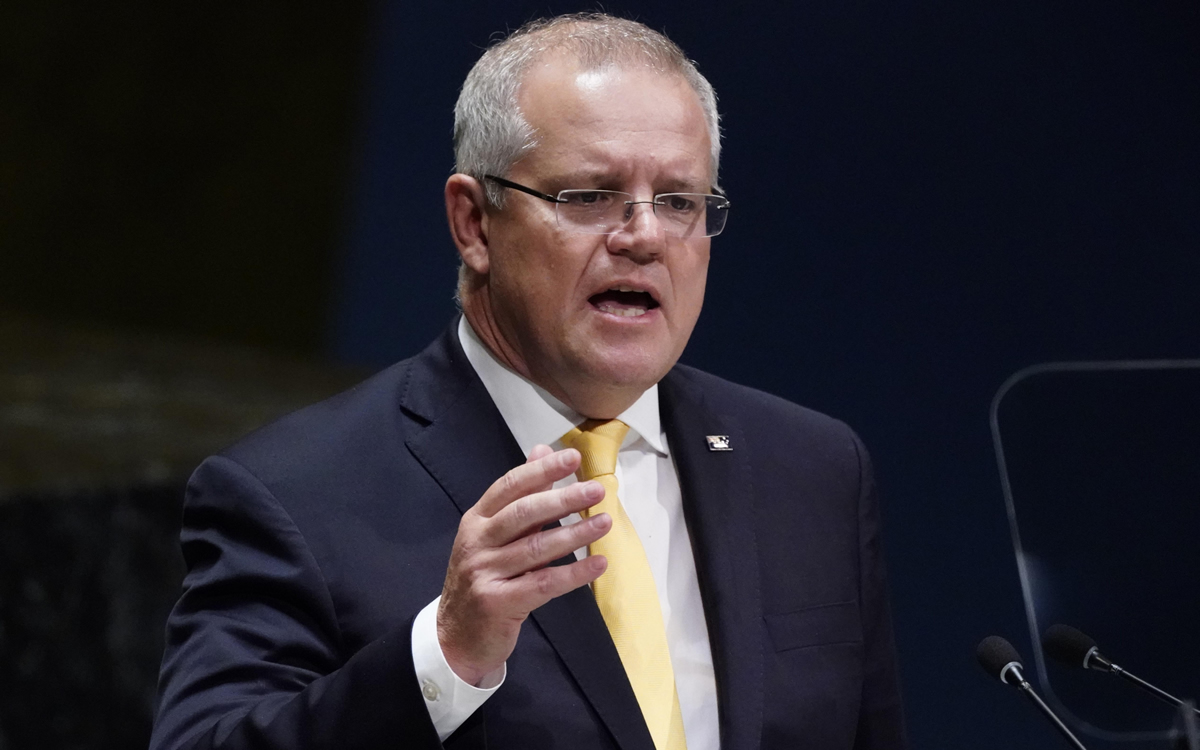
Australian Prime Minister Scott Morrison has reiterated his opposition to transgender women on female sports teams.
Senator Claire Chandler, who represents Tasmania, in February introduced a bill in the Australian Parliament that would amend the country’s Sex Discrimination Act to allow sports and clubs to ban trans women from “single-sex sport” teams.
“For the avoidance of any doubt, references to ‘sex’ refer to biological sex and the intention of this clause is to provide certainty that operating single-sex sport — sporting activity exclusively for either females or males — is not a breach of the act,” reads the bill. “A person’s gender/gender identity/gender expression has no bearing on their sex.”
The Australian Broadcasting Corporation on Monday noted Morrison has described Chandler’s bill as “terrific.” The Australian Broadcasting Corporation reported the prime minister has also endorsed Katherine Deves, the co-founder of Save Women’s Sport, a group that backs efforts to ban trans women from competing on female sports teams, who is running against incumbent MP Zali Steggal.
“I share their views,” said Morrison on Monday.
Australia’s general election will take place on May 21.
The Australian Broadcasting Corporation on Monday noted Morrison declined to say whether his government would seek to ban trans women from female sports teams if it were to win re-election.
“It’s time to recognize that there’s nothing brave about attacking trans people, but that courage instead lies in addressing the real problems we face,” said Sally Goldner, a spokesperson for Just Equal Australia, a national LGBTQ rights group, on Monday in a press release.





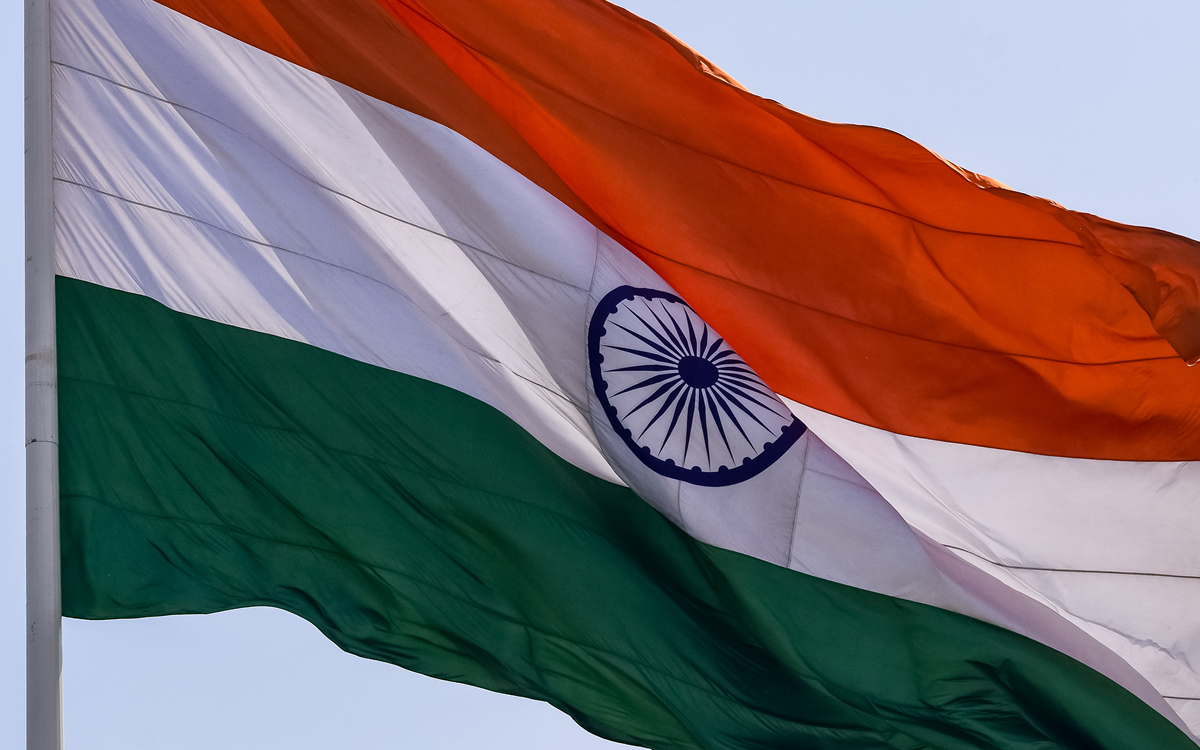
India’s Income Tax Department has opposed a same-sex couple’s petition that challenges Section 56(2)(x) of the Income Tax Act.
The provision exempts gifts between spouses from tax. The couple seeks the same benefit for their relationship.
At the center of the challenge is the explanation to the fifth provision of Section 56(2)(x). According to the petition, the provision excludes same-sex partners from the definition of “spouse.” The petition describes that exclusion as unconstitutional.
The provision defines “relative” to include an individual’s spouse, siblings, the spouse’s siblings, parents’ siblings, and other blood relatives.
Paiyo Ashiho and another petitioner, Vivek Divan, asked the Bombay High Court to recognize same-sex couples presumed to be in a marriage as “spouses” under the fifth provision to Section 56(2)(x).
A similar challenge is pending before the Karnataka High Court.
Bengaluru-based engineers Anurag Kalia and Akhilesh Godi have sought similar relief. Kalia said he wanted to give Godi a gold bracelet worth more than ₹115,500 ($1213.44.). The case remains pending.
The Prime Minister Narendra Modi-led government rejected the petition in an affidavit filed last year. It argued the plea was not legally tenable because it challenged no action or order of the Income Tax Department. Calling the petition an “abuse of process of law,” the government said the relief sought fell outside the scope of the Income Tax Act, 1961.
The government also argued the petitioners sought the benefits available to a “spouse” without legal recognition of their relationship. According to the affidavit, they had not placed on record any law recognizing their relationship as a marriage. It urged the court to dismiss the petition with costs.
The case returned to the spotlight on July 6, when the Bombay High Court heard the petition.
Justices B.P. Colabawalla and Firdosh P. Pooniwalla adjourned the matter after Solicitor General Tushar Mehta said he would appear on behalf of Modi’s government.
The petition comes nearly two years after the Indian Supreme Court’s marriage equality ruling.
In 2023, a five-judge Constitution Bench, in a 3-2 verdict, declined to recognize the constitutional validity of same-sex marriage in India. The country’s top court said MPs must decide whether to extend marriage rights to same-sex couples.
During the 2023 marriage equality hearings, lawyer Abhishek Manu Singhvi told the Supreme Court that marriage is a source of social validation, dignity, self-respect, fulfillment, and security. He argued that it also carries legal and civil benefits, including those related to taxation, inheritance, and adoption. Lawyer Anand Grover, who also appeared for the petitioners, told the court that marriage remains fundamental to the functioning of society and is necessary to access several state benefits, including joint tax benefits and surrogacy rights.
Chief Justice Dhananjaya Y. Chandrachud, in his minority opinion, said the Income Tax Act provides numerous tax benefits for payments made on behalf of a spouse, including deductions for life and health insurance premiums. He also noted that marriage confers several financial benefits on a spouse, including eligibility for gratuity, funeral expenses, medical benefits, and provident fund claims as the dependent of a deceased spouse.
In the marriage equality ruling, the Supreme Court recognized queer people cannot be discriminated against. The court said denying queer couples the material benefits and services available to heterosexual couples violates their fundamental rights.
While issuing directions to the federal, state, and territory governments; Chandrachud said the government should ensure there was no discrimination in access to goods and services. He also directed governments to sensitize the public about queer rights, establish a hotline for the queer community, create safe houses for queer couples, and ensure intersex children were not forced to undergo medical operations.
The petition is awaiting its next hearing before the Bombay High Court.
India’s tax system relies on both direct and indirect taxes, although its direct tax base remains relatively narrow. Individuals pay income tax at progressive rates of up to 30 percent, while consumers pay taxes on most goods and services through the Goods and Services Tax. The Income Tax Act also provides exemptions, deductions, and other tax benefits for eligible taxpayers, including those linked to family relationships and legal marital status.
India’s LGBTQ community is estimated to comprise between 135 million and 140 million people, or nearly 10 percent of the country’s population. Collectively, it is estimated to have a purchasing power exceeding $168 billion. The World Bank estimated that exclusion based on sexual orientation and gender identity cost India between $1.9 billion and $30.8 billion in lost economic output annually, or up to 1.7 percent of its gross domestic product.
India imposed a separate Gift Tax Act in 1958 to tax certain transfers of property made without consideration. Parliament repealed the law in 1998 to simplify the tax system and encourage genuine gifting. However, concerns over tax avoidance later prompted the government to bring gifts back within the Income Tax Act. Today, specified gifts exceeding prescribed limits may be taxed under Section 56(2)(x), subject to exemptions that include gifts received from relatives.
Under the Income Tax Act, gifts received from non-relatives exceeding ₹50,000 ($525.30) in a financial year are generally treated as taxable income, unless they qualify for a statutory exemption. Gifts received from specified relatives, including a spouse, are exempt from tax regardless of their value.
Tarun Khaitan — a research director and professor of public law at the London School of Economics Law School, honorary professorial fellow at Melbourne Law School, and associate fellow of the Bonavero Institute of Human Rights at the University of Oxford — told the Washington Blade the guarantee of equality and non-discrimination under India’s constitution was deliberately framed in broad terms because its framers envisaged that the understanding of those principles would evolve over time. They did not intend to freeze their meaning in 1950, he said. Instead, older and newer statutes alike must be interpreted in light of the constitution’s contemporary understanding.
“Constitutional values must inform the interpretation of all laws in India. It is well established in Indian jurisprudence that if a term can carry two meanings, the court will give it the meaning that complies with constitutional demands,” Khaitan said. “The term ‘spouse’ is not defined in the Income Tax Act, and unlike ‘husband’ or ‘wife’ is not a legal term of art in Indian family law. Its use by the Income Tax Act therefore is apt for judicial interpretation, which must be guided by the constitutional guarantees of equality and liberty.”
Asked how courts should balance respect for legislative choices with their constitutional responsibility to safeguard equality and dignity, Khaitan said he was not convinced that the legislature had made a clear choice in this case. He noted that the Income Tax Act uses the term “spouse” without defining it, adding that no other Indian law, to his knowledge, defines the term either. Its meaning has evolved over time, he said, pointing to the Oxford English Dictionary, which now defines a spouse as “a husband or wife, or a person joined to another in a comparable legally recognized union.”
Khaitan said the decision to restrict the meaning of “spouse” to different-sex married couples appeared to be the government’s interpretation rather than one expressly adopted by MPs. Even so, he said, courts have a duty to safeguard constitutional rights, although those rights are not absolute. The state, he said, must justify any restriction by demonstrating that it serves a sufficiently important public interest and that the limitation is proportionate to that objective.
“The extension of marriage would be a symbolic expression of equal acceptance of same-sex relations by law as well as a the extension of the bundle of material incidents that typically attach to it. Whether or not such extension happens, concerns such as inheritance, hospital visitation rights, decisions regarding end of life care, pensions etc affect the lives of same-sex couples as well as unmarried different-sex couples in a real, material sense,” Khaitan said. “There is no conceptual reason why the expressive salience of ‘marriage’ and the material incidents of a domestic partnership cannot be unbundled.”
Khaitan has had his scholarship cited by the Supreme Court in several constitutional cases, including Navtej Singh Johar v. Union of India, which decriminalized consensual same-sex relations, and Lt. Col. Nitisha v. Union of India, a landmark judgment on indirect discrimination.
Netherlands
Tens of thousands take part in World Pride March
Event capped off two weeks of celebrations in Amsterdam.

AMSTERDAM — Tens of thousands of people on Saturday participated in the World Pride March in Amsterdam.
Outright International Executive Director Maria Sjödin and Paolo Rondelli, who in 2022 became the world’s first openly gay head of state when he became Captain Regent of San Marino, are among those who participated alongside Massachusetts state Rep. Jack Lewis and Olena Shevchenko, chair of Insight, an LGBTQ advocacy group in Ukraine, and others.
Members of D66, the centrist Dutch political party that Prime Minister Rob Jetten heads, also marched.
Jetten in February became the Netherlands’ first openly gay prime minister. He participated in the opening of the World Pride Human Rights Conference on Aug. 5 and spoke on a panel with Rondelli, former Irish Prime Minister Leo Varadkar, and other gay and lesbian current and former heads of government.
(Washington Blade video by Michael K. Lavers)
(Washington Blade video by Michael K. Lavers)
The march took place a week after hundreds of thousands of people lined Amsterdam’s canals for the city’s annual Amsterdam Pride Canal Parade.
A terrorist attack at Berlin’s Christopher Street Day on July 25 left one person dead and more than two dozen others injured.
The incident overshadowed World Pride, which began hours earlier and ended on Saturday.
Dutch authorities increased security measures in the aftermath of the July 25 attack. No incidents were reported during World Pride.
Netherlands
Dutch PM: More needs to be done to defend trans rights
Rob Jetten on Friday was on World Pride Human Rights Conference panel

Editor’s note: International News Editor Michael K. Lavers and Photo Editor Michael Key will be on assignment in Amsterdam until Aug. 10.
AMSTERDAM — Dutch Prime Minister Rob Jetten on Friday said more needs to be done to defend transgender people and their rights.
“Everywhere in the Western world, it’s definitely the group that’s the most vulnerable in the moment and it’s rather well-picked also by our advisories,” he said during a panel at the World Pride Human Rights Conference in Amsterdam that Ying Xin and Diego García Blum of Global LGBTQI+ Human Rights Program at the Harvard Kennedy School’s Carr-Ryan Center for Human Rights Policy moderated. “They’ve chosen the smallest group within our broader community (trans people) to attack them, to ensure that we can strip their rights and if they’ve done with that, they’ll go after the next group within our community, so we shouldn’t be naïve about what’s behind it.”
“It’s very well-funded. It’s very well-organized and we have to organize as well to fight back and to win this fight,” added Jetten. “We also need to be more open in conversations that we are having within the community and also dive into it much deeper and maybe even have more difficult and annoying conversations.”
Jetten in February became the Netherlands’ first openly gay prime minister.
He appeared on the panel alongside former Irish Prime Minister Leo Varadkar, who in 2017 became his country’s first openly gay head of government, and former San Marino Captain Regent Paolo Rondelli, who was his country’s ambassador to the U.S. from 2007-2016.
Several other current former heads of government who are gay or lesbian also participated in the panel. They include former Icelandic Prime Minister Jóhanna Sigurðardóttir, former Luxembourgish Prime Minister Xavier Bettel, and Andorran Prime Minister Xavier Espot Zamora. California Congressman Mark Takano, who chairs the Congressional Equality Caucus, and LGBTQ+ Victory Fund CEO Evan Low were among those who attended.
Jetten in his remarks said he was “very surprised” to learn that “not only in the U.S. but also in some European countries that we’ve let them decide what the gay group looked like.” The Dutch prime minister further pointed out that conservatives began “to attack the debate on toilets or starting this debate about trans people in Olympic games.”
“That is, of course, a ridiculous debate to start, but we’ve got distracted because we were so busy having this debate on Olympians, and then we actually forgot the real fight was about access to healthcare, just being yourself, being able to enlist in the army, or being able to be a young trans boy or girl in school,” said Jetten. “We got distracted by some fresh meat that was thrown into the area by some very conservative people.”
“We have to open our eyes and have very in-depth conservations within our community, and come up with a much better strategy to win this fight and to protect all our trans brothers and sisters, dolls, whatever,” he added. “Because if we don’t win this fight for trans people, we’re going to lose the bigger fight for all LGBTQ people in the world.”
Varadkar noted Ireland in 2015 passed a law that allows people to legally change their gender without surgery or other medical interventions.
He conceded there was “a liberal wind blowing across the world at the time, and it was largely uncontested.”
“It would be harder now, quite frankly, to do that legislation,” said Varadkar.

Scottish lawmakers in 2022 passed the Gender Recognition Reform Bill, which lowered the age for anyone to legally change their gender without medical intervention from 18 to 16. Then-British Prime Minister Rishi Sunak’s government later blocked the measure from taking effect.
The U.K. Supreme Court in 2025 ruled the legal definition of a woman under the country’s Equality Act is limited to “biological women.” Author J.K. Rowling is among those who praised the decision that stemmed from a case that challenged the Scottish government’s decision to include trans women in its definition of women when it sought to increase the number of women on government boards.
The Trump-Vance administration on Jan. 20, 2025, the first day it was in office, issued a sweeping executive order that, among other things, declared the federal government would only recognize two genders: male and female. The White House earlier this year in its counterterrorism strategy said it “will also prioritize the rapid identification and neutralization of violent secular political groups whose ideology is anti-American, radically pro-transgender, and anarchist.”
“We have to stay united,” said Rondelli. “The strategy was, since the beginning, was a Nazi strategy to create groups, target groups, and to create maximum distractions to avoid discussion about some sort of policies.”
“Trans people are the target at the moment,” he added. “But after them it will probably be some others, so we have to stay united.”

Boris Dittrich, the Dutch Senate’s First Vice President and a member of Jetten’s D66 party who was previously global advocacy director for Human Rights Watch’s LGBTQ Rights Program, at the end of the panel asked about protecting intersex babies from what advocates maintain are unnecessary surgeries.

Flanagan beats Craig in Minn. Senate primary after winning key LGBTQ endorsements

Gay ANC commissioner sues D.C. over police ‘failure’ to pay reward money

New LGBTQ visitor center slated for Wilmington, Del.

Jason DePuy on coping with homophobia in ‘Big Brother’ house

2 former NBA players launch cheap anti-trans stunt to exploit WNBA rules

HRC condemns DoE removal of LGBTQ bullying data from federal survey

New book chronicles gay man’s life in hippie commune

PHOTOS: Daddy Issues at Kiki

Something’s off about Dad. When is it time to step in?