Commentary
Survivors of sex crimes are unsung heroes
Taking trauma and turning it to their advantage
(Editor’s note: This is the second of a two-part story. Click here to read the first installment.)
Last month, I started watching “The X-files.”
For the most part I loved the show, with Agents Scully and Mulder as the primary reasons why. Yet what I found most frustrating was watching their investigations. As early as episode one, set in a small town of scared people guarded by scary men, Agent Scully proposed coincidences while Agent Mulder proposed aliens. Despite the episode having “cult” written all over it, both agents seemed none the wiser.
Recently, I learned the FBI has an open process for writers and other creatives to learn how the agency works. I also discovered the FBI has a history of monitoring writers. In fact, the FBI is about as image-conscious as your typical D.C. gay, making me wonder how the “X-Files” moved forward with little pushback. That’s about as interesting as UFOs being discovered in New Mexico as we tested the atomic bomb.
But if you’re reading this, you likely want me to shut up about the “X-Files” and get back to my story. When I left off, my friend had disappeared and my work cleared me of any wrongdoing. That said, I was mysteriously fired in September 2022—nearly a year after the initial incident—and just six weeks after my boss learned that I wrote books.
The process of my firing was strange, to say the least. First and foremost, I was never given a reason. To this day it remains a mystery. My now-former employer—a high-profile lobbying firm—then bullied me into signing an NDA to access my severance.
By the way, I negotiated up. While I don’t know what I did, I had a feeling I had that power. I was right.
Just prior to the firing, they asked me to bring in my laptop so they could download my files. This rang an alarm for me, primarily because they never gave me a laptop. So, they wanted me to bring in my personal laptop. As a writer with original materials, I reasonably asked what constituted a work file. I never received an answer.
Coincidentally, I met my ex-boyfriend exactly one week before I got fired. He is the same ex-boyfriend from my religion piece, in which I mentioned he fell into hard times. Specifically, I was referring to concerning signs I spotted last April, primarily on the gay apps, and with memories of the last boy still fresh on my mind, I refused to let another slip from my grasp.
So, what did I do? I dove headfirst into hell in a messy attempt to rescue him. After playing this new game of cat-and-mouse in which I was said mouse, allow me to share what I learned: Over the course of several months, I spotted sketchy characters at my ex’s place—characters I suspected dealt hard drugs, which was highly out of character for him. Moreover, I found online accounts promoting extremely suspect pornography and, yes, pimping services on X (formerly Twitter), some of which looked a lot like my ex. While I didn’t know what exactly was happening, I knew something was off, but when I confronted my ex, he denied it.
Being the stubborn asshole that I am, I decided to check these sketchy characters out for myself. It turns out I was spot on about their sketchiness. I learned they not only drug unsuspecting young men in a coordinated manner, but once drugged they sexually violate them and—if drugged enough—begin recording videos. It’s all made to look random yet safe; for example, there always seems to be a nurse in the group who is “experienced” in administering needles.
Once I had proof these people were unsafe, I took further action for my ex. In mid-November, I reached out to someone in his personal life, which was a tough decision since he was closeted. I was strategic and chose someone who knew he was bisexual, and after connecting with her on Instagram, spoke on the phone with her the next morning. Upon hearing my concerns, she agreed based on her own observations.
Apparently, she spotted signs of him being physically harmed over the summer. She and I spoke for hours on end about the situation and how we could help him. Then, just a week later, I lost contact with her and my ex. I haven’t heard from either since.
I eventually grew concerned enough to contact the police and the FBI. In the meantime, particularly following my trauma article, sex workers approached me to share their stories—primarily stories of rape and abuse alongside a power structure rooted in it. As for those who try to oppose this system? They’re often written off as mentally ill.
I don’t know about you, but I refuse to live in a world where young queers are shepherded into this system. That’s the opposite of what I envision for the queer community.
Mid-Atlantic Leather weekend arrived in January, along with more sex workers. Once again, some approached me to share their stories—about their aspirations, about their art, about their perspectives on the world. And once again, about the system of abuse designed against them from the start. I heard stories of young boys raped by their fathers, or friends of their fathers, or about the drugs used to coerce them into sexual activity. Sadly, just like a UFO witness, they are usually written off and never taken seriously, especially if they have a record of drug abuse or mental illness. Seems to be a pattern, doesn’t it?
That said, these men are not solely victims. If anything, they took their trauma and turned it to their advantage. I’d like to take this moment to thank them. They’re unsung heroes—each and every one—in a nation that often shames them.
Yet as proud as I am of these sex workers, my heart was equally broken. These stories were painful to hear, to say the least. I quickly grew paranoid of people around me, even friends at times. There were other times I sat alone in my apartment, bawling over the men I had lost, along with the pain others had experienced. This only strengthened my resolve to end it.
To top this all off, my final discovery came just two months ago. Turns out there’s an X account publicly teasing me about this entire affair. The account even references this column and, according to the receipts, started well before I noticed concerning signs about my ex in the first place.
Hello there, dear X account. It appears you’ve been observing me. Consider this my proverbial tapping back on the glass.
Wow—there seems to be a lot of time, energy, and effort spent on little ole me. Why is that, I wonder? I’ve mentioned before I’m just a measly little barback who has been fired twice. Although looking back, those firings were strange too, weren’t they?
Is it the abuse I uncovered? Is it the details of my lover’s past? Is it something I wrote? Is it a combination of the three? And is it possible that the little dark cloud that’s been following me in D.C. is more intentional than I once thought?
I may never learn the truth on my own, but I can pose another question: what’s the only thing scarier than UFOs? To me there’s just one answer: that UFOs were never real in the first place. Occasionally, answers to unsettling mysteries simply unearth more unsettling mysteries.
I mentioned before in this column that I arrived to D.C. naïve about the world, perhaps just as naïve as Agents Scully and Mulder. Yet in my naiveté I tripped on something: the rot hiding beneath the surface of our nation’s capital. No, it isn’t coincidence. It isn’t aliens, either. But whatever it is, I alone cannot identify it.
Throughout my time uncovering this story, I’ve come across friends, acquaintances, and even relatives who suffered abuse, along with threats or shaming to keep them quiet. They come from all races, creeds, backgrounds, and orientations, and as it turns out, some of the infrastructure of power in D.C. and in towns across this nation are built around it. While I’m ready to tear it down, this isn’t just my story. I might be the one starting it, but it’s not on me to finish.
The most I can do is hand the pen over to the victims. I’ve shared my part. Now it’s their turn. As for the audience: I hope you’re now ready to start believing.
Jake Stewart is a D.C.-based writer and barback.


Commentary
When a church fears the rainbow
Puerto Rico pastor objected to Pride symbols outside congregation
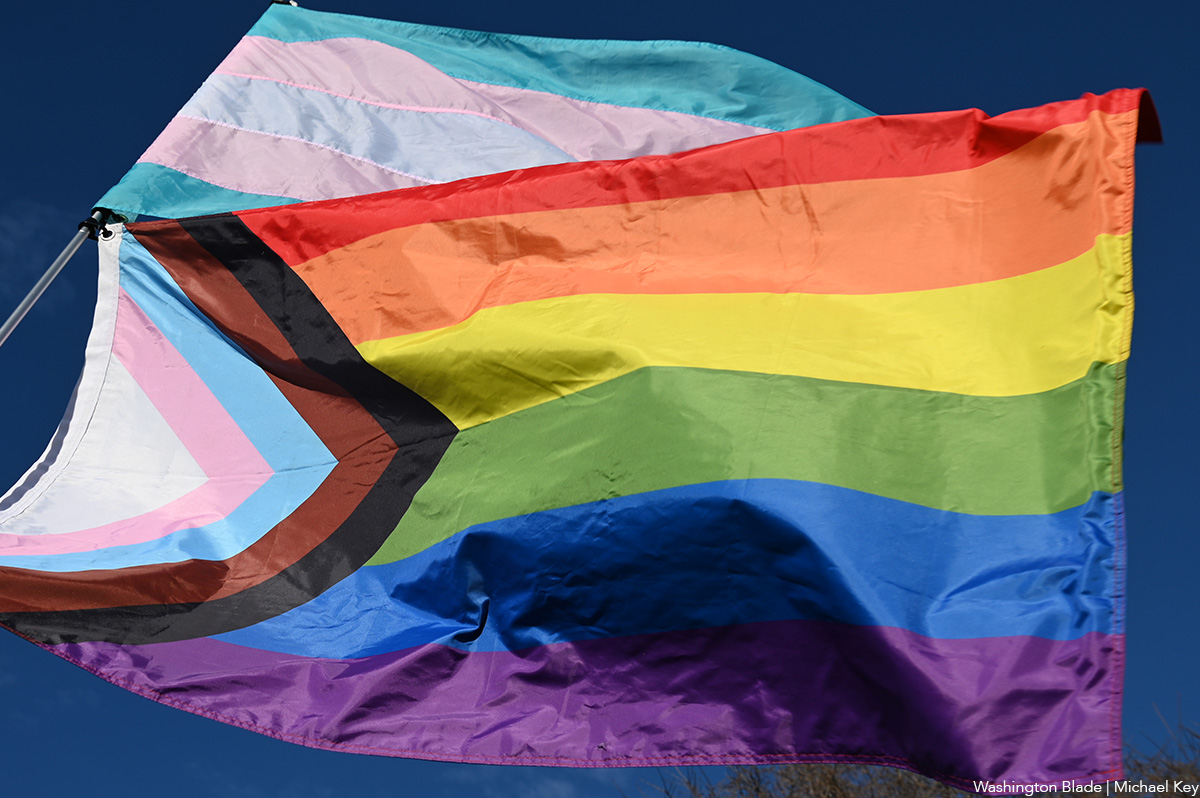
There are moments when an incident stops being merely a local story and begins to reveal something much deeper. What happened on June 28 outside One Church, in Comerío, Puerto Rico, belongs in that category.
I do not know who painted the rainbow colors on the asphalt and on a roadside guardrail. I do not know what motivated them, and it is not my place to justify their actions. If someone believes a law was broken, there are authorities and legal mechanisms to address that. That is not the point of this reflection.
The point is the words that followed.
Hours after those colors appeared, Pastor Jorge J. Santiago Reyes went live on social media. He said he felt threatened. He described what happened as a physical attack against his church. He appeared angry and disappointed. He called those who painted the rainbow “cowards” and “charlatans.” He expressed frustration with the support that, according to him, the municipal government of Comerío has shown toward the LGBTQ community, and with those who support posts related to that community. He repeated several times that the people responsible had “crossed the line.” He ended his message by saying, “These charlatans have to be stopped.”
As I listened to his words, I stopped thinking about the paint.
I began thinking about fear.
There is one phrase the pastor repeated again and again: “They crossed the line.” Yet he never explained what that line was. If he was referring to a possible violation of the law, that is for the authorities to determine. If he meant respect for property, there are also procedures to deal with that. But when that line remains undefined and the message begins to associate a rainbow with a threat, the question changes. It is no longer only about a guardrail or a road. It becomes a question about what boundary, in the pastor’s view, was actually crossed.
Paint can be erased.
A brush can cover the asphalt and return a guardrail to its original color.
What does not disappear so easily is the meaning of those colors.
And perhaps that is where the real conflict begins.
It is significant that this happened precisely on June 28, the day when the LGBTQ community remembers a history marked by exclusion, violence, and the struggle for dignity. What represents memory, hope, and the possibility of living without hiding for millions of people was presented by others as a threat.
I do not know why someone painted that rainbow. I do not need to know in order to ask whether those were the words society should expect from a pastor.
A religious leader may feel hurt, frustrated, or angry. What he cannot forget is the responsibility that comes with every public expression. His words do not end when a livestream ends. They move beyond the space of his church, reach people who may never share his faith, and help shape the way others see those who think differently. When a pastor calls other people “charlatans” and “cowards,” says they “have to be stopped,” and turns a rainbow into evidence of an attack, he is no longer speaking only from frustration. He begins to build a discourse that can feed rejection toward a community far larger than the people responsible for that act.
There was another moment in the livestream that caught my attention. The pastor reminded viewers how much he has served Comerío, how much he has accompanied his community, and how much he has worked for it. I have no reason to question that service. I am sure many people can testify to the good he has done.
That is precisely why it was difficult to hear.
Pastoral vocation is not about reminding a town of everything one has done for it when conflict appears. Service does not lose its value when it goes unrecognized; it loses something when it becomes an argument to claim a moral position from which to speak down to others. A person who serves does so because that is the nature of the calling, not because that service grants authority to discredit those who think differently.
As a pastor, that part of the message left me deeply uneasy. Not because I expect ministers of God to be perfect. We are not. But because our words carry weight, we are called to speak with greater responsibility. Some expressions build bridges. Others raise walls. Some words invite encounter. Others end up justifying rejection.
The paint will disappear. A brush will be enough to cover the asphalt and return the guardrail to its original color.
The words will not disappear as easily.
They will remain recorded in a video, shared again and again on social media, and remembered by those who heard them. They will remain long after the last trace of paint has been erased.
When this episode is remembered, it probably will not be because of the rainbow that appeared outside One Church, in Comerío, Puerto Rico.
It will be because of the words a pastor chose to use when speaking about it.
And that difference changes everything.
Commentary
The boy they refused to forget
Jonathan David Muir Burgos released from Cuban prison after participating in protest
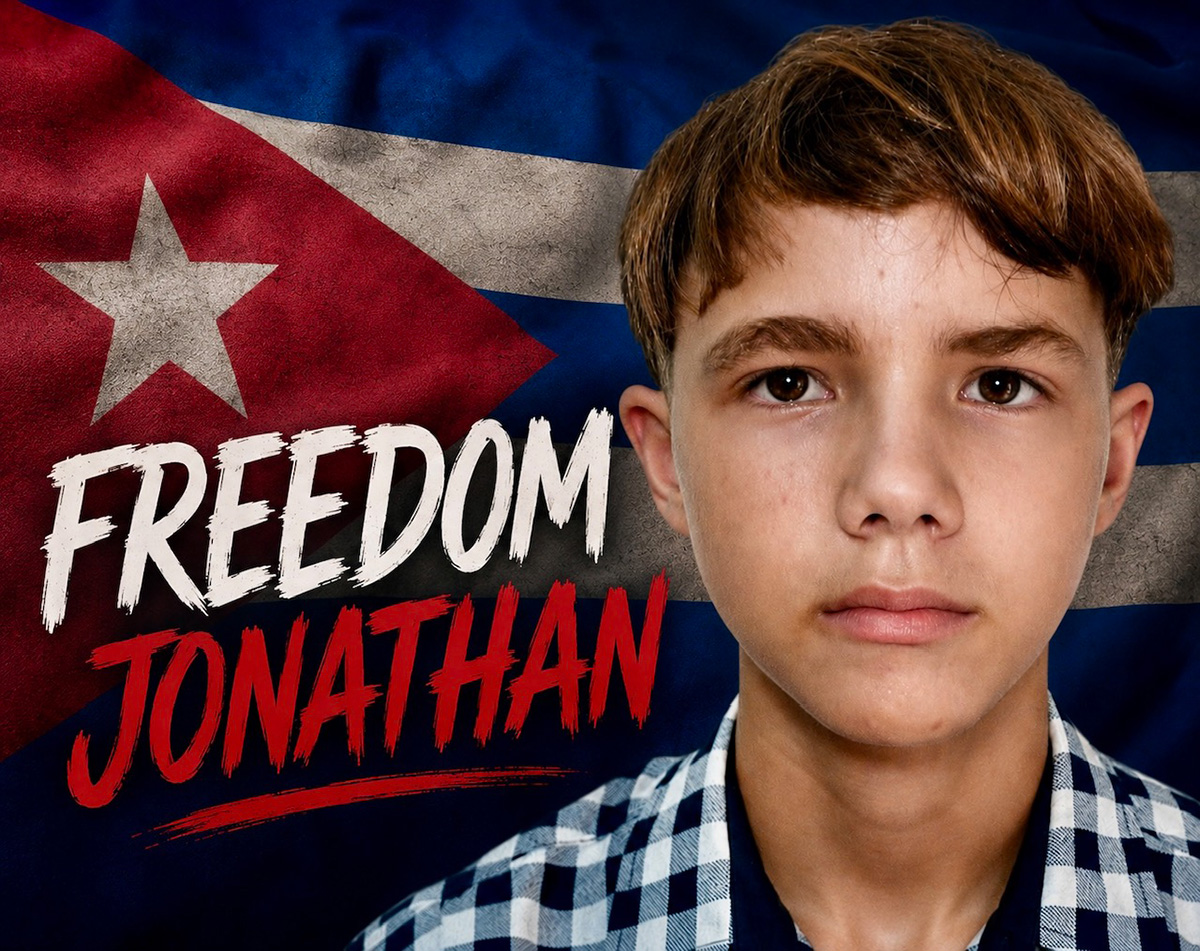
When the Washington Blade first reported the story of Jonathan David Muir Burgos, the news centered on a 16-year-old Cuban teenager who had been sent to prison after taking part in a public protest in Morón, Ciego de Ávila. At the time, the facts were straightforward. A minor had lost his freedom, and his case was beginning to attract attention beyond Cuba’s borders.
Today there is another fact that deserves to be recorded with the same rigor.
Jonathan is no longer in prison.
His release, confirmed by multiple news organizations, closes one chapter of a story that, for months, was followed by journalists, human rights organizations, religious communities, and countless individuals who refused to let his name disappear from public view. Each of them became part of a much larger effort to ensure that the imprisonment of a Cuban teenager would not fade into silence as the news cycle moved on.
That collective attention does not explain every decision that ultimately led to Jonathan’s release, and it would be irresponsible to suggest otherwise. Judicial processes are rarely shaped by a single factor. What can be said with certainty is that Jonathan’s story never disappeared. It continued to be documented, discussed and followed long after the initial headlines were published.
Behind every widely reported case there is a family living a reality that rarely appears in the news. In Jonathan’s case, there was a father who also serves as a Protestant pastor and who spent months speaking publicly about his son while asking others not to forget him. There was a mother enduring the uncertainty familiar to any parent separated from a child. There were classmates, friends, and neighbors waiting for the day when Jonathan would no longer be known as the teenager behind bars, but simply as the young man returning home.
The image of a prison gate opening often marks the end of a news story. In reality, it marks the beginning of something far more difficult. A teenager must resume an interrupted education, reconnect with friends, rebuild ordinary routines, and recover a sense of normalcy after months in confinement. Those experiences seldom become headlines, yet they are part of the true cost of imprisonment.
Jonathan’s release is therefore more than an update to a story previously reported. It is a reminder that public attention has value. Journalism matters because it documents. Human rights organizations matter because they investigate. Communities matter because they refuse indifference. Families matter because they continue to wait, even when the waiting becomes unbearable. None of these efforts should be viewed in isolation. Together they ensure that a person’s story does not disappear simply because time has passed.
Many people leave prison after being forgotten.
Jonathan David Muir Burgos walked out of prison knowing that, throughout those months, thousands of people had continued to speak his name, follow his case and hope for the day when this story could be told differently.
Today, that day has arrived.
Commentary
Religion, spirituality, and humanity: finding meaning in a complex world
LGBTQ refugees find hope in faith, common humanity
Religion and spirituality continue to shape the lives of billions of people around the world. Whether expressed through organized faith traditions, personal beliefs, cultural practices, or philosophical reflection, they remain powerful influences on how people understand themselves, others, and the world around them.
As a displaced person, I have seen firsthand how religion and spirituality affect people’s lives during times of uncertainty, hardship, and hope. In communities facing displacement, poverty, illness, conflict, and long waits for resettlement opportunities, questions about meaning, purpose, resilience, and belonging are not abstract concepts. They are part of everyday survival.
Religion and spirituality are often discussed together, yet they are not identical. Religion generally involves organized systems of belief, sacred texts, rituals, and communities. Spirituality is often more personal and may involve an individual’s search for meaning, connection, and inner peace without necessarily belonging to a specific faith tradition.
Despite their differences, both seek to answer some of humanity’s oldest questions: Why are we here? How should we live? How do we cope with suffering? What gives life meaning?
A search shared across cultures
Human beings have always searched for answers to the mysteries of existence. Across continents and throughout history, people have developed different ways of understanding life, death, nature, and the universe.
Christians may turn to the Bible. Muslims may seek guidance from the Quran. Jews may draw wisdom from the Torah. Hindus, Buddhists, Sikhs, Indigenous peoples, and many others have their own spiritual traditions and teachings.
Recently, an Australian reader, Eveline Goy, shared a thoughtful reflection after reading one of my earlier articles. She noted that while some people may speak of “false prophets” based on their religious beliefs, others may find truth and wisdom in entirely different traditions. She also highlighted the rich spiritual heritage of Australia’s First Nations peoples, whose stories of the Rainbow Serpent continue to shape cultural identity and understanding of creation.
Her reflection reminded me that while beliefs vary widely, the desire to understand our place in the universe appears to be deeply human.
Religion, love, and LGBTQ people
For many LGBTQI+ people, religion can be both a source of comfort and a source of pain.
Throughout history, faith communities have offered people hope, belonging, and moral guidance. Yet many LGBTQI+ individuals have also experienced rejection, exclusion, or condemnation from religious institutions because of their sexual orientation or gender identity.
As a queer refugee, I know how deeply these experiences can affect a person’s sense of self-worth and belonging. Many LGBTQI+ refugees I work with were not only rejected by society but also by families and faith communities they once trusted. Some were told they were sinful, broken, or unworthy of love. Others were forced to hide their identities in order to remain accepted.
Yet this is not the whole story.
Across the world, there are also religious leaders, churches, mosques, synagogues, temples, and faith communities that embrace LGBTQI+ people and affirm their dignity. Many believers interpret their faith through the values of compassion, justice, mercy, and love rather than exclusion.
At its heart, love is one of the most universal values found across spiritual traditions. Whether expressed through faith, friendship, family, or community, love has the power to heal wounds, build bridges, and restore dignity.
For many LGBTQI+ people, the challenge is not choosing between faith and identity but finding spaces where both can coexist.
Religion and spirituality in difficult times
We live in a world facing numerous challenges. Wars continue across several regions. Climate change affects communities through droughts, floods, and extreme weather events. Economic uncertainty impacts millions of families. Refugees and displaced people face uncertain futures.
In such circumstances, many people turn to religion or spirituality for comfort and guidance.
Here in Gorom Refugee Settlement Camp, I see this every day. Some gather for prayer. Others find strength in sacred texts. Some find comfort in collective worship, while others seek peace through personal reflection and meditation.
For many, faith provides hope when circumstances seem hopeless.
Yet I have also observed something equally important. Not everyone draws strength from religion. Some find resilience through friendship, mutual support, activism, creativity, and the determination to keep moving forward despite adversity.
This reminds us that while religion and spirituality can be sources of strength, so too can our shared humanity.
The human values that unite us
One of the most remarkable aspects of religion and spirituality is that despite their differences, many traditions promote similar values: Compassion, kindness, forgiveness, generosity, honesty, and respect for others.
These values are not exclusive to any single religion or philosophy. They appear across cultures, faiths, and secular worldviews.
Living in a refugee community has reinforced this lesson. Some of the most generous people I have met are deeply religious. Others are not religious at all. What matters most is not necessarily what people believe, but how they treat one another.
When someone shares food with a hungry neighbor, that is compassion.
When a person comforts a frightened child, that is humanity.
When communities stand together despite differences, that is solidarity.
These actions often speak louder than doctrine.
Building bridges in a diverse world
Religion and spirituality have inspired extraordinary acts of kindness throughout history. Yet they have also contributed to division when people become convinced that only their own beliefs are valid.
In today’s interconnected world, we encounter a greater diversity of perspectives than ever before. This diversity can enrich societies, but it also requires humility, curiosity, and respect.
No individual, community, or tradition possesses all the answers to life’s mysteries.
The challenge is not to eliminate differences but to learn how to coexist peacefully despite them.
For LGBTQI+ people, refugees, people of faith, and those without religious beliefs, dialogue and mutual respect remain essential. We all benefit when societies create space for people to live authentically while respecting the dignity of others.
Religion and spirituality continue to play important roles in human life. They help many people find meaning, resilience, comfort, and community during difficult times.
At the same time, the values that often matter most compassion, dignity, kindness, justice, and love are not confined to any single religion or belief system.
My experiences as a queer refugee have shown me that hope can emerge from many places. Some find it in prayer. Some find it in philosophy. Some find it in activism. Some find it in human connection.
Perhaps what ultimately matters is not which path we follow, but whether that path encourages us to become more compassionate, understanding, and caring human beings.
In an uncertain world marked by division and conflict, our shared humanity may be the strongest foundation upon which we can build a more peaceful, inclusive, and loving future for LGBTQI+ people, for people of faith, and for all humanity.
Aby lives in the Gorom Refugee Settlement Camp in South Sudan.

Authorities investigate officer-involved shooting outside Asheville gay bar

Popular Mount Vernon gay bar Leon’s to temporarily close after owner’s death

30 years on, ‘The Birdcage’ remains a landmark

Comings & Goings

Whitman-Walker to host legal services workshop

Mexico’s first openly gay mayor killed

Expected India Supreme Court ruling could shape future LGBTQ rights cases

Celebrate Pride in Rehoboth Beach this weekend

Christa Tichy hopes to preserve LGBTQ representation in Md. House of Delegates

Advocacy groups join Venezuela earthquake relief efforts
-

 Mexico5 days ago
Mexico’s first openly gay mayor killed
-
India4 days ago
Expected India Supreme Court ruling could shape future LGBTQ rights cases
-
Rehoboth Beach4 days ago
Celebrate Pride in Rehoboth Beach this weekend
-
Maryland4 days ago
Christa Tichy hopes to preserve LGBTQ representation in Md. House of Delegates