Virginia
Gay talk show host wins GOP nom for Va. lieutenant guv
John Reid becomes first out gay nominee for statewide office in state
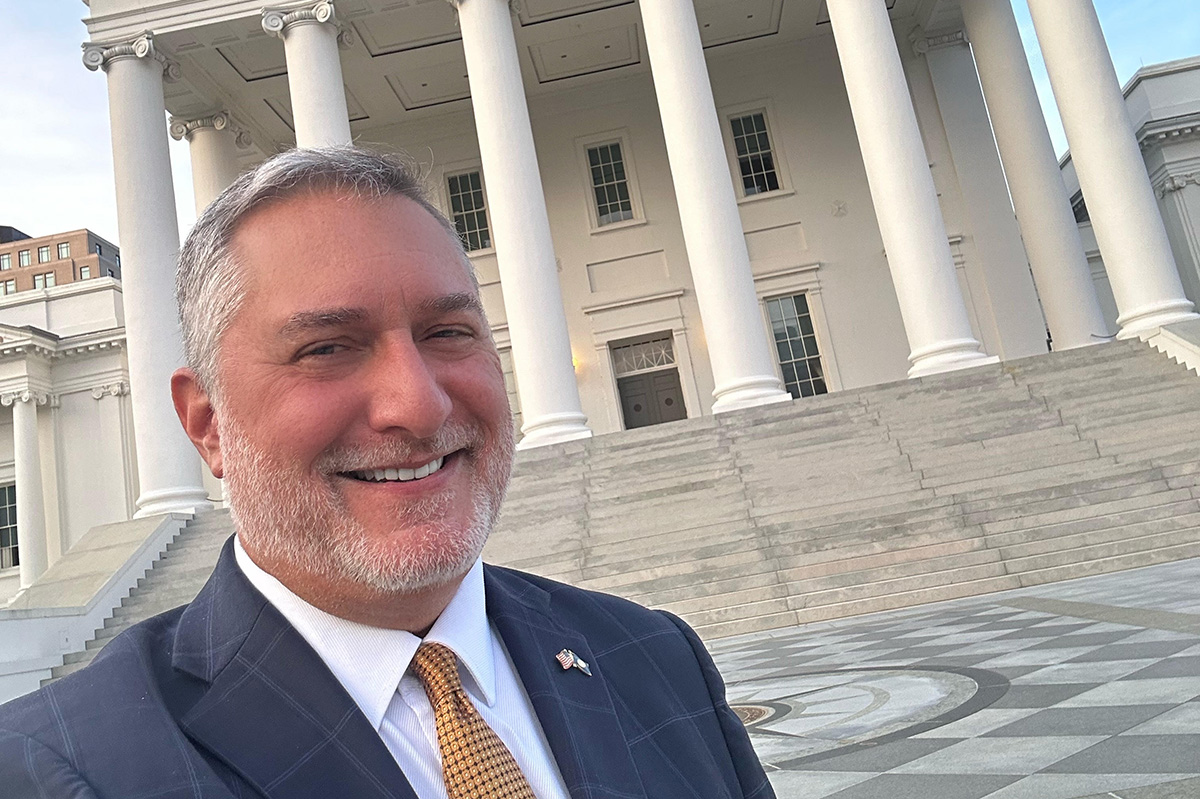
John Reid, a conservative gay radio talk show host in Richmond for many years, this week secured the Republican nomination for the office of lieutenant governor in Virginia, becoming the first known openly gay person to be nominated for a statewide office in that state.
Reid secured the nomination after his only rival in the Republican primary, Fairfax County Supervisor Pat Herrity, dropped out of the race this week for health reasons.
Herrity’s decision to withdraw from the race finalized the GOP nominees for Virginia’s three statewide contests in the November general election in what political observers are calling an unusually diverse GOP slate.
Current Virginia Lt. Gov. Winsome Earle-Sears, a Black woman, captured the GOP nomination for governor without a GOP opponent. Jason S. Miyares, a Hispanic man, is running for re-election as Virginia attorney general without a GOP rival. And Reid, a gay man, is the GOP nominee for lieutenant governor.
Reid will face one of six Democratic candidates for lieutenant governor who are competing in the June 17 Democratic primary.
The Blade spoke with Reid on Tuesday. Below is a partial transcript of that interview.
Blade: Is there a message you have for LGBTQ voters in Virginia, including Democrats, for why you think they should vote for you?
Reid: Well, the thing that I would say to gay voters who are looking and examining the candidates, is that I was out of the closet as a gay Republican publicly in very difficult rooms where people weren’t accepting of gay men – long before Donald Trump said I don’t care about this stuff.
And long before polite society said this was OK. So, in the ‘90s I came out on television and said on Oct. 11 – it was on National Coming Out Day. It was probably in 1996 or 1997. I started at the TV station in 1994. So, it was a couple of years into it.
I came out and said you never know your news anchor could be gay on National Coming Out Day. And everyone was appalled. How can you say this? You’re not supposed to say something like that. So even though I’m a Republican I know some people in the LGBT community are reflexively hostile to Republicans.
I took that step in public, and I think I helped change a lot of minds within the Republican Party and within central Virginia, which continues to be a pretty conservative place by being true to who I am. I spoke out in meetings around Republican staff and legislators and said I think we are not doing the right thing by being hostile to gay marriage.
We talk about the importance of family – Republicans talk about the importance of family, the importance of marriage as a fundamental building block of society. And a gay marriage is a net positive. Is it biblical to people who are following traditional Christian theology? No. But is it good for our society to have people in committed relationships? I think yes.
When we were going through the debate over gays in the military I said I see no reason that someone who is qualified to be in the military and can meet every single standard that everyone else is asked to meet, why should they not be in the Naval Academy, the Air Force Academy, West Point? Or serving as a grunt in active duty. Why would we exclude those people?
And those were very unpopular positions within the Republican Party.
Blade: Your campaign website says you have supported civil unions for same-sex couples. I could have missed seeing it, but I didn’t see an expression of support for gay marriage. Are you saying now that you support full same-sex marriage?
Reid: You know, you’re right. There is a distinction. And I think marriage is completely legitimate. Civil unions – if you want to go and sign paperwork at the courthouse – that’s great. If you want to be married and if a church wants to marry you if you find a church and religious leader and group that wants to bless that – that’s what I hope to do with my partner now.
Sometime in the near future I hope we will be married. And it’s very important to me as a Christian to be married in a church. So, that’s interesting. Most people would not draw that distinction. I appreciate that you’re drawing a distinction. I’m supportive of both.
Blade: Did you say you worked for a member of Congress? Can you say who that was?
Reid: George Allen, the senator from Virginia. And, of course, you and I – I know you’ve covered so many stories like this that you’ve brought together. But it was a very difficult position. When I started with Sen. Allen, he had a very libertarian attitude about this. The [Virginia State] constitutional amendment was not necessary. There was no need to go down that road.
And of course President Bush – George W. – was very assertive during the 2004 campaign. And then the issue continued to bubble up and you know we wound up with this amendment in the Virginia Constitution that banned gay marriage until the Supreme Court decision. And I was not supportive of that. And I voted for my boss, my senator, who I respected and still do respect.
Blade: Your website shows that your support for the gay community does not extend to the transgender community.
Reid: Yeah, I hate this. But I do think that our current focus on trans issues is where the gay rights movement has jumped the shark. And I think we’re losing support that we worked very diligently for decades to build with the average person. And I’m puzzled that the former leaders of the Human Rights Campaign had presidents when Elizabeth Birch and others – I don’t know what their stance is today.
I do recall that all of us who talked about gay rights issues focused on normalcy and that we would meet every standard that everyone else met. That all the vile things that were said about gays being pedophiles and grooming children – that simply was not true.
And I think we have stumbled into a very unfortunate and dangerous territory where we’re almost taunting the average person with an insistence that they accept drag queen story hour and the provocative books and provocative media that the average person would say, ‘You told us you were normal. – quote unquote normal – and now you are peddling an agenda which we don’t agree with and you’re being really aggressive about it.
And that’s really a difference. I know you’ve been covering it for a long time. I don’t know if you agree with this. I think we are peddling a very different political agenda today than the gay community was 20 years ago. And I think we should restrain ourselves and be cautious about that. And I think we’re in dangerous territory with the general population. And I’d urge caution about that.
Blade: Online reports show that there are as many as six Democratic candidates competing for the lieutenant governor’s position in the June 17 Democratic primary. Do you know any of them?
Reid: I’m familiar with most of them. Some are from the Richmond area. And I believe they are all very supportive of gay rights, which is I think a good thing. My reason for challenging them as a Republican – and I think there are other places where there is a lack of appropriate leadership and good judgment. And so, I don’t expect the gay issue would be a real issue. The trans issue may be a point of contention in the race.
But I don’t think the gay issue – and I do draw a distinction between the two — I don’t think that will be a real dividing line with those Democrat[ic] candidates.
Blade: So unlike when you were a TV news anchor, on your radio talk show were you able to offer more opinions and commentary?
Reid: That’s correct. There was a lot of opining, no script. So, I was able to tell stories about how I traveled to Miami, and I went to Washington. I went to the Kennedy Center and shared some of my life and lifestyle as appropriate with the audience.
Blade: Well, thank you for this interview.
Reid: I’m happy to talk to you. One of the reasons I called you back is that the political consultants have always told me don’t talk to anybody that might disagree with you. And I reject that. I have already lived 30 years as an out gay man. And it has been very difficult. And I would like to make it easier for the next generation to live their authentic selves. … Calling you and talking to you against the advice of all these people who say never do that, I’m hopeful that my willingness to engage and be candid will ultimately be well received, I hope.
Virginia
Va. lawmakers consider partial restoration of Ryan White funds
State Department of Health in 2025 cut $20 million from Part B program
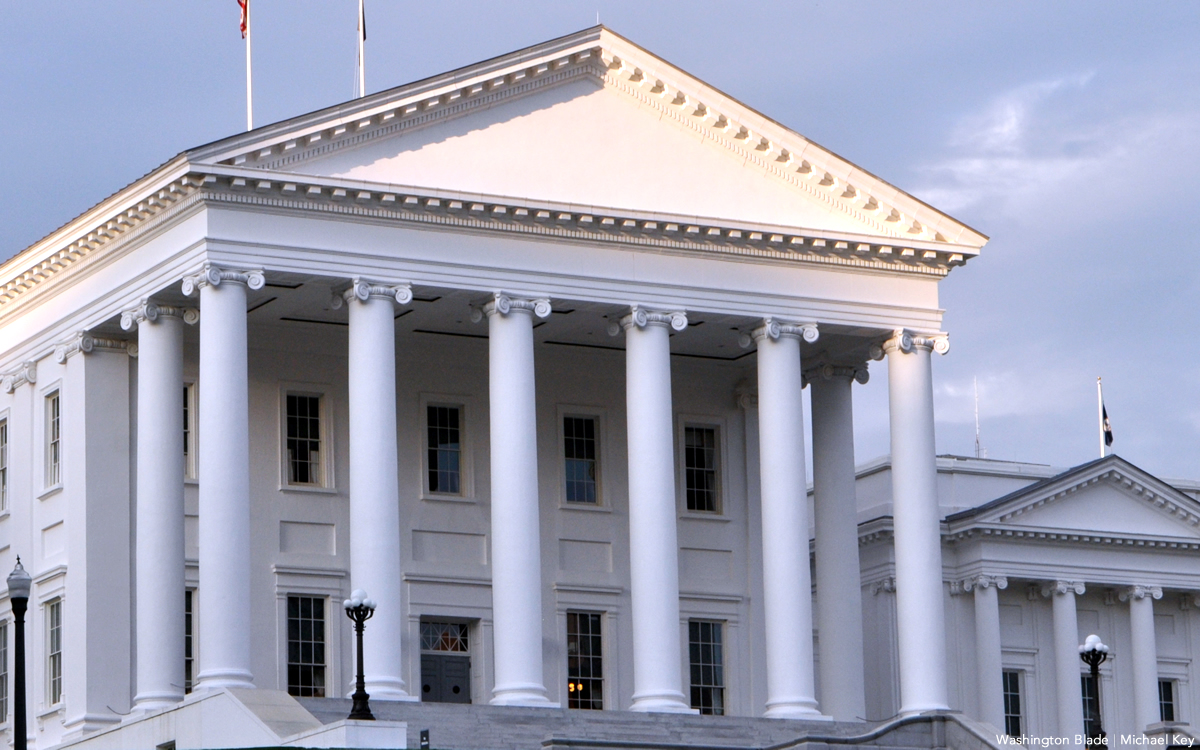
The Virginia General Assembly is considering the partial restoration of HIV funding that the state’s Department of Health cut last year.
The Department of Health in 2025 cut $20 million — or 67 percent of total funding — from the Ryan White Part B program.
The funding cuts started with the Trump-Vance administration passing budget cuts to federal HIV screening and protection programs. Rebate issues between the Virginia Department of Health and the company that provides HIV medications began.
Advocates say the funding cuts have disproportionately impacted lower-income people.
The Ryan White HIV/AIDS Program, a federal program started in 1990, provides medical services, public education, and essential services. Part B offers 21 services, seven of which remained funded after the budget cuts.
Equality Virginia notes “in 2025, a 67 percent reduction severely destabilized HIV services across the commonwealth.”
Virginia lawmakers have approved two bills — House Bill 30 and Senate Bill 30 — that would partially restore the funding. The Ryan White cuts remain a concern among community members.
Both chambers of the General Assembly must review their proposed changes before lawmakers can adopt the bills.
“While these amendments aren’t a full restoration of what community-based organizations lost, this marks a critical step toward stabilizing care for thousands of Virginians living with HIV,” said Equality Virginia Executive Director Narissa Rahaman. “Equality Virginia plans to continue their contact with lawmakers and delegates through the conference and up until the passing of the budget.”
“We appreciate lawmakers from both sides of the aisle who recognized the urgency of this moment and will work to ensure funding remains in the final version signed by the governor,” added Rahaman.
Virginia
Arlington LGBTQ bar Freddie’s celebrates 25th anniversary
Owner asks public to support D.C.-area gay bars
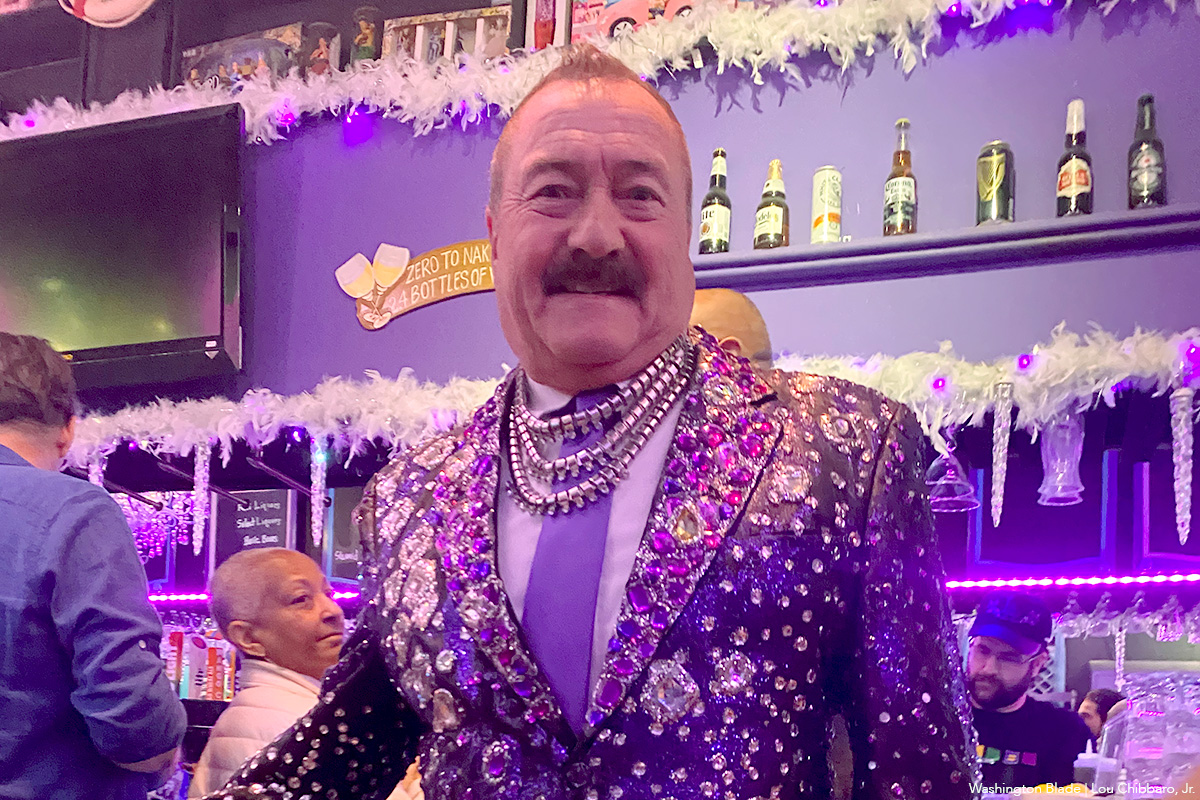
An overflowing crowd turned out Sunday night, March 1, for the 25th anniversary celebration of Freddie’s Beach Bar, the LGBTQ bar and restaurant located in the Crystal City section of Arlington, Va.
The celebration began as longtime patrons sitting at tables and at the bar ordered drinks, snacks, and full meals as several of Freddie’s well-known drag queens performed on a decorated stage.
Roland Watkins, an official with Equality NoVa, an LGBTQ advocacy organization based in the Northern Virginia areas of Arlington, Alexandria, and Fairfax County, next told the gathering about the history of Freddie’s Beach Bar and the role he said that owner Freddie Lutz has played in broadening the bar’s role into a community gathering place.
“Twenty-five years ago, opening a gay bar in Arlington was not a given,” Watkins told the crowd from the stage. “It took courage, convincing, and a deep belief that our community belongs openly, visibly, and proudly,” he said. “And that belief came from Freddie.”
Watkins and others familiar with Freddie’s noted that under Lutz’s leadership and support from his staff, Freddie’s provided support and a gathering place for LGBTQ organizations and a place where Virginia elected officials, and candidates running for public office, came to express their support for the LGBTQ community.
“Over the past 25 years, Freddie’s has become more than a bar,” Watkins said. “It has become a community maker.”
Lutz, who spoke next, said he was moved by the outpouring of support from long-time customers. “Thank you all so much for coming tonight and thank you all so much for your support over the past 25 years,” he said. “I can’t tell you how much that means to me and how much it’s kept me going.”
But Lutz then said Freddie’s, like many other D.C. area gay bars, continues to face economic hard times that he said began during the COVID pandemic. He noted that fewer customers are coming to Freddie’s in recent years, with a significant drop in patronage for his once lucrative weekend buffet brunches.
“So, I don’t want to be the daddy downer on my 25-year anniversary,” he said. “But this was actually the worst year we’ve ever had,” he added. “And I guess what I’m asking is please help us out. Not just me, but all the gay bars in the area.” He added, “I’m reaching out and I’m appealing to you not to forget the gay bars.”
Lutz received loud, prolonged applause, with many customers hugging him as he walked off the stage.
Virginia
Va. activists preparing campaign in support of repealing marriage amendment
Referendum about ‘dignity and equal protection under the law’
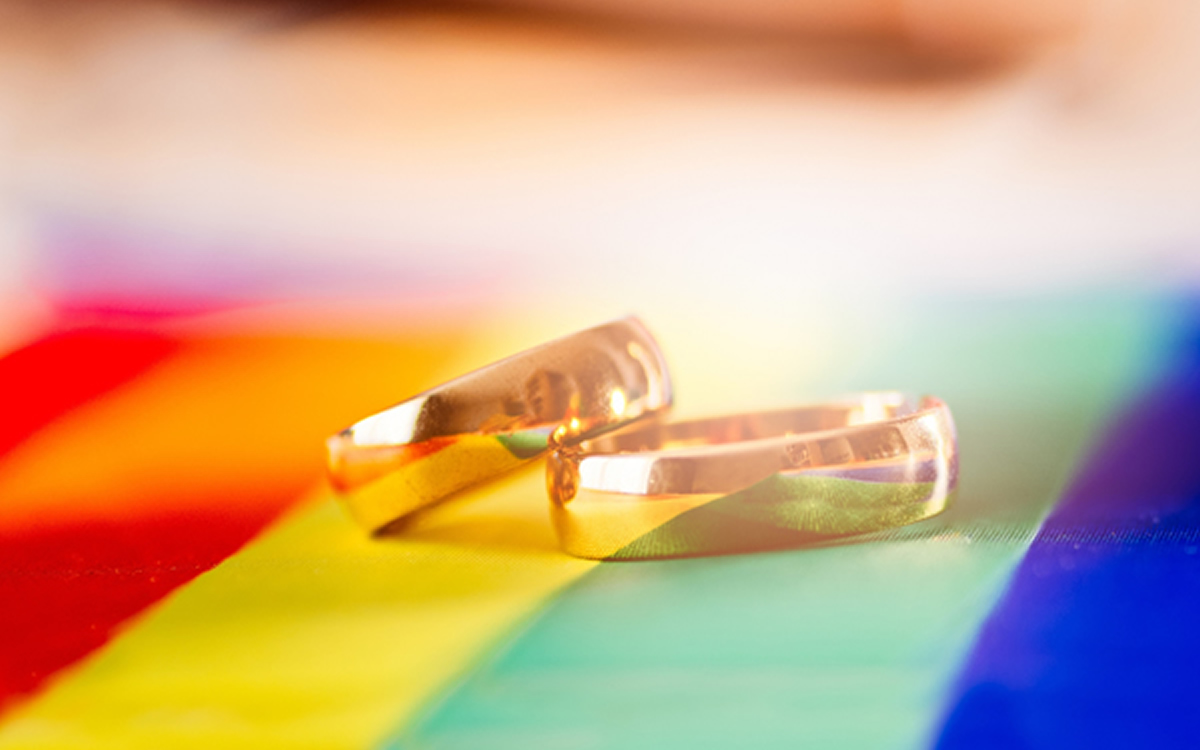
Virginia voters in November will vote on whether to repeal their state’s constitutional amendment that defines marriage as between a man and a woman.
Democratic Gov. Abigail Spanberger on Feb. 6 signed House Bill 612 into law. It facilitates a referendum for voters to approve the repeal of the 2006 Marshall-Newman Amendment. Although the U.S. Supreme Court’s Obergefell ruling extended marriage rights to same-sex couples across the country in 2014, codifying marriage equality in Virginia’s constitution would protect it in the state in case the decision is overturned.
Maryland voters in 2012 approved Question 6, which upheld the state’s marriage equality law, by a 52-48 percent margin. Same-sex marriage became legal in Maryland on Jan. 1, 2013.
LGBTQ advocacy groups and organizations that oppose marriage equality mounted political campaigns ahead of the referendum.
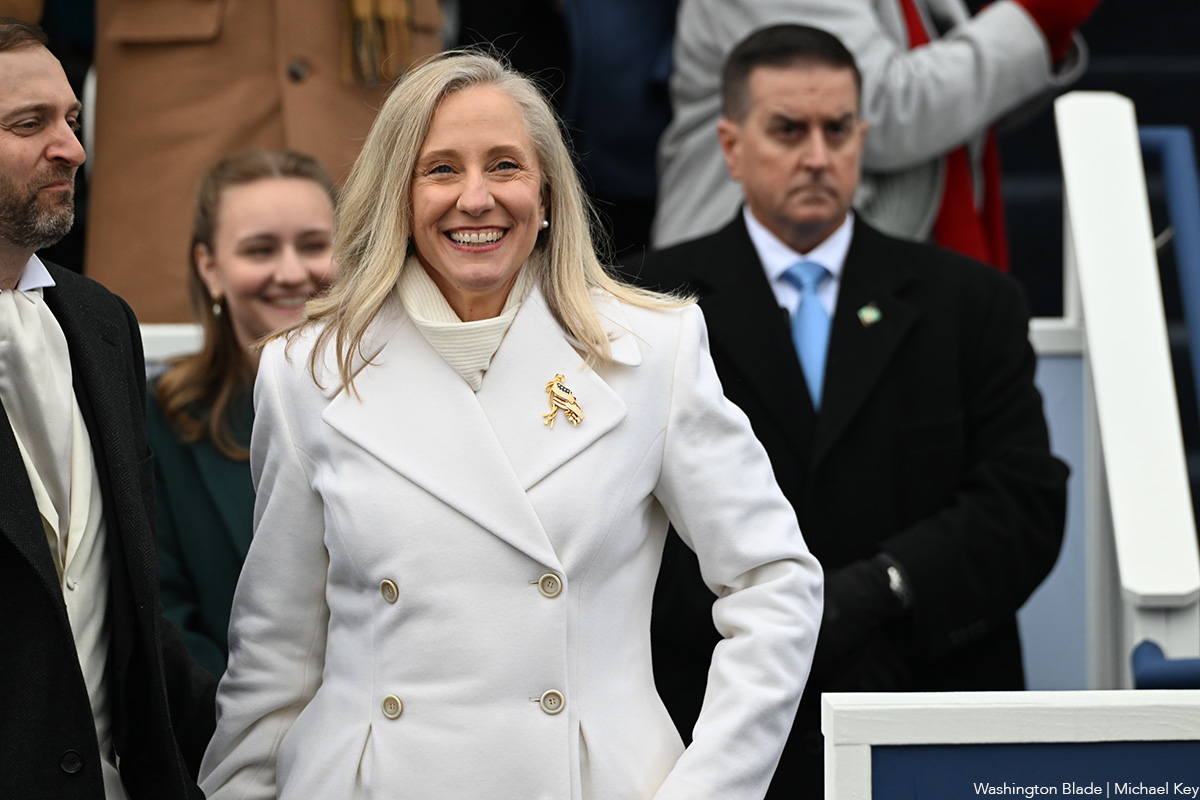
Equality Virginia has been involved in advancing LGBTQ rights in Virginia since 1989.
Equality Virginia is working under its 501c3 designation in conjunction with Equality Virginia Advocates, which operates under a 501c4 designation, to plan campaigns in support of repealing the Marshall-Newman Amendment.
The two main campaigns on which Equality Virginia will be focused are education and voter mobilization. Reed Williams, the group’s director of digital engagement and narrative, spoke with the Washington Blade about Equality Virginia’s plans ahead of the referendum.
Williams said an organization for a “statewide public education campaign” is currently underway. Williams told the Blade its goal will be “to ensure voters understand what this amendment does and why updating Virginia’s constitution matters for families across the commonwealth.”
The organization is also working on a “robust media and voter mobilization campaign to identify and turn out voters” to repeal Marshall-Newman Amendment. Equality Virginia plans to work with the community members to guarantee voters are getting clear and accurate information regarding the meaning of this vote and its effect on the Virginia LGBTQ community.
“We believe Virginia voters are ready to bring our constitution in line with both the law and the values of fairness and freedom that define our commonwealth,” said Equality Virginia Executive Director Narissa Rahaman. “This referendum is about ensuring loving, committed couples and their families are treated with dignity and equal protection under the law.”
The Human Rights Campaign has also worked closely with Equality Virginia.
“It’s time to get rid of outdated, unconstitutional language and ensure that same sex couples are protected in Virginia,” HRC President Kelley Robinson told the Blade in a statement.

Small is beautiful: subcompact SUVs

‘Inherit the Wind’ isn’t about science vs. religion, but the right to think

‘How We Survived’ panel set for March 25

Calendar: March 21-26

Queer American in Israel discusses Iran war’s impact

Idaho advances bill to restrict bathroom access for transgender residents

Gay candidate running for D.C. congressional delegate seat

SAVE Act could silence millions of trans voters

Thomas A. Decker of Arlington dies at 73

The frightening rise of antisemitism, Islamophobia
-

 Idaho4 days ago
Idaho advances bill to restrict bathroom access for transgender residents
-
District of Columbia4 days ago
Gay candidate running for D.C. congressional delegate seat
-
Opinions3 days ago
SAVE Act could silence millions of trans voters
-
Obituary4 days ago
Thomas A. Decker of Arlington dies at 73