News
Anticipation builds amid delay: Will Biden name LGBTQ ambassadors?
United States has never had lesbian woman, trans person as envoy
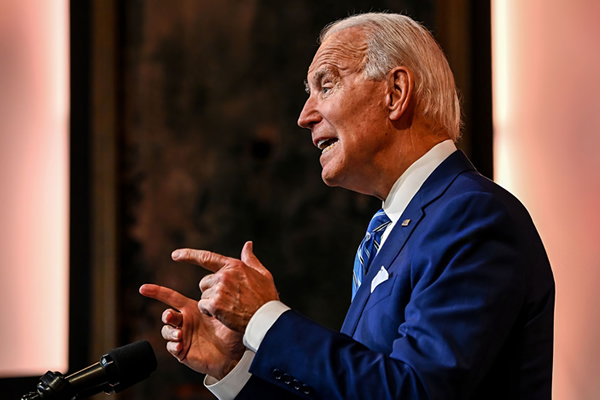
More than 100 days into his presidency, President Biden has yet to name picks for a multitude of ambassadorial positions in a delay unusual for a presidency at this stage, raising questions about whether he’ll miss an opportunity to exhibit America’s LGBTQ community overseas through the appointment of the first-ever lesbian and transgender person as ambassadors.
Many of these ambassadorial vacancies, which complement the diplomatic corps of the U.S. government to serve as a representation of American diversity overseas, are in key positions. Nearly 90 ambassadorial positions, including sought-after posts in Israel, the United Kingdom, Mexico, Italy and China, remain vacant according to an April article in USA Today.
The delay in ambassadorial appointments appears to come from pressure on Biden to refrain from the traditional practice of naming donors who bundled for his presidential campaign to the prestigious posts as opposed to foreign policy experts. Biden declined during his campaign to commit to refusing to reward donors with ambassadorial appointments, but the issue has taken hold in progressive circles.
On the other hand, many donors and bundlers for Biden’s presidential campaign were LGBTQ people, who would reasonably expect an ambassadorial appointment as a reward for helping get Biden to the White House.
White House Press Secretary Jen Psaki, under questioning from the Washington Blade on Tuesday on whether Biden is missing an opportunity to name lesbian and transgender ambassadors in historic firsts, urged patience.
“Given we haven’t named many ambassadors quite yet — and we hope to soon; stay tuned — certainly the president looks to ensuring that the people representing him, not just in the United States, but around the world, represent the diversity of the country, and that certainly includes people who are LGBTQ, members of the transgender community,” Psaki said.
Asked to clarify her definition of “soon” in this context — whether it means days, weeks, or months — Psaki declined to provide a more definite timeline.
“I think it depends on when the president makes some decisions,” Psaki said. “And he’ll continue to consider a range of options for a lot of the positions that are out there and still remain vacant.”
At the same time, Psaki made a point to commend the work of Foreign Service officers at the State Department with whom Biden has sought to restore trust after years of scorn from former President Trump.
“I will say, having served at the State Department for a couple of years, there are incredible career service employees who are serving in these embassies around the world who are representing the United States and our values.” Psaki said. “That continues to be the case, but, of course, we’re eager to have ambassadors in place and confirmed to represent the president and the vice president and the United States.”
The appointment of members of the LGBTQ community to ambassadorships has a significant place in the movement’s history. In 1998, Jim Hormel became the first openly gay person to serve as U.S. ambassador after being named U.S. ambassador to Luxembourg. But the victory came after a struggle when anti-gay senators, including the late Jesse Helms, refused to confirm Hormel explicitly because he’s gay. President Clint0n ended up appointing Hormel as an ambassador through a recess appointment, which averted the need for Senate confirmation.
Presidents regardless of party have achieved historic firsts with the appointment of openly gay men as ambassadors. Michael Guest in the George W. Bush administration was confirmed as U.S. ambassador to Romania, making him the first openly gay person to obtain Senate confirmation for an ambassadorship. Former President Obama over the course of two terms appointed a record seven openly gay men as ambassadors, including John Berry as U.S. ambassador to Australia and Daniel Baer as U.S. ambassador to the Organization for Security & Cooperation in Europe.
Richard Grenell, named by President Trump as U.S. ambassador to Germany, currently has the distinction of being the openly gay person with the most prestigious ambassadorial appointment. Consistent with his reputation as a firebrand on social media, Grenell hit Germany hard as ambassador to compel the G-5 country to meet its military spending obligations as a NATO partner. Grenell has something to show for his efforts: The country began to spend closer to 2 percent of its GDP on defense.
And yet for all these appointments, no president has ever named an open lesbian or trans woman for a position as U.S. ambassador, an oversight that stands out after the rapid progress on LGBTQ rights in recent years. At a time when transgender rights are in focus amid anti-trans attacks in state legislatures, the appointment of an openly transgender ambassador would also send a signal of solidarity with the transgender community.
There’s no indication Biden won’t appoint an LGBTQ person for a position as U.S. ambassador, which could be an easy achievement from him with the LGBTQ community, but the delay raises questions on whether or not they will happen, in addition to keeping the diplomatic corps from being fully staffed and functional.
Moreover, the position of LGBTQ international liaison at the State Department, a position Biden campaigned on filling after Trump let the position remain vacant, remains unfilled. During the Obama years, Randy Berry served in that role and travelled internationally to work with LGBTQ groups overseas and demonstrate U.S. solidarity with them.
It’s unclear why the international LGBTQ liaison position continues to remain vacant within the Biden administration. A State Department spokesperson referred the Blade on Wednesday back to the White House on potential LGBTQ ambassadorial appointments or the international LGBTQ liaison role.
To be sure, Biden has made several key LGBTQ appointments in the limited time in his presidency. Among them are Pete Buttigieg as transportation secretary, making him the first-ever openly gay person to win Senate confirmation for a Cabinet-level role, and Rachel Levine as assistant secretary of health, which made her the first openly transgender person to win Senate confirmation for any presidential appointment.
In the past few weeks alone, Biden has signaled he’d name openly lesbian and transgender people to high-ranking civilian positions at the Defense Department. Brenda Sue Fulton, a lesbian activist who fought to repeal “Don’t Ask, Don’t Tell” and the transgender military ban, got the nod as assistant secretary of defense for manpower and reserve affairs, while Shawn Skelly, a transgender national security expert who served in the Air Force for 20 years as a Naval Flight Officer, obtained the nod to become assistant secretary of defense for readiness. Meanwhile, Gina Ortiz Jones, a lesbian Iraq war veteran who twice ran to represent Texas’ 23rd congressional district, was nominated to become Air Force under secretary.
Even the State Department itself has a person from the LGBTQ community serving as its public face. Ned Price, who conducts daily briefings with the media as State Department spokesperson, is the first openly gay person to serve in that prominent position.
The LGBTQ Victory Institute, which at the start of the Biden administration had signaled the appointment of a lesbian, transgender person and LGBTQ person of color as U.S. ambassadors were among its goals, expressed confidence Biden would name these appointments in due time.
“President Biden will roll out his picks for ambassadorships over the next few months and it presents an incredible opportunity to choose diverse and groundbreaking LGBTQ nominees,” said Ruben Gonzales, executive director of the LGBTQ Victory Institute. “As President Biden has already made history with the number of LGBTQ women and transgender people he has nominated for Senate-confirmed positions, we predict this commitment to LGBTQ diversity will continue when ambassadors are nominated. The impact of our first LGBTQ women ambassadors, first LGBTQ ambassadors of color and first trans ambassadors would be enormous – an impact not lost on the Biden administration.”




Poland
Poland begins to legally recognize same-sex marriages from other countries
‘This is an important milestone, but it should not be the final destination’
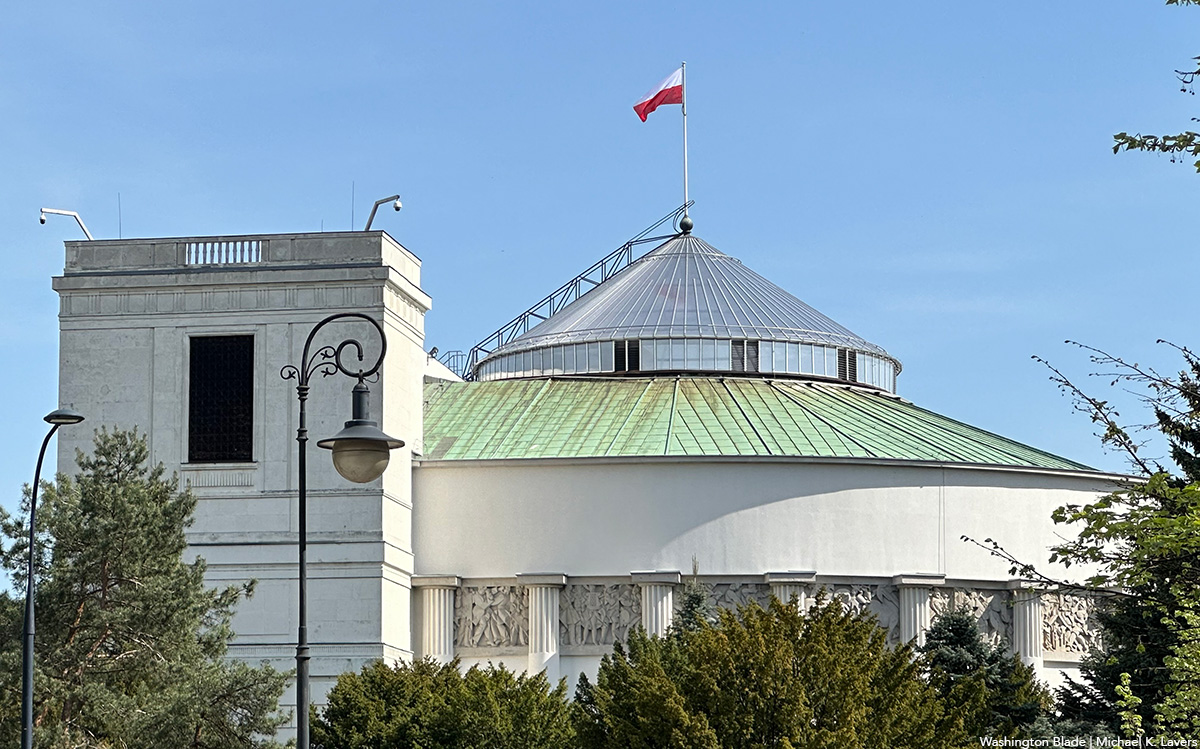
Poland has begun to recognize same-sex marriages legally performed outside the country.
TVP World, the country’s public broadcaster, reported civil registry offices began to “transcribe same-sex marriages legally” conducted outside of Poland on Aug. 22.
The EU Court of Justice in Luxembourg last November ruled in favor of a same-sex couple who challenged Poland’s refusal to recognize their German marriage. Poland’s Supreme Administrative Court in March reaffirmed the decision.
The couple, who lives in Poland, brought their case to Polish courts in 2019. The Supreme Administrative Court referred it to the EU Court of Justice.
The Polish government in May announced it will recognize same-sex marriages legally performed in other EU countries. Polish President Karol Nawrocki on July 17 vetoed bills that would have extended rights to same-sex couples.
Poland’s Constitutional Tribunal a few days later rejected the recognition of same-sex marriages legally performed in other EU countries. The Love Does Not Exclude Association, a Polish marriage equality advocacy group, in an Aug. 26 press release notes the ruling “does not prevent implementation of these new regulations” because the Constitutional Tribunal is “largely discredited” and the government considers it “to be improperly constituted.”
“This is an important milestone, but it should not be the final destination,” said Maja Heban of the Love Does Not Exclude Association. “No couple should have to cross a border to marry. Our goal is allowing loving, committed couples to marry in Poland in the first place. The law now increasingly recognizes these marriages once couples return to Poland in areas such as healthcare and social security, but significant gaps remain, mainly lack of recognition of same-sex parents which directly impacts security of their children.”
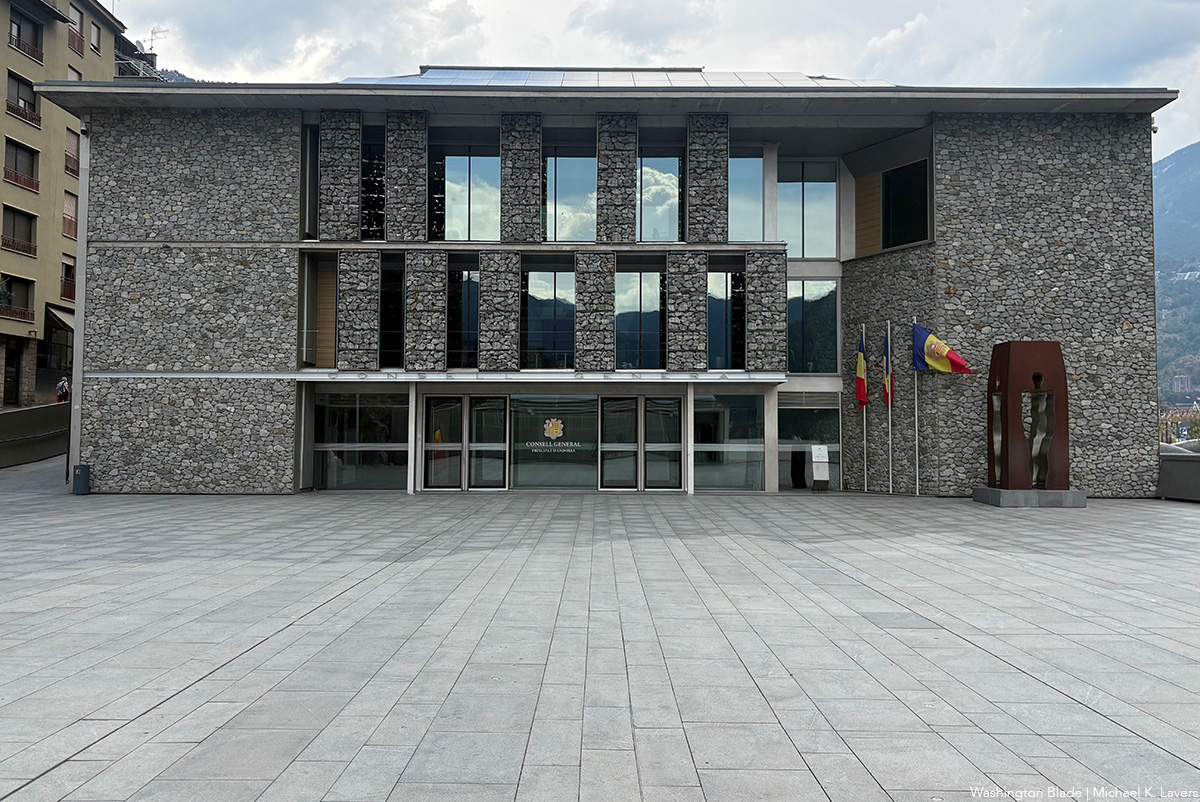
Germany, Belgium, France, Ireland, Spain, and Portugal are among the EU countries in which same-sex couples can legally marry. Andorra, whose prime minister, Xaviet Espot Zamora, is openly gay, and Switzerland are among the other European nations that have extended marriage rights to same-sex couples.
The Netherlands in 2001 became the first country in the world to extend marriage rights to same-sex couples. Activists who participated in this year’s World Pride that took place in Amsterdam earlier this summer marked this milestone.

National
Milo Yiannopoulos deported to UK
ICE arrested far-right provocateur in New Orleans on Thursday

Editor’s note: The Department of Homeland Security on Saturday said Milo Yiannopoulos has been deported to the U.K.
U.S. Immigration and Customs Enforcement on Thursday arrested far-right provocateur Milo Yiannopoulos.
A DHS spokesperson in a statement sent to the Washington Blade said ICE arrested Yiannopoulos, who they described as “an illegal alien from the United Kingdom,” at Louis Armstrong New Orleans International Airport.
The DHS spokesperson said Yiannopoulos “legally entered the country” in New York on May 14, 2019.
“He chose to overstay his welcome in violation of our nation’s laws,” said the spokesperson.
The DHS spokesperson said an immigration judge on July 22 “issued a final order of removal” for Yiannopoulos “after failing to show up for his immigration hearing.” The Times-Picayune newspaper in New Orleans on Friday reported Yiannopoulos is being held at an ICE detention center in Alexandria, La., which is about 200 miles northwest of the Crescent City.
“He will remain in ICE custody pending removal,” said the DHS spokesperson.
Yiannopoulos has, among other things, repeatedly targeted transgender people and Muslims.
The American Conservative Union, which organizes the annual Conversative Political Action Conference, in 2017 disinvited Yiannopoulos from speaking at that year’s CPAC after a video in which he appeared to condone sex between adults and underage boys emerged. Yiannopoulos subsequently resigned from Breitbart News, a far-right news website, where he had been a senior editor.
Yiannopoulos later that year married his boyfriend in Hawaii. The far-right provocateur in 2021 claimed he was an “ex-gay.”
The Australian government in 2019 banned Yiannopoulos from entering the country “on character grounds.” Yiannopoulos was also banned from Facebook, Twitter (now X), and other social media platforms.
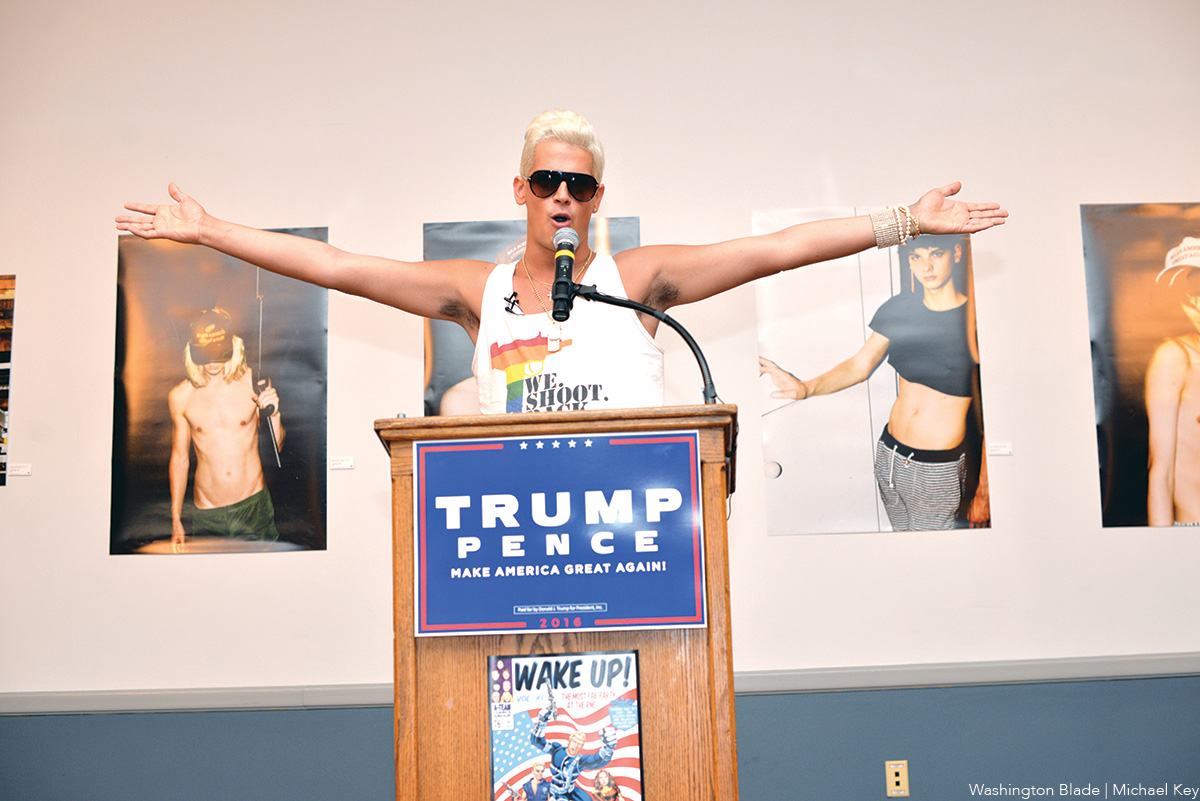
The Times-Picayune reported Yiannopoulos “most recently worked for” Ye, formerly known as Kanye West.
The controversial rapper is scheduled to perform in New Orleans on Friday.
Laura Loomer, a far-right conspiracy theorist who is close to President Donald Trump, has called for Yiannopoulos’s deportation. Loomer on Friday wrote on X that she “reported him to ICE and the FBI” after he “called for me to be assassinated.”
California
San Francisco, long a queer safe haven, remains competitive for homebuyers
AI boom has boosted market as housing shortages continue
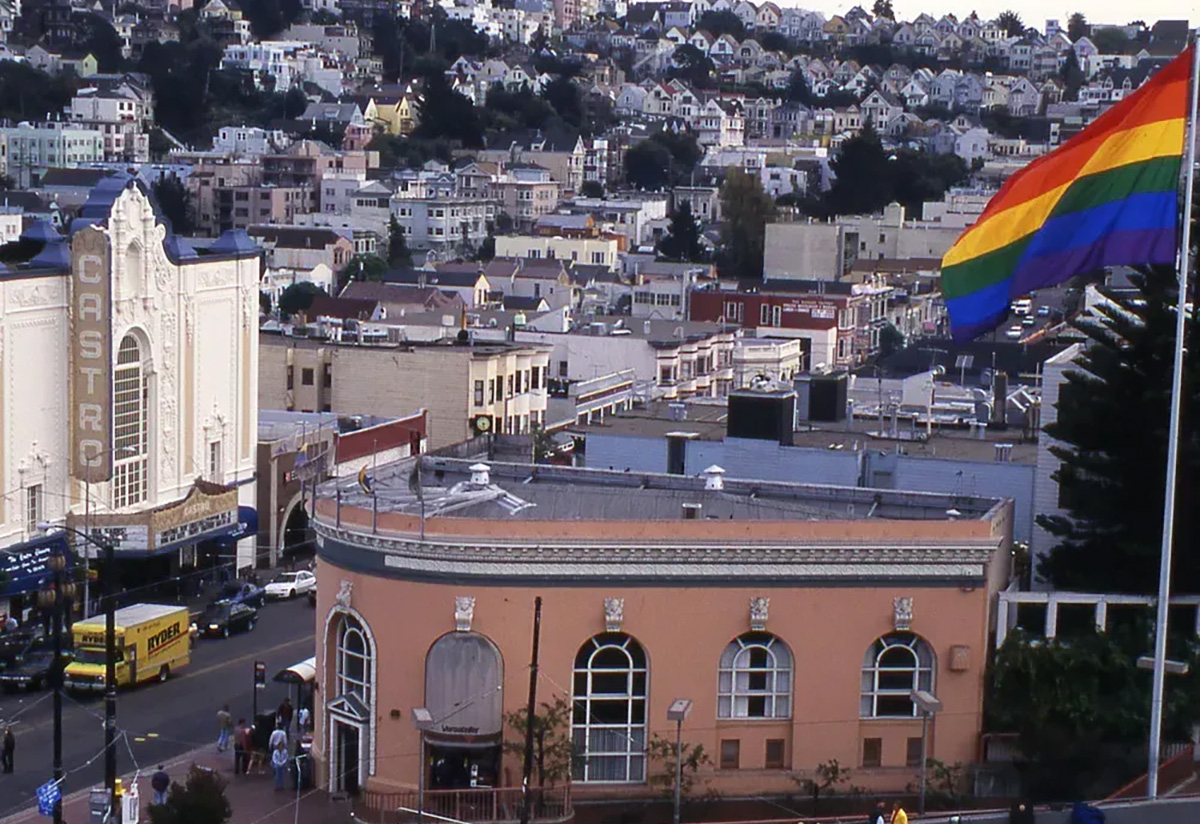
LGBTQ people have a variety of housing options when they’re lucky enough to be able to afford property. In San Francisco – long considered a safe haven for the queer community – individual needs have to be weighed both against the city’s chronic housing shortage and a competitive but often lucrative job market.
After a lull of several years, the city’s real estate market has heated up in recent months, driven by the city’s economic recovery post-COVID lockdowns and the artificial intelligence boom.
For Rick Page, 68, and Anthony Farace, 57, both gay men, the job market was a top reason to move back to the city after they’d left the Bay Area five years ago.
Page said the couple had left behind a “huge home in a town called Oakhurst, on the way to Yosemite.” When moving back to San Francisco they wanted to balance suburban and downtown vibes, Farace said, leading them to settle in Diamond Heights, a tiny neighborhood built atop three hills above Noe Valley, that has suburban sensibilities but isn’t too far from downtown.
“In the summer it’s a little foggy but it’s nicer up here the rest of the time, and where it felt like you aren’t downtown where it’s just concrete and buildings,” Farace said.
Added Page, “It sounds goofy, but if there’s a tsunami, it won’t get all the way up here.”
Page said that in the spring the couple initially bought a relatively small studio in Diamond Heights. But they found that it didn’t meet their needs and purchased a second studio unit nearby that did. They closed on the larger condo unit in October.
“It just didn’t have any kind of patio or outdoor thing for the dog,” Page said of their first studio, “so we saw something upgraded with a kitchen redone, nice hardwood floors, a fireplace, a sunny patio, so it was much nicer. We bought that one, now we have to figure out what to do with the first one.”
The first unit was $450,000 and the second $520,000, they stated.
The couple also mentioned a lack of some of the downtown, South of Market, and Mission District street disorder that garnered negative headlines in the past several years. The couple also noted that Diamond Heights is more affordable than traditionally high-priced Russian Hill, which is closer to downtown.
Nevertheless, “The employment, the social life is better” in San Francisco, Page added.
Federal data shows many LGBTQ people want to own a home.
Fannie Mae, the government sponsored enterprise that buys home loans, does have some LGBT data, according to research from 2023 that was published in 2024. The data is the result of sexual orientation and gender identity identifiers in the National Housing Survey. It did not ask about queer representation.
According to the report, 8.6% of respondents identified as lesbian, gay, bisexual, and transgender – similar to the U.S. Census Bureau’s Household Pulse Survey. The survey included responses from a weighted total of 12,363 people 18 years and older, with a weighted total of 1,059 identifying as LGBT.
The research found the LGBT homeownership rate to be 46%, which is much lower than the overall U.S. homeownership rate of 65%.
The latest available data from The Urban Institute reveals that the homeownership rate for individuals identifying as LGBTQ+ stands at 51%, in contrast to 71% for those who identify as both straight and cisgender. According to the U.S. Census Bureau, at least 1.3 million same-sex couples reside in the U.S., meaning a significant number of LGBTQ people in this country do not own their own homes.
In San Francisco, the Diamond Heights neighborhood is just a half-hour walk from the Castro, and even shorter on the bus.
Charlie Mader is a gay man who has been a Realtor in San Francisco for “just under 25 years,” with a particular emphasis on Diamond Heights, the Castro, and Noe Valley. He said that while many LGBTQ people want to live relatively close to a queer neighborhood, such as the Castro, “It’s not like it used to be.”
Even in spite of a recent backlash to LGBTQ equality in the mid-2020s, leading to a number of federal policies largely targeting transgender and gender-nonconforming people, Mader said that since marriage equality, “You hear ‘There’s no need for us to live together in a gay ghetto,’ and we’re interspersed throughout the community and the country.”
Marriage equality became legal in California in June 2013, two years before the U.S. Supreme Court made same-sex unions legal nationwide in 2015.
Mader said marriage equality helped incentivize more LGBTQ home-buying due to an old Clinton administration tax law that gave married couples favorable tax incentives versus single homebuyers.
But even within the City-by-the-Bay, the distinction between neighborhoods is not as stark.
“I hear the Mission is just as gay as the Castro is, and the food is better,” Mader said. “I can’t argue with that.”
Angel Carney, a lesbian Realtor, has also been in the Castro area for decades. She said the threshold of home ownership there has risen dramatically.
“When I first started,” which was in 2002, she said, “I had teachers, I had nurses, I had a doctor … It was diverse in terms of who was buying. Everybody had a way to get into the market.”
Now, “with tech, they blew out everybody,” she added, saying first-time homebuyers are sometimes competing with tech employees making six-figure salaries from their early 20s due to their economic opportunities.
Carney said that even so, “It’s mostly a two-income household who’s buying in the Castro,” largely people in their 30s.
“LGBTQ is more of a rarity,” she added. “I’ve seen more non-LGBTQ, I would say, couples buying in the Castro.”
One reason is because while it is such an iconic epicenter of the LGBTQ community, it is “definitely a transit hub, and it’s geographically central, so if you work on the Peninsula, you go over Diamond Street and you’re on [Highway] 280. You can get to BART, to the airport, it definitely is transit centric for work, for traveling, if you’re a tech worker.”
Understanding that unhoused people are often part of San Francisco neighborhoods such as the Castro is also a factor, Mader said.
“Because gays are so tolerant, it draws a magnet for people who you know are distressed and so you see more antisocial behavior, begging on the street, people just getting high because they know they can get away with it,” he said. That can impact people’s desire to buy a forever home in one neighborhood or another.
Indeed, the Castro has experienced fewer open-air drug scenes than other parts of the city, such as Sixth Street or the Civic Center Plaza, which are both near the downtown core. Such activity has, however, remained a persistent complaint of Castro merchants. In early December, Sophie Marie, a legislative aide to gay Board of Supervisors President Rafael Mandelman, who represents the neighborhood as District 8 supervisor, noted that “a lot” of unhoused people have recently moved into the Castro as they leave South of Market and Civic Center amid an increase in law enforcement activity and attention from city government there.
The Castro is among those neighborhoods seeing building height limits increased as a result of Mayor Daniel Lurie’s family zoning plan that, after much rancor, passed the Board of Supervisors for the final time on December 9. The plan is intended to increase the city’s housing stock to meet state housing goals.
San Francisco’s median home sale price rose nearly 6% to $1.85 million, its highest amount since 2022, earlier this year, as the San Francisco Standard reported.
Mader said that nonetheless, “There are empty condos everywhere for sale,” and that market is down 20% from its peak.
“Right now I’m selling for $625,000 – I’ve sold for $100,000 more than that,” Mader noted.
Carney agreed that condos are very available right now.
“If you’re thinking about entering the market, think about condos,” she advised. “When interest rates go down, prices will go up, so get in now on a condo. People say they’re waiting for the market to drop – well, the market dropped on condos. Those are a great buy right now.”
The Fannie Mae data showed that homeownership aspirations are high among LGBT consumers, with 83% saying they “would like to buy at some point” or “continue to own,” the report stated. This share is comparable to non-LGBT consumers, the report stated. LGBT consumers also believe there are more obstacles to owning a home than their non-LGBT peers.
Those obstacles include that over 70% of LGBT respondents said it was difficult to get a home mortgage today, compared to only 55% of non-LGBT respondents, according to the research. LGBT consumers were more concerned about closing costs, credit score or history, current debt, and insufficient income for monthly payments.
The Federal Reserve on December 10 lowered interest rates for the third time this year. The recent reduction was by a quarter of a percentage point, as the New York Times reported. The new range is between 3.25% to 3.75%. But CNBC noted that mortgage rates may remain higher because they are less impacted by the Fed. The average rate for a 30-year, fixed-rate mortgage is currently about 6.35%, the network reported December 10.
Nationally, the real estate market is dealing with the same uncertainty as the rest of the economy, now almost one year into President Donald Trump’s second term.
“Everyone is afraid of another Trump recession,” Mader said. “People are not buying houses especially in places like Florida, where they’re having all kinds of issues with insurance.”
Florida is the nation’s most expensive state for home insurance due to natural disasters like hurricanes.
California is also experiencing insurance issues, particularly in areas prone to wildfires, as the San Francisco Chronicle reported. Most of the Bay Area is not as affected as other parts of the state, though insurance premiums are rising for home insurance.
Not everyone wants to live in a big city.
Mark Kliem, who’s part of the LGBTQ Real Estate Alliance, focuses on the North Bay, encompassing Solano, Napa, and Sonoma counties.
“Consumers can contact the alliance no matter where they live and connect with the nearest LGBTQ agent close to their area whether they are buyers or sellers,” Kliem, who is gay, said.
Kliem lives in the Solano County city of Vallejo, where the real estate market took a dive during the Great Recession.
“A lot of investors swooped in and bought up as many of those places as they could, so there was a lot of investing in property through that, and a lot of flippers,” he said, referring to people who buy a property, fix it up, and then sell it for a profit.
Now, the area is one of the country’s hottest real estate markets, he said, because it’s near San Francisco, has warmer weather and is more affordable long-term.
“It’s a good place location wise – we’re on a bay, we have a ferry service to downtown San Francisco. We don’t have BART, so it’s a little problematic to get to the nearest BART, but our weather gets even warmer, less fog, than Oakland. Throughout the year, it’s a five-degree difference from San Francisco.”
Ultimately, the Golden State and the Bay Area in particular are poised to remain competitive for buyers of all sexual orientations and gender identity – despite the fact that that leads to so many barriers to entry. Gay Realtor Anthony Waite, 30, explained why.
“A lot of people who moved to Austin, Texas [during the COVID pandemic lockdowns] said there’s not a lot to do,” Waite said. “In San Francisco, you could find something to do every single corner every hour, day and night. Texas doesn’t offer that.”
(Editor’s note: This article was originally published by the Bay Area Reporter and is part of a national initiative exploring how geography, policy, and local conditions influence access to opportunity. Find more stories at economicopportunitylab.com .)

Poland begins to legally recognize same-sex marriages from other countries

Immersive ‘Nation-State’ imagines a society free of authoritarianism

New book examines Trump cuts to LGBTQ healthcare

E-INFOSOL leaders encourage youth to pursue tech careers

Milo Yiannopoulos deported to UK

Music icon and dear LGBTQ friend Dolly Parton remembered

Please join me in supporting the Washington Blade Foundation

American democracy on the brink

Delaware fines Rehoboth bar $15,000 for discriminating against trans woman

Girlfriends charged with Silver Spring murder to go on trial in 2027
-

 Obituary5 days ago
Music icon and dear LGBTQ friend Dolly Parton remembered
-
Commentary4 days ago
Please join me in supporting the Washington Blade Foundation
-
Opinions4 days ago
American democracy on the brink
-
Delaware5 days ago
Delaware fines Rehoboth bar $15,000 for discriminating against trans woman