World
Harsh anti-LGBTQ bill introduced in Ghana
Measure would criminalize LGBTQ identity, allyship
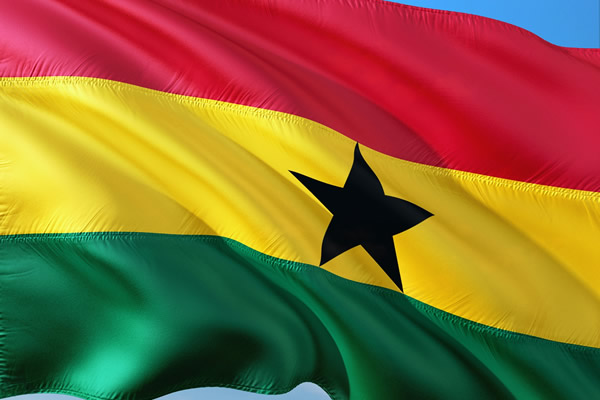
A bill that would criminalize LGBTQ identity and allyship in Ghana was officially introduced in the country’s Parliament on Monday.
The “Proper Human Sexual Rights and Ghanaian Family Values Bill” went to the Constitution and Legal Affairs Committee after its first reading.
Eight conservative lawmakers who are from the opposition and ruling parties sponsored the bill. Thomson Reuters Foundation News reports Samuel Nartey George, a member of the National Democratic Congress party, is the lead sponsor.
The bill, if passed, would outlaw LGBTQ identity and subject anyone who identifies as part of the LGBTQ community or as an ally with up to 10 years in prison.
A draft of the bill that was leaked online last week listed some of the punishable offenses that include “gross indecency,” which is defined as “the public show of amorous relations between or among persons of the same sex.” This act, labeled a misdemeanor, can result in “a term of imprisonment no less than six months and not more than one year.”
Activists in Ghana and across the world have sought to raise awareness of the bill on social media with the hashtags #KillTheBill and #GhanaIsEnoughForUsAll. A Change.org petition that urges Ghanaian lawmakers to oppose the measure has been created.
Critics say the measure would violate human rights and would make LGBTQ people more vulnerable to persecution and violence. The Coalition of Muslim Groups in Ghana and other religious organizations have welcomed the bill, with Thomson Reuters reporting they say it is needed to “prevent the dilution of cultural values and beliefs in Ghanaian society.”
Naa Seidu Fuseini Pelpuo, the overlord of the Waala Traditional Area, and other traditional leaders have condemned the LGBTQ+ community as “unnatural and [perverted].” Pelpuo has also banned activities between LGBTQ individuals in the Waala Traditional Area and warned of “firm and swift” punishment if found engaging in “such acts,” according to the Ghana Broadcasting Corporation.
The bill’s introduction comes after the May arrest of 21 activists and paralegals who attended a conference on how to advocate for LGBTQ rights.






Germany
1 dead, 29 injured in Berlin Pride attack
Authorities investigating incident as ‘Islamist terrorist attack’
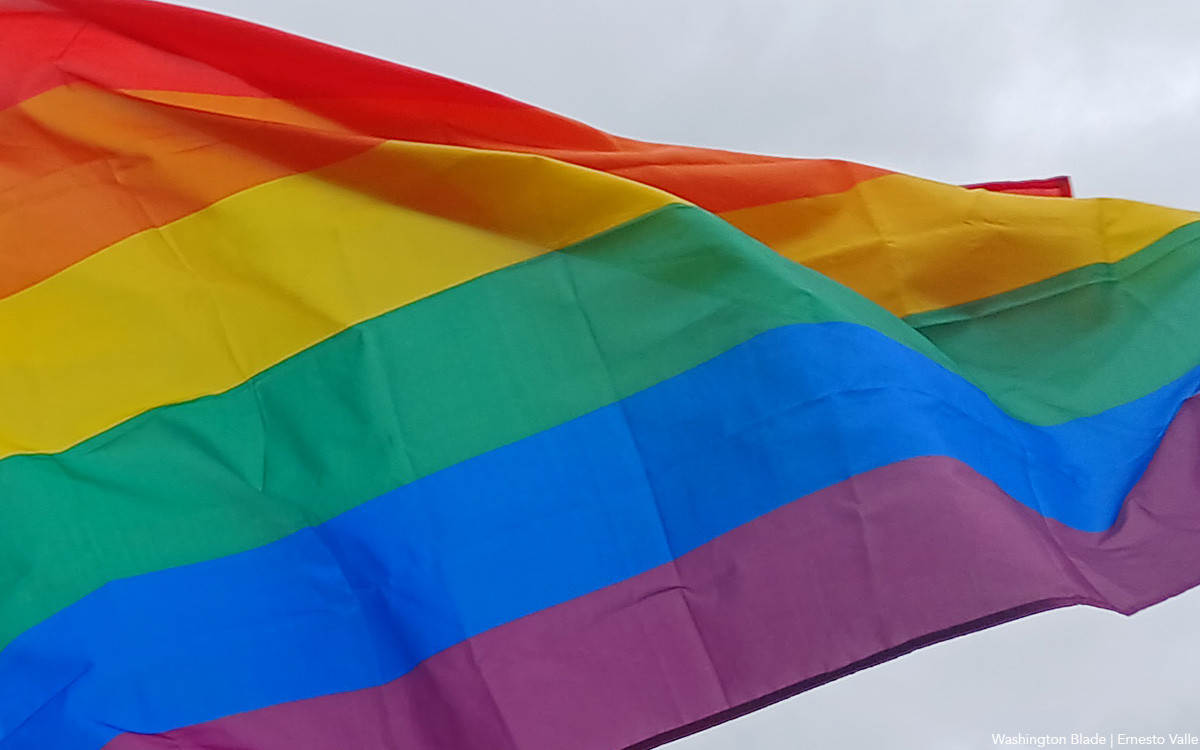
At least one person died on Saturday when a van drove into a crowd at Berlin’s annual Pride march.
The incident took place shortly before 10 p.m. local time (4 p.m. ET) in Tiergarten park.
Authorities say a 21-year-old German man of Lebanese descent who tried to join the Islamic State drove the van into the crowd. German Interior Minister Alexander Dobrindt on Sunday told reporters during a press conference the suspect also attacked people with a machete.
Dobrint said the suspect injured 29 people — with some of them in critical condition.
He and German Chancellor Friedrich Merz confirmed authorities are investigating the attack as “an Islamist terrorist attack.” Officers killed the suspect in the Berlin suburb of Spandau on Sunday after he reportedly charged at them with a knife.
A memorial service and rally took place in Berlin on Sunday.

Hundreds of thousands of people participate in the annual Christopher Street Day parade — which is one of Europe’s largest Pride events — that winds its way through Berlin.
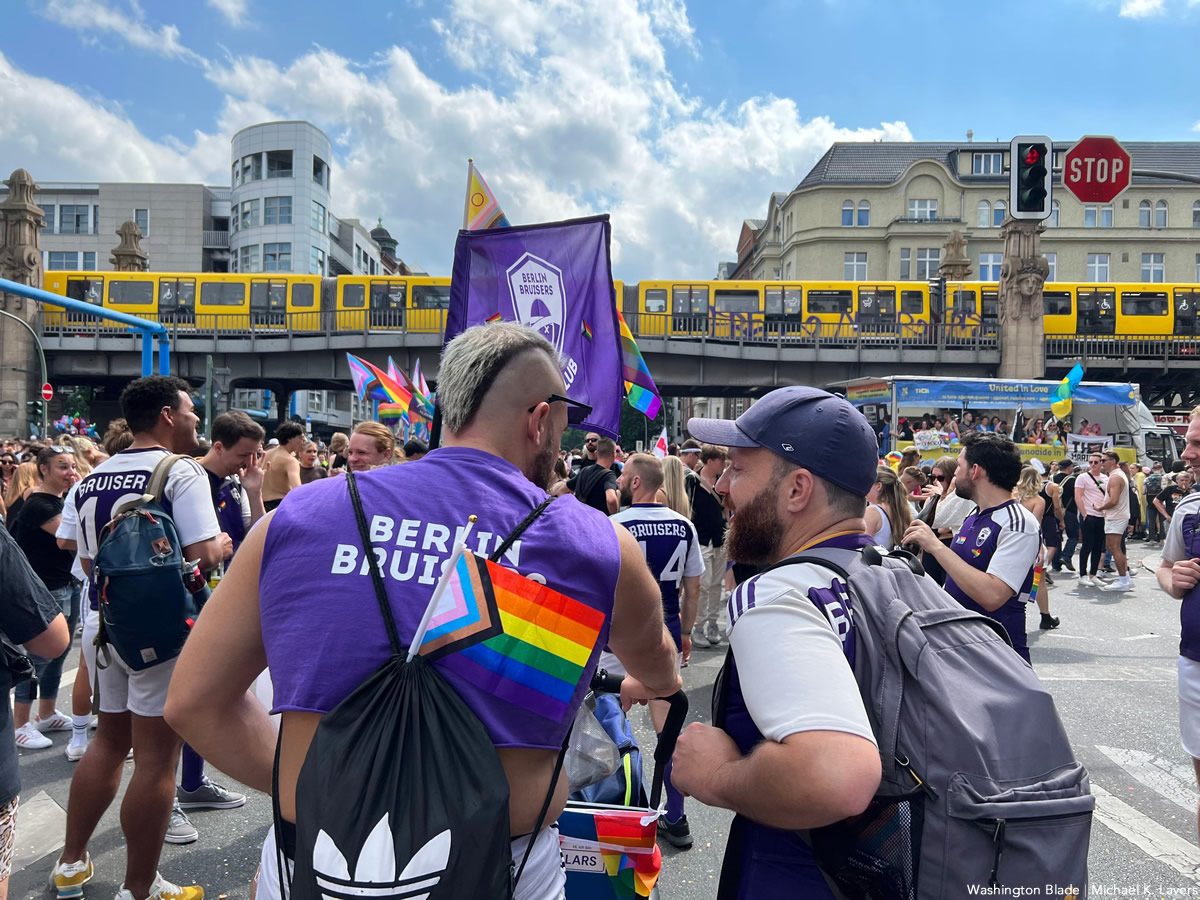
Tiergarten is near June 17 Street and the Brandenberg Gate where post-parade parties and concerts take place. Authorities cancelled the remaining Pride events after Saturday’s attack.
“We strongly condemn the fatal attack at the Christopher Street Day celebration in Berlin,” said the U.S. Embassy in Germany on Sunday. “This attack undermines the fundamental values of freedom and respect which underpin open and democratic societies. Our thoughts are with the victims, their families, and the first responders.”
European Commission President Ursula von der Leyen and Italian Prime Minister Giorgia Meloni are among those who condemned the attack.
“It is difficult for us to put into words the shock and grief of the queer community,” said Alva Träbert of Federation Queer Diversity, a German LGBTQ and intersex rights group known by the acronym LSVD, on Sunday in a statement. “Our solidarity goes out to all the victims and their families. The community’s grief now needs space to be expressed. This act, which according to the current state of the investigation was motivated by Islamist extremism, is to be condemned in the strongest possible terms. We owe our thanks and deep respect to the entire Berlin Pride team for their organization and to the emergency services for their swift assistance.”
Träbert added the attack “was not directed at a party, but at a political demonstration for the human rights of LGBTQIA+ people” and was “also an attack on democratic values themselves.” Träbert also urged the German government in the wake of the attack to do more to protect LGBTQ and intersex Germans.
Dutch authorities to ‘take extra measures’ during World Pride in Amsterdam
The attack took place on the same day that World Pride began in Amsterdam.
Amsterdam Mayor Femke Halsema on Sunday said authorities will “take extra measures … where necessary” during the event and the city’s annual Pride, which will take place on Aug. 1. Dutch Prime Minister Rob Jetten, who is gay, on social media said he expressed his condolences to Merz.
“The horrific act of aggression last night at the Pride in Berlin is a direct attack on our free and tolerant society,” said Jetten on X.
“My thoughts are with the victims and their loved ones,” he added. “In these difficult times, we stand shoulder to shoulder with our German neighbors.”
Brazil
2026 International AIDS Conference to take place in Rio
US funding cuts have significantly impacted global HIV/AIDS fight
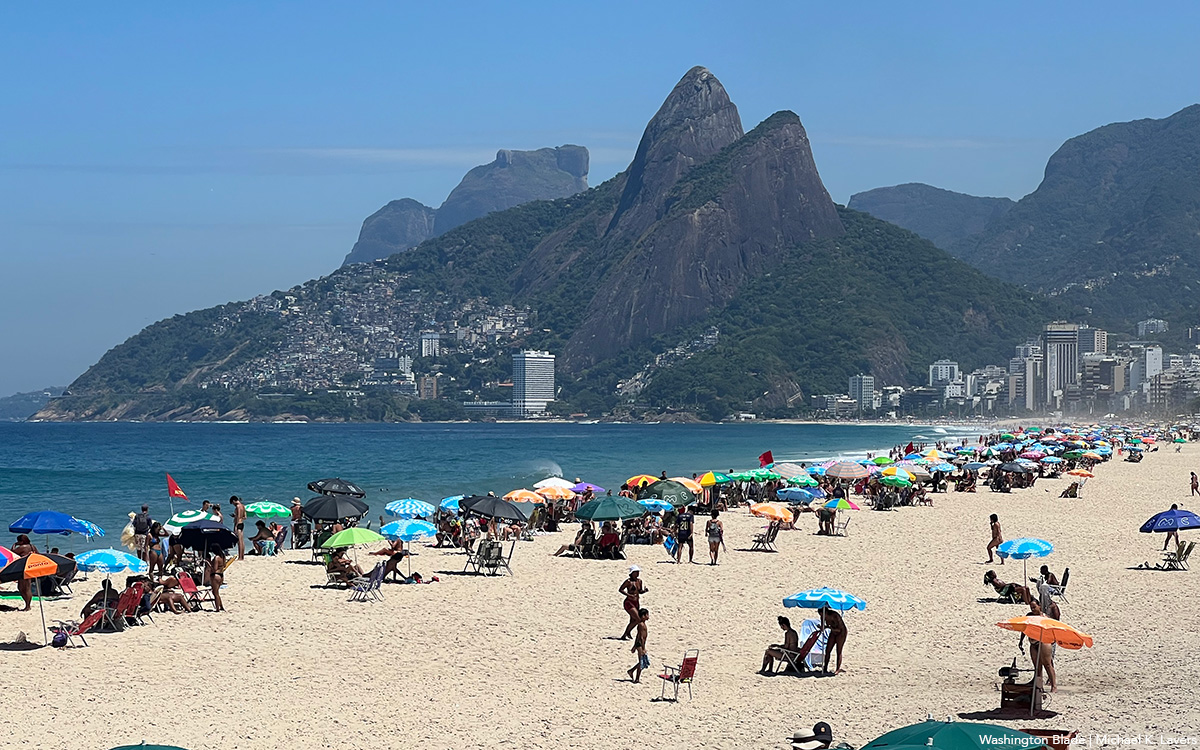
The 2026 International AIDS Conference will take place next week in Rio de Janeiro.
Francisco Ruiz, the former director of the White House Office of National AIDS Policy, and UNAIDS Executive Director Winnie Byanyima are among those scheduled to speak at the conference that will take place in the Brazilian city from July 26-31. Other scheduled speakers include Spanish Health Secretary Javier Padilla, World Health Organization Director-General Tedros Adhanom Ghebreyesus, South African Deputy Health Minister Mathume Joseph “Joe” Phaahla, and Alexus D’Marco of the United Caribbean Trans Network.
The International AIDS Society-organized AIDS 2026’s theme is “Rethink. Rebuild. Rise.”
AIDS 2026 will take place against the backdrop of U.S. funding cuts that have significantly impacted the global HIV/AIDS fight.
Secretary of State Marco Rubio shortly after the Trump-Vance administration took office issued a waiver that allowed PEPFAR and other “life-saving humanitarian assistance” programs to continue to operate during a freeze on nearly all U.S. foreign aid spending. HIV/AIDS service providers around the world with whom the Washington Blade has spoken say PEPFAR cuts and the loss of funding from the U.S. Agency for International Development, which officially closed on July 1, 2025, has severely impacted their work.
The International AIDS Society in a press release it issued on Tuesday noted PEPFAR “has saved more than 26 million lives” since President George W. Bush implemented it in 2003, “and changed the trajectory of the HIV pandemic.”
“PEPFAR was a success under the first Trump administration, with major progress toward the 95-95-95 goals,” it said.
The UNAIDS’s 95-95-95 goals are 95 percent of people with HIV knowing their status, 95 percent of people with HIV having access to antiretroviral therapy, and 95 percent of those receiving ART having suppressed viral loads by 2030.
“Since the start of the second Trump administration, however, it has undergone major disruptions,” added the International AIDS Society.
Eswatini is among the African countries that have received doses of lenacapavir, a groundbreaking HIV prevention drug that users inject twice a year, through PEPFAR since the Trump-Vance administration took office.
The White House last month announced it will end PEPFAR funding for South Africa.
President Ronald Reagan in 1985 implemented the global gag rule, also known as the “Mexico City” policy, that banned U.S. foreign aid for groups that support abortion and/or offer abortion-related services. The Trump-Vance administration earlier this year expanded the prohibition to include groups that promote “gender ideology” and support gender-affirming care and diversity, equity, and inclusion programs.
The International AIDS Society in its press release notes 52 percent of “all implementing partners had at least once terminated award,” while 77 percent of them “had been asked to restrict their work to comply with an additional U.S. policy.” The International AIDS Society notes 1,010 public health facilities, 325 “access points” and 126 “drop-in centers” around the world have closed because of U.S. funding cuts.
“Science is moving fast, giving us more powerful HIV prevention and treatment tools. But these advances cannot save lives if they never reach the people who need them,” said International AIDS Society President Beatriz Grinsztejn, who co-chairs AIDS 2026 and is the director of Rio de Janeiro’s Evandro Chagas National Institute of Infection Diseases’ HIV/AIDS Clinical Research Unit. “That requires robust, stable financing and steadfast political commitment.”
Poland
Polish president vetoes same-sex relationship recognition bills
Karol Nawrocki: measures would ‘lead to the loss of the special status of marriage’
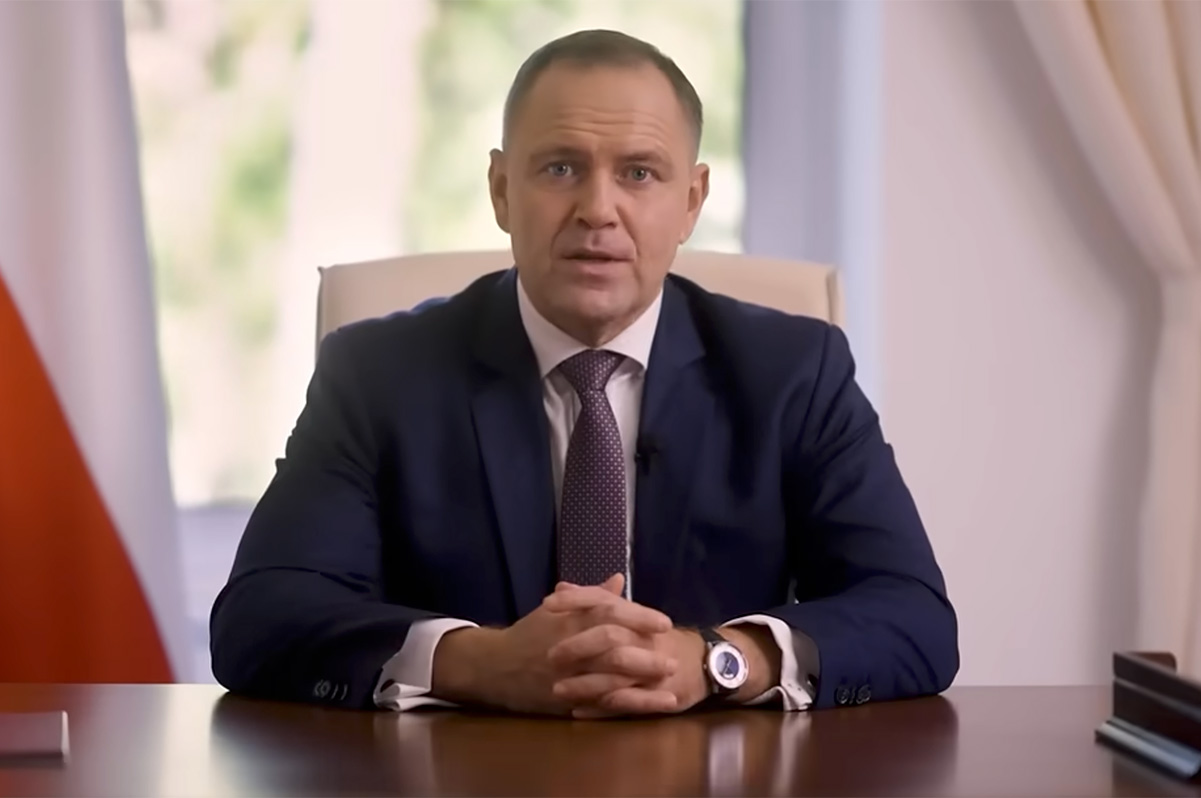
Polish President Karol Nawrocki on July 17 vetoed bills that would have extended rights to same-sex couples.
Reuters reported Nawrocki rejected two measures that would have allowed same-sex couples who live together to enter into “cohabitation contracts.” Reuters noted the bills would have allowed same-sex couples to make decisions on issues that include access to medical information, property rights, and burial.
The country’s coalition government backed the bills that MPs approved. Nawrocki, a socially conservative Catholic, in a statement said they “create a new, formalized institution of family law, equipped with a broad catalogue of rights similar to those of marriage.”
“As the guardian of the Constitution, I cannot accept a solution that would lead to the loss of the special status of marriage, defined in Article 18 of the Constitution as a union of a man and a woman under the protection and care of the Republic of Poland,” said Nawrocki, as Reuters noted.
Prime Minister Donald Tusk sharply criticized Nawrocki.
Miko Czerwiński of the Campaign Against Homophobia, a Polish LGBTQ advocacy group, in a statement noted nearly 80 percent of Poles “believe that the status of same-sex couples should be protected.”
“Once again, the voice of society has proven irrelevant to those in power,” said Czerwiński. “We are not willing to accept this. We will continue working towards full marriage equality.”
The EU Court of Justice in Luxembourg last November ruled in favor of a same-sex couple who challenged Poland’s refusal to recognize their German marriage. Poland’s Supreme Administrative Court in March reaffirmed the decision.
The couple, who lives in Poland, brought their case to Polish courts in 2019. The Supreme Administrative Court referred it to the EU Court of Justice.
The Polish government in May announced it will recognize same-sex marriages legally performed in other EU countries. Tusk, for his part, apologized to same-sex couples for the “years of rejection and humiliation” they suffered because Poland did not recognize their relationships.
“We will continue working towards full marriage equality,” said Czerwiński in response to Nawrocki’s vetoes. “We will not allow years of work by non-governmental organizations, activists, and our entire community to be wasted.”

1 dead, 29 injured in Berlin Pride attack

‘Into the Grey’ unites Cavill, Gyllenhaal for thrills and gay love

Winsome Earle-Sears launches campaign against Va. marriage equality amendment

Calendar: July 24-30

Pentagon says hormones make trans troops unfit but gives them to men

LGBTQ ‘human rights crisis is unfolding in Puerto Rico’

Is the Metro safe for riders?

Craig Thier says experience, civility are key to Rehoboth’s future

House blocks effort to codify transgender servicemember ban into law

D.C. Council approves increased funding for Mayor’s Office of LGBTQ Affairs
-

 Puerto Rico5 days ago
LGBTQ ‘human rights crisis is unfolding in Puerto Rico’
-
District of Columbia4 days ago
Is the Metro safe for riders?
-
Rehoboth Beach4 days ago
Craig Thier says experience, civility are key to Rehoboth’s future
-
Congress4 days ago
House blocks effort to codify transgender servicemember ban into law