Commentary
What I Learned from Joe Biden 45 (Gulp!) Years Ago
Why The Lessons Give Me Hope for 2022
The twin threats that still loom over us — the anti-democratic radicalization of the Republican Party and the persistence of the pandemic — are making this a tough time to appreciate the many first-year successes of the Biden Administration.
We are in an undeniable moment of peril and there is every reason for alarm, but also for hope. I will continue beating the drum on the urgency of passing measures such as the John Lewis Voting Rights Advancement Act, the Freedom to Vote Act, the Protecting Democracy Act, and the Judiciary Act, as well as holding those attacking our democracy accountable.
And in this end-of-year piece, I reflect on how what I learned from President Biden so many years ago gives me hope that in 2022 we can turn a corner. We can prevail in the work of defending and righting our democracy.
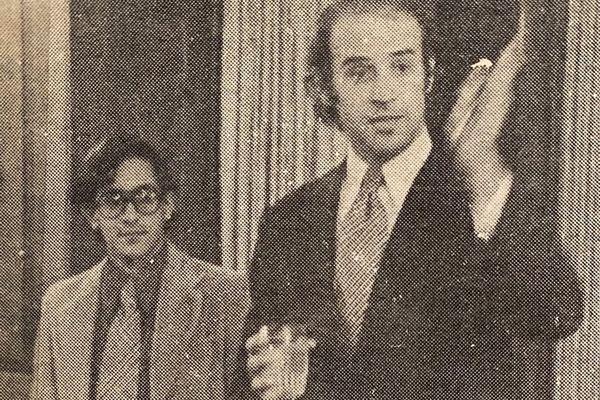
It was the summer of the Bicentennial. The summer I first saw a fax machine (which, during several minutes of noise, laboriously spooled out, on a curl of smelly, waxy paper, documents arriving from Wilmington to Washington). The summer after my sophomore year in college. The summer of 1976, when I interned for a then-wunderkind senator named Joe Biden.
Even as a kid, I was into history and politics. I knew that Biden, at the age of 29 — still too young to serve — had defeated a seemingly unbeatable incumbent. I was aware of the horrible car accident following his election, and how he rode back and forth by train to be there with his two little boys at bedtime. I watched Biden become “a liberal who breaks ranks” (as I described him in my diary), a gregarious, energetic, precocious, ambitious young senator.
My diary from 1976 shows me also to have been energetic, precocious, and — sometimes cringe-worthily — ambitious. I had a diverse network of friends and roommates. Despite a cascade of plays, movies, lectures, pleasure reading, and other distractions catalogued in my diary, I was excelling academically. I had succeeded in winning election as Speaker of the Yale Political Union, climbing to the top of the greasy pole among the other greasy pols at a school full of wannabes. And as my diary recounts, in blow by blows, 1976, as it happened was also the year I first had sex. With a woman.
When I reread the diary now, I am struck by how much this 19-year-old kid was doing, how well he was doing, how insightful and passionate he was about so much. And that, indeed, is how I’ve long remembered that year — a time of growth, accomplishment, and adventure.
But the diary also records what I had forgotten: so much second-guessing and self-doubt, a sense of losing ground and erratic confidence, critiques of my friends and myself… so much yearning outpacing my undeniable striving. I had forgotten how much perspective I did not have then on what really mattered, even as I was doing stuff that mattered and wrote endlessly in the diary about wanting to matter.
One of the things I wanted back then was to land a job in Washington. And so I was thrilled when the hotshot young Senator Biden agreed to come speak to the Political Union. After presiding, as Speaker, over his appearance, I wrote in my diary:
February 10: Senator Biden was impressive tonight. Young, energetic, warm, and intelligent. Egotistical to some extent…. I want to work for him…. I want a summer job in DC. This is important, unlike the Speakership. It’ll show that my credentials stand up in the ‘real world’ and will be that critical initial involvement leading to other jobs.
Over the next couple months — while juggling impressive courses and activities, and wrapping up the Speakership — I wrote letters, made calls, and even traveled to DC in hopes of securing an internship. My diary displays the determination and idealism with which, in the midst of my studies and activities, I pursued that ambition. For instance:March 8: A day of firsts and things that would have been orgasmic at one point in my life. Lunch with a congressman (we talked politics and then job), going on the floor of the House, sitting in the Speaker’s chair and standing at the podium where Truman gave the Truman Doctrine speech, where State of the Union speeches are given. Riding in Members Only elevators, hobnobbing with Senator Biden like a friend [but] no definite job…. Biden and I are becoming real chummy. His AA asked me back tomorrow, as the Senator and I kibitzed our time away. Good luck. I want a job so badly….
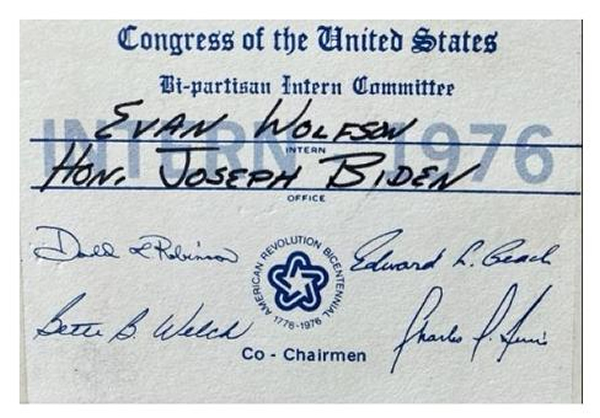
Then, on April 20, I got the call.
For the next several months, my diary contains voluminous descriptions of an exciting, busy Bicentennial Summer in DC, and my thrills, frustrations, and aspirations as a witness to, and sometime participant in, the activities of an office of a Senator on the go. The numerous entries tended to go like these:
May 25: Attended my first Foreign Relations Committee hearing…. I sat on the stage behind the Senators and entered through the private doors. Funny how when I see the sign STAFF on the elevator, I almost turn away until I realize and then get a kick out of it…. Am going to slowly widen my activities until they see I’m reliable and capable. Did some press work (phoning in ‘actualities,’ quotations on tape from Biden…to radio stations in Delaware). I used a computer research machine, ‘Scorpio,’ to read a report on Rhodesia and took such stuff out on own initiative this evening, having ordered it from the Library of Congress. Tomorrow — sale of nuclear reactors. Must remember that my goal this year should be to know how an office and Congress run…not to make policy. I have eleven years (at least) to go on that….
June 3: To my great joy, I was assigned as the Intern for Foreign Relations. I’ve handled some relatively thorny constituent requests…. I also decided that the only way I would advance from office work (not exactly crap, but not policy-making either) would be to take initiative and show them what I can do. I figured that the one thing I know I’ve gotten from a Yale education that I would not have gotten on my own is the ability to write quickly and well. So, I made impressive inquiries at the Congressional Research Service, including a jaunt to the Library of Congress (where my researcher was shocked and probably a little annoyed to discover that I was younger than he, and not a Legislative Assistant) …. I submitted it to my L.A. [legislative assistant], a former C.I.A. guy who knows everyone in the foreign relations business (!); he seemed pleasantly surprised. I hope he’ll consider it good and timely enough to: A) submit it to Biden, and B) warrant including me, at least as an observer, in the substantive areas of senatoring.
June 9: Started work at Roy Rogers [where I moonlit nights to make some money during that unpaid summer internship].
July 21: Was walking down the hall to the Foreign Relations Committee when [Vice Presidential nominee Walter] Mondale popped out (he has the office right across from us). He began walking right in front of me, and the TV people ran backwards ahead of us with bright lights and cameras. I was flanked with Secret Service — and hadn’t even tried to get into the picture! Couldn’t have done better if I’d tried. Had a low today, too: had to go pick up the Senator’s lunch. Although LA’s do it (and in other offices, it’s one of the high points of an intern’s day), it still rankled.
Even during that long-ago summer, I noted firsthand how much Biden cared about policy and government across a broad range of areas, tapping many sources of expertise and input, putting in the work. I wrote on June 16 that the Senator “does look at every single letter that goes out with his signature. He also rejects drafts and demands a lot — rightfully so.” I saw how engaged he was, and what a people person.
One diary entry, for instance, gives the flavor, recounting an outing at the beach with the Senator and the woman he was then dating whom I was introduced to as Jill — now our First Lady Dr. Jill Biden — whom I liked right off the bat and every time I was with her.
August 1: Yesterday…I went to Delaware to spend time at the Biden picnic for volunteers and supporters…. What a folksy state. The Senator running around clowning and taking pictures in his bathing suit, splashing with his kids in the water. The Governor [Sherman Tribbitt]– ‘howaya, Sherm’ — in loafers and short sleeves walking on the sand. Me playing ‘football’ with Beau and Hunt Biden (7, 6), then taking them in the cold ocean, counting continually to make sure — like a camp counselor — that there were 5 kids all the time, heads above the water and all….The kids gave me something to do other than fawn on the Senator, as I knew very few of the people there. At one point the Senator grabbed me and made a joke about Yale; I had walked in front of someone taking a picture with him — boy, was I embarrassed. He and I bantered a little, in and out of the water — but I still am not sure he knows my name… I still don’t know where I stand. I so want to be a part of things…
Back at school in the fall, I stayed in touch with the Senator’s office, and occasionally heard from him as well — treasuring every contact.
September 27: Got a nice note from Biden…. He says that he is glad I took him up on the suggestion that I keep in touch with ideas for legislation. He said, ‘You have always been a reservoir of ideas. [!] … In light of all your outside interests, I trust your studies are not suffering. Keep in touch… Joe.’
Soon, though, my diary reveals that I was busier than ever — juggling highs and lows of friendships, teaching Sunday School, and diving into a new role as Yale campus co-coordinator for the Carter-Mondale campaign, all while shouldering another challenging course load (my favorite semester at college, it turned out). And throughout, figuring out for myself what it was going to mean to be gay.
Of course, 1976 was a long time ago, and very early in my life. Still ahead of me lay graduating college and law school; the Peace Corps; decades of lawyering and activism; founding and leading the successful and transformative campaign to win the freedom to marry; teaching at Georgetown and Yale; close circles of friends (including, still, the college roommates I had written and worried about, and now, our respective spouses and partners); uncle-hood; travels; and a happy marriage to the man I love. In 1976, I had no way of knowing that this was what life held in store for me — but as I reread the diary, I can see now that the 19-year-old me was finding his way to at least two major lessons that have shaped my life (and been hallmarks of my work) ever since.
First, I learned that year that greatness as in “I want to be great” comes, if at all, from actual service, making a difference for others, rather than from the credentials and things I’d begun the year by pursuing — to be Speaker of the Political Union, or to be in politics for the sake of glory or even attention. I discovered that after striving to get elected Speaker, the actual position didn’t feel as worthwhile as I had thought it would, whereas engaging in debates (and meeting visitors like Biden), my grunt work organizing the campus and helping deliver a Connecticut win for Jimmy Carter, teaching students at Sunday School, and digging as an intern into substantive research — not to mention my actual studies — felt gratifying and proved meaningful.
I was learning for myself the lesson best conveyed in my favorite speech of Martin Luther King, Jr.’s, the one I hang on the wall of every office I’ve had. When they give my eulogy, Dr. King said, “tell them not to mention that I have a Nobel Peace Prize — that isn’t important. Tell them not to mention that I have three or four hundred other awards — that’s not important. Tell them not to mention where I went to school…. I’d like somebody to mention that [he] tried to give his life serving others… tried to love somebody. [All] of the other shallow things will not matter…. I just want to leave a committed life behind.”
My diary shows me learning another lesson, too: the power and affirmation that come from not wallowing in the negative, from being hopeful, from focusing on the pathway not the problem, from being kind — to others, and to myself.
While I wince at the young me’s sometimes shallow ambition and excessive judgment (“fancied greatness,” as another hero, Abraham Lincoln, described his youthful sense of self), I am simultaneously proud of what the young me was actually doing — even as he wrestled with what it meant and where he wanted to go. As the young me learned that year to pursue a committed life in a meaningful way, and to be charitable toward others, so older me is again reminded to be kind to my young self, too.
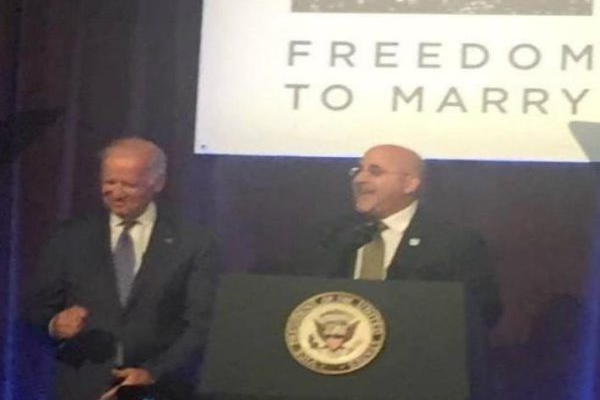
I last spent real time with Joe Biden when the then-Vice President spoke to the more than 1000 advocates and celebrants at Freedom to Marry’s Victory Celebration on July 9, 2015.
“Let me begin by saying I take full credit for Evan” were Biden’s opening words (greeted by laughter). He then shared lessons he’d learned from his father about love, his evolution in understanding gay people, and how he came to support the freedom to marry — even getting out in front a bit to help nudge the Administration along. He recalled his pivotal Senate role in defeating the anti-gay Robert Bork, nominated by Reagan to the Supreme Court. That, in turn, led to the appointment of Justice Anthony Kennedy instead, who went on to write the marriage victory we had worked for and were celebrating.
“In 1983, there was a Harvard Law essay making the constitutional case for marriage equality written by a young man,” Vice President Biden told the audience. “He said, ‘Human rights illuminate and radiate from the Constitution, shedding light on the central human values of freedom and equality.’…. That was the basis upon which I took on Judge Bork.”
“These were not words from an illustrious Supreme Court Chief Justice,” Biden concluded. “These are the words written by Evan Wolfson when he was in law school. Pretty courageous for a 26-year-old kid at Harvard Law School when the future looked so dark and lonely.”
Whether or not his former intern’s law school thesis on marriage, written just a few years after my internship, really had been top of mind in Biden’s thinking as he took on Bork and continued his Senate career, I still appreciated his generosity. It was yet another example of what I know I really learned from him.
When I endorsed him for president, I wrote that “Biden [sometimes] got things I cared about wrong — even, initially, my own work to win the freedom to marry. But, crucially, he has also always shown a willingness to listen and learn, an eagerness to explore new approaches and syntheses, a capacity to empathize and evolve.”
“I have seen firsthand,” I added, “how, unlike Trump, Joe Biden cares about governing, knows how the government works, and will work through it, not war on it…. Biden’s concern for people and deep knowledge and experience give him the ability to bring people together” and to deliver on good ideas to restore our democratic possibilities.
From a wunderkind senator, the embodiment of ambition, Joe Biden came to embody virtues of empathy, faith in government, and hope as a politician, candidate, and now, our president. On him now — and on us — literally rests the future of America as a democracy.
I can’t claim to know President Biden well enough to know every bit of his inner thinking, but from what I’ve experienced in interacting with him , it’s clear that in his own way, too, Joe Biden learned what I began learning under his tutelage: A committed life is found not in just the ambition to be great, but the ambition to “do great” — to do for others. To persevere and put in the work. To listen and to grow. To be kind. To be hopeful, and to convey hope. And, too, and always, the personal matters.
Now, heading into 2022, we must redouble our efforts to help (and push) President Biden and all true democrats. Together we must rally enough Americans to defend liberal democracy, reach for justice, combat inequality, and build America back better. We have to persuade, organize, hang in, maneuver, mobilize, and vote. What I learned as a college kid, and since, sustains my belief that we Americans can, yet again, meet the call to action and rise to the great work this moment and history require.
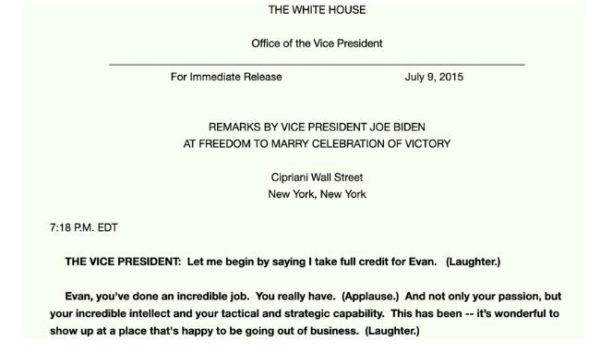
Vice President’s Remarks, Freedom to Marry Victory Celebration, July 9, 2015
*********************
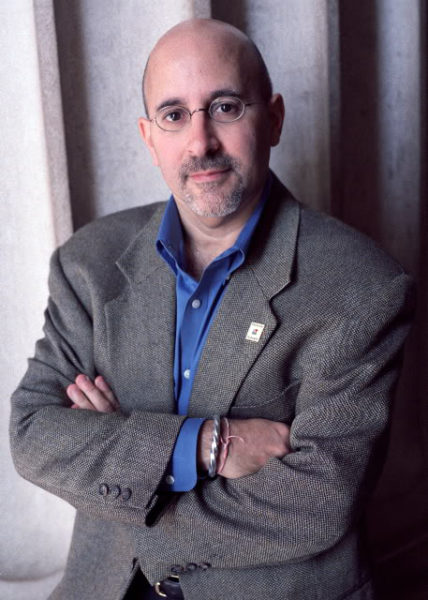
Evan Wolfson led the campaign to win the freedom to marry for same-sex couples. Since victory in 2015, he advises and assists diverse movements in the US on “how to win,” as well as activists seeking to win marriage in other countries worldwide.
*********************
The preceding piece was previously published on Medium and is republished with permission.





Commentary
What LGBTQ veterans are building after ‘Don’t Ask, Don’t Tell’
DADT repeal took effect on Sept. 20, 2011. Trans servicemember ban reinstated

Fifteen years ago this month, the repeal of “Don’t Ask, Don’t Tell” took effect. At the time, the importance of the change was obvious: gay, lesbian, and bisexual Americans would no longer have to hide who they were to wear the uniform. What was harder to see was what would follow: a generation of LGBTQ veterans able to carry their service openly into American civic life.
Earlier this month, Alaska state Rep. Andrew Gray, an Army veteran, stood before the Anchorage Assembly and asked the city to recognize Sept. 20 as LGBTQ Veterans Day.
His former command sergeant major, Mike Grunst, followed him to the microphone. A 35-year veteran who had served in combat, Grunst called troops who had served while hiding who they were “the bravest I have ever served with.”
Then Denise Sudbeck stepped forward. A Vietnam-era Navy veteran, she thanked the country for the privilege of serving and asked that the next generation have the same chance.
The Assembly approved the recognition.
Nothing about the scene required a new vocabulary. A veteran made a request of his community. A commander vouched for those who served beside him. Another veteran asked that younger Americans inherit the opportunity she valued. They entered the civic record simply as veterans.
That identity can do more than win recognition.
When federal policy abruptly ended the careers of transgender servicemembers this year, veterans and servicemembers in California began asking a practical question: What happens when those Americans come home?
Republican Assemblyman Jeff Gonzalez, a Marine combat veteran, began one hearing with questions about transgender military service. He listened as veterans explained how the military handles medical care and deployment case by case.
Then the discussion turned to separation.
“I don’t wanna see any veteran homeless,” Gonzalez said. Before the hearing ended, he was asking: “How can I help? How can I understand? How can I be a good advocate?”
The legislation that followed would provide housing, employment and transition assistance to discharged servicemembers. Republican state Sen. Shannon Grove spoke for it. The Senate passed it 32 to 0.
Americans have plainly not settled their disagreements over transgender people. Nor should military service be a prerequisite for rights that belong to every citizen.
But military service creates relationships that are difficult to reduce to the abstractions of the culture war. Before a legislature, “the transgender issue” can become a veteran who deployed, an officer who led troops, or the person who once stood beside you.
The political question changes because the human relationship has already changed.
The pattern is beginning to appear across the country. Kansas is among the states recognizing LGBTQ Veterans Day for the first time this year. New York and Virginia are pursuing broader state-level programs for LGBTQ veterans.
Sept. 20 is deliberate. On that day in 2011, “Don’t Ask, Don’t Tell” ended.
We usually remember repeal for what LGBTQ Americans gained: the ability to serve openly. Fifteen years later, we can also see what the country gained.
A gay veteran can stand before his local government beside the commander who once led him. A transgender servicemember can sit before a legislator who begins with doubts and ends by asking how he can help. A veteran from an older generation can ask her neighbors to give those who follow her the same chance to serve.
This is citizenship in practice.
The enduring legacy of “Don’t Ask, Don’t Tell” repeal is not only that Americans were finally allowed to serve openly. It is also what they can now build after coming home.
Commentary
Anti-science, anti-LGBTQ movements go hand in hand
HHS under RFK Jr. has blocked gender-affirming care for youth

A newborn baby died after contracting measles in Pennsylvania last month, and, as if it wasn’t enough grief for his parents, anti-vax activists are trying to track down and harass his family. Apparently, Gov. Josh Shapiro tangled with Robert F. Kennedy Jr. over his “inaccurate and misleading claims.”
On Aug. 26, RFK Jr., the secretary of the U.S. Department of Health and Human Services, declared that the deaths could be fabricated. We live in peculiar times, when it is government officials, not freaks on the internet, who are spreading conspiracy theories. The new spread of measles in the United States since Donald Trump came to power is one of the most shameful parts of the story of modern American politics, and the tragedy of parents who lost their baby because more and more people refused to vaccinate may seem absolutely unrelated to LGBTQ rights, but actually, there is a pretty solid connection.
Because RFK Jr., the same man who was fighting vaccination, promoted the false idea that vaccines caused autism, and even curated the anti-vaccine organization Children’s Health Defense before going into politics, is also a known opponent of transgender rights. Under his “leadership,” gender-affirming care for trans minors was banned, and there were also created new healthcare guidelines recognizing only two genders.
All around the globe, there is a weird correlation between anti-LGBTQ — particularly anti-trans — ideas and anti-science movements. And it should be clearer to the general public. People who are speaking against LGBTQ rights are not just threatening minorities. They are a danger to everyone.
The Trump-Vance administration is an iconic example of such tendencies.
Trump himself is a known critic of modern scientific studies — for example, believing in the same anti-vax conspiracies that Kennedy promoted, and showing obvious skepticism that global warming exists, despite all the evidence that has been shown by climatologists. And he is also a man who used trans people as boogeymen. Under his command, trans people were kicked out of the military. And even worse, recently he made an extremely chilling statement about the 2026 midterm elections, urging voters to “pretend I’m on the ballot” and vote for Republicans, and while discussing what he says is at stake, he said that if Republicans win, “transgenderism” will “end.” This is an offensive statement at best and genocidal at worst.
And, of course, I think everyone remembers the Department of Government Efficiency (DOGE), which was led by infamous billionaire Elon Musk, who announced to the world that he would destroy the “woke mind virus” that killed his child just because his trans daughter, Vivian Wilson, well, is happy to be a trans person.
DOGE is known not just for cancelling academic research around LGBTQ studies and gender studies. No, this agency abruptly canceled and froze thousands of federal science, research, and health grants, attacking such vital health programs as cancer research, vaccination research, and diabetes research, among others. As you can see, they are not just attacking people who are “affected” by the “mind” virus — they are dangerous to everyone, even if most of the public standing of Musk was around his anti-trans politics and he tried to present himself as a pro-science, pro-progress man by supporting the space industry.
An even more vivid example is the so-called Dark Enlightenment movement.
This extremely reactionary political movement was born in the late 2000s, and originally grew from very democratical classical liberal ideas. Until it became anti-democratic itself. And also often It was created by American software engineer Curtis Yarvin (writing under the pseudonym Mencius Moldbug) and expanded by British philosopher Nick Land. The movement is popular among some Silicon Valley businessmen, and got support from PayPal founder Peter Thiel, and one of their main ideas is that modernity is bad. They are basically obscurantists, who see modern universities as part of “the Cathedral” — a system that, in their opinion, promotes equality and modern science that society doesn’t need. Of course, the movement’s followers are mostly anti-LGBTQ rights, and, as you can see, anti-queerness once again go hand in hand with obscurantism. Unfortunately, the movement got the support of extremely prominent politicians, including U.S. Vice President JD Vance.
In his speech from 2021, Vance proved to be an obscurantist when he claimed that universities are the enemy. He is also a known homophobe and transphobe.
So, why are anti-vaxxers, people who oppose modern scientific studies, and people who hate universities more likely to be queerphobic? Why do the same people who are defending their transphobia by showing that they support common sense actually often show zero such sense when it comes to protecting themselves and their children from measles or decreasing the chances of getting cancer?
We don’t have any statistics or studies that show that all obscurantists are queerphobic, but around the globe, the same dynamic is visible.
In Russian anti-LGBTQ censorship, books about animal biology and zoology have been censored because the censors saw “LGBT propaganda” in them. The famous pro-Putin philosopher Alexander Dugin, who is extremely anti-queer, also speaks up against modernity itself.
In Taliban’s Afghanistan, modern science and LGBTQ rights are attacked at the same time.
Even in the UK, Reform UK is known as the most anti-trans and anti-queer party, and they are facing widespread criticism from scientists and medical experts for promoting climate change denial and anti-vaccine ideas. It doesn’t mean that LGBTQ supporters never believe in conspiracy theories or that progressive politicians always support science.
No, it just means that explicit anti-science and anti-LGBTQ statements often go hand in hand.
I think there are two reasons for this correlation.
First, LGBTQ people are real. You cannot deny that sex is not binary, gender and sex are different, and transition improves the quality of life of actual trans people. Or that same-sex relationships are natural, because even animals have same-sex sexual contacts. To deny it, you need an ideology or a conspiracy theory.
The second reason is that anti-scientific populism and anti-LGBTQ conspiracy theories are popular among the same category of people. It’s a “bundle” of ideas — a trend that conservative voters often adopt together. Studies also show that people who are likely to believe in one conspiracy theory are more likely to believe in another.
But the question is more broad. We don’t speak enough about the harm anti-scientific conspiracy theories and obscurantist politicians around the globe create for mankind in general. Not all people would suffer from a prohibition of hormone therapy, or attacks on same-sex marriage. But anti-global warming ideas, anti-vax advocates, and restrictions on modern research, especially medical research, are potentially dangerous to any human being.
And one of the best things LGBTQ activists could do is just show society that they are being used — that the same people who are stealing LGBTQ rights are also destroying medicine and the environment, and it’s a threat to their own traditional families and future of all kids no less than to queer people.
Commentary
Please join me in supporting the Washington Blade Foundation
An important event impacting the LGBTQ community will be held on Sept. 12 in Rehoboth Beach, Del.
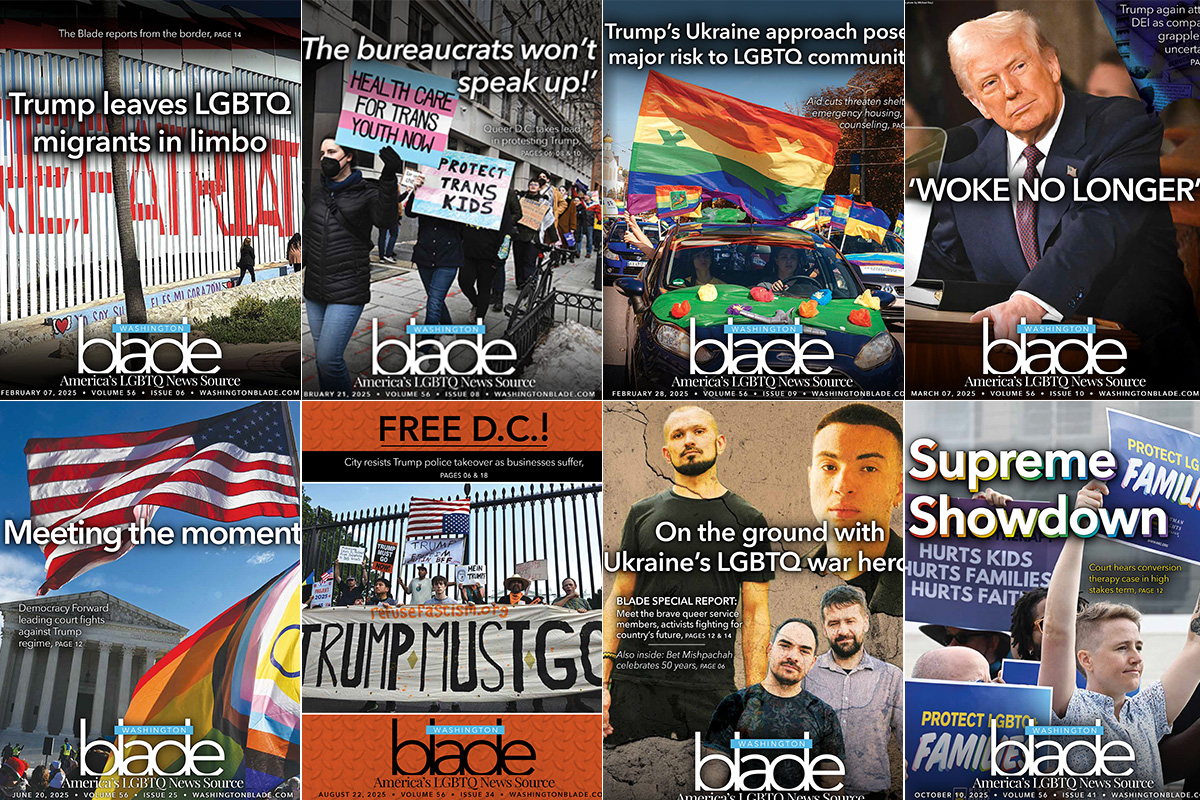
The event is a fundraiser for the Washington Blade Foundation. Whether you can join us in person, or just be with us from a distance, I ask you to seriously consider becoming a sponsor of this event. You may ask why should you care, why is this important, and how the Blade Foundation supports the LGBTQ community.
The event will feature an open bar, food catered by the Blue Moon, entertainment, and speeches from Blade staff along with remarks from Rehoboth’s Mayor-elect Susan Stewart and another surprise guest or two. You can buy tickets on Eventbrite; if you’re interested in sponsoring the event, contact Publisher Brian Pitts at [email protected].
The Blade Foundation was begun to ensure the history of our community, written in the pages of the Washington Blade, was archived, and never lost. That effort was a success thanks to the support of the DC Public Library. Now the Blade Foundation works to help ensure there will be future LGBTQ journalists working throughout the media, not just for the Blade. By funding interns and fellowships for LGBTQ journalism students, we help make that possible. By helping to fund the international news section of the Blade, the Foundation helps to keep the LGBTQ community around the world connected. In many countries where our community is either still not accepted, or worse, tortured, members of our community living in those places may only get news of their communities by reading the Blade online.
I know many of you reading this already know, the Washington Blade newspaper has been in existence, and reporting on the LGBTQ community, for more than 56 years. The paper’s reporting is done by those who are part of the community, and that makes a real difference. The paper is proud of its journalists, and the numerous awards they have won. One is Lou Chibbaro Jr., who recently was the subject of a documentary aired on PBS. He, and others like him, report the news honestly, without bias, but with fervor, because they actually live the stories.
In those 50-plus years since Stonewall, the Blade has been reporting on the progress our community has made. The steps forward, the stumbles, those allies who have worked with us, and those people who have tried to stop us from living our lives as who we were born to be. Again, the news is being reported by members of our own community. It is not others writing about us, but us, writing about ourselves. The Blade is followed by many mainstream media outlets, and stories that first only the Blade covered, ignored by mainstream media, were then picked up and reported garnering the widespread coverage they deserve. The Blade is the best place to find out about what the members of our own community are doing, and what others are doing to, and for, us.
It is sad that today the Blade has to report we are at a place in history where we are fighting just to keep the strides for equality we have made over the past 50 years. Because of that, it is even more important than ever, that the Washington Blade keeps publishing. Today, the Blade is the only LGBTQ news outlet with a dedicated seat in the White House briefing room. That is important for the Blade, and for all the members of our own community. It is important the Blade be where the action is.
The Blade’s international coverage helps us in the United States to understand where we can help those in our community who may be suffering and less fortunate, but also to celebrate with those who are even more free in many ways. The recent stories about World Pride in Amsterdam inspire us to fight even harder for our rights here, so we never again have a president who will work to keep our community from being all it can be. That we will never again have a President who threatens the lives of our trans sisters and brothers, threatens their healthcare, and throws our community’s heroes out of our military. Those news stories are important to write, and they often only get written about fully, in the Blade.
So again, I ask you to consider being a sponsor, and joining us in Rehoboth on Sept. 12. Or if you can’t be in Rehoboth, that you support our work from a distance, and support this important event. The Washington Blade Foundation is a 501c(3) non-profit. So, whether you are a business supporting the community, an individual ally, or a member of the community, please dig deep, and help to support the future of LGBTQ journalism, and future LGBTQ journalists. By doing so, you are supporting the future of the LGBTQ community. You can donate online at bladefoundation.org/donate.
Peter Rosenstein is a longtime LGBTQ rights and Democratic Party activist.

For lesbian victims of domestic violence, competent care is scare

UN human rights chief sounds alarm over ‘comprehensive onslaught’ against LGBTQ rights

White House press pool pushes back after Trump bars three outlets

PHOTOS: Shenandoah Valley Pride

Long-time DignityUSA executive director announces retirement

Jeremy Moss looks to bring LGBTQ advocacy from Lansing to Capitol Hill

Republican challenger misgenders McBride during forum, forced to leave

Queer mega stars coming to D.C. this fall

Activists protest outside Turkish Embassy in D.C.

A roundup of fall events not to be missed
-

 Congress5 days ago
Jeremy Moss looks to bring LGBTQ advocacy from Lansing to Capitol Hill
-
Delaware4 days ago
Republican challenger misgenders McBride during forum, forced to leave
-
Music & Concerts4 days ago
Queer mega stars coming to D.C. this fall
-
Turkey4 days ago
Activists protest outside Turkish Embassy in D.C.