World
Mexican Supreme Court rules against same-sex marriage ban
Three gay Oaxacan couples challenged denial of marriage licenses, ruling opens possibility of same-sex marriage throughout the country.
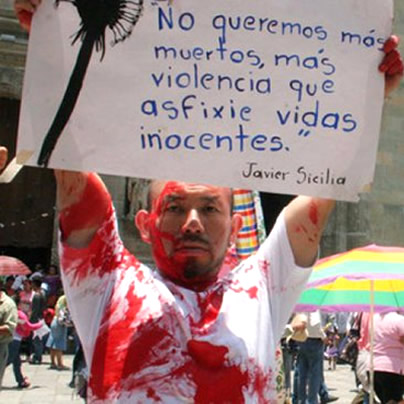
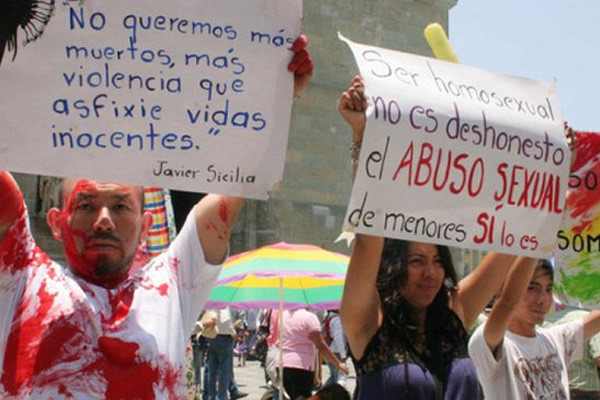
Lawyer Alex Ali Mendez Diaz represented three same-sex couples from the Mexican state of Oaxaca whom local authorities denied marriage licenses. (Photo courtesy of Alex Ali Mendez Diaz)
The Mexican Supreme Court on Wednesday unanimously struck down a law in the southern state of Oaxaca that defined marriage as between a man and a woman.
Three couples — Lizeth Citlalli Martínez Hernandez and María Monserrat Ordóñez Narváez, Jesús Reyes Álvarez and Guillermo Emmanuel Martínez Pimental and Karina Mendieta Pérez and Gabriela Castellanos Mota — tried to apply for marriage licenses in Oaxaca, but local authorities denied their applications.
Lawyer Alex Alí Méndez Díaz filed lawsuits on behalf of two of the couples in Aug. 2011 and a third in January who sought legal recourse, known as an “amparo” in the Mexican judicial system, that would ensure local authorities would protect their constitutional rights. Geraldina González de la Vega, a lawyer who advised Méndez, noted to the Washington Blade this “remedy can be used against laws or acts of authority” in Mexico.
A Oaxacan court in April ruled in favor of Martínez and Ordóñez, but against Reyes and Martínez and Mendieta and Castellanos. An appellate judge in August cited the Mexican constitution that bans anti-gay discrimination in his ruling that ordered Oaxacan authorities to allow same-sex marriages.
The state’s governor and Congress petitioned the Mexican Supreme Court to review the case — Méndez also asked the tribunal to determine the criteria under which the Oaxacan marriage law should be understood.
“The court did not declare the unconstitutionality of the law, but the effect of its application is that the justices said that one would have to understand marriage is a contract celebrated between two people without any reference to the sex of those who enter into it,” Méndez told the Washington Blade during an interview from Mexico City hours after the justices issued their decision.
Same-sex couples have been able to legally marry in the Mexican capital since 2010, and the Mexican Supreme Court has ruled other states must recognize same-sex marriages legally performed in Mexico City. Same-sex couples have also married in Quintana Roo, which includes the resort city of Cancún on the Yucután Peninsula.
The state of Coahuila offers property and inheritance rights and other limited legal protections to same-sex couples.
The latest Mexican Supreme Court decision only applies to Oaxaca, but advocates maintain these cases will open the doors to same-sex marriages across the country.
González noted the court needs to issue five rulings before the “amparo” will “have general effects” throughout the country.
“We already have three,” she said.
“These cases set a precedent that can be invoked in any other state in Mexico,” Méndez added. “While it is not obligatory for those who must resolve these new cases, there is a high possibility that the result will be the same as what we have obtained in Oaxaca.”
Enrique Torre Molina, an LGBT activist and blogger in Mexico City, agreed.
“It’s not going to be long before same-sex marriage is a reality in the whole country,” he told the Blade on Wednesday. “It’s a matter of same-sex couples who have been thinking about getting married and haven’t done it either because they’re not in Mexico City and traveling is not an option or because they were going to get no for an answer. It’s just a matter of time of trying it out as these couples in Oaxaca [did] and sort of contribute to this history.”
The Mexican Supreme Court issued its ruling hours after a Colombian Senate committee approved a measure that would legalize same-sex marriage. Senators in the South American country are expected to debate the bill on Tuesday.
Same-sex couples have been able to legally marry in Argentina since 2010. Neighboring Uruguay allow civil unions for gays and lesbians, but the country’s lawmakers are expected to debate a same-sex marriage measure on Tuesday.
The Inter-American Court of Human Rights in February ruled in favor of lesbian Chilean Judge Karen Atala who lost custody of her three daughters to her ex-husband in 2005 because of her sexual orientation. Three gay Chilean couples who had been denied marriage licenses filed a lawsuit with the tribunal in September after the country’s Supreme Court ruled against them.
The Mexican Supreme Court cited the Atala case in its decision.
“Our country has already been sanctioned on many occasions by the IACHR,” Méndez said. “Our country, being part of this Inter-American system, will have to follow this trend in regard to protecting the human rights of the LGBT community.”
J. Lester Feder, a former Politico reporter who has covered the same-sex marriage throughout Latin America for four months for his blog AfterMarriage.org, noted to the Blade from Oaxaca that courts throughout the region often look to those in other countries in reaching their own decisions. He said the Atala case is one of the legal precedents the Oaxacan couples used in their successful lawsuits.
Justice José Ramón Cossío told CNN en Español he expects the same-sex marriage could become a reality throughout the country within a few months.
“The three cases are effective with respect to the state of Oaxaca,” he said. “By the position that we have on the Supreme Court as the country’s highest tribunal, it is foreseeable that if other people from other federal entities challenged a code that had a similar condition, the court would reiterate its criteria and within the next few months will guarantee the juris prudence that will become mandatory.”
Feder agreed.
“It means that it’s very likely universal marriage rights are going to be available in Mexico well before the United States,” he said. “International human rights law in the Americas is [increasingly interpreting] marriage rights as human rights, but the United States legal system doesn’t internalize international norms. We’re not participating in that trend.”




Hungary
Charges against Budapest mayor for organizing Pride march dropped
Country’s new government took office last month

Hungarian authorities on Thursday dropped charges against Budapest Mayor Gergely Karácsony over his role in organizing the city’s 2025 Pride march.
Karácsony spoke at the event, even though then-Prime Minister Viktor Orbán’s government banned it.
More than 100,000 people defied the ban and participated in the march that took place on June 28, 2025. The Associated Press notes the Budapest Chief Prosecutor’s Office in January charged Karácsony with “organizing the unlawful assembly despite a prohibition order.”
Karácsony, who has been Budapest’s mayor since 2019, described himself as a “proud defendant” after his indictment.
“It seems that in this country, this is the price you pay if you stand up for your own freedom and the freedom of others,” he said in a statement, according to the AP. “If anyone thinks they can ban me, deter me, or prevent me and my city from doing so, they are gravely mistaken.”
Budapest is Hungary’s capital and largest city.
Prime Minister Péter Magyar took office last month after his center-right Tisza party ousted Orbán’s Fidesz-KDNP coalition in elections that took place on April 12.
Hungarian police on May 29 announced they will allow the Budapest Pride march to take place this year.
The European Union’s top court, the EU Court of Justice, days after Orbán’s ouster struck down Hungary’s anti-LGBTQ propaganda law that MPs approved in 2021. The BBC notes Hungarian authorities cited the decision in their decision to drop the charges against Karácsony.
Authorities in Pécs, a city near Hungary’s border with Croatia, have also dropped charges against Géza Buzás-Hábel, who organized a 2025 Pride event.
Hungary
Hungarian authorities lift Budapest Pride ban
Country’s new government took office last month
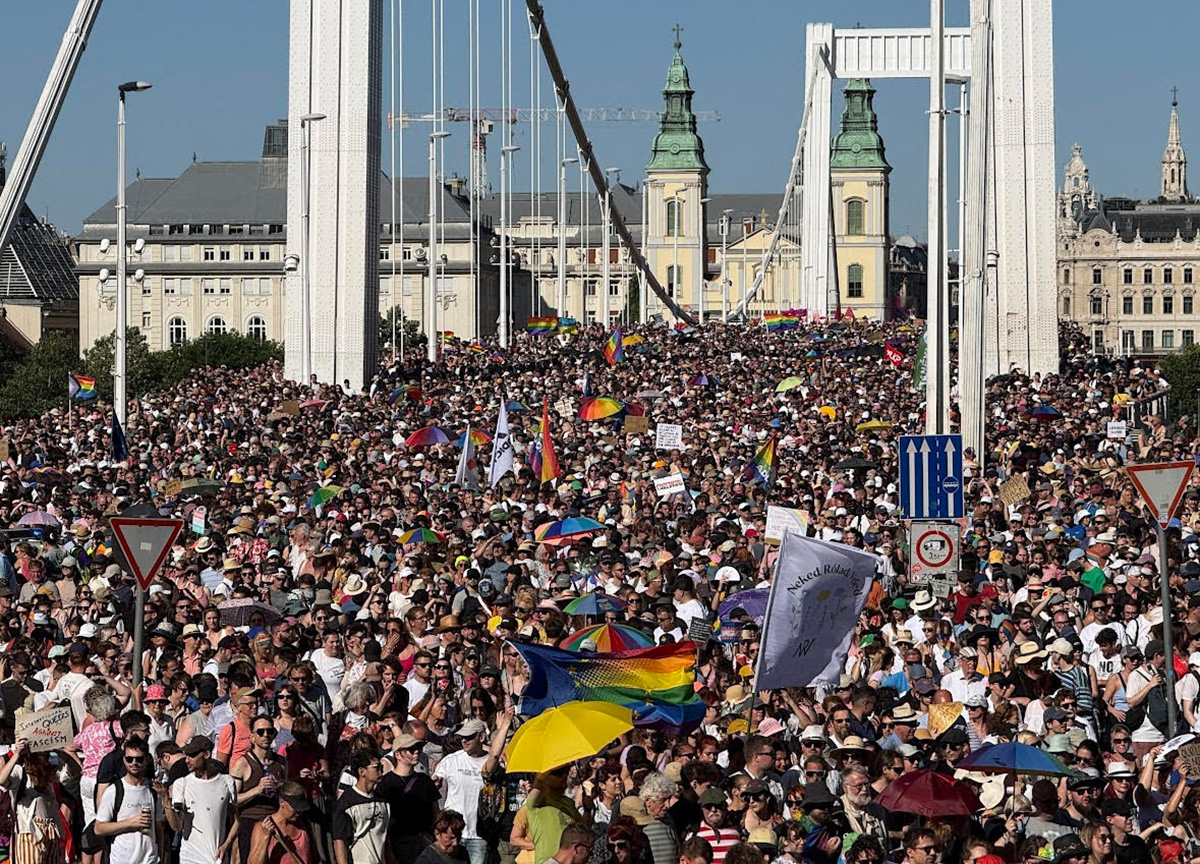
Hungarian police on May 29 announced they will allow the annual Budapest Pride march to take place.
“The Budapest Metropolitan Police has approved the 2026 Budapest Pride Parade and also has issued restrictive orders in relation to three counter-demonstrations,” a Budapest Metropolitan Police spokesperson told Politico.
Budapest is Hungary’s capital and largest city.
Hungarian lawmakers last year passed a bill that banned Pride events and allowed authorities to use facial recognition technology to identify participants. MPs later amended the Hungarian constitution to ban public LGBTQ events.
More than 100,000 people defied the ban and participated in last year’s Budapest Pride parade. The event became one of the largest protests against then-Prime Minister Viktor Orbán and his government since he took office in 2010.
Prime Minister Péter Magyar took office last month after his center-right Tisza party ousted Orbán’s Fidesz-KDNP coalition in elections that took place on April 12. The European Union’s top court, the EU Court of Justice, days after Orbán’s ouster struck down Hungary’s anti-LGBTQ propaganda law that MPs approved in 2021.
The EU on May 29 announced it will release more than €16 billion ($18.59 billion) in funds to Hungary that it withheld while Orbán was in office.
The Budapest Pride march will take place on June 27.
“We will march freely in fresh air for our rights, for the democratic Hungary,” said Budapest Pride on its Facebook page.
Colombia
Claudia López comes up short in Colombian presidential election
Former Bogotá mayor would have been country’s first lesbian head of government
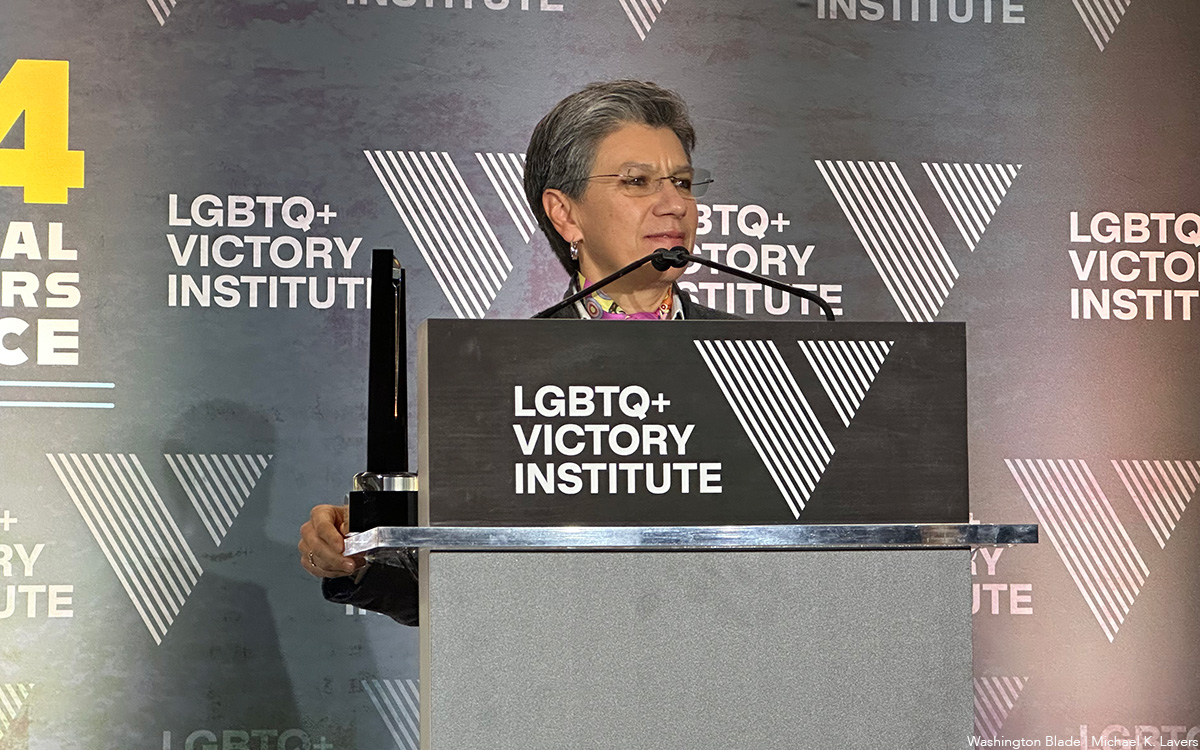
Former Bogotá Mayor Claudia López on Sunday finished fifth in the first round of Colombia’s presidential election.
López, a centrist who ran as an independent, received 225,517 votes. This figure is .95 percent of the total votes cast.
López was the Colombian capital’s mayor from 2020-2023. She was a member of the Colombian Senate from 2014-2018. López, whose wife is outgoing Colombian Sen. Angélica Lozano, would have become the country’s first female and first lesbian president if she would have won the election.
The LGBTQ+ Victory Institute honored López in D.C. in 2024.
“We need to listen to each other again, we need to have a coffee with each other again, we need to touch each other’s skin,” she told the Washington Blade during an interview. She hadn’t yet declared her candidacy, and did not specifically discuss her plans to run.
Runoff to take place June 21
Abrelardo de la Espriella, a far-right lawyer who has praised U.S. President Donald Trump and Salvadoran President Nayib Bukele, on Sunday finished first with 43.74 percent of the vote. Senator Iván Cepeda, a member of outgoing President Gustavo Petro’s Historic Pact party, came in second with 40.9 percent of the vote.
Neither men received a majority of votes. A runoff between them will take place on June 21.

Gay 1920s-era Hollywood star to be honored in Staunton, Va.

Why I’m supporting Gary Goodweather for D.C. mayor

Don’t just vote for change — vote for Hope Solomon for mayor

Vote Kenyan McDuffie for D.C. mayor

Your queer D.C. voting guide

Timothy Nelson on the premiere of his opera ‘Song of Sakuntala’

Controversial ‘Blue Film’ pushes past taboos for gripping drama

PHOTOS: ‘Soul Divas’

‘Mighty Real’ explores history of LGBTQ music