World
EXCLUSIVE: Zimbabwean LGBT activist visits D.C.
Advocate is a member of countrywide advocacy group
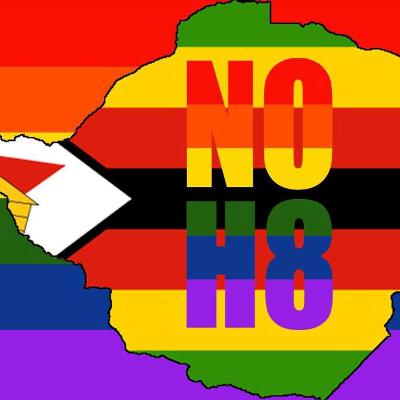
Photo courtesy of GALZ
A Zimbabwean LGBT rights advocate told the Washington Blade during an exclusive interview in D.C. earlier this month he expects his country’s government to once again crack down on gay rights groups ahead of July’s presidential elections.
“I am told President Robert Mugabe’s party, ZANU-PF, is going to use the issue of homosexuality as one of their campaign tools,” the activist, who asked the Blade not to publish his name because he remains afraid of potential reprisals against him, said. He added his brother and most other Zimbabweans who oppose Mugabe will ultimately vote for him because of his strong opposition to homosexuality. “I strongly believe that they will use this issue to threaten the LGBT people in Zimbabwe. And they will do everything in their power to make sure that LGBT people are punished.”
The activist, who is a member of Gays and Lesbians of Zimbabwe, which a group of gay white Zimbabweans founded in 1990 as a support organization, spoke to the Blade ahead of a scheduled March 16 referendum on a new constitution that includes an amendment that specifically bans same-sex marriage.
The State Department last August criticized the Zimbabwean government’s crackdown on LGBT rights activists after police arrested 44 GALZ members inside the group’s office in Harare, the country’s capital. The organization said authorities confiscated computers and pamphlets from the same office a few days earlier.
The activist said he received death threats after the Blade published a story on the State Department’s response to the raid. He fled to neighboring South Africa where he remained for more than a month.
“It was difficult because I was not doing what I was supposed to do when I was home,” he said. “So I went back.”
Mugabe in 1995 described gay men and lesbians who showcased at the annual International Book Festival in Harare as “dogs and pigs.” Former President Canaan Banana three years later received a 10 year prison sentence after his conviction on 11 charges of sodomy, attempted sodomy and indecent assault against his former male employees.
The activist said Zimbabweans had been reluctant to publicly discuss homosexuality until Mugabe’s 1995 speech.
“President Mugabe was the first person in Zimbabwe to castigate the gay people and the lesbians,” he said.
Aside from the State Department, Amnesty International and other international human rights organizations have criticized the Zimbabwean government for cracking down on LGBT advocacy groups.
Peter Tatchell and two other British gay activists in 1999 tried to arrest Mugabe as his car drove through the streets of London during a personal shopping trip. He once again tried to detain the Zimbabwean president inside a Brussels hotel in 2001, but his security guards beat him.
Mugabe routinely criticizes the British government and Prime Minister David Cameron, who has previously suggested the allocation of international aid should hinge upon a country’s LGBT rights record. The activist stressed he has not heard Mugabe “state anything against” President Obama.
He also applauded former Secretary of State Hillary Clinton for urging the Zimbabwean government to end its crackdown on GALZ.
“To us that was a very powerful statement coming from this country,” he said, noting he feels Mugabe heeded the warning. “That was the time when our members were arrested. That was the time when our members were being followed to their homes. It just stopped miraculously because soon after that no one was arrested.”
As for GALZ, its mission continues.
The organization’s Harare office reopened to staff last month.
GALZ, which has close to 2,000 members across the country, also continues to host HIV/AIDS workshops in Bulawayo.
“When they raid our offices they think they are going to find pornographic materials,” the activist said. “When they come in there, they find it is a resource center. People are busy working.”




Hungary
Charges against Budapest mayor for organizing Pride march dropped
Country’s new government took office last month
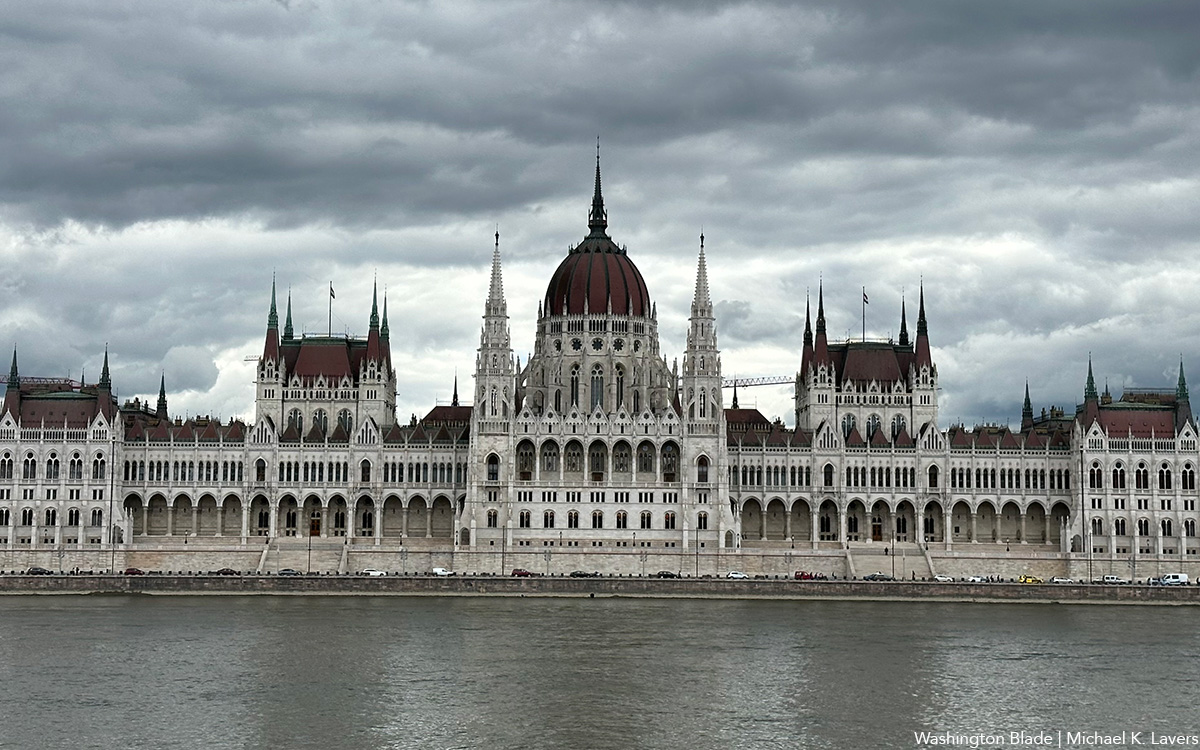
Hungarian authorities on Thursday dropped charges against Budapest Mayor Gergely Karácsony over his role in organizing the city’s 2025 Pride march.
Karácsony spoke at the event, even though then-Prime Minister Viktor Orbán’s government banned it.
More than 100,000 people defied the ban and participated in the march that took place on June 28, 2025. The Associated Press notes the Budapest Chief Prosecutor’s Office in January charged Karácsony with “organizing the unlawful assembly despite a prohibition order.”
Karácsony, who has been Budapest’s mayor since 2019, described himself as a “proud defendant” after his indictment.
“It seems that in this country, this is the price you pay if you stand up for your own freedom and the freedom of others,” he said in a statement, according to the AP. “If anyone thinks they can ban me, deter me, or prevent me and my city from doing so, they are gravely mistaken.”
Budapest is Hungary’s capital and largest city.
Prime Minister Péter Magyar took office last month after his center-right Tisza party ousted Orbán’s Fidesz-KDNP coalition in elections that took place on April 12.
Hungarian police on May 29 announced they will allow the Budapest Pride march to take place this year.
The European Union’s top court, the EU Court of Justice, days after Orbán’s ouster struck down Hungary’s anti-LGBTQ propaganda law that MPs approved in 2021. The BBC notes Hungarian authorities cited the decision in their decision to drop the charges against Karácsony.
Authorities in Pécs, a city near Hungary’s border with Croatia, have also dropped charges against Géza Buzás-Hábel, who organized a 2025 Pride event.
Hungary
Hungarian authorities lift Budapest Pride ban
Country’s new government took office last month
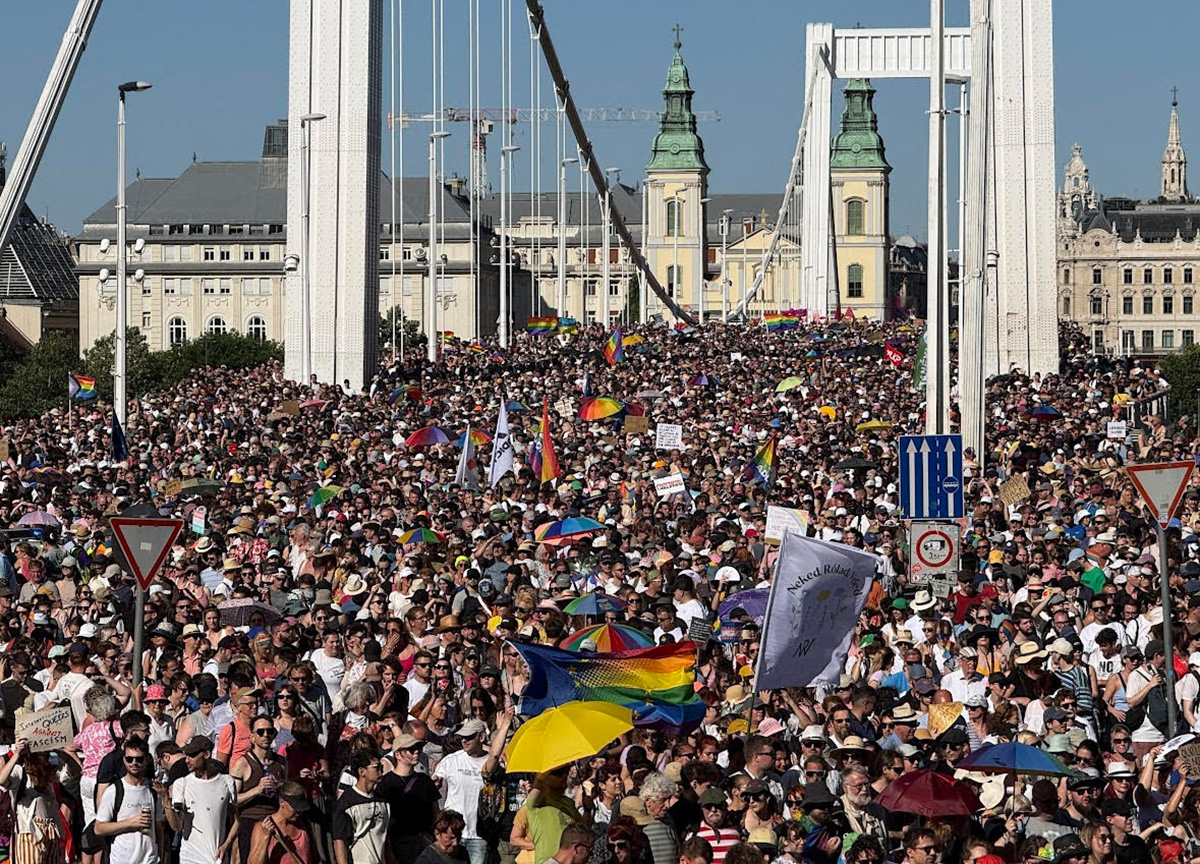
Hungarian police on May 29 announced they will allow the annual Budapest Pride march to take place.
“The Budapest Metropolitan Police has approved the 2026 Budapest Pride Parade and also has issued restrictive orders in relation to three counter-demonstrations,” a Budapest Metropolitan Police spokesperson told Politico.
Budapest is Hungary’s capital and largest city.
Hungarian lawmakers last year passed a bill that banned Pride events and allowed authorities to use facial recognition technology to identify participants. MPs later amended the Hungarian constitution to ban public LGBTQ events.
More than 100,000 people defied the ban and participated in last year’s Budapest Pride parade. The event became one of the largest protests against then-Prime Minister Viktor Orbán and his government since he took office in 2010.
Prime Minister Péter Magyar took office last month after his center-right Tisza party ousted Orbán’s Fidesz-KDNP coalition in elections that took place on April 12. The European Union’s top court, the EU Court of Justice, days after Orbán’s ouster struck down Hungary’s anti-LGBTQ propaganda law that MPs approved in 2021.
The EU on May 29 announced it will release more than €16 billion ($18.59 billion) in funds to Hungary that it withheld while Orbán was in office.
The Budapest Pride march will take place on June 27.
“We will march freely in fresh air for our rights, for the democratic Hungary,” said Budapest Pride on its Facebook page.
Colombia
Claudia López comes up short in Colombian presidential election
Former Bogotá mayor would have been country’s first lesbian head of government
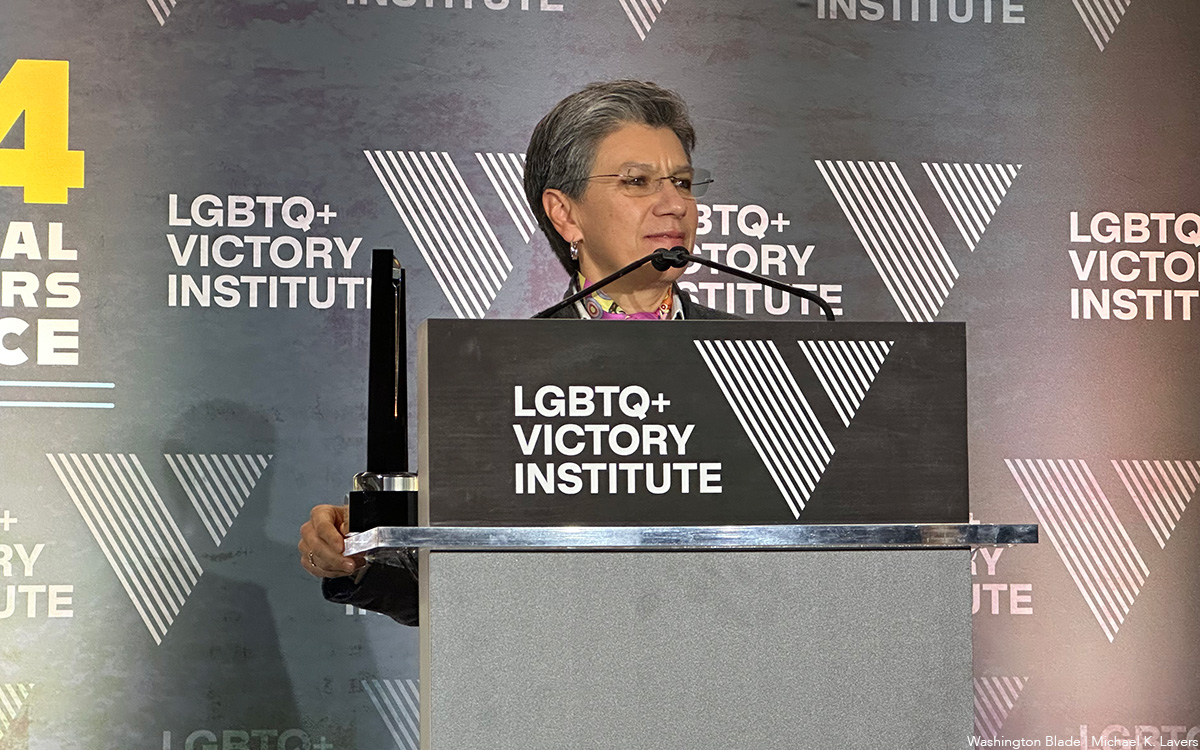
Former Bogotá Mayor Claudia López on Sunday finished fifth in the first round of Colombia’s presidential election.
López, a centrist who ran as an independent, received 225,517 votes. This figure is .95 percent of the total votes cast.
López was the Colombian capital’s mayor from 2020-2023. She was a member of the Colombian Senate from 2014-2018. López, whose wife is outgoing Colombian Sen. Angélica Lozano, would have become the country’s first female and first lesbian president if she would have won the election.
The LGBTQ+ Victory Institute honored López in D.C. in 2024.
“We need to listen to each other again, we need to have a coffee with each other again, we need to touch each other’s skin,” she told the Washington Blade during an interview. She hadn’t yet declared her candidacy, and did not specifically discuss her plans to run.
Runoff to take place June 21
Abrelardo de la Espriella, a far-right lawyer who has praised U.S. President Donald Trump and Salvadoran President Nayib Bukele, on Sunday finished first with 43.74 percent of the vote. Senator Iván Cepeda, a member of outgoing President Gustavo Petro’s Historic Pact party, came in second with 40.9 percent of the vote.
Neither men received a majority of votes. A runoff between them will take place on June 21.

Gay 1920s-era Hollywood star to be honored in Staunton, Va.

Why I’m supporting Gary Goodweather for D.C. mayor

Don’t just vote for change — vote for Hope Solomon for mayor

Vote Kenyan McDuffie for D.C. mayor

Your queer D.C. voting guide

Timothy Nelson on the premiere of his opera ‘Song of Sakuntala’

Controversial ‘Blue Film’ pushes past taboos for gripping drama

PHOTOS: ‘Soul Divas’

‘Mighty Real’ explores history of LGBTQ music