News
Don’t miss today’s Blade town hall with the mayor!
Watch today’s LGBT town hall live here at the Blade. We will ask the mayor about the issues you are most interested in.
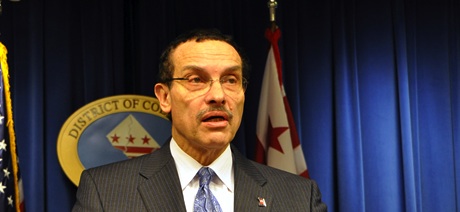
Mayor Gray will address the Washington D.C. LGBT community's questions on June 2 at the Wilson Building. (Washington Blade photo by Michael Key)
The Washington Blade and Mayor Vince Gray will be discussing the issues most pressing for the DC LGBT community today at 5:30 P.M. and you can be part of the discussion!
All week we’ve been taking your questions for the mayor. Now make sure you log in at 6:30 to watch our LIVE coverage of the conversation at our dedicated page http://washingtonblade.com/beheard.
Get ready to be heard. “A Conversation With The Mayor,” Town Hall Event during DC’s LGBT Pride month with Mayor Vincent Gray, will feature questions submitted through the Blade website, Facebook and Twitter. If you’re watching with us, use the hashtag #DCLGBT.
The Washington Blade invites you to “A Conversation with the Mayor” today, as part of our Pride month celebrations. At the event, Blade editor Kevin Naff will interview Mayor Vincent Gray on LGBT issues. The mayor will also answer questions submitted by the public.
Join us at 5:30 p.m. for a reception and the opening of SMYAL’s youth advocacy project photography exhibit exploring heterosexism. The exhibit will be on display from June 2, 2011 through June 13, 2011.
“We are honored that Mayor Vincent Gray will join us for a candid discussion about the topics that are of greatest concern to the District’s LGBT community,” said Naff. “This will be a wonderful forum for the mayor to interact with a community that has been incredibly supportive of his efforts to push for autonomy from congressional interference in city affairs, including the marriage equality law.”
The event will include a question and answer session following Naff’s interview with Gray. Members of the public will have the opportunity to submit questions for the mayor through the newly re-launched Blade website, Facebook and Twitter.
“A Conversation with the Mayor” will be held at the John A. Wilson Building. The event will be preceded by a reception. Both events are open to the public and all members of the DC metro area community are invited to attend.
If you can’t be there in person, be there with us for our live coverage at http://washingtonblade.com/beheard!
WHO: Washington Blade
Washington DC Mayor Vincent Gray
Washington Blade editor Kevin Naff
WHAT: “A Conversation with the Mayor,” a Capital Pride town hall event
WHEN: June 2nd, 2011
6 to 6:30 p.m. – reception
6:30 to 7 p.m. – interview with the mayor
7 to 7:30 p.m. – question and answer session
WHERE: John A. Wilson Building
If you require accommodations to participate in this event, please inform The District of Columbia Office of Disability Rights at 202-724-5055.
Make sure that you “like” our Facebook Page, and “follow” our Twitter Page so that you can see what others in D.C. are asking the mayor. You can also get all of the best local and national news and info on the hottest upcoming events in and around Washington.




Congress
EXCLUSIVE: Pelosi reflects on four decades of LGBTQ advocacy
Blade spoke with House speaker emerita before her 2027 retirement
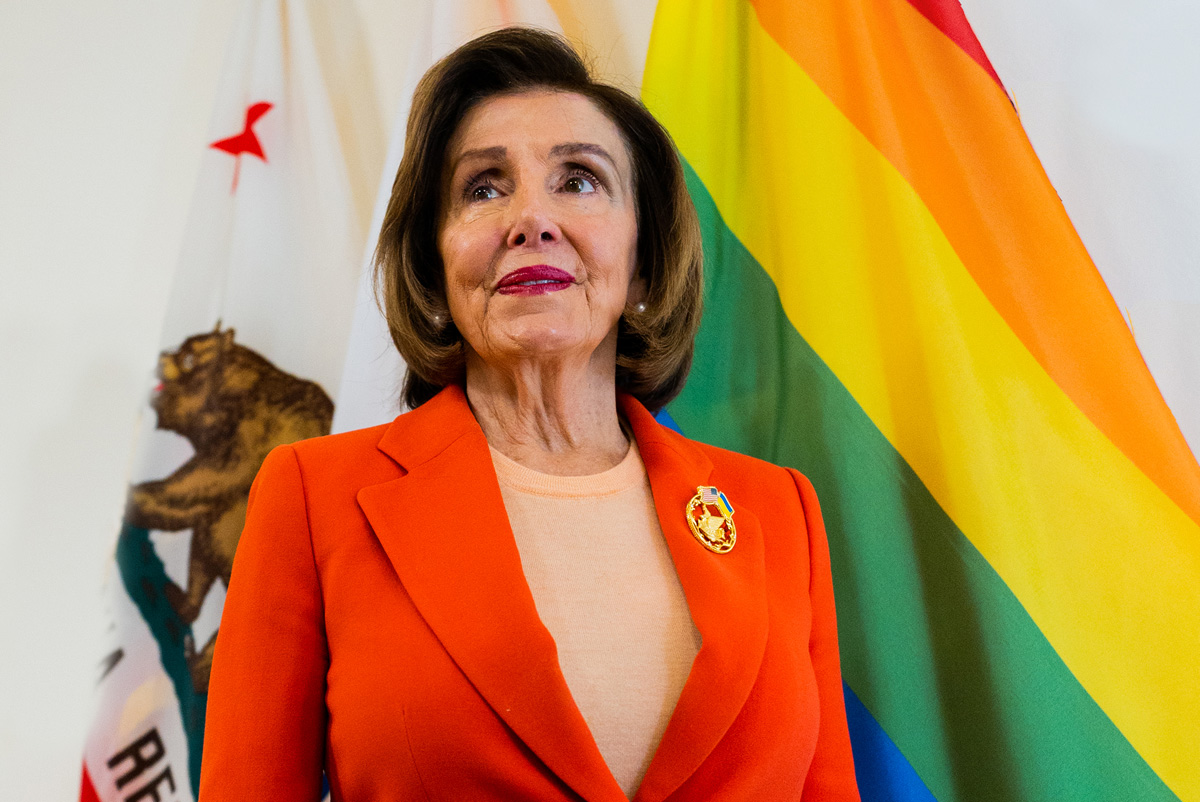
For nearly four decades, House Speaker Emerita Nancy Pelosi (D-Calif.) has been one of the most influential champions of LGBTQ rights in American politics.
The former U.S. House of Representatives speaker helped lead landmark LGBTQ legislation through Congress; including the repeal of “Don’t Ask, Don’t Tell,” passage of the Matthew Shepard and James Byrd Jr. Hate Crimes Prevention Act, and multiple House approvals of the Equality Act. She also played a central role in congressional efforts to combat HIV/AIDS and oppose restrictions targeting transgender Americans.
In an exclusive interview with the Washington Blade; Pelosi reflected on those accomplishments, the role grassroots activists played in achieving them, and the ongoing challenges facing the LGBTQ community during President Donald Trump’s second term.
When asked which LGBTQ-related achievement she is most proud of, Pelosi pointed not to a specific bill, but to the movement that made those victories possible — and the loud, strong-willed grassroots believers in a better America than the one they had found themselves in.
“Anything that we accomplished, whether it was fighting HIV and AIDS, ending discrimination, passing hate crimes legislation, or ending ‘Don’t Ask, Don’t Tell,’ would never have happened without outside mobilization,” Pelosi said, expressing gratitude for those who saw a problem and dared to speak its solution into existence. “Our inside maneuvering was important, but we couldn’t do our best job without the community. Every chance I get, I thank them for their patriotism because they make democracy function.”
Pelosi explained that her initial LGBTQ advocacy efforts were directly shaped by the LGBTQ community in the San Francisco area and by the HIV/AIDS epidemic that decimated the community during the 1980s.
The former speaker recalled arriving in Congress in 1987 and making HIV/AIDS a centerpiece of her agenda from the start.
“My first words on the House floor were that I had come here to fight HIV and AIDS,” Pelosi told the Blade. “People asked why I would make that my first statement. To me, that reaction showed just how much discrimination still existed and how much work remained to be done.”
She continued, explaining that advocating for San Francisco — with its once-vibrant LGBTQ community that was dying more with every passing day — became a joint effort between community-driven activists and government officials trying to manage and mitigate the crisis that claimed more American lives than the Vietnam War.
“When we were trying to bring the Democratic convention to San Francisco, people were saying they couldn’t come because of HIV/AIDS,” she said. “What emerged from that moment was community-based advocacy, community-based care, prevention, and research. Every success we had sprang from the community itself.”
Multiple times during the interview, Pelosi returned to those four pillars of the effort to combat HIV/AIDS: community-based advocacy, community-based care, prevention, and research.
She argued that the epidemic, despite its horrific toll, ultimately helped many Americans better understand and accept LGBTQ people in a society that had not been as tolerant.
“When families learned that a son or daughter was HIV-positive and gay, barriers started to break down,” Pelosi said. “Love prevailed in many cases. I actually give HIV/AIDS some credit for the acceptance of marriage equality because people began seeing these issues through the lens of family.”
Pelosi also highlighted the passage of federal hate crimes legislation as one of her — and the LGBTQ rights movement’s — most defining victories.
“Matthew Shepard’s mother came and spoke to members. (The late-former Massachusetts Congressman) Barney Frank told his story. We had to convince people that leadership means leading, not following,” Pelosi said. “That legislation was incredibly important because it forced people to confront the real consequences of hate.”
She said she refused pressure to remove transgender protections from the bill, despite promises from others that it would pass more easily if lawmakers only protected what they viewed as the least vulnerable groups.
“People told me, ‘You can pass this in a minute if you take out trans,'” Pelosi recalled. “I said, ‘I won’t pass it in 100 years because I’m not ever taking out trans.’ We passed it with trans protections included.”
The Blade also asked Pelosi about the stalled passage of the Equality Act — which would add federal protections for LGBTQ people through amendments to the Civil Rights Act of 1964 that would explicitly prohibit discrimination based on sex, sexual orientation, and gender identity. She expressed confidence that the Equality Act will eventually become law, though she acknowledged the political obstacles that have persisted since its creation in the 1970s.
In her office, among bowls of Ghirardelli chocolates and prints depicting national parks in her district, a large photo hangs on the wall showing Pelosi standing at the House rostrum with LGBTQ advocates beneath the words “#EQUALITY ACT” — photographic proof that she had already passed the landmark legislation in the House, if only the U.S. Senate had agreed.
“We passed it in the House again and again,” she said. “The Senate is more difficult because of the procedural hurdles, but we’re not stopping. We’ll stick with it until the job is done.”
The longtime Democratic leader also credited civil rights icon John Lewis with helping build support for the legislation when others argued the growing LGBTQ rights movement was, as one California Democratic legislator put it, “too fast, too much, too soon.”
“There were people who worried about opening up the Civil Rights Act to include LGBTQ protections,” Pelosi said. “John Lewis told us, ‘We can’t wait. We must do it now.’ He was instrumental in helping move that effort forward.”
Much of the conversation eventually turned to the Trump-Vance administration’s policies affecting trans Americans.
Pelosi argued that Executive Order 14183, “Prioritizing Military Excellence and Readiness,” which puts restrictions on trans military service weakens national security, and efforts to limit gender-affirming healthcare for trans children with the Executive Order “Protecting Children From Chemical and Surgical Mutilation” ignores the needs of families.
“When they diminish the ability of transgender people to serve in the military, they diminish our national security,” she said. “At the same time, families are being told they can’t get the care their children need. That is deeply troubling.”
She recounted hearing testimony from conservative parents whose views changed after their own children came out as trans — a transformation she said changed hearts and minds, even among people she had once seen wearing red MAGA hats.
“One mother told us she was a Trump supporter until her child needed medical care and her state wouldn’t allow it,” Pelosi said. “She said she had to leave Texas to care for her child. Hearing stories like that reminds people that these are families, not political talking points.”
Pelosi described efforts to restrict healthcare access for trans youth as both discriminatory and morally wrong.
“Some of the things they’re doing by refusing to support clinics that meet the needs of trans kids are sinful,” she said. “I’m a religious person, and I believe every child is God’s child. We have a responsibility to meet their needs.”
Asked what she would say to people who oppose LGBTQ equality, Pelosi returned to a theme that surfaced throughout the interview: love.
“I’ve seen families completely transform when these issues become personal,” she said. “People who once opposed HIV/AIDS funding became advocates when someone they loved was affected. Love has a way of changing hearts.”
As for how she hopes history remembers her role in the movement, Pelosi again shifted attention away from herself and toward activists.
“People were dying, and the community demanded action,” she said. “I hope people remember that the progress we made came from the very vocal participation of LGBTQ people and their allies. I was honored that they trusted me to carry that fight in Congress.”
Pelosi, who has announced she will not seek reelection and plans to retire from the House in 2027, said the struggle for equality is far from over.
“Every major expansion of rights in this country has been a long struggle,” she said. “We’ve laid a foundation, but there is still more work to do. We still have to pass the Equality Act.”
When asked what she credits for the change in public understanding and the growth of the LGBTQ movement, she said respect lies at its foundation.
“This month, Pride Month, people would say to me, ‘It’s easy for you because you’re from San Francisco, and San Francisco is so tolerant,'” Pelosi said. “And I would say to them, ‘Tolerant to me is a condescending word.’ Tolerance is a good word writ large, but in terms of the subject, it’s not about tolerance — it’s about respect. Respect is what made it almost inevitable that I would have nothing but enthusiasm for what I was doing. We don’t just respect — we take pride in our community. But that pride springs from respect that people have to have for everything, including the differences that they see.”
District of Columbia
David Archuleta, Monroe Alise named D.C. Pride parade marshals
Honorees ‘live authentically’ and ‘power of sharing your story’

The Capital Pride Alliance has announced that David Archuleta and Monroe Alise will be the grand marshals for the Pride parade on June 20.
Ryan Bos, the Capital Pride Alliance’s president, said the two were chosen for the way that they exemplify the theme “Exist. Resist. Have the Audacity!”
Archuleta is the “American Idol” season 7 runner-up and a strong supporter of the LGBTQ community.
He grew up religious and has been clear about his struggle to reconcile his faith, identity, and self-expression. In 2021, he publicly came out and has since been a major voice for LGBTQ visibility and acceptance. This year, Archuleta published the memoir “Devout,” which details his lived experience as a closeted Mormon teenager.
Alise is a transgender advocate and a D.C. native.
She has appeared in the shows “P-Valley” and “The Chi.” She also grew a major online following through her social media series “I’m CLOCKABLE,” where she discusses topics such as dating, culture, and self-discovery from the perspective of a queer person.
“Together, they represent to live authentically and the power of sharing your story to create change,” Bos said in a statement.
As grand marshals, the two will kick off celebrations leading up to the parade and participate in it. Alise will join the Crack of Noon Parade Brunch from 12-3 p.m. at Viceroy Washington, alongside honorees such as D.C. Mayor Muriel Bowser.
The parade will kick off at 3 p.m. at the intersection of 14th and T Streets, N.W., before moving straight down 14th Street and ending at Pennsylvania Avenue at 7 p.m. The parade is free for anyone to watch at designated viewing areas.
More information about celebrations throughout Pride and the parade can be found at www.capitalpride.org.
District of Columbia
Hundreds of thousands expected to attend D.C. Pride events
Parade to take place on June 20
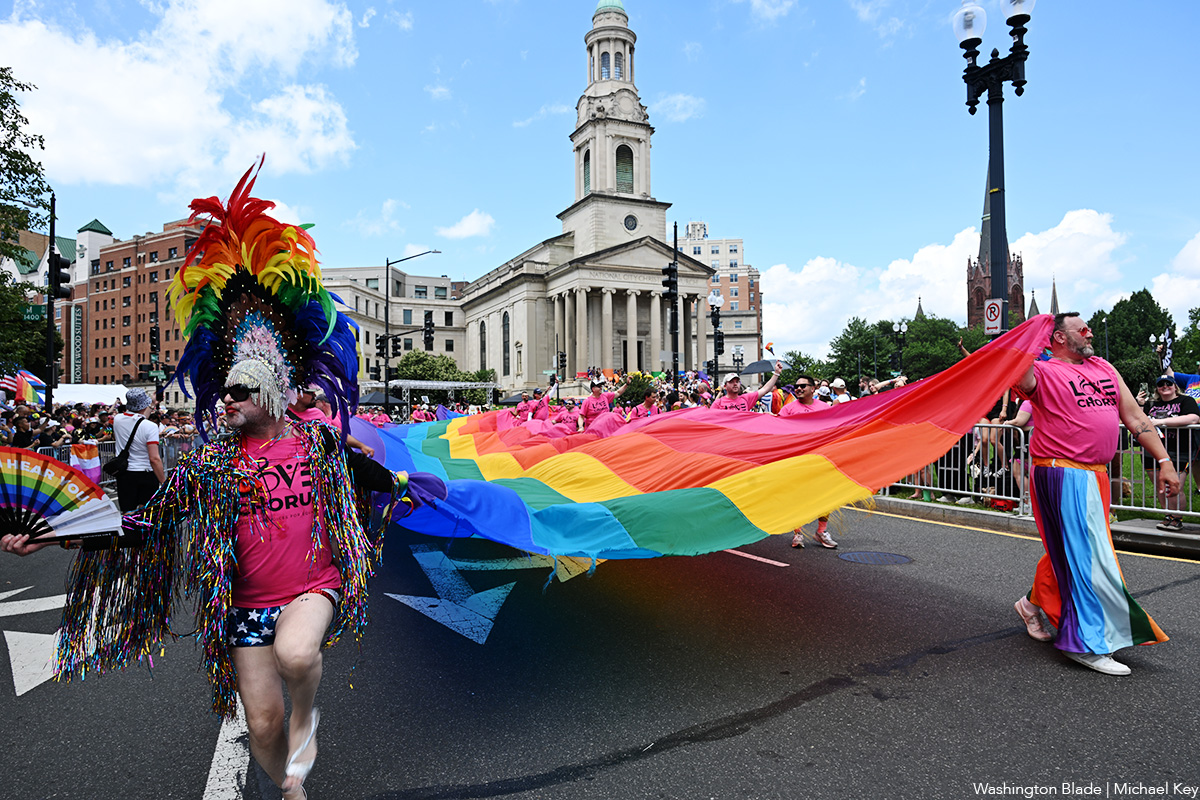
Hundreds of thousands of people are expected to attend Pride events in D.C. this month.
The Capital Pride Alliance is marking its 51st year with a full slate of events, including a parade, festival, concert, parties, and community events across the city. This year’s theme is “EXIST. RESIST. Have the Audacity!”
“Our audacity is our collective strength. Against the forces that try to diminish us, we must remain bold, courageous, visible and heard, in a world that questions our humanity and challenges our rights. Together, let’s have the audacity to live, thrive, be joyful, and proud!” Capital Pride Alliance said in a statement.
Capital Pride’s signature weekend events will center on the June 20 parade and June 21 festival and concert.
The parade and concert will not take place on the second weekend of June, as they have in the past, to avoid conflicts with America’s 250th anniversary celebration.
The parade route is expected to begin at 14th and T Streets, N.W., and end at Pennsylvania Avenue and 9th Street, N.W. Free viewing areas will be available, though reservations are required for seating at designated locations across the route.
Leading up to the parade, a family event will be hosted from 11 a.m. to 3 p.m. at Stead Park in Dupont Circle. Activities will include crafts, glitter tattoos, hair tinsel, photo ops, and an inflatable obstacle course. The event is free, but a prior reservation is required.
Crack of Noon Parade Brunch, a 21+ event featuring an all-you-can-eat buffet, will also take place earlier on June 20 at the Viceroy Washington at 1430 Rhode Island Ave., N.W.
The 17th Street Block Party, presented by Absolut, will also take place from noon to 10 p.m. on 17th Street in Dupont Circle. It will feature local food, an adult beverage garden, and other events.
On June 21, the Capital Pride Festival will run from noon to 10 p.m. on Pennsylvania Avenue The festival includes the Capital Pride Concert at Capitol Stage. The lineup of artists for the festival concert includes Maren Morris, queer rapper Leikeli47, Lisa Lisa, “Heated Rivalry” DJ Harrison, Tracy Young, and Myki Meeks.
“In a moment when LGBTQ+ people are being challenged across the country, the Capital Pride Concert is a space where our community is fully seen and heard,” said Capital Pride Alliance President Ryan Bos in a news release regarding the concert lineup.
Tickets to the concert are free, with exclusive pit and VIP experiences available for purchase.
The night will end with a “Capitol” Sunset Dance Party from 8-10 p.m., directly following the concert. It is available to all ages.
Other stages for concerts include the Monument and Dupont Dance Stage, with the artist lineup yet to be announced.
Three main parties will be available leading up to and during the parade: Riot!: The Official Pride Opening Party on June 19, featuring Bob the Drag Queen with a DJ set and headliner Myki Meeks. ELIX-Her on June 20 is a women-centered event at Decades and is 21+. On the same night, KINETIC: Toyland will feature headliner Alaska, “RuPaul’s Drag Race All Stars 2” winner.
Before the parade and festival weekend, community events, and celebrations will take place throughout the city.
The Washington Blade will host Pride on the Pier on June 13 from 4-9 p.m. at The Wharf. The free event will feature Pride365 Radio, a drag show with Venetian, DJ Chord, and dancing.
Capital Pride will have Night of Expression on June 10 at 7 p.m. at Busboys and Poets (14th and V streets). The event will feature an open mic and other performances.
Capital Pride Honors
Beyond its public celebrations, the Capital Pride Alliance will also recognize community leaders through its annual Capital Pride Honors program. This year’s honorees were selected based on how their work reflected the 2026 theme of Pride.
The winners were awarded at the Audacity Brunch: In Full Fuchsia, which is part of a fundraiser with Pride365, on Sunday.
Honorees included D.C. Del. Eleanor Holmes Norton, who received the Paving the Way Award; D.C. Mayor Muriel Bowser, who received the Key to Capital Pride Award; and the Heroes Award recipients Benjamin Coy, Charity Blackwell, Darryl Hamilton, Thea Kano, Kendall Martinez-Wright, and Lee Levingston Perine.
Dylan Drobish and Tyler Hack received the SaVanna Wanzer Visibility Award, while Patrick Magee and Judy Schloss were honored with the Bill Miles Award for Outstanding Volunteer Service.
Darrell Wood and Tyler Cargill received the Breaking Barriers: Community Impact Award, and Dai Nguyen received the Bernie Delia Award.

PHOTOS: Fairfax City Pride

EXCLUSIVE: Pelosi reflects on four decades of LGBTQ advocacy

D.C. prepares to party as Pride celebrations kick off Saturday

David Archuleta, Monroe Alise named D.C. Pride parade marshals