
News
Malta lawmakers approve civil unions, adoption bill
Constitutional amendment to ban anti-LGBT discrimination also passed
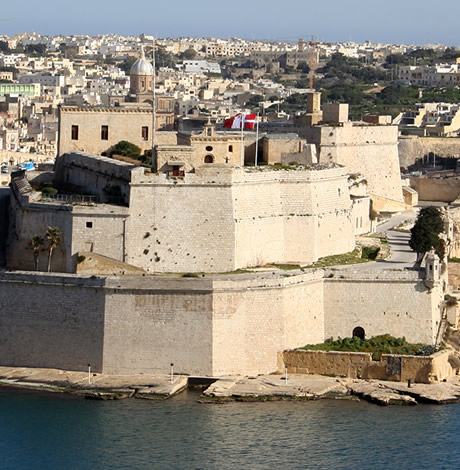
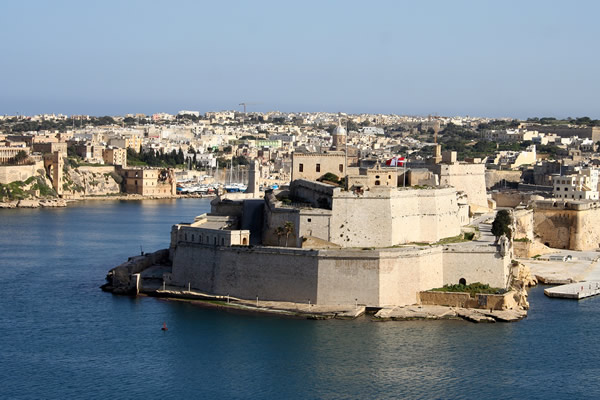
(Photo public domain)
Lawmakers in the small island nation located south of Sicily in the Mediterranean Sea also approved a proposed constitutional amendment that would ban anti-LGBT discrimination.
“Malta is now more liberal and more European and it has given equality to all its people,” said Prime Minister Joseph Muscat, who leads the country’s Labor Party, after the vote as Reuters reported.
Paulo Côrte-Real, co-chair of the ILGA-Europe Executive Board, also applauded the vote in the predominantly Catholic country that only legalized divorce in 2011.
“We warmly welcome today’s historic vote for Malta and particularly pay tribute to Maltese politicians and Maltese LGBTI activists,” he said. “The adoption of the civil union law is a result and an example of a successful partnership built between the decision makers and the civil society.”
The Associated Press reported opposition lawmakers from the conservative Nationalist Party abstained from the vote. Auxiliary Bishop Charles Scicluna of the Archdiocese of Malta is among those who also spoke out against the civil unions and second-parent adoption measure.
Iceland, Norway, Sweden, Denmark, the Netherlands, Belgium, France, Portugal and Spain are among the countries in which same-sex couples can legally marry.
The movement to extend marriage rights for gays and lesbians has also advanced in other parts of Europe over the last year.
Same-sex couples began to tie the knot in England and Wales on March 29.
A law that will allow gays and lesbians to legally marry in Scotland takes effect later this year. Gay Luxembourg Prime Minister Xavier Bettel, who took office last December, said he hopes his country will extend marriage rights to gays and lesbians in 2014.
An Italian court last week ruled the Tuscan city of Grosseto must recognize the marriage of a gay couple who tied the knot in New York in 2012.
The Irish government next year will hold a referendum on whether to extend marriage rights to same-sex couples.
Croatian voters last December overwhelmingly approved a constitutional amendment that defines marriage as between a man and a woman. Hungary, Latvia and other European countries also prohibit gay nuptials.
Georgian Prime Minister Irakli Garibashvili late last month proposed a constitutional amendment that would define marriage as between a man and a woman in the former Soviet republic. The country already bans nuptials for gays and lesbians.


District of Columbia
D.C. Council approves expanded grant funding for Mayor’s Office of LGBTQ Affairs
Measure introduced by Zachary Parker faces second vote

The D.C. Council on June 9 gave its first round of approval to an amendment to the city’s fiscal year 2027 budget that calls for increasing the number and size of funding grants that the Mayor’s Office of LGBTQ Affairs provides for local organizations providing services for the LGBTQ community.
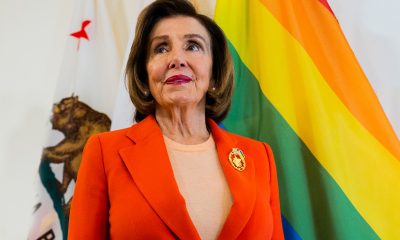
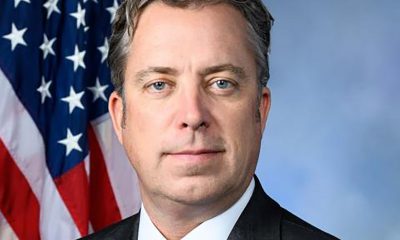
The amendment, titled the “LGBTQ Community Grant Amendment Act of 2026,” was introduced by D.C. Council member Zachary Parker (D-Ward 5), the Council’s only gay member.
The amendment calls for the LGBTQ Affairs office to issue a $980,000 grant in fiscal year 2027 to a private, nonprofit organization in partnership with the office “for the purpose of supporting programs that promote the welfare of the lesbian, gay, bisexual, transgender, and questioning community.”
The organization would also initiate its own fundraising effort to expand the amount of funds beyond the amount the office would provide, enabling it to provide larger grants to a greater number of local LGBTQ organizations.
Among other things, the amendment says the organization chosen for this new role should have a “proven track record of success in grant making and fundraising” and agree to undergo an annual audit and submit quarterly reports to the office on its use of the funds it receives.
Under its rules for approving legislation, the Council must hold the second vote on the budget bill with the Parker amendment before it is sent to Mayor Muriel Bowser for her signature. It must then go to Congress for a congressional review that does not require approval, but could result in a vote to disapprove the measure, an action Congress usually does not take.
In a June 12 statement, the D.C. LGBTQ Budget Coalition called the D.C. Council’s initial approval of the Parker amendment, “a historic measure that establishes the District’s most sustainable model for a vehicle for investing in LGBTQ communities.”
The statement adds, “The legislation arrives at a critical moment, as LGBTQ-serving organizations face unprecedented uncertainty. Growing demand for services is colliding with shrinking resources, federal attacks on LGBTQ programs, and ongoing threats to local funding streams.”
It says the new program that the Parker amendment would create, if it reaches final approval, “creates a durable mechanism to protect and expand investments in the organizations that thousands of District residents rely upon every day.”
A spokesperson for the mayor’s office said he was looking into the mayor’s position on the Parker amendment but didn’t immediately get back with a response.
Germany
German group slams White House’s LGBTQ rights record ahead of World Cup
LSVD says trans, nonbinary soccer fans safety ‘not guaranteed’ in US

A German advocacy group on the eve of the 2026 World Cup sharply criticized the Trump-Vance administration over its anti-LGBTQ policies.
The World Cup will take place in the U.S., Canada, and Mexico through July 19. The tournament began on Thursday in Mexico City with Mexico beating South Africa 2-0.
“In the USA, democracy is being gradually dismantled,” said Julia Monro of Federation Queer Diversity, a German LGBTQ and intersex rights group known by the acronym LSVD, in a statement released on Wednesday. “In particular, the human rights of trans, intersex, and nonbinary individuals, as well as other queer people, are facing massive attacks and political instrumentalization by the Trump administration.”
The LSVD statement notes sports “has a special responsibility in this situation because it conveys values worldwide that extend beyond the playing field: fairness, respect, and inclusion.”
“This must apply to everyone, including trans* and nonbinary people,” says LSVD. “Those who love sport must also protect those who can only experience it under difficult circumstances.”
“The public visibility of queer people is being pushed back, companies and organizations with diversity strategies are being pressured, and laws for trans*, intersex, and nonbinary people are being tightened,” added the group. “This is not a fringe issue, but directly affects everyday life, mobility, and safety. The way minority rights are treated is a measure of the state of a democratic society. Inhumane measures must not be normalized. The international community must not remain silent as attention on the host country, the USA, increases. The Trump administration could exploit this media platform for further inhumane purposes, in order to transfer its homophobic agenda to other countries.”
LSVD also stressed the “safety of trans* and nonbinary soccer fans is currently not guaranteed in the USA.”
“We advise all queer fans to inform themselves carefully beforehand and to take precautions for their safety,” it said.
The Council for Global Equality is one of the more than 100 organizations that issued a travel advisory for the U.S. ahead of the World Cup.
LSVD in its statement pointed out the German government in 2025 issued a travel advisory for trans and nonbinary people who are planning to visit the U.S. The warning specifically noted President Donald Trump’s executive order that banned the State Department from issuing passports with “X” gender markers.
InterPride, the organization that coordinates WorldPride events, issued a travel advisory for trans and nonbinary people who planned to travel to the U.S. for WorldPride that took place last summer in D.C.
“Due to an executive order issued by the U.S. president on Jan. 20, all travelers must select either ‘male’ or ‘female’ when applying for entry or visas. The gender listed at birth will be considered valid,” read the InterPride advisory. “If your passport has ‘X’ as a gender marker or differs from your birth-assigned gender, we strongly recommend contacting the U.S. diplomatic mission before traveling to confirm entry requirements.”
LSVD notes the German government reiterated its 2025 travel advisory ahead of the World Cup.
“Anyone traveling with a different gender entry, with an ‘X’ marker in their passport, or who does not conform to the state’s expectations during checks, must expect problems in the USA,” said LSVD.
Virginia
Gay 1920s-era Hollywood star to be honored in Staunton, Va.
Billy Haines became acclaimed designer after anti-gay policies ended his acting career
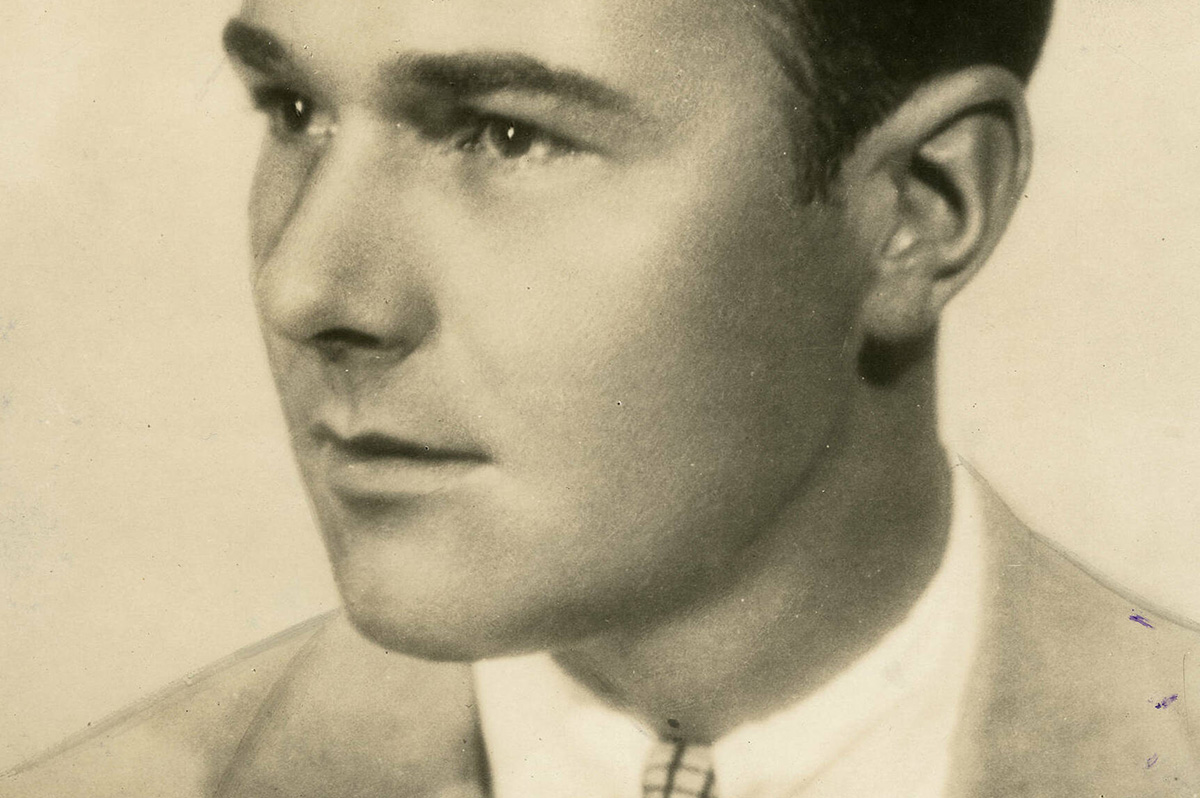
A project is underway in Staunton, Va., to honor William ‘Billy’ Haines, who was born and raised in Staunton before becoming an out gay 1920s and early 1930s-era Hollywood movie star whose acting career ended around 1934 when he refused demands that he conceal his sexual orientation and end his relationship with his male partner.
Haines left the movie business around that time to start what became a highly successful interior design and furniture business in Los Angeles that he led until his death in 1972 at age 72, and which remains in business today, according to the Arcadia Project, a Staunton-based nonprofit initiative.
In a statement released last month, Arcadia Project announced it is working to revitalize a long-vacant movie theater in downtown Staunton that it plans to rename after Haines. It says a fundraising campaign is under way to support efforts to reopen the theater and the larger building in which it is housed as a “dynamic mixed-use cultural center.”
The statement notes that Haines left Staunton at age 14 and resided in Hopewell, Va., and Greenwich Village in New York City until 1922, when he was “discovered” by a talent scout and sent to Hollywood.
“Between 1922 and 1934, Haines appeared in 54 movies during his meteoric and highly successful career,” the Arcadia Project statement continues, noting he transitioned from silent movies to talkies and was fully open about being gay. “But when Hollywood’s moral crackdown of the 1930s demanded that he end his relationship with his longtime partner Jimmie Shields, Haines refused,” it says.
“For LGBTQ people – then and now – Haines’s choice resonates deeply. Rather than deny who he was, he reinvented himself as an interior designer to the stars,” according to the statement.
It says he helped invent the so-called Hollywood Regency style home and designed homes for Hollywood legends such as Joan Crawford, Gloria Swanson, Carole Lombard, George Cukor, and Jack Warner as well as for political figures like Ronald Reagan when he was governor of California.
“As there is no monument, marker or public recognition for Haines in his hometown of Staunton, Va., Arcadia Project, in collaboration with the LGBTQ+ community in Staunton seeks to commemorate him inside a new cultural center,” the statement says.
It quotes Arcadia Project Executive Director Pamela Mason Wagner as saying, “Naming the movie theater in Haines’ honor is more than an act of historical recognition – it is a powerful statement about visibility, belonging, and whose stories are valued in our community.”
The statement says project leaders hope to open the cultural center in early 2027, with a fundraising campaign seeking to raise $250,000 to renovate the theater.
“If the full goal is not reached, a smaller space within the building will be named for Haines, scaled to the amount of funds raised,” it says. “We truly hope friends and admirers of Billy Haines everywhere will want to participate.”
Donations for the project can be made through this site: www.thearcadiaproject.org

PHOTOS: The Audacity Brunch

D.C. Council approves expanded grant funding for Mayor’s Office of LGBTQ Affairs

Congressional Cemetery hosts Gays & Graves

Baltimore Pride is here

Calendar: June 12-18

Hundreds of thousands expected to attend D.C. Pride events

PHOTOS: Pride Run

Queen Jean is Tony’s first transgender winner

David Archuleta, Monroe Alise named D.C. Pride parade marshals


