Opinions
Opinion | Folk singer Alix Dobkin’s work was life-changing
Believed to have recorded first album by and for lesbians
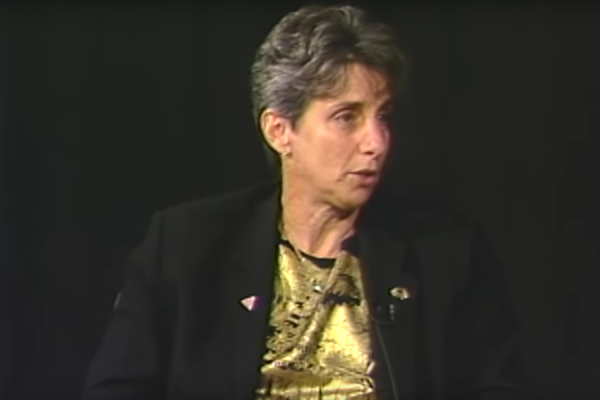
Alix Dobkin, the openly lesbian folk singer and queer activist, died at age 80 on May 19 from a brain aneurysm and stroke at her home in Woodstock, N.Y.
Her music and activism were life-changing for lesbians.
I thought of Dobkin recently. One Sunday morning, I heard NPR’s Lulu Garcia-Navarro interview 22-year-old queer musician Marie Ulven, known as the girl in red. Her debut album “If I Could Make It Go Quiet” is just out.
Ulven was open with Garcia-Navarro (and NPR’s millions of listeners) about her sexuality and mental health. In “Period,” “Serotonin” and other songs, she sings honestly about her romantic break-ups and mental health struggles.
Awesome, I thought, women ask each other “do you listen to the girl in red?” to find out if they’re queer!
Sexism, homophobia and transphobia still exist in music. Some musicians are closeted because they resist labels or don’t feel it’s safe to come out.
Yet, Ulven is one of a number of out queer woman musicians from Hayley Kiyoko to Kehlani to Melissa Etheridge to Brandy Clark to Tegan and Sara.
I marveled as I listened to Ulven. When I was beginning to come out in the 1970s, you’d as likely have heard an openly queer musician on a radio show with a big audience as you’d have seen Richard Nixon smoking weed at Woodstock.
Back then, if you were a lesbian you didn’t feel heard or seen in songs. Not even in the fabulous, but hetero, music of the era from the Beatles to Smokey Robinson to Joni Mitchell.
You had to create the soundtrack-of-your-life by queering up, as best you could, the lyrics of songs you loved to include the women you loved.
Dobkin, known as the “Head lesbian” by her aficionados, was born in New York City. As she recalled in “My Red Blood,” her 2009 memoir, she grew up in a left wing and Jewish family.
Her parents were communists and took Dobkin with them as they organized on behalf of unions. As the Washington Post reported, Dobkin was named after an uncle who was killed by a right-wing firing squad in the Spanish Civil War.
She was proud of her parents, but “my wish was to be like everyone else in a Dick and Jane sort of way,” Dobkin wrote in “My Red Blood.”
Dobkin received a bachelor’s degree from Temple University in 1962. There, she studied painting. At college she began performing folk songs. Soon she was performing in clubs in Greenwich Village. Dobkin married Sam Hood, a co-owner of the Gaslight, a club in the Village. The couple had a daughter, Adrian. The marriage ended in divorce.
Dobkin is survived by her former partner and friend Liza Cowan, Adrian Hood, a brother, a sister and three grandchildren.
It’s hard to overstate how historic Dobkin’s work was.
In 1973, with Kay Gardner, and other women musicians, Dobkin recorded the album “Lavender Jane Loves Women.” This is believed to be the first album recorded by and produced by and for lesbians. Its songs were about lesbians.
Back in the day, it was wonderful to hear Dobkin, an out lesbian, cover “I Only Want to Be with You” on Lavender Jane.
“Alix was one of the first to celebrate us in music,” lesbian historian Lilian Faderman told the Washington Post.
Even now, when corporations sponsor Pride parades, it can be hard to say the word lesbian. Like when your family on Christmas Eve doesn’t want you to say the L-word.
Yet, decades ago, Dobkin told interviewers her job was “to say ‘lesbian’ as often as possible.”
“Living with Lesbians” was among the albums that Dobkin recorded.
Dobkin’s views on transgender people were controversial. She didn’t want transgender people to be in women-only spaces.
Dobkin was a co-director of the group Old Lesbians Organizing for Change.
Though recorded decades ago, many of Dobkin’s songs still ring true now.
In the pandemic, the lyrics “The woman in your life/Will do what she must do/…The woman in your life/…is you,” resonate with queer and hetero women.
Thank you for your music and your life, Alix, R.I.P.
Kathi Wolfe, a writer and a poet, is a regular contributor to the Blade.




Opinions
Pro-trans court ruling does little for Naval healthcare worker
Trump administration should support accomplished service members

Following the start of the Iran war, many Americans were worried for the first time in decades about a potential draft. When asked about the possibility, White House Press Secretary Karoline Leavitt noted that it was not part of the current plans but that, “The president wisely keeps his options on the table.”
While the Trump administration did not rule out the option to conscript unwilling young citizens, it had no problem alienating willing service members, removing high-ranking female or African-American officers, and banning transgender people from serving in the military, stating that “a history of gender dysphoria is incompatible with the high physical, surgical, and mental health standards required for military service.”
The decision to discharge thousands of service members who have already proven their dedication and efficacy in serving their country, simply because of their gender identity, seems counterintuitive for a nation that has just struggled through a war, a regression toward a long past of discrimination in our military, and a ruling that has been questioned in judicial systems.
On June 1, the U.S. Court of Appeals for the D.C. circuit issued a decision blocking the government from discharging 28 transgender plaintiffs from the military (Talbott vs. United States), calling the policy “animus” toward a politically unpopular group. News outlets reported it as a win for LGBTQ rights, but that hardly seems to matter for the close to 15,000 other transgender military service members who have either already been separated or constantly fear that they will soon be removed.
I interviewed a recently separated transgender Naval healthcare worker for this editorial, who used the initial S. for anonymity and who told me that hearing the news of the Talbott court decision was more bitter than sweet, remarking, “While the recent ruling in favor of trans service members offers fleeting hope, Department of Defense Secretary Pete Hegseth has already announced the decision to appeal to the Supreme Court, where we will likely expect the same outcome as before. Unfortunately, any definitive outcome in favor of trans service members will likely come long after the damage has been done.”
Studies by the RAND Corporation have found that transgender military service showed no significant impact on operational readiness, and according to the BBC, the Department of Defense spends eight to 10 times more on erectile dysfunction drugs than on gender-affirming care.
S. served a critical role in the Navy, as active-duty service members are far more likely to experience mental health challenges than the civilian population, and it doesn’t sound like his gender identity was a problem for any of his coworkers: “Everyone judged me by my ability, not my identity; most of them didn’t know that I was transgender until the separation process forced my public acknowledgement.”
Dedicating years of his life to serving his country, not only did S. lose that dream, but it also impacted his entire caseload of clients. “One by one, I had to meet with them and explain that I was abruptly leaving the clinic and ultimately separating from military service. It was death by a thousand cuts—having to tell people back-to-back, session after session, that I could no longer work with them. Many of them were in the midst of their own crises while I was quietly navigating mine. It was heartbreaking.”
He also spent 11 months in a state of limbo, waiting to be officially separated – having secured a job at another federal agency and beginning to treat new patients, the Department of Defense rescinded its approval, citing that you cannot work at two federal agencies at once, and effectively sidelined a critical health care worker until they could formally discharge S. from the Navy.
The irony of citing mental health standards to remove a Naval healthcare worker in good standing, at a time when many personnel are in dire need of clinical care is notable. To maximize operational readiness, the Trump administration should not turn its back on accomplished service members who hold critical roles in the military.
Tyler Kania is an independent journalist and 2025 IAN Book of the Year finalist.
Opinions
Supreme Court ruling on trans athletes is a public health story
Justices label an entire group as ‘lesser’
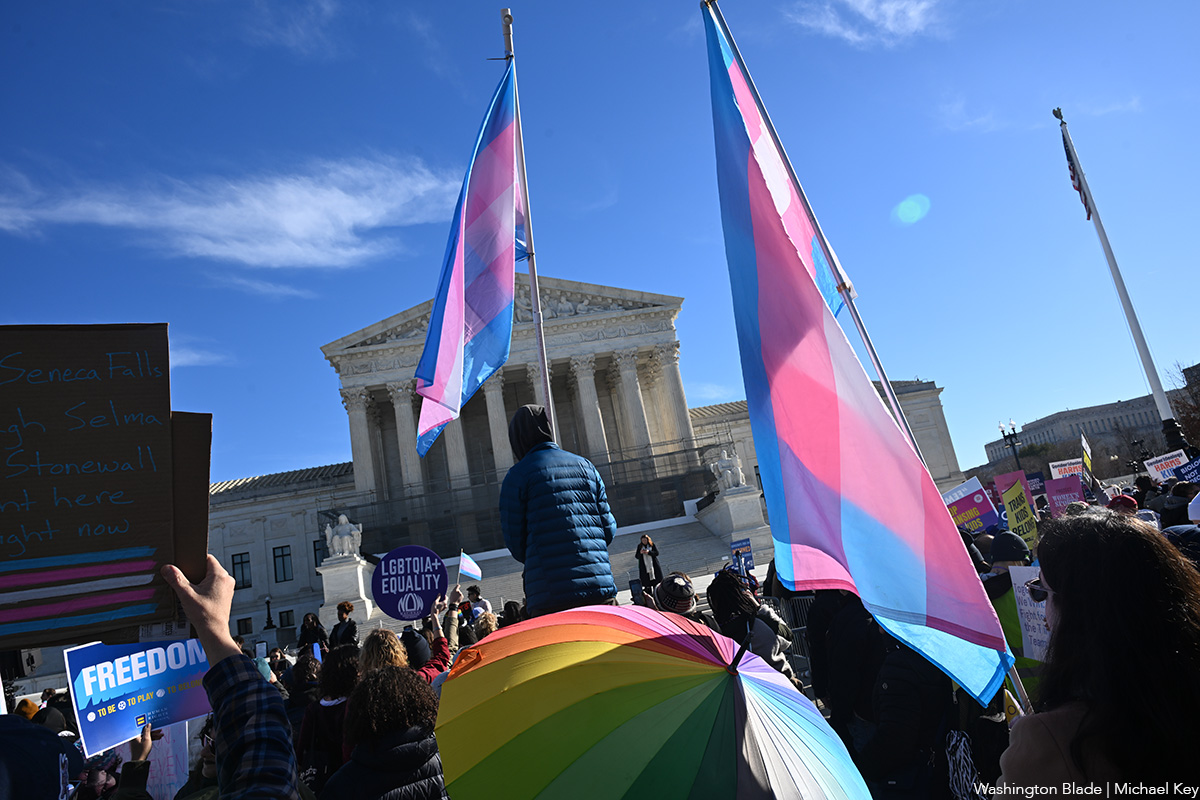
On June 30, the Supreme Court ruled, 6-3 that states may bar transgender girls and women from girls’ and women’s sports teams. Justice Brett Kavanaugh wrote that states may keep these teams for “biological females” and set eligibility by “biological sex.” The country will now spend days arguing about fairness on the field. We’ll debate race times, records, and who has earned a place on the roster.
I want to redirect this conversation, because I study something different and because the frame we’ve settled on misses the something important.
I’m a public health researcher. My work focuses on how the conditions people live under get into the body and influence health over a lifetime. I’m talking about conditions such as laws, policies, and the everyday climate of acceptance or rejection.
Two features of this ruling deserve more attention than the sports fight is giving them: the lifelong costs even a “narrow” decision sets in motion, and the question the Court declined to decide.
Start with how a ruling like this reaches the body, because that pathway is what makes this a public health story. My area of research has a name for what laws like this do: structural stigma. It’s the way statutes and court rulings can mark an entire group as lesser, and in doing so become a chronic stressor for every member of that group.
The overwhelming majority of transgender kids will never compete for a state title. They still learned, from the highest court in the country, that their belonging is conditional. The stress that follows from that lesson is associated with higher rates of depression, anxiety, and poorer health across LGBTQ populations. A consistent finding in this literature is that social acceptance can disrupt such harmful trajectories. But this ruling pushes the country the other way.
I want to emphasize that the question of fairness is important, and the girls and women who raise it deserve to be heard. But the ruling does not resolve this question. It flattens it.
The science on athletic performance and gender transition is truly complicated and individual. It varies by sport, by person, by age, and by life circumstance. The Court grounded its decision in biological sex and then declined to reckon with what biology shows. The West Virginia teenager at the center of the case has been on puberty blockers since before male puberty began. The advantage the law claims to police never developed in her. A rule that treats her like an adult athlete disregards biology.
Here is the part a policy-minded reader should pay attention to. For decades, the central legal question about transgender Americans has been this: When the government treats transgender people differently, how good does its reason have to be? Courts don’t judge all discrimination in the same way. If a law sorts people by race or sex, the state must provide a strong justification, and many such laws fail. But if a law tries to draw an ordinary distinction, like who qualifies for a license, judges tend to wave it through as long as there’s a reasonable purpose. Whether a law singling out transgender people gets the skeptical look (what lawyers call heightened scrutiny) or the easy pass has not been settled. And this ruling, despite its subject, still did not settle it.
How did the Court avoid the question its own case raised? Following last year’s decision in Skrmetti (the gender-affirming care case), the Court described these laws as drawing lines by biological sex, not transgender status. Courts endorsed sex-separated teams long ago; separate teams are the reason girls’ sports exist. So a law framed as a “sex” line lands on ground the courts have already approved, while a “transgender” line would have forced the choice between the skeptical look and the easy pass. The Court chose the frame that let it stay silent.
That silence creates exposure for transgender people – and I mean that word the way my field of public health uses it, for a condition that puts a whole population at risk. The same unanswered question now hangs over health care, employment, identification documents, public accommodations, and every domain where the level of scrutiny is the whole ballgame. And the Court read Title IX, the federal law banning sex discrimination in schools, through the same lens: “biological sex,” full stop. Advocates are right to see protections far beyond sports as newly vulnerable.
This is where my own research makes me most uneasy. I study LGBTQ adults in their 60s, 70s, and 80s, who came of age in a far more hostile America. Their lives show that the cost of stigma accumulates. Chronic stress works its way under the skin and surfaces years and decades later. Researchers see these deleterious outcomes in mental health, in physical health, and in emerging research like my own that explores the aging brain. So we should understand this decision for what it is: a long-term health decision the country is making on behalf of a generation of children.
Practically, the ruling compels no state to do anything. It tells the more than two dozen states that have passed these bans that they stand on solid ground, and it sends the rest of the fight back to statehouses and school boards, where trans youth and their families often hold little power. The ruling arrives just over a year after the Court let states ban the medical care many of these same young people depend on. Each law is a single stressor. Together they are a dangerous environment.
We know what protects these children. Acceptance, inclusion, and the dignity of being treated as though they belong. The Court made all three harder to offer, and left open the question that determines how much harder it can get. It is the children who needed those protections who will bear the cost, this sports season and for the rest of their lives.
Harry Barbee, Ph.D., is an assistant professor at the Johns Hopkins Bloomberg School of Public Health where they study LGBTQ health, aging, and public policy.
Opinions
It’s good to see some justices standing up to Trump
But expanding the court is necessary to save our democracy
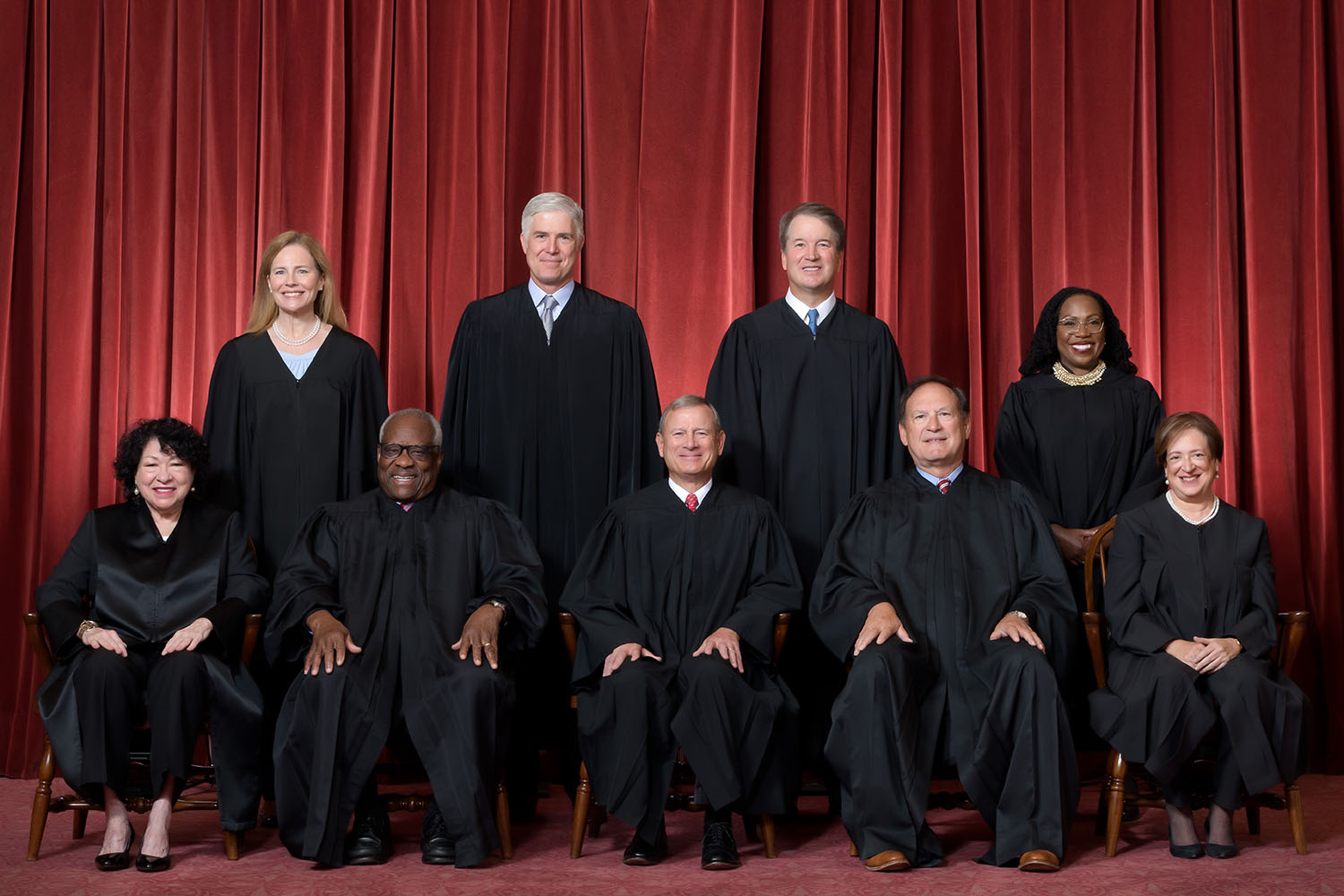
It was shocking to see some of the MAGA-loving majority on the Supreme Court actually voted against the felon in the White House a couple of times. Not surprisingly, Samuel Alito and Clarence Thomas were steadfast in their ultra-MAGA, outrageous views. They just want to help make Republican doctrine, which today means helping to make Project 2025 a reality, a success. They couldn’t care less about the Constitution. We can just imagine how they voted on the E. Jean Carroll case, where Trump has been trying to weasel out of his obligation to pay the woman he was convicted of committing sexual assault against. But we won’t know for sure since the Court simply denied hearing the case, so there was no recorded vote or dissent.
On what was a simple case, the constitutional principle of birthright citizenship, Chief Justice John Roberts, Amy Coney Barrett, and Brett Kavanaugh, actually voted to uphold the Constitution along with the three liberal justices, Sonia Sotomayor, Elena Kagan, and Ketanji Brown Jackson. But even then, Kavanaugh was only halfway there. But as could have been predicted, Alito and Thomas voted the other way, and this time were joined by Neil Gorsuch. Then on the question of trans women playing sports on a women’s team, the vote was 6-3 against, and you can figure out who the three were who went against the felon, and supported the women.
Interestingly, in the case of Mississippi and mail-in ballots, allowing those mail-in ballots to be counted up to five days after the election if they were postmarked by Election Day, Roberts and Coney Barrett went with the liberals. Once again, you knew before the vote where Alito and Thomas were, and in this case, they were joined by Kavanaugh and Gorsuch, trying to help Republicans steal the next election.
I have no love for Roberts, but it seems every so often he is trying to save his own reputation since all this is the Roberts court, as he is the chief justice. I have never known what to make of Coney Barrett, who has occasionally sided with the more liberal justices, to the consternation of Trump, who believed when he nominated her, she would always be with him. She mostly has, and he can be thankful she voted with the other slime bags, and granted him total immunity as president in the 2024 decision. In essence, placing him above the law. In so many ways the felon has acted using that immunity. We now see a blatant case of this with the release of his new financials, and his $2 billion windfall with crypto.
Roberts nearly always votes with the Trump judges, but if there is a decision that is so obviously a gift to the felon, Roberts every once in a while could go with the liberal wing of the court. We need to remember he was appointed by George W. Bush. But again, this court will always be known as the Roberts court, the one that bowed down to the felon in the White House, and his fascist aids like Stephen Miller, and the author of Project 2025, Russell Vought, at OMB.
So, what can we do to change this, and to fight back? The first thing is to elect a Democratic Congress in 2026, and then a Democratic president in 2028. Then those we elect will have to decide how to proceed. One answer to that question is simple. Vote to add more justices to the Supreme Court. That simply requires a bill to pass with a majority in both houses of Congress, and the president’s signature. To the surprise of many it has been done seven times since the court was created in 1789. There is no number of justices for the court stipulated in the Constitution. Yet it has remained at nine since 1869. Although that fix may sound easy if Democrats take over Congress and the White House, we must remember, Franklin Roosevelt tried in 1937 to expand the court by six justices to protect his New Deal programs. After a fight that lasted 168 days, the bill to do this was defeated. I fear any proposal to expand the court today, may actually have the same fate. There will be those who say it will divide the nation even further, and there will be a constant tit-for-tat on everything. The only way to win such a vote will be if enough people are convinced the felon and his gang of thieves, have so destroyed our democracy, that changing the court is a necessity if we are to save our democracy for the next 250 years.
Peter Rosenstein is a longtime LGBTQ rights and Democratic Party activist.

New book reveals what we can learn from animal sex

Who might replace Lindsey Graham? The contenders and their LGBTQ records

PHOTOS: Westminster Pride

Un terremoto también se vive desde el exilio

PHOTOS: Emerald City Pride

Mr. Henry’s celebrates 60 years of proud inclusivity

It’s good to see some justices standing up to Trump

Egyptian authorities refuse to allow gay cruise to dock in country

Queer media dominates 2026 Emmy nominations