World
Dutch government formally apologizes for forced sterilization of trans, intersex people
Gender Change Act was in place from 1985 to 2014
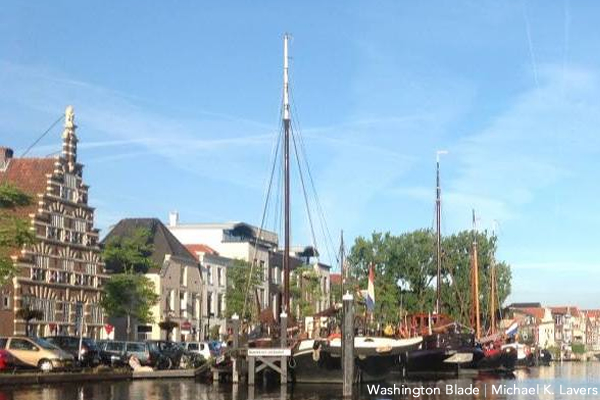
The Dutch government on Saturday formally apologized to transgender and intersex people who were forced to become sterile in order to legally change their gender.
The Gender Change Act, which was also known as the Transgender Act, was in effect in the Netherlands from 1985 until its repeal in 2014.
Education, Culture and Science Minister Ingrid van Engelshoven and Law Minister Sander Dekker last year on behalf of the Dutch government apologized to trans and intersex people who had undergone forcible sterilizations. The Dutch government also agreed to pay 5,000 euros ($5,633.68) to around 2,000 trans people who had sterilization surgeries.
A ceremony did not take place because of the pandemic.
Van Engelshoven issued Saturday’s the formal apology during a meeting with trans and intersex people that took place at the Ridderzaal, a 12th century building in The Hague that the Dutch government uses for speeches from the country’s royal family and other important ceremonial events.
“For decades we have had a law that has harmed transgender and intersex people,” said van Engelshoven. “People have undergone medical treatment that they did not want, or have been forced to postpone becoming themselves. Today, on behalf of the entire Cabinet, I make our deepest apologies. Recognition of and apologies for what has been done to these people and which has caused a lot of grief for those involved is extremely important and is central to this special day in the Ridderzaal.”
Vanmiddag heeft @ivanengelshoven namens het kabinet excuses aangeboden voor de oude Transgenderwet. Mensen konden hun geslachtsaanduiding in de geboorteakte veranderen, onder voorwaarde van geslachtsveranderende operaties en blijvende onvruchtbaarheid ⬇️https://t.co/iQwLTmWeP5 pic.twitter.com/13QmUUczPb
— Ministerie van Onderwijs, Cultuur en Wetenschap (@MinOCW) November 27, 2021
Transgender Netwerk Nederland in a press release said the Netherlands is the first country in the world to issue such an apology. The advocacy group notes the Dutch government last month began to compensate trans and intersex people who were forcibly sterilized, but adds the amount of money they will receive remains too low.
“The government has structurally disadvantaged and damaged transgender and intersex people for almost 30 years,” said Willemijn van Kempen, who spearheaded the campaign for the formal apology. “It is important that it now apologizes for that.”


Netherlands
Tens of thousands take part in World Pride March
Event capped off two weeks of celebrations in Amsterdam.

AMSTERDAM — Tens of thousands of people on Saturday participated in the World Pride March in Amsterdam.
Outright International Executive Director Maria Sjödin and Paolo Rondelli, who in 2022 became the world’s first openly gay head of state when he became Captain Regent of San Marino, are among those who participated alongside Massachusetts state Rep. Jack Lewis and Olena Shevchenko, chair of Insight, an LGBTQ advocacy group in Ukraine, and others.
Members of D66, the centrist Dutch political party that Prime Minister Rob Jetten heads, also marched.
Jetten in February became the Netherlands’ first openly gay prime minister. He participated in the opening of the World Pride Human Rights Conference on Aug. 5 and spoke on a panel with Rondelli, former Irish Prime Minister Leo Varadkar, and other gay and lesbian current and former heads of government.
(Washington Blade video by Michael K. Lavers)
(Washington Blade video by Michael K. Lavers)
The march took place a week after hundreds of thousands of people lined Amsterdam’s canals for the city’s annual Amsterdam Pride Canal Parade.
A terrorist attack at Berlin’s Christopher Street Day on July 25 left one person dead and more than two dozen others injured.
The incident overshadowed World Pride, which began hours earlier and ended on Saturday.
Dutch authorities increased security measures in the aftermath of the July 25 attack. No incidents were reported during World Pride.
Netherlands
Dutch PM: More needs to be done to defend trans rights
Rob Jetten on Friday was on World Pride Human Rights Conference panel

Editor’s note: International News Editor Michael K. Lavers and Photo Editor Michael Key will be on assignment in Amsterdam until Aug. 10.
AMSTERDAM — Dutch Prime Minister Rob Jetten on Friday said more needs to be done to defend transgender people and their rights.
“Everywhere in the Western world, it’s definitely the group that’s the most vulnerable in the moment and it’s rather well-picked also by our advisories,” he said during a panel at the World Pride Human Rights Conference in Amsterdam that Ying Xin and Diego García Blum of Global LGBTQI+ Human Rights Program at the Harvard Kennedy School’s Carr-Ryan Center for Human Rights Policy moderated. “They’ve chosen the smallest group within our broader community (trans people) to attack them, to ensure that we can strip their rights and if they’ve done with that, they’ll go after the next group within our community, so we shouldn’t be naïve about what’s behind it.”
“It’s very well-funded. It’s very well-organized and we have to organize as well to fight back and to win this fight,” added Jetten. “We also need to be more open in conversations that we are having within the community and also dive into it much deeper and maybe even have more difficult and annoying conversations.”
Jetten in February became the Netherlands’ first openly gay prime minister.
He appeared on the panel alongside former Irish Prime Minister Leo Varadkar, who in 2017 became his country’s first openly gay head of government, and former San Marino Captain Regent Paolo Rondelli, who was his country’s ambassador to the U.S. from 2007-2016.
Several other current former heads of government who are gay or lesbian also participated in the panel. They include former Icelandic Prime Minister Jóhanna Sigurðardóttir, former Luxembourgish Prime Minister Xavier Bettel, and Andorran Prime Minister Xavier Espot Zamora. California Congressman Mark Takano, who chairs the Congressional Equality Caucus, and LGBTQ+ Victory Fund CEO Evan Low were among those who attended.
Jetten in his remarks said he was “very surprised” to learn that “not only in the U.S. but also in some European countries that we’ve let them decide what the gay group looked like.” The Dutch prime minister further pointed out that conservatives began “to attack the debate on toilets or starting this debate about trans people in Olympic games.”
“That is, of course, a ridiculous debate to start, but we’ve got distracted because we were so busy having this debate on Olympians, and then we actually forgot the real fight was about access to healthcare, just being yourself, being able to enlist in the army, or being able to be a young trans boy or girl in school,” said Jetten. “We got distracted by some fresh meat that was thrown into the area by some very conservative people.”
“We have to open our eyes and have very in-depth conservations within our community, and come up with a much better strategy to win this fight and to protect all our trans brothers and sisters, dolls, whatever,” he added. “Because if we don’t win this fight for trans people, we’re going to lose the bigger fight for all LGBTQ people in the world.”
Varadkar noted Ireland in 2015 passed a law that allows people to legally change their gender without surgery or other medical interventions.
He conceded there was “a liberal wind blowing across the world at the time, and it was largely uncontested.”
“It would be harder now, quite frankly, to do that legislation,” said Varadkar.

Scottish lawmakers in 2022 passed the Gender Recognition Reform Bill, which lowered the age for anyone to legally change their gender without medical intervention from 18 to 16. Then-British Prime Minister Rishi Sunak’s government later blocked the measure from taking effect.
The U.K. Supreme Court in 2025 ruled the legal definition of a woman under the country’s Equality Act is limited to “biological women.” Author J.K. Rowling is among those who praised the decision that stemmed from a case that challenged the Scottish government’s decision to include trans women in its definition of women when it sought to increase the number of women on government boards.
The Trump-Vance administration on Jan. 20, 2025, the first day it was in office, issued a sweeping executive order that, among other things, declared the federal government would only recognize two genders: male and female. The White House earlier this year in its counterterrorism strategy said it “will also prioritize the rapid identification and neutralization of violent secular political groups whose ideology is anti-American, radically pro-transgender, and anarchist.”
“We have to stay united,” said Rondelli. “The strategy was, since the beginning, was a Nazi strategy to create groups, target groups, and to create maximum distractions to avoid discussion about some sort of policies.”
“Trans people are the target at the moment,” he added. “But after them it will probably be some others, so we have to stay united.”

Boris Dittrich, the Dutch Senate’s First Vice President and a member of Jetten’s D66 party who was previously global advocacy director for Human Rights Watch’s LGBTQ Rights Program, at the end of the panel asked about protecting intersex babies from what advocates maintain are unnecessary surgeries.
Netherlands
Dutch prime minister opens World Pride Human Rights Conference
Rob Jetten is country’s first openly gay head of government

Editor’s note: International News Editor Michael K. Lavers and Photo Editor Michael Key are on assignment in Amsterdam through Aug. 10.
AMSTERDAM — Dutch Prime Minister Rob Jetten on Wednesday opened the World Pride Human Rights Conference in Amsterdam.
Jetten — who in February became the country’s first openly gay prime minister — began his remarks with an acknowledgment that the July 25 terrorist attack at Berlin’s Christopher Street Day that left one person dead and more than two dozen others injured “filled me with anger and sorrow.”
He started to speak after a group of activists began to shout at him over his government’s position on Palestine — the International Criminal Court, which is based in The Hague, has issued arrest warrants for Israeli Prime Minister Benjamin Netanyahu and Hamas leaders in connection with crimes against humanity it says they committed in the Gaza Strip and Israel after Oct. 7.
Jetten stood silently and allowed them to protest before security personnel removed them from the room.
View on Threads
Jetten in his speech acknowledged this year marks 25 years since the Netherlands became the first country to extend marriage rights to same-sex couples. He also pointed out 2025 marks Amsterdam Pride’s Canal Parade‘s 30th year.
“More and more in recent years, we’ve seen hard won progress being eroded,” conceded Jetten. “We’ve seen countries backsliding in equal rights legislation. We’ve seen homophobic hate speech becoming more overt and aggressive, and not only out in the real world, but online as well.”
Jetten pointed out “online hatred is one of the biggest threats facing the LGBTQIA+ people today.”
“All around the world … misinformation and disinformation can be spread in the blink of an eye with a single mouse click, reaching much further and much faster than NGOs, youth workers and health organizations can,” he said. “This is always how hatred takes hold. First in the shadows, outside the spotlight of society, underestimated by everyone, until, having grown into a many headed monster, it crawls out of the darkness.”
Jetten said his government this fall will launch “a social dialog on online discrimination and offering specific guidance on action to take.” This will include “training courses for municipalities and civil society organizations to help them deal with online hate speech.”
His government over the next three years will invest €7.5 million each year “in improving the safety of the queer community in our cities with an alliance of organizations committed to safety, both in the public space and in the workspace for LGBTQI+ people, and with a public information campaign to combat discrimination and disinformation.” Jetten also said the government will promote a campaign in Dutch schools that encourages students and teachers to wear purple as a way to show their support for the LGBTQ community.
’Equal rights are not a Western agenda’
Jetten in his speech also singled out “conservative forces” in Uganda, Senegal, and in other countries who are framing LGBTQ rights “developments as a neocolonial Western agenda.”
“Under the pretense of resisting so-called Western moral decadence, horrendous laws are enacted and promoted, laws that put the rights of free people under severe pressure,” he said. “But in reality, many communities in these countries have a long history of diversity and freedom, and the laws that impose the restrictions were in fact put in place by the colonial powers.”
“No matter how hard those conservative forces try to pull the wool over people’s eyes, queer communities around the world know that equal rights are not a Western agenda,” added Jetten. “They are first and foremost a human agenda.”
Amsterdam Mayor Femke Halsema and Nayyab Ali, co-chair of the Ending Violence Against Women and Girls Alliance Pakistan, are among those who also spoke on Wednesday. Lady Phyll, co-founder of UK Black Pride, and Camiel Welling, supervisor of the Amsterdam Trans Clinic, are co-hosting the conference that ends Friday.


Don’t miss summer productions at Clear Space in Rehoboth Beach

New LGBTQ visitor center slated for Wilmington, Del.

PHOTOS: World Pride March

Tens of thousands take part in World Pride March

PHOTOS: Daddy Issues at Kiki

Continue to engage in community after Pride month

D.C.’s Mary’s House For Older Adults names new executive director

Suzanne Goode is not good for Rehoboth Beach

Calendar: August 7-13