World
Guatemala lawmakers pass bill to ban same-sex marriage
Measure also defines family as a man and woman with children
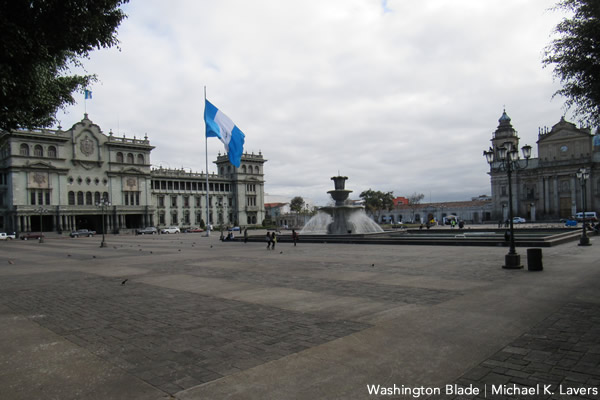
Lawmakers in Guatemala on Tuesday approved a bill that would formally ban same-sex marriage and define a family as a man and a woman who are raising children together.
The Guatemalan Congress by a 101-8 vote margin approved the “Law for the Protection of Life and the Family” under which a woman who has an abortion would face up to 10 years in prison. Media reports indicate 51 lawmakers did not attend the vote, which took place on International Women’s Day.
Visibles, a Guatemala City-based LGBTQ rights group, described the bill as “a law that promotes hate, violence, disqualification and dehumanization of those who dare to demand a more free and just world.”
“It is a regressive law that criminalizes girls, women and the LGBTIQ community through the exercise of their rights and freedoms,” said Visibles in a tweet.
El Decreto 18-2022 es una ley que promueve el odio, la violencia, la descalificación y la deshumanización de quienes se atreven a exigir un mundo más libre y justo. #NoALa5272 #NoALaLeyDelOdio pic.twitter.com/3V23SV0ZEs
— Visibles (@visibles_gt) March 9, 2022
“I never see marriage equality in Guatemala,” former Visibles Executive Director Daniel Villatoro told the Washington Blade on Friday.
Villatoro is currently a human rights fellow at Columbia University and the coordinator of the International Women’s Media Foundation’s LGBTQI+ and Women’s Rights Reporting Initiative in Latin America. Villatoro noted the bill would also codify the government’s official position that sexual education in the country’s schools should not promote “any sexuality that is not heterosexuality.”
“It is something broader,” Villatoro told the Blade. “It is a very heavy pathologization. It is anti-LGBT.”
The Inter-American Court of Human Rights in 2018 issued a landmark ruling that recognizes same-sex marriage and transgender rights in the Western Hemisphere. Guatemala is among the countries in which the decision is legally binding.
Media reports indicate President Alejandro Giammattei has said he would veto the bill because it violates international treaties. Villatoro noted Giammattei plans to send the measure back to Congress for further review.
“The law from its inception is unconstitutional,” said Congressman Aldo Dávila, who is openly gay and living with HIV, on Thursday in a video he posted to social media.





Germany
German group slams White House’s LGBTQ rights record ahead of World Cup
LSVD says trans, nonbinary soccer fans safety ‘not guaranteed’ in US

A German advocacy group on the eve of the 2026 World Cup sharply criticized the Trump-Vance administration over its anti-LGBTQ policies.
The World Cup will take place in the U.S., Canada, and Mexico through July 19. The tournament began on Thursday in Mexico City with Mexico beating South Africa 2-0.
“In the USA, democracy is being gradually dismantled,” said Julia Monro of Federation Queer Diversity, a German LGBTQ and intersex rights group known by the acronym LSVD, in a statement released on Wednesday. “In particular, the human rights of trans, intersex, and nonbinary individuals, as well as other queer people, are facing massive attacks and political instrumentalization by the Trump administration.”
The LSVD statement notes sports “has a special responsibility in this situation because it conveys values worldwide that extend beyond the playing field: fairness, respect, and inclusion.”
“This must apply to everyone, including trans* and nonbinary people,” says LSVD. “Those who love sport must also protect those who can only experience it under difficult circumstances.”
“The public visibility of queer people is being pushed back, companies and organizations with diversity strategies are being pressured, and laws for trans*, intersex, and nonbinary people are being tightened,” added the group. “This is not a fringe issue, but directly affects everyday life, mobility, and safety. The way minority rights are treated is a measure of the state of a democratic society. Inhumane measures must not be normalized. The international community must not remain silent as attention on the host country, the USA, increases. The Trump administration could exploit this media platform for further inhumane purposes, in order to transfer its homophobic agenda to other countries.”
LSVD also stressed the “safety of trans* and nonbinary soccer fans is currently not guaranteed in the USA.”
“We advise all queer fans to inform themselves carefully beforehand and to take precautions for their safety,” it said.
The Council for Global Equality is one of the more than 100 organizations that issued a travel advisory for the U.S. ahead of the World Cup.
LSVD in its statement pointed out the German government in 2025 issued a travel advisory for trans and nonbinary people who are planning to visit the U.S. The warning specifically noted President Donald Trump’s executive order that banned the State Department from issuing passports with “X” gender markers.
InterPride, the organization that coordinates WorldPride events, issued a travel advisory for trans and nonbinary people who planned to travel to the U.S. for WorldPride that took place last summer in D.C.
“Due to an executive order issued by the U.S. president on Jan. 20, all travelers must select either ‘male’ or ‘female’ when applying for entry or visas. The gender listed at birth will be considered valid,” read the InterPride advisory. “If your passport has ‘X’ as a gender marker or differs from your birth-assigned gender, we strongly recommend contacting the U.S. diplomatic mission before traveling to confirm entry requirements.”
LSVD notes the German government reiterated its 2025 travel advisory ahead of the World Cup.
“Anyone traveling with a different gender entry, with an ‘X’ marker in their passport, or who does not conform to the state’s expectations during checks, must expect problems in the USA,” said LSVD.
Hungary
Charges against Budapest mayor for organizing Pride march dropped
Country’s new government took office last month
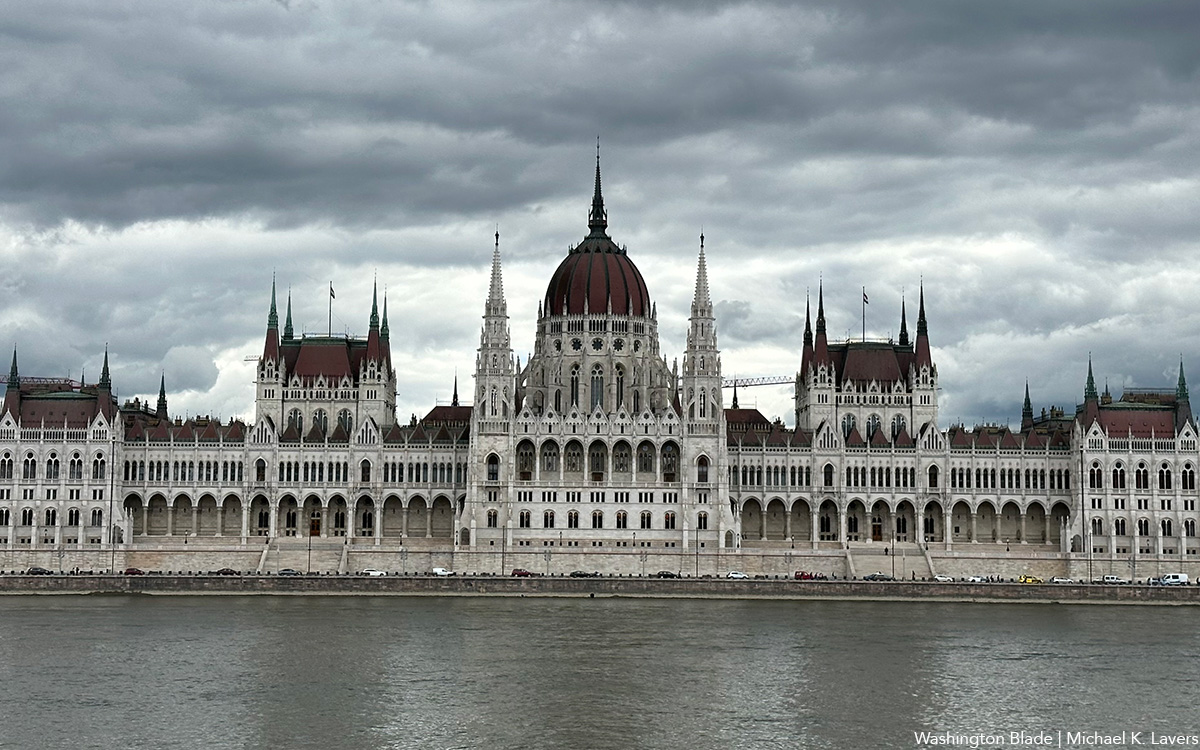
Hungarian authorities on Thursday dropped charges against Budapest Mayor Gergely Karácsony over his role in organizing the city’s 2025 Pride march.
Karácsony spoke at the event, even though then-Prime Minister Viktor Orbán’s government banned it.
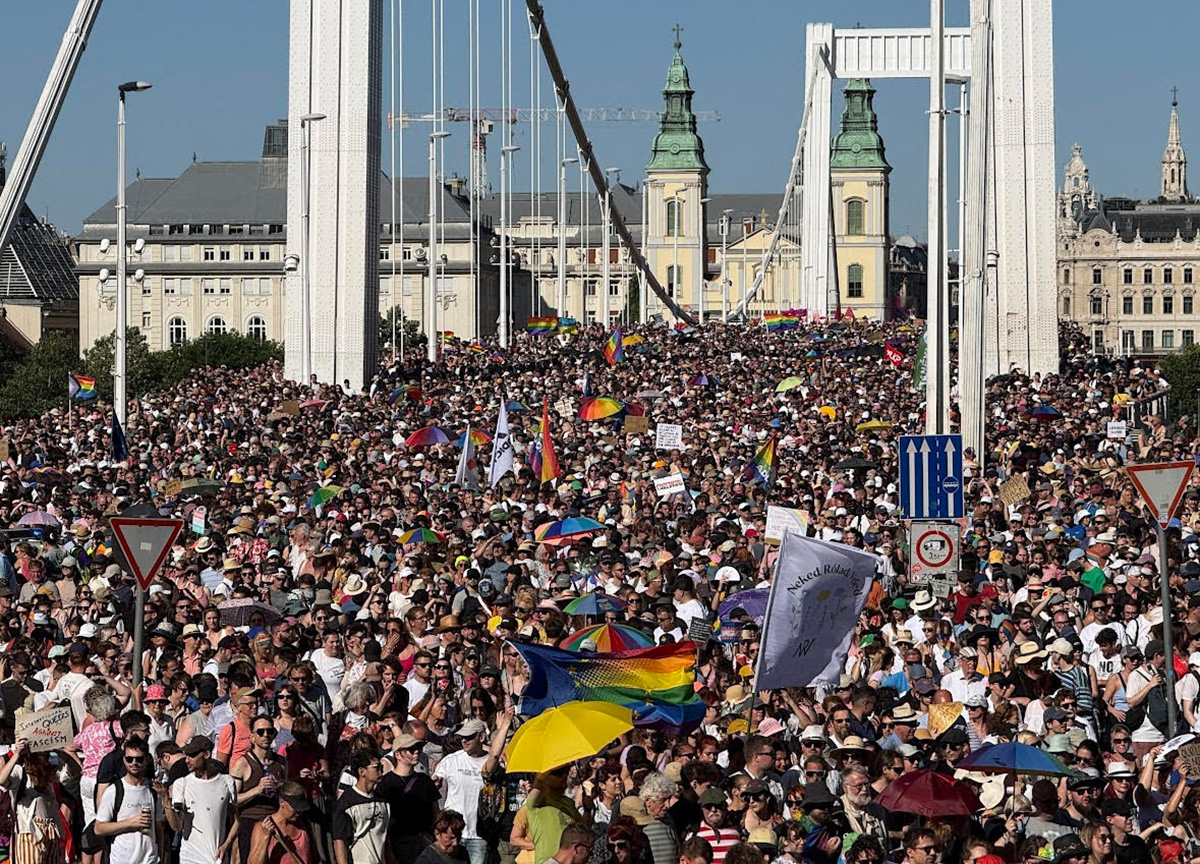
More than 100,000 people defied the ban and participated in the march that took place on June 28, 2025. The Associated Press notes the Budapest Chief Prosecutor’s Office in January charged Karácsony with “organizing the unlawful assembly despite a prohibition order.”
Karácsony, who has been Budapest’s mayor since 2019, described himself as a “proud defendant” after his indictment.
“It seems that in this country, this is the price you pay if you stand up for your own freedom and the freedom of others,” he said in a statement, according to the AP. “If anyone thinks they can ban me, deter me, or prevent me and my city from doing so, they are gravely mistaken.”
Budapest is Hungary’s capital and largest city.
Prime Minister Péter Magyar took office last month after his center-right Tisza party ousted Orbán’s Fidesz-KDNP coalition in elections that took place on April 12.
Hungarian police on May 29 announced they will allow the Budapest Pride march to take place this year.
The European Union’s top court, the EU Court of Justice, days after Orbán’s ouster struck down Hungary’s anti-LGBTQ propaganda law that MPs approved in 2021. The BBC notes Hungarian authorities cited the decision in their decision to drop the charges against Karácsony.
Authorities in Pécs, a city near Hungary’s border with Croatia, have also dropped charges against Géza Buzás-Hábel, who organized a 2025 Pride event.
Hungary
Hungarian authorities lift Budapest Pride ban
Country’s new government took office last month
Hungarian police on May 29 announced they will allow the annual Budapest Pride march to take place.
“The Budapest Metropolitan Police has approved the 2026 Budapest Pride Parade and also has issued restrictive orders in relation to three counter-demonstrations,” a Budapest Metropolitan Police spokesperson told Politico.
Budapest is Hungary’s capital and largest city.
Hungarian lawmakers last year passed a bill that banned Pride events and allowed authorities to use facial recognition technology to identify participants. MPs later amended the Hungarian constitution to ban public LGBTQ events.
More than 100,000 people defied the ban and participated in last year’s Budapest Pride parade. The event became one of the largest protests against then-Prime Minister Viktor Orbán and his government since he took office in 2010.
Prime Minister Péter Magyar took office last month after his center-right Tisza party ousted Orbán’s Fidesz-KDNP coalition in elections that took place on April 12. The European Union’s top court, the EU Court of Justice, days after Orbán’s ouster struck down Hungary’s anti-LGBTQ propaganda law that MPs approved in 2021.
The EU on May 29 announced it will release more than €16 billion ($18.59 billion) in funds to Hungary that it withheld while Orbán was in office.
The Budapest Pride march will take place on June 27.
“We will march freely in fresh air for our rights, for the democratic Hungary,” said Budapest Pride on its Facebook page.

PHOTOS: The Audacity Brunch

D.C. Council approves expanded grant funding for Mayor’s Office of LGBTQ Affairs

Congressional Cemetery hosts Gays & Graves

Baltimore Pride is here

Calendar: June 12-18

Hundreds of thousands expected to attend D.C. Pride events

PHOTOS: Pride Run

Queen Jean is Tony’s first transgender winner

David Archuleta, Monroe Alise named D.C. Pride parade marshals