Television
Grindr’s first series is as shallow as you’d expect
Instantly forgettable, just like a typical hook-up
When Grindr announced it was dropping its first-ever original series on April Fools’ Day, many people assumed it was a joke.
That’s perfectly forgivable; even without the seasonal timing, most people would never expect the notorious “dating” app to jump into the streaming entertainment market. It just seems, well, absurd. But whether or not Grindr chose the release date as a bit of self-deprecating fun, “Bridesman” – a limited comedy series consisting of six 7-10 minute webisodes and focusing on the misadventures of a gay scenester as his female BFF prepares for her wedding – is not a joke. It really exists.
Unfortunately.
The series, created by John Onieal and co-written by Onieal and Frank Spiro, debuted on Grindr for its first weekend, but is now available to stream on the app’s YouTube channel. It stars Jimmy Fowlie as Terry, described in the official synopsis as an “awful gay,” who is asked by his best friend Judith (Sydnee Washington) to fulfill bridesmaid duties at her upcoming nuptials. Terry, aside from his disdain for marriage as a heteronormative construct, feels betrayed that the person who once claimed to be his “forever partner” has chosen to commit herself to another man, and to make matters worse, he feels an “electric” sexual connection with Wyatt (David Mudge), her literally myopic groom-to-be. Rather than see his BFF lost to the horrors of a traditional marriage, he resolves to save her from that fate by doing his best to tank the wedding – especially since it also means sticking it to the control-obsessed Muriel (Shannon DeVido), chosen over him to be Judith’s Maid-of-Honor and therefore an object of his particular disdain.
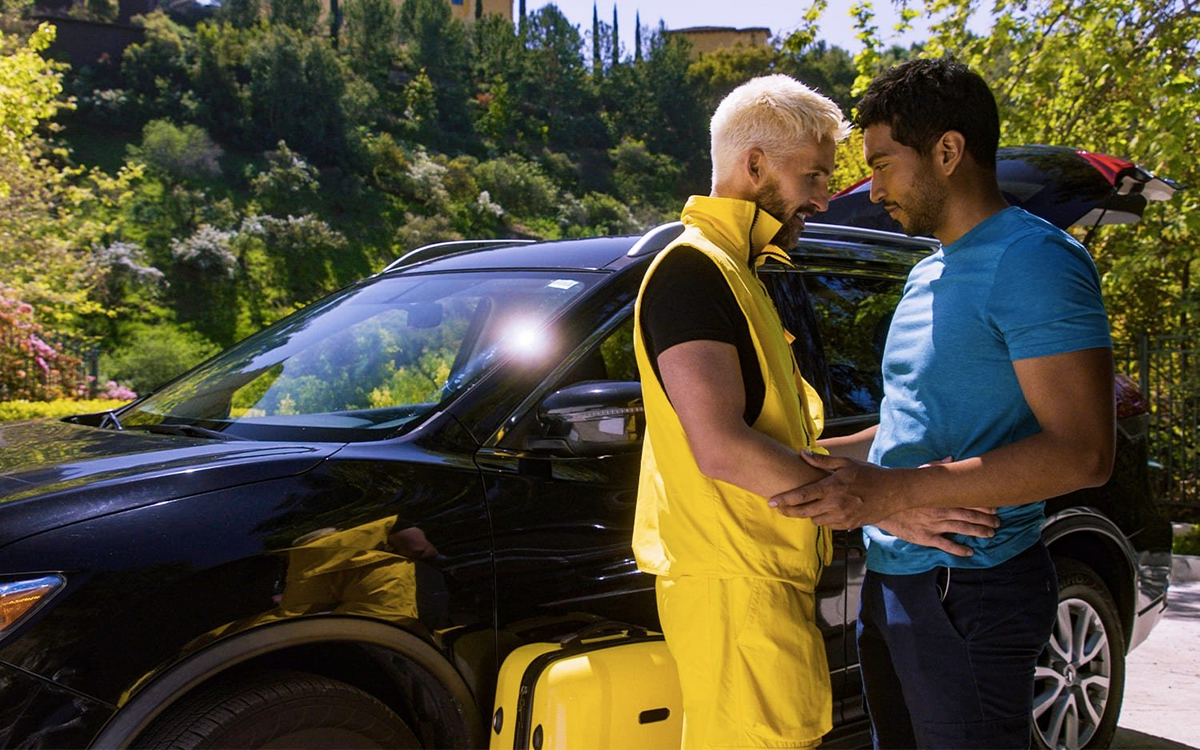
What follows is (again, according to the official synopsis) “an irreverent, fast-paced satire of modern wedding culture and the ‘old fashioned trend’ of monogamy,” in which Terry goes on a slash-and-burn campaign to ruin his best friend’s big day, doing his best to sabotage everything from the sexy bridal boudoir photo shoot to the bachelorette party, and steamrolling his way through a tangled web that involves detectives, a secret agent, a relationship counselor moonlighting as a stripper, and a demon from hell. Along the way, though, he still finds time to hook up with a sexy Uber driver (Calvin Seabrooks) whenever he feels like going for a ride.
It seems like a lot to pack into a story that, in total, runs just shy of an hour, but the show’s self-description of “fast-paced” is accurate, and director Julian Buchan never allows things to drag. Indeed, the story moves so fast it doesn’t even give all its jokes time to land – an approach that works well with a script that throws them out like a pitching machine on a batting range – and trusts its audience to keep up.
That’s probably not a miscalculation, either; the target demographic here has become well-accustomed to absorbing a lot of information in a short space of time, thanks to the rise of YouTube, TikTok, and all the other digital sources of entertainment for those with a short attention span. Furthermore, since the characters on the screen belong definitively to that same generation, they have no problem sticking to a rapid pace, and they plow ahead with confidence as if they’re in a race with the cameras to get to the end of the show first.
In fact, it’s the cast – an admirably diverse and inclusive one, thankfully – that makes it all come together, and which provides us with most of the show’s entertainment value. They embrace their exaggerated characters – most of whom are vapid, narcissistic, aggressively pretentious, or some toxic combination of the three – with glee and abandon, committing completely to the absurdities the story necessitates them to enact. It’s infectious, and it almost allows “Bridesman” to live up to its aspirations of satire.
As to that, the show sets its sights not just on “modern wedding culture,” as it declares in its synopsis, but on the broader target of modern culture in general, with its emphasis on the shallow and ephemeral and its obsession with self. It aims for a similar tone, perhaps, as “The Other Two” (the runaway comedic hit that began life on Comedy Central before being picked up by HBO for its second season), a show that deftly skewers the self-serving, attention-seeking mentality that drives our pop culture as it barrels through its never-ending cycle of “new, now, next” distractions. Its two lead characters – the older sister and gay brother of a teen YouTube star who are trying to levy their proximity to him into fame and fortune for themselves – are flat out horrible people, or at least behave like them, as are most of the characters that surround them, and watching them fail repeatedly in their efforts to manipulate their way into the fickle spotlight of “the moment” is just part of the fun provided by the series’ merciless send-up of the trends, tropes, and twaddle that surround so much of what we see on our plethora of screens today.
The characters in “Bridesman,” for the most part, are horrible people, too, though in some cases they might just be regular people caught up in a horrible mindset. Most horrible of all, of course, is Terry, who essentially embodies everything that gay youth culture loves to hate about itself; vain, judgmental, driven by libido, and completely unconcerned with anyone’s feelings but his own, he lives to create drama yet seems to love nothing better than to stand aside from it and roll his eyes in withering disapproval. Portrayed with dead-on accuracy by Fowlie (who is, coincidentally, probably best known to viewers for a recurring role as a super-gay influencer on “The Other Two”), he embodies the kind of jaded queer socialite whose posturing and self-promotion only prove just how “basic” he really is.
Yet the reason we are really amused by “The Other Two” and other shows that successfully lampoon the foibles and pretensions of our own society is not just because they put them on display. We laugh because we recognize something of ourselves in the people we see on the screen; because the horribleness is contrasted with the human, or at least tempered by good intentions; because there’s a flicker of something genuine underneath all the pretense reminding us that, no matter how far we allow ourselves to be carried away by our own ego, there is always a thread we can follow back to reality. Without that factor, the comedy can easily become hollow, even cruel, and amounts to ridiculing something just for the sake of ridiculing it.
“Bridesman” has no such tempering influence. Though its satire is savage and even smart, there’s little self-awareness to suggest that it has any purpose except to become the “next big thing” and enjoy its five minutes in pop culture’s center ring. Like the people who inhabit it, it might be fun to hang around with for a while, but in the end its lack of substance makes it instantly forgettable.
You know, just like a typical Grindr hook-up.



Television
‘Vampire Lestat’ heats up Pride month with queer action
Latest Anne Rice adaptation poised to be your next TV obsession
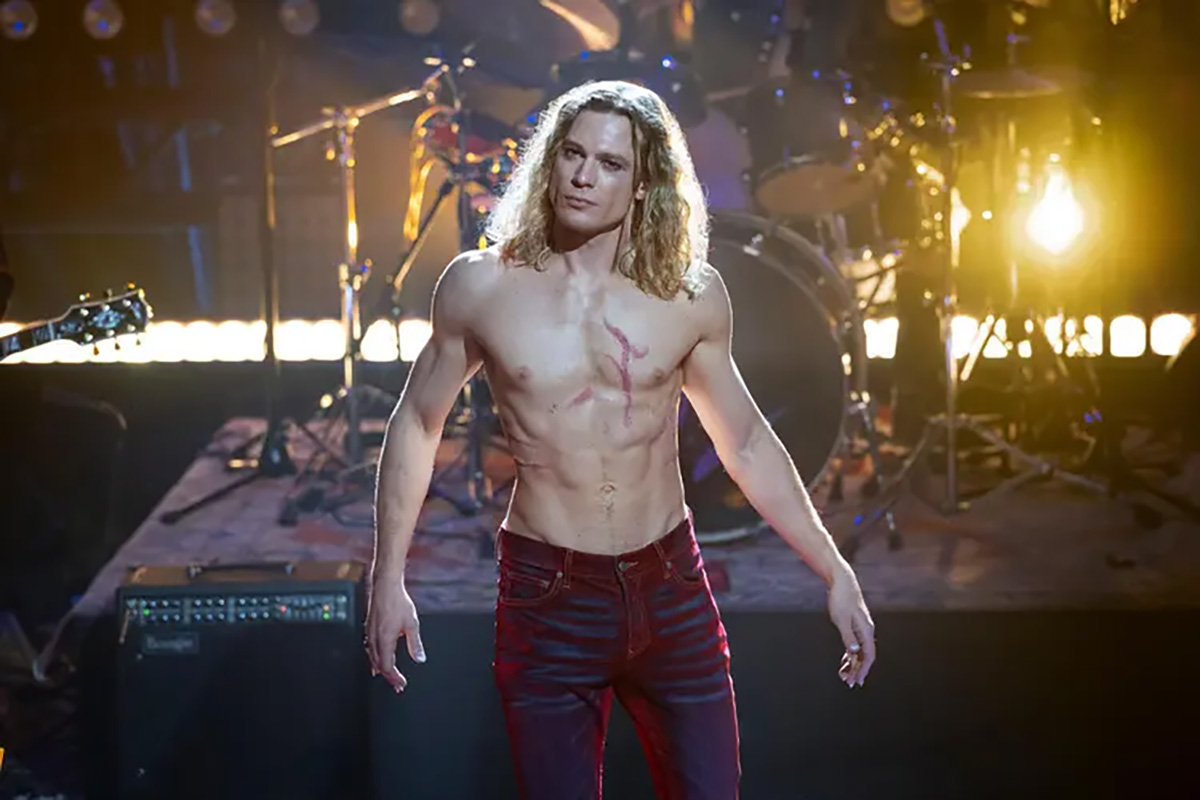
Whether you’re mourning the end of Euphoria, The Boys, or Hacks, you’re dying for another hit of Heated Rivalry or just need something new to watch, The Vampire Lestat has you covered. Whether it’s the cutting witty dialogue, supernatural action, or the maudlin adventures of problematic queer relationships, this is the show for you. This new season brings literal sex, drugs, and rock-n-roll as Lestat (Sam Reid), a multi-centennial vampire, decides to process his beef with his sexy ex Louis (Jacob Anderson) for giving the Interview With The Vampire by starting a rock band.
In 1976, Anne Rice wrote a book to process the death of her young daughter. It was the story of two vampire “roommates” and their centuries-long relationship drama. What followed was a series of 13 books and a whole world filled with vampires, witches, and more. This launched the 1994 film where Brad Pitt, Antonio Banderas, and Tom Cruise played “totally not gay” vampires who almost kissed a few times, despite having all of the hottest actors of the era, it was sanitized of all queer subplots. R&B diva Aaliyah’s last role was as Akasha, the eponymous Queen of the Damned (2002), the unoffical follow up to the first film covering Rice’s second and third book.
The AMC series version of Interview with the Vampire took all this source material and made it more gay, more current, and more PC. They shifted the story to the present day, having Louis live in a luxurious Dubai compound, and his interviewer, Daniel Molloy (Eric Bogosian), being a former addict hawking his masterclass, armed with a ton of evidence. The choice to race-swap Louis from a misanthropic emo plantation owner to a black brothel owner in New Orleans adds so much more nuance, history and richness to his character. Exploring the abusive nature of the relationship and casting the amazing Delainey Hayles as Claudia have all elevated the story to your next television obsession. The choice to turn the book into two seasons allowed the creators to take their time, play with storytelling and explore Louis as an unreliable narrator and tease at many of the storylines of later books. This was a smart choice considering these characters are all centuries old, and over the course of 13 books, all have complex backstories and inner worlds.
Sam Reid was always a standout and captured the egomania and charm of Lestat, the self-proclaimed Brat Prince. He gets to play an over-the-top bitch about everything we’ve seen and heard in Seasons 1 and 2, while even skewering the world of today, commenting on the state of fame, life, and politics.
Like in the book, he reclaims the narrative as he takes the helm of the story. Rather than write his own book, he’s nabbed the newly vamped-up Daniel Molloy as his documentarian. Also, without giving too much away, this series begins in an unnamed future. Armand (Assad Zaman) and Louis are still as hot as ever, and they’re at an auction for the complete works of the Vampire Lestat. It’s teased that some sort of world-altering event has transpired, and Lestat is missing in action. Could that be the events of The Queen of the Damned or even the sum of all of the books? Only time will tell.
The worldbuilding is really solid as we get to see the past, present and future of these characters. Prime example, Akasha, The Queen of the Damned, was name-checked in earlier seasons. Whether you’re a fan of the original source material or not, this series has something for everyone. It has action, including an epic vampire fight scene in the premiere. It has a complex world and mysteries that unfold over the course of each season. Plus, it has hotties of all genders with Reid, Anderson and Zaman holding it down from earlier seasons. Schitt’s Creek dreamboat Noah Reid joins the cast as Lestat’s band’s frontman.
The show has everything: sex, violence, drama, all with a queer and racially inclusive lens. It doesn’t pull punches in storytelling and examining history, all while maintaining a level of levity and fun. It unfolds with dramatic soap operatic reveals and confrontations while also grounding all of the fantasy in our world.
The series is poised to continue with the same characters from the first two seasons while shifting the focus to allow in a new cast of characters who will play out the events of multiple books and major arcs that are part of AMC’s new Anne Rice cinematic universe.
The series airs on AMC Plus, while the first two seasons are available on Netflix. A note to people streaming it may appear on Season 2, as the series name change might be confusing for those who haven’t seen the show.
Television
Repression, toxic masculinity fuel intense queer drama ‘Half Man’
A solidly crafted, well-acted, fascinating binge watch
In 2024, when Richard Gadd’s “Baby Reindeer” became a stock-boosting hit for Netflix, there were few Americans who knew his name.
In the UK, however, the Scottish writer/comedian/actor had already emerged as a talent to be reckoned with, blending autobiographical stand-up comedy with theater to create a reputation as an edgy and provocative creator whose shows tended to be equal parts divisive and successful. One of these, his fictionalized true-life story of being stalked and sexually harassed by a female fan, became an Olivier Award-winning hit in the London theater; that was “Baby Reindeer,” and – in the form of a seven-episode miniseries adaptation – it became the vehicle that carried him to wider fame.
Two years later, Gadd has returned with another high-profile miniseries, this time for HBO Max, and like its predecessor, it’s a story that deals with queer sexual repression, unhealthy attachments, and a central relationship that can safely be described without exaggeration as “toxic” – and it’s an even darker (and more twisted) ride that stretches across decades.
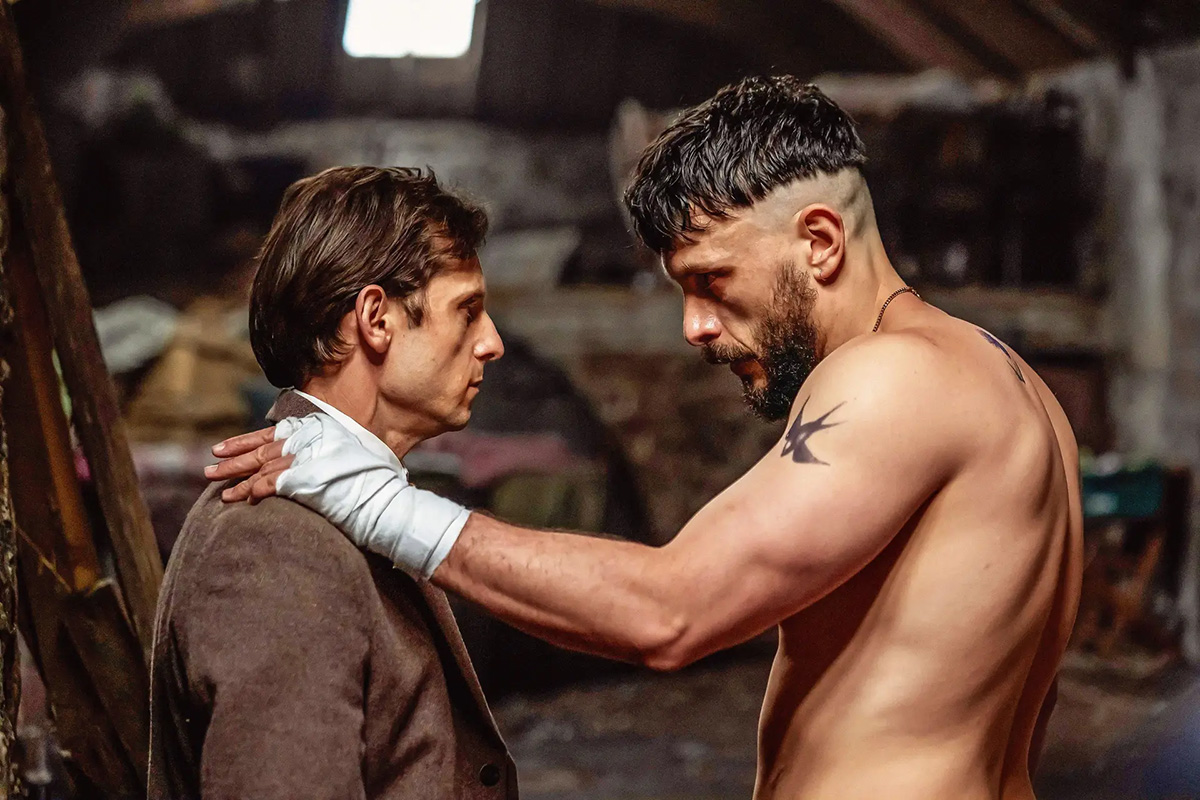
“Half Man,” which debuted on April 23 and continues with one episode per week through May 14, is the story of two “brothers” – Niall (Jamie Bell) and Ruben (Gadd) – whose mothers (Neve McIntosh and Marianne McIvor) have become a lesbian couple after leaving their relationships with the boys’ respective fathers. They are seeming opposites in personality; Niall is quiet, sensitive, and secretly unsure about his sexuality, while Ruben is tough, rebellious, and prone to violence – and unsurprisingly, it’s a match made in hell.
We meet them at the top of the first episode as adults, on the day of Niall’s wedding, when Ruben shows up without warning; his appearance triggers what looks like fear in his “brother from another lover,” and a private meeting between them in a barn at the wedding site turns ugly, launching a flashback format that takes us back to their schooldays, when young Ruben (Stuart Campbell) – already in trouble with the law and trying for a new start – comes home from juvenile detention to become roommate, protector, and bully to young Niall (Mitchell Robertson), all in one.
It’s the dawn of a new and epic relationship, despite a history that has made Niall terrified of the older boy; their seemingly opposite qualities somehow mesh into a kind of symbiotic bubble, in which a tense equilibrium turns them into unlikely allies. Ruben makes sure Niall has nothing to fear from the sniggering schoolyard homophobes who target him, and Niall helps Ruben pass the tests he needs to pass in order to stay in school. Nevertheless, their dynamic is both surprisingly tender and alarmingly lopsided; though they form a bond, it’s a volatile one, and by the end of episode one – after an uncomfortable-to-watch late night incident that amounts to a sexual assault – there is little doubt that Ruben is a psychopath. By then, however, it’s too late; Niall has become hopelessly ensnared by his manipulations, and their dangerous attachment has taken permanent root.
In episode two, the timeline moves the past forward several years (while rolling the wedding-day story back a few hours as well), bringing Niall to his college years. Ruben is once again absent from his life, but the bond is still deep. He struggles to make connections in his new setting – including with another student, the openly gay Alby (Bilal Hasna), who recognizes a side of him that he has still yet to accept for himself. Though he gradually begins to adapt to his new social circle, his insecurities get the better of him – and despite warnings from his mother not to do so, he calls Ruben to come and visit. His arrival triggers another escalating series of incidents, this time entangling Niall’s new friends and culminating in a shocking, jealousy-fueled explosion of violence.
Without going on with the story – after all, the two remaining episodes have yet to be released, so we wouldn’t want to spoil anything – it’s safe to say there’s a pattern here, and it’s intentional.
Gadd has already been public about his own struggles with repression, which were directly explored (albeit fictionally) in “Baby Reindeer,” and it’s clear that he had more to say about the effects they had on his life and identity.
As he put it himself, in an interview with the Hollywood Reporter, “Themes of, I guess, masculinity, or what it means to be a man, or ‘I’ve gone through a masculinity crisis’ come into [the show] probably because I’ve been through that in my life, and I feel I can write to it and speak to it.
“I always think that the best kind of art is kept close to your chest, kept close to your heart, kept close to your experiences, and I guess with ‘Half Man,’ there’s a lot in it that I relate to. It’s not an autobiographical piece by any stretch, it’s purely fiction, but it certainly borrows from themes and struggles and issues that I understand.”
That understanding translates to the series through its focus on tracing the roots of Niall and Ruben’s relationship by methodically tracking the cause-and-effect chain that links the major events of their lives together. It explores the contradictory combination of worship and terror, the transgressive eroticism that intertwines danger and desire, the power of the forbidden to make us want it more, and the self-loathing that punishes itself through violence toward others. The inverted framework of the storytelling, which works both forward and back to meet at (we assume) some definitive point, makes following it a bit like putting together a puzzle, which also has the effect of building suspense as we wait to see the “moment of truth.”
Of course, those who prefer a more straightforward narrative might not appreciate the additional challenge, especially when the subject matter – which revolves around experiences, feelings, and behavior that might be entirely unfamiliar to many audiences – is challenging enough by itself, in its own way. Likewise, and for much the same reason, there will be viewers who are unable to relate to its characters, as some of the show’s less-favorable reviews have pointed out.
But it would be naive to assume that the themes in “Half Man” – of fragile masculinity, internalized homophobia, misdirected rage, nihilistic rebellion, conflicted desires, projected shame, and the other ingredients that infuse this shadow-boxing psychodrama with such a distinctive musky odor – do not apply to more men in today’s culture of incels, “looksmaxxers,” and “the Man-o-sphere” than any of them would like to admit. We’d wager that its portrait of a same-sex, sub/Dom, borderline incestuous relationship might resonate more urgently there than within a queer community that has been grappling with those issues for generations already and are just waiting for everybody else to catch up.
In any case, Gadd’s newest variation on a theme is a solidly crafted, well-acted, and hypnotically fascinating (if sometimes uncomfortable) exercise in the kind of “can’t look away” drama that makes for a perfect binge watch. Or, at least, it will once all the episodes drop.

It’s surely a sign of the times that this year’s spring preview of upcoming screen entertainment doesn’t hold nearly as much boldly out-and-proud queer content as we would like – but then again, there are only a small handful of noteworthy titles overall – especially on the big screen, where, just like any year, the top-grade content is being saved for summer.
Even so, we’ve managed to put together a list of the movies and shows on the horizon that offer a much-needed taste of the rainbow; a mix that includes returning favorites, “don’t-miss” events, and a few promising big screen crowd-pleasers, it should keep you occupied until the summer season brings a fresh new crop of (hopeful) blockbusters with it.
Scarpetta (Prime Video, March 11). Proving once again that she’s on a quest to accumulate more screen appearances than any other actor in history, Nicole Kidman returns for another star turn by way of this true-crime-ish mystery series, adapted from the bestselling “Kay Scarpetta” novels by lesbian author Patrica Cornwell, as a “brilliant and beautiful” forensic pathologist who uses her knowledge to solve murders. If that’s not enough to draw you in, her co-stars include fellow Oscar-winners Jamie Lee Curtis (as her feisty older sister) and Ariana DuBose (as her nosy lesbian niece), as well as Bobby Cannavale and Simon Baker.
It’s Dorothy! (Peacock, March 13). Filmmaker Jeffrey McHale first won our attention with his fun and insightful “Showgirls” documentary, and now he’s back with a look at perhaps the ultimate queer icon in popular culture: none other than Dorothy Gale, that Kansas farm girl who taught us all that “there’s no place like home” in L. Frank Baum’s classic novel “The Wonderful Wizard of Oz” and its sequels – and of course, in a certain movie adaptation starring Judy Garland. Charting the journey of the fictional heroine across a century of cultural reiterations – on the page, the stage, the screen, and beyond – with a mix of archival material, artistic interpretations, and commentary from queer and queer-friendly voices such as John Waters, Rufus Wainwright, and Lena Waithe, it’s sure to be required viewing for every “Friend of Dorothy” – and all of their friends, too.
The 37th Annual GLAAD Media Awards (Hulu, March 21). Sure, it’s already happened and you already know (or can find out with a few quick taps of your phone screen) who and what the winners were – but, hey, we already know that the Oscars aren’t going to offer much in the way of queer victories (since there are only a small handful of queer nominees), so why not plan to watch the GLAAD ceremony (recorded live on March 5 for later streaming)?
The Comeback: Season 3 (HBO Max, March 22). Another returning gem is this inventive “mockumentary” style sitcom-about-a-sitcom, starring Lisa Kudrow as a “B-list” television star trying to revive her own faltering career. Slow to catch on in its first season (which originally aired in 2005), it won acclaim (and new fans) when it was rebooted in 2014 by Kudrow and collaborator/co-creator Michael Patrick King (former executive producer of “Sex in the City,” and now returns after a 12-year hiatus for another installment, which tracks “never-was” has-been Valerie Cherish through yet another attempt to make stardom happen. If you like cynical, sharp-edged satire, especially when it’s aimed at the behind-the-scenes world of show-biz, then you’ve probably already discovered this one – but if you haven’t, now’s your chance to jump on board.
Heartbreak High: Season 3 (Netflix, March 25). Fans of this imported Australian teen “dramedy” series – itself the “soft reboot” of another popular Australian series from the ‘90s – will be thrilled for the arrival of its third and final installment, which picks up where it left off in the lives (and sex lives) of the students and teachers of a suburban high school. As always, it can be expected to push the envelope (and some buttons) with its irreverent treatment of issues of class, race, and sexuality – and to deliver another season’s worth of the colorful and striking costume designs that have been acclaimed as a highlight of the show. And yes, it includes a refreshingly significant number of variously queer characters, so if you’re not already on board with his hidden gem of a streamer, we suggest you should give it a shot – you can probably even catch up on the first two seasons before this one drops.
Pretty Lethal (Prime Video, March 25). Fresh from a March 13 debut at the SXSW Film and TV Festival, this girl-power fueled action thriller from director Vicky Jewson and writer Kate Freund centers on a troupe of ballerinas who, while en route to a prestigious ballet competition, are stranded by a bus breakdown and must take shelter at a remote roadside inn run by Uma Thurman as a ruthless crime boss. Needless to say, the girls are forced to adapt their dance prowess into combat skills before the night is over. With a cast that includes Maddie Ziegler, Lana Condor, Avantika, Millicent Simonds, and Michael Culkin, our bet is that it’s sure to be campy fun with a feminist twist.
Forbidden Fruits (Theaters, March 27). Adapted from the play “Of the woman came the beginning of sin, and through her we all die” by Lily Houghton (who co-wrote the screenplay with director Meredith Alloway), this comedy/horror film about a group of young witches who operate a “femme cult” out of the basement of a mall store called “Free Eden” looks like another campy treat, full of witchy wiles and bitchy rivalries, but something about its theatrical pedigree tells us it will also be more than that. Even if we’re wrong, though, we’ll be perfectly happy; why would anyone say no to a delicious piece of camp, especially when it has a cast led by Lili Reinhart, Lola Tung, Victoria Pedretti, and Alexandra Shipp, with creator/influencer Emma Chamberlain in her film debut and heavyweight talent Gabrielle Union thrown in for good measure? We’re ready to join the coven.
Club Cumming (WOW Presents Plus, March 30). Queer icon Alan Cumming (currently riding high as host of “The Traitors”) takes us inside his NYC East Village gay bar, nightclub, and showplace for a behind-the-scenes reality series that spotlights the talent, fashion, and fabulously queer vibe that makes the establishment one of queer New York’s most iconic nightspots. Cabaret singer Daphne Always, go-go dancer and drag performer Michelle Wynters, Drag queen Brini Maxwell, Drag king Cunning Stunt, and Comedian Jake Cornell are among the many reasons why this little slice of the queer New York scene is reason enough alone to become a subscriber to World of Wonder’s streaming platform – though if you’re a “Drag Race” superfan, chances are good you already are.
The Boys: Season 5 (Prime Video, April 8). Amazon’s violent superhero satire, complete with its divisive and deliciously challenging emphasis on queer storylines and its in-your-face caricature of contemporary American “culture war” politics, returns for its fifth and final season, along with all the thorny issues of racism, nationalism, and xenophobia it has showcased all along, and an ensemble cast that includes Karl Urban, Jack Quaid, Antony Starr, Erin Moriarty, and the rest of the usual players. A decidedly queer-informed game-changer in the mainstream fan culture, it’s a show that will be sorely missed – but with several spin-offs already in existence (including the even-queerer “Gen V”) and another (“Vought Rising”) on the way, we can take comfort in knowing that its influence will live on.
Euphoria: Season 3 (HBO Max, April 12). The controversial Sam Levinson-created drama that is HBO’s fourth most-watched series of all time is back after a lengthy hiatus, rejoining the lives of its dysfunctional characters – queer struggling addict Rue (Zendaya), trans teen Jules (Hunter Schafer), abusive sexually insecure football star Nate (Jacob Elordi), and the rest – a full five years later, away from the social traumas of high school and settled into what we can only assume is an equally-dysfunctional life as young adults. Renowned for its cinematic visual styling and its no-holds-barred treatment of “triggering” subject matter, this long-awaited return is likely to be at or near the top of a lot of watchlists – and ours is no exception.
Mother Mary (Theaters, April 17). One of the most promising (and queerest) offerings of the season is this psychological thriller set in the world of pop music, helmed by acclaimed filmmaker David Lowery (“A Ghost Story,” “The Green Knight”) and starring Anne Hathaway (“The Devil Wears Prada,” “Les Misérables”) as a pop singer who becomes entwined in a twisted affair with fashion designer Michaela Cole (“I May Destroy You,” “Black Earth Rising”). Besides its two queer-fan-fave stars, it features trans actress Hunter Schafer (“Euphoria”), FKA Twigs, and Jessica Brown Findlay (“Downton Abbey”) in supporting roles, and to top it all off, it includes a soundtrack full of original songs. With a celebrated director behind it and an award-winning pair of leading ladies, this one has all the potential of a future classic.
The Devil Wears Prada 2 (Theaters, May 1). Meryl Streep is back as Miranda Priestley, need we say more? We know the answer to that is “no,” but we still need to remind you that Anne Hathaway, Emily Blunt, and Stanley Tucci are all part of the deal, too, as this hotly anticipated sequel hits the screen just ahead of the summer rush. Along for the ride are Kenneth Branagh, Justin Theroux, Lucy Liu, B.J. Novak, Conrad Ricamora, Sydney Sweeney, Rachel Bloom, Donatella Versace, and Lady Gaga herself. We trust that will be sufficient to ensure that you will show up on opening day – dressed accordingly, of course.
The Sheep Detectives (Theaters, May 8) Rounding out our roundup with a fun-for-the-family treat that blends live action with animation for an inter-species “whodunnit” with an all-star array of talent, this adaptation of Leonie Swann’s 2005 novel “Three Bags Full” centers on a flock of sheep as they attempt to solve the murder of their beloved shepherd. Boasting onscreen performances from Hugh Jackman, Emma Thompson, Nicholas Braun, Nicholas Galitzine, and Molly Gordon, along with character voices provided by Julia Louis-Dreyfus, Bryan Cranston, Chris O’Dowd, Regina Hall, Patrick Stewart, Bella Ramsey, Brett Goldstein, and Rhys Darby, this one might be just the kind of lightweight entertainment we all need as we move deeper into the confounding year of 2026.
And if not, stay hopeful – the films and shows of summer will be here soon enough.

‘Here the Whole Time’ delivers queer coming-of-age comedy

Pentagon expands testosterone screening as trans troops face hormone therapy restrictions

Calendar: September 4-10

Swiss government backs nationwide conversion therapy ban

Gloria Steinem dies at 92

PHOTOS: Miss Gay Old Bay

Beloved D.C. ‘Old Catholic’ Bishop Charles Braun dies at 86

Blade welcomes fall intern

Top Bulgarian court rules government must legally recognize trans people