ROOMATE / DC
Real Estate
D.C.’s housing reality: Cautious optimism meets landlord strain
Cost of living remains a major problem
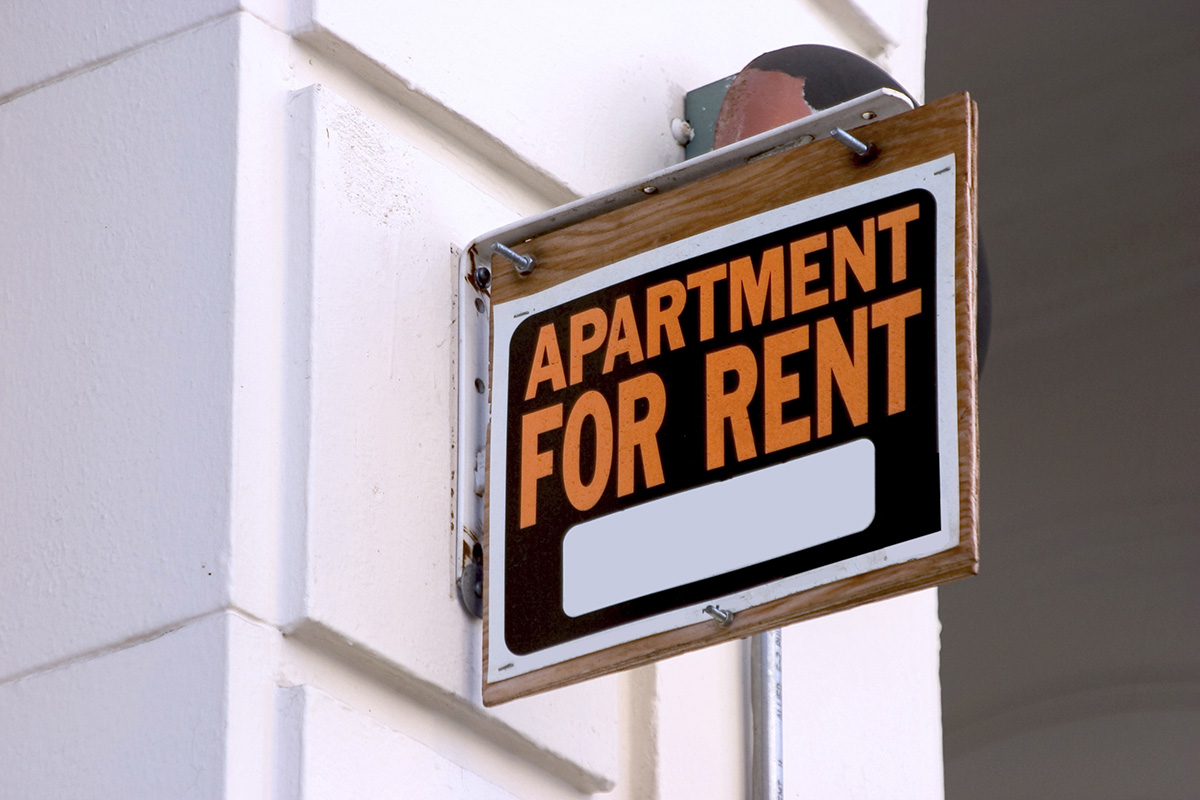
Washington has long prided itself on stability. Anchored by the federal government and buoyed by a highly educated workforce, the District has historically weathered economic uncertainty better than most cities.
But beneath that stability, cracks have been showing since January 2025.
I was having a conversation with a prospective client the other day and offered him a candid assessment of the District’s economic outlook. Simply put, structural challenges have been shaping the city’s future, a new mayoral election, and more that blends cautious optimism with clear concern about the changes ahead.
For one, the long-term shift toward remote and hybrid work continues to reshape the city in ways many people still underestimate. There has been a change in the rhythm of downtown D.C., reduced daytime foot traffic for local businesses, and created uncertainty for commercial real estate owners and the neighborhoods that depended on those workers every day.
At the same time, the cost of living in the District continues to rise at a pace that many residents are struggling to absorb. Even residents with strong incomes are becoming more cautious about spending and relocation decisions.
Landlords are feeling those pressures as well. Many smaller housing providers are operating in an environment where expenses continue to rise faster than revenue while the regulatory environment has grown increasingly complex. For some rental owners, especially those with older buildings or only a few rental units, the math is making it harder to cover costs, much less generate passive income.
There is also growing concern about the District government’s own financial outlook. Significant budget pressures and spending cuts are being had in a more serious way than many Washingtonians are used to hearing. As uncertainty in federal employment affects local tax revenue and consumer confidence, how will the city fund services, infrastructure, housing programs, and public safety priorities in the years ahead?
At the same time, consumer confidence feels noticeably down than it did even a few years ago. People are taking longer to make decisions, whether that means signing a lease, purchasing a home, renovating a property, or expanding a business. That hesitation creates a slower-moving marketplace where caution often replaces momentum.
Despite all this, Washington has proven remarkably resilient over time. The city continues to attract talented professionals, international investment, universities, healthcare institutions, and industries tied to government, law, technology, and public policy. Neighborhoods continue to evolve, and demand for well-managed rental housing remains strong in the core areas of the city.
Unlike other major cities driven by private industry, federal employment and contracting are two of the main pillars of Washington’s economy. That reliance has long insulated the region from deep recessions. But it also creates vulnerability when federal activity slows.
D.C.’s economy is far more interconnected and interdependent than many people fully appreciate. Between significant federal layoffs, the District’s high unemployment rate, and broader economic uncertainty, there are a number of warning signs that property owners should be paying close attention to. When federal hiring slows or contracts tighten, the impact extends well beyond government workers themselves. It affects restaurants, retail, housing, and countless other sectors tied to the District’s economic activity.
Brookings Institution has documented how job losses in higher-income sectors can disproportionately impact urban economies—precisely because those workers drive local spending.
Research from the Urban Institute supports this view, noting that federal workforce disruptions can quickly ripple through the region’s economy. For landlords and renters alike, those ripples are already being felt. Renters see many more properties on the market which gives them leverage on negotiating discounts in rent or special incentives. Housing providers, already squeezed by the reality of a weak economy and strong regulations face lowering rents and income.
For years, affordability has been one of D.C.’s most persistent challenges. Much of that pressure has been driven by strong job growth and sustained demand for housing at a pace that new housing inventory has struggled to match. That imbalance has steadily pushed rents and home prices higher, leaving many residents financially stretched.
Recent multifamily housing data suggests the market is already beginning to adjust. Developers delivered more than 15,000 apartment units across the Washington metropolitan area over the past year, and several industry reports have noted that elevated supply levels, combined with slower demand growth, have contributed to softer occupancy levels and downward pressure on rents in portions of the region. CoStar, CBRE, and Northmarq have all reported rising vacancy rates across segments of the D.C. multifamily market as newly delivered Class A inventory continues entering the pipeline at a time when hiring growth has moderated and federal workforce uncertainty has increased.
At the same time, several economists and housing analysts have cautioned that the District’s affordability challenges are deeply structural and unlikely to disappear quickly. The Joint Center for Housing Studies of Harvard University has repeatedly identified Washington among the nation’s more cost-burdened metropolitan areas, particularly for renters, while Zillow data continues to show housing costs consuming a substantial percentage of household income for many residents.
From my own perspective as a property manager working directly in the market every day, I believe we are beginning to see the early stages of a market recalibration rather than a collapse. Anecdotally, there appears to be more competition among larger apartment buildings than there was several years ago, particularly in neighborhoods where substantial new inventory has recently delivered. That does not necessarily mean dramatic rent declines are coming, but it does suggest that the imbalance between supply and demand may be moderating somewhat after years of sustained upward pressure on pricing.
Even if prices soften, affordability will remain a long-term challenge.
Regulation and the Realities of Tenant Turnover
The same rental owner I spoke with pointed to regulatory hurdles as a major source of hesitation to continue renting out his property, given past bad experiences with tenants and excessive costs to prepare the rental for a new tenant.
For many small property owners, the cumulative weight of regulation, maintenance costs, and market uncertainty is becoming harder to bear. Clients of mine have described feeling overwhelmed, not just financially, but emotionally. What was once a source of pride has, in some cases, become a source of stress.
We’re seeing more small landlords sell their rental homes, questioning whether it’s worth staying in the market. That’s a significant shift from even five or ten years ago. The National Multifamily Housing Council has noted that regulatory complexity often disproportionately impacts smaller landlords, who lack the resources of larger firms.
Some are choosing to sell. Others are simply trying to hold on. The result is the same – less rental housing for DC residents.
A Shift From Pride to Disillusionment
Perhaps the most striking theme is the emotional shift described by the property owner. For some, owning property in D.C., once a milestone achievement, has become a source of disillusionment. They cited financial losses, regulatory frustration, and a growing sense of political alienation.
There are also broader concerns about:
- The decline of small multifamily ownership
- Rising foreclosures in certain segments
- Increased consolidation by larger institutional landlords
If small landlords continue to exit the market, it changes the entire housing ecosystem. You lose diversity in housing options, and that can have long-term consequences for affordability. It also robs families of having homes large enough to live in.
Politics and Policy: A System at a Standstill?
The political environment has obviously been a key factor shaping the city’s housing future. Following the 2026 elections, a lack of significant leadership change may result in continued policy stagnation.
Without meaningful policy shifts, we’re likely to see more of the same: continued and increasing pressure on landlords and not enough study and focus on policies to increase housing supply by first stopping those property owners fleeing the District’s extreme tenant friendliness. The D.C. City Council remains central to these decisions, with advocacy groups continuing to push for expanded tenant protections. The importance of balance cannot be understated: ensuring protections for renters while maintaining a viable environment for housing providers.
Taken together, these dynamics point to a housing system at a crossroads.
D.C. must find a way to balance:
- Tenant protections
- Housing affordability
- Landlord sustainability
- Long-term investment in housing supply
What’s Next?
D.C. isn’t going anywhere. The question is how it adapts. If we can find the right balance, there’s a path forward, but it’s going to take time and thoughtful policy decisions. For landlords, that path will require adaptability and engagement. For renters, it may mean gradual rather than immediate relief. For policymakers, it presents a clear challenge: create a system that works for everyone.
Scott Bloom is owner and senior property manager of Columbia Property Management. Contact him via ColumbiaPM.com.
Books
‘Mighty Real’ explores history of LGBTQ music
From Judas Priest to Whitney, something for every taste

‘Mighty Real: A History of LGBTQ Music, 1969-2000’
By Barry Walters
c.2026, Viking
$35/496 pages
Step, step, tap, back step.
Shimmy in a circle, left hand waving over your head, shake your tail feathers, repeat to the beat. Once there was a time when you could do any dance in your sleep, but it’s been a while. So read “Mighty Real” by Barry Walters, and see if your toes don’t tap.

Fifty-seven years after Stonewall, and here we are: LGBTQ musicians still face scrutiny for their sexuality because, says Walters, music isn’t created for gay listeners. No problem: LGBTQ artists and writers have often penned lyrics carefully in order to say what can’t be said, “coding” songs for gay audiences that straight (and ignorant) listeners can dance to and enjoy with apparent obliviousness.
Walters offers “just a few” examples.
Lou Reed sang about trans people in the late ‘60s and offered a rallying song for the Gay Liberation Front in 1972, the latter of which felt like a message to a then-11-year-old Walters. Janis Joplin claimed she was straight, but she had several girlfriends. Motown singers often offered sometimes-ambiguous lyrics.
John Lennon’s hand placement on the back cover of Sgt. Pepper’s Lonely Hearts Club Band made Walters begin to understand that he was different from other boys.
David Bowie is on his list, of course, as is Bette Midler, Elton John, Donna Summer, and Queen. You’ll find Judas Priest here, Green Day, and punk music. The Village People are included in this book, also Grace Jones, Duran Duran, and Cher, Whitney, Melissa, Latifah, and the lyrics from several blockbuster movies.
Two of Prince’s band members were lesbians, and they heavily influenced his albums. Diana Ross’s “I’m Coming Out” cemented her position in LGBTQ culture, and Michael Jackson’s inclusion here takes much careful consideration.
Read about Olivia Newton-John and the B52s. And then there’s Sylvester, for whom Walters has a soft spot in his heart. Sylvester’s death still makes Walters cry.
In his preface, author and music writer Barry Walters points out that music is what you make it and that it’s interpreted differently by each individual. To that end, this book naturally consists of preferential history and personal opinions about singers, bands, albums, and songs.
Agree or disagree. That’s where much of the appeal lies in “Mighty Real.”
Here, Walters wraps his memories around his choices, giving readers room for their own views, memories, and list making. Music-loving readers might also be surprised to note who’s not on Walters’ list – there aren’t many country performers here, for example, and the overall list focuses entirely on music from roughly 1968 to the year 2000, mostly on the kinds of songs you’ll want at the club or party. Again, discuss, and curate your own playlist.
This is a hefty book, but the chapters are browse-able and generally short enough to read in under five minutes. It’s nostalgic, yet also serious in the history it presents. This is the kind of book you want to leave near your album collection, or wherever you get your tunes. But finding “Mighty Real” is your first step.
The Blade may receive commissions from qualifying purchases made via this post.

The Gay Men’s Chorus of Washington performed “Soul Divas” at the Lincoln Theatre over the weekend. The show featured songs popularized by Tina Turner, Aretha Franklin, Diana Ross, Gladys Knight, Whitney Houston and more.
(Washington Blade photos by Michael Key)


D.C.’s housing reality: Cautious optimism meets landlord strain

‘Mighty Real’ explores history of LGBTQ music

PHOTOS: ‘Soul Divas’

Timothy Nelson on the premiere of his opera ‘Song of Sakuntala’

Controversial ‘Blue Film’ pushes past taboos for gripping drama

Outright International honors Cyndi Lauper at annual NYC gala

AIDS Healthcare Foundation announces 3 million people globally in its care

Results from key Tuesday primary races

Federal appeals court rules White House illegally banned trans troops

Leaving for a barge trip through canals of Burgundy
-

 Celebrity News5 days ago
Outright International honors Cyndi Lauper at annual NYC gala
-
Health5 days ago
AIDS Healthcare Foundation announces 3 million people globally in its care
-
National5 days ago
Results from key Tuesday primary races
-
U.S. Military/Pentagon4 days ago
Federal appeals court rules White House illegally banned trans troops