National
DOMA repeal unlikely to find a single GOP vote in committee
‘Poison pill’ amendments could emerge during panel markup

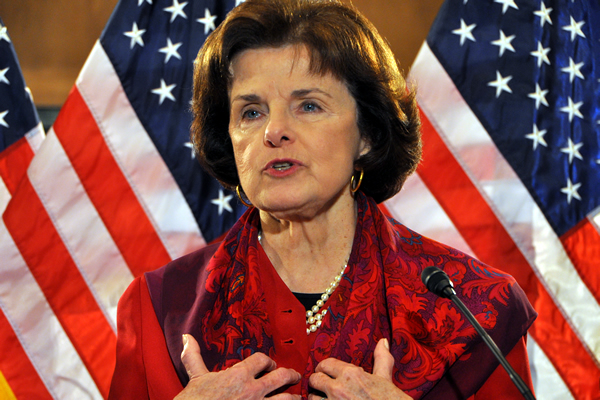
Sen. Dianne Feinstein (Blade file photo by Michael Key)
Legislation that would repeal the Defense of Marriage Act is unlikely to win support from a single Republican during an upcoming committee vote on the bill.
On Thursday, the Senate Judiciary Committee is set to begin debate leading to a vote on the Respect for Marriage Act, which would repeal the 1996 law prohibiting federal recognition of same-sex marriage.
Although the committee action on the legislation is set begin on Thursday, the panel will likely hold off on consideration of the bill for another week. Committee rules allow for any member of the panel to hold bills over when they first appear on the executive committee agenda.
Sen. Dianne Feinstein (D-Calif.), the sponsor of the DOMA repeal bill, told the Washington Blade in a brief exchange on Capitol Hill that she expects the committee to postpone action on the Respect for Marriage Act after the panel convenes.
“Everybody has the right to put it over for one week, so it’ll be put over,” Feinstein said.
Members of the committee may read opening statements on Thursday regarding their views on DOMA, but action will likely be postponed.
All 10 Democrats on the 18-member panel are supporters of DOMA repeal, so the legislation should have no trouble moving out of committee. But LGBT advocates are dubious about finding support from any Republicans on the panel.
Of the eight Republican members of the panel, six received a score of “0” in the Human Rights Campaign’s most recent scorecard of federal legislators. Sen. Lindsey Graham (R-S.C.) had a score of 13 out of 100. Another committee member, Sen. Mike Lee (R-Utah), is a newcomer and wasn’t rated during the 111th Congress.
Rick Jacobs, chair of the Courage Campaign, said he isn’t expecting a single Republican vote during the committee consideration of the Respect for Marriage Act.
“I don’t think they will,” Jacobs said. “They should. We welcome them. … This should be non-partisan because it simply restores the status quo ante. For people who are states’ rights advocates, join the party.”
The Courage Campaign, a progressive grassroots organization, has been working to build the number of Senate co-sponsors for the Respect for Marriage Act by circulating petitions among state residents and sending them to senators. The group is currently focused on adding Sens. Jack Reed (D-R.I.) and Bob Casey (D-Pa.) as supporters.
The Blade placed calls to each of the eight Republican members of the committee to inquire about how the senators would vote when the Respect for Marriage Act comes before them. Only the office of Sen. Charles Grassley (R-Iowa), ranking member of the committee, responded immediately.
Beth Levine, a Grassley spokesperson, said the senator “has been very clear how he feels about this bill” and “supports the Defense of Marriage Act.”
During the Senate committee hearing on DOMA in July, Grassley articulated his opposition to lifting DOMA from the books in his opening statement.
“A real bill to restore marriage would restore marriage as it has been known: as between one man and one woman,” Grassley said. “That is the view of marriage that I support. This bill would undermine, not restore marriage, by repealing the Defense of Marriage Act.”
The Respect for Marriage Act wouldn’t compel states to recognize same-sex marriages, but would lift the provision preventing federal benefits and responsibilities from flowing to existing married gay couples throughout the country.
R. Clarke Cooper, executive director of the Log Cabin Republicans, said his organization is communicating with GOP members of the committee in conjunction with Freedom to Marry, but added he couldn’t name any Republican who would vote “yes.”
“We’re still working and communicating with them,” Cooper said. “But I’ll leave it at that.”
In addition to voting against the legislation, Republican opponents of the Respect for Marriage Act may offer amendments to force senators to vote on uncomfortable issues or alter the legislation so supporters would no longer back it.
Such amendments are often called “poison pill” amendments because they serve no purpose other than to disrupt the measure at hand.
Feinstein acknowledged that amendments attempting to derail passage of the Respect for Marriage Act could come up, but expressed skepticism that any would move forward.
“That’s certainly a possibility,” Feinstein said. “I don’t know whether it’s a probability or not — there’ll certainly be amendments. Whether they would be poison pill — I would be doubtful of that. But that’s just me.”
LGBT advocates say they’re awaiting Republican amendments aimed at disrupting passage of the Respect for Marriage Act to come up in committee, but don’t want to speculate on the nature of the measures.
Michael Cole-Schwartz, an HRC spokesperson, said Republicans may want to score points with their conservative base by offering disruptive amendments.
“The interesting thing will be to see to degree to which committee Republicans will want to offer amendments or otherwise make political hay out of this issue,” Cole-Schwartz said.
Even if the bill is advanced out of committee, supporters of the legislation will face a stiff challenge in passing the bill on the Senate floor. In addition to Feinstein, the legislation has 30 co-sponsors — all Democrats — far short of the 60 votes needed to overcome a filibuster on the Senate floor.
The office of Senate Majority Leader Harry Reid (D-Nev.) didn’t immediately respond to the Blade’s request for comment on whether the Democratic leadership would bring the bill up for a vote during the 112th Congress.
Feinstein said she hasn’t engaged in talks with Reid on bringing the Respect for Marriage Act to the Senate floor. Asked whether she had conversations with him about the bill, Feinstein replied, “No. Not at this time. Let’s get it out of committee first.”
The California lawmaker said she doesn’t “necessarily” expect a floor vote on the bill before this Congress adjourns at the end of next year, saying “We’d like to win it.”
Cole-Schwartz said the full Senate “remains a challenge” in passing DOMA repeal, but the committee markup would be effective in building momentum for the legislation.
“There’s a lot more work to be done to gain additional co-sponsors, to educate members on the issue,” he said. “It’s important that we get Republican co-sponsors on the bill before we’re really going to be in a position to win 60 votes on the floor.”
Passage in the U.S. House would be even more difficult. House Speaker John Boehner (R-Ohio) indicated in July he wouldn’t bring the legislation to a vote on the House floor, telling the Blade that DOMA is “the law of the land, and should remain the law of the land.”
An amendment affirming DOMA sponsored by Rep. Virginia Foxx (R-N.C.) passed in July on the House floor by a vote of 248-175.
Despite these challenges, Jacobs said the effort is still worthy and he’s “not going to give up on the idea” the bill could pass this Congress.
“I think it’s really obvious and simple: people didn’t think that ‘Don’t Ask, Don’t Tell’ would move as it did,” Jacobs said. “As a community, we have to continue to organize with our friends and our allies, and we have this great opportunity with this markup now, and if we keep going we’ll win.”



Minnesota
Flanagan beats Craig in Minn. Senate primary after winning key LGBTQ endorsements
The race highlights a growing ideological shift within the Democratic Party, as Democrats increasingly seek a more robust pushback against Trump.
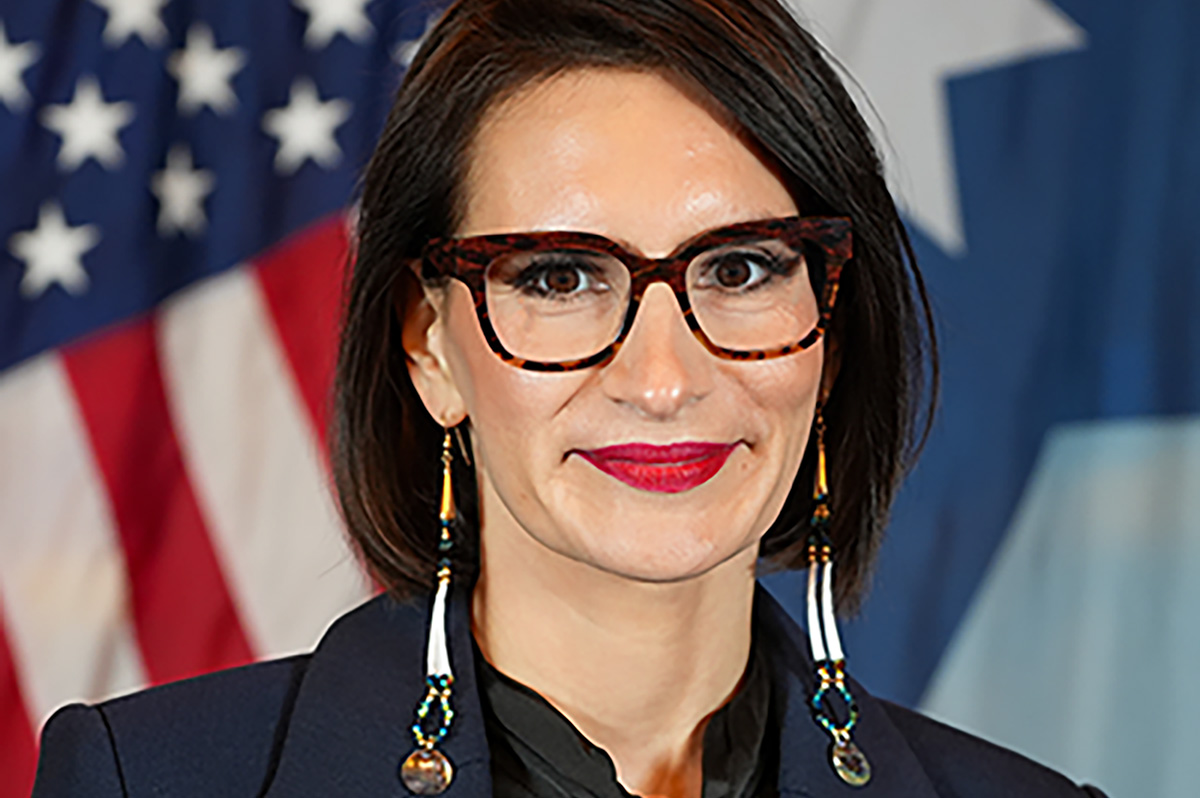
Lt. Gov. Peggy Flanagan won the Democratic primary for the Senate in Minnesota, as progressive Democrats continue to clinch nominations across the country.
On Tuesday night, NBC News called the race for Flanagan, who received 59.0% of the state’s Democratic primary vote, while her opponent, Rep. Angie Craig, received 39.4%. Flanagan ran against Craig for retiring Sen. Tina Smith’s seat.
Smith, along with Sens. Bernie Sanders, I-Vt., and Elizabeth Warren, D-Mass., endorsed Flanagan, while House Minority Leader Hakeem Jeffries, D-N.Y., and former House Speaker Nancy Pelosi, D-Calif., backed Craig.
Flanagan also received the endorsement of the Christopher Street Project, a transgender rights organization that has been at the center of efforts to counter the Republican Party’s push against transgender rights. The group chose Flanagan over Craig in part because Craig has not co-sponsored the Trans Bill of Rights, legislation that has been introduced multiple times in Congress and seeks to establish federal protections for transgender Americans.
The endorsement underscored a key difference between the two Democrats on LGBTQ issues. While Craig is the first openly lesbian mother in Congress, the Christopher Street Project said LGBTQ identity alone is not enough without a strong commitment to transgender rights as they are increasingly debated in legislative offices around the country.
In 2022, the Human Rights Campaign, the largest LGBTQ advocacy organization in the U.S., endorsed Flanagan’s re-election campaign for lieutenant governor alongside Tim Walz, calling the duo “Champions of Equality.”
Flanagan called the race an expensive fight of the “many versus the money,” Flanagan told NBC News’ “Meet the Press Now.” Craig and her allies combined to spend nearly $20 million on the airwaves, while Flanagan and her allies spent $4.7 million, according to AdImpact and NBC.
“I’m running to make sure that people can afford the lives they want to live,” Flanagan said. “I want to get big money out of our politics, and I want to fight for things like ‘Medicare for All’ so that people aren’t just paying for health insurance but actually have access to health care.”
Flanagan criticized Craig, who is in her fourth term, for not standing up enough to President Donald Trump’s administration, a characterization Craig disputed. Craig flipped a competitive House seat in the Twin Cities metro area and had argued that she was the best candidate to win in November.
Craig faced criticism for voting for the Laken Riley Act, an immigration detention measure that Trump signed into law shortly after he started his second term in January 2025. Craig said she later regretted that vote.
Flanagan has been vocal about her stance on abolishing U.S. Immigration and Customs Enforcement. In a recent Minnesota Public Radio debate she said that ICE “has to be ripped apart.” Flanagan said she does support immigration enforcement to ensure secure borders.
Immigration and ICE debates are especially pertinent in the Twin Cities, as ICE agents fatally shot two U.S. citizens, Renee Good and Alex Pretti, in Minneapolis during an enforcement crackdown at the behest of President Trump.
Despite the contested race, Craig made it clear that Democrats are committed to unifying.
“We have an existential crisis in our nation with Trump and Republicans, and so I would be right by the lieutenant governor’s side asking my supporters to support her,” Craig said. “The most important thing in this election is that we beat Republicans. That’s what matters.”
On the Republican side, former NFL sideline reporter Michele Tafoya won the Senate primary. Considered an outsider to the Republican Party structure, she did not win the state GOP’s endorsement at the May convention, where delegates instead backed retired Navy SEAL Adam Schwarze.
She has run her campaign on a slew of issues Republicans have deemed worthy — including transgender sports participation, corruption, and minimizing illegal immigrants in the area.
This recent pattern of moderate and centrist Democrats raising huge funds — in many instances backed by major PACs — only to lose to more progressive and less experienced candidates is growing as more people grow disillusioned with the Democratic Party’s inability to push back against Trump and Republicans. A similar outcome happened in Michigan’s Democratic primary last week when progressive physician Abdul El-Sayed won over incumbent U.S. Rep. Haley Stevens (D-Mich.).
Democratic Gov. Tim Walz, who decided not to run for re-election, stayed neutral in the Senate primary but his wife, Gwen, backed Craig over Flanagan, the governor’s ticketmate.
The Senate seat will be determined in the election on Tuesday, November 3, later this year.
Federal Government
Todd Blanche’s record on LGBTQ issues comes under scrutiny as he takes over DOJ
Blanche was confirmed by the Republican controlled Senate 50-49.
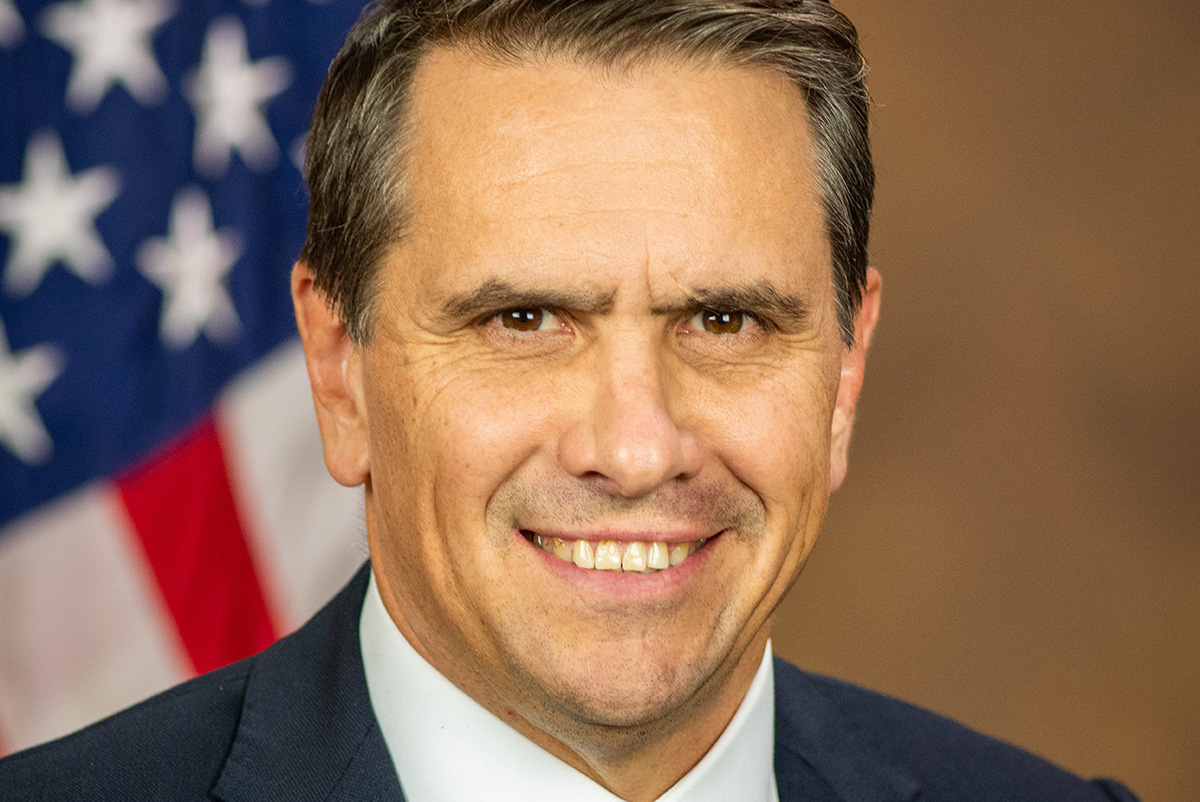
Todd Blanche, President Trump’s former personal lawyer, was sworn in as attorney general of the United States on Monday.
Blanche secured the position as the country’s 88th chief law enforcement officer on Sunday night after a contentious Senate confirmation process, ultimately ending with a 50-49 vote in his favor. All Democrats, as well as Republican Sens. Susan Collins and Lisa Murkowski, voted against him.
The confirmation hearing — and subsequent vote — brought questions surrounding Blanche’s credibility and integrity, as well as concerns about Trump’s ethical dilemmas surrounding cronyism, to the forefront.
The attorney general acts as the head of the Department of Justice, responsible for enforcing federal laws, representing the U.S. in court, and advising the president.
Blanche has a long history in Washington, beginning when he attended American University for his undergraduate education, like fellow former Trump attorney Michael Cohen. He began his legal career as an intern in the U.S. Attorney’s Office in Washington, which eventually became a full-time position.
That job eventually led him to work as a paralegal in the U.S. Attorney’s Office for the Southern District of New York while attending Brooklyn Law School at night. Blanche graduated cum laude in 2003.
Blanche left the public sector in 2014, taking a job in the Manhattan office of the law firm WilmerHale. In September 2017, he moved to Cadwalader, Wickersham & Taft LLP, where he was a partner in the White Collar Defense and Investigations practice.
There, Blanche represented several figures associated with President Donald Trump, including former New York City Mayor Rudy Giuliani and Trump’s former campaign manager Paul Manafort.
In 2024, Blanche switched from Democrat to Republican and moved from New York City to Palm Beach, Fla., where he would be closer to Trump’s primary legal residence at Mar-a-Lago.
He then served as Trump’s personal defense attorney in the New York state case that led to Trump’s 2024 conviction on 34 felony counts of falsifying business records to cover up hush-money payments to adult film star Stormy Daniels.
While serving as acting head of the Department of Justice before his official confirmation, Blanche played a central role in overseeing the department and was involved in leadership decisions tied to several controversial actions affecting LGBTQ people.
One of the first issues was transgender rights and gender-affirming care, particularly for minors — an issue the White House and Republican Party have made a key part of their broader cultural agenda and federal policy efforts.
In a letter to New York Attorney General Letitia James, Blanche declared that the Justice Department “will not sit idly by while you attempt to use your office to force harmful procedures on our most vulnerable population.”
The letter came before NYU Langone ended its gender-affirming care at the behest of the president, forcing the hospital system to stop prescribing puberty blockers and hormones to minors.
The hospital’s change in policy came after the Trump-Vance administration threatened to pull all federal funding if it continued providing the care.
Blanche wrote that “the Justice Department believes the law is clear, and anti-discrimination laws cannot be used to force NYU Langone to perform sex-rejecting procedures on children.”
“As just one example, your office’s position would require a hospital to prescribe certain medications for certain diagnoses, regardless of the hospital’s or its doctors’ independent medical determination about the propriety of such treatment,” he continued in the letter.
In addition to his anti-transgender positions, Blanche also echoed his predecessor, Pam Bondi, in taking a public stance on limiting LGBTQ-related protections at the federal level.
He aligned with Bondi’s sentiments in June 2025 regarding the U.S. Supreme Court’s 6–3 decision that restricted LGBTQ history lessons in schools and limited lower federal courts from issuing nationwide injunctions — rulings that have often blocked Trump administration policies.
Blanche called it “another great decision that came down today,” arguing the ruling “restores parents’ rights to decide their child’s education.”
“It took the Supreme Court to set the record straight, and we thank them for that,” he said. “Now that ruling allows parents to opt out of dangerous trans ideology and make the decisions for their children that they believe is correct.”
In December 2025, a Justice Department memo stated that, “effective immediately,” prisons and jails would no longer be held responsible for violations of standards meant to protect LGBTQ people from harassment, abuse and rape under the Prison Rape Elimination Act.
The law, passed unanimously by Congress in 2003, requires that incarcerated people be screened for their risk of sexual assault, including consideration of LGBTQ status, and applies to all correctional facilities.
Additionally, when the Justice Department, under Blanche’s deputy leadership and at Trump’s behest, attempted to force Children’s National Hospital in D.C. to turn over medical records related to gender-affirming care, U.S. District Judge Julie R. Rubin ruled that the effort “appears to have no purpose other than to intimidate and harass.”
Blanche also faced scrutiny over a slew of other issues surrounding his leadership during his tenure as acting AG.
The Justice Connection, a watchdog organization that works to protect current and former civil servants working in the U.S. Department of Justice, called his work so far “devastating.”
The organization said Blanche “harmed the department’s workforce, advanced the politicization of the department, undermined the rule of law, and threatened public safety.”
The group cited several issues, including what it described as Blanche minimizing the violent reality of the January 6 insurrection led by Trump supporters; investigating and attempting to prosecute President Trump’s perceived political enemies; the botched release of the Epstein Files to Congress and the public, including the release of victim and witness details and censorship surrounding the scope of Trump’s relationship with the convicted sex trafficker and pedophile; and the expansion of federal immigration enforcement in Minnesota which lead to the death of two U.S. citizens by federal officials.
Sharon McGowan, senior vice president of Policy & Litigation at the Human Rights Campaign, the largest LGBTQ advocacy group in the country, provided a statement to the Blade about Blanche’s confirmation calling it “chilling.”
“The last thing Todd Blanche deserves is a promotion,” McGowan said via email. “For months, Blanche has used his position as Acting Attorney General to advance President Trump’s personal and financial interests and to weaponize the Justice Department against the President’s enemies, whether they be transgender kids or civil rights organizations trying to help people vote. His notion of justice is warped and dangerous, and LGBTQ+ Americans deserve better.”
National
HRC condemns DoE removal of LGBTQ bullying data from federal survey
Organization cites rise in homophobic, transphobic policies, worse mental health outcomes

The Human Rights Campaign is slamming the White House — and the Department of Education — following their removal of some LGBTQ bullying data from federal data collection.
The Civil Rights Data Collection is a mandated survey of all public school districts that collects figures on a wide variety of statistics about students — including demographics that include race, ethnicity, sex, disability status, and English learner status; course-level enrollment data, such as how many students are enrolled in advanced placement or honors classes; and school climate information, such as rates of bullying, harassment, suspensions, and expulsions.
That data collection has been ongoing since 1968 — nearly six decades — but now has a major change in what questions are being asked, or not asked, that advocates are largely attributing to the Trump-Vance administration’s culture war fight on LGBTQ children in the country.
Changes to the 2025-2026 survey questions — approved by the Office of Budget and Management in July — eliminated a space for schools to report how many students identify as nonbinary, how often those students are victims of harassment and bullying, and whether school districts have policies prohibiting gender identity-based incidents.
K-12 Dive, a publication that focuses its reporting on news related to K-12 education, first published a list of these data collection changes from 2024-2025 to 2025-2026.
These questions, as well as others that included LGBTQ student topics on treatment in schools, were added to the CRDC under the Biden-Harris administration. By including these questions, policymakers hoped this would lead to increased investigations into discrimination complaints, initiate compliance reviews, and provide policy guidance to districts, according to Education Department documents.
The CRDC also eliminated the mention of “gender identity” from the definition of rape and sexual assault. The prior collection of data (before the Trump-Vance administration changed it) defined rape as something that could be done to “all students, regardless of sex, or sexual orientation, or gender identity.” Now, the new data collection questions say, “All students, regardless of sex, or sexual orientation can be victims of rape,” removing “gender identity” from the new definition.
By removing and changing definitions, this could have a real-world impact on some of the school’s most vulnerable students. According to CRDC data from 2021-2022, more than 1,800 school districts reported enrolling one or more nonbinary students.
Additional data also shows that the changes to data collection is harming public school students. U.S. Sen. Bernie Sanders (I-Vt.), the ranking member of the Senate Health, Education, Labor, and Pensions Committee released a report in April finding that the Trump-Vance administration’s efforts to all but close the Department of Education Office for Civil Rights has left students facing discrimination and harassment throughout the country without the federal recourse they are entitled to under federal law.
The Williams Institute, a think tank that collects data and conducts research on issues related to sexual orientation and gender identity, has data indicating the true number of nonbinary and transgender children is much higher — they estimate that for children ages 13 to 17, nearly 724,000 identify as nonbinary or trans.
This is in line with a slew of policies pushed by the Trump-Vance administration since their federal takeover. Within his first day in office, President Donald Trump signed Executive Order 14168, titled “Defending Women from Gender Ideology Extremism and Restoring Biological Truth to the Federal Government.” This directive attempts to make the federal definition of gender unchangeable, determined by sex assigned at birth alone.
Within his first month of his second term, Trump issued Executive Order 14187, titled “Protecting Children from Chemical and Surgical Mutilation.” The order directs federal agencies to restrict gender-affirming medical care — including puberty blockers, hormone therapy, and surgeries — for individuals under the age of 19.
He also pushed multiple anti-trans executive orders, including Executive Order 14201, “Keeping Men Out of Women’s Sports,” and Executive Order 14183, “Prioritizing Military Excellence and Readiness,” targeting trans athletes and military members, respectively.
These policies have a real-world impact on trans people.
The Trevor Project, a nonprofit dedicated to crisis and suicide prevention for LGBTQ people under 25, reported that, for the seventh year in a row, LGBTQ youth are at higher risk for suicide as a result of mistreatment and stigmatization.
Trevor Project data showed that nearly 60 percent of LGBTQ young people ages 13-17 said they were bullied in the past year, and that 36 percent of LGBTQ youth seriously considered suicide in the last year. The data shows a bigger discrepancy for trans youth, with that number hovering around 40 percent considering suicide.
HRC President Kelley Robinson issued a statement following the approval of the new data collection questions that leaves LGBTQ students’ bullying statistics under — if not completely unreported.
“If there was even a shadow of a doubt, this latest move by the Trump administration makes it abundantly clear they do not care about the safety of LGBTQ+ students, and trans students in particular,” Robinson said. “These are adults who should be protecting our kids. And instead, they are making sure bullying and harassment are not tracked. If they are not tracked, bullying and harassment cannot be prevented or stopped — which is exactly what the Trump administration wants. Parents deserve to know their kids are safe at school, and every single young person deserves dignity and safety at school. Anything less is plain evil.”
HRC has a “Welcoming Schools” initiative that they say is the “most comprehensive” bias-based bullying prevention program in the nation. The program includes LGBTQ and gender-inclusive resources for schools, help navigating special education and disability resources for LGBTQ-identifying students, and other tools to help schools become more inclusive.
This program has been in effect for nearly two decades and, according to HRC, reaches nearly 750,000 students.
The Washington Blade reached out to both the Department of Education and Office of Management and Budget for comment but did not receive a response by publication time.

Flanagan beats Craig in Minn. Senate primary after winning key LGBTQ endorsements

Gay ANC commissioner sues D.C. over police ‘failure’ to pay reward money

New LGBTQ visitor center slated for Wilmington, Del.

Jason DePuy on coping with homophobia in ‘Big Brother’ house