National
Mystery surrounds DOJ’s second gay hate crime case
Assault victim posted YouTube video describing attack
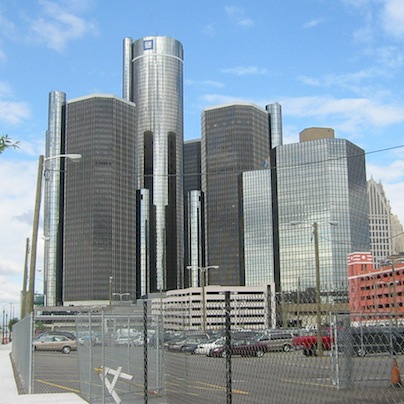

Witnesses failed to help as Everett Dwayne Avery shouted anti-gay epithets while attacking Justin Alesna as they waited in line at a Detroit gas station. Avery has plead guilty to a Federal hate crime. (photo by Carol Spears via Wikimedia)
The U.S. Department of Justice announced on Aug. 29 that a 36-year-old Michigan man pleaded guilty in court in Detroit to a federal hate crime in connection with an assault against a man he believed to be gay in March 2011.
But the DOJ and Detroit police have yet to publicly disclose whether local authorities investigated the case between the time the attack took place on March 7, 2011 and the time federal officials charged the perpetrator with a hate crime on Aug. 10, 2012.
The DOJ announcement says Everett Dwayne Avery admitted he struck the victim in the face while the two were customers in a gas station convenience store in Detroit, causing the victim to suffer a fractured eye socket and other facial injuries. Documents filed by prosecutors in federal court say Avery shouted anti-gay names at the victim during the assault.
The case represents the second time federal authorities have invoked the Matthew Shepard and James Byrd Jr. Hate Crimes Prevention Act to prosecute someone for an anti-gay hate crime. Congress passed and President Obama signed the measure into law in 2009.
The act authorizes federal authorities to prosecute hate crimes based on a victim’s sexual orientation or gender identity if local authorities are unable or unwilling to prosecute such a case or if local officials invite federal prosecutors to become involved in the case.
“Hate-fueled incidents have no place in a civilized society,” said Thomas E. Perez, Assistant Attorney General for the DOJ’s Civil Rights Division. “The Justice Department is committed to using all the tools in our law enforcement arsenal, including the Matthew Shepard and James Byrd Jr. Have Crimes Prevention Act, to prosecute acts of violence motivated by hate.”
Spokespersons for the DOJ, the FBI, which investigated the case, and the Detroit police department said they could not immediately determine whether Avery had been apprehended and prosecuted by the police before federal officials filed the hate crime charge against him on Aug. 10.
The DOJ also did not say why it chose not to disclose the victim’s name. The victim, Justin Alesna, 23, posted a YouTube video describing the anti-gay attack less than two weeks after it happened. More than 3,400 people have viewed the video since its posting, according to YouTube.
Alesna’s assertion in the video that the convenience store clerk and at least two customers in the store refused to come to his aid and the clerk refused to call police were widely reported by news media outlets in Detroit, including the local CBS affiliate.
DOJ spokesperson Mitchell Rivard said the FBI and federal prosecutors became involved in the case after being contacted by the statewide LGBT organization Equality Michigan. Rivard said local law enforcement officials supported the federal involvement because Michigan’s hate crimes law doesn’t cover hate based on someone’s sexual orientation.
Rivard said he couldn’t immediately determine whether local police and prosecutors attempted to charge Avery with a felony-related assault even though the state lacks a hate crimes law that covers anti-gay hate crimes. A Detroit police spokesperson didn’t immediately respond to queries from the Blade to determine whether police opened an investigation into the case.
Under the federal hate crimes law, Avery faces a maximum sentence of 10 years in prison. His sentencing is scheduled for Nov. 28 in the U.S. District Court for the Eastern District of Michigan.




Florida
Former Fla. gubernatorial candidate Andrew Gillum arrested on drug charges
Democrat narrowly lost to DeSantis in 2018, later came out as bisexual
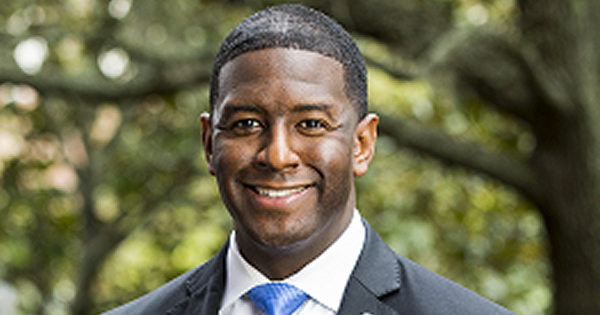
Andrew Gillum, the former Democratic nominee for governor of Florida and former mayor of Tallahassee, was arrested on drug possession charges in Alabama last week.
Police in Daphne, Ala., said they pulled Gillum over for erratic driving and found marijuana and methamphetamine in his vehicle. He was charged with possession of marijuana and unlawful possession of a controlled substance, according to the Daphne Police Department. Jail records show he was arrested on July 2 and released on July 3, the Associated Press reports.
Gillum, the first Black nominee of a major political party for governor in Florida, lost the 2018 election to current Republican Gov. Ron DeSantis in a highly contentious race.
Once considered a rising star in national politics, Gillum served in Tallahassee’s local government, first as a city commissioner and then as mayor of Florida’s capital from 2014- 2018.
The Daphne Police Department said officers stopped Gillum’s vehicle around 10:45 p.m. and initiated a probable cause search after one officer noticed a glass pipe on the center console.
During the search, officers found several rolled marijuana cigarettes and three packages containing a substance that tested positive for methamphetamine, police said.
The day after his arrest he was charged with possession of dangerous drugs, use or possession of drug paraphernalia, and possession of marijuana.
In 2020, Gillum was involved in a similar incident when he was found in a Miami Beach, Fla., hotel room with a man identified as an escort who had apparently overdosed on drugs. Police also found three bags of suspected crystal methamphetamine in the room. The man survived, and no one was ever charged with a crime.
Later that year, Gillum came out as bisexual during an appearance on “The Tamron Hall Show,” where he discussed his struggles with drug and alcohol addiction and his decision to seek treatment following the 2020 incident.
In the same interview he shed light onto this, saying his substance use was a byproduct of the emotional struggles he experienced after losing the 2018 gubernatorial race to DeSantis.
This is not the first time Gillum has faced legal scrutiny.
During his 2014 mayoral campaign, he faced allegations of misconduct after hiring private equity investor Adam Corey as his campaign treasurer, raising questions about a potential conflict of interest. However, the FBI ultimately concluded there was no conflict of interest.
Pennsylvania
Philadelphia murder suspect remains at large
Two killed, one injured in attacks motivated by victims’ sexual orientation
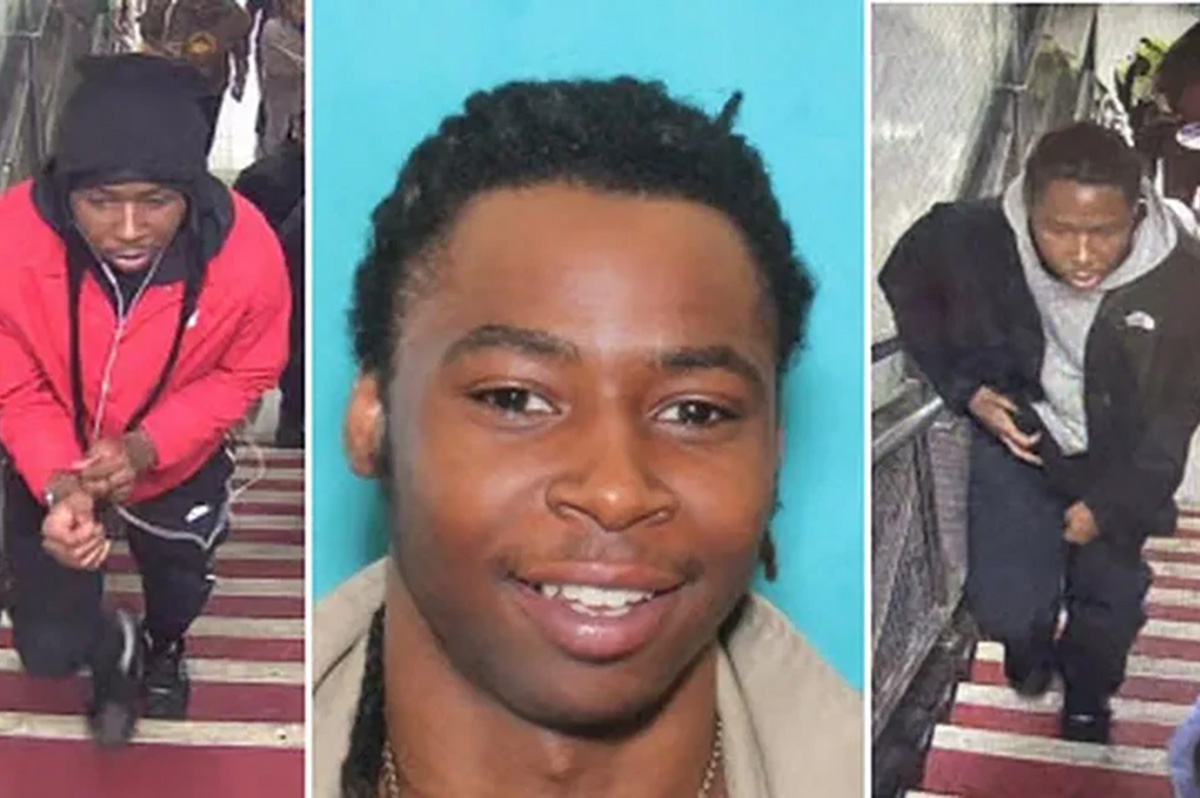
Police seek the public’s support in finding a suspect wanted in connection with three Philadelphia shootings, including two murders, who may have targeted his victims because they were gay. All three shootings took place near Hunting Park Recreation Center between May 29 and June 26.
The suspect is 21-year-old Jahylin Melchur, who has not been located by police and is not in police custody as of July 7. Police seek the public’s support in tracking down the suspect, whose image was captured on surveillance cameras. Previous reporting underlined that Melchur should be considered armed and dangerous.
Each of the victims was found partially clothed between 10 and 11 p.m.
On May 29, a 55-year-old in Juniata Park was found two miles from the rec center. The victim, who survived the encounter with critical injuries, said a man approached him and announced his intention to rob him, before shooting him in the elbow and torso.
Martin Higgins, 45, was pronounced dead on the bleachers of the rec center’s baseball field on June 20, suffering from a gunshot wound to the abdomen. Sharef Holman, 29, was found near the basketball courts on June 26, suffering from multiple gunshot wounds. He was transported to Temple University Hospital but died shortly thereafter.
Deputy Police Commissioner Frank Vanore declined to answer the Philadelphia Inquirer’s question regarding whether the victims may have met Melchur on a dating app, citing the ongoing investigation. Sources told the Philadelphia Inquirer that investigators are exploring this possibility
Although robbery may be at least part of the motive in the first shooting, other movies are unclear.
NBC10 reported that law enforcement sources told the station all three victims were targeted because they were gay, but the Philadelphia Police Department did not confirm this.
The Philadelphia Police Department replied to PGN’s questions with an email stating, “This remains a very active investigation, and investigators are looking at all aspects of the case, including underlying motivations for committing these crimes.
“At this point, we can confirm that Melchur is wanted for two homicides by shooting and one non-fatal shooting, all of which occurred in the Hunting Park area.
“The investigation has not established that the victims were specifically targeted because of their sexual orientation.”
The Philadelphia Police Department is urging anyone with information to contact the Homicide Unit at 215-686-3334 or submit an anonymous tip by calling the PPD Tip Line at 215-686-TIPS (8477).
(This story is republished with permission of the Philadelphia Gay News.)
National
Madonna roundup: Reviews, sales, and love for ‘Danceteria’
Pop legend’s new album ‘Confessions II’ earning raves
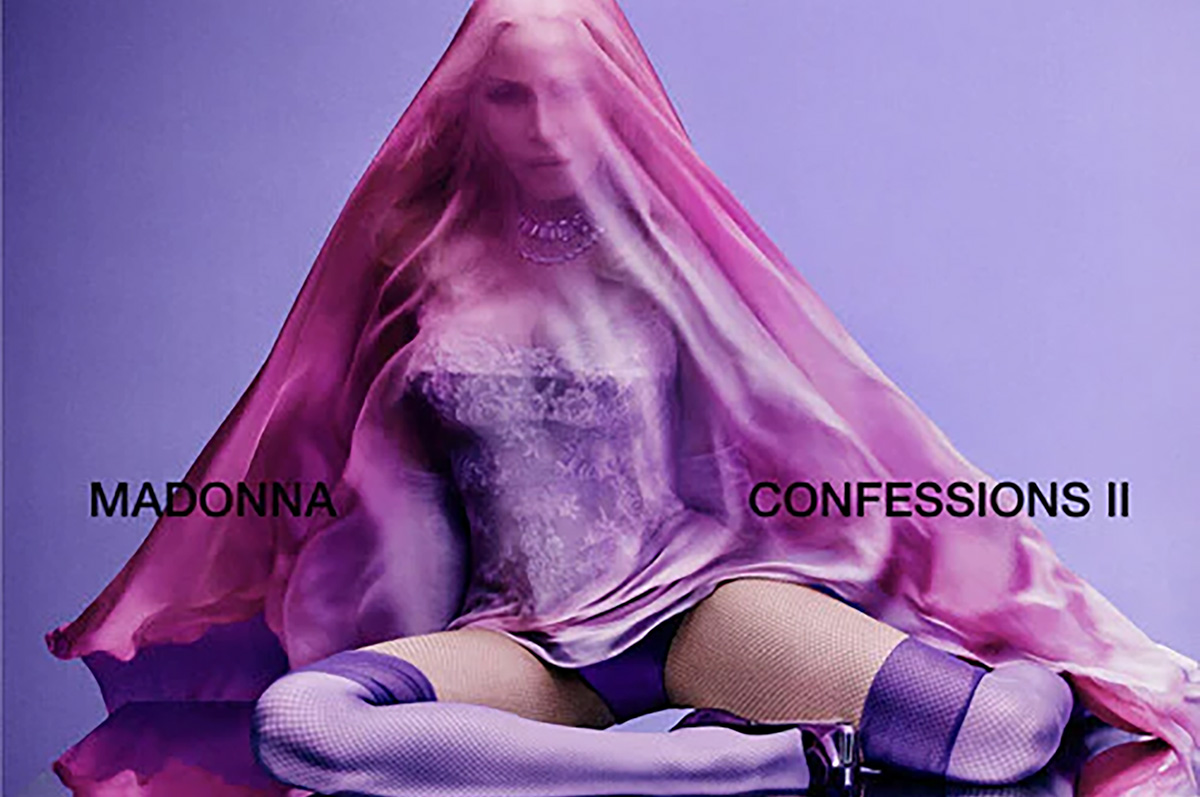
Madonna isn’t just back, she’s ubiquitous.
From a Times Square takeover to Graham Norton’s couch, the pop legend is busy promoting her new album, “Confessions II,” a sequel to 2005’s “Confessions on a Dance Floor,” that is earning rave reviews.
“Madonna’s back in peak form with a fresh and honest dance record that’s not only her best in 20 years, but a genuinely vital addition to her canon,” says Pitchfork.
“Facing grief and loss has made Madonna’s music deeper than it’s been in 20 years, but also more alive,” the Guardian proclaims.
“If everyone in the club is a work of art, as ‘Danceteria’ says, then to live loudly is to make an indelible mark,” according to Vulture.
The album features upbeat dance productions along with some melancholic views on death and loss. On the song “Betrayal,” she reflects on the recent death of her stepmother Joan, singing, “You’ll never take my mother’s place … you betrayed me, you enslaved me.”
On “L.E.S. Girl,” she revisits her early days living on the Lower East Side and struggling to pay the rent. “Bizarre” seems to reference her failed 1980s marriage to actor Sean Penn. “Test” is a duet with daughter Lola Leon, in which she sings, “I wish I knew / The pain I’ve caused / My butterfly / Was always being watched.”
But the emotional high point of the album comes on “Fragile,” which she wrote about the death of her brother Christopher. The two were close early in Madonna’s career and he designed sets for early tours, including “Blonde Ambition.” But they had a falling out after her marriage to Guy Ritchie and he wrote a scathing tell-all book about his sister that led to years of estrangement. The two reconciled after Christopher’s cancer diagnosis and shortly before he died in 2024 at age 63. She sings, “Late last night I was fast asleep/You came to me in a dream/You said, ‘Don’t forget about me/Don’t forget to be happy.’”
Death emerges again but in a much more upbeat context in “Danceteria,” an ode to the iconic New York nightclub that has emerged as a gay favorite single and seems destined to be the song of the summer in queer nightlife. She recounts her pre-fame days trying to convince a DJ to play her first single “Everybody” at the club and name checks Jean-Michel Basquiat, Keith Haring, best friend Debi Mazar, and DJ Mark Kamins on the track.
Streaming numbers and sales are strong for the new album with projected first week sales of 100,000 ensuring a No.1 debut in the U.S.

Ron Singer, owner of popular Mount Vernon gay bar Leon’s, dies

Egyptian authorities refuse to allow gay cruise to dock in country

‘She’s the He’ brings gender-bending twist to teen comedy genre

Supreme Court ruling on trans athletes is a public health story

Queer media dominates 2026 Emmy nominations

‘My Favorite Sociopath’ debuts at Shepherdstown’s CATF

Under-the-radar Delaware beach towns smart buyers are targeting

In Trump’s divided America, Michael Weinstein’s AHF responds

Turkish authorities refuse to allow gay cruise to dock in country

When a church fears the rainbow
-

 Theater4 days ago
‘My Favorite Sociopath’ debuts at Shepherdstown’s CATF
-
Real Estate4 days ago
Under-the-radar Delaware beach towns smart buyers are targeting
-
Politics3 days ago
In Trump’s divided America, Michael Weinstein’s AHF responds
-
Turkey3 days ago
Turkish authorities refuse to allow gay cruise to dock in country