Books
Perez Hilton seeks forgiveness
New biography chronicles shift from gossip to fatherhood
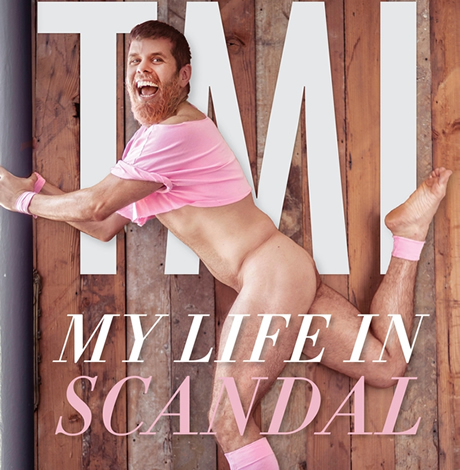
‘TMI: My Life in Scandal’
By Perez Hilton
c.2020, Chicago Review Press
$26.99/229 pages
You’re allowed to change your mind.
You grow, get a few experiences under your belt, and things might look a bit different. You can have a change of heart then, and pivot your life in a different direction. You can take do-overs and take-backs, but carefully. And as in the new book “TMI” by Perez Hilton (with Leif Eriksson and Martin Svensson), you can ask for forgiveness, too.
If you knew Mario Armando Lavandiera Jr. when he was a child, you’d be surprised at the man he is today. He says he had a good childhood but he was a “different” kid then, and was often bullied: among other indignities, his classmates called him “the Fat Kid” because he loved to eat.
That last part hasn’t changed. What has is that Lavandiera is now thinner, famous, and known by a nicer name: Perez Hilton. And no, if you’re wondering, Paris Hilton “never bothered” to sue him over the lookalike name, “though she definitely could have.”
This transformation didn’t happen overnight.
By the time he moved to New York to attend college, Hilton knew for sure that he was gay; while there, he gained friends, a pile of debt, and a mitt full of credit cards. Down but not out, he started a series of jobs and launched a series of websites that both spanned time in New York and L.A., and that got him into trouble in one way or another. Then a photogra-friend leaked a few celeb pictures his way, Perez posted them on his website, and he was famous, literally overnight.
And that was good – for a while. Hilton partied near-constantly, busted into celebrity events, became “wifey” with Gaga, clubbed with Jessica Simpson, and hung with Paris Hilton. And then he made a video for a national cause that caused him to see the hurt he’d left.
Could it be that the infamous author and gossip blogger Perez Hilton has softened?
Yes, mostly. There’s a whole lot less venom inside “TMI” than you might expect from Hilton, but fans won’t be entirely bereft. There’s still a little spark of gossip here, names dropped, and stories propped up and left on the roadside for embarrassment or for examination. Those are accompanied in this memoir by a glint-in-his-eye tone, and the sneakiest of snark hidden here and there, but that’s often tendered by tenderness.
The surprise – or the shock, depending on your level of fandom – is that Hilton apologizes to several people he feels he hurt; and he expresses a degree of regret for having lost good, close friends because he reported gossip about them despite the friendship. It’s contrition that feels like it came from a battered schoolyard bully, only genuine.
Hilton is a father now and he writes with unabashed love for his kids, from a refreshing, seemingly happier place in his life. “TMI” still includes plenty of Hiltonized Too Much Information, some snickers, and a hint of tattle-tale, but if you’ve never been much of a fan, here’s a chance to change your mind.






Books
New book reveals what we can learn from animal sex
‘Poking the Squid’ on homosexuality, gender swapping, and more
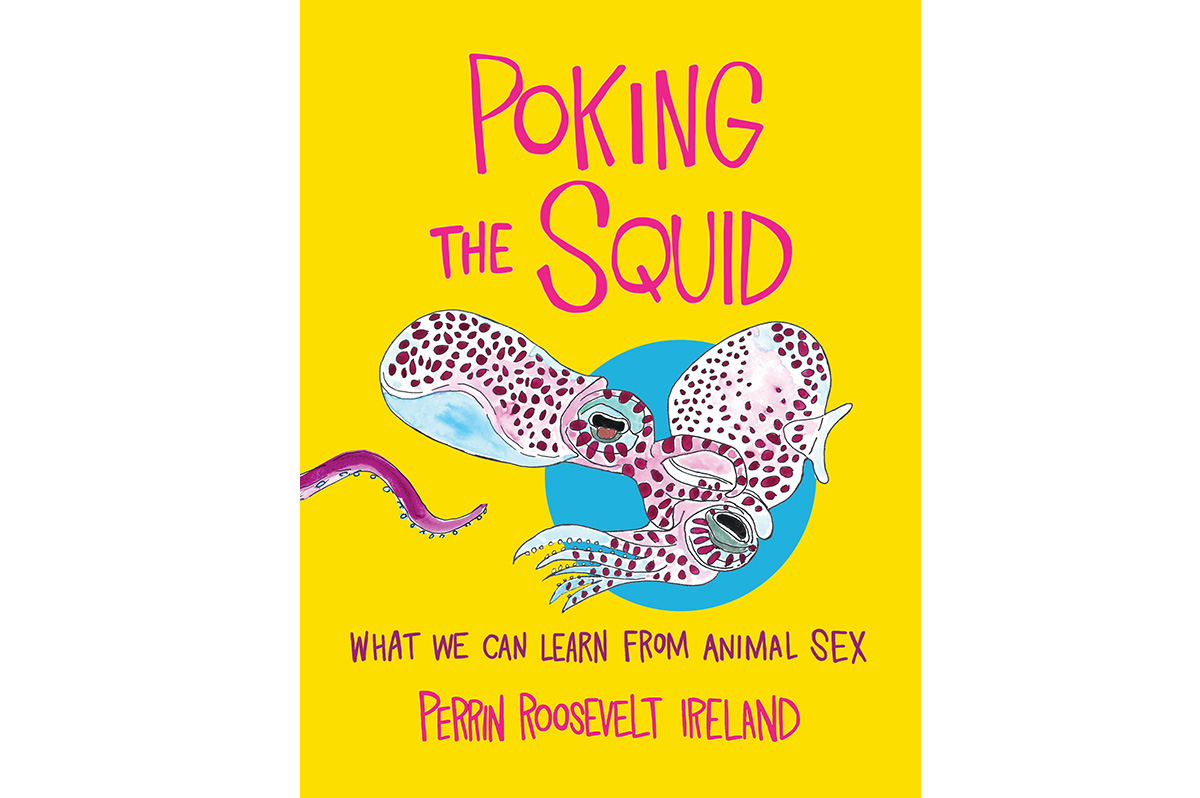
‘Poking the Squid: What We Can Learn from Animal Sex’
By Perrin Roosevelt Ireland
c.2026, W.W. Norton
$29.99 241 pages
Birds do it.
According to Cole Porter, bees do, too, but it’s not exactly what he imagined. Wild and tame, avians, insects, and mammals all have sex – although not always as you’ve been told or for reasons you might think. Even educated fleas do it and, as in the new book, “Poking the Squid” by Perrin Roosevelt Ireland, humans can learn from them all.

If you read through scientific papers on animal reproduction, you might notice something unusual: for scientists, the word “sex” means a lot of different things.
Says Ireland, “It’s used to describe behaviors, biology, life histories, and more.”
That might be because animals are not simply binary.
Take, for instance, hyenas. It’s easy for the casual observer to mistake a male hyena for a female and vice versa because of stereotypes of anatomy. Mating, for hyenas, requires subordination for the male and a nifty trick on the part of the female’s body to get things done.
Our feathered friends are no birdbrains, either: black-browed albatrosses were once thought to be monogamous but global warming seems to have changed their nesting habits sometimes. Male flamingos have sex with one another, as a territorial thing; other birds and animals form same-sex pairs for other reasons.
The Chinese mantis eats her mate after fertilization. Female snakes, alpacas, guinea pigs, and monkeys are anatomically able to enjoy sex. Genitalia between species varies quite a bit; in fact, the vaginas of ducks “are highly complex.” Lionesses will mate up to 100 times when in heat. Female damselflies will change into a “third sex” to avoid overly aggressive mating males. Bearded dragons can change their sex, if needed, as can yellow clown goby fish. And seahorse pregnancy and birth sparked a book banning in Tennessee.
So, asks Ireland, if animals, including us, vary so much in biology and life, “… why are we using the word sex like it means something, anything, consistent?!”
Pick up “Poking the Squid,” page through it a few seconds, and you’ll see that the information here is largely told through cartoon-like drawings mixed with captions. It seems to be something on the lighter side, but don’t let that artwork fool you.
Author Perrin Roosevelt Ireland offers readers solid information that cozies up to the scholarly, with hard science, philosophy, feminism, and quotations from researchers to support it, thus furthering the narrative and hitting the points squarely. If you see the art and expect something lighthearted, comic, and small-talk-worthy, you could be disappointed.
On the other hand, if you want solid, wryly serious facts, you’re in for a treat.
There’s lots of learning to be gleaned here, and some slight nudge-wink whimsy to emphasize the absurdity of wrong-headed thinking. This can make readers feel like they’re in-the-know on the jokes, and the playfulness balances the seriousness of the information well.
So, serious, scholarly, or slightly silly, none of these are negative but you’re going to know what you want from a book like this. For the right reader, someone in the mood, “Poking the Squid” is wild.
The Blade may receive commissions from qualifying purchases made via this post.
Books
‘Transcendent’ a tough but important read
Laverne Cox’s memoir recounts horrific abuse as a child
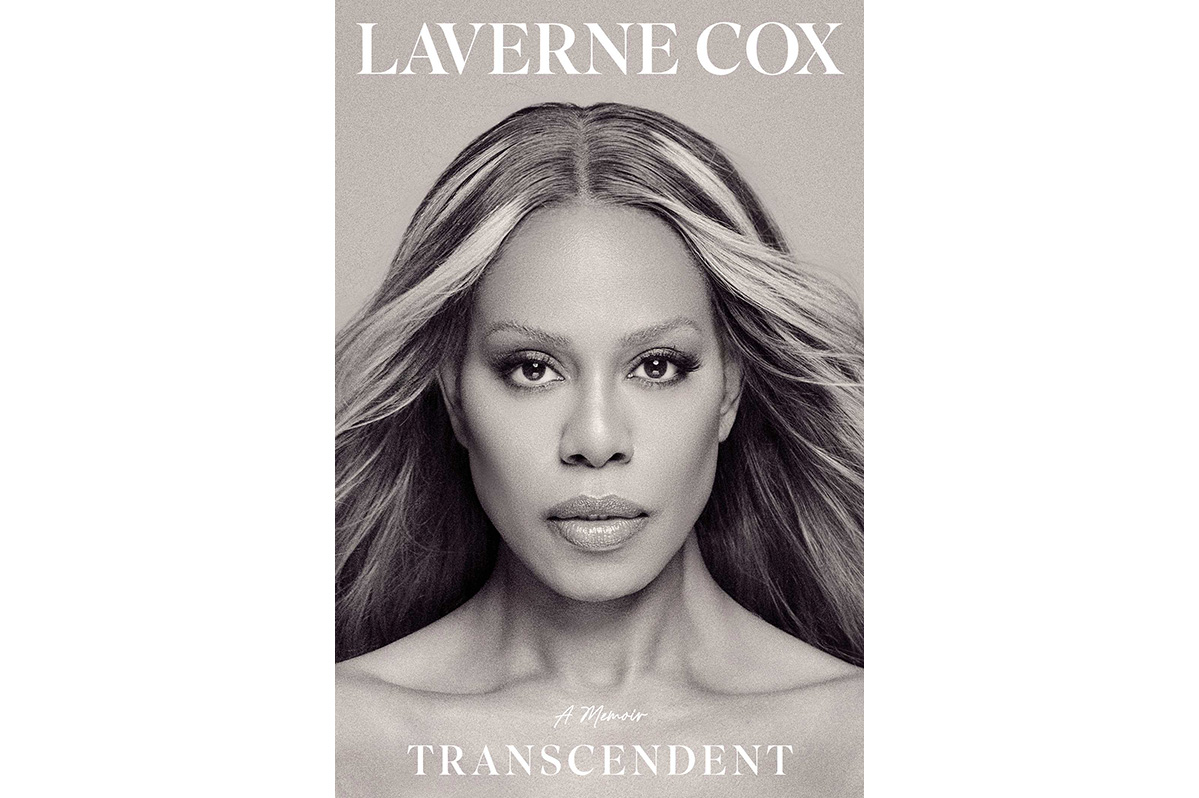
‘Transcendent: A Memoir’
By Laverne Cox
c.2026, Gallery Books
$30/238 pages
OK, let’s just say it: You’re tired of lies.
They come from above, behind, from either shoulder. They’re repeated, laid out in a line, told as if they’re true but they’re not. You wish people would stop lying to you. As in the new memoir “Transcendent” by Laverne Cox, you wish you could tell the truth about yourself.
Sissy.
If the bullies in the neighborhood weren’t constantly calling Laverne Cox that name, then Cox’s mother was. “Sissy,” was just one word, though; the others were worse. The boys would say those things while they beat Cox, when they could catch her. Her mother screamed at her gentle child who didn’t like “boy” activities.
Even at eight years old, says Cox, “I was a prim and proper lady.”
Despite the verbal abuse about her perceived feminine behavior and a furtive, failed attempt at conversion therapy, Cox’s mother sent her and her brother to the Alabama School of Fine Arts, where Cox learned to dance. It was a lifeline for her, and the talent gained there helped Cox get into college in Indiana.
From there, Cox expected to find fame and fortune in New York City.
And yet, the abuse she suffered as a child held Cox back, and the words “There is something wrong with me” became a daily mantra.
“I didn’t know how to say it.” Cox says. “I’m a girl.”
There were therapy sessions to get to that point, as Cox learned the language and skills needed to speak the truth. Landing a sense of style helped, as did her brother’s support, a handful of friends, and happy, scent-infused memories of her mother’s make-up table.
At each step, Cox says, “I was expressing myself, I was also allowing myself to edge closer to my girlhood.”
Let’s start here: “Transcendent” is a difficult read – not for style, but for substance.
From her earliest memory of being sexually abused as a toddler; to verbal and physical abuse from many sources; to what, judging by photo captions, seems perhaps like forgiveness, author Laverne Cox glosses over nothing. Be ready, in other words, for pages and pages of memories that, like a roller-coaster, will make you cringe and want to hide your eyes, although doing so would be a mistake.
As this book progresses, Cox’s story does, too. We see a child who knows a truth but has no words for it. The child becomes a teen with a bursting sense of self, then a young adult who craves love as she’s stretching her wings. By the time Cox advances to writing about her career and the abuse is (mostly) over, readers will breathe a well-deserved sigh of relief. Whew, you’ve winced through a harrowing tale to reach a satisfying but not complete update.
Fans of Cox’s work will want “Transcendent,” as will anyone who’s transitioned, is thinking about it, or loves someone who has. It’s a rough read, but a necessary one, then, and that’s no lie.
The Blade may receive commissions from qualifying purchases made via this post.
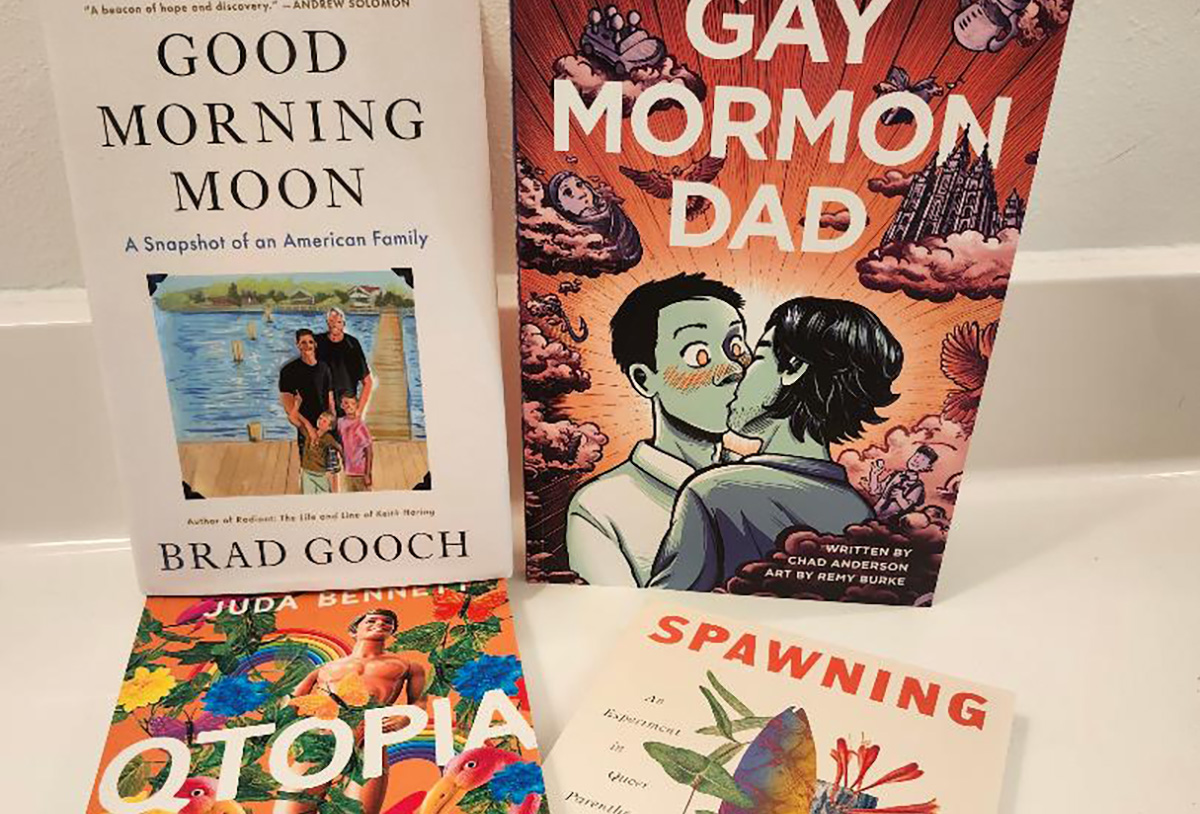
Books for Pride by various authors
c.2026, various publishers
$18.95 – $29.00
How many times have you marched so far this month? Seems like there’s always a reason to gather and walk during Pride, but save some time for yourself, too. You’ll want to reflect, rest, and read these great books about living your best Pride month.
No doubt, you’ve thought once or twice about stepping away from society as it is, and moving somewhere more accepting. So read “Qtopia: A Memoir of Love, Land, and Liberation” by Juda Bennett (University of Wisconsin Press, $18.95), the story of doing exactly that, and how it turned out.
Back in the ‘70s, Bennett fled the suburbs and all it represented, and went “back to the land,” to a commune named Lavender Hill. Some of the places he’d lived before then had promised way more than they delivered, but Lavender Hill was different – more rural, more open, more queer, much better. But you know all good things must end, and that includes “queer utopia.” The only thing left was to re-enter the mainstream, a journey unto itself, and one worth reading.
Speaking of memoirs, in “Gay Mormon Dad” by Chad Anderson, art by Remy Burke (Graphic Mundi, $21.99), you’ll read about Anderson’s life as a husband (to a woman), a father, and a man who seemingly had it all but it wasn’t right, and he wasn’t happy. He was gay, but acknowledging it, telling his family and his church family, could mean the loss of everything he loved. It’s a story that may be familiar to you, in some way, and it’s a quick read.
For most of his life, Joseph Osmundson dreamed about getting pregnant and having a family. The former didn’t happen and, as for the latter, as he writes in his memoir, “Spawning Season: An Experiment in Queer Parenthood” (Bloomsbury, $27.99) the journey for a gay man to become a father can have plenty of roadblocks.
When two women approach Osmundson to be a sperm donor, it appears that his ultimate dreams are about to come true. Things go swimmingly – until race enters the conversation. Are the words “donor” and “dad” the same? Read this powerful book, and think about it.
And finally, if parenthood as a gay person is something that’s a case of maybe-later, then “Good Morning Moon: A Snapshot of an American Family” by Brad Gooch (Harper, $29) is a book to find. It’s the story of late-life love, surrogacy, and identity as Gooch learns about himself as he learns to be a good Dad. This is a great book for older fathers, and anyone who’s on the parental fence, later in life.
If these great books aren’t enough for you, or if you’re looking for something different for Pride, then head to your favorite bookstore or library and ask the staff there to help you find your next best read. They’ve got a lot of books to put in your hands, a lot of sunny afternoons full of relaxing and promise, so march on out, get a new book, and happy Pride!

New book reveals what we can learn from animal sex

Who might replace Lindsey Graham? The contenders and their LGBTQ records

PHOTOS: Westminster Pride

Un terremoto también se vive desde el exilio

PHOTOS: Emerald City Pride

Mr. Henry’s celebrates 60 years of proud inclusivity

It’s good to see some justices standing up to Trump

Egyptian authorities refuse to allow gay cruise to dock in country

Queer media dominates 2026 Emmy nominations