Opinions
Opinion | D.C. statehood is an LGBTQ equality issue
Lack of congressional representation rooted in racism
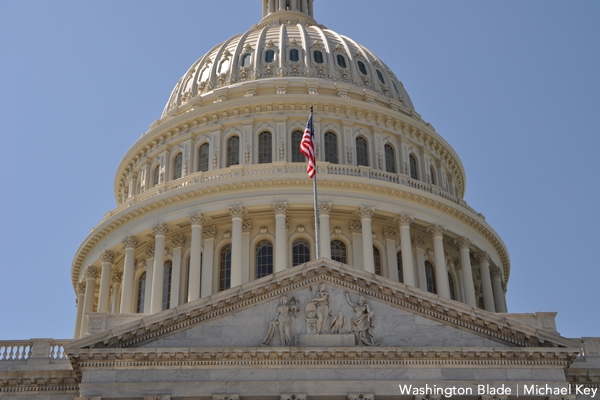
Washington, D.C. has long been a power center for the LGBTQ community.
Our community has made a deep imprint on Washington, D.C. life, politics, and culture – from Frank Kameny and the Mattachine Society, to Whitman-Walker filling the vacuum left by the Reagan administration when the HIV/AIDS crisis hit, to Dupont Circle and the modern equality movement.
Currently, the city has the highest percentage of LGBTQ individuals in the United States, with 9.8% of the population identifying as members of the community.
Throughout the DMV region, the LGBTQ+ community matters – Maryland was one of the first states in the nation to pass equal marriage rights for same-sex couples at the ballot box, a movement I was proud to be part of.
The State of Maryland has full authority over its own family laws, without its budget being subject to approval of Congress. This is important.
In Maryland, we have been able to create positive change not just on the local and state level, but also on the federal level. I am fortunate enough to live in, and represent, a jurisdiction that has not just full congressional representation, but strong advocates in Congress.
In College Park, we appreciate having Steny Hoyer, the second most powerful member of the House of Representatives, as our representative and advocate. We also appreciate having our two senators – Chris Van Hollen, a rising leader in the Senate, and Ben Cardin, who holds key leadership roles in several Senate committees.
All of this makes it that much more frustrating that the District of Columbia — the center of our region and a place where many College Park residents go to work, shop, and eat — lacks full representation in Congress, and lacks full control over its own laws and budget.
Our national leadership can ignore the interests and needs of our region, and restrict the ability of D.C. residents to decide their own policies and set their own rules, without any fear of serious repercussion. This is unacceptable. As leaders and as a community that votes, we can do better.
The continued lack of congressional representation for the District of Columbia is rooted in racism and D.C.’s historic status as an important power and cultural center for African Americans. Our country’s resistance to Home Rule and political power for the local community in D.C. stemmed from African-American power in Washington, D.C., starting with Reconstruction. White Americans spoke openly about the desire to keep power in the capital city away from its African-American population.
As such, statehood for the District of Columbia is critical not only to give full representation for its strong and vibrant African-American community, but also its strong and vibrant LGBTQ+ community. Without full and equal representation in Congress, the significant advances that we have made locally for the LGBTQ community will not be reflected in our national leadership, and the ability for our community’s local leaders to pursue advances on the local level is deeply hindered.
For me, this isn’t just a political issue, it’s a personal one.
When my husband Dave and I joined Deane and Polyak v. Conaway, the lawsuit for equal marriage rights for same-sex couples in Maryland, we learned the importance of representation of our community’s interests in our state and federal legislative bodies. After the Maryland Court of Appeals decided against marriage equality in Maryland by a vote of 4-3, we had to turn to the Maryland General Assembly to secure our rights as a married couple.
We now are looking to the United States Congress to advance equality on the federal level. Unfortunately, congressional representatives like Sen. Kyrsten Sinema, who claim to believe in equality for the LGBTQ equality, continue to stand in the way of the Democratic majority’s will to grant full statehood to the District of Columbia.
By supporting the filibuster, Sinema and others like West Virginia Sen. Joe Manchin continue to prevent Congress from giving a full voice to D.C.’s LGBTQ community, and all D.C. residents.
Critical civil rights legislation like the Equality Act, which would help ensure recognition of full civil rights for the LGBTQ community would be much more likely to pass if D.C. had two senators directly accountable to D.C. voters. This would benefit LGBTQ+ and allied residents of College Park, the entire State of Maryland, and the whole country.
It is time for all fair-minded legislators to stop standing in the way and allow D.C. statehood to pass both chambers of Congress.
Patrick Wojahn is mayor of College Park, Md. The opinions expressed here are his own.


Commentary
When a church fears the rainbow
Puerto Rico pastor objected to Pride symbols outside congregation
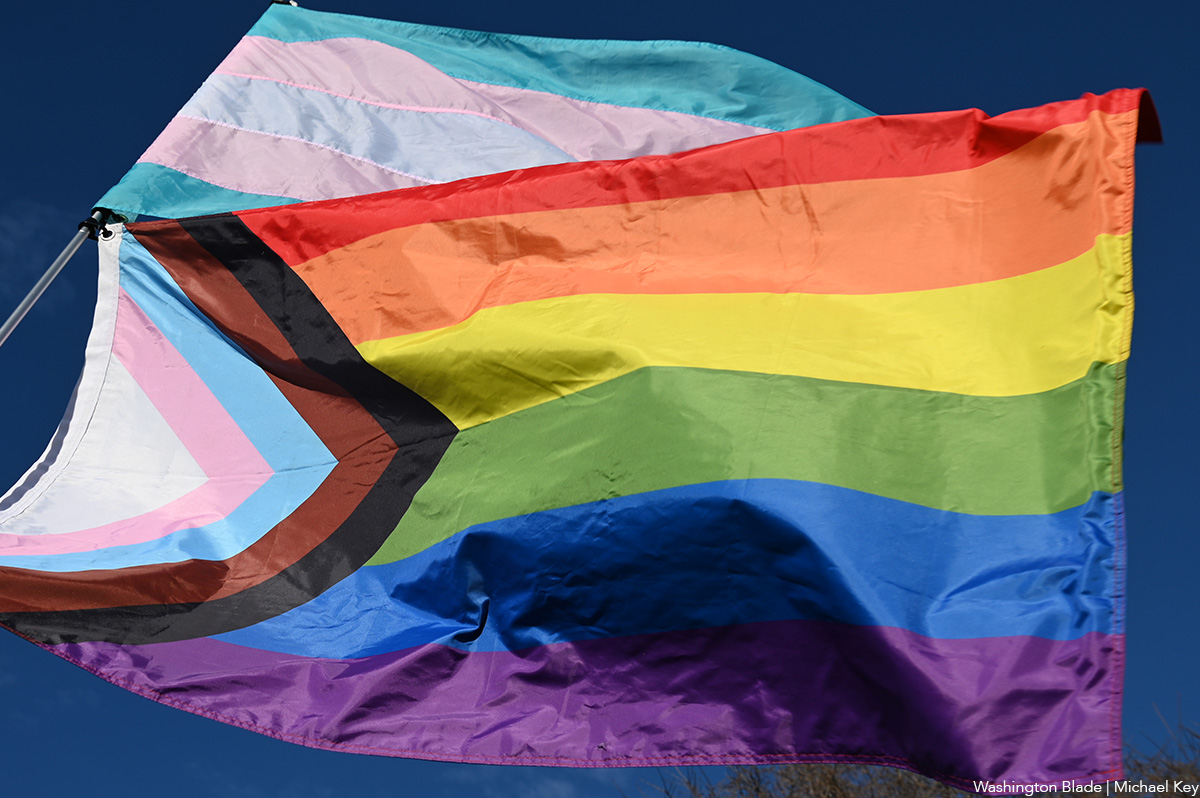
There are moments when an incident stops being merely a local story and begins to reveal something much deeper. What happened on June 28 outside One Church, in Comerío, Puerto Rico, belongs in that category.
I do not know who painted the rainbow colors on the asphalt and on a roadside guardrail. I do not know what motivated them, and it is not my place to justify their actions. If someone believes a law was broken, there are authorities and legal mechanisms to address that. That is not the point of this reflection.
The point is the words that followed.
Hours after those colors appeared, Pastor Jorge J. Santiago Reyes went live on social media. He said he felt threatened. He described what happened as a physical attack against his church. He appeared angry and disappointed. He called those who painted the rainbow “cowards” and “charlatans.” He expressed frustration with the support that, according to him, the municipal government of Comerío has shown toward the LGBTQ community, and with those who support posts related to that community. He repeated several times that the people responsible had “crossed the line.” He ended his message by saying, “These charlatans have to be stopped.”
As I listened to his words, I stopped thinking about the paint.
I began thinking about fear.
There is one phrase the pastor repeated again and again: “They crossed the line.” Yet he never explained what that line was. If he was referring to a possible violation of the law, that is for the authorities to determine. If he meant respect for property, there are also procedures to deal with that. But when that line remains undefined and the message begins to associate a rainbow with a threat, the question changes. It is no longer only about a guardrail or a road. It becomes a question about what boundary, in the pastor’s view, was actually crossed.
Paint can be erased.
A brush can cover the asphalt and return a guardrail to its original color.
What does not disappear so easily is the meaning of those colors.
And perhaps that is where the real conflict begins.
It is significant that this happened precisely on June 28, the day when the LGBTQ community remembers a history marked by exclusion, violence, and the struggle for dignity. What represents memory, hope, and the possibility of living without hiding for millions of people was presented by others as a threat.
I do not know why someone painted that rainbow. I do not need to know in order to ask whether those were the words society should expect from a pastor.
A religious leader may feel hurt, frustrated, or angry. What he cannot forget is the responsibility that comes with every public expression. His words do not end when a livestream ends. They move beyond the space of his church, reach people who may never share his faith, and help shape the way others see those who think differently. When a pastor calls other people “charlatans” and “cowards,” says they “have to be stopped,” and turns a rainbow into evidence of an attack, he is no longer speaking only from frustration. He begins to build a discourse that can feed rejection toward a community far larger than the people responsible for that act.
There was another moment in the livestream that caught my attention. The pastor reminded viewers how much he has served Comerío, how much he has accompanied his community, and how much he has worked for it. I have no reason to question that service. I am sure many people can testify to the good he has done.
That is precisely why it was difficult to hear.
Pastoral vocation is not about reminding a town of everything one has done for it when conflict appears. Service does not lose its value when it goes unrecognized; it loses something when it becomes an argument to claim a moral position from which to speak down to others. A person who serves does so because that is the nature of the calling, not because that service grants authority to discredit those who think differently.
As a pastor, that part of the message left me deeply uneasy. Not because I expect ministers of God to be perfect. We are not. But because our words carry weight, we are called to speak with greater responsibility. Some expressions build bridges. Others raise walls. Some words invite encounter. Others end up justifying rejection.
The paint will disappear. A brush will be enough to cover the asphalt and return the guardrail to its original color.
The words will not disappear as easily.
They will remain recorded in a video, shared again and again on social media, and remembered by those who heard them. They will remain long after the last trace of paint has been erased.
When this episode is remembered, it probably will not be because of the rainbow that appeared outside One Church, in Comerío, Puerto Rico.
It will be because of the words a pastor chose to use when speaking about it.
And that difference changes everything.
Opinions
D.C. queer faith leaders commit to exist, resist, persist
Pride Interfaith Service features remembrances, celebration

Last month, Center Faith hosted the 43rd annual Pride Interfaith Service titled “In Faith We Exist. Resist. Persist!” at St. Mark’s Episcopal Church in Washington, D.C. Amid torrential downpours, queer leaders and people of faith from Muslim, Catholic, Episcopalisn, Unitarian Universalist, Jewish, Pagan, and many other communities gathered in a church immediately behind the John Adams building.
In the two-hour service, leaders spoke about the power of faith in the fight for LGBTQ rights and against Chrisitan nationalism, all while honoring three lifelong leaders in the D.C. LGBTQ interfaith community.
The service began with Rev. Michelle Morgan welcoming everyone to St. Mark’s Episocal Church, followed by greetings from Robert Sanchez, representing The DC LGBTQ+ Community Center, Japer Bowles, representing the D.C. Mayor’s Office of LGBTQ Affairs, and Danielle Goldstone, representing the Interfaith Council of Metro Washington.
Rev. Ebony Peace, a Unitarian Universalist community minister and one of the service organizers, welcomed everyone with a blessing:
“Today in this interfaith worship service, we celebrate our existence. We honor those past and present who resist oppression. We acknowledge today that the fight for freedom and dignity is not over. We will be here. We will not be silent, and we will not back down.”
Representatives from diverse faith traditions followed by creating and blessing the space with a libation ritual by Rev. Elder Dr. Akosua McCray from Unity Fellowship Church of Washington, DC, a recognition and grounding in the elements by David Dashifen Kees from The Firefly House, along with readings from Aura Kaiser (DC Queer Muslims), Daisaku Leslie (Sokka Gakkai International), and Jonah Richmond and Rachel Dubin from Jewish temples throughout the Washington, DC area.
Rev. Cathy Alexander and her partner Dr. Carla Sherrell shared an offering on love, an interpretation of 1 Corinthians 13 and a contemporary meditation by Rev. Tess Baumberger on behalf of the Metropolitan Community Church in DC, followed by words of joy by Rev. Thomas Wieczorek from the National Catholic Church and silent meditation led by Joe Izzo from the Friends Meeting of Washington.
After songs and responsorial affirmations, Bishop Mariann Budde, who is perhaps best known for delivering the homily at the January 2025 interfaith prayer service immediately following Donald Trump’s second presidential inauguration, spoke at the service. In her gentle but determined voice that reverberated throughout the space, she asserted that “I’m here tonight to affirm the unshakable goodness of each person here and of every person, and to say without equivocation that what needs to be resisted by each and everyone one of us is anything that would negate that goodness, that would cause any of us to feel less than worthy of love and belonging.”
She was followed by a beautiful call and response song led by Cantor Ze’evi Tovlev from Temple Shalom titled “The Birds Don’t Know.” As Cantor Tovlev sang the words “I will sing a song of mourning, I will transform and let go,” this service shifted to recognizing–as it had when Elder Akosua McCray led the libation ritual, all the queer and trans elders who have gone before us, including one of the honorees this evening: SaVanna Wanzer who passed away in April of this year.
SaVanna Wanzer was one of the original founders of DC Trans Pride and DC Black Trans Pride. As one of the first leaders creating transgender programming at DC Black Pride, she fought to represent and celebrate her lived experiences, and as a Black trans woman living with HIV, she regularly volunteered for DC’s Whiteman-Walker Health clinic and became the first recipient of its Robert Fenner Urquhart Award recognizing her service. What many people do not know is that Wanzer was an active member and ordained Deacon at Westminster Presbyterian Church, which hosted the first Transpride event in Washington, DC.
At this year’s service, she was honored by Rev. Danielle Dufoe, a Presbyterian minister who is the first Black trans woman to complete both divinity and seminary school, who called the fierce advocate and friend both “mother” and “champion.”
“We need folks like SaVanna, and we need folks like Jesus,” Dufoe said, “who says no man takes my life but I lay it down for the sake of salvation. And SaVanna is saying no man took my life. I laid it down for beloved community.”
Following a remembering of Wanzer’s life, Rev. Dr. Wallace Charles Smith recognized Bishop Cheeks, affectionately known as “Rainey,” is a native Washingtonian who founded Inner Light Ministries in Washington, DC in 1993. Before his time as an ordained minister, he was the lead coordinator for the famous DC “Clubhouse,” where the LGBTQ+ community found both social and spiritual refuge in a space that was totally drug and alcohol free. Continuing the spirit of the “Clubhouse,” he founded Us Helping Us, an organization supporting African Americans who live with HIV/AIDS that fought shame and stigma inside and outside of the LGBTQ+ community.
“Through his ministry and public witness, countless individuals found the courage to live authentically and to claim both their faith and their identity. Tonight, as we affirm that in faith, we exist, resist, and persist, we celebrate a man who has done exactly that. He has existed unapologetically. He has resisted exclusion, stigma, and injustice. He has persisted through epidemics, discrimination, silence, and struggle,” Smith said.
“And through it all, he has continued to remind us of his enduring spiritual affirmation. I see the God in you,” Rev. Smith’s voice thundered as he turned to face his mentor and friend.
Finally, Rev. McCray, a Black lesbian founding pastor of Unity Fellowship Church of Washington, DC, recognized Michael Vanzant. Vanzant served as co-pastor of Faith Temple in Washington, which has described itself as the nation’s first explicitly Black, gay Christian congregation. Vanzant took over the reins after its founder–Dr. James S. Tinney–died in 1988 of AIDS. Although he stepped away from his role as co-pastor several years after succeeding Tinney, he assumed a pastoral role again in the early 2000s and has continued fighting for LGBTQ+ inclusion in Christian and interfaith spaces ever since, serving on the organizing committee for the Pride Interfaith Service.
McCray shared that “the power that he gave to people to preach, to sing, he gave them rope to pull people at the other end toward them.”
The two living honorees — Cheeks and Vanzant — were presented with certificates expressing the community’s gratitude.
A small celebration with food was held in the parish hall after the conclusion of the service that many described as “profound and moving.” Although fewer people than normal attended the service–approximately 60 people in total, it was an important moment for many queer and trans people who are navigating their relationship with faith, especially as far right actors use religion and religious liberty to justify their anti-LGBTQ+ policies.
Amid the rise of Christian nationalism asserting a heternormative, trans-exclusionary politic, faith leaders affirmed the power of queer and trans people to claim and become empowered by faith.
Emma Cieslik is a D.C.-based museum worker and public historian.
Opinions
Democratic Socialists of America are not automatically Democrats
There’s some overlap but also major policy differences
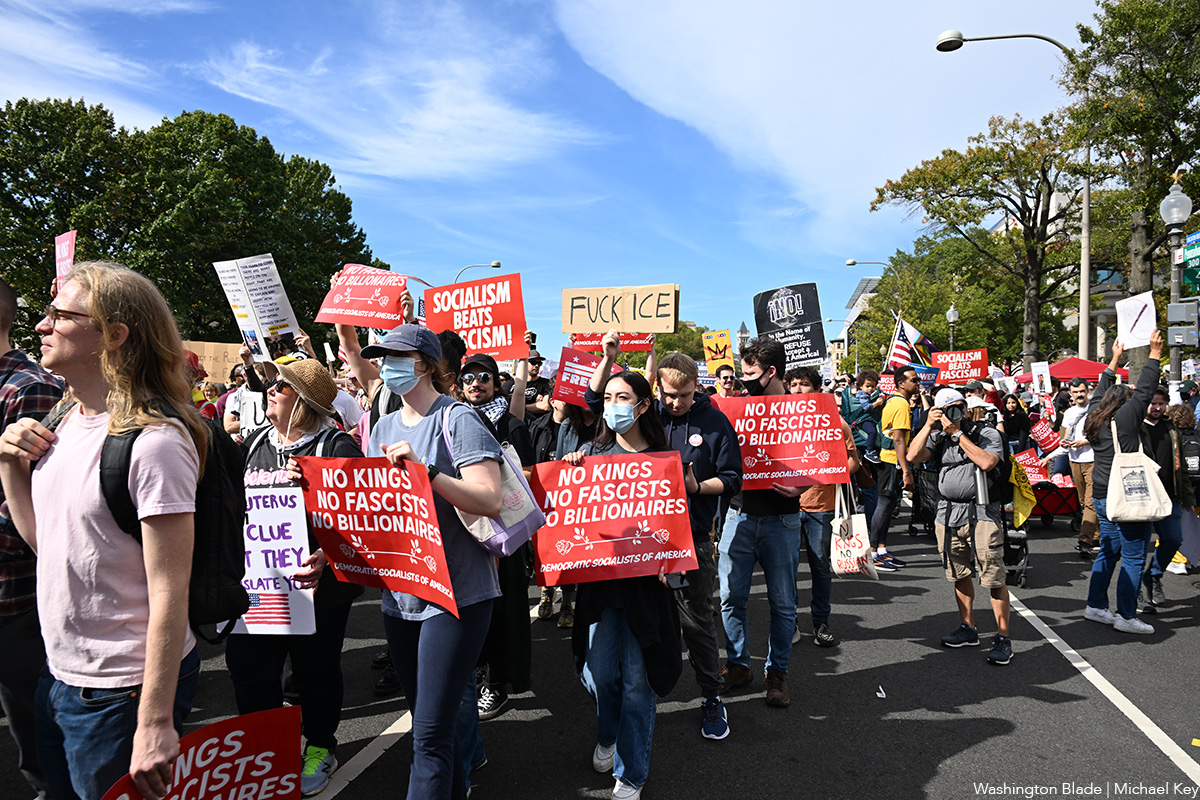
I recognize people come to their opinion of the Democratic Socialists of America Party, a party different from the Democratic Party, usually based on their own backgrounds.
I am a progressive Democrat. A first generation American; gay, and Jewish. My parents were refugees from Hitler, my mother from Austria, my father from Germany. My father’s parents were killed in Auschwitz. I have spent a lifetime working for civil rights, women’s rights, disability rights, and since I came out at the age of 34, LGBTQ rights. I was a union member when I taught school in Harlem. I worked for one of the most progressive members of Congress, Bella S. Abzug (D-N.Y.). Bella understood how to move forward the progressive issues she worked on. She won the right for women to get their own credit cards, without their husband’s signature. She is responsible for the curb cuts we see on every corner. She was the first to break the highway trust fund for mass transit. She fought against the Vietnam War, and to impeach Nixon. She introduced the first Equality Act for the LGBTQ community. She was named a whip by Tip O’Neill in her third term in Congress, not because she gave up her fight for progressive causes, but rather because she could get things done. She understood what compromise meant, and used it to move forward the progressive issues she fought for.
So, people must understand, members of the Democratic Socialists of America (DSA), are their own party, they are not automatically part of the Democratic Party. They have their own platform, different from the Democratic Party platform in many ways. Yes, the two overlap in many areas. But the differences are clear.
DSA was founded in 1982 from a merger of the Democratic Socialist Organizing Committee (DSOC), and the New American Movement (NAM). The merger was seen as a symbolic healing of the rift between the Old Left, represented by DSOC’s social democrats and trade unionists, and the New Left, represented by NAM’s activists who emerged from the social movements of the 1960s. Initially led by Michael Harrington, the DSA continued DSOC’s strategy of “realignment” by working within the Democratic Party to push it to the left, functioning as a small advocacy group for its first three decades. After the 2016 presidential campaign of Sen. Bernie Sanders, a self-identified democratic socialist, and independent, never a Democrat, and the election of Donald Trump, the organization’s membership swelled from about 6,000 members in 2015 to 100,000 in 2026. This growth gave DSA a much younger and more activist base, which shifted its strategy toward one centered on building an independent political force. DSA’s platform calls for reforms such as a Green New Deal, single-payer healthcare, and tuition-free higher education, with a long-term aim of social ownership and democratic control of the American economy. They support defunding the police. DSA’s foreign policy is non-interventionist, strongly supporting spending cuts and footprint reductions to the U.S. military while also supporting pro-Palestinian and anti-Zionist causes. That includes the abolishment of the State of Israel from the ‘river to the sea.’
As a progressive Democrat, I support universal healthcare, and have since Hillary Clinton introduced it to Congress when she was first lady in 1993. I support expanding Medicare, ensuring the solvency of the Social Security System, and making housing, childcare, and education, affordable for everyone. As a Democrat all my life, I supported Democrats who believe in the same things.
This may enrage many, but in my opinion one of the biggest mistakes the Democratic Party made was allowing independent, Democratic Socialist Bernie Sanders, to run in their presidential primary in 2016. When they did, they shared their voter lists, and enabled Sanders to get a foothold in the party without actually being a Democrat. He ended up screwing Hillary Clinton’s chances to be president. He attacked her throughout the entire primary, and even after she secured the nomination, he kept attacking, and wouldn’t endorse her for 30 days. When he finally did, he traveled the country, in essence pretending he was campaigning for her, when in actuality he was building his own brand, and writing his book. So yes, the independent, Democratic Socialist, Bernie Sanders, who has accomplished nothing in a 40-year congressional career, carries a lot of responsibility for helping to elect Donald Trump.
Today we have Mamdani, mayor of New York, who proudly calls himself a Democratic Socialist of America. He is a charismatic leader, and helped a number of Democratic Socialist candidates in New York win their primaries. One who he endorsed for the state Senate in Queens, is Democratic Socialist Aber Kawas. She is the one who said the United States brought the 9/11 terror attacks on itself, believing we asked for and are responsible for the nearly 3,000 people killed.
I have been, and will be, attacked, for saying the DSA platform is anti-Semitic for calling for the total abolishment of the State of Israel. For asking why there is nowhere in the DSA platform a condemnation of Hezbollah or Hamas, for their platforms calling for genocide against Jews in the State of Israel, while they are comfortable calling Israeli killings in Gaza genocide. While I may debate the term, I agree what Israel is doing is horrendous. Netanyahu and his government are committing war crimes, and belong in jail. But then so are Hamas, and Hezbollah committing war crimes.
The way to stop all this is to rid the world of Netanyahu and his government, and the terrorist groups Hamas and Hezbollah. I believe the United States should stop funding Israel’s offensive weapons, while we still ensure they have an adequate defense. Iran and others need to stop funding the two terrorist groups. We need to separate people’s views of the Jewish people, from the Netanyahu government, in the same way we need to separate views of the Palestinian people from Hamas, and the Lebanese people from Hezbollah. That is the only way we will ever have peace and a Palestinian state. If we ever get there, we must ensure the billions of dollars needed to make it self-supporting. But to get to that state, the Palestinian people must also have the support of the world, including the states surrounding Israel, that have never given support to the Palestinian people. I don’t have an answer to all of this, and clearly no one else does at the moment. I believe the last time there could have been a Palestinian state, with Israel agreeing to it, was back during the Camp David accords.
But whatever happens in the Middle East, if we want people in the United States to succeed, if we want to make sure the poor and the middle class can do more than just exist, if we want to provide affordable, decent healthcare, housing, job opportunities, and childcare, etc., the Democratic Party must not think redefining themselves as the Democratic Socialists of America, and all the baggage they bring with them, is the way to go.
While DSA candidates will succeed in a few big cities, this is not where the vast majority of voters in the nation are. If there is a positive Democratic Party platform, and we allow candidates in each district to run on the particular issues they feel can win for them, we can move the vast majority of the nation to more progressive positions, and to younger Democrats. That is the direction the Democratic Party must move in if we are to take back Congress in the midterms, and then the presidency in 2028.
There are a host of candidates around the country who are running, and winning, in Democratic primaries, as Democrats, not as members of the DSA Party. In not one of the districts we need to flip to take back Congress, is being a member of the Democratic Socialists of America a positive thing.
To begin the process of taking back our country, let’s all support Democrats across the board, up and down the ballot. If we do, we win!
Peter Rosenstein is a longtime LGBTQ rights and Democratic Party activist.
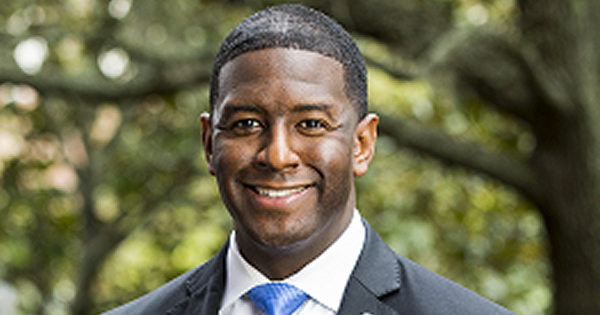
Former Fla. gubernatorial candidate Andrew Gillum arrested on drug charges

Dutch prime minister scheduled to open World Pride human rights conference

Philadelphia murder suspect remains at large

Mary’s House founder, CEO retires

Va., Md., advocates brace for next fight after Supreme Court sports ruling

Under-the-radar Delaware beach towns smart buyers are targeting

‘My Favorite Sociopath’ debuts at Shepherdstown’s CATF

In Trump’s divided America, Michael Weinstein’s AHF responds

Turkish authorities refuse to allow gay cruise to dock in country

When a church fears the rainbow
-

 Real Estate3 days ago
Under-the-radar Delaware beach towns smart buyers are targeting
-
Theater3 days ago
‘My Favorite Sociopath’ debuts at Shepherdstown’s CATF
-
Politics2 days ago
In Trump’s divided America, Michael Weinstein’s AHF responds
-
Turkey2 days ago
Turkish authorities refuse to allow gay cruise to dock in country