Books
‘Jackie & Me’ puts a refreshing spin on Camelot
Jack’s gay pal narrates fictional take on iconic love affair
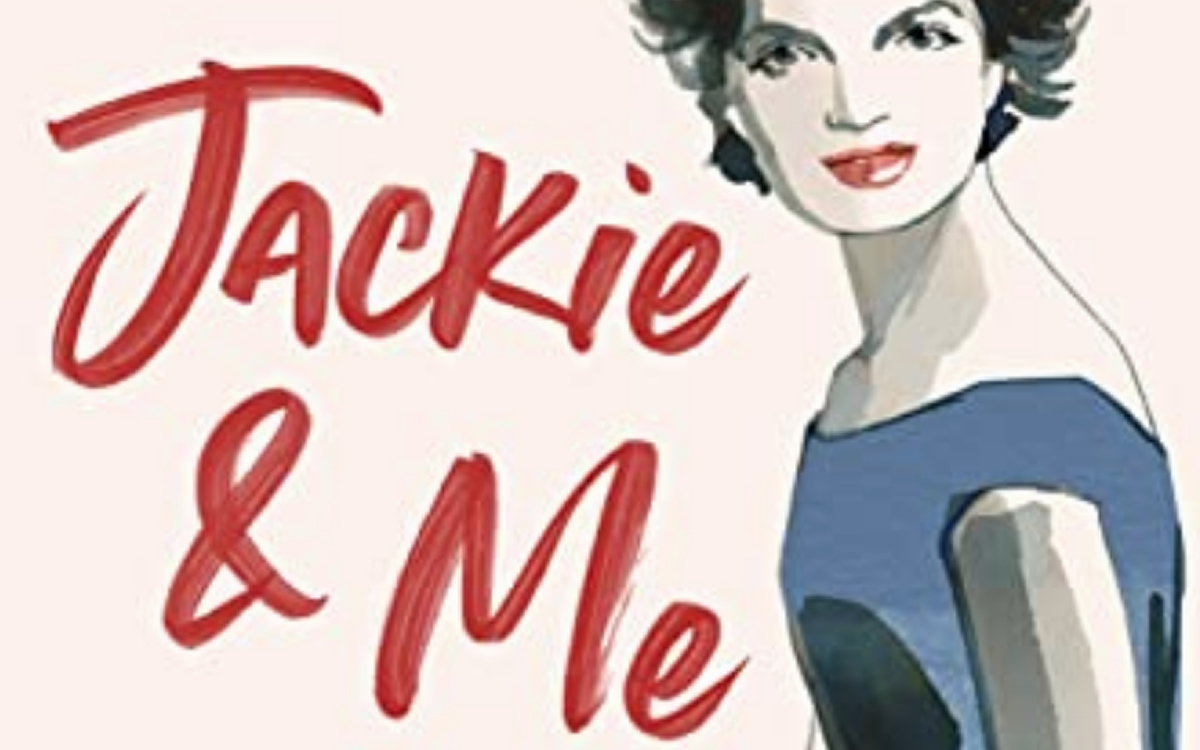
‘Jackie & Me: A Novel’
By Louis Bayard
c.2022, Algonquin
$28/352 pages
It is a truth that is universally acknowledged: A love story will be not only entertaining, but a moving, thought-provoking page-turner, if it has a gay best friend.
“Jackie & Me” by Louis Bayard, the acclaimed gay novelist, isn’t a Jane Austen tale. But Austen would have appreciated Bayard’s witty, poignant, new novel.
Unless you’ve lived under a rock, whether you’re Gen Z or a Boomer, you know about Jack and Jackie Kennedy and Camelot.
Yet, Bayard, in his tenth novel “Jackie & Me,” puts a refreshing spin on this story.
The novel is narrated by Kirk LeMoyne (a.k.a. “Lem”) Billings, Jack’s best friend. Lem has been JFK’s pal since they were students at Choate. Though Lem never says “I’m out and I’m proud,” it’s clear that he’s gay.
Lem is JFK’s fixer and court jester. He pays for Jack’s lunch. If Jack’s in the mood, Lem drinks with him. When Jack needs advice on love affairs, Lem’s on it.
“Jackie & Me” brings us JFK and Jackie before they were iconic.
The novel takes place in 1952. Jackie, 22, then Jacqueline Lee Bouvier, is the “inquiring photographer” for the Washington Times Herald. Jack, 35, is a Massachusetts congressman. They don’t know each other until they meet up at a party in D.C.
What makes “Jackie & Me” so enjoyable is that Lem is our fly on the wall. He takes us along as the couple date, meet the parents, and wed.
Jack is from a wealthy, Irish, Catholic political family. The Kennedys know everyone from Harry and Bess Truman to Henry and Clare Luce to Joe McCarthy.
Jackie’s father, known as “Black Jack,” was a Wall Street stockbroker. Her mother Janet Auchincloss was a socialite. Her stepfather Hugh Auchincloss was a Standard Oil heir. Unlike many women at the time, Jackie is well educated (with a degree in French literature from Washington University and classes at the Sorbonne in Paris).
Jack loves sleeping with women, but has no love for marriage. Yet he must marry because “my father says I can’t get elected [president] if I’m not married,” he tells Lem.
Knowing that matrimony is in his future whether he likes it or not, Jack thinks Jackie might be the right woman to marry. But he wants to be sure she’s not involved with other men and that, if they wed, she’ll tolerate his extramarital liaisons. He turns to his dependable buddy Lem and asks him to pal around with Jackie – to spy on her.
Lem isn’t thrilled by this. “Who would I be working for,” he says to Jack, “you? Your father ‘the bossman’?”
While Jack’s been busy in Congress and womanizing, he’s been escorting Jackie about town. They’ve gone to the Smithsonian, laughed at bad Loretta Young movies and gone to an amusement park. They’ve become close friends.
If something happens and Jack doesn’t work out, “would you be my back-up husband,” Jackie, who’s caught on to Jack’s foibles, jokes to Lem.
Billings, who lived from 1916 to 1981, maintained ties with the Kennedy family after Jack’s death.
But “Jackie & Me” is, without apology, a fictional work and “an exercise in alternative history,” Bayard writes in the acknowledgments.
Though a work of fiction, “Jackie & Me” feels true. In the novel, Jackie and Lem are outsiders. Jackie isn’t of the Kennedy family and doesn’t, as many women did then, aspire to be a homemaker. Lem was a closeted gay man when homophobia was socially acceptable.
Lem recalls how at Choate, boys who wanted sex or tenderness from other boys, would write notes on toilet paper. “I’m not that kind of boy,” responds Jack on receiving a note on toilet tissue from Lem.
“Jackie & Me” is intriguing because it’s not, at heart, about the romance of a glittering young couple. It’s an Austenesque triangle: the tale of the twists, turns, love and friendship of three compadres.
It’s a charming, elegant summer read.
The Blade may receive commissions from qualifying purchases made via this post.




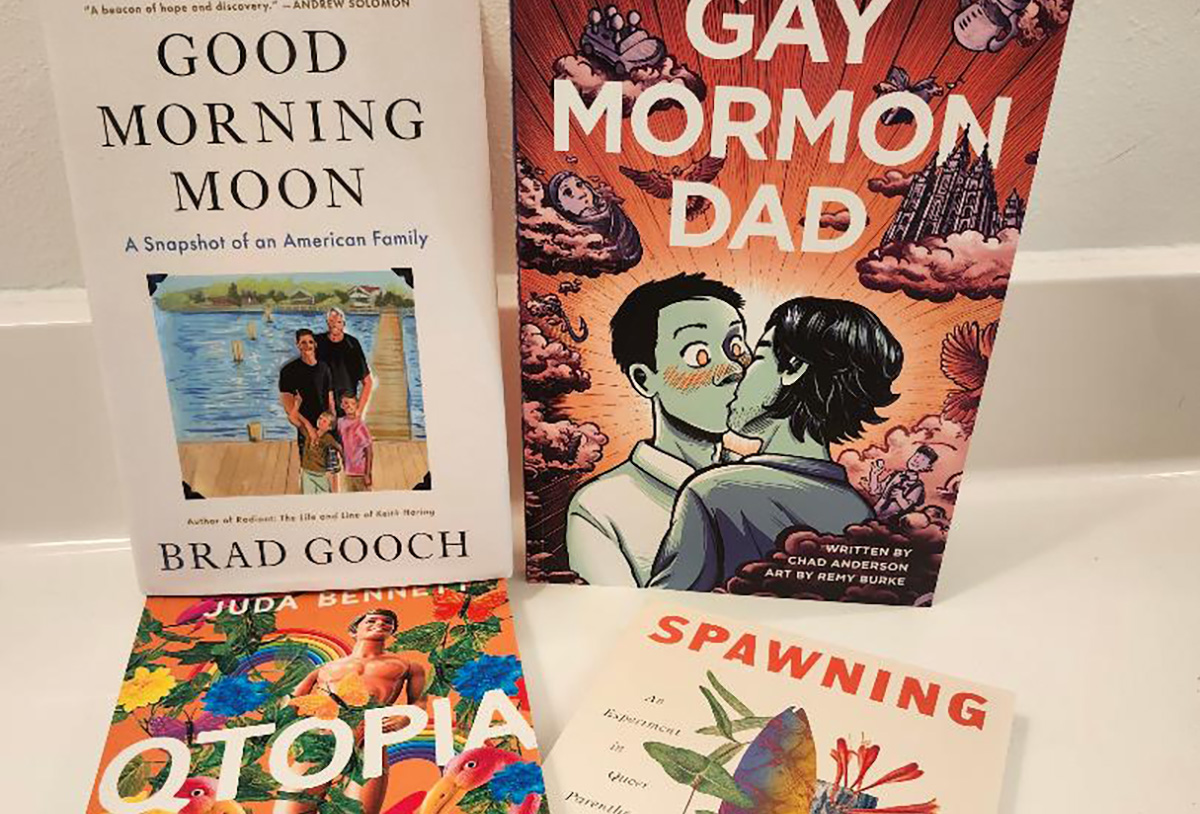
Books for Pride by various authors
c.2026, various publishers
$18.95 – $29.00
How many times have you marched so far this month? Seems like there’s always a reason to gather and walk during Pride, but save some time for yourself, too. You’ll want to reflect, rest, and read these great books about living your best Pride month.
No doubt, you’ve thought once or twice about stepping away from society as it is, and moving somewhere more accepting. So read “Qtopia: A Memoir of Love, Land, and Liberation” by Juda Bennett (University of Wisconsin Press, $18.95), the story of doing exactly that, and how it turned out.
Back in the ‘70s, Bennett fled the suburbs and all it represented, and went “back to the land,” to a commune named Lavender Hill. Some of the places he’d lived before then had promised way more than they delivered, but Lavender Hill was different – more rural, more open, more queer, much better. But you know all good things must end, and that includes “queer utopia.” The only thing left was to re-enter the mainstream, a journey unto itself, and one worth reading.
Speaking of memoirs, in “Gay Mormon Dad” by Chad Anderson, art by Remy Burke (Graphic Mundi, $21.99), you’ll read about Anderson’s life as a husband (to a woman), a father, and a man who seemingly had it all but it wasn’t right, and he wasn’t happy. He was gay, but acknowledging it, telling his family and his church family, could mean the loss of everything he loved. It’s a story that may be familiar to you, in some way, and it’s a quick read.
For most of his life, Joseph Osmundson dreamed about getting pregnant and having a family. The former didn’t happen and, as for the latter, as he writes in his memoir, “Spawning Season: An Experiment in Queer Parenthood” (Bloomsbury, $27.99) the journey for a gay man to become a father can have plenty of roadblocks.
When two women approach Osmundson to be a sperm donor, it appears that his ultimate dreams are about to come true. Things go swimmingly – until race enters the conversation. Are the words “donor” and “dad” the same? Read this powerful book, and think about it.
And finally, if parenthood as a gay person is something that’s a case of maybe-later, then “Good Morning Moon: A Snapshot of an American Family” by Brad Gooch (Harper, $29) is a book to find. It’s the story of late-life love, surrogacy, and identity as Gooch learns about himself as he learns to be a good Dad. This is a great book for older fathers, and anyone who’s on the parental fence, later in life.
If these great books aren’t enough for you, or if you’re looking for something different for Pride, then head to your favorite bookstore or library and ask the staff there to help you find your next best read. They’ve got a lot of books to put in your hands, a lot of sunny afternoons full of relaxing and promise, so march on out, get a new book, and happy Pride!
Books
David Archuleta on Mormon faith, ‘Idol,’ more in new book
Unique memoir details religious upbringing, coming out
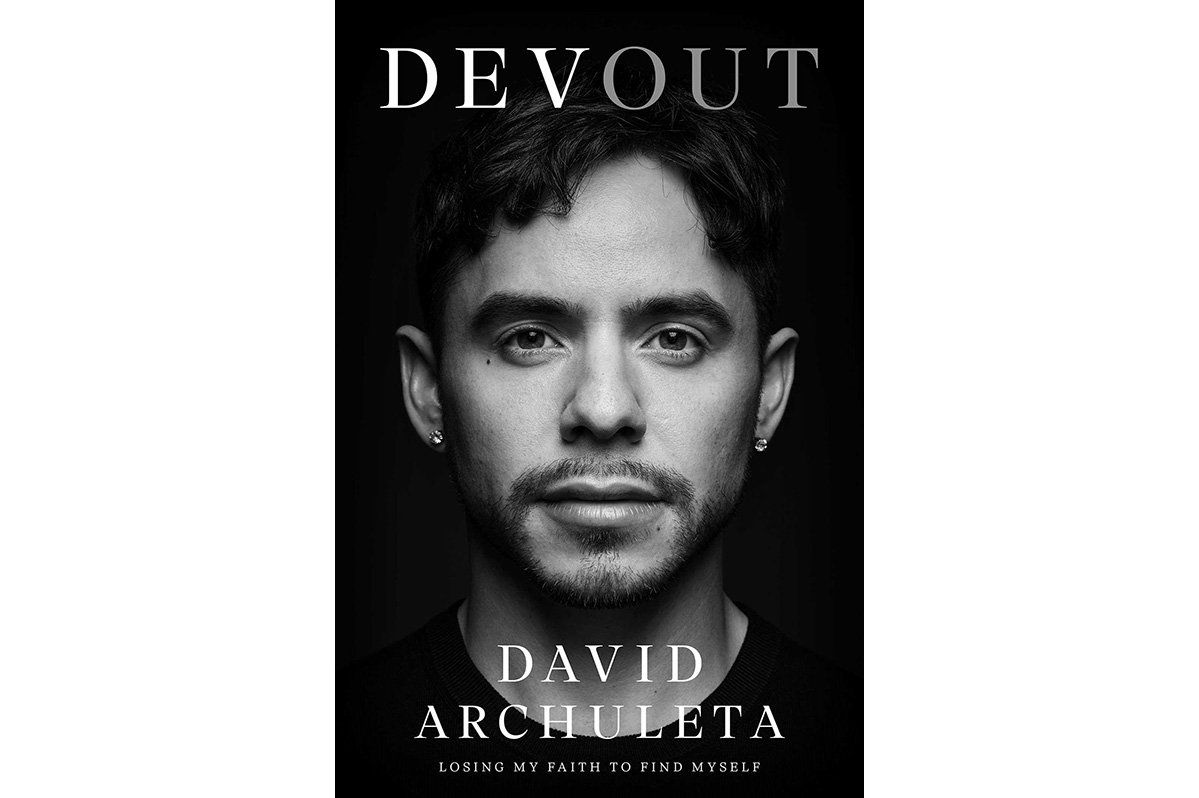
‘Devout: Losing My Faith to Find Myself’
By David Archuleta
c.2026, Gallery Books
$29/290 pages
So just make up your mind already.
The decision is very much in your control – or, at least that’s how it’s supposed to be. It’ll be your future, your path, and seizing it may not just be necessary, but mandatory. It’s your life, and no one can live it for you. As in the new memoir “Devout” by David Archuleta, that goes for career and for love, too.

Born to parents who both had musical careers before they wed, David Archuleta remembers an early childhood growing up in a Hispanic Mormon community in Florida, where kin was always nearby. He was six when his parents moved the immediate family to Utah; the first thing he remembers about that is the snow, and how it was so cold, it burned.
Because music was in his blood, Archuleta grew up singing and dancing, often with his mother whom he calls “my rock.” It was his father, however, who encouraged him to perform; first, with a gentle push, then a shove toward a career Archuleta didn’t really want.
But he did want to make his father happy, so he went along with the contests, embarrassing meet-and-greets with stars, and uncomfortable introductions. Slowly, though, performing became more fun, and Archuleta made friends.
Meanwhile, back home, everything was breaking apart. A “family friend” whom Archuleta refuses to name accused his father of abuse. He was exonerated, but it affected the family’s closeness and they stopped being affectionate.
That was a painful backdrop to Archuleta’s soaring career, his appearances on Star Search, friendships with other rising stars, his runner-up spot on “American Idol,” tours, and recording contracts. His father kept pushing him.
But there was one thing missing.
Since he was a boy, Archuleta had known that he was attracted to men, but his Mormon faith taught him that that was unacceptable. Kissing, his abuelita said, was wrong. He tried hard to date girls, in the most chaste way. Anything past that was against God – and anything at all with a man was unthinkable.
Though it absolutely favors his personal life and dwells on it a bit too much, “Devout” strikes an otherwise nice balance between that, author David Archuleta’s career, his sexuality, and his faith. The latter two are loaded with controversy.
You don’t need to be Mormon to fully understand the faith part; Archuleta offers non-Mormons a brief education, so readers can see the importance of the Church’s teachings in his life and why he felt the need to abandon it as his understanding of his bisexuality grew. It’s emotionally raw and honest, but also so respectful that it almost bears re-reading. Such candor and the heart-on-his-sleeve tone you’ll sense are features in the entire book, alongside Archuleta’s family’s struggles and his learning to strike out alone.
It’s harmonious in more ways than one, and fans will be happy.
So, too, will anyone who wants a unique memoir with a dose of faith, or someone who’s an “American Idol”watcher. Find “Devout” and be sure to share. You won’t mind.
The Blade may receive commissions from qualifying purchases made via this post.
Books
‘Mighty Real’ explores history of LGBTQ music
From Judas Priest to Whitney, something for every taste
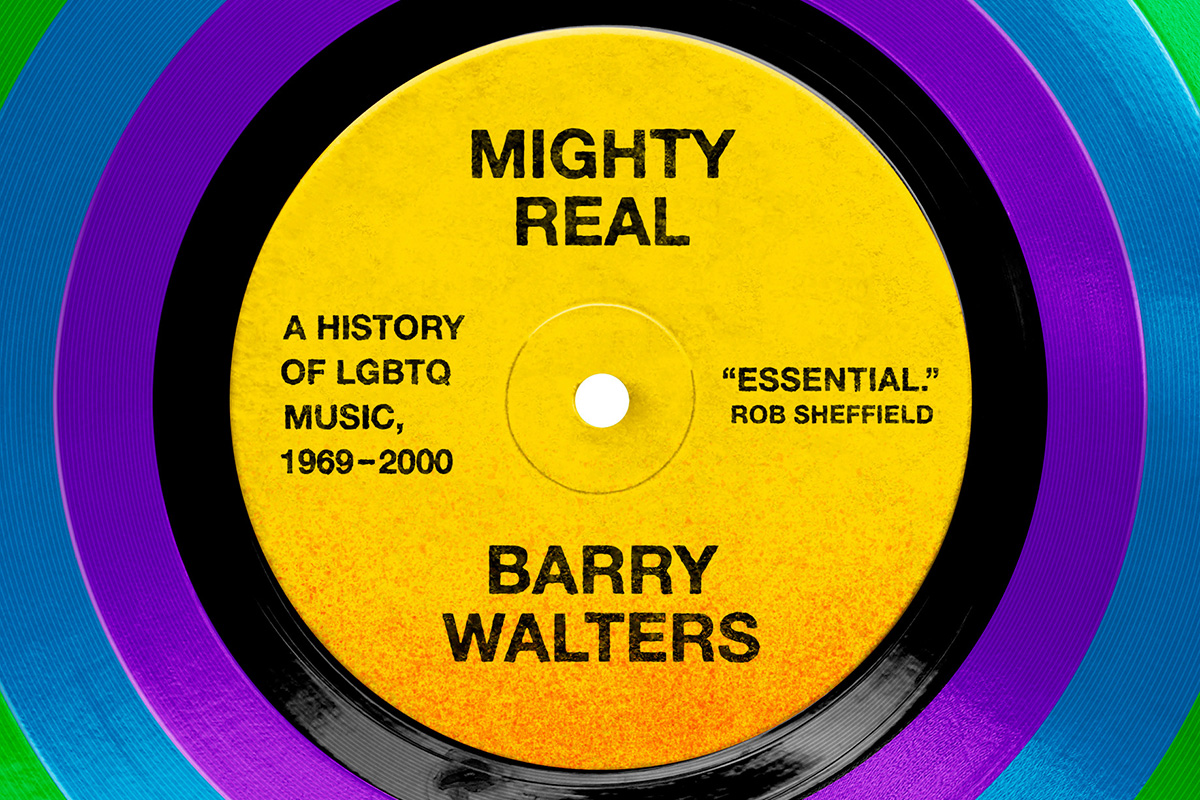
‘Mighty Real: A History of LGBTQ Music, 1969-2000’
By Barry Walters
c.2026, Viking
$35/496 pages
Step, step, tap, back step.
Shimmy in a circle, left hand waving over your head, shake your tail feathers, repeat to the beat. Once there was a time when you could do any dance in your sleep, but it’s been a while. So read “Mighty Real” by Barry Walters, and see if your toes don’t tap.
Fifty-seven years after Stonewall, and here we are: LGBTQ musicians still face scrutiny for their sexuality because, says Walters, music isn’t created for gay listeners. No problem: LGBTQ artists and writers have often penned lyrics carefully in order to say what can’t be said, “coding” songs for gay audiences that straight (and ignorant) listeners can dance to and enjoy with apparent obliviousness.
Walters offers “just a few” examples.
Lou Reed sang about trans people in the late ‘60s and offered a rallying song for the Gay Liberation Front in 1972, the latter of which felt like a message to a then-11-year-old Walters. Janis Joplin claimed she was straight, but she had several girlfriends. Motown singers often offered sometimes-ambiguous lyrics.
John Lennon’s hand placement on the back cover of Sgt. Pepper’s Lonely Hearts Club Band made Walters begin to understand that he was different from other boys.
David Bowie is on his list, of course, as is Bette Midler, Elton John, Donna Summer, and Queen. You’ll find Judas Priest here, Green Day, and punk music. The Village People are included in this book, also Grace Jones, Duran Duran, and Cher, Whitney, Melissa, Latifah, and the lyrics from several blockbuster movies.
Two of Prince’s band members were lesbians, and they heavily influenced his albums. Diana Ross’s “I’m Coming Out” cemented her position in LGBTQ culture, and Michael Jackson’s inclusion here takes much careful consideration.
Read about Olivia Newton-John and the B52s. And then there’s Sylvester, for whom Walters has a soft spot in his heart. Sylvester’s death still makes Walters cry.
In his preface, author and music writer Barry Walters points out that music is what you make it and that it’s interpreted differently by each individual. To that end, this book naturally consists of preferential history and personal opinions about singers, bands, albums, and songs.
Agree or disagree. That’s where much of the appeal lies in “Mighty Real.”
Here, Walters wraps his memories around his choices, giving readers room for their own views, memories, and list making. Music-loving readers might also be surprised to note who’s not on Walters’ list – there aren’t many country performers here, for example, and the overall list focuses entirely on music from roughly 1968 to the year 2000, mostly on the kinds of songs you’ll want at the club or party. Again, discuss, and curate your own playlist.
This is a hefty book, but the chapters are browse-able and generally short enough to read in under five minutes. It’s nostalgic, yet also serious in the history it presents. This is the kind of book you want to leave near your album collection, or wherever you get your tunes. But finding “Mighty Real” is your first step.
The Blade may receive commissions from qualifying purchases made via this post.

Comings & Goings

‘Leviticus’ demonizes homophobia for gripping queer horror yarn

Calendar: June 26-July 2

Orioles take on Nats for Pride Night

My boyfriend is almost perfect

Abelardo de la Espriella elected Colombia’s next president

Capital Pride draws tens of thousands to D.C.

British Prime Minister Keir Starmer to resign

PHOTOS: Capital Pride Festival and Concert