a&e features
Black Deafhood: A journey at the intersection of sexuality, disability, race
Gallaudet’s Bobbi-Angelica Morris on their activism and art
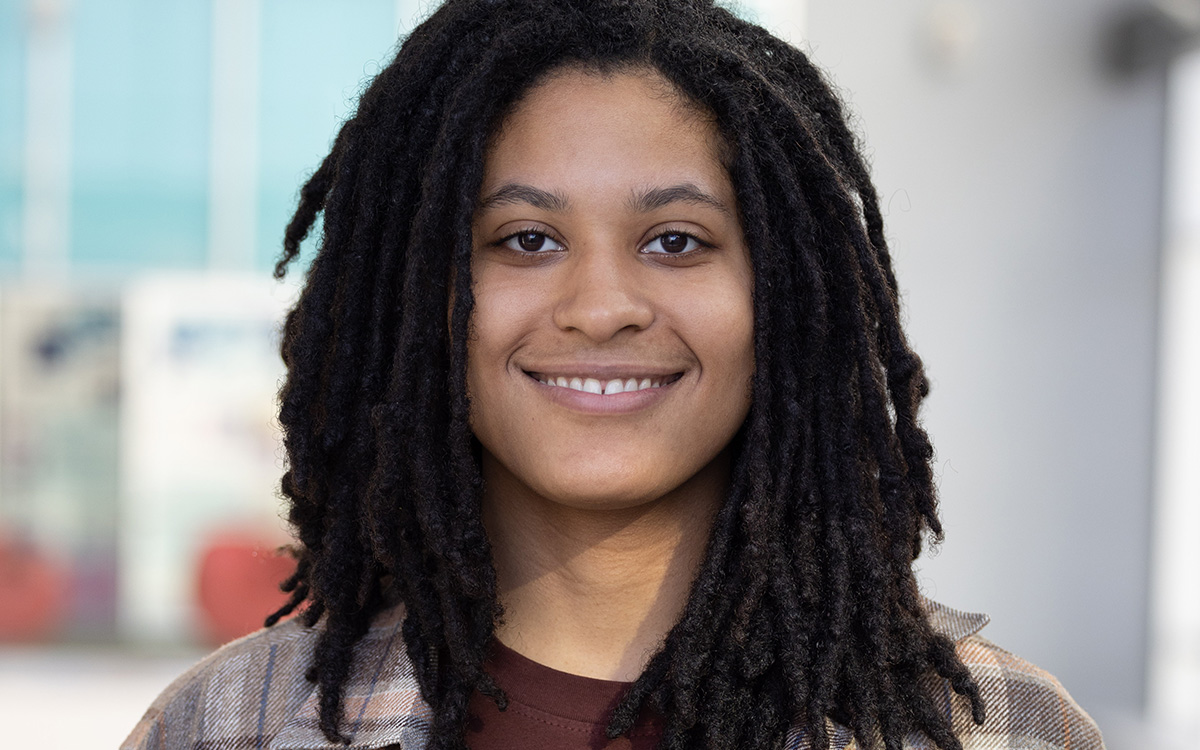
Editor’s note: One in four people in America has a disability, according to the CDC. Queer and Deaf/disabled people have long been a vibrant part of the LGBTQ community. Take two of the many queer history icons who were disabled: Michelangelo is believed to have been autistic. Marsha P. Johnson, a hero of the Stonewall Uprising, had physical and psychiatric disabilities. Today, Deaf-Blind fantasy writer Elsa Sjunneson, actor and bilateral amputee Eric Graise and Obama administration Assistant Secretary of Labor for Disability Employment Policy Kathy Martinez are just a few of the people who identify as queer/Deaf/disabled. The stories of this vital segment of this queer community have rarely been told. In its series “Queer, Crip and Here,” the Blade is telling some of these long unheard stories.
“My ‘coming out’ story looks more like me telling someone my favorite cookie flavor is chocolate chip,” Bobbi-Angelica Morris, a Gallaudet University graduate student, activist, poet, photographer, videographer and visual artist, told the Blade, “than an emotional roller coaster.”
“I’ve always embodied this carefree energy pertaining to who I am, what my purpose is, and how I show up for others,” added Morris, who is Deaf/Hard of Hearing and identifies as a Black, nonbinary, queer and abolitionist artist.
Earlier this year, Morris, 23, received the Mary Bowman Arts in Activism Award from the National AIDS Memorial, the San Francisco organization that displays the internationally acclaimed AIDS Memorial Quilt.
Over the phone and in email, Morris spoke with the Blade about a range of topics – from her “Deafhood” to how she felt safe at a queer Halloween party.
Morris, who uses she/they pronouns, grew up in different parts of the East Coast. They spent most of that time in Richmond, Va.
“Growing up, most of the people around me would ask if I was gay,” Morris said, “because I fit into the stereotypical realms of present day msc [masculine] presenting dykes.”
“No one questioned me when I actually came to terms with my queer identity,” they added.
Before enrolling in Gallaudet, Morris spent most of their time as a student with hearing people in schools, where most teachers and students didn’t communicate in American Sign Language (ASL). Morris was the only Deaf student in their classes until they graduated from the University of Virginia in 2022 in Charlottesville. There, they majored in global development studies and minored in ASL with a concentration in disability studies and community development.
Growing up, Morris didn’t know about ASL or the creativity and history of Deaf culture.
“It wasn’t until I was in elementary school,” Morris said, “that an audiologist said I qualified for hearing aids.”
In their poetry, Morris, who speaks and signs their work, reflects on their family and their experience of being Deaf.
“I reflect on my own Deafhood:/ my playground fights/ with uneducated parents,” Morris writes in a poem, “When little Black Deaf girl doesn’t hear someone speak to her,/that someone thinks little Black Deaf girl is disrespectful.”
Like many Deaf/Hard of Hearing people, who go to school when they don’t know American Sign Language, and there are no ASL interpreters, Morris felt isolated.
“I had no knowledge of the Deaf community or of Black Deaf history,” they said.
Some in Morris’s family and community couldn’t accept that Morris is Deaf. “Some, not out of maliciousness, prayed for my healing,” they said.
What Morris calls her “Black Deafhood,” has been a long journey at the intersection of sexuality, Deafness, disability, Blackness, gender, activism, and art.
Deafhood is a “journey that a Deaf person undertakes to discover his, her or their identity and purpose in life,” according to a Deafhood Foundation statement on deafhood.org.
Hearing people often perceive of Deafness as a disease that should be cured, and of Deaf people as incompetent, second-class, less-valued, citizens.
Just as coming out helps queer people to affirm their sexuality and connect with the LGBTQ community and history, Deafhood empowers Deaf people to have pride in themselves – to connect with the Deaf community, history and culture.
As it often goes with finding and loving your queer self, Deafhood is a process.
In middle school, Morris watched “Switched at Birth,” the popular TV series. The teen and family drama features Deaf and hearing actors and scenes in ASL.
The show jump-started Morris’s interest in Deafness and the Deaf community. “But, I still didn’t understand my connection [with the Deaf community],” Morris said.
Curious to discover something about Deaf culture, Morris started an informal class – a club. There, they and their friends learned signs from YouTube videos.
At the University of Virginia, Morris took a sign language class. They studies abroad for a time in India.
At Gallaudet, Morris began to feel connected to the Deaf community. They are a student in the Master of Social Work program at Gallaudet’s School of Civic Leadership, Business, and Social Change. Morris will graduate with an M.S.W. degree in 2024.
They are equally committed to making art and activism – to working for social justice for Black, Deaf/disabled, queer, and other marginalized groups. A love of art and social change is etched in their bones.
“I am an abolitionist and an artist,” Morris said, “I cannot be one without the other.”
Their abolitionist identity is connected to how they experience intersectionality. Morris sees their life as connected “to the movement for total liberation of all our people, beings, and non-beings in this present day and beyond,” they said.
Because they are an artist, they have a responsibility to use their skills to educate, inspire and protect “everyone and everything that abolitionists fight for daily,” Morris said.
From early on, Morris loved being creative. During an unstable childhood, art helped Morris to express their feelings.
Fortunately, art ran in Morris’s family. “My bio-mom is an amazing artist,” Morris said, “so we would draw things together.”
Later, Morris’s god-mom gave Morris materials that sparked their interest in painting and photography.
In middle school, Morris got into spoken word poetry when one of their Boys and Girls Club mentors showed them a spoken word video. At the University of Virginia, Morris participated in poetry slams. In their Gallaudet social work program, they impressively deploy their artistic and activism chops.
Their advocacy projects are numerous. Morris is developing ASL G, a non-profit organization. The group’s mission “is to develop community garden coalitions and programming for art and health wellness through disability justice,” Morris said.
Morris was the former creative outreach coordinator of VOCA, a non-profit that supports BIPOC, Deaf artists.
“I have family members that have been incarcerated,” Morris said. “Because of that, I want to fight the injustice of the prison industry and mass incarceration.”
Morris is the president of Students Against Mass Incarceration (SAMI), a student club at Gallaudet.
Ableism, audism (discrimination against Deaf people), homophobia and racism are issues for Morris. “The white presence is prominent in many institutions,” they said, “often they’re predominantly white.”
Morris likes being a Gallaudet student. But, “there’s a lack of racial competency at Gallaudet as there is in the whole of America,” they said.
The queer community has provided safe spaces for Morris.
Once, Morris and their partner attended a queer Halloween party in Charlottesville. “Half the people in attendance knew or were learning sign language,” Morris said. “I think it was then that I realized how connected the queer community was in ensuring no one was left out.”
Morris went to the party as Beast Boy, and their partner went as Raven from Teen Titans.
Follow Morris on Instagram @Blckrainbow5



a&e features
Mr. Henry’s celebrates 60 years of proud inclusivity
Capitol Hill staple remains ‘a caring community’
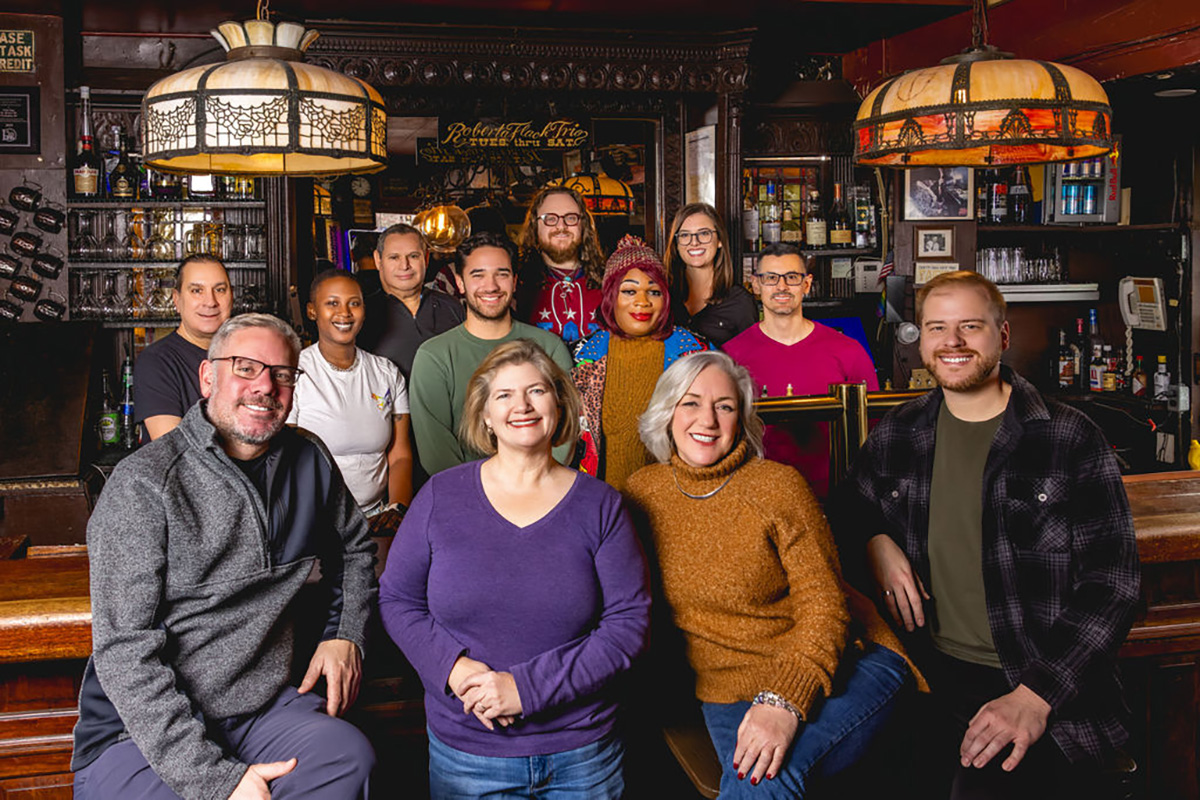
America’s 250th isn’t the only milestone birthday D.C. is celebrating this year.
Beloved D.C. restaurant Mr. Henry’s, that Capitol Hill staple, celebrates its Diamond Jubilee all year long. Named for its original owner Henry Yaffe, the restaurant opened on a warm day 60 years ago in the summer of 1966 and has never looked back.
Yaffe took over what was then a country western restaurant, renovated the interior to his liking, and created an institution. Yet Yaffe had another goal. As a gay man, “he created Mr. Henry’s to be a place where everyone felt welcome — not easy in 1966 — and he succeeded,” says current owner Mary Quillian.
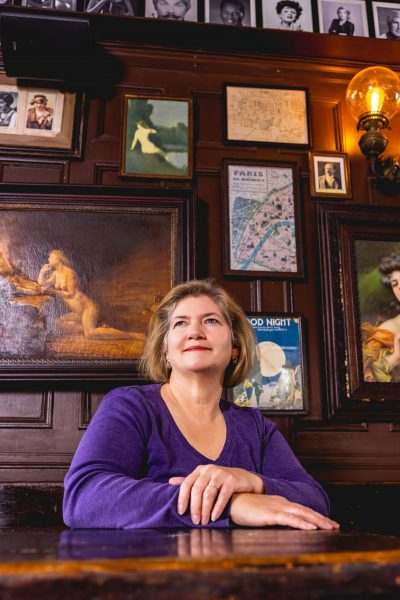
“Mr. Henry’s has long been a place the LGBTQ community has supported because they felt and still feel welcomed,” says Quillian. Even in the current administration, “the gay community and the diversity-minded community continue to come.”
Since then, Mr. Henry’s has changed hands, opened and closed its second floor, welcomed famed musical acts, and played host to politicians, date nights, breakups, and birthdays. But it still feels like home (and has a note in the National Trust for Historic Preservation) at 601 Pennsylvania Ave., S.E.
Its wood-paneled, Victorian-inspired art-filled décor in the downstairs dining room and bar serves American pub fare for lunch and dinner daily, with brunch on weekends (and a dog-friendly patio). Upstairs, Mr. Henry’s hosts live jazz performances and special events most nights, continuing a musical tradition that has defined the venue for decades. That upstairs bar has played host to names like Roberta Flack and Woody Allen.
Musician Kevin Cordt said that, “Mr. Henry’s has been a part of my life for more than 30 years. I started as a customer, then became a bartender and server, and now I have the good fortune to play trumpet at one of the best live music venues in Washington, D.C.”
Aaron Myers, executive director of the D.C. Commission on the Arts and Humanities, is also a supporter. “Not many cities can sport venues that have consistently served the community in the space of culture for more than 50 years, let alone can brag as the birthplace of culture defining talent.”
From the start, Yaffe promoted a rare yet celebrated combination of locals’ bar and soulful nightlife venue. Mr. Henry’s has attracted a diverse crowd at a time when such spaces were – and perhaps still are – uncommon, a diversity that is credited with helping protect the pub during the 1968 D.C. riots.
Longtime customer Evelyn Branic said, “Mr. Henry’s has been my ‘Cheers’ hangout since my wife and I moved to the Hill in 1987. I’ve experienced many iconic moments meeting politicians, reporters, civic activists, and neighbors engaging in spirited conversations. Whether political, LGBTQ, historians, neighbors, or out-of-towners, everyone could find a special place to be greeted as a friend.”
Its welcoming tables come dabbed with a bit of tea: In 1971, in a moment that has since become part of Capitol Hill lore, Yaffe lost the pub in a poker game to Larry Quillian. The Quillian family, recognizing the special role Mr. Henry’s played in the neighborhood, took over ownership, and committed to preserving its spirit. Today, Larry’s daughter Mary owns the bar, having given it a bit of a facelift for the bar’s 50th birthday, bringing in new tables and some fresh menu items.
For example, the menu has some of those dishes that regulars would riot if they disappeared. The Reuben and the hamburgers, the chili and in-house roasted turkey have never departed the menu. Dishes do evolve, says Quillen: they added wings about two decades ago.
In 2026, the restaurant is hosting monthly ticketed “decades” parties, celebrating each of the 10-year periods the restaurant’s been open, plus there were specials in June for Pride. The official 60th anniversary gala takes place Aug. 29, featuring performers, beverages, timeless favorite foods, swag – and the unveiling of a new cocktail.
Inclusive, eccentric, eclectic, Mr. Henry’s is looking forward to maintaining its centrality to diverse crowds in Capitol Hill. Battling inflation, rising menu prices, changing tastes, and thin margins, Quillian says that Mr. Henry’s has — and will always be — “a caring community for so many different folks. And THAT is why I am committed to keeping us going. Society needs places like Mr. Henry’s, now more than ever.”
a&e features
Television loses a legend, longtime ‘Will & Grace’ director James Burrows
Iconic hitmaker leaves behind a legacy of telling LGBTQ stories
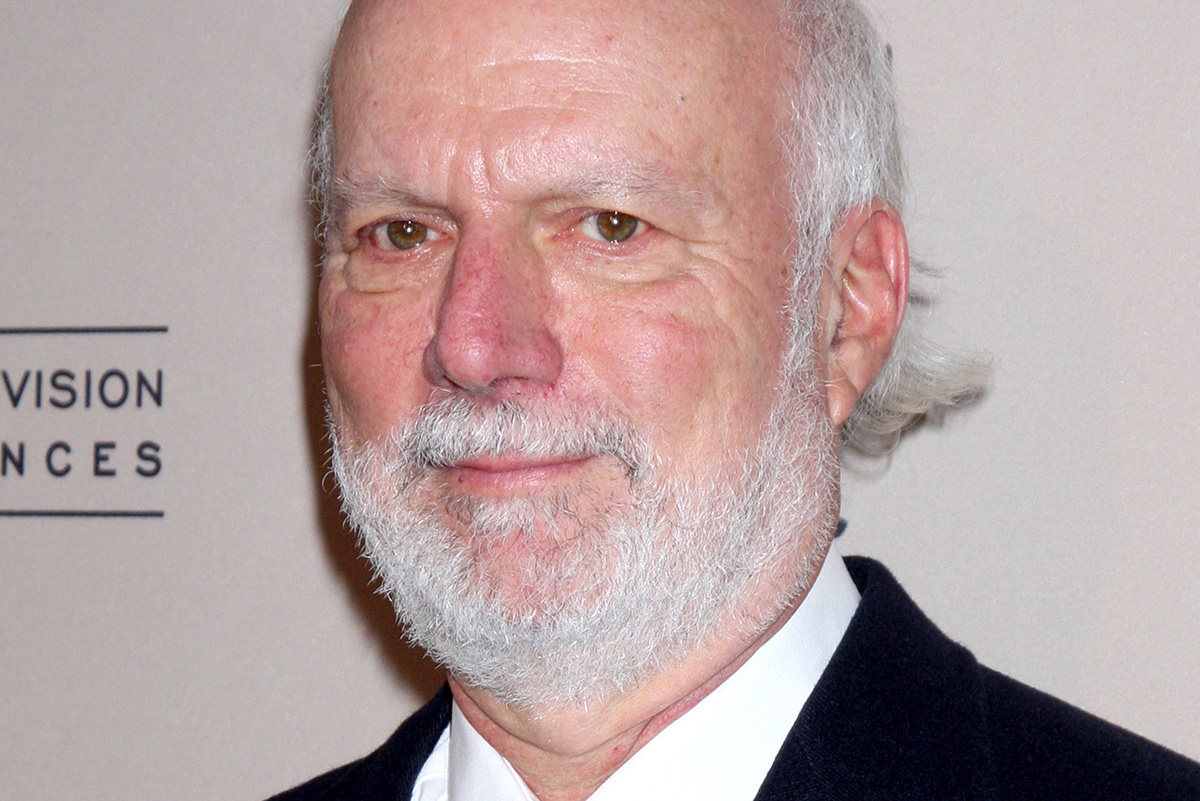
You don’t have to be a pretentious film major to name 10 movie directors. But naming television directors is not that simple. They’re the unsung heroes of your favorite shows, and the late James Burrows was the television director. He passed on June 19, but his DNA runs through television history.
He directed over 1200 episodes of television and over 50 pilots. He co-created “Cheers” and directed many episodes of long-running series like “Friends,” “Taxi,” “Frasier,” “The Big Bang Theory,” and “Two and a Half Men.” You also may remember him from playing a heightened version of himself on the Lisa Kudrow comedy “The Comeback.”
He has left an indelible mark on the LGBTQ community. As recently as last year, he directed the series run of “Mid-Century Modern” starring Nathan Lane, Matt Bomer, and Linda Lavin. He was also a longtime director of “Will & Grace” and directed every episode of the series revival. He even directed the unaired “Absolutely Fabulous” pilot with Kathryn Hahn, Kristen Johnston, and Zosia Mamet.
Not to mention he’s worked with queer icons throughout history, including Betty White and Stockard Channing on their single-season series, and Jennifer Coolidge in “2 Broke Girls.”
He started his career on shows like “The Mary Tyler Moore Show,” “Rhoda,” “Laverne & Shirley,” and the first four seasons of “Taxi.”
He continued to work steadily and directed successful pilots that went to series for “Roc,” “3rd Rock From the Sun,” “Dharma & Greg,” and “Wings.” He directed multiple episodes of “Friends,” “Caroline in the City,” and “Frasier.”
This magic continued into the 2000s with him directing the pilots for “Two and a Half Men,” “The Big Bang Theory,” and multiple episodes of “Mike & Molly,” and the entire return series of “Will & Grace.”
What was the secret to his success? He’d enact the “fun clause” in his contract. In his words, “Life is too short to deal with obnoxious leads,” he shared. “So as long as the writing is good and the cast is fun, I’m going to enjoy the experience.”
He had the magic touch, having multiple pilots turned into long-running series. He was nominated for an Emmy 24 times in 26 years and worked consistently until a year before his death.
The secret was the way he brought the cast together. He describes, “it was my job to mold them into an ensemble, and they did round into a group of people who loved each other.”
This earned him 11 Emmy Awards and five Directors Guild of America Awards, including being awarded the inaugural DGA’s Lifetime Achievement Award for Television Direction.
In a 2003 interview by the Television Academy, he was asked how he wants to be remembered, and he said, “That every night forever you can tune in somewhere, and there’ll be a show I did.”
He’s survived by his wife, Debbie, four daughters, seven grandchildren, and the countless people whose careers he launched and the countless viewers he inspired with his television legacy.
a&e features
D.C. prepares to party as Pride celebrations kick off Saturday
Bars, clubs have busy lineups; Pride on the Pier returns

Capital Pride’s date change isn’t slowing down the festivities. Back in December, the Capital Pride Alliance shifted the calendar for Pride celebrations in the nation’s capital from the second weekend of June to two weeks later to the weekend of June 20-21 to not conflict with President Trump’s birthday and 250th anniversary of America celebrations, with the aim that “our community can gather safely and without unnecessary barriers… We are protecting our space and preserving Pride as a powerful act of visibility, solidarity, and resistance.”
On the heels of WorldPride last year, the city shows no sign of slowing down. Instead, restaurants, bars, clubs, and neighborhoods are taking the opportunity to be even more visible. The Blade has put together a (non-comprehensive) list of parties, activations, and activities across town:
Pride on the Pier returns on Saturday, June 13 to the Wharf on the Southwest waterfront. The event, sponsored and hosted by the Washington Blade, is free and runs from 4-9 p.m. There will be vendors, DJs, and drag performances all day. VIP tickets are $25 and come with air conditioned party room, private bathrooms, and free cocktail. More details at prideonthepierdc.com.
Capital Pride Official Opening Party: RIOT! is the official opening dance party of Capital Pride, taking place Friday June 19, 9 PM-3AM. The 2026 edition headlining performer is Myki Meeks, a finalist of “RuPaul’s Drag Race” season 18; Bob The Drag Queen will perform a special set. DMV-area DJs and performers include: Bambi, Baphomette, Bumper, Cake Pop!, Connor, DJ Ed Bailey, DJ Diyanna Monet, Evry Pleasure, Jakknife Complex, Mari Con Carne, Pussy Noir, WessTheDJ. Trade owner Ed Bailey is producing the event.
Kinetic Presents brings the heat across the entirety of Pride weekend as well. It again is partnering with Capital Pride Alliance to produce four events over four days this Pride, including the Official Main Event on Saturday (the Friday official event is at Echostage). Kinetic’s parties are splayed across various D.C. venues, with special performances, massive productions, shirtless dancers, play zones, dance-forward audio and visuals, and international DJ talent. Thursday, June 18 at 10 PM at District Eagle is Lust, with music by Dan Slater and TOMI. Friday, June 19 at 10 PM is UNCUT XXL Heavy Load, at A.i. Warehouse in Union Market District, with music by Alex Acosta, Felipe Lira & Mitch Ferrino; the party is a “high-octane night of muscular house and tribal rhythms.” Saturday, June 20 at 10 PM brings that official main event, Kinetic Toy Land, at Echostage, with music by GSP & Matt Suave. Alaska Thunderfuck headlines. Sunday evening June 21 at 10 PM closes with discoVERS at SAX. A portion of tickets supports the DC LGBTQ+ community through Capital Pride Alliance.
9:30 Club always comes in clutch for the LGBTQ community. Already in June, it produced Kitty Kat Ball on June 7, and Kiesza performed on June 8. On June 20 at 10 PM, the famed Mixtape party hits the stage, care of gay DJs Shea van Horn and Matt Bailer, who have spun together for coming up on two decades. Mixtape has been held at several venues across the city over those years, and now settled on 9:30 Club for Pride. On June 25 at 7 PM, Big Freedia – the bounce artist from New Orleans – hits the 9:30 Club scene for the eighth time, as part of the Big Freedom Tour.
Crush: New this year from the 14th Street bar is the Pride Pop-Up, sitting pretty in the parking lot at 1820 14th St., N.W., at the corner of Swann Street by the start of the Pride Parade route. Hours are Friday from 2-10 PM and Saturday from 12-10 PM. Friday evening features Grizzly Bear Happy Hour, a DJ will set up shop on Saturday, and for those needing another layer, there’s a Crush merch store. Co-owner Mark Rutstein “has always wanted to throw a party in that parking lot, so he did,” said co-owner Stephen Rutgers. Note that Crush (the bar) will have a cover on Friday and Saturday.
Kiki: Over at Kiki, there’s a full slate of Pride-themed programming all week. Tuesday, June 16 at 9 PM brings karaoke; Wednesday, June 17 at 7:30 PM is trivia; Thursday June 18 at 9PM is “Night of 1000 Tatianna’s Drag Show”, and Friday June 19 at 9 PM brings the Juneteenth Serve Drag Show. Saturday, June 20 at 10 PM, post-parade, is a Pride Dance Party with DJ Lemz. Sunday daytime at 5 PM is the Father Figures Daddy Issues Special Drag Show; and after the festival at 8 PM, DJ Tezrah hits the tapes.
Jane Jane: Right along the parade route, gay-owned Jane Jane has transformed its space into a “No Kings, Yas Queens” activation in a direct response to the America 250th commemorations happening downtown, from the colorful window installation, to merch (including a custom bandana and tank) to disco wig installations. Events include industry night on Mondays, donations to LGBTQ charities, and to-go cocktails during the Pride Parade.
Shaw’s Tavern: Gay-owned Shaw’s Tavern on Florida Avenue celebrates Pride week with a full lineup of themed events, entertainment, and specials, including Pride trivia on Monday, June 15 at 7:30 PM, bingo on Tuesday, June 16 at 8 PM, a cabaret on Thursday, June 18 at 9 PM, Juneteenth Drag Brunch on Friday, June 19 at 12:30 PM, and both a pre-parade brunch (10 AM-4 PM) and post-parade party (5-9 PM) on Saturday, June 20. Sunday, June 21 at 7 PM brings Mama’s Sunday Supper & Drag Pride Show in the evening for anyone who is still awake.
Trade: This classic has a weekend of events, starting on Thursday, with Tiburon Pride Edition, a Latin Dance party in the Shark Tank. On Friday, the bar opens early (at 2 PM), with all-day happy hour and the Jx&Evry Show. On Saturday, the bar opens at noon, offering a prime parade viewing spot from its windows. There will be the CLASH drag show hosted by Tatianna and Crimsyn, and Sweet Spot party that night. On Sunday, the bar opens for normal hours at 2 PM, with DJs Adam K, Alex Love, and WESSTHEDJ.
Pitchers: The multi-level bar in Adams Morgan is hosting a Pride-themed show on Thursday, June 18 at 10 PM, with drawstring bag giveaways – the only kind of bag that will be allowed into the bar during Pride weekend. The show features drag queen Kyle Sonique Love.
Barrel House Cafe and Bar: Also by the parade route on 14th Street, Barrel House Cafe takes advantage of its large patio to have a slate of events during Pride week, including Schism, a drag and burlesque show on June 18 at 10 PM, as well as an all-day Pride party coinciding on parade day.
Bunker: Bunker again plays host to a series of afters. Friday night (Saturday 3:30 AM) is Unhinged, and Saturday night (Sunday 3:30AM) is Unholy. The regular Saturday night party (10 PM) brings in Venetian and Tiara Missou. All parties have cover charges.
District Eagle: Beyond the Kinetic party on Friday, June 19 brings Gear Night at 10 PM; Saturday, June 20 at 10 PM is LOBO presents PRISM, and Sunday, June 21 is Sundaze wit Papi at 6 PM.
African Art Museum: On Thursday, June 18 at 5 PM, this Smithsonian museum is hosting a free event with artists and curators celebrating its exhibit, “Here: Pride and Belonging in African Art,” “based on years of close collaboration and dialogue with African visual art practitioners who claim belonging in the LGBTQ+ community, however they define those terms,” according to the museum.
KNEAD Hospitality & Design: The gay-owned KNEAD restaurant group (including spots like Gatsby, Mi Vida, Succotash The Grill) is featuring the GLITTERATI cocktail, made with Tito’s, St-Germain Elderflower, Butterfly Flower, ginger, and yes, glitter. A portion of proceeds from every Glitterati cocktail sold will benefit The Trevor Project. The cocktail will be sold throughout June.
The Fountain Inn is partnering with Rhodium spirits (Rhode Island’s first LGBTQ+ owned distillery) all month, making cocktails like gimlets and espresso martinis featuring Rhodium’s liquors. Proceeds benefit SMYAL, an organization dedicated to empowering LGBTQ+ youth.
Hard Rock Cafe: Hard Rock DC is taking part in the chain’s annual “LOVE OUT LOUD” campaign, with Pride merch, specials on June 20, and a donation to The Trevor Project.

Campaign launched to elect more LGBTQ candidates to ANC seats

Gay librarian to discuss new novel at Green Lantern

Calendar: July 10-16

Gay Fla. Democrat Elijah Manley sees opportunity in Trump’s second term

Ron Singer, owner of popular Mount Vernon gay bar Leon’s, dies

‘My Favorite Sociopath’ debuts at Shepherdstown’s CATF

Under-the-radar Delaware beach towns smart buyers are targeting

In Trump’s divided America, Michael Weinstein’s AHF responds

Turkish authorities refuse to allow gay cruise to dock in country

When a church fears the rainbow
-

 Theater5 days ago
‘My Favorite Sociopath’ debuts at Shepherdstown’s CATF
-
Real Estate5 days ago
Under-the-radar Delaware beach towns smart buyers are targeting
-
Politics4 days ago
In Trump’s divided America, Michael Weinstein’s AHF responds
-
Turkey4 days ago
Turkish authorities refuse to allow gay cruise to dock in country